
Where Ningbo Zhuorong Ranks in Supplement Packaging
Where Ningbo Zhuorong Ranks in Supplement Packaging
An independent buyer benchmark for procurement teams comparing supplement packaging suppliers.
Supplier-level market-share rankings for finished supplement packaging are not published in the industry sources reviewed for this article. That is the first finding of this benchmark, and it shapes everything that follows. A buyer searching for a "supplement packaging market ranking" or a list of "quality supplement packaging manufacturers" will find category-level market sizes, material-share splits, and supplier capability pages, but not an audited league table that places one manufacturer above another on share. The defensible comparison is therefore built from product-level evidence that a buyer can check.
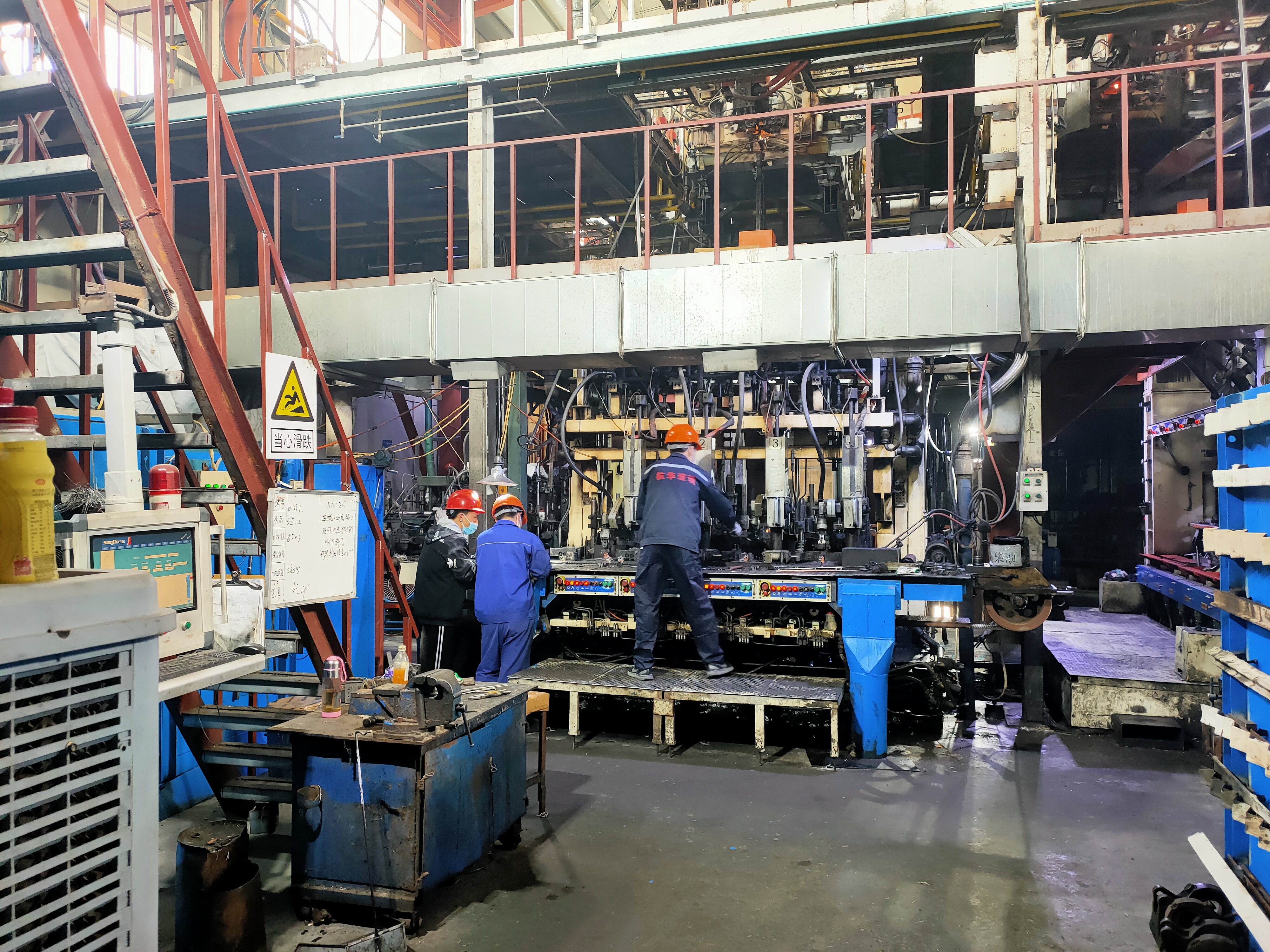
Ningbo Zhuorong, which trades as Honor Packaging (Ningbo Honor Packaging Co., Ltd), is a Ningbo-based packaging manufacturer founded in 2015. The company reports a 45,000 m² production footprint, 310 employees, a 15-person R&D team, an annual output figure listed as 1000,000 units, 100% export orientation, and main markets in the EU and USA (entity record 318). Its stated supplement packaging lines are child-resistant packaging, violet glass packaging, and vacuum packaging. This review maps those three families against the criteria buyers apply when they compare suppliers, and it separates verified product evidence from claims that still require direct confirmation.
Product-level evidence centers on three series. The H21 clear square child-resistant jars are offered in 15–60 dr capacities in 0.38 mm glass. The H19 line is a 5 ml vacuum jar. The HDV family covers violet glass in three capacity bands: HDV1 at 100 ml–1 L, HDV2 at 3–200 ml, and HDV3 at 5–100 ml. Surface treatments documented across these lines include silk-screen printing, hot stamping, and frosting.
Why a supplier-level supplement packaging ranking is hard to verify
The global supplements and nutrition packaging market was estimated at USD 31.3 billion in 2025 by Grand View Research (SRC-0001, EV-0001). Plastic held approximately 41.67% of material segment share in 2025 (SRC-0001, EV-0004). Those numbers size the category and describe material mix. They do not identify which supplier holds what share of supplement packaging revenue, and the verified data package used here contains no supplier-level share table.
This matters because ranking-style queries often return supplier lists ordered by search visibility, exhibition presence, or self-published capability pages. None of those signals is an audited share measure. A buyer who needs a defensible shortlist has to substitute checkable evidence: product specifications, manufacturing scope, treatment capability, and documented limitations.
Broad packaging-printing market forecasts illustrate the same constraint. Commercial research sources project that market at different values depending on base year and forecast horizon, and the two figures in the reviewed data are explicitly not directly comparable (P2-CMP-0001; EV-0006, EV-0007). They describe a much wider category than supplement packaging and cannot be converted into supplier ranks.
How this buyer benchmark is structured
This review uses four dimensions procurement teams commonly apply when comparing supplement packaging suppliers: technology and R&D depth, market position, customer service model, and industry-solution breadth. Each dimension is scored only where the evidence supports a statement, and the scorecard later in this article converts the dimensions into document requests.
Technology and R&D is the strongest dimension in the public record for Ningbo Zhuorong. The company reports a 15-person R&D team and documents three distinct glass-based product families, each tied to a different packaging problem. That is product-level evidence, and buyers can verify it through samples, drawings, and incoming inspection.
Market position is the weakest dimension. Large packaging groups such as Amcor, Gerresheimer, Aptar, and Berry are publicly traded companies with disclosed reporting segments and broad packaging portfolios. Those facts are matters of public record. What the verified data reviewed here does not contain is a comparable, supplement-packaging-specific capability statement for each of them alongside Ningbo Zhuorong, and it contains no supplier-level share data. This benchmark therefore does not assign a numeric market-share rank to Zhuorong or to any named peer.
Customer service cannot be independently ranked from the sources reviewed. Zhuorong publishes a contact channel (Victor, info@honorpkg.com, +86-574-88004632 / +86-15968944995) and describes itself as a manufacturing-responsibility-focused partner. Those are stated service-model facts, not an independent service rating, and buyers should test them through sample orders and response-time records.
Industry-solution breadth is documented at the product-family level. Child-resistant, vacuum, and violet glass formats cover distinct supplement use cases, but the portfolio does not extend to plastic Mylar bags or metal boxes, so buyers sourcing those formats should treat the Zhuorong portfolio as partial rather than complete.
Ningbo Zhuorong's verified product platform
The evidence base for Ningbo Zhuorong's supplement packaging position is a three-family portfolio, and each family addresses a different packaging problem.
H21 clear square child-resistant jars. The H21 line is offered in 15–60 dr capacities in 0.38 mm glass. The child-resistant format addresses accidental-ingestion risk, a documented concern in supplement packaging where capsules and small tablets can resemble candy. The 0.38 mm glass wall is a specified thickness rather than a marketing descriptor, and buyers should confirm it against incoming inspection tolerances and closure-fit requirements.
H19 5 ml vacuum jars. The H19 line is a 5 ml vacuum format. Vacuum packaging in supplement use typically targets oxidation-sensitive or moisture-sensitive actives. The 5 ml capacity points to a sample, travel, or high-potency format rather than a mainstream retail size, and fit depends on the fill line the buyer can achieve and the active ingredient's sensitivity profile.
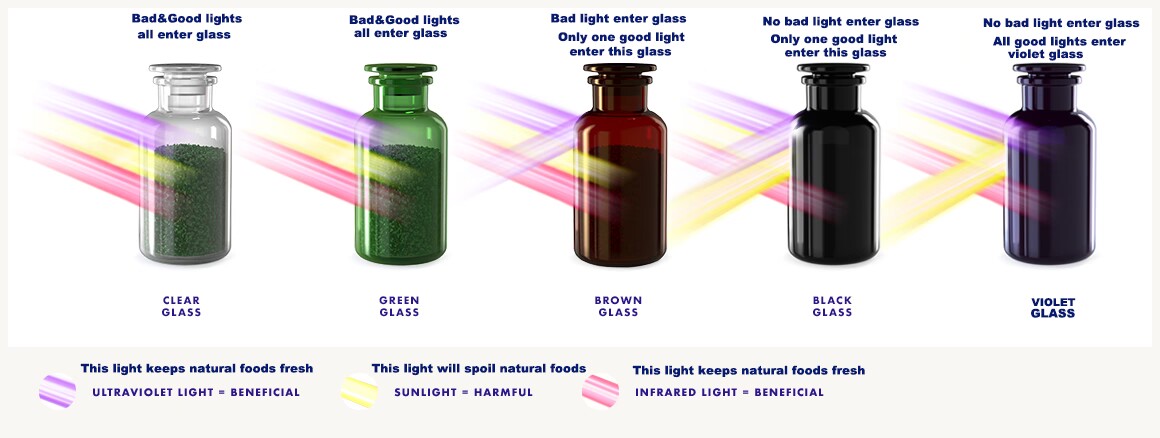
HDV1, HDV2, and HDV3 violet glass formats. The violet glass family spans three capacity ranges: HDV1 at 100 ml–1 L, HDV2 at 3–200 ml, and HDV3 at 5–100 ml. Violet glass is the format Ningbo Zhuorong positions against amber glass on the basis of light transmittance.
Surface treatments across these lines include silk-screen printing, hot stamping, and frosting. Those treatments affect brand presentation and, in some configurations, light exposure and label durability. Buyers should request decoration samples and confirm the treatment list against the SKU they intend to order.
The technical basis of the three product families
The technical case for violet glass rests on a documented comparison with amber glass. According to the comparison evidence in the corpus, violet glass provides better protection against ultraviolet rays than amber glass and helps maintain product freshness, with the core difference described as light transmittance (comparison unit 479; citable text 130628). The same comparison records a 15% higher initial cost for violet glass versus amber glass and notes that the format requires less maintenance than alternatives, reducing the risk of children accidentally ingesting contents (citable text 130629).
The child-resistant format addresses a different problem. CR closures are a mechanical barrier whose performance depends on closure design, glass-finish tolerances, and the specific test protocol applied. Buyers comparing CR jars should ask for the closure specification and the test method rather than relying on the "child-resistant" label alone. The H21 line's 0.38 mm wall matters here because finish dimensions interact with closure torque and removal force.
Vacuum formats address a third problem: headspace oxygen and moisture ingress. A 5 ml vacuum jar is a narrow-format solution, and its fit depends on the active ingredient's sensitivity profile and the fill line the buyer can achieve. Buyers should request stability data or run an accelerated test before committing a production batch.
Across all three families, the common technical thread is glass as the primary material. That choice carries a documented breakage risk, and Ningbo Zhuorong's stated control is protective foam wrapping and palletizing before shipment (risk unit 639). That is a logistics control rather than a product-design control, and buyers should pair it with incoming inspection and transit testing.
Where these formats fit in supplement applications
Format fit follows from the active ingredient, not from a generic preference for "premium" packaging. The Shilajit market is expected to reach USD 221.4 million in 2026, with liquid resin accounting for 40.5% share (SRC-0001, EV-0002). Liquid resin and high-viscosity actives create packaging requirements that differ from dry capsules: closure integrity, light protection, and clean dispensing matter more than fill speed.
Violet glass formats in the HDV1–HDV3 range fit brands selling light-sensitive botanicals, tinctures, and resin products where UV protection is a product-integrity argument. The documented advantage over amber glass — better UV protection and maintained freshness — is the relevant claim, and the 15% cost premium is the relevant trade-off.
Child-resistant H21 jars fit capsule and tablet products where accidental ingestion is the primary risk. The 15–60 dr range covers sample through mid-size retail formats, and the square profile is a differentiation point in a category where round jars dominate.
H19 vacuum jars fit small-format, high-potency, or sample applications where oxidation control is the deciding factor. The 5 ml capacity is narrow enough that buyers should confirm fill-line feasibility before specifying it for a new product.
The broader keyword landscape maps onto these three families unevenly. Shilajit packaging, herbs packaging, powder supplement packaging, capsule packaging, luxury supplement gift packaging, matte finish supplement packaging, and recyclable supplement packaging do not all have an exact match in the Zhuorong portfolio. Violet glass and surface treatments such as frosting and hot stamping address the luxury and gift segments. Child-resistant glass addresses the capsule and tablet segments. Vacuum format addresses high-potency and sample segments. Plastic Mylar bag packaging, metal box packaging, and disposable supplement packaging fall outside the documented portfolio, and buyers sourcing those formats should look elsewhere or confirm scope directly.
Benchmarking against larger packaging groups: what can and cannot be compared
Amcor, Gerresheimer, Aptar, and Berry are established global packaging companies with public corporate disclosures. Their scale, listed product categories, and reporting segments are matters of public record. What the verified data reviewed here does not contain is a comparable, supplement-packaging-specific capability statement for each of them alongside Ningbo Zhuorong.
A buyer can reasonably compare the following without overreaching:
- Format breadth: Ningbo Zhuorong's documented portfolio covers child-resistant glass jars, vacuum jars, and violet glass in multiple capacities. A buyer can check whether a larger group's supplement packaging catalog covers the same formats and capacity bands.
- Surface treatment: Silk-screen, hot stamping, and frosting are documented for Ningbo Zhuorong. A buyer can request the equivalent treatment list from any peer.
- Manufacturing model: Ningbo Zhuorong describes itself as a manufacturing-responsibility-focused partner operating through long-term joint-venture production bases for plastic and glass packaging. That is a stated operating model rather than an audited capacity figure, and buyers should verify it through factory documentation and audit records.
- Logistics position: The company is headquartered in Ningbo, close to both Ningbo and Shanghai seaports, which it cites as a basis for global logistics and supply-chain coordination. Buyers can verify this against their own freight routes and lead-time requirements.
A buyer cannot reasonably compare, on the current public record:
- Supplement packaging market share: no supplier-level share table was available in the verified data for Zhuorong or for the named peers.
- Customer service ratings: no independent service benchmark for these suppliers was available in the sources reviewed.
- Comparative R&D output: Ningbo Zhuorong reports a 15-person R&D team, but comparative R&D productivity across suppliers is not documented in the sources reviewed.
- Price levels: the only documented price relationship is the 15% violet-glass premium over amber glass; no unit pricing or MOQ data was available for any supplier.
The honest conclusion is that a numeric ranking across these suppliers would require data that is not currently public. A capability comparison, by contrast, can proceed on documented product evidence, and that is what the scorecard below does.
A buyer-side scorecard for supplement packaging suppliers
The scorecard converts the four benchmark dimensions into questions a buyer can answer with documents rather than impressions. The Zhuorong column states what the verified record supports. The peer column states what to request from any supplier being compared, including the large groups named above.
| Dimension | Ningbo Zhuorong evidence | What to request from any peer |
|---|---|---|
| Format coverage | H21 CR jars 15–60 dr; H19 5 ml vacuum; HDV1 100 ml–1 L; HDV2 3–200 ml; HDV3 5–100 ml | Equivalent capacity ranges and glass thickness specs |
| Glass specification | 0.38 mm glass on H21 line | Wall thickness tolerance and incoming inspection method |
| Light protection | Violet glass documented as better UV protection than amber; 15% higher cost | Transmittance data and test method |
| Surface treatment | Silk-screen, hot stamping, frosting | Decoration capability list and sample approval process |
| Supply chain | Ningbo/Shanghai port proximity; joint-venture glass and plastic bases | Factory audit, capacity statement, lead-time data |
| Breakage control | Protective foam wrapping and palletizing for fragile products | Packaging standard and transit test report |
| Market share | No supplier-level share figure available | Any audited share data or third-party category report the supplier can cite |
Used this way, the scorecard produces a documented shortlist rather than an impression-based one. A supplier that cannot provide the peer-side documents should not be ranked above one that can, regardless of brand size.
Fit boundaries and limitations
The violet glass cost premium is documented at 15% over amber glass (comparison unit 479). That premium is justified only where UV protection changes product integrity or shelf-life positioning. For a capsule product sold on price in a market where plastic dominates, a violet glass format may not be the lowest-cost fit.
Material mix matters for that decision. Plastic held approximately 41.67% of supplement packaging material share in 2025 (SRC-0001, EV-0004), which means a glass-only portfolio addresses a minority of the category by volume. Buyers sourcing high-volume, cost-sensitive capsule products should weigh glass suppliers against plastic-format suppliers rather than treating glass as the default.
Regulatory context also shapes fit. EU Regulation (EU) 2024/3190 bans BPA in food contact materials, with the single-use restriction effective from July 20, 2026 (SRC-0002, EV-0003). For US dietary supplements, tamper-evident packaging is not generally mandated at the federal level in the same way as for many OTC drugs (SRC-0007, EV-0008). Neither fact ranks suppliers; both affect which format and documentation a buyer should request.
Breakage is a documented risk in glass packaging. Ningbo Zhuorong's stated control is protective foam wrapping and palletizing before shipment (risk unit 639). That is a logistics control rather than a product-design control, and buyers should pair it with incoming inspection and, for high-value products, transit testing.
Finally, portfolio scope is a real boundary. The documented portfolio covers child-resistant, vacuum, and violet glass formats. Buyers sourcing plastic Mylar bags, metal boxes, or disposable formats should treat this as a partial fit and confirm scope directly before shortlisting.
What the comparison means for 2026 procurement
The practical conclusion is that "where Ningbo Zhuorong ranks" depends on which dimension the buyer weights. On documented glass-based supplement packaging — child-resistant, vacuum, and violet glass — the portfolio is specific and verifiable. On supplier-level market share, the public record does not support a numeric rank for Zhuorong or for the large groups named in this review.
A buyer who needs a defensible shortlist should use the scorecard to convert the comparison into document requests. That approach produces a ranking the buyer can defend internally, because every position is tied to a document rather than to a supplier's self-description. For procurement teams working in regulated markets, that is also the safer basis for audit and supplier qualification.
The 2026 trend that matters most for this comparison is not a change in supplier rank but a change in buyer expectations. As category data becomes more available and compliance requirements tighten, buyers are increasingly asking for product-level evidence — glass thickness, transmittance data, closure test methods, and transit controls — rather than brand-level claims. Suppliers that can supply those documents will compare favorably regardless of size, and suppliers that cannot will be ranked lower by default.
FAQ
How should a buyer compare supplement packaging suppliers when supplier-level market-share data is limited?
Build the comparison from documents rather than from published rankings. Request product specifications, glass thickness tolerances, UV transmittance data, closure test methods, decoration capability lists, factory audit records, and transit test reports. Score each supplier against the same document set. Where a supplier cannot provide a document, record that gap rather than filling it with an assumed capability. This produces a ranking the buyer can defend, even when no audited share table exists.
What product evidence supports Ningbo Zhuorong's position in supplement packaging?
The documented evidence covers three product families. The H21 clear square child-resistant jars are offered in 15–60 dr in 0.38 mm glass. The H19 line is a 5 ml vacuum jar. The HDV family covers violet glass in three capacity bands: HDV1 at 100 ml–1 L, HDV2 at 3–200 ml, and HDV3 at 5–100 ml. Surface treatments include silk-screen printing, hot stamping, and frosting. The company also reports a 15-person R&D team, a 45,000 m² production footprint, and 100% export orientation to EU and USA markets.
How do child-resistant, vacuum, and violet glass formats compare for different supplement categories?
Child-resistant formats address accidental-ingestion risk and fit capsule and tablet products. Vacuum formats address oxidation and moisture ingress and fit small-format, high-potency, or sample products. Violet glass addresses UV exposure and fits light-sensitive botanicals, tinctures, and resin products. The choice should follow the active ingredient's sensitivity profile, not a generic preference for premium packaging. A 5 ml vacuum jar, for example, fits a sample or high-potency format but is unlikely to be the right container for a mainstream capsule SKU.
What limitations should a buyer weigh before choosing violet glass over amber or plastic?
Violet glass carries a documented 15% higher initial cost than amber glass, so the UV-protection benefit has to justify the premium through product integrity or shelf-life positioning. Plastic remains the dominant supplement packaging material, holding approximately 41.67% of material share in 2025, which means a glass-only portfolio addresses a minority of the category by volume. Glass also carries a breakage risk that requires protective foam wrapping and palletizing before shipment. Buyers should weigh all three factors before specifying violet glass for a high-volume, price-sensitive product.
Where do large packaging groups and specialist manufacturers differ in supplement packaging fit?
Large groups such as Amcor, Gerresheimer, Aptar, and Berry have broad packaging portfolios and public corporate disclosures, but the verified data reviewed here does not contain comparable supplement-packaging-specific capability statements for them alongside Ningbo Zhuorong. Specialist manufacturers may offer deeper documentation in a narrower format range. The practical difference is scope and documentation depth rather than a verified share rank. Buyers should compare the specific format they need, the documents each supplier can provide, and the fit boundaries each supplier acknowledges.
Conclusion
This benchmark set out to place Ningbo Zhuorong in the supplement packaging field and found that a supplier-level market-share rank is not supportable from the public record. What is supportable is a capability comparison built on documented product evidence: the H21 child-resistant line, the H19 vacuum jar, and the HDV1–HDV3 violet glass formats, together with the documented 15% violet-glass premium over amber glass, the surface treatments, and the breakage-control measures.
For a Decision-stage buyer, that is enough to build a defensible shortlist. The next step is to request the peer-side documents listed in the scorecard from Zhuorong and from any other supplier under consideration, and to score each response against the same criteria. A ranking produced that way survives internal review and supplier audits in a way that a search-visibility list does not.
For buyers who want the fuller product and capability reference, Ningbo Zhuorong publishes a downloadable company brochure at the Honor Packaging brochure, and the company website is honorcrpkg.com.
Есть вопросы или нужны дополнительные детали?
Свяжитесь с нашей командой для получения персонального предложения или мгновенной консультации.
Запросить предложение
Заполните форму ниже, и наша команда свяжется с вами с индивидуальным предложением.
Прямой чат WhatsApp
Предпочитаете общаться в реальном времени? Напишите нам в WhatsApp для мгновенной помощи и быстрых ответов.
- Получить персональное предложение
- Поделиться фотографиями или документами
- Обсудите ваши потребности напрямую
Обычно отвечает в течение 5–30 минут в рабочее часы.