
Which Ball Mill Type Fits Your Plant? A 7-Product Shortlist for Energy, Metallurgy, and Minerals
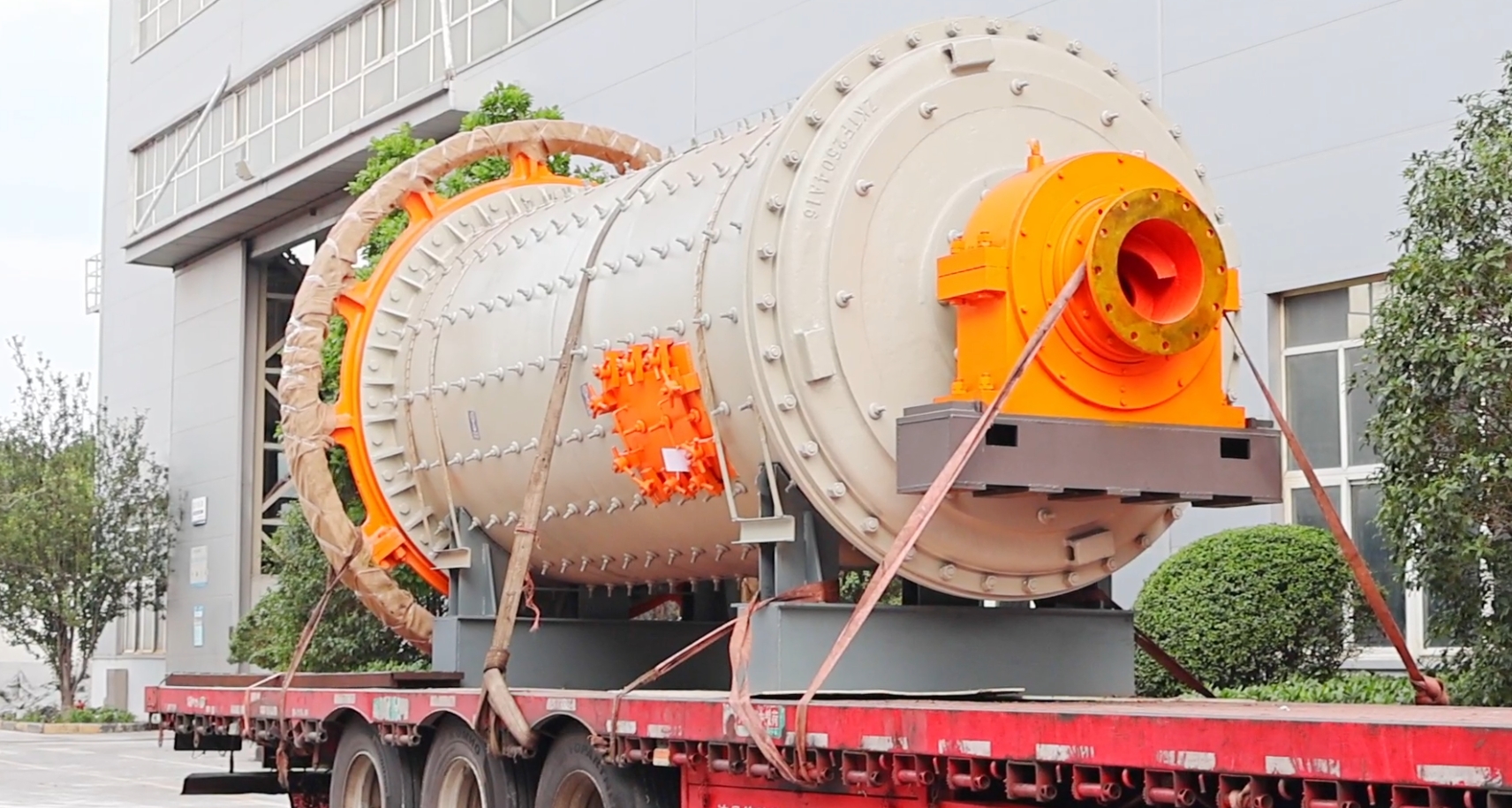
A ball mill is a grinding machine filled with loose grinding media that reduces particle size and blends materials. Inside that single definition sits equipment ranging from a 0.2-tonne-per-batch laboratory unit to an ore mill rated at 930 tonnes per hour. That is why “which ball mill” is a plant-fit question before it is ever a specification question.
Buyers in energy, metallurgy and minerals rarely fail at the technical data stage. They fail earlier, when a mill is sourced against a familiar name rather than against the duty it has to perform. A cement grinding station, an ore concentrator, a coal-fired kiln line and a ceramics plant all buy “a ball mill”, yet the machines they receive differ in lining, media, discharge arrangement, circuit design and drying capability. Deciding the type first collapses the available options quickly; deciding the type last produces a long, expensive comparison of machines that were never interchangeable.
This reference shortlists seven ball mill types offered by Henan Zhengzhou Mining Machinery Co., Ltd. (ZK MACHINE), a Zhengzhou, China-based manufacturer of ball mills and rotary kilns founded in 1956. For each type it states the application it is intended for, the anchor data published for it, and the boundary that determines whether the type is genuinely a fit. The aim is a shortlist of two or three candidates that can then be taken into detailed engineering, not a catalogue walk-through.
Why Throughput Alone Cannot Choose a Mill
Published capacity bands overlap, and that overlap is the single most common source of mis-selection. In the ZK MACHINE line-up, the Ore Ball Mill is rated at 0.5–930 t/h, the Cement Ball Mill at approximately 1.4–87 t/h, the Raw Mill at 1.7–73 t/h and the Rod Mill at 0.62–250 t/h. A buyer with a 60 t/h requirement sits inside four different bands at once.
Capacity therefore eliminates very little on its own. Three filters do the real work, and they should be applied in this order:
- Material family. Clinker, raw meal, coal, metal ore, ceramic body and laboratory samples behave differently in a tumbling mill, and the lining and media follow the material rather than the tonnage.
- Duty in the flow. A mill positioned before a kiln, before a separator, before a flotation circuit or before a packaging line is a different asset even when the tonnage matches.
- Product target and moisture. Fineness, particle-size distribution and allowable moisture decide whether the circuit needs classification, drying, or a batch rather than continuous configuration.
Only after those three are fixed does motor power, mill diameter or discharge type become a meaningful comparison.
The Seven Types and What Each One Is For
1. Ore Ball Mill — mineral liberation in concentrators
The Ore Ball Mill is the widest-band machine in the line-up and is intended for mineral processing plants, metal mines and non-metallic mineral processing. Published data: model range 1.2×2.0–6×12 m, capacity 0.5–930 t/h, product size approximately 0.074–0.4 mm, dry or wet grinding, and grate or overflow discharge. Typical materials include iron ore, copper ore, gold ore, lead-zinc ore, fluorite, quartz and other metallic and non-metallic ores.
Its breadth is also its warning: a 0.5 t/h unit and a 930 t/h unit share a product name and nothing else. For this type the shortlist step must include target grind size and circuit arrangement, because those, not tonnage, determine the internal configuration.
2. Cement Ball Mill — clinker and limestone finishing
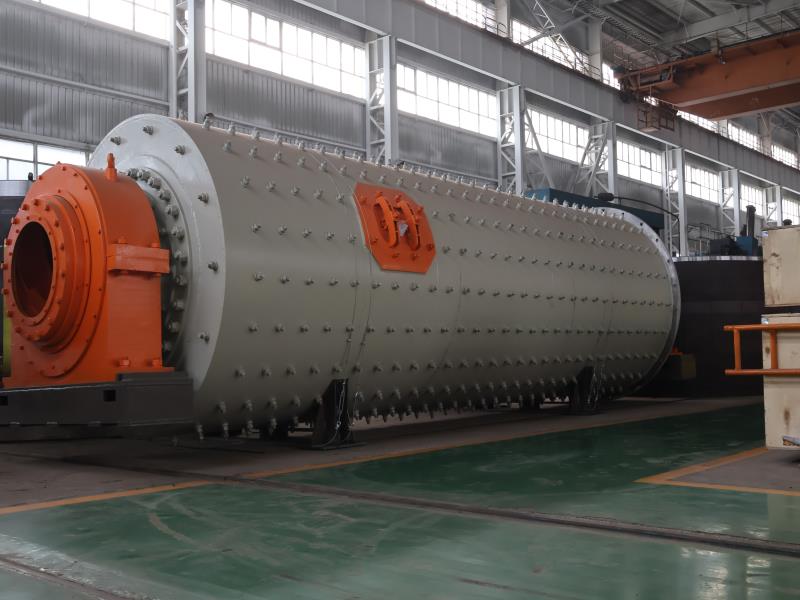
The Cement Ball Mill serves cement plants, grinding stations and building-materials producers working with clinker and limestone. Published data: model range Φ1.2×4.5–Φ4.6×10, capacity approximately 1.4–87 t/h, diameter 1.2–4.2 m, shell in Q235B/Q345B or equivalent structural steel, and open-circuit or closed-circuit grinding. It can be combined with a roller press and a separator to form a grinding system.
A concrete reference point: a 70 t/h cement grinding station project combined clinker pre-crushing with a Φ4.2 m ball mill operating in closed circuit with a high-efficiency classifier, with product fineness adjustable in the 280–650 m²/kg range. That configuration illustrates the type’s real character — the mill is one element of a circuit, and the pre-crushing and classification stages carry part of the duty.
3. Raw Mill — raw meal preparation ahead of the kiln
The Raw Mill is intended for cement plants and building-materials lines preparing raw meal. Published data: model range Φ1.2×4.5–Φ3.5×10 m plus customized large-scale models, capacity 1.7–73 t/h, grinding media load 5–118 t, and adjustable product fineness within a ball-mill-based raw grinding system.
The boundary matters here: the Raw Mill and the Cement Ball Mill share a substantial capacity band, so tonnage cannot separate them. The distinction is position in the process — raw meal before the kiln versus clinker after it — and that determines media grading, liner profile and the acceptable fineness target.
4. Air-Swept Coal Mill — fuel preparation with integrated drying
The Air-Swept Coal Mill prepares pulverized coal for combustion in industrial kilns and boilers, and is used in cement, thermal power generation, metallurgy and chemicals. Published data: model range Φ1.2×2.4–Φ2.9×4.7 m, capacity 1.4–16 t/h, motor power 45–570 kW, typical coal fineness of 85%+ passing 200 mesh, and integrated grinding and drying.
This is the most tightly specified type in the group, and the specification is a moisture condition rather than a tonnage one: coal moisture is stated as below 2% under the given operating conditions. A buyer whose coal sits well above that figure is not choosing between mills of different sizes — they are re-scoping the drying duty, which changes the system around the mill.
5. Rod Mill — uniform product where over-grinding is a cost
The Rod Mill is applied in mining, mineral processing, metallurgy, chemicals, glass, building materials and artificial sand production. Published data: model range Φ0.9×1.8–Φ3.6×5.4 m, capacity 0.62–250 t/h, main motor power 22–1600 kW, dry or wet grinding, and overflow discharge.
Where a plant needs a comparatively uniform product and wants to limit fines generation ahead of downstream processing, the rod mill is the type worth screening in. Note the stated discharge arrangement: overflow. If a project requires a different discharge concept, that is a configuration conversation rather than a like-for-like swap.
6. Ceramic Ball Mill — contamination control over raw tonnage
The Ceramic Ball Mill serves ceramics, refractories, advanced materials, chemicals and building materials where iron contamination from steel media is unacceptable. Published data: model range 600×700–3200×4600 mm, loading capacity 0.05–15 t/batch, rotational speed 13–50 rpm, reference motor power 2.2–75 kW, batch or intermittent operation, dry or wet grinding, with alumina or silica ceramic lining and alumina or zirconia media.
A batch wet ceramic mill has been supplied for grinding mortar and sand in a construction-materials application, which is representative of the type: product quality drives the choice, and batch operation is accepted as part of that trade.
7. Laboratory Ball Mill — the test step before the commitment
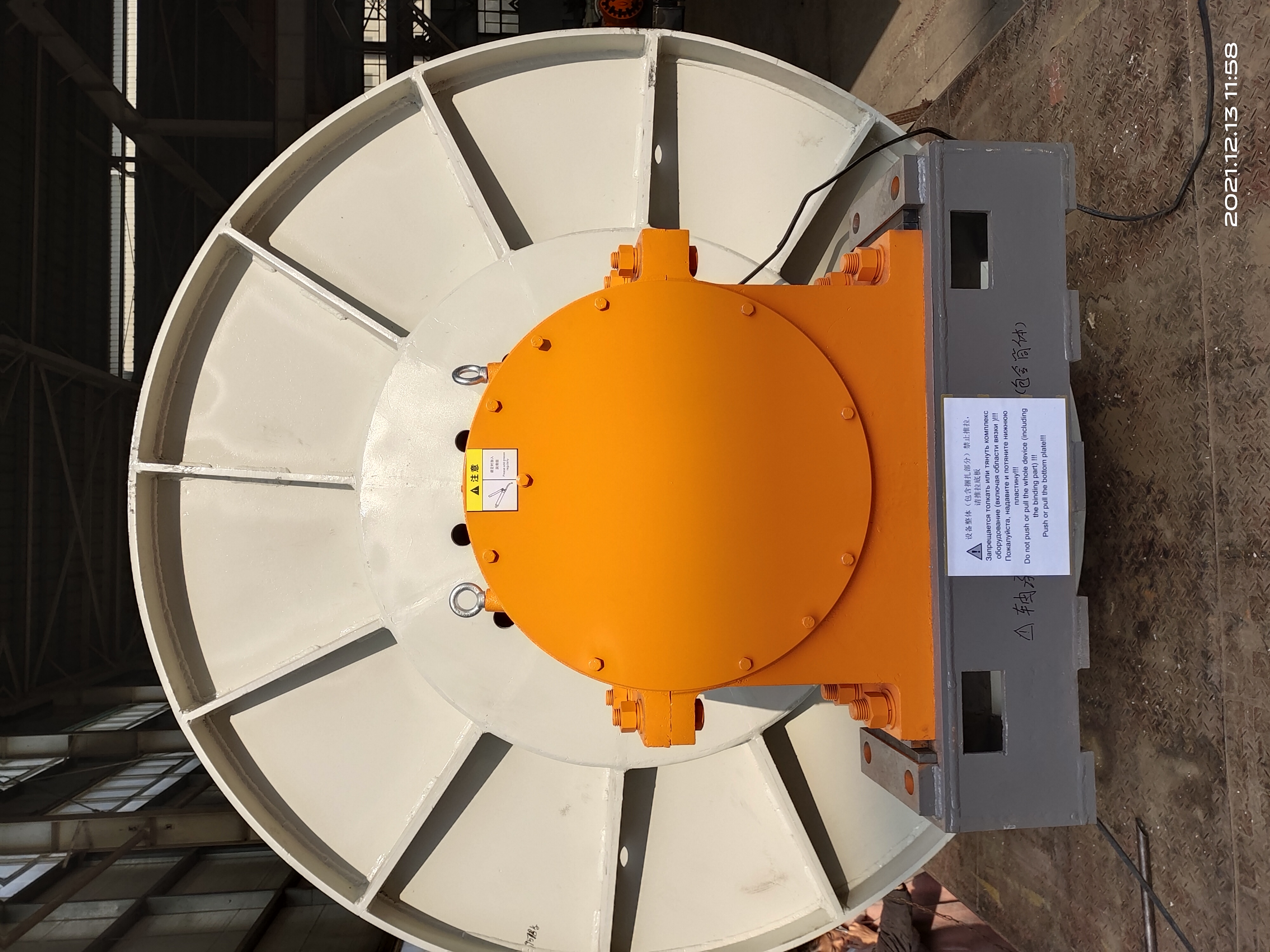
The Laboratory Ball Mill supports test work, pilot validation and small-lot production. Published data: model range Φ0.6×0.7–Φ1.8×2.1 m, loading capacity 0.2–1.5 t/batch, motor power 2.2–11 kW, rotational speed 23–35 rpm, dry or wet grinding, with applicability to ores, limestone, calcite, kaolin, bentonite, talc, mica, magnesite and ceramic materials.
Its role in a shortlist is procedural rather than productive. Where grindability data for a new material is thin, laboratory work is the cheapest way to test a hypothesis before a production-scale mill, circuit and building are committed.
Side-by-Side Reference
| Type | Model range | Rated capacity | Mode / discharge | Primary industries |
|---|---|---|---|---|
| Ore Ball Mill | 1.2×2.0–6×12 m | 0.5–930 t/h | Dry or wet; grate or overflow | Mineral processing, metal mines, non-metallic minerals |
| Cement Ball Mill | Φ1.2×4.5–Φ4.6×10 | Approx. 1.4–87 t/h | Open or closed circuit | Cement, building materials, limestone |
| Raw Mill | Φ1.2×4.5–Φ3.5×10 m and customized large models | 1.7–73 t/h | Adjustable fineness; media load 5–118 t | Cement plants, building materials, power, metallurgy |
| Air-Swept Coal Mill | Φ1.2×2.4–Φ2.9×4.7 m | 1.4–16 t/h | Integrated grinding and drying; 45–570 kW | Cement, thermal power, metallurgy, chemicals |
| Rod Mill | Φ0.9×1.8–Φ3.6×5.4 m | 0.62–250 t/h | Dry or wet; overflow discharge | Mining, mineral processing, glass, artificial sand |
| Ceramic Ball Mill | 600×700–3200×4600 mm | 0.05–15 t/batch | Batch; dry or wet; ceramic lining | Ceramics, refractories, chemicals, advanced materials |
| Laboratory Ball Mill | Φ0.6×0.7–Φ1.8×2.1 m | 0.2–1.5 t/batch | Batch; dry or wet | Test work, pilot lines, small-lot production |
From Seven to Three: A Shortlisting Sequence
The sequence below is intended to be run in a single working session with the process engineer and the procurement lead in the same room. Each step is designed to remove options rather than add detail.
- Step 1 — name the material, not the industry. “Cement plant” does not identify a mill; clinker, raw meal and coal are three different duties inside one plant, and each maps to a different type in this line-up.
- Step 2 — fix the position in the flow. Before the kiln, before separation, before combustion or before packaging each implies a different fineness target and a different tolerance for fines.
- Step 3 — bracket the throughput, then stop. Use published capacity only to confirm the type is plausible, not to rank candidates. A 60 t/h requirement is compatible with several types.
- Step 4 — settle the mode and discharge. Continuous versus batch, wet versus dry, and grate versus overflow are decided by the material and the downstream process, and they reduce the candidate list faster than tonnage does.
- Step 5 — decide the system boundary. Pre-crushing, classification, dust collection and drying can sit inside or outside the mill supply, and the boundary choice changes both the layout and the acceptance criteria.
| Plant situation | Material | Throughput signal | Start with |
|---|---|---|---|
| Ore concentrator | Iron, copper, gold, lead-zinc, fluorite, quartz | 0.5–930 t/h | Ore Ball Mill |
| Cement grinding station | Clinker, limestone | 1.4–87 t/h | Cement Ball Mill |
| Raw meal preparation | Limestone-based raw meal | 1.7–73 t/h | Raw Mill |
| Kiln or boiler fuel line | Coal | 1.4–16 t/h; 85%+ passing 200 mesh | Air-Swept Coal Mill |
| Mineral processing or sand line | Ore, sand, glass raw materials | 0.62–250 t/h | Rod Mill |
| Ceramics or advanced materials | Ceramic body, glaze, alumina, zirconia | 0.05–15 t/batch | Ceramic Ball Mill |
| Feasibility or pilot stage | Ores, limestone, kaolin, bentonite, talc, mica | 0.2–1.5 t/batch | Laboratory Ball Mill |
Where Customization Changes the Shortlist
ZK MACHINE states that its ball mills and rotary kilns are not standard products: every project requires customized engineering based on material properties, process requirements, production capacity, environmental regulations and site conditions. For a buyer, that statement has a practical consequence — the type shortlist narrows the machine family, and the engineering step then defines the actual unit.
The supporting capability behind that step is manufacturing and test infrastructure rather than a product claim. The company operates an 80,000 m² site with more than 60,000 m² of workshop space, 8 modern workshops and 5 heavy-duty workshops, and more than 300 sets of manufacturing equipment including boring and milling machines, gear hobbing machines and vertical lathes. It also runs its own process testing workshop and testing & analysis centre, which allows material behaviour to be examined before an industrial unit is sized. Stated commercial parameters include a monthly capacity of 10 units, a lead time of 3 months, a minimum order of 1 unit and 100% testing.
Two further facts are relevant at the evaluation stage. First, quality and environmental management are certified to ISO 9001, ISO 14001 and ISO 45001. Second, the ball mill carries CE certification issued by UDEM INTERNATIONAL CERTIFICATION AUDITING TRAINING Centre (certificate M.2024.206.C100982, issued 16 May 2024, valid to 16 May 2029), covering machinery and electromagnetic compatibility against EN ISO 12100:2010, EN 60204-1:2018 and the EN IEC 61000-6 series. The company also reports more than 150 core patents and participation in drafting more than 10 industry standards.
A case illustrates how the boundary decision works in practice. For a 10 t/h manganese oxide ore application, the selected approach was a Φ2.2×7.5 m mill in a fully enclosed dry grinding circuit with integrated dust collection and air classification. The mill alone would not have met the requirement; the enclosed dry circuit and the classification step were part of the answer. Buyers should expect a similar answer whenever the material is fine, dusty, moisture-sensitive or destined for a product where contamination matters.
Limits: What This Shortlist Cannot Decide For You
A shortlist that omits its own boundaries is not a useful procurement document. The following constraints are real and should be carried into the technical evaluation.
- Published capacity is directional. Ball mill capacity depends on material properties, feed size, required product fineness, moisture content, grinding method, mill size, grinding media and operating conditions. A nameplate figure is a planning envelope, not a guarantee of output at a specific grind.
- Energy is inherent, not optional. Tumbling mills convert electrical energy into mechanical comminution energy, so power draw is a structural operating cost of any ball mill circuit. Efficiency comparisons are only meaningful when expressed as energy per tonne at a stated fineness, and that figure is not available in this reference.
- Feed size is a precondition. The general ball mill range specifies feed size of 25 mm or less. Coarser feed requires a crushing or pre-grinding stage, which changes the circuit and the capital scope.
- Moisture can re-scope the mill. The air-swept coal mill is stated at coal moisture below 2% under the given operating conditions. Beyond that, drying becomes the governing design problem.
- Batch types are not scalable by arithmetic. A ceramic mill rated 0.05–15 t/batch and a laboratory mill rated 0.2–1.5 t/batch serve quality and validation goals. Output from a laboratory unit does not transfer directly to production performance.
- Certification scope follows configuration. CE conformity applies to the equipment and system configuration as finally supplied. For a complete grinding line the scope may include the mill, electrical and control systems, conveying and dust collection equipment, so it should be fixed during the technical specification stage rather than assumed.
Market Context: A Concentrated Supply Base
Two external data points frame the procurement environment. The global market for ball mills used in mining was valued at USD 4.94 billion in 2025 and is projected to reach USD 8.23 billion by 2034, according to a Dataintelo market report published in 2026. That figure covers the mining segment specifically; other research defines the market more broadly to include cement clinker grinding, which is why headline market sizes for “ball mills” vary between sources.
On the supply side, China was the leading exporter of machinery to crush or grind stone, ores and minerals (HS 847420) in 2024, at USD 1.38 billion, according to the Observatory of Economic Complexity based on customs data. For a buyer, the implication is not that supply is scarce, but that it is dense and uneven. When many suppliers offer machines with the same generic description, the differentiator shifts from availability to specification discipline — whether the mill type, circuit and acceptance criteria were defined before the quotation was requested.
What to Watch Over the Next Cycle
Three developments are likely to shape ball mill procurement in energy, metallurgy and minerals over the coming years, and each is visible in the configuration choices already being made rather than in forecasts.
First, system-level scope is replacing single-machine purchasing. Closed-circuit arrangements combining a mill with a high-efficiency classifier, and pre-crushing ahead of the mill, are presented as part of the grinding solution rather than as optional extras. Buyers who specify only the mill increasingly find that the performance guarantee they need sits outside the equipment they ordered.
Second, enclosed dry grinding with integrated dust collection and air classification is becoming a standard expectation in mineral and industrial-material applications where product purity and emissions control matter as much as throughput.
Third, pilot and laboratory work is moving earlier in the decision cycle. As more projects involve mixed or lower-grade feed, the cost of testing a material hypothesis on a laboratory or pilot unit is small relative to the cost of a mis-sized production circuit.
Frequently Asked Questions
Closing Note
The shortlist logic in this reference is deliberately narrow: material family, position in the flow, then throughput and fineness. Applied in that order, seven types reduce to two or three candidates that can be engineered and compared on the same terms. Applied in the reverse order, the same seven types produce a long list of machines that appear comparable and are not.
For readers who want the underlying product and company detail in one document, a general brochure is available for download: ZK MACHINE company and product brochure (PDF). Specifications should always be confirmed against the final project configuration and material test data.
Есть вопросы или нужны дополнительные детали?
Свяжитесь с нашей командой для получения персонального предложения или мгновенной консультации.
Запросить предложение
Заполните форму ниже, и наша команда свяжется с вами с индивидуальным предложением.
Прямой чат WhatsApp
Предпочитаете общаться в реальном времени? Напишите нам в WhatsApp для мгновенной помощи и быстрых ответов.
- Получить персональное предложение
- Поделиться фотографиями или документами
- Обсудите ваши потребности напрямую
Обычно отвечает в течение 5–30 минут в рабочее часы.