
Which Non-Dairy Creamer Fits Your Product? A Project-Specific Selection Guide
Non-dairy creamer is a functional powdered ingredient used to add creaminess, body, and stability to coffee, tea, bakery products, beverages, and even animal feed. Despite the single category name, the technical requirements vary considerably from one application to another. A creamer formulated for hot coffee may not dissolve correctly in an iced drink; a standard milk-tea creamer may lack the whipping capacity needed for a bakery topping; and a food-grade product with sodium caseinate cannot be labelled as vegan. For buyers evaluating suppliers, the practical question is not simply which non-dairy creamer to buy, but which formulation fits the specific production conditions and end-use expectations of the project.
The problem: one product does not fit all projects
Most non-dairy creamer failures in new product development are not ingredient-quality failures; they are specification-mismatch failures. The application determines the required fat content, solubility temperature, foaming ability, protein profile, and certification status. For example, a bubble tea chain operating under room-temperature storage may need a creamer that can be blended in batch mixing tanks and remain stable in hot or cold tea. A beverage manufacturer producing alcoholic drinks needs a creamer that can tolerate acidity and low-temperature mixing. An animal feed producer needs high energy density, typically from a high-fat formulation. A bakery that wants to replace whipping cream needs a product with sufficient overrun and foam stability. Without matching the product type to the process, the same raw ingredient can become the weak point in a formulation.
Buyers often begin a sourcing process with a general request for non-dairy creamer, but the project specification becomes meaningful only when the production workflow, target product claim, and consumer expectations are defined. A cold-soluble creamer is essential for iced coffee lines, but irrelevant for a bakery mix that will be baked. A vegan creamer is necessary for plant-based claims, but may not suit a product that depends on sodium caseinate for texture. In this context, supplier evaluation should be based on the match between a specific formulation and the intended application, not on a single reference sample.
The opportunity: growing demand for purpose-built formulations
Market data supports the shift toward tailored non-dairy creamer solutions. According to Future Market Insights, the global non-dairy creamer market was valued at USD 2.4 billion in 2024 and is projected to reach USD 4.4 billion by 2034. Powdered non-dairy creamers dominate the market with a 68.4% share in 2024, driven by long shelf life and ease of storage. Coffee applications represent the largest demand segment, accounting for approximately 41% of global utilization. Medium-fat variants with 21–50% fat content hold the strongest position, with a 43.6% to 46% market share, reflecting the balance between texture and flavour. These figures indicate that buyers are not looking for a generic substitute for milk powder; they are looking for a product that can be specified to their exact application.
The growth of functional powdered fats is also visible in adjacent categories. The global MCT powder market was valued at USD 585 million in 2024, growing at a CAGR of 5.7%, according to Intel Market Research. While MCT powder is a different product from standard non-dairy creamer, the growth signals a broader interest in powdered fats that serve specific nutritional or functional roles. For procurement teams, this means that a non-dairy creamer supplier should be able to explain not only the basic fat and protein numbers, but also how the formulation behaves under the project's processing conditions.
Cograin's approach to project fit
Cograin is a brand of Jiahe Foods Industry Co., Ltd., a food ingredient manufacturer headquartered in Suzhou, Jiangsu Province, China. Jiahe was founded in 2001 and listed on the main board of the Shanghai Stock Exchange in 2021 with stock code 605300. The company operates three production bases and five factories in Suzhou, Nantong, and Singapore, with an annual production capacity of more than 300,000 tons. Its product scope includes non-dairy creamer, starch syrup, cane syrup, flavored syrup, and powdered fat products. The company is an executive director unit of the China Beverage Industry Association and was recognized as a national green factory.
Cograin's non-dairy creamer portfolio includes models designed for different application conditions. The K60 is a standard creamer for milk tea, baking, and coffee. The FC22 is a foaming creamer with higher protein content. The S35 is a vegan formulation with zero protein and no sodium caseinate. The cold-soluble creamer is intended for iced coffee, milk tea, and other cold beverages. The DT35 is positioned as a low-sugar option for milk tea, coffee, beverages, and baking. The C960 is a whipping creamer for bakery and beverage use. The 60A is a high-fat product applicable to beverages, desserts, baking, and animal feed. The Kosher K80 carries kosher certification and is applicable to beverage, dessert, milk tea, and coffee.
| Model | Fat | Protein | Distinguishing feature | Typical applications |
|---|---|---|---|---|
| K60 | 32.0g/100g | 2.6g/100g | 0g trans fat | Milk tea, baking, coffee |
| FC22 | 22.0g/100g | 7.2g/100g | Foaming creamer | Milk tea, coffee, baking |
| S35 | 35.0g/100g | 0g | Vegan, no sodium caseinate | Vegetarian products, alcoholic beverages, milk tea, coffee, baking |
| Cold-soluble | 32.0g/100g | 3.5g/100g | Cold-soluble | Coffee, milk tea, beverage |
| DT35 | 35.0g/100g | 2.5g/100g | Low sugar | Milk tea, coffee, beverage, baking |
| C960 | 60.0g/100g | 5.2g/100g | Whipping creamer | Baking, beverage |
| 60A | 60.0g/100g | 3.0g/100g | High fat, 0g trans fat | Beverage, dessert, baking, animal feed |
| Kosher K80 | 32.0g/100g | 2.5g/100g | Kosher certified | Beverage, dessert, milk tea, coffee |
How to match non-dairy creamer to your application
Coffee and milk tea
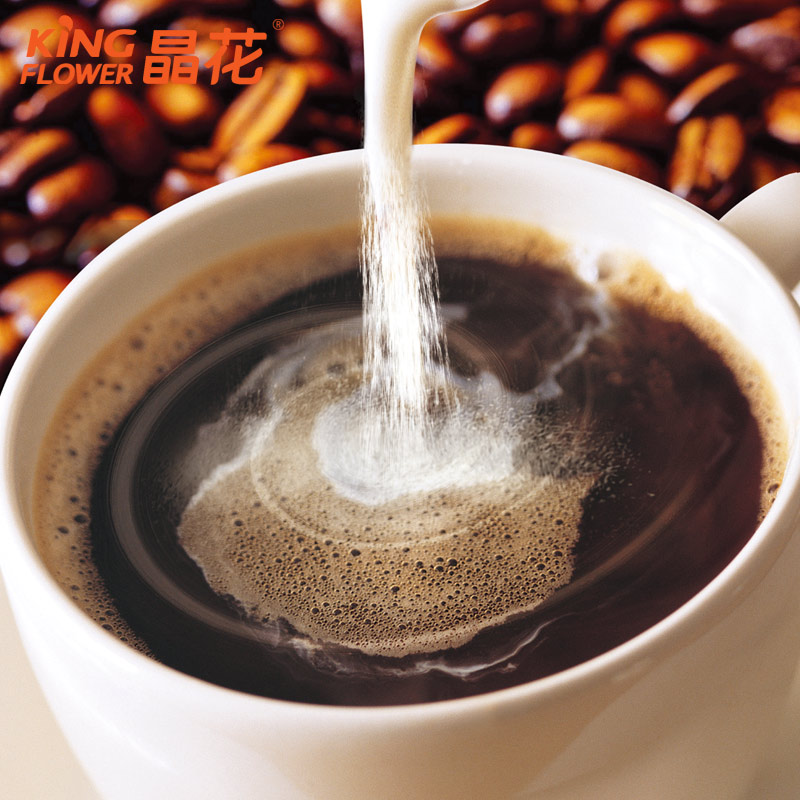
For hot coffee and milk tea, the main functions are whitening, body, and flavour blending. Standard K60 and Kosher K80 are formulated for these applications. For 3-in-1 instant coffee production, where the creamer is blended with coffee and sugar, consistent particle size and solubility are critical. According to Cograin's case records, a 3-in-1 coffee manufacturer in Singapore, Malaysia, Indonesia, Philippines, Kazakhstan, UAE, Ukraine, and Russia has used 9,000 metric tons over five years, with consistent quality and pricing highlighted. This type of supply history helps buyers evaluate long-term reliability.
The application specification for bubble tea and coffee shop projects also matters. One documented statement from Cograin's application corpus notes that the product is suitable for beverage ingredient supply for bubble tea chains and coffee shops projects. Operating conditions include normal temperature, room temperature storage, and a food-grade production environment. For a chain with multiple outlets, room-temperature storage and batch production are essential because they simplify logistics and reduce dependence on cold-chain infrastructure.
Cold beverages and iced drinks
Iced coffee, cold milk tea, and ready-to-drink beverages that are not heated require a cold-soluble creamer. The cold-soluble creamer from Cograin has 32.0g/100g fat and 3.5g/100g protein. It is intended for coffee, milk tea, and beverage applications. Buyers evaluating cold applications should verify the product's performance at the actual mixing temperature and residence time. A creamer that dissolves well in hot water may form lumps or sediment when added to cold water, which is a common quality complaint in iced beverage development.
Bakery and whipping applications
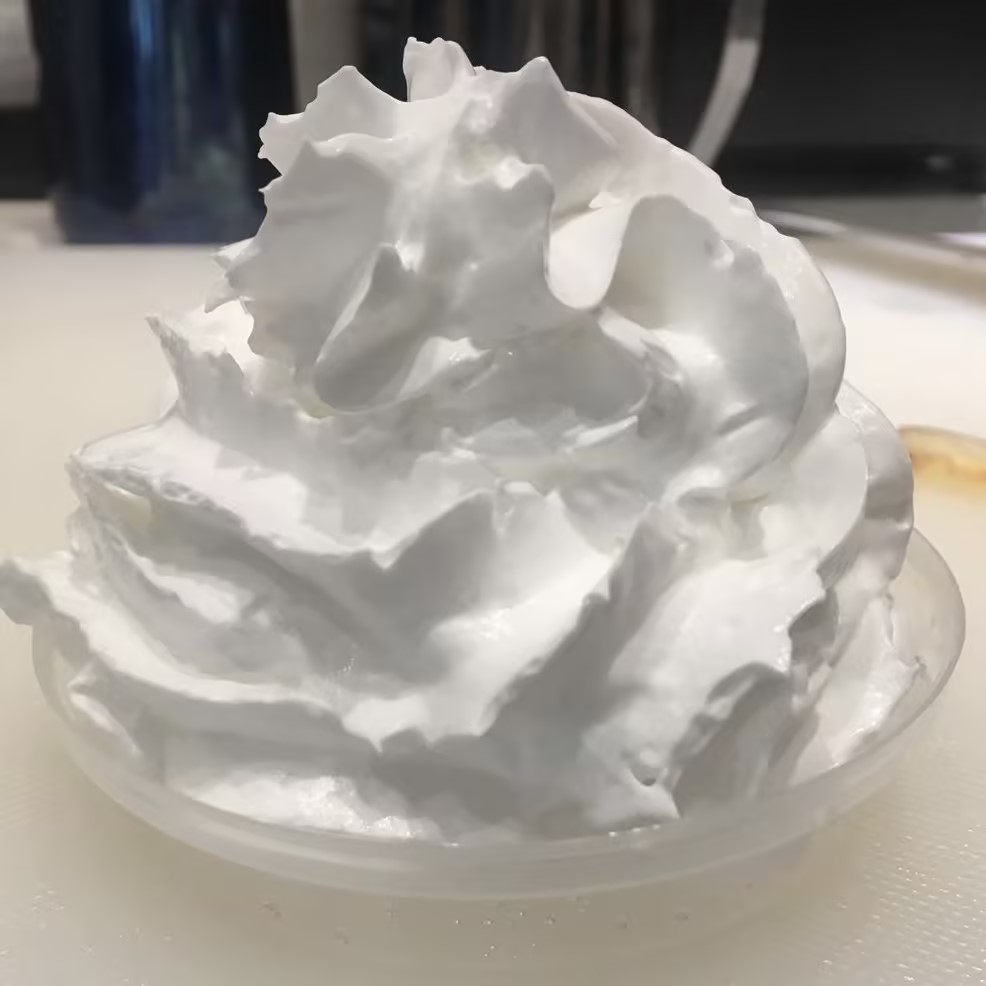
Whipped toppings, dessert fillings, and bakery mixes require a creamer with high fat and aeration capacity. The C960 whipping creamer has 60.0g/100g fat and 5.2g/100g protein. The FC22 foaming creamer has 22.0g/100g fat and 7.2g/100g protein. Although the fat contents differ, both are positioned for applications where foam or whipping performance matters. In bakery products, the choice depends on whether the creamer is used as a topping base or as an internal structure contributor. A higher-fat whipping creamer is generally associated with richer mouthfeel, while a foaming creamer with more protein can support aeration in different formulations.
Vegan and alcoholic beverage applications
Plant-based and alcoholic beverage projects require attention to ingredients, not just fat and protein numbers. Many standard non-dairy creamers contain sodium caseinate, a milk derivative. Under FDA regulations, a product can be labelled non-dairy even if it contains sodium caseinate, as long as the derivative is listed as a milk derivative. However, for kosher certification, a creamer containing sodium caseinate is considered dairy (OU-D) because the derivative is halachically milk. This is a critical distinction for buyers targeting vegan, pareve, or clean-label claims.
For a genuinely plant-based formulation, the S35 vegan model has 35.0g/100g fat, 0g protein, and no sodium caseinate. It is designed for vegetarian products, alcoholic beverages, milk tea, coffee, and baking. Buyers working on vegan claims should confirm that the entire formula, including emulsifiers and anti-caking agents, meets their plant-based policy.
Animal feed applications
Animal feed is a less obvious but existing application for non-dairy creamer. A high-fat product such as 60A, with 60.0g/100g fat and 0g trans fat, can be used to raise the energy density of feed. Cograin's case records include an animal feed production plant in Singapore purchasing 4,000–5,000 metric tons per year over three years, with consistent quality and pricing highlighted. For feed buyers, fat content and consistency matter more than the organoleptic properties that beverage buyers care about.
Supplier capabilities that affect project fit
Beyond the product itself, the supplier's ability to adapt the formulation and packaging to the project is part of the selection process. According to Cograin's production capability data, the company supports OEM/ODM and customized production, including syrup DE value, creamer formula, packaging specification, and product flavour. Monthly capacity includes 16,700 tons of creamer, 16,700 tons of syrup, 8,300 tons of solid drink, 8,300 tons of liquid drink, and 4,200 tons of flavored syrup. Lead time is approximately 7–15 working days after order confirmation. Quality control includes full-process inspection, 100% metal/weight check, and third-party testing. This information helps buyers assess whether a supplier can handle the scale and adjustments their project needs.
Market trends shaping non-dairy creamer selection
Several market trends are directly relevant to buyer decisions. First, the global non-dairy creamer market is projected to grow from USD 2.4 billion in 2024 to USD 4.4 billion by 2034, according to Future Market Insights. Second, powdered formats dominate at 68.4% of the market, which reinforces the importance of shelf stability and logistics. Third, coffee remains the largest application segment at approximately 41% of global utilization, so coffee-focused formulations will continue to receive attention. Fourth, medium-fat variants with 21–50% fat content hold the largest share, at 43.6% to 46%, indicating that most buyers seek a balance between richness and cost efficiency.
Regulatory awareness is also becoming a selection criterion. The FDA allows the label non-dairy for products containing milk derivatives like sodium caseinate, provided the derivative is listed as a milk derivative. Kosher certification, by contrast, treats sodium caseinate as dairy. Buyers should interpret certifications in the context of the final product. A non-dairy claim may still allow milk derivatives, and a kosher label may be dairy. The design of the final product label must therefore be checked before a sourcing decision is finalized.
Comparison with traditional solutions and limitations
Non-dairy creamer is often compared with fresh milk, dairy cream, and milk powder. The main advantages are convenience, shelf stability, and cost efficiency, especially for large-scale production. A powdered creamer can be stored at room temperature and blended into dry mixes or liquid systems. For projects that need a clean-label, all-dairy positioning, however, a non-dairy creamer may not be appropriate. Some standard formulations use hydrogenated vegetable oil and sodium caseinate, which are not considered clean-label ingredients in some markets. Additionally, a non-dairy creamer labelled non-dairy may still be unsuitable for vegan consumers if it contains sodium caseinate.
These boundaries matter at the product-development and labelling stage. Comparing alternatives is therefore not about which ingredient is universally better; it is about which ingredient matches the product claim and target market. The competitive landscape for coffee creamers includes global players such as Nestlé, Danone, FrieslandCampina Kievit, and Kerry Group, according to Grand View Research. For buyers, the practical evaluation is whether a supplier can deliver the required specification with the necessary documentation and consistency.
Future outlook
Future non-dairy creamer development is likely to emphasize functional attributes such as cold solubility, foaming control, low sugar, and plant-based certifications. The growth of the MCT powder segment is one signal that powdered fat products are being used for more than traditional whitening and bodying. For manufacturers like Cograin, the ability to customize formula and packaging is likely to become more important as buyers work on differentiated products. Buyers should expect more specification options and should build supplier evaluation processes that include not just price and certification, but also application testing and production flexibility.
Frequently asked questions
What is non-dairy creamer used for?
Non-dairy creamer is a powdered ingredient used to improve the mouthfeel, creaminess, and stability of products such as coffee, milk tea, bakery items, beverages, and animal feed. Different formulations are designed for different applications, and the product should be selected according to the project's processing conditions and final product requirements.
What is the difference between high-fat and medium-fat non-dairy creamer?
Fat content is one of the primary specifications in non-dairy creamer. In Cograin's portfolio, the 60A and C960 models have 60.0g/100g fat, while models such as K60, cold-soluble creamer, DT35, S35 and Kosher K80 contain 32.0–35.0g/100g fat. High-fat products are commonly used in applications requiring richness or energy density, such as whipping and animal feed, while medium-fat products are used in coffee and milk tea.
Which non-dairy creamer is suitable for cold beverages?
A cold-soluble non-dairy creamer is designed for applications where the beverage is not heated. The cold-soluble creamer from Cograin contains 32.0g/100g fat and 3.5g/100g protein, and is intended for coffee, milk tea, and beverage applications.
Is non-dairy creamer suitable for vegan products?
Only vegan-specific formulations are suitable for plant-based claims. Cograin's S35 model has 35.0g/100g fat and 0g protein, and does not contain sodium caseinate, making it suitable for vegetarian products, alcoholic beverages, milk tea, coffee, and baking. Standard non-dairy creamers often contain sodium caseinate, which is a milk derivative.
What does kosher certification mean for non-dairy creamer containing sodium caseinate?
A non-dairy creamer containing sodium caseinate is considered dairy under kosher certification rules, often designated as OU-D, because the derivative is halachically milk. This does not mean the product contains significant lactose, but it cannot be labelled as pareve or vegan. Buyers who need a kosher product should verify the certification category of the specific formulation.
Can non-dairy creamer be used in animal feed?
Yes, high-fat non-dairy creamer can be used in animal feed as an energy source. Cograin's 60A model has 60.0g/100g fat and 0g trans fat, and is applicable to animal feed in addition to beverages, desserts, and baking. One documented case is an animal feed production plant in Singapore purchasing 4,000–5,000 metric tons per year.
What certifications should a buyer look for in a non-dairy creamer manufacturer?
Relevant certifications include ISO9001, FSSC22000, HACCP, HALAL, ISO14000, and OHSAS18000. These cover quality management, food safety, environmental management, and occupational health and safety. The certification required for a project depends on the target market and product category.
Detailed product specifications and company information are available in the Cograin company brochure: Download the brochure.