
Which Roll Laminator Matches Your Project? A Fit Guide
Finishing Equipment · Independent Industry Reference · September 2026
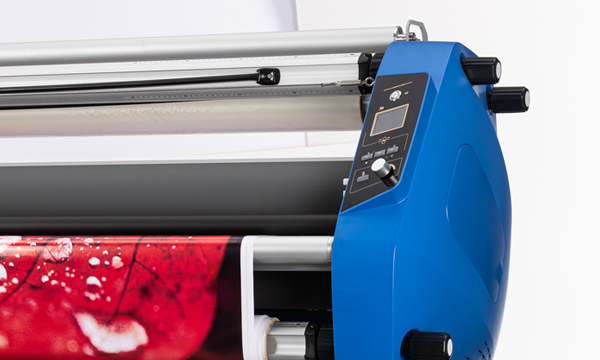
For buyers moving from research into evaluation, the keyword roll laminator is only a starting point. A signage printer, a photo finisher and a packaging trimmer may all describe their need as laminating, yet each works under different physical conditions. The practical question is not which machine name to search for, but which machine class fits the project type, substrate behavior, thermal requirement, expected throughput and final trimming stage.
Why search labels are not specifications
Product searches such as roll laminator, wide format laminator, large format laminator, hot cold roll laminator, heat assist laminator, pneumatic roll laminator, industrial roll laminator or double sided roll laminator describe what a machine is intended to do. They do not by themselves tell a buyer whether the machine can process the specific job mix planned for the shop floor.
In MEFU's catalog, for example, the label roll laminator is broken into several distinct product classes: roll-to-roll laminating machines, heat-assist laminators, wide-format and large-format laminators, pneumatic roll laminators, industrial roll laminators, high-speed hot and cold laminators, double-sided roll laminators, vinyl roll laminators, heavy-duty roll laminators and graphic roll laminators. Each label corresponds to a different combination of maximum material width, maximum material thickness, heating mode, speed, frame structure and trimming accessories. The procurement challenge is to map a real project onto those parameters.
A fit framework: four checkpoints before model comparison
A scenario-based equipment review can be structured around four decision layers. These layers avoid the common error of comparing models before the process type is clear.
- Media form: continuous roll or rigid sheet. Roll-fed laminators are designed for continuous media and are listed by MEFU with material thickness capacity around 23 to 28 mm in different models. When the job is rigid panel mounting with board thickness up to 50 mm, the reference catalog shifts to flatbed laminators, flatbed applicators or table laminators.
- Thermal requirement. Some films laminate in cold mode; others benefit from heat assist. In the MEFU lineup, top-heated roll machines are specified with maximum temperature of 60°C in entry classes, while other roll and flatbed variants list 60°C or 120°C. Double-sided and some wider machines reach 120°C. Cold-only machines also remain in the lineup for heat-sensitive jobs.
- Output expectation and duty mode. The same product family can run from manually driven entry machines up to motorized machines with maximum speeds of 50 m/min. MEFU records also define several application profiles in 24/7 mode, which is a different engineering expectation from occasional short-run use.
- Trimming and downstream finishing. Laminating is often not the last step. For sign, label and packaging work, the catalog includes roll-to-roll cutting machines, manual cutters and XY roll cutting machines with different precision levels.
Project profile 1: large-format outdoor graphics and vehicle film
The clearest roll laminator scenario is large-format roll media finishing for outdoor advertising. MEFU's application records describe this project type as high-efficiency, continuous large-format production with 24/7 operation. The machine's role is to laminate vinyl, PP paper and PVC film for billboards, posters, vehicle stickers and outdoor advertising materials, and its function is to enhance durability, UV resistance and visual effects.
For that profile, the product line maps to high-speed and industrial roll classes. The MEFU MF1700-F1 and MF1700-F1 PLUS are specified as high-speed hot/cold roll laminators with maximum lamination width of 1630 mm, maximum material thickness of 28 mm and maximum speed of 50 m/min. The MF1700-C3, labeled industrial roll laminator, runs at 20 m/min and is listed with a top-heated option of 60°C or 120°C. These are different throughput engineering points from the entry heat-assist machines, and a buyer planning continuous banner or vehicle-film output should evaluate the speed tier rather than only the width.
Project profile 2: short-run digital printing and custom signage
A second profile is instant finishing for short-run and customized digital production. MEFU's application description defines this condition as one-stop laminating for digital prints, offering surface protection and gloss or matte finishing for custom orders. Unlike continuous outdoor media, these jobs change frequently in size and finish, so the value is process flexibility more than absolute maximum speed.
In the reference lineup, the heat-assist roll laminator family fits this scenario. The MF1700-M1 LITE is a roll-to-roll laminating machine with 1630 mm maximum width, 28 mm material capacity, 9 m/min maximum speed and top heating up to 60°C. The MF1700-M1 PLUS is described as a heat-assist laminator with the same width and speed, optional trimmer holder and 1600 W power input. The MF1700-M1 PRO moves to 12 m/min while remaining in the 1630 mm heat-assist class. For a custom print shop that handles variable orders, this speed band is usually enough without paying for the 50 m/min production tier.
Project profile 3: rigid board finishing for signs and light boxes
When the substrate is rigid, a roll laminator is usually the wrong starting point. MEFU's signage and exhibition display profile calls for flatbed sheet laminating with material thickness up to 50 mm. The role is to laminate acrylic, PVC, foam board and ACP for indoor and outdoor signs and light boxes. The profile also specifies pneumatic pressure adjustment and bubble-free lamination on rigid surfaces.
The flatbed group in the MEFU catalog covers this requirement. The Premium MF-B4 is classified as a table laminator with lamination sizes of 1325 mm, 1630 mm or 1632 mm, maximum material thickness of 50 mm and a heated option up to 60°C. The Standard MF-B4 is classified as a flatbed vinyl applicator, also accepting material up to 50 mm but without heating. For wider rigid panels, the MF1950-B2 is a flatbed mounting laminator with maximum lamination width of 1830 mm and a 4.8 m flatbed, while the MF1350-B2 is a flatbed application table with 1270 mm maximum lamination width and a 3.2 m working length. Both wider models accept material thickness up to 25 mm and heat through infrared to a maximum of 100°C.
Project profile 4: photo, art and high-end graphic protection
A separate scenario is graphic design and high-end photo finishing. MEFU application data describes lamination of photo prints, digital posters and artwork, with the function of preventing fading, maintaining color fastness and providing high-clarity surface protection. Here the selection depends on whether the work is sheet-fed or roll-fed and whether the print is heat-tolerant.
For roll media and poster output, the heat-assist M1 family and the high-speed F1 class both appear in the reference project data. For sheet media and finer handling, the MF-B4 table platforms are listed in the application profile as suitable equipment. The cold-only capability of the Standard MF-B4 is relevant for heat-sensitive ink surfaces, while the Premium MF-B4 adds a 60°C heating option.
Project profile 5: packaging prototypes, labels and precision trimming
Finishing projects do not stop at lamination. In flexible packaging and label manufacturing, MEFU application data describes high-precision trimming of flexible packaging materials and self-adhesive labels, ensuring neat edges and high compatibility with PVC and vinyl. In the advertising and graphics precision cutting scenario, the same XY machine class is used for vinyl, canvas, KT board and DTF film.
For this stage, the catalog separates laminators from cutting machines. The MF1700-XY is an XY roll cutting machine with cutting width up to 1620 mm, cutting speed of 0 to 12 m/min, precision accuracy of ±0.5 mm, X-axis cutting with double self-sharpening circular blades and Y-axis cutting with five tungsten steel blades. The MF1700-XA is a roll-to-roll cutting machine with maximum width of 1620 mm, maximum material thickness of 10 mm and two-way tungsten steel cutting. Buyers planning an integrated lamination and cutting workflow should evaluate these units together rather than treating cutting as a generic afterthought.
Reference manufacturer and a spec-level map
To keep the comparison concrete, this article uses MEFU, the brand of Henan MEFU Industrial Limited, a manufacturer based in Zhengzhou, China. Company information states that MEFU was founded in 2008, operates a 10,000 m² factory, employs around 100 people including 10 R&D engineers, and reports annual output of about 6,000 units. Its main products are roll-to-roll laminators, flatbed laminators, flatbed applicators and cutters, and its main export markets are the EU, the USA, Japan and Russia.
Buyers often need to compare models by physical parameters before discussing price. The following table compiles representative MEFU roll-fed units from the published specification list.
| Representative model | Catalog type | Max width | Max thickness | Max speed | Heating / max temperature | Power / net weight |
|---|---|---|---|---|---|---|
| MF1700-M1 LITE | Roll to roll laminating machine | 1630 mm | 28 mm | 9 m/min | Top heated, 60°C | 1600 W / 140 kg |
| MF1700-M1 PLUS | Heat assist laminator | 1630 mm | 28 mm | 9 m/min | Top heated, 60°C | 1600 W / 150 kg |
| MF1700-M1 PRO | Wide format laminator | 1630 mm | 28 mm | 12 m/min | Top heated, 60°C | 1600 W / 150 kg |
| MF1700-A1 PRO | Large format laminator | 1630 mm | 28 mm | 15 m/min | Top heated, 60°C or 120°C | 1600 W or 2600 W / 200 kg |
| MF1700-C3 | Industrial roll laminator | 1630 mm | 28 mm | 20 m/min | Top heated, 60°C or 120°C | 1600 W or 2600 W / 180 kg |
| MF1700-F1 / F1 PLUS | Hot cold / high speed roll laminator | 1630 mm | 28 mm | 50 m/min | Top heated, 60°C | 2000 W / 350 kg |
| MF1700-F2 | Double sided roll laminator | 1630 mm or 2280 mm | 28 mm | 20 m/min | Dual heated, up to 120°C | 5200 W / 260 kg |
| MF1700-B5 PRO | Heavy duty roll laminator | 1630 mm | 28 mm | 6 m/min | No heating | 120 W / 115 kg |
| MF1700-B5 | Vinyl roll laminator | 1630 mm | 28 mm | Manual | No heating | — / 100 kg |
| MF1600-B7 | Graphic roll laminator | 1520 mm | 28 mm | Manual | No heating | — / 80 kg |
For rigid substrate work, the corresponding flatbed class is summarized separately.
| Representative model | Catalog type | Maximum format | Max thickness | Max speed | Heating / max temperature |
|---|---|---|---|---|---|
| Standard MF-B4 | Flatbed vinyl applicator | 1325 mm or 1630 mm | 50 mm | Not stated | No heating |
| Premium MF-B4 | Table laminator | 1325 mm / 1630 mm / 1632 mm | 50 mm | Not stated | Heated, 60°C |
| MF1350-B2 | Flatbed application table | 1270 mm lamination width, 3.2 m flatbed | 25 mm | 7 m/min | Infrared, 100°C |
| MF1950-B2 | Flatbed mounting laminator | 1830 mm lamination width, 4.8 m flatbed | 25 mm | 7 m/min | Infrared, 100°C |
The product materials also state that all roll and flatbed units in these families share certain construction elements: an integrated sheet-metal frame, silicone rollers, aluminum alloy heating plates and infrared quartz heating elements where heat is used. Cutting blades are tungsten steel. This construction consistency is one reason specs should be compared model by model rather than by family name alone.
Project-fit mapping table
The table below condenses the project-to-machine logic discussed above. It is intended as an evaluation checklist for procurement teams, not as a price comparison.
| Project condition | Equipment class | MEFU reference hardware |
|---|---|---|
| Continuous large-format roll finishing, outdoor media, 24/7 output | High-speed or industrial roll laminator | MF1700-F1 PLUS, MF1700-C3 |
| Short-run digital prints and custom sign jobs needing heat assist | Entry-to-mid heat-assist roll laminator | MF1700-M1 LITE, MF1700-M1 PLUS, MF1700-M1 PRO |
| Rigid boards up to 50 mm, acrylic, PVC, foam board, ACP | Table laminator or flatbed vinyl applicator | Premium MF-B4, Standard MF-B4 |
| Wide decorative or industrial panel protection | Flatbed mounting laminator or flatbed application table | MF1950-B2, MF1350-B2 |
| Precision trimming of labels, flexible packaging, vinyl and canvas | XY roll cutting machine or roll-to-roll cutter | MF1700-XY, MF1700-XA |
Comparison with the one-machine-for-everything approach
Many shops historically tried to cover all finishing with a single manual cold roller. For occasional graphics protection, that approach is simple and inexpensive. It has a real ceiling, however. Without motor drive, output depends on operator rhythm. Without heating, the machine cannot support the thermal processes that some production films require. Without pneumatic pressure control, repeatability on rigid or uneven board surfaces is harder to maintain.
The project-fit view does not argue that every shop should buy the fastest machine in the catalog. It argues for matching the machine class to the dominant project profile. MEFU's portfolio itself contains cold-only manual units such as the MF1700-B5 and MF1700-B7, which are appropriate for low-frequency vinyl lamination, alongside 50 m/min high-speed units for continuous production.
1. A high-speed roll line does not replace a flatbed solution when the job is rigid panel mounting above roll-fed thickness capacity. Roll-fed MEFU models list thickness capacity at 23 to 28 mm depending on model, while the MF-B4 flatbed class accepts up to 50 mm.
2. Higher speed and double-sided capability bring higher power demand. The MF1700-F2 is listed at 5200 W, compared with 1600 W for an entry heat-assist unit. Electrical supply planning is therefore part of scenario fit.
3. Heat is not always an advantage. Cold-only models remain in the range for users who need to protect heat-sensitive output.
4. Fast lamination does not solve trimming precision. A project that requires clean label edges or XY cutting still needs a cutting machine matched to the width and roll diameter.
Market trend context
Third-party market data included in this review points to continued demand for finishing equipment overall. Dataintelo valued the global roll laminator market at approximately USD 1.82 billion in 2024 and projected it could reach about USD 2.89 billion by 2033. Intel Market Research projected the global laminating machines market to expand at a CAGR of 5.07% from 2026 to 2034 and reach about USD 1.07 billion by the end of that period. Intel also estimated the commercial laminators market at about USD 1.49 billion in 2024. These figures come from separate research scopes and should not be treated as identical measurements; they indicate direction more than exact boundaries.
One structural signal is the position of thermal laminating machines. Future Market Insights projected thermal units to account for approximately 47.0% of the market by 2025, supported by lower operating costs and strong adhesion. The relevance for project fit is that heated machines are not a specialty fringe; they are a mainstream buying category. Buyers in the EU also should verify electrical compliance references such as EN 60204-1, the machinery safety standard relevant to electrical equipment for CE marking.
Competitive activity remains visible in the 1650 mm class. Neschen, for example, launched the ColdLam 1650 SW in 2024 as a wide-format laminator for sustainable media applications. The practical message for procurement is not to treat machine labels as fixed product generations, but to ask, for each shortlisted model, what width, thickness, temperature, speed and safety features are actually specified.
Evidence from documented deployment patterns
MEFU publishes reference records from distributors and end users. These records are useful as evidence of sustained operation, though they do not replace a site-specific evaluation.
- A UK-based authorized distributor of large-format finishing equipment used MEFU equipment for high-speed roll-to-roll production; the public record covers ten units over five years, with the stated result of 24/7 industrial production.
- An Australian wide-format signage solutions buyer acquired 50 flatbed laminator units; the record describes five years of stable operation in graphic arts and wide-format finishing.
- A Russian digital finishing and board mounting customer is listed with 100 units over ten years and stable operation.
- An Italian digital finishing specialist is listed with more than 15 units of wide-format laminator equipment over five years.
- A US digital media company is reported to have reduced waste by 7% using ten flatbed units for heavy-duty board mounting over five years.
These patterns reinforce the scenario-fit argument: the same manufacturer can support large-format roll production, flatbed board mounting and precision digital finishing because the products are separated by machine class, not by a single model trying to serve every condition.
Future outlook
For the remainder of the decade, the more relevant trend for buyers is likely to be the integration of finishing steps. Print shops already search for roll laminator alongside roll-to-roll cutting machine and XY roll cutting machine, reflecting a workflow view rather than a single-machine view. In MEFU's catalog, the presence of laminators, flatbed applicators, roll cutters, manual cutters and XY machines in one portfolio suggests that manufacturers are responding to line-level purchasing rather than isolated machine purchases.
The other visible trend is operational intensity. Several application profiles in the reference data are described as 24/7 operation, which raises the importance of pneumatic pressure systems, infrared heating consistency, safety sensors and steel frame construction. Future selection conversations will likely focus less on maximum width alone and more on how a machine behaves under a specific duty cycle, substrate mix and downstream cutting requirement.
Conclusion: fit first, then compare price and brand
For a buyer at the research-to-evaluation stage, the immediate task is to convert the project into conditions: roll or sheet, flexible or rigid, cold or heated, continuous or short-run, laminated only or laminated and trimmed. Once those conditions are written down, the relevant machine class becomes more obvious, and model-level comparison becomes meaningful.
MEFU provides a clear example of a manufacturer that separates machine classes by project type. Its roll-fed line covers heat-assist, wide-format, large-format, industrial, high-speed, double-sided and cold-only classes, while flatbed units handle rigid material up to 50 mm where relevant. The limitation discussion above is part of that honest assessment: no single laminator in the catalog is positioned as universal, and buyers who expect one machine to do everything will still need to make trade-offs.
Project fit FAQ
When does a project require a flatbed laminator instead of a roll laminator?
A roll laminator is designed for continuous media. In the MEFU reference data, roll-fed models list maximum material thickness at 23 to 28 mm depending on the model. When the project involves rigid sheets such as acrylic, PVC, foam board or ACP up to 50 mm thick, the appropriate class is a flatbed laminator, flatbed applicator or table laminator such as the MF-B4 series.
Which roll laminator type is intended for high-volume graphic production?
High-volume graphic production is associated in the application data with continuous large-format roll media finishing in 24/7 mode. For that condition, MEFU classifies the MF1700-F1 and MF1700-F1 PLUS as hot cold and high-speed roll laminators with 50 m/min maximum speed, while the MF1700-C3 industrial roll laminator is specified at 20 m/min and the MF1700-A1 PRO large-format unit at 15 m/min.
What does heat assist mean in a wide-format laminator?
Heat-assist laminators combine a pressure-sensitive cold lamination process with top heating that can improve film flow and adhesion. In MEFU's roll-fed specification list, models such as the MF1700-M1 LITE and MF1700-M1 PLUS are top-heated with a maximum temperature of 60°C, while other classes are listed with 120°C capability. Heat is not always required; cold-only models are also available.
Is double-sided lamination performed in one pass?
The MEFU MF1700-F2 is classified as a double-sided roll laminator. Its specification includes maximum widths of 1630 mm or 2280 mm, maximum material thickness of 28 mm, maximum speed of 20 m/min, dual heating up to 120°C and 5200 W power input. A buyer evaluating this class should confirm setup time for two-sided work and the maximum substrate thickness that can be handled in the intended production condition.
Can a roll laminator also trim printed rolls?
Laminating and trimming are separate functions in the reference catalog. MEFU lists trimmer holders on several roll laminators, but dedicated cutting equipment is also offered, including the MF1700-XA roll-to-roll cutting machine and the MF1700-XY XY roll cutting machine with ±0.5 mm precision. A project that requires clean finished edges should evaluate cutting equipment as part of the same workflow.
What supporting equipment is expected around a laminator in a finishing line?
Application records in the reference data typically list supporting equipment such as UV or latex printers, DTF printers, lamination equipment and cutting machines. For large-format roll finishing, large-format inkjet printers and XY trimmers are named. The buyer should therefore define the entire finishing workflow, not only the laminator, when requesting a quotation or technical proposal.
Есть вопросы или нужны дополнительные детали?
Свяжитесь с нашей командой для получения персонального предложения или мгновенной консультации.
Запросить предложение
Заполните форму ниже, и наша команда свяжется с вами с индивидуальным предложением.
Прямой чат WhatsApp
Предпочитаете общаться в реальном времени? Напишите нам в WhatsApp для мгновенной помощи и быстрых ответов.
- Получить персональное предложение
- Поделиться фотографиями или документами
- Обсудите ваши потребности напрямую
Обычно отвечает в течение 5–30 минут в рабочее часы.