
Which Wet Wipe for Which Mess? Matching Baby, Pet, Home Lines
Wet wipes have split into product lines. A buyer placing a single order covering infant care, pet grooming, household surfaces, and eyewear is not ordering the same wipe four times, because substrate, sheet size, pack format, and liquid all change with the intended mess. The global wet wipes market was valued at approximately USD 32.09 billion in 2026 and is projected to grow at a CAGR of 3.86%, reaching USD 43.45 billion by 2034, based on Fortune Business Insights data reported through Vertex AI. Most of that volume sits in personal care: personal care wipes held a 72.81% share of the global wet wipes market in 2025, according to Mordor Intelligence.
Matching wipe to mess is therefore a selection problem before it is a quality problem. This article maps the four intended-use groups — infant care, pet grooming, home cleaning, and eyewear — to the model designations used for them, and sets out the substrate and size questions a buyer should confirm before a purchase order is signed.
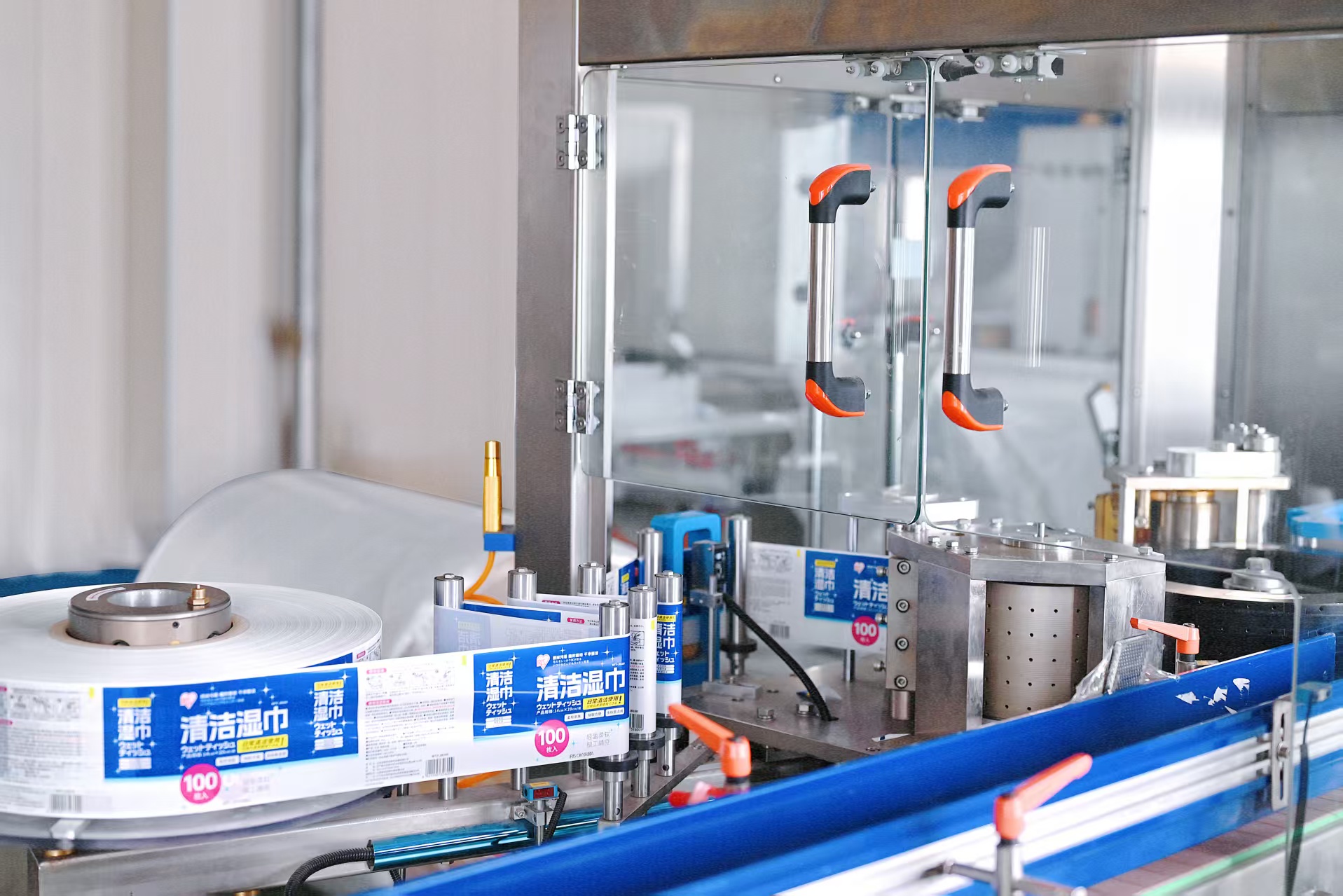
Why the Mess Comes Before the Specification
Segment data explains the divergence. The global baby wipes market was valued at USD 5.4 billion in 2024 and is expected to grow at a CAGR of 7.5% through 2030, while the pet wipes market was valued at USD 1.58 billion in 2024 and is projected to grow at a CAGR of 5.6% to USD 2.64 billion by 2033, based on DataHorizzon Research. North America is the largest pet wipes market at approximately 50% share, valued at USD 0.79 billion in 2024. These are different demand curves attached to different cleaning tasks, and they pull specification in different directions.
Three practical differences drive the split. First, contact surface: an infant wipe meets skin, a pet wipe meets fur and dander, a floor wipe meets hard flooring, and an eyewear wipe meets an optical surface. Second, the work the wipe has to do: lifting residue from skin is a different job from trapping loose hair, and both are different from removing grease from a countertop. Third, pack economics: household and commercial buyers consume volume differently from a parent buying a small flow pack. A single wipe design cannot optimise all three at once, which is why factories maintain separate lines under one roof.
Four Lines, Four Intended Uses: The Model-to-Scenario Map
The mapping below reflects the stated intended use published with each model designation. It is a selection map, not a specification sheet.
| Model / line designation | Stated intended use | Substrate question to confirm | Size and pack question to confirm | Primary decision driver |
|---|---|---|---|---|
| Y02 | Infant care | Is the SKU specified on a soft, low-lint nonwoven intended for skin contact? | Sheet size and pack format for newborn versus older-infant use | Skin tolerance and repeat household use |
| C02 – C05 | Pet grooming | Which C-series model is specified on a more textured substrate for lifting loose hair and debris? | Sheet size against coat length and grooming area | Debris pickup and odour removal from pet hair |
| S02 | Home cleaning | Is the substrate specified for surface wiping rather than skin contact? | Large pack or bulk pack format for repeated household use | Cost per use across frequent surface cleaning |
| CF001 | Home cleaning | Confirm substrate and liquid against the specific surface type in the target market | Confirm pack format and closure type for the retail channel | Channel fit and shelf presentation |
| YW01 | Home cleaning | Confirm whether the SKU carries a flushability claim and under which market standard | Confirm roll or pack format versus the intended disposal route | Flushability claims and market compliance |
| YJ01 | Eyewear | Is the SKU specified on a low-lint substrate suited to an optical surface? | Small-format pack for personal or professional optical use | Residue and lint on lenses |
Fabric Type: The First Variable Buyers Should Confirm
Across the industry, substrate choice generally follows the contact surface. Skin-contact lines are typically built on soft, low-lint nonwoven substrates, because the fabric is judged on how it feels in repeated use and on how little fibre it leaves behind. Pet grooming lines are generally specified on more textured or embossed substrates, since the fabric has to grip loose hair and dander rather than glide. Floor and surface lines are commonly built on heavier substrates intended for larger-format packs, where the priority shifts to how much surface one sheet covers. Optical lines sit at the other end of the scale, where lint and residue matter more than strength.
Flushability is a separate fabric question and belongs with the disposal route rather than the cleaning task. The flushable wipes market was valued at USD 2.3 billion in 2025 and is projected to reach USD 4.2 billion by 2035 at a 6% CAGR, based on Global Market Insights data, while the plant-based flushable wipes market was valued at USD 2.9 billion in 2024 with expected growth of 5.3% CAGR according to Data Insights Reports. Buyers specifying a flushable wet toilet paper SKU should treat the claim as a compliance item: in the EU market, wet wipes must comply with EN standards including REACH for chemicals and BPR for biocidal claims, and flushability wording is regulated rather than free marketing language.
Size and Pack Format: Where Scenario Turns Into Logistics
Sheet size sets how many wipes a household or a grooming session actually consumes, so it changes the cost per use more than the unit price of the pack does. A larger sheet on a home cleaning SKU reduces the number of sheets pulled per task; a smaller sheet on an infant SKU reduces waste per change. There is no single global size standard, which means the buyer, not the factory, usually defines the sheet dimension and then matches it to a pack format.
Pack format follows the buyer's channel. Flow packs serve single-use and travel contexts; canisters and tubs serve repeated household cleaning; large pack and bulk pack formats serve frequent users and commercial cleaning; flushable rolls serve the toilet-adjacent use case. Large pack and bulk pack configurations are also where private label and custom logo printed wet wipes programs most often appear, because the pack face carries the brand at shelf level. For export programs, pack format and artwork should be locked at the same time as the substrate, since re-specifying artwork after tooling is the most common source of delay in an OEM wet wipes project.
Where These Lines Are Produced
Da lian Weijie Biotechnology Co., Ltd. is a Dalian-based hygiene products manufacturer established in 2013, operating under the sunfans brand. The company produces baby wipes, pet wipes, wet toilet paper, functional wipes, floor dry wipes, and floor wet wipes — a portfolio that covers the four intended-use groups discussed here. Its facility covers 6,000 m², employs 50 people, and reports annual output of 4 million packages, with a research and development team of 10 and an export ratio of 70%. Listed export markets include Japan, Australia, Canada, the United States, and Singapore. Company information is published at www.unilibio.com.
For a buyer matching models to scenarios, the relevant point is that infant, pet, home, and eyewear lines sit inside one portfolio rather than across separate suppliers. That reduces coordination cost in a private label program, but it also means the buyer must be explicit about line separation in the purchase order — substrate, liquid, sheet size, and pack format should be stated per model, not per supplier.
One Control Base Behind All Four Lines
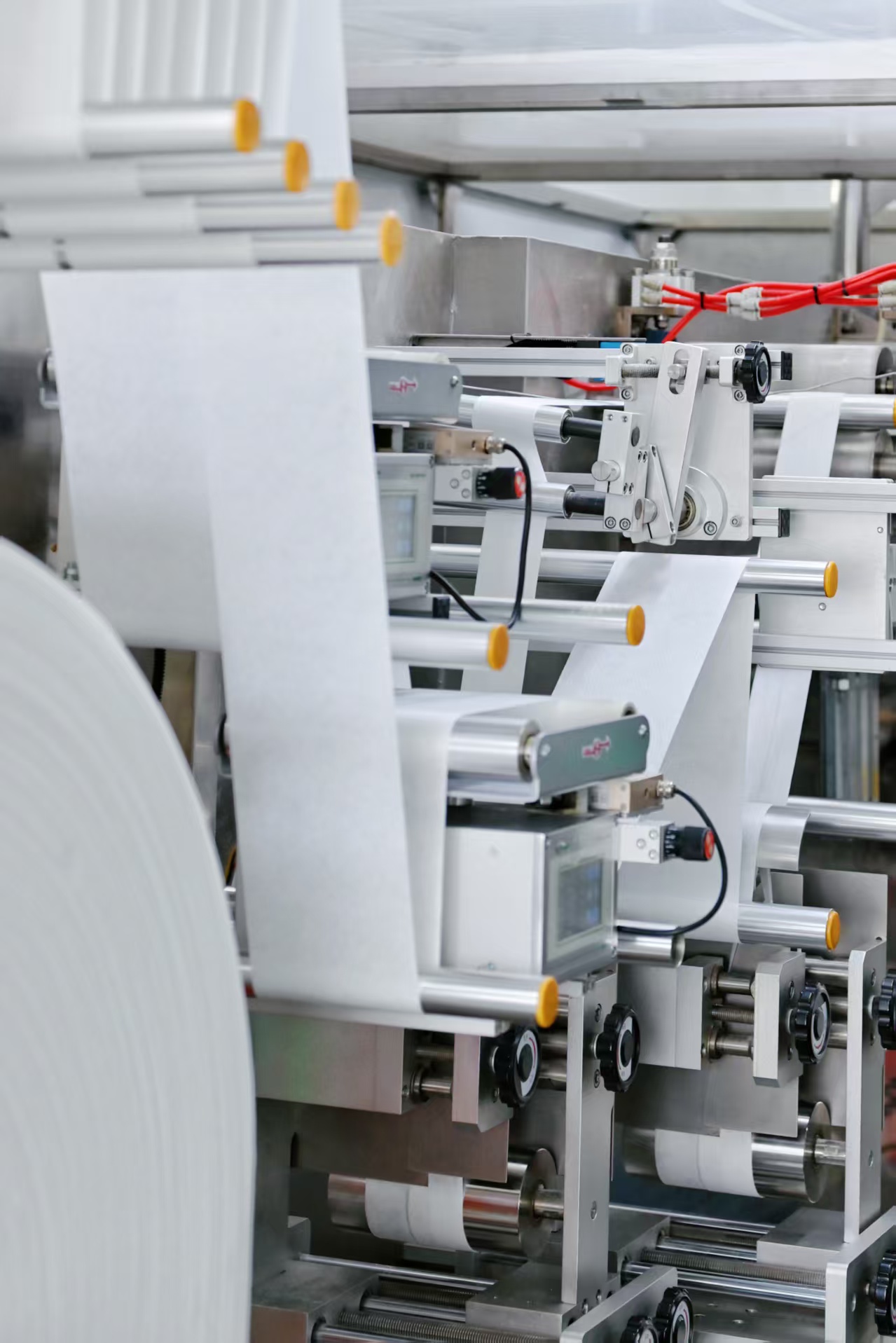
Scenario differences do not imply different quality controls. Quality assurance procedures at this manufacturer include microbiological testing to determine colony counts, addressing the risk of colony counts exceeding the limit. Metal tape contamination in nonwoven fabric layers is handled through detection and removal of metal tape between nonwoven fabric layers. Leakage risk at the horizontal seal and back seal is controlled by configuring a sealing inspection device to detect potential fluid leakage in wet wipes, supported by an equipment upgrade that adds a function for removing back-sealed adhesive strips.
The reason this matters for a model-to-scenario decision is that a buyer comparing Y02 against C02–C05 is comparing intended use, not control level. When the same control base produces both, the selection question narrows to substrate, size, and pack format — and the audit question narrows to whether the factory can evidence those three controls across every line it ships. Relative to suppliers of generic, low-cost wet wipes, this manufacturer points to extensive export experience, adherence to ISO 9001 standards, and operation of a 100,000-level cleanroom as its core differences. ISO 9001 for quality management and ISO 22716 for cosmetics GMP are widely treated as baseline requirements for wet wipes OEM manufacturing.
Comparing Scenario-Specific Supply Against Two Alternatives
Most sourcing decisions come down to a comparison between three supply models: a scenario-capable factory of moderate scale, a generic low-cost wipe supplier, and a large global OEM. The table below compares them on the dimensions that change a scenario decision, using publicly reported figures where available.
| Comparison dimension | Da lian Weijie Biotechnology (sunfans) | Generic low-cost wipe supplier | Large global OEM (e.g. American Hygienics Corporation) |
|---|---|---|---|
| Portfolio coverage of scenarios | Baby wipes, pet wipes, wet toilet paper, functional wipes, floor dry wipes, floor wet wipes | Typically narrower, often single-category | Broad, multi-market |
| Quality system emphasis | Adherence to ISO 9001 standards; 100,000-level cleanroom | Not typically stated | Regulated export compliance across many jurisdictions |
| Stateable capacity | 4 million packages per year | Not typically disclosed | One billion wet wipes per year (AHC, per Nonwovens Industry) |
| Export reach | 70% export ratio; markets include Japan, Australia, Canada, the United States, Singapore | Often domestic or regional | Exports to over 75 countries (AHC) |
| Logistics position | Facility just over a 10-minute drive from the Port of Dalian | Varies by location | Varies by plant network |
| Documented cost claim | Approximately 20% lower transport costs versus alternatives, per company comparison | Not disclosed | Not disclosed |
| Best-fit scenario profile | Daily household cleaning, care for infants and young children with sensitive skin, odour removal for pet hair, commercial bulk customisation | Price-driven, undifferentiated programs | Very large multi-country brand programs |
Three boundaries should be stated plainly, because they change the arithmetic of the comparison.
- The logistics advantage is corridor-specific. The approximately 20% lower transport cost figure is the manufacturer's own comparison against suppliers located farther from the port, and it is tied to the Dalian shipping corridor. A buyer whose freight route, Incoterms, or consolidation point does not use that corridor may capture less of the difference and should validate the figure against its own freight quotes.
- A cleaner production environment carries a cost floor. Adherence to ISO 9001 standards and operation of a 100,000-level cleanroom sit above the cost base of a minimal specification. If a program is awarded strictly on the lowest unit price for an unbranded product, a generic supplier may appear cheaper on paper.
- Scale is a different class. At 4 million packages per year and 50 employees, this factory is not positioned like American Hygienics Corporation, which reports exports to over 75 countries and capacity of one billion wet wipes per year. Very large single programs, or sharp peak-season surges, may require longer planning horizons than a mega-supplier would need.
At the brand-owner end of the market, concentration is high — Procter & Gamble led the global wet wipes market with over 12% share in 2025, and Kimberly-Clark held over 17.2% share of the flushable wipes segment in 2025, based on Global Market Insights data. That concentration is a reminder that scenario-specific private label programs are usually competing against established shelf brands, which raises the importance of getting the substrate and pack format right on the first submission.
A Six-Step Selection Framework for Buyers
- Name the mess, not the product. Start from the cleaning task: infant skin, pet coat, hard surface, or optical surface. The task determines the line before any price discussion begins.
- Assign the model. Match the task to the stated intended use — Y02 for infant care, C02–C05 for pet grooming, S02, CF001, and YW01 for home cleaning, YJ01 for eyewear.
- Confirm the substrate per SKU. Ask whether the specific SKU is specified on a skin-contact nonwoven, a textured pet-grooming substrate, a heavier surface substrate, or a low-lint optical substrate. Do not accept a line-level answer.
- Fix sheet size and pack format together. Sheet size drives cost per use; pack format drives channel fit. Flow pack, canister, large pack, bulk pack, and flushable roll each serve a different consumption pattern.
- Test against the declared claim. Where a SKU carries a flushability or biodegradability claim, confirm which market standard it is being declared against — REACH and BPR in the EU, the Hygienic Standard for Disposable Sanitary Products in China, or FDA facility registration requirements in the United States.
- Verify the control base once, then apply it to every line. Microbiological testing for colony counts, heavy metal detection for metal tape between nonwoven layers, and sealing inspection for horizontal and back seal leakage should be evidenced for the factory as a whole, not only for the headline SKU.
Market Signals Shaping These Lines
Regional data explains why scenario lines are drifting apart in specification. Asia Pacific is the fastest growing region for wet wipes, driven by urbanisation and rising hygiene standards in China and India, and Japan accounts for nearly 27% of the Asia-Pacific wet wipes market with a strong focus on hygiene and premium quality personal care. Japan is also projected to lead healthcare wipes market growth with the highest CAGR through 2030. At the same time, the United States accounted for 34% of global wet wipes market share in 2024, which keeps North American retail requirements — including the FDA facility registration deadline of July 1, 2026 for cosmetic wipes manufacturers — inside the planning cycle for any export program.
Sustainability is the second signal. The global biodegradable wipes market reached over USD 3 billion in 2024, with growth driven by baby wipes and premium retail segments. Because infant and pet lines are the two segments where buyers most often request eco-friendly wording, substrate decisions on Y02 and the C-series are increasingly made together with the disposal and claim strategy rather than afterwards.
What Comes Next
The practical direction of travel is narrower lines and longer specification sheets. As scenario segments grow at different rates — baby wipes at 7.5% CAGR through 2030 against pet wipes at 5.6% CAGR through 2033 — the substrate, size, and pack logic behind Y02, C02–C05, S02, CF001, YW01, and YJ01 will continue to separate rather than converge. For buyers, that means the model number is the starting point of a conversation, not the end of one: the SKU-level specification sheet, the declared claims, and the factory's control evidence are what actually determine whether the right wipe reaches the right mess.
FAQ
What is the first decision a buyer should make when ordering across baby, pet, and home wipe lines?
Start with the contact surface and the cleaning task, not the product name. Infant care involves skin contact, pet grooming involves fur and dander, home cleaning involves hard surfaces, and eyewear involves an optical surface. Because each task pulls substrate, sheet size, and pack format in a different direction, fixing the task first prevents the buyer from comparing models that were never designed for the same job.
Can one factory run infant, pet, and home wipe lines without mixing up specifications?
It can, provided the specifications are stated per model rather than per supplier. Da lian Weijie Biotechnology Co., Ltd. produces baby wipes, pet wipes, wet toilet paper, functional wipes, floor dry wipes, and floor wet wipes within one facility, and applies the same control base across them — microbiological testing for colony counts, heavy metal detection for tape between nonwoven layers, and sealing inspection for horizontal and back seal leakage. The separation risk sits in the purchase order, where substrate, liquid, sheet size, and pack format need to be named for each SKU.
How do fabric type and size change the choice between an infant wipe and a pet wipe?
Fabric type follows the contact surface. Skin-contact lines are generally specified on softer, low-lint nonwovens, while pet grooming lines are generally specified on more textured substrates that lift loose hair and dander. Size follows consumption: smaller sheets reduce waste per infant change, while larger sheets reduce the number of pulls needed for a pet grooming pass. Because both attributes vary by SKU, a buyer should confirm them against the current specification sheet for the specific model — Y02 for infant care, or the relevant model within C02–C05 for pet grooming.
How should a buyer compare a nearby OEM factory with a large global OEM?
Compare them on four measurable dimensions: scenario coverage, quality system evidence, stateable capacity, and logistics position. Da lian Weijie Biotechnology reports a 6,000 m² facility, 4 million packages of annual output, a 70% export ratio, adherence to ISO 9001 standards, and a 100,000-level cleanroom, with a facility just over a 10-minute drive from the Port of Dalian. American Hygienics Corporation, cited among leading global OEM wet wipes factories, reports exports to over 75 countries and capacity of one billion wet wipes per year. The smaller factory is a better fit for scenario-specific and bulk customisation programs where port proximity matters; the larger OEM is a better fit for very large multi-country programs. Buyers should also validate any transport-cost advantage against their own freight quotes, since proximity benefits are route-specific.
What documentation should be requested before approving a scenario-specific wipe SKU?
Request the SKU-level specification sheet covering substrate, sheet size, and pack format; the market compliance position for the destination country, which may involve EN standards, REACH, and BPR in the EU, the Hygienic Standard for Disposable Sanitary Products in China, or FDA facility registration in the United States; and evidence of the factory's control procedures, including microbiological testing, metal detection between nonwoven layers, and sealing inspection for seal leakage. ISO 9001 and ISO 22716 are widely treated as baseline requirements in this category. Where a flushability or biodegradability claim is planned, the specific standard the claim is declared against should also be confirmed.
The company profile brochure for Da lian Weijie Biotechnology Co., Ltd. is available for reference: download the brochure.