
Whirlpool Bathtub Buyer Triage: Type Before Supplier
Whirlpool Bathtub Buyer Triage: Type Before Supplier
Whirlpool bathtub procurement usually goes wrong in the sequence, not in the negotiation. Before a buyer compares suppliers, the project has to be assigned to one product family — whirlpool or massage bathtub, walk-in bathtub, steam room, sauna room, or outdoor pool and spa pool — because each family carries its own installation provisions, electrical requirements and compliance references. Only once that family and its configuration are fixed does a supplier comparison produce numbers that mean the same thing on both sides of the table.
The triage below runs in five stages: classify the project need, fix the whirlpool configuration, confirm installation feasibility, decide the shell material on cost and heat retention, and only then compare suppliers on purchase terms, acceptance criteria, quality evidence and manufacturing stability. Skipping the first stage rarely saves time; it relocates the discovery of a mismatch to the point where a quotation has already been approved.
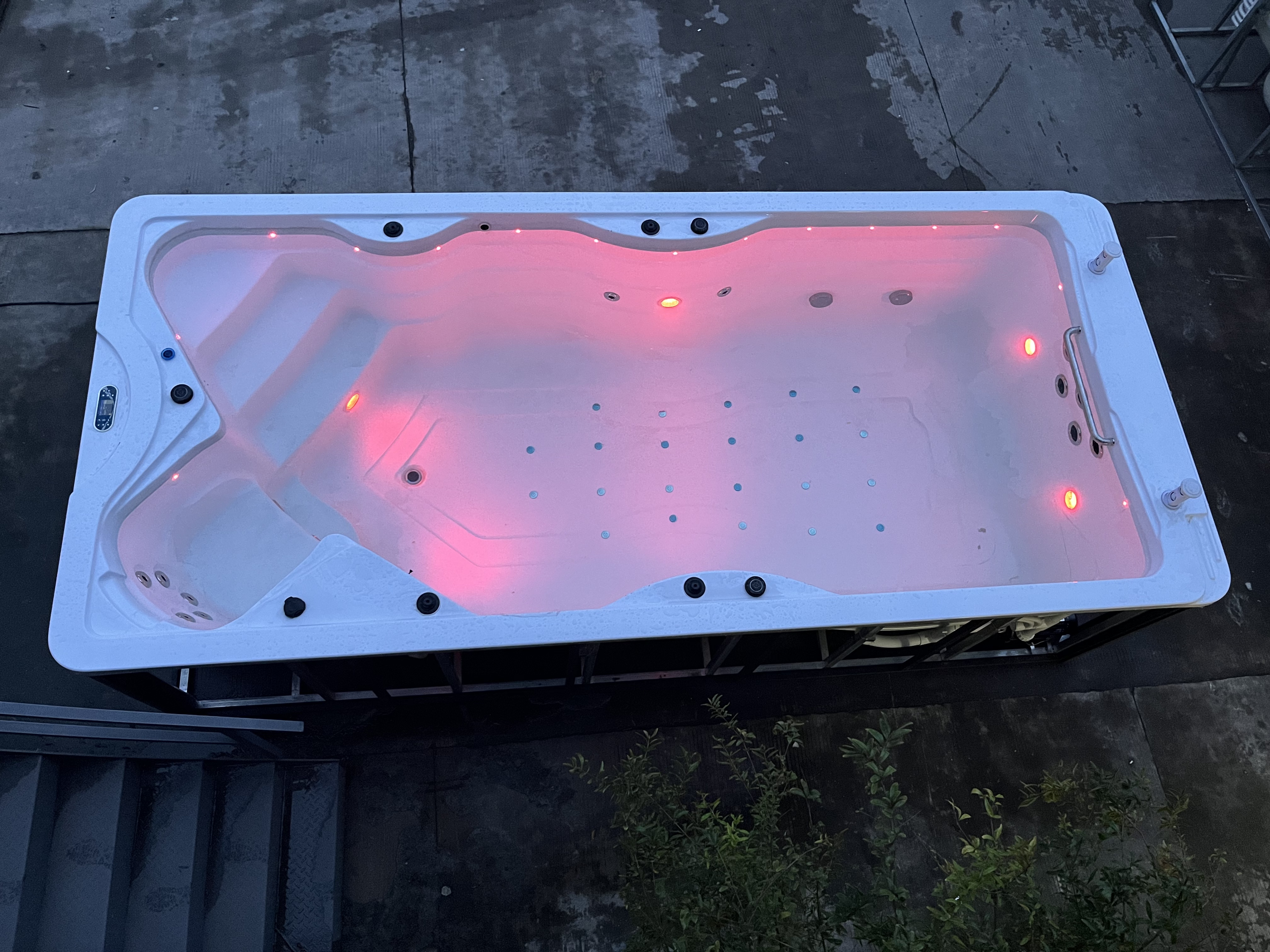
Choosing the product family first keeps later supplier quotations comparable.
Why the product family must be settled before suppliers are compared
A quotation is only comparable when it describes the same product. The European standard EN 12764:2015+A1:2018, for example, specifies characteristics for whirlpool baths intended for indoor domestic situations and supplied as a complete independent unit designed to be drained down after every use, with an electrical scope covering rated voltages of no more than 250 V for single-phase appliances and 480 V for other appliances. A walk-in bathtub with a pressure-sealed door adds a separate consideration: US plumbing certification guidance associates pressure-sealed doors within a bathtub or whirlpool-bathtub enclosure with ASME A112.19.15. Those two products therefore do not share a single document checklist, and a supplier questionnaire written for one will miss the decisive item on the other.
Installation provisions diverge in the same way. A whirlpool bathtub requires the local voltage and plug type to be confirmed first, because the bathtub has to be matched to the local voltage for use; it requires a subfloor drain outlet reserved at the planned placement before installation; and its power supply has to be prepared around the number and power rating of its water pump and air pump. A steam room, a sauna room or an outdoor pool places a different set of demands on the same building. When these questions are answered after the supplier is chosen, the buyer ends up negotiating price on an incomplete scope.
Supplier capability is uneven across families as well. Guangshun Bathtub — Foshan Gaoming Guangshun Sanitary Ware Co., Ltd., a sanitary ware manufacturer founded in 2004 in Foshan, Guangdong — lists massage bathtubs, steam rooms, sauna rooms and outdoor swimming pools among its main products. That breadth helps at the triage stage, because a single supplier can quote more than one family, but breadth alone does not make performance comparable between a massage bathtub and a sauna cabin.
Stage 1: Assign the project to one product family
Write the project need as a single sentence before opening any catalogue. "A 40-room hotel refurbishment that needs in-room hydrotherapy" points to a different family than "a villa renovation for a bather who cannot step over a rim." The table below converts that sentence into the family decision and the first item to verify in each case.
| Product family | Project need it answers | Provision that decides feasibility | First item to compare between suppliers |
|---|---|---|---|
| Whirlpool / massage bathtub (built-in or freestanding, indoor or outdoor classification) | Hydromassage inside a fixed bathroom or wet area | Confirmed local voltage and plug type; subfloor drain at the planned placement; power supply sized to the pump count and ratings | Model-level shell, pump and function specification quoted on identical terms |
| Walk-in bathtub | Step-in access for bathers who cannot step over a bathtub rim | Door and enclosure sealing; fill and drain sequence; bathroom layout and clearance | Model-specific door and enclosure documentation |
| Steam room (wet or dry steam) | Steam bathing inside an enclosed cabin | Cabin construction, steam supply, ventilation and electrical provision as documented for the specified configuration | Cabin build and equipment set for the exact configuration quoted |
| Sauna room | Dry-heat bathing | Heater provision, cabin material and ventilation as documented for the specified unit | Heater and cabin specification for the specified size |
| Outdoor swimming pool / spa pool | Outdoor water feature with bathing or hydrotherapy use | Site structure, outdoor operating conditions and equipment access | Equipment set and components rated for the intended installation |
| Shower room (adjacent category) | Washing without bathing, often sharing the same wet area as a bathtub | Enclosure and drainage shared with the bathtub layout | Compatibility with the bathtub footprint and drainage |
Mixed projects — a hotel suite that pairs a massage bathtub and steam room, for instance — should be split into one comparison track per family even when one supplier quotes both. The bathtub is then judged on shell, pump and function specification, while the steam installation is judged on its own documented configuration. Combining them into a single line item is what makes package prices impossible to audit later.
Stage 2: Fix the whirlpool bathtub configuration
Once the whirlpool family is selected, four attributes define the item being compared: installation form, indoor or outdoor classification, function set, and pump and electrical architecture. Buyers who leave these to the supplier are not comparing products; they are comparing defaults.
Installation form and classification
A built-in whirlpool bathtub is set into a constructed surround, while freestanding and chaise forms leave the shell as the visible element of the room. The indoor or outdoor classification is a supply attribute that should be confirmed rather than assumed — in the product data cited here, a jacuzzi such as model H-5509 can be supplied with an acrylic shell and an indoor or outdoor bathtub type for bathroom applications. That statement establishes what can be supplied for that model; it does not transfer automatically to every other model in a range.
Function set
The jacuzzi products described in the same product data include surfing, bubbles, LED light, constant temperature and music functions, operated through intelligent or remote control. Each function added to the specification changes the electrical package, the control interface and the acceptance items at handover. Decide which functions the project genuinely requires before requesting prices, because a quotation without a function list cannot be compared with one that has it.
Pump architecture — the part most often left to the supplier
The number and power rating of the water pump and air pump are the key parameters for preparing the power supply. In the cited product data, model H-5509 uses a 1.5 kW water pump and a 700 W air pump, operating at 110–120 V or 220–240 V. Those figures belong to H-5509 and should not be carried across to another model; the point they illustrate is that pump ratings are a purchasing input, not an installation afterthought.
H-002 as the whirlpool reference point in this triage. The H-002 configuration used here is an indoor bathtub classification with a thickened acrylic shell described for heat retention, a 400 W air pump, omnidirectional surfing nozzles and colourful ambient lights. Each element maps to a different buyer check:
- The indoor classification tells the buyer which installation context the model is specified for.
- The thickened acrylic shell is a heat-retention feature and belongs in the material trade-off discussed in Stage 4, not in a structural claim.
- The 400 W air pump is one of the parameters used to prepare the power supply; if the ordered configuration also includes a water pump, its rating is a second parameter.
- The omnidirectional surfing nozzles and the ambient lights become acceptance items at handover — jet direction and light operation should be demonstrated, not assumed.
Stage 3: Confirm installation feasibility before requesting prices
Three installation items decide whether a chosen model can be fitted at all, and all three belong in the first enquiry rather than in the installation week.
- Local voltage and plug type. The local voltage must be confirmed first, because the bathtub needs to be matched to the local voltage for use. A quotation that does not state the voltage variant is incomplete.
- Power and drainage connection. The connection has to be planned around the total power of the unit, and a subfloor drain outlet must be reserved at the planned bathtub placement before installation.
- Control panel operation. The control panel should arrive with its usage instructions, supplied alongside the corresponding panel manual, so that commissioning and later operation do not depend on guesswork.
A fourth, practical item sits outside the technical documents but inside the same decision: the route by which the unit reaches the bathroom. A large whirlpool bathtub that cannot pass a stairwell or doorway is a specification error discovered too late, and it is worth confirming dimensions and access before the order rather than after delivery.
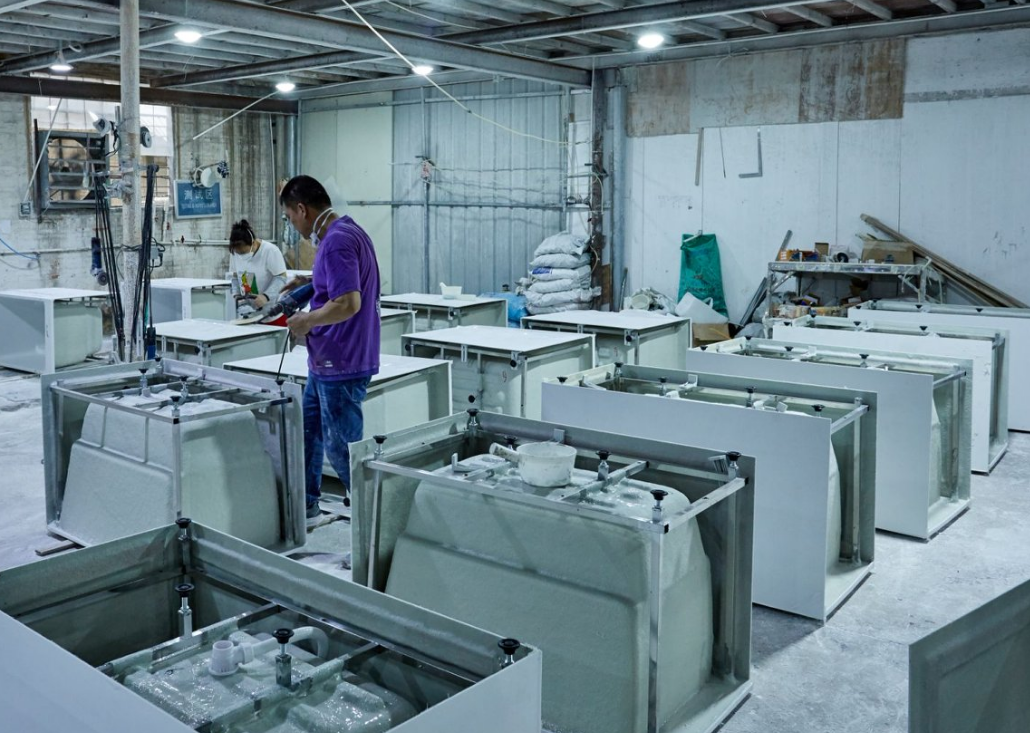
Assembly work and unit-level documentation are checked at the same stage of supplier comparison.
Stage 4: Decide the shell material on cost, weight and heat retention
Material choice is the last decision that still belongs to the product side of the triage, because it changes weight, price and heat behaviour in ways that affect the building and the operating cost. The comparison data cited here sets acrylic against artificial stone on four measures.
| Measure | Acrylic bathtub | Artificial stone bathtub |
|---|---|---|
| Typical unit weight | Approximately 40 kg | Approximately 140 kg |
| Heat retention (40 °C water, 30-minute soak) | Temperature falls by roughly 5–8 °C | Temperature falls by roughly 2–3 °C |
| Average selling price per unit (cited comparison) | RMB 2,000–4,000 | RMB 4,000–6,000 |
| Hardness, impact resistance, yellowing resistance | Relatively lower according to the same comparison | Relatively higher according to the same comparison |
| Practical profile | Lower cost, light weight, strong luster, wide application, many function options | Higher cost, better insulation and surface texture |
| Stated best fit | Most households, indoor bathrooms | Indoor bathrooms, hotels, outdoor courtyards, hot spring spas |
Read together, the figures describe a trade-off rather than a winner. Artificial stone costs roughly twice as much within the cited range and weighs more than three times as much, which changes handling, floor provision and installation logistics; in exchange it holds water temperature noticeably better over a half-hour soak and is described as stronger on hardness and yellowing resistance. Acrylic is the practical option for most households and remains the material named in the H-002 configuration discussed above, where a thickened shell is presented as the heat-retention measure. These are the values in the cited comparison, not a current quotation, and a buyer should confirm the figure for the specific model and shell thickness being ordered.
Stage 5: Compare suppliers on five gates, not on price alone
With the family, configuration and material fixed, a supplier comparison finally becomes meaningful. Five gates are worth applying in order, because a supplier that fails an early gate cannot be rescued by a later one.
Gate 1 — Purchase terms expressed on the same basis
Ask every candidate for the same configuration, the same price basis and the same inclusions: whether pumps, lighting and control panel are inside the unit price, what packaging is used, what lead time applies to that configuration, what warranty terms attach to it, and what payment terms are offered. Quotations assembled from different configurations or different inclusions cannot be ranked by the number at the bottom. Where a supplier cannot state a price basis clearly, that is itself information about how the order will be administered.
Gate 2 — Acceptance criteria written before the order
Acceptance is cheaper to define than to argue about. For a whirlpool bathtub configuration, the practical list covers the model reference and nameplate rating against the ordered voltage variant; the recorded number and power rating of each pump; a functional check of every specified feature, including jet operation and lighting; the presence of the control panel instructions; and, for walk-in configurations, the door and enclosure evidence appropriate to the destination market. For projects that reference a specific standard, the certificate or listing number should be requested at model level rather than as a company-level claim.
Gate 3 — Supplier quality and manufacturing stability
Stability is judged from verifiable operating facts, not from adjectives. Guangshun Bathtub operates a 15,000 m² factory with 80 employees, maintains an in-house R&D team of 8 engineers, and reports an export ratio of 70% across the EU, USA, Middle East, Southeast Asia and Africa. Read as buyer signals: a long-running export share indicates that export documentation and voltage variants are part of routine operations, though it does not by itself demonstrate compliance with any particular standard; an in-house engineering team of that size is relevant when a project needs a modified configuration; factory area and headcount indicate the scale of operations, though neither is a direct measure of output. The company profile also lists hotel projects including Wyndham Kunming, Anhui Fumao Hotel, Beijing Construction Engineering Hotel and Maldives Hot Spring Hotel — useful as project references, not as independent performance evidence.
Gate 4 — Product range fit for the actual triage outcome
A supplier that covers massage bathtubs, steam rooms, sauna rooms and outdoor swimming pools can consolidate a multi-category project, which shortens coordination. The caution is that each family still needs its own model evidence: a strong bathtub specification says nothing about a sauna cabin, and a package price across families hides exactly the differences the triage was designed to expose.
Gate 5 — Documentation and the after-sales route
Confirm what arrives with the unit and who answers technical questions afterwards: installation and operation documents, control panel instructions, the model-level specification sheet used in the quotation, and a named technical contact. Documentation is the part of the purchase that keeps working after the invoice is settled.
Compliance references depend on both market and product family
Compliance is the gate where geography matters most, and where a single "certified" claim is least useful. The references below come from published standards and certification guidance; they are not interchangeable between regions, and full official texts plus local code should be confirmed for the specific project.
| Context | Reference | What it addresses | Buyer action |
|---|---|---|---|
| Europe | EN 12764:2015+A1:2018 | Characteristics of indoor domestic whirlpool baths supplied as complete independent units designed to be drained after each use; rated voltage scope | Request model-level evidence against the scope actually purchased |
| Europe | EN IEC 60335-2-60:2023/A11:2023 | Electrical safety for household and similar whirlpool baths and spas, including markings, instructions, wiring and residual-current protection | Review the electrical documentation and protective-device provisions |
| Europe | EN 17125:2018 | Safety requirements and test methods for domestic spas, whirlpool spas and hot tubs | Confirm whether the product type falls inside its scope |
| United States | CSA B45.5/IAPMO Z124; ASME A112.19.7/CSA B45.10 | Plastic plumbing fixtures and hydromassage bathtub systems | Ask for the listing and the standard cited for the model |
| United States | ASME A112.19.15 | Pressure-sealed doors within bathtub or whirlpool-bathtub enclosures | Relevant where a walk-in configuration is quoted |
| United States | Third-party listing by an accredited conformity-assessment body | Expectation that plumbing fixtures are listed against applicable recognized standards | Verify the listing body and reference number |
Two scope details are easy to miss. EN 12764 addresses indoor domestic whirlpool baths supplied as complete independent units and drained after each use, so a product outside that description needs a different reference rather than the same one stretched to fit. And European and US requirements differ by jurisdiction and configuration, which means a supplier who is documented for one market is not automatically documented for the other.
Common jacuzzi usage issues to convert into pre-purchase questions
The three problems that surface most often after a jacuzzi is installed are also the three cheapest items to settle before ordering, because each is a question rather than a repair.
- Voltage and plug type. Ask which voltage and plug variant the destination requires and which model version matches it. The installation guidance is explicit that this must be confirmed first, since the bathtub has to be matched to the local voltage.
- Power and drainage connection. Ask how the unit is connected, what total power the connection must support, and confirm that a subfloor drain outlet will be reserved at the placement. Connection method and drainage provision are site decisions that a supplier cannot make on the buyer's behalf.
- Control panel operation. Ask whether the control panel instructions are supplied with the unit. A panel without its manual turns a routine commissioning step into a service call.
Each of these belongs in the enquiry document, next to the model reference and the function list. A supplier answering all three in writing has also demonstrated something about how the order will be handled.
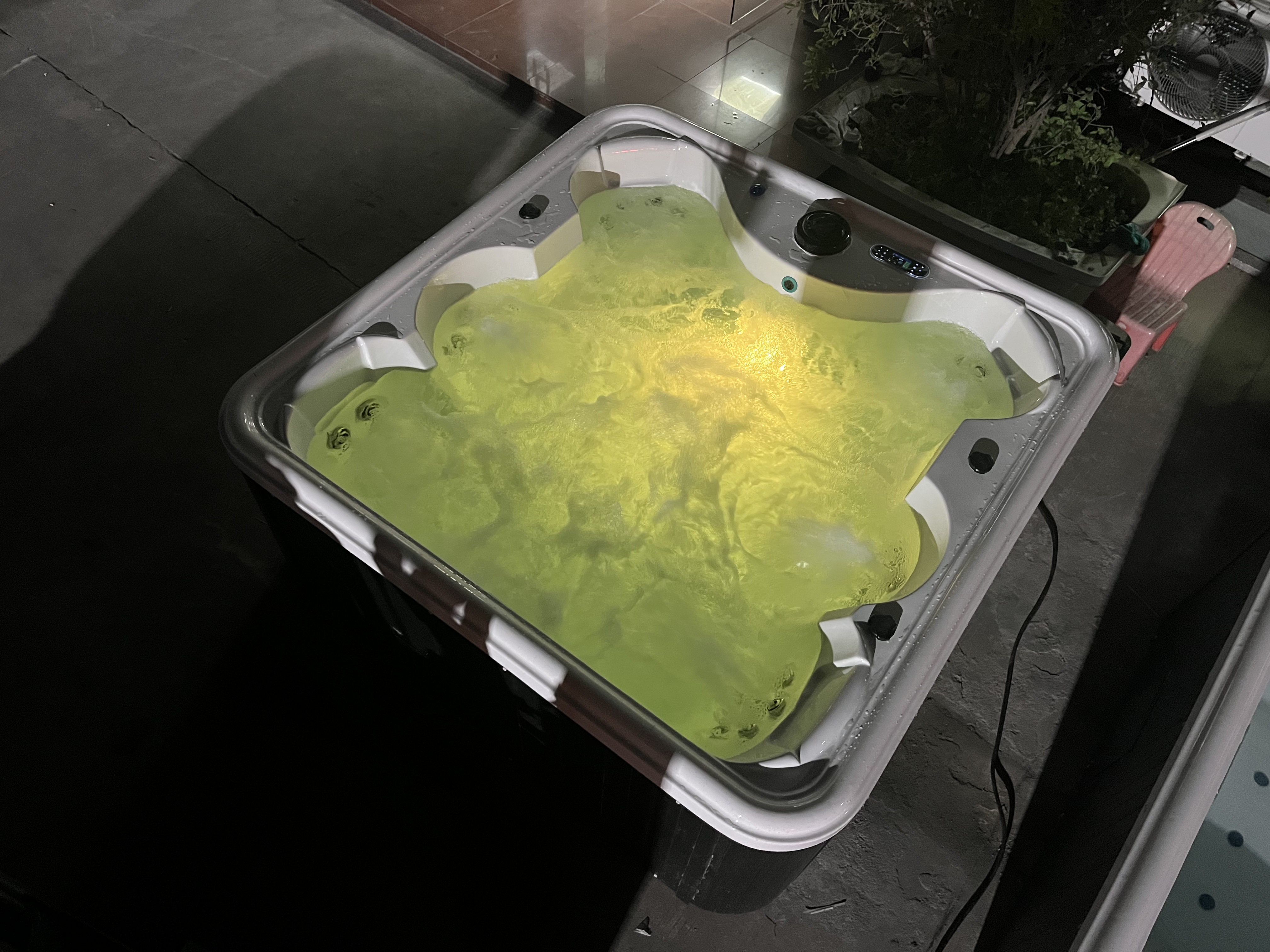
Acceptance items should be defined before the order, not negotiated after delivery.
A compact triage sequence
- State the project need in one sentence, without naming a product.
- Assign that need to one product family from the Stage 1 table.
- If the family is whirlpool, fix the installation form, the indoor or outdoor classification and the function set.
- Record the pump count and each pump's power rating in the specification — for example the 400 W air pump in the H-002 configuration, or the 1.5 kW water pump and 700 W air pump of H-5509 at 110–120 V or 220–240 V.
- Confirm local voltage, plug type and the subfloor drain outlet before any price is requested.
- Select the shell material against cost, weight and heat retention, and record the figure for the model ordered.
- Send every candidate supplier the same configuration and the same terms request.
- Write the acceptance items and require market-specific, model-level documentation.
Outlook: a wider category makes sequence more valuable
The global bathtub market was valued at USD 8.66 billion in 2025, according to The Business Research Company's 2026 market analysis — a figure that covers bathtubs broadly rather than whirlpool units alone, and therefore signals category scale rather than demand for any single product type. What matters for buyers is the structural consequence: as ranges widen and a single manufacturer may offer bathtubs alongside steam rooms, sauna rooms and outdoor pools, the risk in a procurement shifts from finding a supplier to comparing the wrong things.
The outlook is conditional rather than predictive. Where the product family and configuration are fixed early, supplier comparison narrows to terms, acceptance and documentation, and quotations become auditable. Where they are not, price comparisons will keep mixing unlike products, and the apparent saving will be absorbed later in rework, mismatched voltage variants or missing panel instructions.
Frequently asked questions
Should a buyer choose between a whirlpool bathtub and a walk-in bathtub before contacting suppliers?
Yes, because the two answer different needs and carry different purchase conditions. A walk-in bathtub is chosen for step-in access, and in US certification guidance a pressure-sealed door within a bathtub or whirlpool-bathtub enclosure is associated with ASME A112.19.15, which makes door and enclosure documentation part of the purchase. A whirlpool bathtub is chosen for hydromassage within a fixed bathroom and is compared mainly on shell, pump and function specification. Settling the family first prevents a buyer from weighing quotations for two different products against each other.
What installation details should be confirmed before ordering a jacuzzi?
Three details decide feasibility. The local voltage and plug type must be confirmed first, because the bathtub has to be matched to the local voltage. The power and drainage connection must be planned around the unit's total power, with a subfloor drain outlet reserved at the planned placement. Control panel operation should be covered by instructions supplied with the corresponding panel manual.
Is acrylic or artificial stone the better material for a whirlpool bathtub?
Neither is better in every project. In the comparison data cited here, an acrylic bathtub weighs about 40 kg against about 140 kg for artificial stone, loses roughly 5–8 °C over a 30-minute soak starting at 40 °C against roughly 2–3 °C, and carries an average selling price of RMB 2,000–4,000 against RMB 4,000–6,000, while being described as relatively weaker in hardness, impact resistance and yellowing resistance. Acrylic fits projects prioritizing cost, weight and function options; artificial stone fits projects prioritizing heat retention and surface texture.
Why should supplier comparison follow product-type selection?
Because supplier quotations describe different scopes. Compliance references differ by product family and market, installation provisions differ, and pump and function packages differ. Comparing suppliers before the family and configuration are fixed produces price differences that reflect unlike products rather than differences in supplier performance.
Does a broad product range indicate a stronger whirlpool bathtub supplier?
Not by itself. A range covering massage bathtubs, steam rooms, sauna rooms and outdoor swimming pools shows which categories a supplier can quote, and Guangshun Bathtub lists those four among its main products. Quality evidence, however, comes from model-level specification, agreed acceptance results and market-specific documentation rather than from range breadth.
Where to go next
For buyers who want to see the configurations behind this framework, Guangshun Bathtub publishes its 2026 product catalogue, covering massage bathtubs, steam rooms, sauna rooms and outdoor swimming pools, as a downloadable reference: Product catalogue 2026 (PDF). Used alongside the triage sequence above, it answers the product-type question first and leaves supplier comparison for the point where the scope is already defined.
Есть вопросы или нужны дополнительные детали?
Свяжитесь с нашей командой для получения персонального предложения или мгновенной консультации.
Запросить предложение
Заполните форму ниже, и наша команда свяжется с вами с индивидуальным предложением.
Прямой чат WhatsApp
Предпочитаете общаться в реальном времени? Напишите нам в WhatsApp для мгновенной помощи и быстрых ответов.
- Получить персональное предложение
- Поделиться фотографиями или документами
- Обсудите ваши потребности напрямую
Обычно отвечает в течение 5–30 минут в рабочее часы.