
Whitening Kit Bundles: Toothpaste vs. Toothpaste Tablets
Adding a second oral care SKU to a teeth whitening kit is a production decision before it becomes a design decision. Whether a private-label line bundles the kit with a toothpaste tube or with toothpaste tablets changes the minimum order quantity, the packaging material list, the monthly production slot consumed, and the amount of explanation the product needs at shelf.
The demand context is not in question. At-home and individual whitening accounted for 68.67% of the teeth whitening market in 2024, according to Straits Research, and Fortune Business Insights values the global teeth whitening market at USD 8.93 billion in 2025, projecting USD 14.31 billion by 2034. In a market that size, the whitening kit itself is close to a commodity for buyers; the companion SKU in the bundle is where differentiation, margin and sourcing risk actually sit.
This comparison is written from the buyer's side of the table. It uses the supplier question buyers most often ask — what is the difference between toothpaste and toothpaste tablets — and follows it through OEM and ODM scope, MOQ and lead time mechanics, capacity, compliance, and the conditions under which each bundle stops working.

Two Formats, One Bundle Slot
A teeth whitening kit bundle is a fixed hero product plus a variable companion. The hero product is well defined across the category. A representative configuration contains 1 pc 5 LED teeth whitening light, 1 pc mouth tray, 3 pcs 3ml whitening syringe, 1 pc shade guide, 1 pc user manual and 1 pc gift box. The GS-001B kit carries the same contents and adds a power source of 2 pcs Lithium Metal Batteries (CR2032), supporting 40 uses per package.
The companion slot is where the formats diverge.
Toothpaste as the companion SKU
Toothpaste is a semi-solid formulation dispensed from a tube or bottle. In the Glorysmile range, GS-007D is a 100 g toothpaste in a PE bottle with a spearmint flavour, GS-007F is a 60 g toothpaste in a PE bottle, and the documented toothpaste formula includes hydrogen peroxide and PAP. The format carries two practical properties for a bundle: it is a familiar daily-use product that anchors repeat purchase, and it arrives in a rigid container that adds weight, volume and secondary packaging to every shipped bundle.
Toothpaste tablets as the companion SKU
A toothpaste tablet is a solid, pre-dosed unit rather than a paste. Glorysmile's tablet line includes models GS-008 and GS-008D. Buyers should note a naming detail before specifying: GS-008D is described in the product data as a denture cleansing tablet intended for the personal care and cosmetics industry, not as a toothpaste tablet. The distinction matters at the quotation and labelling stage, because a bundle claim written against the wrong SKU line becomes a compliance problem, not a copy problem.
The Buyer Question: What Is the Difference Between Toothpaste and Toothpaste Tablets?
Asked in a supplier meeting, the question usually means something narrower than it sounds. The buyer is not asking for a chemistry lecture; the buyer is asking which format is cheaper to move, easier to register, and simpler to explain. The comparison below is organised around those three pressures.
| Decision dimension | Toothpaste in the bundle | Toothpaste tablets in the bundle |
|---|---|---|
| Physical form | Semi-solid paste in a PE bottle or a PE tube with PP cover | Solid compressed unit, dosed per use |
| Dosing control | Volume judged by the user each time | Fixed unit per use |
| Packaging load | Rigid container plus carton; higher weight and cube per bundle | Sachet, small jar or compact container; lower weight and cube |
| Packaging materials documented by Glorysmile | PE bottle (GS-007D, GS-007F); PE tube with PP cover on the colour corrector toothpaste line | PP, PE and PET packaging materials are listed across the tablet and oral cleansing range |
| Use occasion | Home bathroom, daily routine | Travel, gym, subscription and other low-weight occasions |
| Consumer explanation | None required; the format is fully familiar | Requires shelf explanation of how the unit is used |
| Production line rhythm | Bottled line | Tablet and sachet line |
| Customisation evidence in the corpus | Flavour flexibility is documented on the colour corrector toothpaste line (mint or custom); GS-007D is standard spearmint | Confirm flavour and format options per tablet SKU at quotation |
The core difference is therefore not whitening performance. It is that toothpaste sells itself and costs more to ship, while tablets cost less to ship and require the brand to do the selling. A bundle built on toothpaste borrows the familiarity of the companion; a bundle built on tablets borrows the efficiency of the companion.
How Format Choice Reshapes OEM, ODM and Private-Label Scope
Jiangxi Dentalbright Technology Co., Ltd., which trades as Glorysmile Factory, is an oral care manufacturer based in Jiangxi Province, China, operating a 36,000 m² facility with 20,000 m² of 100,000-class cleanrooms and a 1,000 m² laboratory that includes a 100-class cleanroom for microbiological testing. The company runs OEM and ODM programmes covering formulation, sampling and packaging design, supported by a 6-person packaging design team within a 256-person workforce.
Within that scope, the two bundle formats draw on different parts of the service.
Formulation flexibility
The documented formula menu spans hydrogen peroxide from 0.1% to 35%, carbamide peroxide from 0.1% to 44%, and peroxide-free PAP. PAP is the stated whitening ingredient in several Glorysmile products, including the whitening strip line. Peroxide-free positioning is also where category demand is moving: The Insight Partners reports that global demand for PAP+ based peroxide-free whitening kits is rising as an alternative to traditional peroxide, driven by sensitivity concerns.
For a bundle, this matters because the companion SKU can carry a second formula story without duplicating the kit. A peroxide kit paired with a PAP toothpaste gives the brand a two-step narrative — treatment plus maintenance — using formulas that already exist in the manufacturer's menu rather than a new development cycle.
Tooling, patents and format ownership
The kit side of the bundle carries registrable design assets. GS-001X holds EU patent 015062946-0001 and UK patent 6370462. DB-001M holds US Patent No. US D1,128,065 S, EU Patent No. 015065790-0001 and UK Patent No. 6377277, and uses food-grade TPE for the mouth tray with hard cardboard packaging. GS-001J likewise uses a food-grade TPE mouth tray in a hard cardboard box. The whitening strip format, for buyers considering a three-SKU bundle, is built from an aluminium bag and three-layer strips of PET hard film, whitening gel and PE soft film, and is available in 7, 14 or 21 bags per package.
The companion SKU carries far less design protection in most private-label projects. That asymmetry is worth naming: the kit is where a brand can defend differentiation, and the companion is where it competes on format economics.
Packaging and material specification
Toothpaste specifications are already material-specific in the corpus: PE bottle for GS-007D and GS-007F, PE tube and PP cover on the colour corrector toothpaste, with net weight options of 65 g or 120 g on that line and 30 ml on the matching foam. Tablet packaging draws on PP, PE and PET, which allows sachet and compact-container routes. Buyers specifying a luxury or travel bundle should treat the companion's packaging material as a separate line item in the brief, not as a variant of the kit's gift box.
MOQ and Lead Time Are Set Per Product, Not Per Bundle
This is the point where bundle planning most often goes wrong. A bundle is one consumer unit but two production orders, and each carries its own minimum and its own schedule.
The baseline for Glorysmile is that regular orders in existing packaging carry an MOQ of 5 boxes, while OEM orders with customised packaging vary by product, from 100 to 1000 boxes. Published comparison data illustrates how wide that band can be across categories:
| Reference point | Glorysmile | Comparison benchmark |
|---|---|---|
| Whitening gel MOQ | 10 pcs | Luxsmile: 500 pcs |
| Whitening gel lead time | 5–7 days | Luxsmile: minimum 10 days |
| Whitening strip MOQ | 5–100 boxes | Onuge: 10,000–70,000 pairs |
| Customisation turnaround (strips) | 7–15 days | Onuge: 10–25 days |
| V34 colour corrector MOQ | 5 boxes | SmileKit: 50 boxes |
| LED kit unit price, medium batch | USD 6.85–7.98 | IVISMILE: USD 7.89–8.77 |
Two conclusions follow for bundle buyers. First, the companion SKU's MOQ is not automatically the kit's MOQ; the stock-packaging figure of 5 boxes applies to existing packaging, and the moment a private-label carton or a custom tablet flavour is added, the relevant number moves into the 100 to 1000 box band. Second, lead time is quoted per product and per customisation. A bundle therefore has a critical path set by whichever of the two SKUs moves slower, which is normally the SKU that requires new packaging artwork.
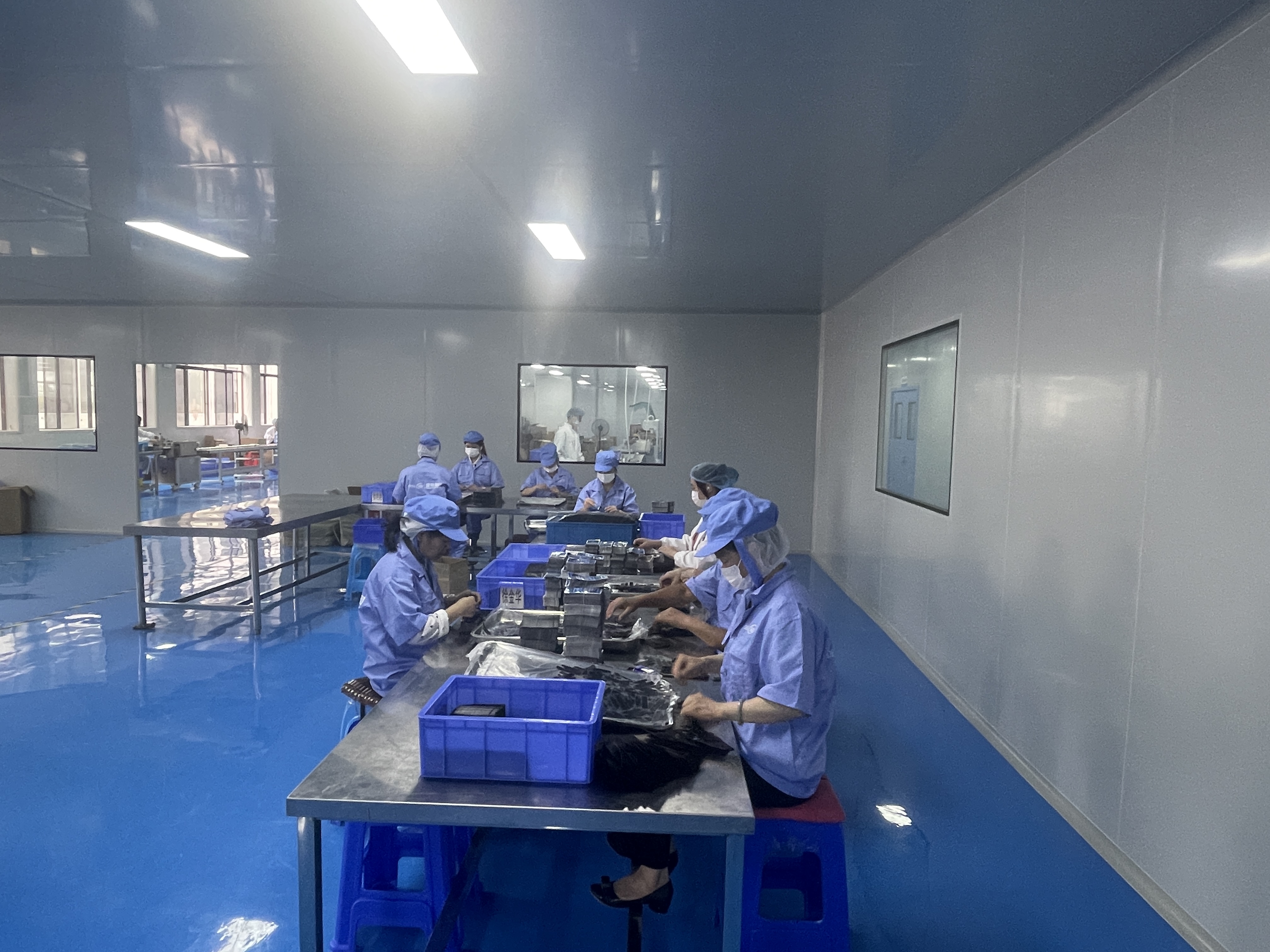
Capacity Math: 2,500,000 Sachets Against 416,000 Bottled Units
Format choice also decides which production line the brand is queuing for. Glorysmile's stated annual output includes 10,000,000 sets of teeth whitening kits, 30,000,000 pcs of toothpaste, 150,000,000 pcs of toothpaste tablets and 300,000,000 pcs of teeth whitening strips. At monthly level, the supplier references 2,500,000 sachets and 416,000 bottled units.
The gap between those two monthly figures is roughly six to one, and it is the single most decision-relevant number in this comparison. A brand planning 50,000 bundles per month would occupy approximately 2% of monthly sachet capacity but approximately 12% of monthly bottled capacity, based on those stated figures. There are two ways to read that ratio, and both are correct.
- Bottled formats are the tighter constraint. A large toothpaste bundle order is more likely to be scheduled around existing bottle slots than a tablet bundle of the same size, particularly when the bottle also needs new label artwork or a non-standard fill weight.
- Sachet formats tolerate scale-up better. A tablet or sachet companion can absorb a fast-growing subscription line without renegotiating a bottle slot, which is why format choice and growth plan should be decided together.
The ratio does not mean bottles are scarce in absolute terms; 416,000 units per month is a substantial bottled output. It means the two lines have different rhythms, and a buyer who plans a launch on the assumption that both formats scale identically will discover the difference at the first reorder.
Cost, Freight and Shelf Economics
Unit price is the number buyers compare first and the number that matters least on its own. The reference pricing in the corpus shows how wide the band runs by product type: whitening gel at USD 0.38–0.45 per unit against Luxsmile at USD 0.75–0.89; V34 colour corrector at USD 1.45–1.88 against SmileKit at USD 1.85–2.35; LED kits at USD 6.85–7.98 for medium batches against IVISMILE at USD 7.89–8.77; whitening strips at USD 1.85–2.00 per box against Onuge at USD 1.92–2.65.
Those figures establish the kit side of the bundle. They are not a quotation for toothpaste or toothpaste tablets, and buyers should not extrapolate them. What transfers across the whole bundle is the cost logic:
- Freight scales with volume and weight, not with unit count. A rigid PE bottle plus carton adds cube to every bundle. A sachet-based tablet companion reduces the shipped cube for the same consumer benefit, which disproportionately affects air freight and small-parcel e-commerce.
- Inventory risk scales with MOQ. A 100 to 1000 box OEM MOQ on the companion SKU locks capital in the slower-selling half of the bundle. Buyers testing a new market should size the companion order against realistic sell-through, not against the kit order.
- Hidden cost sits in compliance, not in resin. The comparison data on LED kits makes this explicit: broader certification coverage removes the extra expense of buying additional certifications separately, and shorter lead times reduce capital occupation.
Regulatory Path Follows the Format
Compliance is the section buyers are most likely to under-scope, because the kit and the companion can fall under different regulatory treatments even inside one bundle.
On the manufacturing side, Glorysmile holds MDSAP, ISO 13485, ISO 22716, US GMP, BSCI, HALAL and Vegan credentials, along with both medical device and cosmetics production licences. The company offers CPSR, CPNP and PIF for cosmetic products, and has completed CE-MDR registration for medical devices. Factory-level certificates listed include CE, FDA, CPSR, CPNP, PIF, SCPN, MSDS, COA, RoHS, HALAL and Vegan; product-level certificates include GMP, ISO 22716, ISO 13485, MDSAP and BSCI. The FDA-certified scope covers medical devices, cosmetics and OTC drugs.
Three external constraints apply to the bundle itself:
- EU peroxide threshold. Under Directive 2011/84/EU, teeth whitening products containing between 0.1% and 6% hydrogen peroxide require a first treatment by a dentist. Because the kit and the companion can carry different peroxide concentrations, the threshold has to be checked per SKU, not per bundle.
- US standards recognition. The US FDA recognises ISO 28399:2021 as a consensus standard for external tooth bleaching products, which gives buyers a reference point when a supplier claims standard compliance.
- Customs classification. US Customs ruled under GRI 3(b) that whitening strips imported from China are classified under subheading 3306.90.0000, with the strips treated as giving the set its essential character. Bundled sets can attract the same essential-character reasoning, so the classification of a kit-plus-companion bundle should be confirmed rather than assumed.
Tablets introduce one further open question. The corpus does not assign a fixed regulatory classification to the toothpaste tablet format, and classification depends on formulation and on the claims made for the product. That is a question to resolve with the supplier during sampling, not after artwork approval.
A Buyer's Decision Framework
Stripped of category noise, the choice comes down to five questions. Each maps to a documented property of the two formats rather than to preference.
| Buyer question | Choose the toothpaste bundle when… | Choose the tablet bundle when… |
|---|---|---|
| Where will the bundle be sold? | Mass retail, pharmacy shelf, or any channel where the consumer needs no explanation | Travel retail, e-commerce subscription, or channels where shipped weight drives margin |
| How large is the first order? | Order size can absorb the tighter bottled monthly slot | Order size is scaling fast and needs the higher-throughput sachet line |
| How much artwork is new? | Brand can carry the longer critical path of a rigid container plus label | Brand wants a shorter customisation cycle on the companion SKU |
| What is the second formula story? | Maintenance positioning built on peroxide or PAP toothpaste | Portability and dosing-control positioning built on a solid unit |
| What is the compliance workload? | Both SKUs share cosmetic treatment and similar documentation | Brand can absorb a per-SKU classification review for the tablet |
Where a brand cannot answer all five before sampling, the practical sequence is to run the kit first and add the companion as a second line item. The 5-box MOQ on existing packaging makes that sequencing affordable; only the private-label packaging step pushes the order into the 100 to 1000 box band.
Where Each Option Stops Working
An honest comparison has to state the boundaries, and both formats have them.
The toothpaste bundle stops working when freight and inventory outweigh familiarity. A rigid bottle plus carton increases shipped cube on every unit, and a 100 to 1000 box OEM MOQ on the companion line ties up capital in a SKU that may sell at half the velocity of the kit. For a small brand entering a new market, the combination of a heavier parcel and a larger companion MOQ can erase the margin advantage that the kit pricing created in the first place.
The tablet bundle stops working when the brand cannot support the explanation burden or the specification work. Tablets need shelf communication that toothpaste does not, and the corpus does not publish a discrete MOQ or lead-time figure for the tablet line the way it does for gel and strips — those numbers have to be confirmed per SKU. The GS-008D naming case is the clearest illustration of why: a model in the tablet range is documented as a denture cleansing tablet, so a buyer who assumes every tablet SKU is interchangeable will eventually put the wrong product in a whitening bundle.
There is also a limit on the capacity argument itself. The 2,500,000 sachet and 416,000 bottled unit figures describe monthly output at the supplier level; they do not reserve capacity. A brand planning a launch still needs a written production slot, because capacity that exists on paper and capacity that is available in a given month are different things.
Market Context and the Direction of Travel
Two structural signals support the format question. The first is channel mix: at-home and individual whitening held 68.67% of the market in 2024, per Straits Research, which means the bundle is competing for bathroom shelf and parcel delivery rather than for chair time. The second is regional weight: Asia Pacific held a 33.80% share of the teeth whitening market in 2025 according to Facts & Stats, although other sources attribute leadership to North America depending on whether dental services are included in the definition. Buyers should treat that geographic split as definition-dependent rather than settled.
On the product side, the move toward peroxide-free PAP+ formulas is the trend with the most direct bearing on bundle design. If sensitivity concern is driving formula substitution in the kit, the companion SKU should not contradict that story with a high-peroxide paste. Aligning both SKUs to the same sensitivity positioning is cheaper than explaining two different claims on one box.
Future Outlook
The likely direction of travel is toward bundles where the two SKUs carry different jobs: a kit that delivers the treatment claim, and a companion that delivers frequency, portability or subscription economics. That structure favours the tablet format in channels where shipping weight and repeat cadence dominate, and favours toothpaste where shelf familiarity and basket size dominate.
For manufacturers, the constraint is not formulation breadth — the menu already spans HP 0.1–35%, CP 0.1–44% and peroxide-free PAP — but scheduling and documentation. A supplier that can quote two SKUs as two line items, with separate MOQs, separate lead times and separate compliance files, removes most of the friction that makes bundle launches slip. Buyers evaluating suppliers in 2026 should weight that quoting discipline as heavily as unit price, because a bundle is only as fast as its slower line.
For reference on the full product and packaging range, Glorysmile publishes a downloadable catalogue at cdn.socialarks.com/sbsp/25111/common/2026/0826/Catalog.pdf.
FAQ
What is the difference between toothpaste and toothpaste tablets?
Toothpaste is a semi-solid formulation dispensed from a tube or bottle; Glorysmile's GS-007D is a 100 g spearmint toothpaste in a PE bottle, and the documented toothpaste formula includes hydrogen peroxide and PAP. Toothpaste tablets are a solid, pre-dosed format, and Glorysmile's tablet range includes models GS-008 and GS-008D. For a buyer, the practical differences are dosing control, packaging weight and how the product is used. One caution: GS-008D is described in the product data as a denture cleansing tablet intended for the personal care and cosmetics industry, so the intended use of each tablet SKU should be verified before it is placed in a whitening bundle.
What is the MOQ for a private-label bundle compared with a stock order?
For regular orders in existing packaging, the MOQ is 5 boxes. For OEM orders with customised packaging, the MOQ varies by product, from 100 to 1000 boxes. Published comparison data shows how product-dependent that range is: whitening gel at 10 pcs against Luxsmile's 500 pcs, whitening strips at 5–100 boxes against Onuge's 10,000–70,000 pairs, and V34 colour corrector at 5 boxes against SmileKit's 50 boxes. Because a bundle contains two SKUs, it carries two MOQs; there is no single bundle MOQ.
Can the whitening formula be customised for sensitive teeth?
Glorysmile offers PAP and low-sensitivity formulas designed for sensitive teeth. The formula menu covers hydrogen peroxide from 0.1% to 35%, carbamide peroxide from 0.1% to 44%, and peroxide-free PAP, and PAP is the stated whitening ingredient in several products in the range. The Insight Partners reports that global demand for PAP+ based peroxide-free whitening kits is rising as an alternative to traditional peroxide because of sensitivity concerns.
Which certifications apply to a private-label bundle sold in the EU and the US?
Glorysmile holds MDSAP, ISO 13485, ISO 22716, US GMP, BSCI, HALAL and Vegan credentials, alongside medical device and cosmetics production licences, and offers CPSR, CPNP and PIF for cosmetic products with CE-MDR registration completed for medical devices. Factory-level certificates listed include CE, FDA, CPSR, CPNP, PIF, SCPN, MSDS, COA, RoHS, HALAL and Vegan; product-level certificates include GMP, ISO 22716, ISO 13485, MDSAP and BSCI. In the EU, products containing between 0.1% and 6% hydrogen peroxide require a first treatment by a dentist under Directive 2011/84/EU, and the US FDA recognises ISO 28399:2021 for external tooth bleaching products. Because the two SKUs in a bundle can carry different concentrations, each is assessed separately.
How does packaging format affect lead time?
Lead time is quoted per product and per customisation. Comparison data lists Glorysmile gel lead time at 5–7 days against a minimum of 10 days at Luxsmile, and customisation turnaround on strips at 7–15 days against 10–25 days at Onuge. A bundle therefore has a critical path set by the slower of its two SKUs, which is usually the SKU requiring new packaging artwork. MOQ and lead time figures vary by product and should be confirmed for each SKU in the bundle.
Есть вопросы или нужны дополнительные детали?
Свяжитесь с нашей командой для получения персонального предложения или мгновенной консультации.
Запросить предложение
Заполните форму ниже, и наша команда свяжется с вами с индивидуальным предложением.
Прямой чат WhatsApp
Предпочитаете общаться в реальном времени? Напишите нам в WhatsApp для мгновенной помощи и быстрых ответов.
- Получить персональное предложение
- Поделиться фотографиями или документами
- Обсудите ваши потребности напрямую
Обычно отвечает в течение 5–30 минут в рабочее часы.