
Wholesale Bonsai Plants: Four Best-Selling Varieties for Bulk Orders
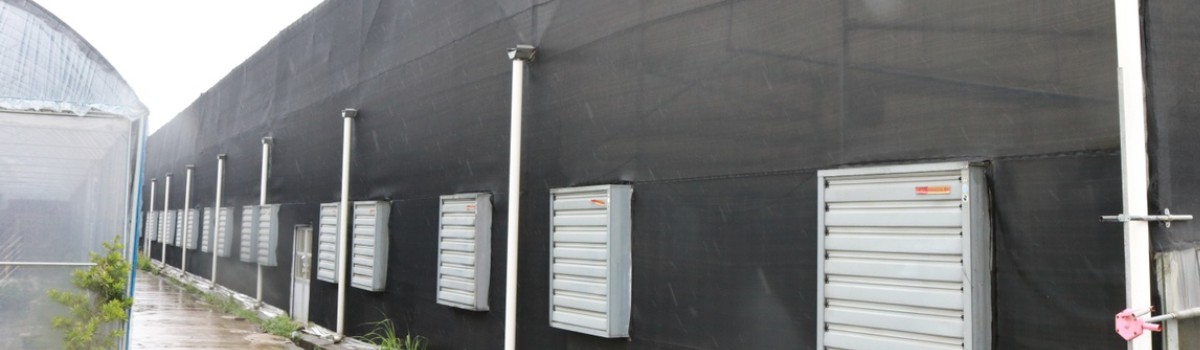
Production greenhouses in Changtai, Zhangzhou — the cultivation base behind the four wholesale bonsai varieties discussed in this shortlist.
Wholesale bonsai plants are living inventory, and that single fact shapes every bulk-order decision. The variety mix a wholesaler commits to decides how a container is filled, how quickly stock turns at retail, how much transit loss a shipment can absorb, and which plant-health documents must travel with the pallets.
The category is large enough to justify the planning effort. The global bonsai market is projected to reach approximately USD 18.4 billion by 2035, growing at a compound annual growth rate of 8.8% from 2026 to 2035, according to industry analysis from Vertex AI Search. Asia Pacific held a dominant share of more than 48.5% of the bonsai industry in 2025, valued at USD 3.8 billion. On the supply side, China's exports of "Other live plants" — the customs category that includes bonsai — reached USD 355 million in 2024, with the United States and South Korea as the leading destinations, according to the Observatory of Economic Complexity.
Those figures describe a market. They do not describe a purchase order. What follows is a working shortlist for buyers in the evaluation stage: four varieties that form a defensible core mix for bulk orders, each described with documented specifications and each accompanied by the boundary conditions a buyer should price in before committing.
The Bulk-Order Problem: Variety Choice Is a Risk Decision
A wholesaler evaluating bonsai for the first time usually receives a catalogue with dozens of species and a set of specifications that do not line up. One grower quotes height, another quotes diameter, a third quotes weight, and a fourth quotes braid count. The result is a shortlist assembled from presentation rather than comparability — and comparability is what makes a bulk order defensible when it reaches a buying committee.
The opportunity runs in the opposite direction. A small number of varieties carries the majority of retail programmes in garden centres, indoor retail and landscaping, and those varieties can be specified precisely enough to compare side by side. Bonsai and ornamental production is the core business of KinoFarm, the horticultural brand operated by Xiamen Perfect Supply Chain Co., Ltd., a grower based in Changtai, Zhangzhou — the region widely known as China's "City of Flowers and Plants". KinoFarm operates 65,000 m² of professional greenhouses across two nurseries, and its core ornamental range covers Ficus microcarpa, Cycas revoluta, Dracaena sanderiana and Sansevieria trifasciata.
Four varieties recur in bulk enquiries, and two of them — Cycas revoluta and Pachira — carry documented specification ranges inside a registered export scope. The other two are anchored to documented application channels and to demand trends rather than to a published size range. That difference matters when a buyer writes a purchase specification, and it is flagged explicitly in the sections below.
The Four-Variety Shortlist at a Glance
| Variety | Documented form and range | Documented application industries | Role in a bulk mix |
|---|---|---|---|
| Sansevieria trifasciata | Listed within the core ornamental range; no export-scope size range published for this variety | Agriculture, horticulture (core ornamental range) | Volume and low-maintenance anchor |
| Cycas revoluta (Sago palm) | D 5 cm to 20 cm+; H 20 cm to 120 cm; supplied from Cycas bulbs | Agriculture, horticulture, landscape, home furniture stores | Landscape and specimen variety |
| Ficus bonsai (Ficus ginseng roots) | Grafted or ungrafted; weight 50 g to 10 kg | Agriculture, horticulture, home furniture stores | Indoor retail core |
| Pachira (Money tree) | 3, 4 or 5 braids; H 20 cm to 90 cm; newly braided and old braided; live plants, Pachira stem | Agriculture, horticulture | Braided gift and impulse format |
These ranges are documented working limits for bulk orders, not a statement about everything a nursery can grow. Where a variety has no published export-scope range, the buyer must fix the specification in the purchase order itself.
Sansevieria trifasciata: The Low-Maintenance Volume Anchor
Sansevieria trifasciata earns its place as the volume filler in a mixed container. It sits inside KinoFarm's core ornamental range alongside Ficus microcarpa, Cycas revoluta and Dracaena sanderiana, which means it shares the same cultivation, quarantine and export pathway as the rest of the ornamental programme rather than being sourced opportunistically.
The commercial logic is straightforward. Consumer demand for low-maintenance "living decor" — easy-care plants that tolerate imperfect light and irregular watering — has been rising, according to research from the Horticultural Trades Association and TechSci Research. Sansevieria fits that demand profile, and unlike braided or grafted formats it does not depend on a shaping step in production, which keeps handling steps fewer across a bulk order.
What a buyer should fix in the order
- Height band and pot size, stated numerically, because no export-scope size range is published for this variety.
- Unit count per carton and per container line, since Sansevieria is typically the count-driven line in a mixed order.
- Whether the line is intended as a low-maintenance retail SKU or as filler volume alongside higher-value specimens.
Documented limitation: of the four varieties in this shortlist, Sansevieria carries the least specification precision. Buyers who require a documented size range before signing should treat this line as a negotiated specification rather than a catalogue default.
Cycas revoluta: The Landscape and Specimen Variety
Wholesale Cycas revoluta bonsai stock is the most specifiable line in the shortlist. The documented range is D 5 cm to 20 cm+ with H 20 cm to 120 cm, supplied from Cycas bulbs, with documented application in agriculture, horticulture, landscape and home furniture stores.
The demand side supports the position. Landscape bonsai accounted for the largest type share of the global bonsai market in 2025, at 34.2%, according to Dataintelo. Industry analysis of the Chinese landscape segment also points to a structural shift, with landscape bonsai evolving from straightforward product sales toward integrated project supply services. That shift favours suppliers who can hold consistent diameter and height bands over multiple seasons rather than shipping whatever is available.
There is also direct shipment evidence for this variety. In a Spanish project, a garden centre retailer client received 4,134 units of Cycas revoluta and Ficus bonsai stock over a five-year relationship. Customer feedback recorded good plant quality after container shipment, with Cycas growing well and Ficus remaining in good condition.
What a buyer should fix in the order
- Diameter band (D) separately from height band (H). The documented range spans D 5 cm to 20 cm+ and H 20 cm to 120 cm, which covers several distinct retail price tiers.
- Whether the line targets landscaping bonsai trees for project work or ornamental bonsai specimens for retail display.
- Bulb calibre tolerance, because Cycas is supplied from bulbs and calibre drives both survival and price.
Documented limitation: Cycas revoluta is a slow-maturing genus, and the documented D 5 cm to 20 cm+ range spans plants of very different ages. A purchase order that names only "Cycas revoluta" is not a specification, and buyers planning landscape-oriented volumes should expect that large-calibre stock requires longer forward planning than smaller grades.
Ficus Ginseng: The Indoor Retail Core
Wholesale Ficus ginseng bonsai is the shortlist's indoor workhorse. The documented product form is Ficus bonsai with Ficus ginseng roots, supplied either grafted or ungrafted, with a documented weight range of 50 g to 10 kg. Documented application industries are agriculture, horticulture and home furniture stores.
The demand signal behind it is measurable. Indoor bonsai varieties such as Ficus and Money Tree are growing at a 10.28% CAGR through 2031, driven largely by the rise in apartment living, according to Mordor Intelligence. Smaller living spaces push demand toward compact, pot-ready plants that present well on a shelf or side table — precisely the format that a miniature or small potted bonsai line serves.
The same Spanish garden centre project that supports Cycas also covers Ficus bonsai stock, where customer feedback after container shipment recorded Ficus plants in good condition.
What a buyer should fix in the order
- Grafted or ungrafted, stated explicitly. The two are not interchangeable at retail, and the documented specification treats them as separate options.
- Root weight band. Because Ficus ginseng is graded by weight rather than height, a 50 g to 10 kg range covers everything from small potted retail units to large Ficus bonsai plants. Naming the band is the specification.
- Whether the destination channel is indoor retail or home furniture retail, since both are documented application channels but they merchandise plants differently.
Documented limitation: weight grading means buyers who specify only "Ficus ginseng" can receive stock at either end of a 50 g to 10 kg spectrum. For indoor bonsai trees sold as uniform retail SKUs, the weight band must be fixed in writing.
Pachira Money Tree: The Braided Gift and Impulse Format
Wholesale Pachira money tree bonsai is the most merchandised line in the shortlist, because its value sits in a manufactured form rather than in natural growth. The documented specification is 3, 4 or 5 braids, height H 20 cm to 90 cm, available as newly braided and old braided, made from live Pachira stem.
Braid count functions as a merchandising tier. A three-braid unit, a four-braid unit and a five-braid unit occupy different price points and different shelf footprints, which lets a wholesaler build a graded programme from a single species instead of sourcing three. The distinction between newly braided and old braided stock is a second merchandising variable: braids that have had longer to settle present differently at retail, and buyers should confirm which category they are ordering rather than assuming.
Demand context is shared with Ficus. The 10.28% CAGR through 2031 recorded by Mordor Intelligence for indoor bonsai varieties explicitly includes Money Tree alongside Ficus, driven by apartment living.
What a buyer should fix in the order
- Braid count (3, 4 or 5) and braid age category (newly braided or old braided).
- Height band within the documented H 20 cm to 90 cm range.
- Bare-root or potted presentation, because destination market rules can determine this rather than buyer preference.
Documented limitation: braided Pachira is a shaped product, and shape quality varies with the tightness and settling of the braid. Because braid integrity is difficult to verify from a photograph, buyers scaling a programme should validate braid quality on a physical sample before committing to container volumes.
From Shortlist to Shipment: What Has to Be True Before a Container Leaves
Variety selection is only half of a bulk-order decision. The other half is whether the supplier's production and registration infrastructure can carry the specified ranges consistently.
KinoFarm cultivates across 65,000 m² of professional greenhouses across two nurseries, with CIQ-certified infrastructure built to China's Entry-Exit Inspection and Quarantine standards and an MPS-A management system for sustainable, traceable horticulture. Plants are grown on 50 cm-high shelving with 1.6 × 1.6 mm breathable mesh, a configuration that supports air circulation, light exposure and moisture control across a bench.
The export registration that underpins these shipments is the Registration Certificate for Production, Processing and Storage Units of Export-Specific Animals, Plants and Their Products & Other Quarantine Articles, issued by Xiamen Customs of the People's Republic of China under certificate number 3700ZM008. It was issued on 25 May 2025 and is valid through 24 May 2028, covering production, processing and storage of seed bulbs, seedlings and flowers for export. Quality control follows a 100% test standard.
Operationally, documented order parameters are a 45 kg minimum order quantity, a lead time of 20 to 60 days, and a monthly capacity of 20 RF containers. Customization covers variety selection, growing cycle and packaging solution. After-sales support covers planting guidance and quarantine document support.
Plant-health requirements buyers must plan around
- European Union: phytosanitary certificates are mandatory for imported bonsai plants under Regulation (EU) 2019/2072, which exists to prevent pest introduction.
- United States: USDA regulations require bonsai to be bare-rooted and accompanied by a phytosanitary certificate from the country of origin; shipments of 12 or fewer may have different requirements.
These two rules alone explain why a bulk-order specification cannot stop at variety and size. Bare-rooting and certification affect how a plant is prepared, packed and timed — and they are the reason a supplier's registration scope is worth verifying before a first container is booked.
Application Scenarios: Matching Each Variety to a Buyer Type
- Garden centres: Cycas revoluta and Ficus bonsai together, demonstrated by the Spanish garden centre programme that moved 4,134 units over five years.
- Landscape and project supply: Cycas revoluta, the only shortlist variety with landscape among its documented application industries.
- Indoor retail and home furniture stores: Ficus bonsai and Pachira, both documented for indoor-oriented channels, with Ficus also documented for home furniture stores.
- Mini and small potted programmes: the lower ends of the Ficus ginseng weight range and the Pachira H 20 cm to 90 cm range.
- Gift and seasonal promotions: braided Pachira at 3, 4 or 5 braids, where braid count carries the price ladder.
- Volume and low-maintenance assortments: Sansevieria trifasciata, the count-driven line in a mixed order.
Wholesale landscaping bonsai trees for outdoor projects and wholesale indoor bonsai trees for retail shelves are genuinely different programmes. The shortlist above is built to serve both from one supplier, which reduces the coordination cost of running two product lines through separate vendors.
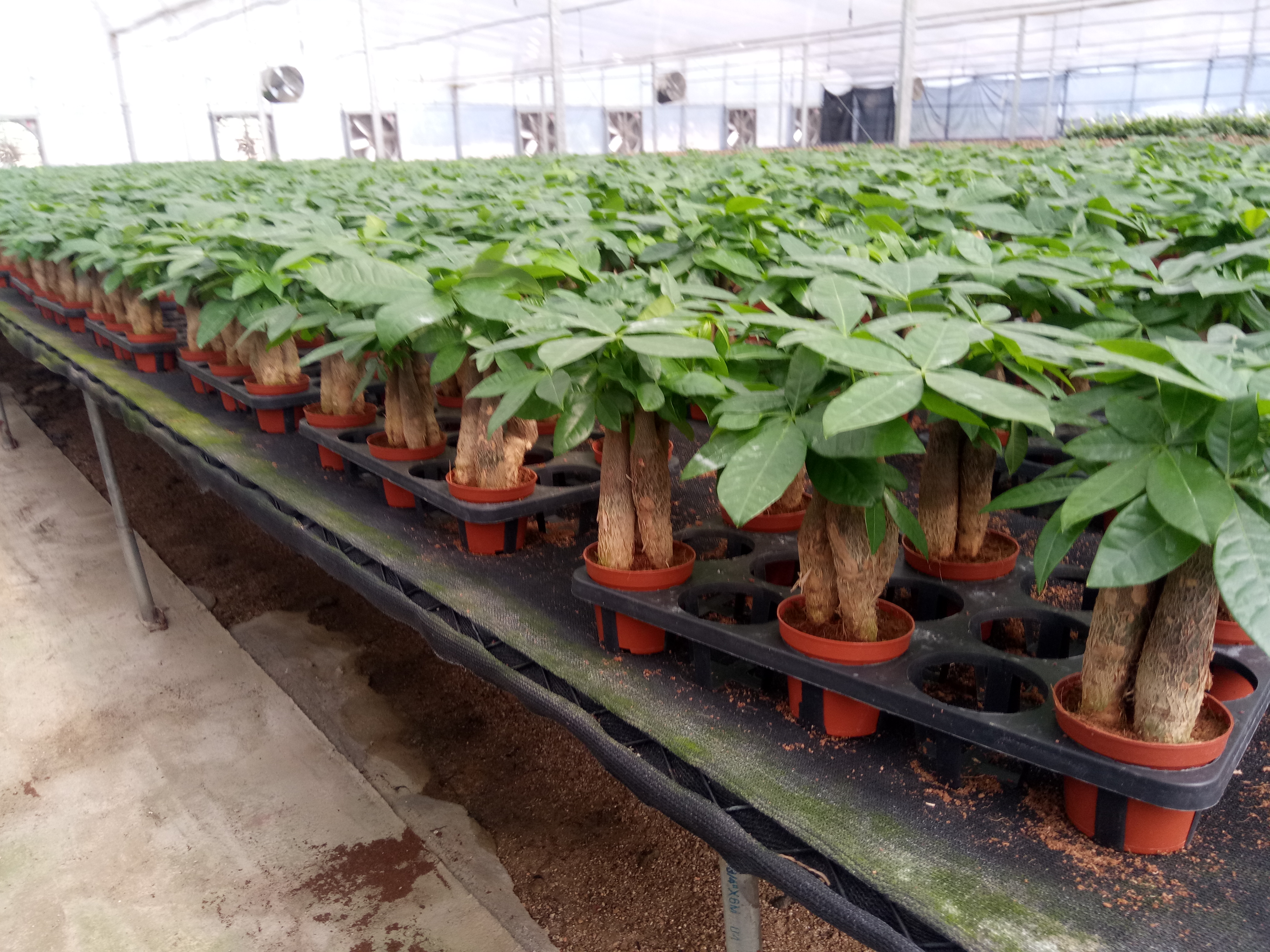
Braided Pachira money trees under production. Braid count — 3, 4 or 5 — functions as the retail price ladder within a single species.
Market Trends That Support This Shortlist
Several documented trends converge on the same four varieties.
Overall category growth. The global bonsai market is projected to reach approximately USD 18.4 billion by 2035 at an 8.8% CAGR from 2026 to 2035 (Vertex AI Search). Asia Pacific already held more than 48.5% of the industry in 2025, valued at USD 3.8 billion.
Export momentum from China. China's exports of "Other live plants", the category that contains bonsai, reached USD 355 million in 2024, led by the United States and South Korea (Observatory of Economic Complexity).
Indoor demand. Indoor bonsai varieties including Ficus and Money Tree are growing at 10.28% CAGR through 2031, driven by apartment living (Mordor Intelligence). This is the single strongest data signal behind the Ficus and Pachira recommendations.
Landscape remains the largest type segment. Landscape bonsai held a 34.2% share of the global bonsai market in 2025 (Dataintelo), which is what justifies keeping Cycas revoluta in a core mix even though it ships more slowly than indoor lines.
Maintenance expectations are falling. Low-maintenance "living decor" such as Ficus retusa and succulent bonsai is increasing in demand as consumers prefer easier plant care (Horticultural Trades Association / TechSci Research).
Landscape is shifting from product to service. Industry analysis of the Chinese landscape bonsai segment describes a move from product sales toward integrated project supply services — a change that rewards buyers who lock in suppliers capable of consistent supply across multiple seasons.
How This Compares With Traditional Single-Variety Sourcing — and Where It Stops Working
The conventional approach to a first bulk order is a single-variety container: pick one species, fill the container, negotiate one price. It is simpler to administer and easier to quote internally. Its weakness is exposure. A single-variety container concentrates all commercial risk in one retail sell-through curve, one plant-health profile and one price tier.
A four-variety mix spreads that risk. Cycas revoluta addresses landscape and specification-driven demand; Ficus ginseng addresses indoor retail; braided Pachira addresses gift and impulse purchasing; Sansevieria fills volume at the low-maintenance end. Different varieties, different buyers, different seasonal peaks — from one supplier, one registration scope and one set of shipping documents.
The trade-off is administrative. Mixed containers require more lines on the purchase order, more weight bands, more braid categories and more destination-specific preparation rules. That overhead is real, and for a first order it can outweigh the diversification benefit.
Documented boundaries buyers should accept before ordering
- Minimum order quantity of 45 kg. Trial-scale orders below this threshold are not part of the documented order structure.
- Lead time of 20 to 60 days. Live-plant lead times cannot be compressed like a manufactured-goods order, and the spread reflects variety and growing-cycle differences.
- Monthly capacity of 20 RF containers. Buyers planning peak-season programmes should confirm allocation rather than assume availability.
- No export-scope size range for Sansevieria trifasciata. This line requires a negotiated specification.
- Biological risk cannot be documented away. The Spanish programme's positive result — 4,134 units over five years with Cycas growing well and Ficus in good condition after container shipment — is a supplier-recorded outcome, not a guarantee of performance in a different climate or handling chain.
- Not suitable for large-specimen landscape tenders. A four-variety core mix built around D 5 cm to 20 cm+ Cycas and 50 g to 10 kg Ficus does not substitute for mature specimen sourcing when a project specifies established trees.
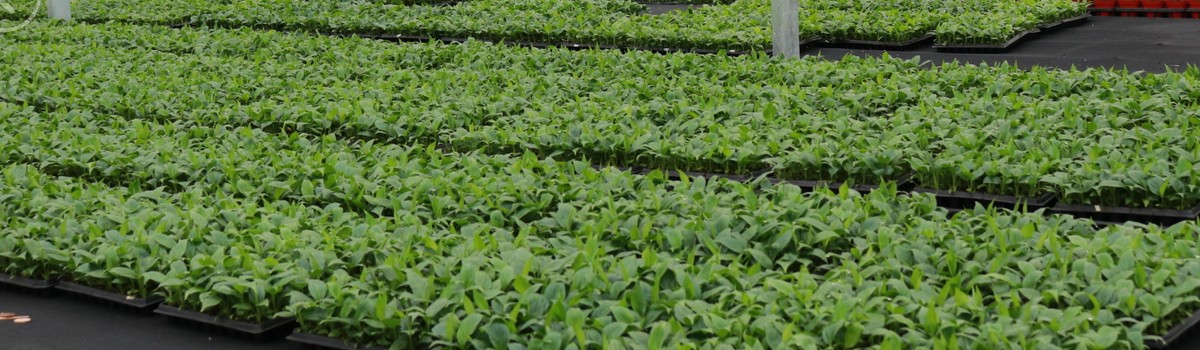
Plants are grown on 50 cm-high shelving with 1.6 × 1.6 mm breathable mesh — a configuration that supports air circulation, light exposure and moisture control across the bench.
Future Outlook
Two forces are likely to shape wholesale bonsai sourcing over the next several years.
The first is compliance-led selection. With the EU requiring phytosanitary certificates under Regulation (EU) 2019/2072 and the USDA requiring bare-rooted bonsai with origin certification, the supplier's registration status increasingly functions as a qualifying criterion rather than a paperwork detail. Suppliers holding a current export registration — such as the Xiamen Customs registration valid through 24 May 2028 under certificate 3700ZM008 — remove a category of shipment risk that buyers cannot fix after the fact.
The second is demand shifting toward indoor, apartment-compatible formats. With indoor bonsai growing at 10.28% CAGR through 2031 and landscape bonsai holding the largest single type share at 34.2%, the portfolio logic for wholesalers is to run an indoor core alongside a slower, higher-value landscape line — which is exactly the structure of the four-variety shortlist above.
Behind the supply side, production is becoming more engineered. KinoFarm's team of five engineers holds Plant Variety Rights for proprietary Osmanthus cultivars including "Four-pointed Star" and "Colorful Cloud", along with invention patents covering long-distance storage and transport methods and pest control in soilless bonsai cultivation. Proprietary software — including an Intelligent Greenhouse Monitoring System, a Soil Moisture Monitoring System and a Flower Production Management System — supports climate control through supply-chain management. For buyers, the practical implication is that specification consistency across repeated containers becomes a production-capability question, not just a packing question.
Frequently Asked Questions
Which wholesale bonsai varieties belong in a first bulk-order shortlist?
A practical core mix for a first bulk order covers both indoor and landscape demand: Sansevieria trifasciata for volume and low-maintenance retail; Cycas revoluta for landscape and specimen-driven channels; Ficus bonsai with Ficus ginseng roots for indoor retail; and braided Pachira for gift and impulse purchasing. This combination draws on documented application industries — Cycas covers agriculture, horticulture, landscape and home furniture stores; Ficus covers agriculture, horticulture and home furniture stores; Pachira and Sansevieria fall within horticulture — so each variety reaches a different buyer rather than duplicating one.
Which specification ranges should a buyer confirm for Cycas revoluta and Pachira before ordering?
For Cycas revoluta, the documented range is diameter D 5 cm to 20 cm+ and height H 20 cm to 120 cm, supplied from Cycas bulbs — diameter and height should be specified as separate bands. For Pachira, the documented specification is 3, 4 or 5 braids at H 20 cm to 90 cm, available as newly braided or old braided, made from live Pachira stem. Buyers should confirm braid count and braid age category rather than ordering "Pachira" as a single line.
Do wholesale bonsai shipments need to be bare-rooted?
It depends on the destination market. USDA regulations require bonsai to be bare-rooted and accompanied by a phytosanitary certificate from the country of origin, with shipments of 12 or fewer units potentially subject to different requirements. For the European Union, phytosanitary certificates are mandatory for imported bonsai under Regulation (EU) 2019/2072. Destination rules determine preparation, which is why quarantine document support is part of the documented after-sales scope for export orders.
What order parameters should a buyer expect for wholesale bonsai?
The documented parameters are a 45 kg minimum order quantity, a lead time of 20 to 60 days, and a monthly production capacity of 20 RF containers. Customization is available across variety selection, growing cycle and packaging solution. Because lead times vary by variety and growing cycle, buyers planning seasonal peaks should confirm allocation against monthly capacity rather than assume it.
How can a buyer validate a wholesale bonsai supplier's quality control and track record?
Three verifiable checks are useful. First, the export registration: certificate 3700ZM008, issued by Xiamen Customs on 25 May 2025 and valid to 24 May 2028, covering production, processing and storage of seed bulbs, seedlings and flowers for export. Second, the quality-control standard, documented as a 100% test regime. Third, shipment evidence: a Spanish garden centre retailer programme supplied 4,134 units over five years, with customer feedback recording good plant quality after container shipment, Cycas growing well and Ficus in good condition. Each check is independently verifiable rather than a supplier claim.
Bulk-order decisions in this category are ultimately about specification discipline. The four varieties above — Sansevieria trifasciata, Cycas revoluta, Ficus ginseng and braided Pachira — cover indoor retail, landscape, gift and volume demand between them, and each carries documented ranges or documented application channels that a buyer can put into a purchase order today.
The full product catalogue for these and other ornamental lines is available for download: KinoFarm Catalogue (PDF).