
Wholesale Bonsai Plants: A 2026 Sourcing & Compliance Guide
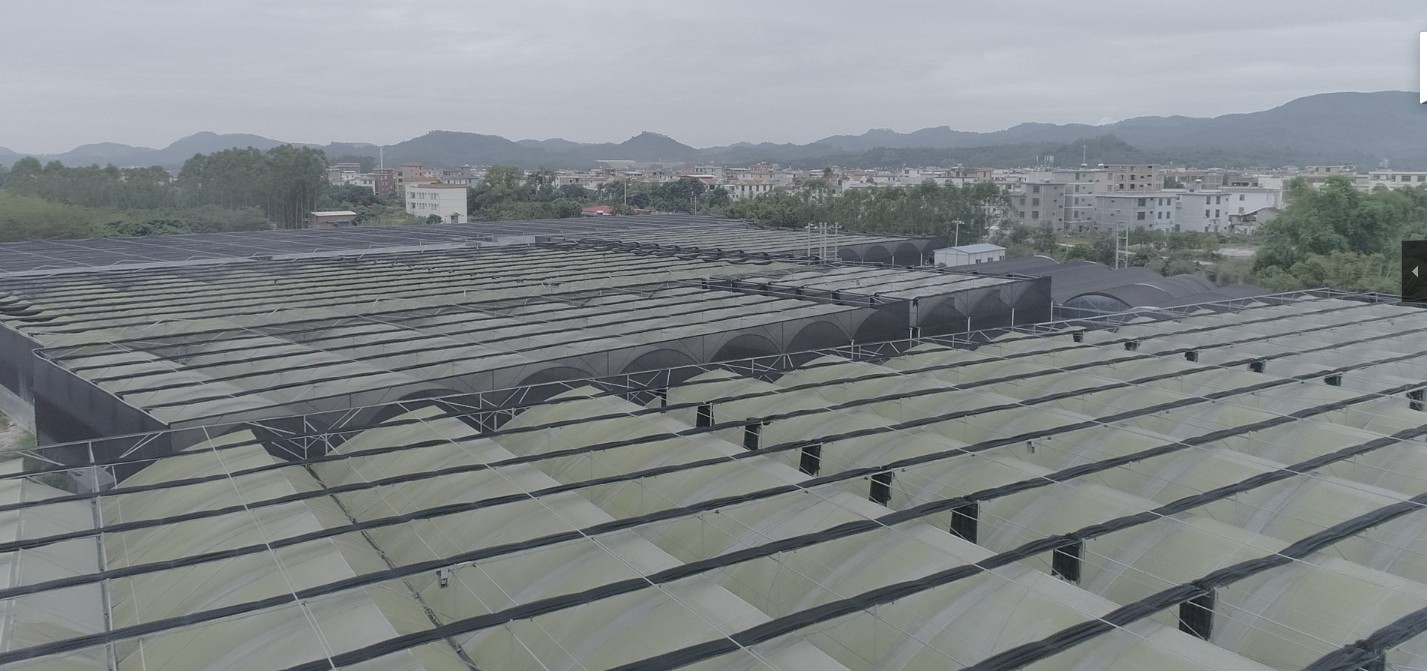
KinoFarm's greenhouse complex in Changtai, Zhangzhou — a production base for wholesale bonsai plants and live plant exports.
The global bonsai market is projected to reach approximately USD 18.4 billion by 2035, growing at a CAGR of 8.8% from 2026 to 2035 (source: Vertex AI Search / Industry Analysis). Asia Pacific dominates the category with a 48.5% share valued at USD 3.8 billion in 2025. Indoor bonsai varieties — including Ficus and Money Tree — are expanding at a 10.28% CAGR through 2031, and landscape bonsai held the largest type share at 34.2% in 2025 (source: Mordor Intelligence, Dataintelo).
For wholesale buyers, the practical question is not whether the bonsai market is attractive, but how to source live plants at scale without losing quality, margin, or compliance. This guide explains the core varieties available for wholesale purchase, the production and logistics capabilities that define a reliable supplier, and the phytosanitary rules that shape import decisions in 2026.
Why Wholesale Bonsai Requires a Different Sourcing Process
Bonsai plants are live goods. Unlike hard goods, order errors do not simply affect packaging — they affect plant survival. Four stages determine whether a wholesale shipment succeeds:
- Production quality: root health, branching structure, and overall plant vigor before packing.
- Packing and loading: protection of roots and foliage during handling and container loading.
- Transit environment: temperature and ventilation inside the container during ocean or overland freight.
- Import compliance: phytosanitary documentation and destination-country regulations.
A buyer can control the last three stages only through supplier selection. This makes the supplier audit a core procurement skill rather than an administrative step.
Supplier Capability: What a Serious Export Nursery Looks Like
One example of a scaled export nursery is Xiamen Perfect Supply Chain Co., Ltd., which operates the KinoFarm Bonsai brand. The company was established in 2012 and specializes in live plants and bonsai. It operates two nurseries totaling 65,000 m² of greenhouse space and produces approximately 5,000,000 units annually. Around 98% of production is exported, with major markets in the UDA, EU, Asia, and Africa, and the company ships over 100 containers of plants every year.
These operational numbers matter to buyers because they indicate:
- consistent volume availability across seasons;
- established export routines for documentation and inspection;
- experience with multiple destination climates;
- buffer capacity for order changes and rebooking.
For compliance-sensitive purchases, the relevant credentials are equally concrete. The company's greenhouses are CIQ-certified to meet China's Entry-Exit Inspection and Quarantine standards, meaning plants are managed as export-ready from cultivation to shipment. The nursery also follows the MPS-A (Marketable Plant Safety - A) certification framework for sustainable, traceable horticulture. Its R&D team holds invention patents for a long-distance storage and transport method for Chrysalidocarpus and for pest control in soilless bonsai cultivation, and has developed proprietary software for greenhouse monitoring, soil moisture control, and flower production management.
Core Wholesale Bonsai Varieties and Specifications
Wholesale buyers assembling a balanced 2026 product range will typically work with four core bonsai and ornamental plant lines. The following specifications reflect standard export supply from KinoFarm Bonsai.
Ficus Ginseng Bonsai
- Type: grafted or ungrafted bonsai
- Material: live plants, Ficus roots and plants
- Weight: 50g to 10kg per plant
- Industries: agriculture, horticulture, home furniture stores
- Typical use: indoor retail, tabletop display, furniture store decor
Cycas Revoluta (Sago Palm)
- Type: Sago palms
- Material: Cycas bulbs
- Sizes: D 5cm to 20cm+; H 20cm to 120cm
- Industries: agriculture, horticulture, landscape, home furniture stores
- Typical use: outdoor landscaping, evergreen decor, potted specimen
Pachira (Money Tree)
- Type: Money tree
- Material: live plants, Pachira stems
- Specs: 3, 4, or 5 braids; H 20cm to 90cm; newly braided or old braided
- Industries: agriculture, horticulture
- Typical use: indoor ornament, office and home decor
Sansevieria (Snake Plant)
- Type: Sansevieria superba
- Model: H 20-70cm
- Specs: 2 to 3 leaves; bare roots or potted; typical height H 20-40cm
- Industries: agriculture, horticulture, garden centers, landscape
- Typical use: low-maintenance indoor plant, air-purifying retail line
These four lines cover two important wholesale segments: compact indoor plants for high-turnover retail, and heavier ornamental specimens for landscape and project supply.
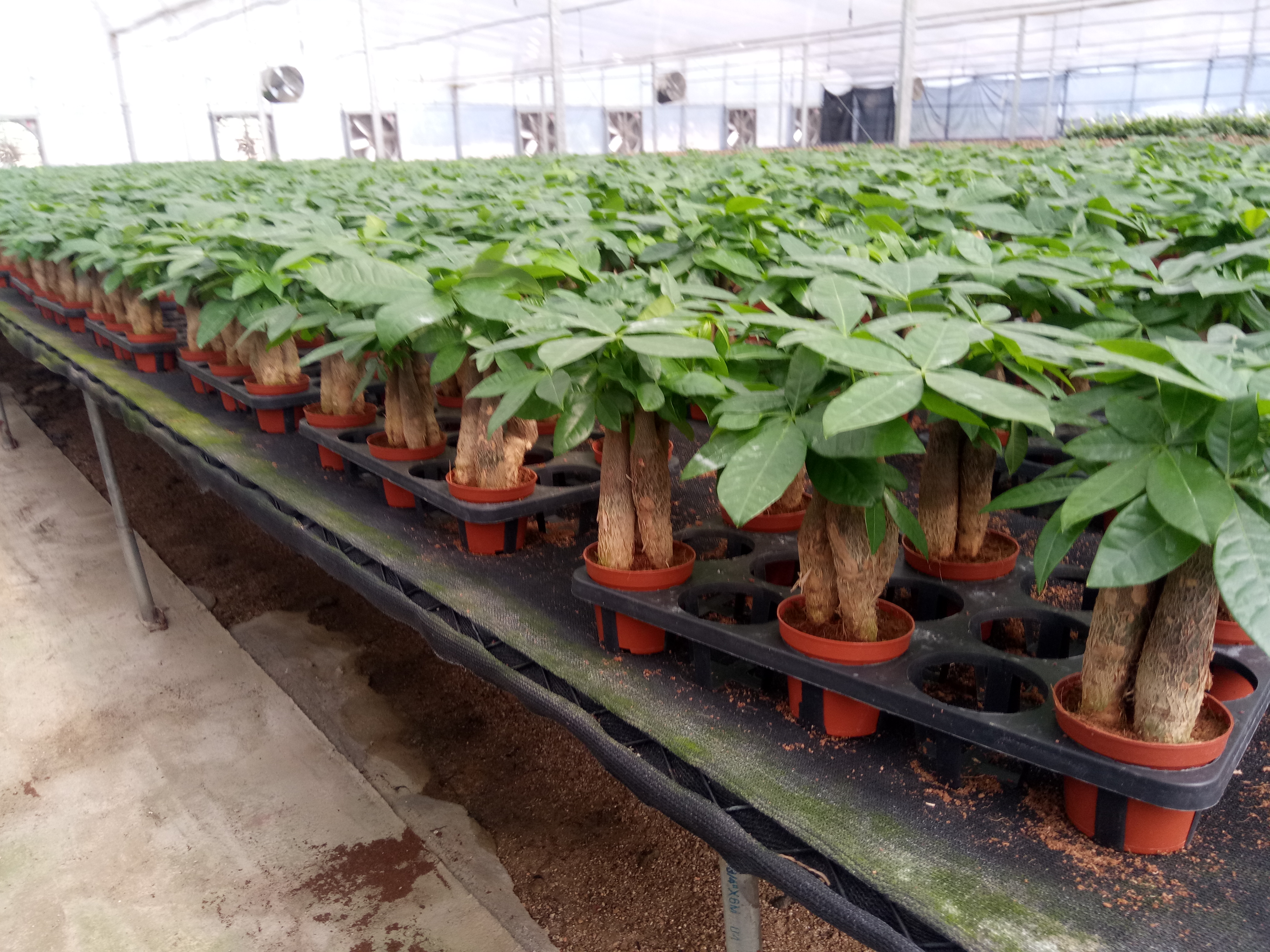
Pachira (Money Tree) plants in the KinoFarm greenhouse — a core product line for wholesale indoor bonsai and ornamental plant buying.
Technical Explanation: How Export-Grade Bonsai Reaches Buyers Alive
1. Cultivation Infrastructure
KinoFarm Bonsai grows plants on 50cm-high shelving with 1.6×1.6mm breathable mesh. This setup optimizes air circulation, light exposure, and moisture control around the root zone. Combined with CIQ-certified greenhouses, it gives wholesale buyers a traceable, controlled production environment from the start.
2. Transport Biology and Container Choices
Plant transportation relies on dormancy and low-metabolism features under low-temperature conditions. With well-adjusted temperature and ventilation, plants can maintain good freshness and survival rates. Standard dry containers do not provide temperature adjustment or ventilation, which leads to relatively high plant loss. Refrigerated or fresh-keeping containers are therefore the recommended mode for wholesale bonsai shipments, with temperature and airflow set according to the plant varieties being shipped.
3. Phytosanitary Compliance at Destination
For the European Union, imported bonsai plants must meet Regulation (EU) 2019/2072, which requires phytosanitary certification to prevent pest introduction. For the United States, USDA regulations generally require bonsai plants to be bare-rooted and accompanied by a phytosanitary certificate from the country of origin. A wholesale buyer should confirm the exact requirement for each destination before placing an order.
Application Scenarios: Matching Product Lines to Sales Channels
Garden Centers and Retail Nurseries
Garden centers need plants with strong shelf life and predictable size. Sansevieria and Ficus ginseng bonsai fit this channel because they tolerate typical retail care conditions and remain attractive over longer selling periods. The typical mode of operation in these environments is continuous daily display, with an emphasis on ornament and environment beautification.
Landscape Contractors and Project Buyers
Landscape bonsai accounted for 34.2% of the global bonsai market in 2025. Landscape-focused buyers often require multiple plants of consistent quality for outdoor ornament and garden decoration. Varieties such as Cycas revoluta and larger Ficus bonsai support outdoor landscape installations, with evergreen character and long-life durability as the principal purchase criteria.
Home Furniture Stores and Interior Retail
Pachira Money Trees, Ficus ginseng bonsai, and Sansevieria are standard SKUs for home furniture and lifestyle retailers. These stores are not plant specialists, so low-maintenance, visually attractive indoor plants are preferred. The indoor segment's 10.28% CAGR makes these lines a stable source of incremental revenue for furniture retailers entering the living decor category.
E-commerce and Cross-Border Fulfillment
Small-format products, including Ficus ginseng bonsai from approximately 50g and Sansevieria at 20-40cm, are suitable for e-commerce logistics because they can be packed densely and tolerate short transit delays. These smaller SKUs also fit distribution via parcel carriers after arrival at the destination port.
Market Trend Analysis: Bonsai Wholesale in 2026
Indoor varieties are the fastest-growing block. The estimated 10.28% CAGR for indoor bonsai through 2031 is supported by the global rise in apartment living. Ficus, Pachira, and Sansevieria benefit directly from this shift because they are compact and tolerate indoor lighting conditions.
Landscape bonsai remains the largest segment. At 34.2% of market value, landscape bonsai is the biggest single category for B2B buyers. Industry analysis indicates the landscape bonsai market is moving from simple product sales toward integrated project supply services, where a single supplier delivers throughout the project lifecycle.
Low-maintenance living decor is gaining preference. Consumer research points to rising demand for easy-care "living decor" plants such as Ficus retusa and succulent bonsai. Low-maintenance plants also reduce post-sale failures, which matters for retailers and project developers alike.
China remains a significant supply base. China's exports of "Other live plants," including bonsai, reached USD 355 million in 2024, with the United States and South Korea as the top destinations (source: OEC). Chinese nurseries offer scale, catalog breadth, and cost competitiveness that remain difficult to replicate in many importing regions.
Comparison with Traditional Supply Models
| Sourcing Dimension | Traditional Nursery / General Trading | Dedicated Export Bonsai Manufacturer (e.g., KinoFarm Bonsai) |
|---|---|---|
| Transport equipment | Standard dry container or open truck | Refrigerated or fresh-keeping container with temperature and ventilation control |
| Phytosanitary readiness | Limited export documentation experience | CIQ-certified greenhouses, MPS-A certification, destination-specific compliance support |
| Product depth | Small seasonal assortment | Multiple core varieties with broad weight and size ranges |
| Production capacity | Small batch, locally constrained | Approximately 5,000,000 units per year from two nurseries / 65,000 m² |
| Technical capability | Generally none | Transport and pest-control patents; greenhouse monitoring software; plant variety rights |
A realistic limitation exists: a dedicated export manufacturer is not automatically the best solution for every market niche. Regional landscape projects may require locally adapted native species or very large field-grown specimens that are outside a standard export bonsai catalog. Wholesale buyers should therefore verify three points before entering a long-term supply agreement: destination climate suitability, species availability, and regulatory requirements for each target market.
Future Outlook for Wholesale Bonsai Sourcing
Several structural trends will shape the wholesale bonsai business in the next five years. Demand growth of roughly 8.8% annually should continue to expand the number of professional buyers entering the category. Indoor and landscape segments will push suppliers to refine product lines rather than offer undifferentiated bonsai. Buyers will increasingly expect product-plus-service supply, including planting guidance and after-sales support. Technology — including greenhouse monitoring, soil moisture sensing, and production management software — will reduce batch variation and improve supply reliability.
For buyers, the competitive advantage will come from pairing the right product portfolio with suppliers that can deliver documentation, logistics, and plant survival as a package.
Download the KinoFarm Bonsai Catalogue (PDF)
FAQ
What bonsai varieties can be purchased wholesale?
Common wholesale varieties include Ficus ginseng bonsai (grafted or ungrafted, 50g to 10kg), Cycas revoluta (Sago palms, D 5cm to 20cm+, H 20cm to 120cm), Pachira Money Tree (3, 4, or 5 braids, H 20cm to 90cm), and Sansevieria (Sansevieria superba, H 20-70cm, 2 to 3 leaves, bare root or potted). These are used in agriculture, horticulture, garden centers, landscape, and home furniture store scenarios.
Can plants survive long-distance transportation in containers?
Yes. Plant transportation relies on dormancy and low-metabolism features under low-temperature conditions. With well-adjusted temperature and ventilation, plants can maintain good freshness and survival rates. Standard dry containers lack temperature adjustment and ventilation functions, which causes relatively high plant loss; refrigerated or fresh-keeping containers should be used instead.
What phytosanitary documents are required for importing wholesale bonsai?
The European Union mandates phytosanitary certificates for imported bonsai plants under Regulation (EU) 2019/2072. In the United States, USDA regulations require bonsai to be bare-rooted and accompanied by a phytosanitary certificate from the country of origin. Wholesale buyers should confirm destination-specific requirements with the supplier before shipment.
How should a buyer evaluate a wholesale bonsai supplier?
Four areas are decisive: production scale (greenhouse area and annual output), export experience (export ratio and destination market coverage), logistics capability (refrigerated containers and temperature control), and compliance readiness (CIQ-certified greenhouse, MPS-A certification, and phytosanitary documentation capability).
What is the difference between small indoor bonsai and large landscape bonsai?
Small indoor bonsai lines, such as mini Ficus ginseng and Sansevieria, are fast-turnaround SKUs ideal for retail and e-commerce. Large landscape bonsai, such as Cycas revoluta and large Ficus specimens, serve landscape projects and commercial installations and have different logistics and compliance requirements.