
Wholesale Leather Bags & Wallets: A Factory-Spec Shortlist
Wholesale Leather Bags & Wallets: A Factory-Spec Shortlist
This shortlist organises four leather goods families by functional specification rather than by subjective quality ranking: a bucket bag platform that runs as a tote, a crossbody and a shoulder bag; a crescent or underarm bag positioned for all-match styling; wallets and card holders with separate men's and women's designations; and travel-and-gift leather accessories covering luggage tags and passport holders.
Every specification referenced here comes from the published product and capability data of Dongguan Feiteng Leather Co.,ltd, a Dongguan-based leather goods manufacturer established in 2005 that provides OEM and ODM production of leather bags, wallets and accessories for wholesale and private-label buyers. The shortlist is presented in no order of preference, and no claim is made that one model outperforms another.
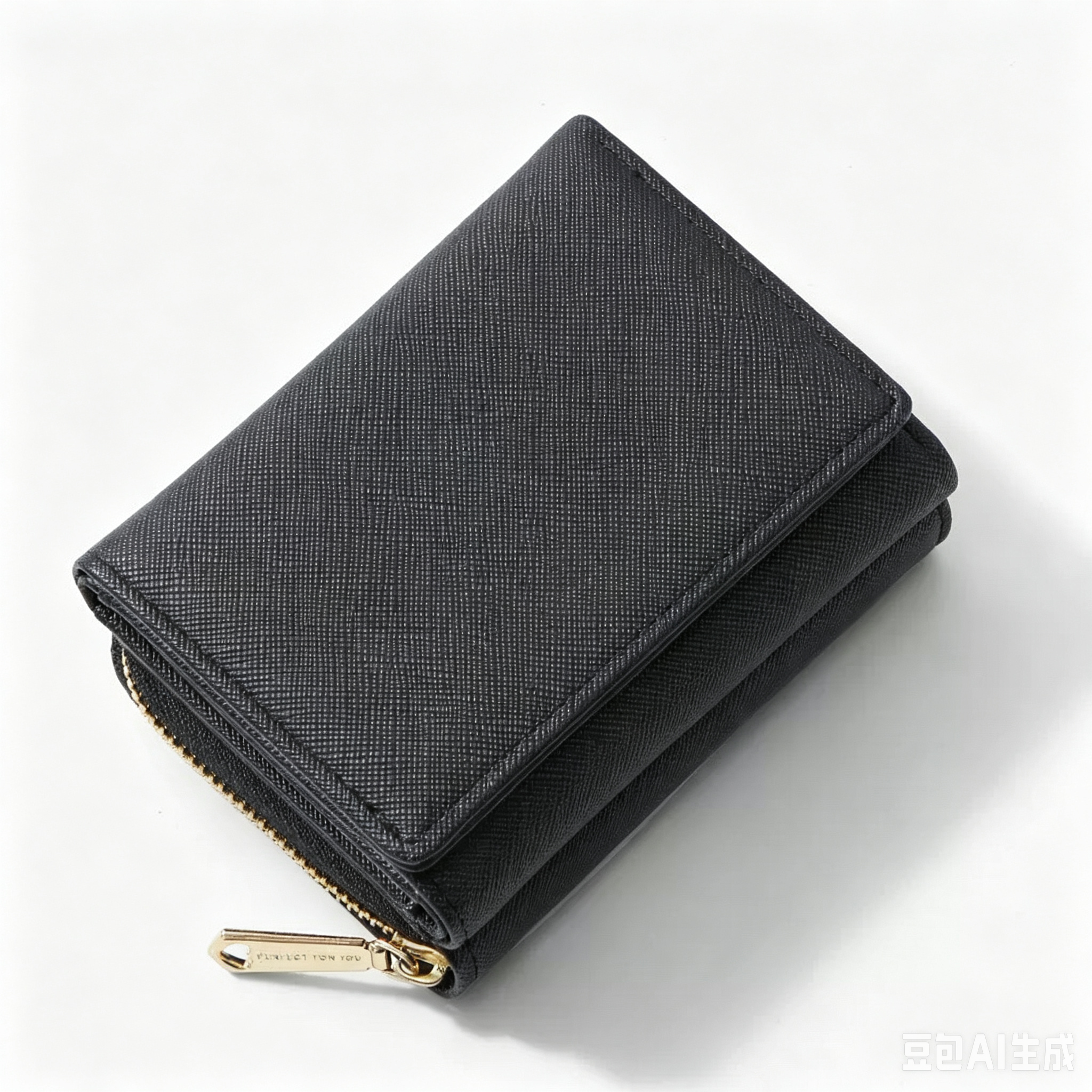
A zipper-closure leather wallet from a documented wholesale product line. Closure type is one of the first specifications a wholesale buyer should fix before sampling.
Why the Selection Standard Shifted From Trend to Specification
Leather goods manufacturing is a labour-intensive light-industry activity. Industry literature describes the post-tanning stages and the general use of leather as especially labour-intensive, which means a large share of a finished bag or wallet's visible quality is created by hand — edge oiling, stitching alignment, hardware setting, strap assembly and final inspection.
That has a direct consequence for wholesale buyers. The variable that most often breaks a reorder is not the design file; it is the repeatability of hand-finished detail. A buyer who specifies "a brown leather shoulder bag" has specified almost nothing. A buyer who specifies a documented closure system, a hardware finish and a leather class has specified something a factory floor can hold to across runs.
Published market segmentation supports a portfolio approach rather than a single-model approach. Commercial leather goods research splits the category by product type — bags, footwear, belts, wallets, apparel and others — and by material type including genuine leather. Bags and wallets move on different rhythms. Bags carry silhouette risk and higher material value per unit. Wallets and small accessories carry lower unit cost, a higher attach rate, and a closer link to gifting seasons and gift-set merchandising.
The opportunity for a wholesale buyer, then, is to build the assortment from a specification menu the factory already documents, and treat design as the variable that changes inside that frame rather than the frame itself.
The Shortlist: Four Model Families Built on Documented Specifications
Dongguan Feiteng Leather Co.,ltd lists its main products as leather bags, leather wallets, leather accessories, leather bag charm, leather keychain, hand bag, tote bag, shoulder bag and leather card holders. Four families within that scope lend themselves to a specification-led shortlist.
1. Bucket Bag Platform — One Body, Three Carrying Configurations
Procurement reading: the value of this family is configuration efficiency. One body pattern merchandised as a tote, a crossbody and a shoulder bag lets a buyer spread a single development and material commitment across three shelf positions, and it lets a retail partner re-merchandise an existing SKU rather than commission a new one. The risk to manage is definitional: "tote", "crossbody" and "shoulder" must be fixed as separate SKU specifications — strap length, hardware count, closure — not left as loose descriptions on a purchase order.
2. Crescent / Underarm Bag — Silhouette-Led, All-Match Styling
Procurement reading: this is the silhouette-led unit in the shortlist. Its function is to carry a collection's shape language without forcing a change of material platform or hardware source. Because the hardware and craft menu is shared with the bucket bag family, a buyer can assemble a small coordinated drop — one shape, one hardware finish, two or three style treatments — and keep the component count low. The boundary is timing: a crescent or underarm silhouette is a fashion-timed choice and should carry a shorter planned life than the tote platform, not a longer one.
3. Wallets and Card Holders — Two Gender Designations From One Construction Platform
Procurement reading: wallets and card holders carry less material value per unit than bags, which makes them the natural volume and attach-rate line in a wholesale order and a practical component of gift sets. Two gender designations plus a card holder drawn from one construction platform lets a buyer cover men's, women's and gifting positions without opening three separate developments. The distinguishing risk is closure: a wallet that relies on a zipper introduces a different failure point from one that closes with a snap fastener or magnetic clasp, so closure should be treated as a SKU-level decision rather than a family default.
4. Travel and Gift Leather Accessories — Luggage Tags and Passport Holders
Procurement reading: travel and gift accessories are how a bag order becomes a broader seasonal programme. They sit naturally in travel retail, gift retail and corporate gifting, and they are the lowest-risk way to validate a new hardware finish or an embossed logo treatment before committing it to a bag line. The boundary here is structural rather than cosmetic: this family's closure menu is narrower than the bag and wallet families, so a buyer planning a "matching set" across bags, wallets and travel accessories should confirm each SKU's closure individually rather than assume the set shares one.
Six Specifications That Decide the Buy
The shortlist only works if the buyer knows which specification dimensions carry the cost and which carry the risk. The table below maps the documented option set to its procurement consequence.
| Specification dimension | Options documented by the manufacturer | What it commits the buyer to |
|---|---|---|
| Closure system | YKK zippers or ordinary zippers; magnetic clasps; snap fasteners; rivets; shoulder strap adjustment clasps | Closure is the most customer-visible durability signal. Naming YKK or ordinary specification in the PO removes ambiguity at the point where substitution most often happens. |
| Hardware material and finish | Alloy; gold electroplated; gold or silver; brass black, rust-proof grade | Finish and anti-rust grade determine how hardware performs in humid conditions and across long shelf life — a specification worth writing down for Middle East and coastal markets. |
| Leather class | Genuine leather; PU leather; microfiber leather | This is the price and positioning ladder. Fixing the class per SKU prevents drift between production runs. |
| Craft method | Embossed; embroidery; patchwork; edge oiling; silk-screen; digital printing | Determines which branding routes are available — embossing for a debossed logo, silk-screen or digital printing for colour graphics. |
| Size | Custom | Custom sizing lets a buyer adapt one model to a market's preferred dimensions without changing the model itself. |
| Style positioning | Simple; luxury; vintage; for daily use; casual; all-match | Maps one model into several shelf positions, which is how a short list of platforms supports a wider assortment. |
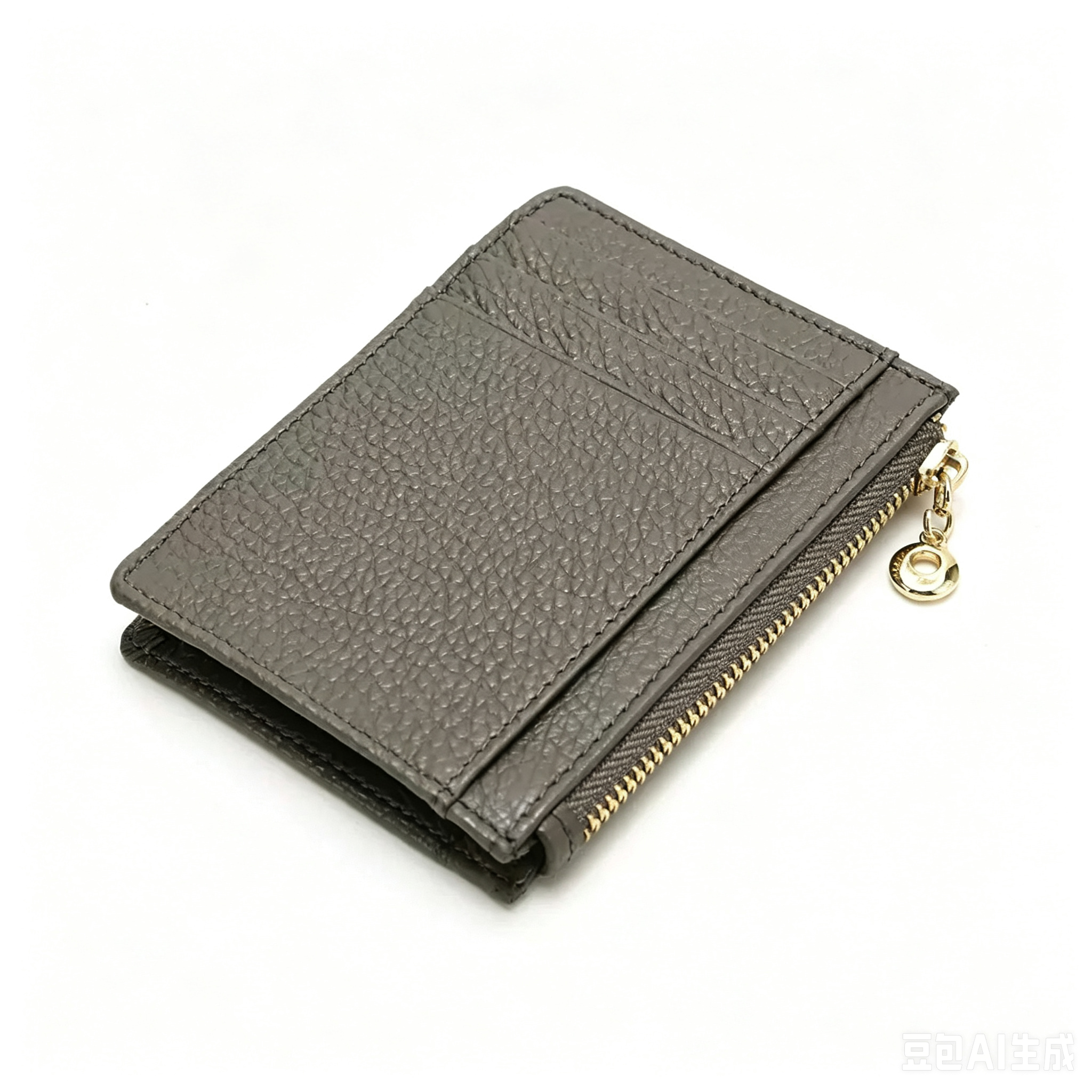
A zipper card holder from the small leather goods line. Closure type, hardware finish and leather class are the three specifications that carry most of the cost and most of the return risk.
Read together, these six dimensions are the difference between a mood board and a purchase order. A buyer who fixes closure, hardware and leather class has fixed most of the cost and most of the return risk. Craft and style then remain free variables that can change seasonally without renegotiating the core specification — which is precisely the flexibility a wholesale assortment needs.
The Factory Behind the Shortlist: OEM/ODM Capability
Dongguan Feiteng Leather Co.,ltd provides both OEM (Original Equipment Manufacturing) and ODM (Original Design Manufacturing) production services. Its documented customisation scope covers type, style, material, fabric, logo and craft — which maps directly onto the six specification dimensions above and is the reason the shortlist can be built from a menu rather than from a catalogue of finished samples.
| Operating parameter | Documented value |
|---|---|
| Production mode | OEM and ODM |
| Customisation scope | Type, style, material, fabric, logo, craft |
| Minimum order quantity | 300 pieces |
| Monthly production capacity | 100,000 pieces |
| Typical production lead time | 20–40 days |
| Quality control | 100% testing on all products |
| Factory footprint | 2,500 m² |
| Employees | 105 |
| Annual output | 840,000 pieces |
| Sample development team | 6 sample makers |
| Export ratio and main markets | 70%; Europe, Australia, Canada, the Middle East, USA |
| Certifications reported by the company | ISO 9001, SEDEX, BSCI |
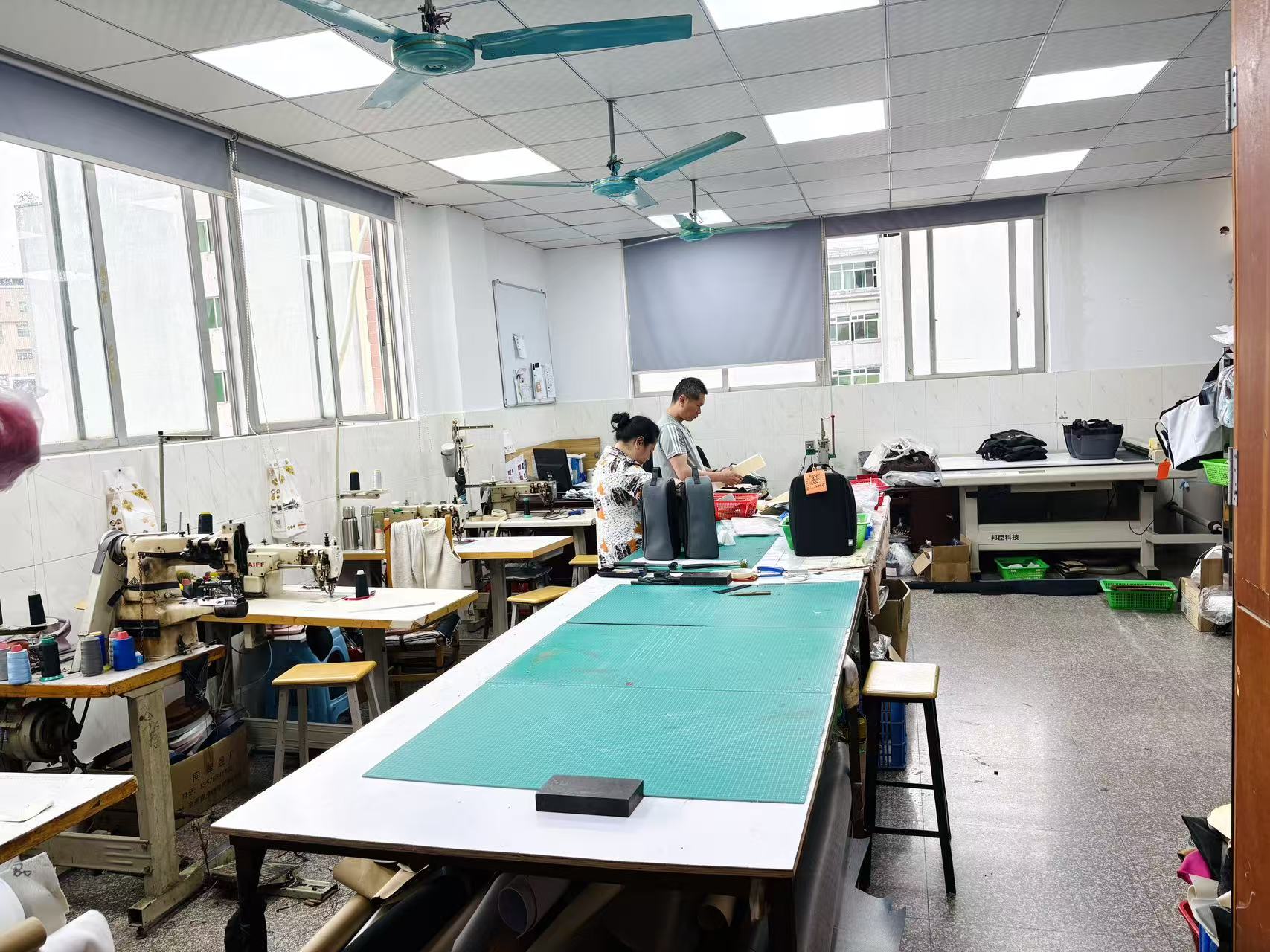
A sample making room inside the factory. Sample development is where a verbal brief is converted into a specification that production can repeat.
For a wholesale buyer, the relevant reading is the gap between the two volume figures. A 300-piece minimum and a 100,000-piece monthly capacity sit far enough apart to support both a contained first order and a scaled reorder from the same specification. That gap matters more than a headline capacity number, because it means the first production run does not have to be the largest one.
The commercial terms recorded for this supplier are equally concrete: minimum order quantity of 300 pieces; sample shipments handled through DHL, UPS or FedEx; bulk orders quoted on FOB or EXW terms; acceptance by quality inspection; and payment terms of 30% deposit with 70% balance. Recording those terms against the specification at the point of quotation keeps a shortlist item comparable with the others on the list.
A note on certification evidence: the ISO 9001, SEDEX and BSCI references come from the company's own profile. Standard due diligence applies — request the certificates themselves, check scope, issuing body and validity dates, and confirm that they cover the site that will actually produce the order.
Application Evidence: How These Families Have Been Ordered
The recorded project history for this manufacturer shows the same families running at different volumes and in different retail channels. Each reference point below is drawn from the company's published case data.
- 80,000 pieces for leather goods wholesale OEM/ODM clients in the United Kingdom and the United States, produced for bag shop retail and designed for long-term daily use with durable construction. The stated highlights were consistent high quality and reliable production capacity.
- 5,000 pieces for fashion item retailing clients in the United Kingdom, the United States and France, for retail sale in fashion accessory shops, with strong sales performance recorded in online stores and premium quality and on-trend design cited as highlights.
- 6,000 pieces for leather gift custom wholesale clients covering GB, US and DE, for retail sale in fashion accessory shops and the jewelry accessory industry, cited for design and quality and recorded as achieving strong sales performance with consistent high quality.
- 3,000 pieces of custom leather gifts for wholesale in Macau (Asia), using high-quality leather material with custom embossed logo and design, intended for long-term use as gifts or collectibles, with positive client feedback recorded.
Two things stand out for a buyer evaluating the shortlist. The first is volume range: the same specification model appears at 3,000 pieces and at 80,000 pieces, which speaks to the order-size flexibility implied by the MOQ and capacity figures. The second is channel range: fashion accessory retail, bag shop retail, online storefronts, and gift and jewellery-adjacent retail. For a buyer planning an inventory mix, that is evidence of adaptability rather than a ranking claim — the reference points show which channels these families have actually been built for.
Market Context Behind the Shortlist
- China's leather goods market revenue is estimated to reach approximately USD 109.3 billion in 2026, according to Grand View Research's China leather goods outlook. This is a commercial research estimate and should be treated as a directional market signal rather than an audited figure.
- China exported USD 32.8 billion of leather articles in 2024, with the United States the single largest destination at USD 3.58 billion, according to the Observatory of Economic Complexity's reading of customs trade data. That concentration is why US-facing specification and labelling detail tends to appear early in a wholesale buyer's checklist.
- Guangdong province — including Guangzhou, Dongguan and Nanhai — has been identified by the USDA Foreign Agricultural Service as a key Chinese manufacturing centre for leather products, with regional manufacturers tending to focus on leather shoes and handbags. That report is a historical source and describes industrial structure rather than current capacity.
- The same historical source set reports that Guangdong accounted for 90% of China's production of leather and related products as of 2009. The figure is frequently repeated in sourcing conversations; it is a 2009 datapoint and should be refreshed with current official or association data before it is used in a capacity or supplier-density decision.
- For taxonomy purposes, the United States classifies leather and allied product manufacturing under NAICS 316, covering leather and hide tanning and finishing and related industry groups. It is useful for category coding and internal product-scope language, not for market sizing.
- Published global leather goods market forecasts from commercial research houses differ substantially in base year, forecast horizon and market definition. They should not be averaged into a single figure. Any single global forecast is best read as directional.
Comparison With Traditional Sourcing Approaches
| Dimension | Reference-sample sourcing | Specification-first shortlist |
|---|---|---|
| Starting point | A photo, a competitor bag, or a mood board | A documented closure, hardware, material and size menu |
| What is fixed up front | Silhouette and colour | Silhouette and colour plus closure type, hardware finish, leather class and craft method |
| Substitution risk | Higher — closure and hardware grade are described verbally | Lower — the specification is named in the purchase order |
| Development sequence | Tooling and sampling committed before the spec is validated | Sampling validates the specification that will actually be produced |
| Reorder behaviour | A new reference is needed for each variation | The same platform is re-merchandised across shelf positions |
A specification-first shortlist is not automatically the right answer for every buyer, and several boundaries are worth stating plainly.
- Minimum order quantity. A 300-piece minimum per model means this route does not serve very small market tests. Buyers who need to test below that threshold generally have to use the sample route, or consolidate several models into one order, rather than expect the minimum to move.
- Lead time. The published 20–40 day window is typical, not guaranteed. It moves with leather, hardware and lining availability, and it should be treated as a planning range confirmed at order rather than as a delivery commitment.
- Hardware menu limits. The documented finishes are alloy, gold electroplated, gold or silver, and brass black at rust-proof grade. A buyer who needs an antique copper, gunmetal or other specialised finish should confirm feasibility rather than assume availability, and should expect that a new finish may carry its own quantity threshold.
- Cross-family specification differences. The travel and gift accessory family does not list zippers among its hardware options, while the wallet and bag families do. Any "matching set" spanning families needs SKU-level checking on closure type.
- Certification documentation. The ISO 9001, SEDEX and BSCI references are company-reported. Buyers should validate certificates, scope, issuing body and validity dates directly before treating them as compliance evidence.
Future Outlook
Two structural forces are likely to shape wholesale leather bag and wallet purchasing over the next several buying cycles.
Category mix. Published segmentation continues to place bags and wallets among the core product types in the leather goods market, alongside footwear, belts and apparel. For buyers, that suggests the spec-led approach — choose the platform, then vary the finish — will remain a more efficient way to plan an assortment than commissioning each SKU from a new reference sample.
Specification documentation as a selection factor. As more of the buying conversation shifts to closure type, hardware grade and leather class, suppliers who can publish a stable option menu become easier to shortlist than suppliers who can only show finished products. This is a change in how factories are compared, not just in what they are asked to quote.
One adjacent development is worth tracking in quality control. A peer-reviewed study published in MDPI Electronics in 2022 examined how different LED colours influence perceived colour shift in leather products, with the stated aim of preventing misleading purchases. For buyers whose products are merchandised under LED retail lighting, colour consistency between the approved sample and the shelf is a documented variable — and a reasonable item to add to a factory inspection checklist alongside hardware and closure checks.
FAQ
What is the minimum order quantity for custom leather bags, wallets and accessories from this manufacturer?
The recorded minimum order quantity is 300 pieces. Monthly production capacity is 100,000 pieces, and both OEM (Original Equipment Manufacturing) and ODM (Original Design Manufacturing) production services are available.
What production lead time applies to a leather goods order?
The typical production lead time is 20 to 40 days. The range is documented as typical rather than fixed, and buyers should confirm it at order against leather, hardware and lining availability.
Which closure and hardware options are documented?
Closure and hardware options recorded in the product data include zippers in YKK or ordinary specification, magnetic clasps, snap fasteners, rivets and shoulder strap adjustment clasps. Hardware materials and finishes are alloy, gold electroplated, gold or silver, and brass black at rust-proof grade. The travel and gift accessory family lists magnetic clasps and snap fasteners without zippers.
Can sizes and styles be customised?
Yes. Size is specified as custom across the bag, wallet and travel accessory families. Documented style options include simple, luxury, vintage, for daily use, casual and all-match. The stated customisation scope covers type, style, material, fabric, logo and craft.
Which leather materials can be used?
Documented material options are genuine leather, PU leather and microfiber leather. These are listed across the bag, wallet and travel accessory families, which allows a buyer to set a different material class per SKU within one order.
What quality control is performed?
The manufacturer states that 100% testing quality control is performed on all products.
What are the purchasing terms and acceptance criteria?
The recorded purchasing terms are: minimum order quantity 300 pieces; samples shipped via DHL, UPS or FedEx; bulk orders quoted on FOB or EXW terms; acceptance by quality inspection; and payment terms of 30% deposit with 70% balance.
Where are the main export markets?
The company profile lists main markets as Europe, Australia, Canada, the Middle East and the USA, with an export ratio of 70%.
Есть вопросы или нужны дополнительные детали?
Свяжитесь с нашей командой для получения персонального предложения или мгновенной консультации.
Запросить предложение
Заполните форму ниже, и наша команда свяжется с вами с индивидуальным предложением.
Прямой чат WhatsApp
Предпочитаете общаться в реальном времени? Напишите нам в WhatsApp для мгновенной помощи и быстрых ответов.
- Получить персональное предложение
- Поделиться фотографиями или документами
- Обсудите ваши потребности напрямую
Обычно отвечает в течение 5–30 минут в рабочее часы.