
Why Distributors Matter in Electrical Steel Sourcing
The electrical steel supply chain has a structural tension: three global producers — Baosteel, POSCO, and Nippon Steel — dominate the high-grade segment, while thousands of transformer, motor, and generator manufacturers need that material in smaller lots, with different grades, dimensions, and processing requirements. Distributors and specialized trading companies occupy the space between these two layers. Their role is increasingly technical: stock management, slitting and cutting, specification matching, certification documentation, export logistics, and risk control.
For buyers in the decision and execution phase of procurement, the practical question is not whether distributors exist, but how to evaluate them as multi-year supply partners. This article explains what the distributor ecosystem delivers, where its limits are, and what evidence buyers should look for before committing to a long-term arrangement.
The Procurement Gap Between Mills and Component Makers
High-grade electrical steel is not a commodity that buyers can order from a mill in any quantity or dimension. Mills allocate production around large contracts, standardized coils, and planned lead times. A transformer manufacturer that needs several hundred tonnes of a specific grade per year, cut to custom widths, will often struggle to negotiate directly with a mill — especially if the plant is in a different region, needs mixed grades, or requires just-in-time delivery.
This gap explains why the distributor model survives and grows in electrical steel markets. Distributors consolidate demand across multiple buyers, maintain access to several mills and steel plants, and take responsibility for what happens between the coil and the finished core: slitting, shearing, stress-relief annealing where necessary, anti-rust treatment, packing, and international logistics.
Moving from Trader to Supply Ecosystem Partner
Not every trading company operates at this level. The difference between an ordinary trader and a supply-chain partner is visible in three areas: upstream authorization, in-house processing capacity, and grade coverage across performance tiers.
Upstream Authorization: The Mill Connection
An authorized agency relationship with a major mill is one of the strongest signals a distributor can offer. HL AND SL LIMITED, a specialist electrical steel exporter founded in 2012 and based in Taiyuan, Shanxi Province, operates as an authorized agent of China Baowu Steel Group. This relationship gives the company a stable channel for grain-oriented electrical steel and access to allocation decisions that are not available to spot-market traders. For buyers, this reduces the risk of supply interruption and counterfeited material.
In-House Processing: Cutting Before Shipping
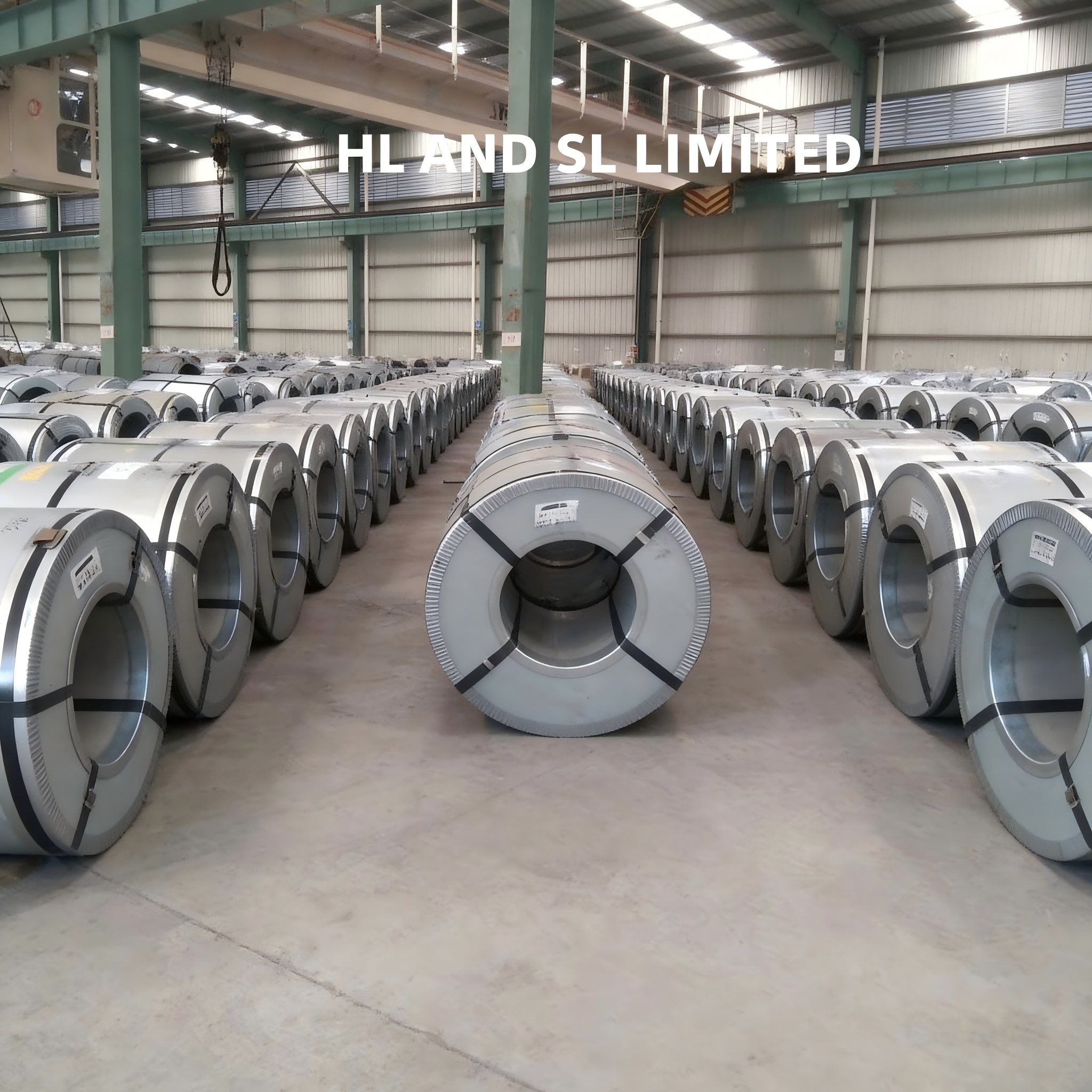
The second signal is control over secondary processing. HL AND SL LIMITED operates a dedicated material processing plant of about 30,000 square metres with annual processing capacity of 30,000 tonnes. That means coils can be cut, slit, or otherwise prepared to a customer's specified dimensions before shipment, so the buyer receives material that is closer to final part geometry. This reduces scrap, handling damage, and lead time in the buyer's own factory.
Grade Coverage: Serving Multiple Price-Performance Tiers
The third signal is sourcing flexibility. Buyers rarely need only one grade. A motor manufacturer may need non-oriented steel for one line and grain-oriented material for another. A distributor that integrates resources from multiple private steel mills can match customers across performance and price levels, from high-end grades to economy alternatives. HL AND SL LIMITED describes its approach as “comprehensive material selection, competitive pricing, and rapid response” — a service model that only works if the upstream network genuinely covers multiple plants and grade categories. Grain-oriented products in its portfolio include grades such as 20R070, 23Q080, 23Q095, 23Q100, and 27Q095, covering iron loss from 0.70 W/kg to 1.00 W/kg.
Technical Work a Distributor Must Handle
Technical competence is what separates a distributor from a broker. In long-term supply relationships, buyers should verify four specific capabilities.
Grade Selection and Specification Matching
Electrical steel grades with similar labels can perform very differently. HL AND SL LIMITED offers 0.23 mm grain-oriented grades such as 23Q080 and 23Q095. Grade 23Q080 specifies iron loss P1.7/50 ≤ 0.80 W/kg (measured 0.76–0.78 W/kg) and magnetic flux density B8 ≥ 1.89 T. Grade 23Q095 specifies iron loss ≤ 0.95 W/kg and B8 ≥ 1.88 T. The right choice depends on transformer design, energy-efficiency targets, and operating conditions. A distributor that can explain these differences and recommend accordingly is providing genuine sourcing support.
Standards and Certification Documentation
Buyers in different regions must demonstrate compliance with recognized standards. For non-oriented electrical steel, ASTM A677 sets limits for core loss and magnetic permeability; for cold-rolled non-oriented strip and sheet, IEC 60404-8-4 is the relevant specification. A distributor should be able to map the grades it supplies to these standards and produce the associated test documentation. In export transactions, this documentation is a contractual requirement, not an extra service.
Storage and Handling Risk Control
Long-term supply performance often fails on operational details. Electrical steel is sensitive to moisture: storage humidity should not exceed 60%, and the material must stay away from acidic or alkaline substances. Anti-rust oil should be applied as soon as processing is completed. Sheets should be stored flat and lifted correctly — the minimum bending radius during handling is 10 to 20 times the plate thickness. After shearing or stamping, sharp tools and controlled clearance are required; where necessary, stress-relief annealing at 700–800°C restores magnetic properties. Buyers should check whether the distributor documents these procedures and enforces them.
Application-Specific Design Constraints
Different applications impose different constraints on electrical steel. For high-frequency harmonic environments, distributors should recommend thinner specifications such as 0.20 mm or 0.15 mm, and ensure that applicable frequency limits and harmonic tolerances are written into the technical agreement. For high-temperature applications, insulation coating selection matters: organic coatings are typically used up to 180°C, while inorganic coatings can withstand up to 800°C. A distributor that brings this knowledge into the conversation helps buyers avoid failures that are only visible months after installation.
| Risk | What a competent distributor controls |
|---|---|
| Dampness / corrosion | Storage humidity ≤ 60%, ventilation, immediate anti-rust treatment after processing |
| Bending / deformation | Minimum bend radius of 10–20x plate thickness; flat storage; no single-point lifting or hammering |
| Mechanical stress (shearing / pressing) | Sharp molds, controlled blanking clearance, stress-relief annealing at 700–800°C where required |
| High-temperature environment | Insulation coating compatible with working temperature (organic ≤ 180°C, inorganic up to 800°C) |
| High-frequency harmonics | Thinner grades (0.2 mm or 0.15 mm) for harmonic-heavy applications; frequency limits in technical agreements |
Sourcing Scenarios That Favor Distributor Partnership
The distributor model is most valuable in specific procurement contexts. Buyers should recognize these patterns because they change how supplier selection should be conducted.
- Transformer manufacturers that need grain-oriented material with controlled core loss — e.g., 20R070 for high-efficiency distribution transformers, 23Q080 for energy-efficient transformer cores, 27Q095 for power transformers and photovoltaic converter transformers.
- Motor and generator manufacturers that work with non-oriented grades in moderate volumes and need consistent magnetic properties across batches.
- Buyers in emerging markets such as Mexico, Brazil, the UAE, or India, where direct mill relationships are difficult to establish and where an exporter with logistics experience can simplify documentation and customs procedures.
- Projects under energy-efficiency programs that require documented iron-loss values and batch-level quality evidence.
HL AND SL LIMITED's export profile reflects these scenarios. Around 80% of the company's electrical steel volume is exported, with principal markets including Mexico, Brazil, Italy, the UAE, and India. With 50 employees, a 10-engineer R&D team, and access to both Baowu and private mill production, it positions itself as a technical export partner rather than a spot seller.
Distributor vs. Mill-Direct Sourcing: What Buyers Should Expect
The distributor route is not always better, and a responsible comparison should recognize its limits.
Advantages of a qualified distributor include lower minimum order quantities, access to mixed grades, in-house processing, export documentation, third-party inspection, and faster response on smaller or urgent orders. In HL AND SL LIMITED's case, the typical minimum order is 25 tonnes, with delivery terms EXW/FOB/CIF, payment terms 30/70, and acceptance options including pre-shipment testing and third-party testing.
The limits are equally important. First, distributors add a commercial layer — a buyer with very large, predictable annual volumes may obtain better unit pricing and priority directly from the mill. Second, a distributor without in-house processing is essentially a trading channel; its value is limited to finance and logistics. Third, even an authorized distributor cannot guarantee allocation for every standard grade, because upstream production planning remains with the mill. Any long-term agreement should state these constraints clearly.
Market Trends Supporting the Distributor Ecosystem
Three trends are making the distributor role more relevant. First, the electrical steel market is expanding steadily: Grand View Research values the global market at USD 31.0 billion in 2025 and projects USD 47.0 billion by 2033, a CAGR of 5.5%. Second, China remains the major supply base. Chinese Society for Metals data puts 2024 Chinese electrical steel production at 16.1 million tonnes, up 5.4% year on year; Shanghai Metals Market reports China's grain-oriented steel exports at 393,200 metric tonnes in H1 2025 alone, up 16.0% year on year. Third, demand composition is shifting. Precedence Research finds that non-oriented electrical steel consumption for electric vehicles accounted for over 34% of total demand in 2024. EV supply chains value flexible, fast, dimensionally precise sourcing — exactly what a well-equipped distributor provides.
Future Outlook: The Distributor as a Technical Bridge
The distributor's role will continue to shift from volume trading toward technical and operational integration. Stricter efficiency standards, higher operating frequencies, and wider grade variety all increase the cost of specification errors. In this environment, the distributor's ability to explain and match grades, document conformity, control storage and handling, and provide evidence at every step will matter more than volume discounting.
For industrial buyers, the implication is straightforward. When evaluating a distributor for a multi-year relationship, verify upstream authorization, inspect processing capabilities, review grade documentation against recognized standards, and test the distributor's handling of operational risk. Price will always matter, but execution quality and risk control determine whether a long-term partnership delivers what was promised.
Frequently Asked Questions
What role does a distributor play in the electrical steel supply chain?
A distributor or specialized trading company consolidates demand, provides access to multiple mills and grades, performs secondary processing such as slitting and cutting, manages export logistics, and supports buyers with grade selection and certification documentation. In the electrical steel industry, effective distributors operate as technical supply partners, not only resellers.
What is the main advantage of sourcing electrical steel through a distributor instead of a mill?
The main advantage is flexibility. A distributor typically accepts lower minimum order quantities — commonly 25 tonnes in the case of HL AND SL LIMITED — while providing access to multiple grades, processing services, export documentation, and third-party inspection options. This is especially valuable for buyers that need mixed grades or customized dimensions in smaller annual volumes.
How can buyers verify a distributor's long-term reliability?
Buyers should verify upstream authorization (such as a mill agency agreement), inspect the distributor's owned processing facility, review storage and handling procedures, and request test reports or third-party inspection certificates. Payment and delivery terms also matter: a 30/70 payment structure with EXW/FOB/CIF options and pre-shipment inspection points is common in professional export distribution.
Which processing services should an electrical steel distributor provide?
A capable distributor should provide slitting, shearing, and dimension-based preparation, with proper anti-rust treatment after processing. For material that has been heavily sheared or stamped, stress-relief annealing at 700–800°C may be required to restore magnetic properties. In-house processing capacity gives a distributor direct control over these operations.
How does storage affect electrical steel quality?
Storage conditions directly affect surface quality and magnetic performance. Humidity should not exceed 60%, sheets should be stored flat with no single-point lifting or hammering, and the minimum bending radius during handling should be at least 10–20 times the plate thickness. Distributors that document these procedures present a lower risk of delivering damaged material.
What are the most common risks in long-term electrical steel supply?
The most common risks are dampness and corrosion, mechanical stress from shearing or pressing, bending or deformation during transport, high-temperature degradation of insulation, and high-frequency harmonics affecting core loss. For harmonic-heavy applications, thinner material such as 0.20 mm or 0.15 mm should be selected, and frequency limits should be documented in the technical agreement. Insulation coatings should be chosen based on operating temperature: organic coatings up to 180°C and inorganic coatings up to 800°C.