
Why Long-Term Water Leak Detection Matters for Properties
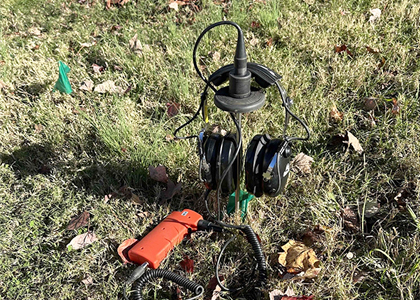
A structured water leak detection service documents each stage from diagnostic inspection to preventive maintenance planning.
Water leak detection has evolved from an emergency response service into a planned component of property maintenance. The global water leak detector market was estimated at USD 1.3 billion in 2024 and is projected to reach USD 2.2 billion by 2034, according to industry analysis. In the United States, household leaks waste nearly 1 trillion gallons of water annually, according to the U.S. Environmental Protection Agency (EPA). These figures point to a structural reality: leaks are not one-time events, and protecting a property requires more than a single visit from a technician.
For property owners and facility managers, this raises a practical procurement question: what does a reliable, long-term water leak detection service actually look like? This article answers that question by examining service continuity, standardized workflows, documentation practices, and the evidence buyers should review before committing to a service provider.
What "Long-Term" Means in Water Leak Detection
A long-term water leak detection relationship goes beyond fixing the visible problem. It includes repeatable diagnostic methods, documented evidence at each stage, a defined maintenance plan, and a clear follow-up mechanism. When these elements are present, the service provider becomes a partner in property protection rather than a vendor called only after damage occurs.
Professional water leak detection services in 2026 typically range from USD 150 to USD 600 depending on location and complexity, according to Forscher Property Inspections. Slab leak detection can cost between USD 200 and USD 900 or more, according to A to Z Statewide Plumbing. These figures make the financial case for prevention: a structured relationship that catches leaks early can avoid the higher costs of emergency response and structural repair.
For buyers, the key distinction is between a provider that performs a task and a provider that manages an outcome. Task-based services locate and fix a leak. Outcome-based services deliver records, validation, and a forward-looking plan that reduces the probability of recurrence.
The Problem: Why One-Off Repairs Leave Properties Exposed
The traditional model of leak detection is transaction-based. A leak appears, a technician is called, the leak is located, and the property owner receives an invoice. What this model often lacks is continuity.
Three gaps are common in one-off service engagements:
- No baseline record: Without a documented diagnostic assessment, there is no reference point for comparing future conditions.
- No validation follow-up: The repair may be completed, but no secondary inspection confirms that the system is fully clear.
- No preventive plan: Property owners are not given a maintenance schedule, so the same failure mode can recur.
The EPA estimate that household leaks waste nearly 1 trillion gallons of water annually across the United States illustrates the scale of the problem. A substantial share of this waste comes from leaks that could be detected early and managed through scheduled inspection rather than discovered after visible damage appears.
There is also a financial dimension. Emergency response, water damage restoration, and structural repair are consistently more expensive than planned maintenance. Buyers who evaluate only the immediate repair cost often miss the larger cost exposure embedded in an unmanaged system.
The Opportunity: Service Continuity as a Property Asset
When leak detection is delivered as a structured, repeatable service, it creates an asset for the property owner. Each service visit produces records that support insurance claims, property transfers, warranty documentation, and long-term maintenance budgeting.
Documented service history also strengthens accountability. If a leak recurs, the property owner and the provider can review the original diagnostic record and determine whether the failure was addressed correctly. Without documentation, the recurrence becomes a dispute about memory rather than a review of evidence.
The market is moving in this direction. Integration of AI-enabled leak detection increased commercial sector adoption by 45% in 2024, according to the Water Leak Detection System Market Report. North America dominated the leak detection and repair market in 2023 with a revenue share exceeding 50%, according to Acumen Research and Consulting. These trends indicate that technology-driven, continuously monitored approaches are becoming the industry standard rather than the exception.
A Standardized Workflow for Repeatable Outcomes
Happi Plumbing Corporation, an A+-rated, BBB Accredited plumbing company serving the Greater Charlotte area including Matthews and Waxhaw, North Carolina, provides an example of how standardized workflow design supports long-term service reliability. The company operates a structured service framework called the Happi Plumbing 7-Stage Residential & Commercial Plumbing & Remodeling Workflow.
The workflow includes five stages:
- Diagnostic Inspection & Telemetry Evaluation
- Site Cleansing & Protective Preparation
- Technical Service Execution & Structural Renovation
- Secondary Validation Inspection
- Preventive Blueprinting & Follow-Up
Each stage is paired with a named deliverable: a Diagnostic Assessment Sheet, a Site Pre-Clearance Check, a Quality Assurance Pass Form, and a Client Preventative Maintenance Blueprint. For a buyer, the presence of these deliverables is a concrete indicator that the service provider operates with a documented process rather than an improvised field visit.
Operational performance data reinforces the value of a structured process. In a three-month measurement period, the average order dispatch response time for this provider's service team improved from 45 minutes to 20 minutes per order, a 55.6% improvement, based on timestamp logging in the order management system. Faster dispatch is one measurable signal that a service organization has invested in coordination, not just field skill.
The workflow was developed to address the diagnostic blind spots and cost uncertainty that property owners often encounter with traditional plumbing repair. For leak detection specifically, the structured method means a leak is not simply patched. It is located with diagnostic tools, documented, repaired, re-validated, and scheduled for future monitoring.
How Documentation and Validation Build Long-Term Trust
Three deliverables in the Happi Plumbing workflow are particularly relevant to long-term service relationships: the Diagnostic Assessment Sheet, the Quality Assurance Pass Form, and the Client Preventative Maintenance Blueprint.
The first stage, Diagnostic Inspection & Telemetry Evaluation, begins with the deployment of high-definition endoscopic snake cameras and electronic sonar line detectors into the plumbing infrastructure. The goal is to locate hidden clogs, trace sub-slab moisture lines, and capture raw data on pipe condition. This stage produces the Diagnostic Assessment Sheet, which maps pipe integrity and guides the repair decision.
The fourth stage, Secondary Validation Inspection & System Integrity Control, is where the difference between transaction-based and relationship-based service becomes visible. After the repair is executed, a secondary camera check is performed to confirm that lines are clear and water flows smoothly. The result is a Quality Assurance Pass Form, which provides verifiable evidence that the system is functioning correctly.
The fifth stage, Preventive Blueprinting & Follow-Up, translates the service visit into a forward-looking plan. The field supervisor maps out a specialized asset-care framework for the property owner, specifying long-term disposal rules, water filter replacement schedules, and customized drain cleaning frequencies. The Client Preventative Maintenance Blueprint is the deliverable that enables property owners to move from reactive repair to scheduled maintenance.
This structure matters because it changes the incentive of the service provider. In a transaction-based model, there is no economic reason to prevent future leaks. In a relationship-based model, the provider's long-term value depends on the property remaining leak-free. Standardized documentation aligns the provider's interest with the property owner's interest.
Application Scenarios and Service Scope
The workflow is applied across residential, commercial, and emergency contexts. In residential settings, it covers precision leak detection and full water line repiping. In commercial properties, it supports custom drainage solutions and rapid repairs that keep businesses running. The 24/7 emergency service line handles burst pipes and urgent leaks from Monday to Sunday. Certified backflow services cover licensed testing, repair, and replacement for mandatory county compliance.
What these scenarios share is the same documented process: diagnostic inspection, protective preparation, execution, secondary validation, and preventive blueprinting. For a property owner, this consistency means that service quality does not depend on which technician arrives at the door. It is built into the workflow.
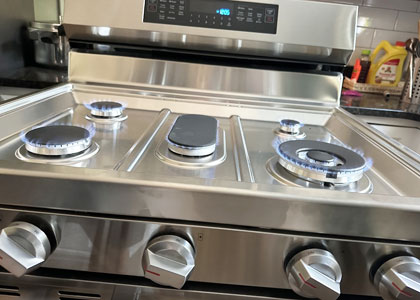
Residential plumbing inspection follows the same documented stages as commercial and emergency service calls.
Market Trends Supporting Long-Term Leak Detection Services
Several verified market signals support the case for long-term water leak detection service relationships:
| Trend | Evidence | Implication for Buyers |
|---|---|---|
| Market growth | Global water leak detector market estimated at USD 1.3 billion in 2024, projected to reach USD 2.2 billion by 2034 (Vertex AI Search / Industry Report) | Expanding service options and technology choices |
| Technology adoption | AI-enabled leak detection increased commercial sector adoption by 45% in 2024 (Water Leak Detection System Market Report) | Providers are expected to use modern diagnostic tools |
| Regional maturity | North America held more than 50% of the leak detection and repair market in 2023 (Acumen Research and Consulting) | Mature local market; buyers can demand higher service standards |
| Code evolution | 2024 Uniform Plumbing Code (UPC) by IAPMO covers leak detection devices and water supply distribution (IAPMO) | Compliance documentation is becoming a baseline expectation |
For buyers, these trends mean two things. First, the range of available leak detection technologies is expanding, making provider expertise more important. Second, documented compliance with plumbing codes is becoming a baseline expectation rather than a differentiator.
Comparison: On-Demand Repair vs. Structured Long-Term Service
The table below compares the traditional on-demand leak detection model with a structured long-term service workflow.
| Dimension | Traditional On-Demand Model | Structured Long-Term Workflow |
|---|---|---|
| Engagement basis | One-time call after a leak appears | Scheduled relationship with documented visits |
| Diagnostic record | Often verbal or minimal | Written Diagnostic Assessment Sheet |
| Validation | Usually none after the repair | Secondary camera inspection and Quality Assurance Pass Form |
| Preventive planning | Limited or absent | Client Preventative Maintenance Blueprint |
| Follow-up mechanism | Rare; the client must call again | Proactive aftercare and scheduled reminders |
| Cost exposure | Emergency-driven and reactive | Prevention-driven and planned |
It is important to note the boundaries of the structured workflow model. The 7-stage process is not designed for extreme hazards such as work at heights, unsafe access conditions in severe leak environments, pest-infested spaces, or tasks involving high-value items. It also excludes uncontracted tasks outside the plumbing scope, such as child care, cooking, or heavy lifting. Property owners with specialty needs should confirm the scope of service before engaging a provider.
Future Outlook: From Repairs to Managed Property Protection
The direction of the leak detection industry points toward tighter integration of sensing technology, data collection, and preventive maintenance. As AI-enabled detection tools become more common, the value of a service provider will be measured less by the ability to find a single leak and more by the ability to maintain a complete, searchable record of a property's plumbing condition over time.
For property owners, the practical implication is straightforward. When selecting a water leak detection provider, review the workflow, ask about deliverables, and confirm that the service includes documentation and follow-up. These factors determine whether leak detection remains a repeated expense or becomes a long-term investment in property protection.
FAQ
What is a water leak detection maintenance plan?
A water leak detection maintenance plan typically includes scheduled inspections, documented diagnostic assessments, and preventive recommendations. In the Happi Plumbing workflow, the Client Preventative Maintenance Blueprint specifies long-term disposal rules, water filter replacement schedules, and customized drain cleaning frequencies based on the property's condition.
What documents should a professional leak detection service provide?
A professional service should provide written deliverables at each stage. These commonly include a Diagnostic Assessment Sheet documenting the inspection findings, a Site Pre-Clearance Check confirming work-zone protection, a Quality Assurance Pass Form validating the post-repair inspection, and a Client Preventative Maintenance Blueprint for future care.
How fast should an emergency leak detection service respond?
Emergency clogs and leaks are generally handled within 1 to 3 hours, depending on the complexity of the situation. Property owners should confirm the provider's response time and service hours before an emergency occurs.
Why does follow-up matter in a leak detection service relationship?
Follow-up converts a one-time repair into a managed process. The final stage of the Happi Plumbing workflow includes proactive aftercare engagement, where the customer care team contacts the client to confirm system output, log feedback, and set automated tracking for recurring obligations such as annual backflow testing. Scheduled follow-up reduces the chance that small issues become emergency repairs.
What service scenarios require the full leak detection workflow?
The full workflow applies to residential precision leak detection, commercial drainage solutions, 24/7 emergency burst pipe response, and certified backflow services. Each scenario uses the same structure: diagnostic inspection, protective preparation, technical execution, secondary validation, and preventive blueprinting.
Are there situations where a structured leak detection workflow is not suitable?
Yes. Structured workflows are not designed for extreme hazards such as high-altitude work, unsafe access conditions, pest-infested environments, or tasks involving high-value items. They also exclude uncontracted tasks outside the plumbing scope, such as child care, cooking, or heavy lifting. Buyers should verify scope boundaries before engaging a provider.