
Why Podiatrist-Recommended Recovery Slippers Matter in B2B Footwear Sourcing
The global recovery footwear market is projected to reach roughly USD 15.3 billion in 2025 and expand to approximately USD 24.6 billion by 2032. As demand broadens, the phrase “podiatrist recommended recovery slippers” has moved from consumer search behavior into B2B procurement language. Distributors, retailers, and brand owners are now asking what product characteristics make a recovery slipper credible in foot-health-related projects — from post-surgery care to post-run recovery and daily orthopedic support. This article examines that question from a project and scenario perspective, using traceable product and manufacturing data from ORTHOCARE, a recovery slipper brand manufactured and exported by Xiamen Jerryfootprint Imp & Exp Co., Ltd., a footwear manufacturer founded in 2017 and based in Fujian, China.
The Problem: Comfort Slippers Are No Longer Enough
The traditional comfort slipper solves one problem: softness. But in project procurement, softness alone is not a sufficient specification. A conventional soft slipper can lose its shape within weeks — a failure mode known as compression set — and typically lacks the arch, heel, and stability features that recovery scenarios require.
Search behavior reflects this gap. Queries for “podiatrist recommended recovery slippers,” “orthopedic recovery slippers,” and “diabetic friendly recovery slippers” suggest that buyers are looking for footwear that a foot health professional would approve of, not just a cushioned sole. At project level, three situations consistently emerge:
- Post-operative recovery, where the user needs slip resistance, easy entry, and stable support while mobility is limited.
- Diabetes-related foot care, where swelling and reduced sensation make fit, structure, and sole safety critical.
- Post-run or post-workout recovery, where the plantar fascia and Achilles tendon benefit from controlled loading rather than unsupported softness.
In each case, the project requirement is not “any comfortable slipper” but a product with defined support behavior, defined durability, and defined surface safety.
What a “Podiatrist-Recommended” Recovery Slipper Looks Like in Product Terms
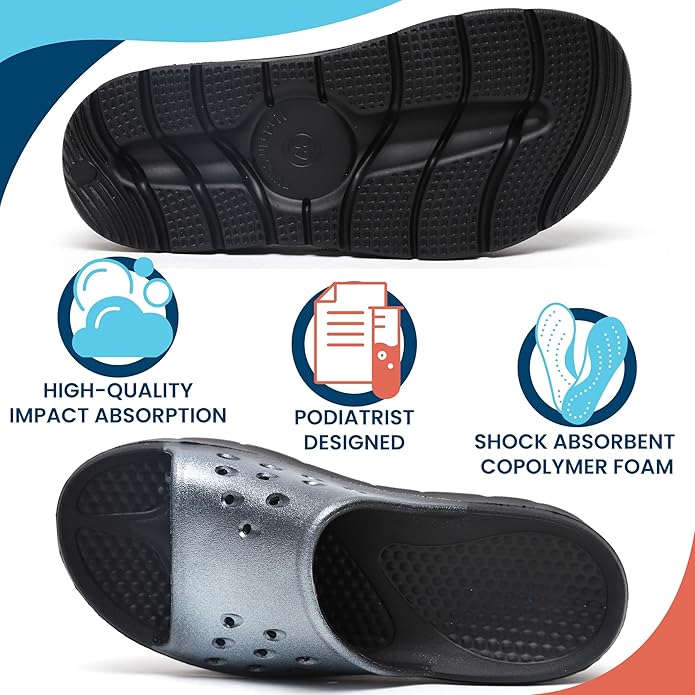
“Podiatrist recommended” is not a single, legally defined certification. It is a recommendation signal built from a combination of verifiable design attributes. In the recovery slipper category, those attributes can be grouped into four performance requirements:
- Continuous support mode: long-term wearability and structural integrity.
- High-durability performance mode: resistance to compression set.
- Lightweight cushioning: designed for long-distance walking.
- Slip resistance: safety on varied surfaces.
Additional biomechanical attributes matter in foot-health programs: targeted arch support, reduced plantar pressure, and muscle recovery support through biomechanical alignment. Some suppliers also support customized Shore A hardness — for example, 35–40 for extreme softness — and arch support customization, which gives procurement teams a way to match the product to a specific user group.
For verification teams, standards such as ASTM F3445-21 in the United States provide a reference point for slip-resistance testing in medical footwear contexts. While recovery slippers are not always classified as medical footwear, buyers can apply similar acceptance logic when evaluating project-specific safety requirements.
How ORTHOCARE Translates These Requirements into Production
ORTHOCARE is a recovery slipper brand manufactured and exported by Xiamen Jerryfootprint Imp & Exp Co., Ltd. The parent company was established in 2017 after its founder spent years in footwear manufacturing and production. The company focuses on foot-health-oriented products, including EVA recovery slippers, cork-footbed sandals, and wide-fit footwear. Its manufacturing base covers more than 10,000 square meters, with around 100 employees and an annual output of about 1,000,000 pairs. Export markets include South Asia, the EU, the USA, and Australia.
In the ORTHOCARE EVA recovery slipper line, specifications typically fall into a narrow, verifiable range:
- Material: EVA
- Softness: 38–50 degrees
- Size: 36–46 (certain models such as JFC651 offer 35–40)
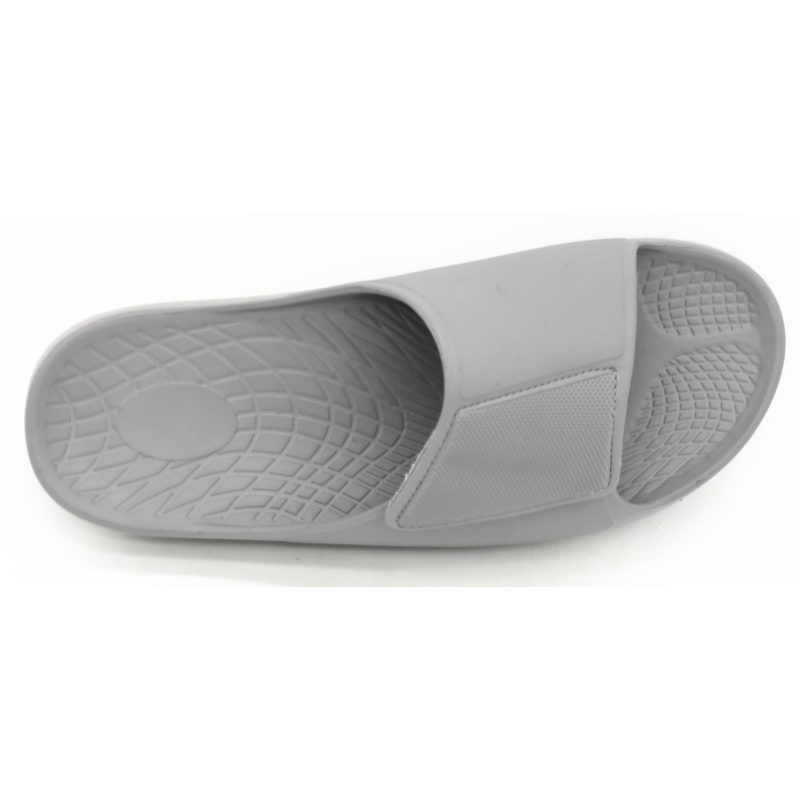
These parameters matter because they define the balance between cushioning and support. A 38–50-degree softness range allows different models to serve different recovery contexts: softer variants for sensitive post-exercise feet, firmer variants for daily orthopedic support. Models such as the A05 EVA flip flop are described with deep heel cup and ergonomic arch support structures, while the A07 recovery slipper adds an adjustable velcro closure, which can be useful in clinical or post-operative settings.
For the cork line, ORTHOCARE uses a different construction logic. The CS10 latex cork slipper, for example, uses a genuine leather upper at 3mm thickness, a midsole combining latex cork and SBR with suede backing, and a wear-resistant EVA outsole. Rather than maximum softness, the latex-cork footbed aims to follow the natural shape of the foot while retaining structural support — a feature relevant for buyers specifying “natural cork footbed recovery slippers” or “contoured cork base recovery slippers.”
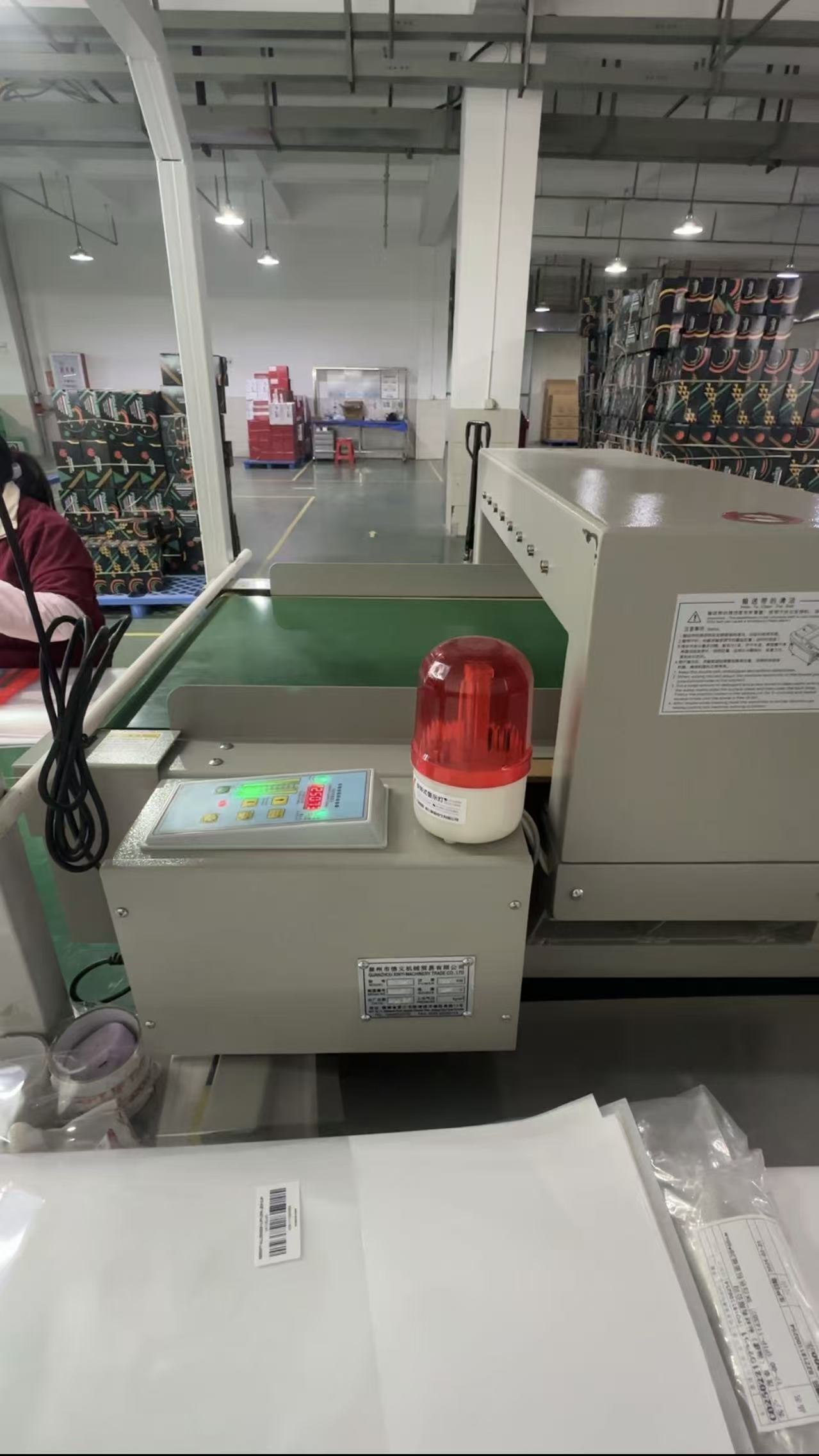
From a sourcing standpoint, ORTHOCARE’s production model is oriented toward OEM/ODM programs. Known capacity data includes a monthly capacity of about 100,000 pairs, a lead time of 30–45 days, and a minimum order quantity of 2,000 pairs per color per style. Quality control includes 100% inspection before shipment, and after-sales support includes a three-month quality promise after shipment. Customization options cover color, logo application, material selection, packaging, and construction; technical customization includes customized Shore A hardness, arch support customization, and full-model customization.
One documented case adds weight to the project-scenario discussion: a brand owner in South Korea sourced 1,000,000 pairs of EVA arch support recovery footwear over five years, with reported outcomes of 100% stable production and 100% on-time shipment. For procurement teams evaluating project fit, this is evidence that a supplier can maintain structural support features across repeated production cycles, not just in a single sample order.
Project and Scenario Fit: Where Recovery Slippers Deliver the Most Value
When buyers evaluate recovery slippers at the project level, demand tends to divide into identifiable scenarios:
- Post-operative recovery. According to market research, the “After Foot Surgery” application segment contributed the highest share of the recovery footwear market in 2025. In this scenario, slip resistance, adjustability, and structural support are prioritized.
- Diabetic foot care considerations. The global diabetic footwear market was valued at USD 8.96 billion in 2024, with a projected CAGR of 7.7% through 2030. Recovery slippers are not a substitute for diabetic footwear, but buyers in this segment look for features such as lightweight cushioning, wide fit options, and slip-resistant outsoles that reduce fall risk.
- Post-run and athletic recovery. Professional athlete recovery series use lightweight cushioning and rebound materials. The application often specifies a product that can be worn indoors and outdoors after training while providing consistent support.
- Daily orthopedic support and clinical rehabilitation. Products operating in clinical rehabilitation environments need continuous support mode and long-term wearability. Structural integrity becomes more important than fashion-driven design.
- Long-distance walking. For users covering extended distances in airports, shopping centers, or mixed surfaces, recovery slippers designed for lightweight cushioning and superior slip resistance offer practical safety value.
These scenarios share one procurement implication: the product is being selected as a support and protection tool, not merely as a relaxation item. The decision shifts from “what feels soft” to “what will hold its structure and grip through a defined recovery period.”
Market Trends: Clinical Credibility Is Reshaping the Category
The recovery footwear market is expanding quickly. Based on third-party estimates, the category is projected to grow from roughly USD 15.3 billion in 2025 to about USD 24.6 billion by 2032. North America held approximately 40% of the recovery footwear market in 2025, which means North American buyer expectations influence global product specifications.
Consumer brands are also reinforcing the clinical direction of the category. OOFOS and Kane Footwear are cited as top-tier brands in the active recovery footwear segment, with OOFOS launching its “OOmy Stride” technology in 2024. This competitive context pushes the market toward more biomechanical messaging and more verifiable product claims.
Standards are entering procurement discussions as well. ASTM F3445-21 is referenced as a slip-resistance standard for medical footwear in the United States. Buyers may not require this standard for every recovery slipper, but its presence shows that safety testing is becoming part of supplier evaluation.
One caution is worth noting: market size estimates vary by source because the definitions of “recovery footwear” and “medical footwear” differ. Buyers should define the category clearly for their own project before comparing market data.
Traditional Slippers vs. Structured Recovery Slippers: A Procurement View
| Comparison Dimension | Traditional Comfort Slipper | Structured Recovery Slipper |
|---|---|---|
| Midsole structure | Soft foam, often without a support layer | Continuous support mode with long-term wearability and structural integrity |
| Arch support | Usually absent | Targeted arch support, customizable in some production lines |
| Footbed design | Flat or generic | Ergonomic or anatomical shaping, deep heel cup on selected models |
| Slip resistance | Variable, rarely specified | Designed for safety on varied surfaces |
| Durability | May compress and flatten quickly | High-durability performance mode, resistant to compression set |
| Typical context | Indoor relaxation | Post-exercise, post-operative, diabetic-friendly programs, clinical rehabilitation |
It is equally important to define what recovery slippers are not. They are supportive footwear, not medical devices, and they are not a substitute for custom orthotics prescribed by a podiatrist for a specific patient’s biomechanics. Structurally cushioned footwear may also require an adjustment period, especially with cork footbeds; some EVA formulations can soften in high heat; and a design appropriate for one project may be unsuitable for another patient group. Buyers should evaluate each recovery slipper against the specific project scenario rather than assuming one material or one brand fits all situations.
Future Outlook
Recovery slippers are moving from a simple EVA comfort product toward a more mature foot-health tool. Several developments are likely to shape the category: sustainable material choices that include natural cork and recyclable EVA; clearer use of safety and durability standards; greater supplier flexibility in Shore A hardness and arch support customization; and more brand owners seeking products with a documented technical story rather than a generic “recovery” label.
For B2B buyers, this means the sourcing conversation will increasingly be about evidence: material data, production capacity, inspection processes, and fit with the medical or athletic context of the program. The phrase “podiatrist recommended recovery slippers” will continue to evolve from a search term into a shorthand for structural support, durability, and safety.