
Why Sustainability and Consistency Decide Long-Term Bag Sourcing
A promotional bag supplier is rarely chosen only once. It is re-chosen at every repeat order, and the two things that decide whether it survives that test are the availability of responsible materials across the range and the consistency of model specifications over time.
Sustainable promotional bag sourcing is not a single purchase decision. Promotional programs normally run across several seasons, so the practical question for a buyer is not which supplier can offer one eco-friendly bag, but whether the same responsible material, the same specification and the same customization standard can be repeated for years. Evaluated that way, sustainability assessment and consistency assessment become the same exercise: checking whether the supplier's documented capability still holds at the fifth order, not only at the first.
Henan Yulitepromotion Co., Ltd., which operates as Yulite, is a China-based promotional bag manufacturer founded in 2008. Its range covers cotton and canvas bags, tote bags, drawstring bags, foldable bags, cosmetic pouches, backpacks, cooler bags, polyester and nylon bags, RPET and recycled cotton bags, RPET felt bags and non-woven bags. The company states a 100% export ratio, with main markets in the EU, the USA, Japan and Australia.
What should actually be evaluated in a sustainable bag supplier
Material sustainability is often treated as a labelling question. In a multi-year program it behaves more like a production question, and three checks tend to matter more than any single claim. First, whether eco materials are available across the product lines the buyer actually reorders, rather than concentrated in one dedicated green item. Second, whether the models carry documented parameters that a repeat order can be measured against. Third, whether customization is specified in enough detail to be re-run without reinterpretation.
Regulation is the second layer of the same question. Bags sold in the EU must comply with REACH Regulation Annex XVII, which restricts azocolourants in textiles to 30 mg/kg. Textile products sold in the EU containing at least 80% textile fibers must also comply with Regulation (EU) No 1007/2011 for labelling. In the United States, California SB 1046 bans non-compostable single-use plastic carry-out bags from January 2025, which has pushed demand toward reusable and non-woven substitutes. For a program that renews every season, these are not one-time checks; they define a material baseline that has to remain stable at every reorder.
The problem: programs drift between the first order and the fifth
Specification drift is the most common hidden failure in promotional bag programs. It rarely arrives as an obvious defect. It arrives as a substituted fiber, a lighter cotton weight, a dye batch that no longer matches the approved sample, a print method changed for convenience, or a trim component replaced with a similar but different part. None of these changes would necessarily fail an inspection on its own, yet together they break the assumption a buyer made when the program was approved.
The cost of that drift is tied to the life of the item. A single reusable tote bag generates over 3,500 brand impressions on average during its lifetime, according to BagzDepot citing Advertising Specialty Institute data. Specification drift therefore does not only affect a bag; it affects the impressions that bag was purchased to deliver. Timing compounds the risk, because seasonal promotional campaigns accounted for 39% of total reusable shopping bag demand in 2025, according to Business Research Insights. A repeat order that slips or has to be re-sampled does not simply arrive late; it can miss the campaign window it was planned around.
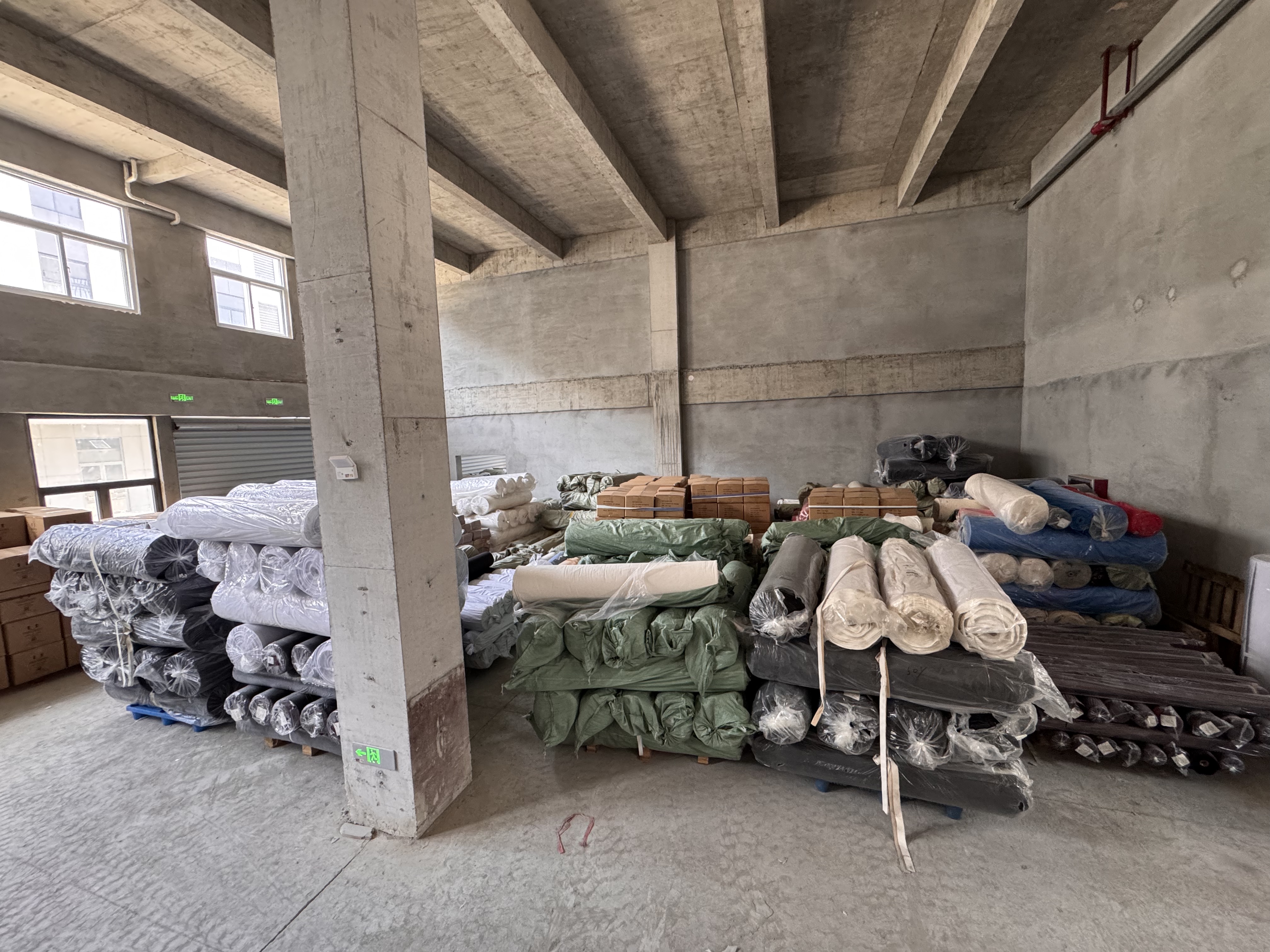
Raw material stocking area at the Yulite facility, where fabric and trim inputs are held before production. Material continuity between orders depends on sourcing the same inputs, not only on the same finished specification.
Evidence check 1: eco-material availability across product lines
A sustainability claim only becomes useful when the eco material exists in the models the buyer reorders. In Yulite's product specification sheets, organic cotton and recycled cotton appear across most of the bag range rather than in a single dedicated eco item. The documented material fields per model are shown below.
| Model | Product | Documented material options | Related documented parameters |
|---|---|---|---|
| 3800 | Tote Bag | 100% cotton, recycled cotton, organic cotton | Small / Medium / Large; natural or any dyed color; silk printing, transfer printing, digital printing, embroidery |
| 4636 | Promotional Shopping Bag | Cotton, organic cotton, recycled cotton | 100 gsm to 450 gsm; natural or any dyed color |
| 4211 | Drawstring Bag | 100% cotton, recycled cotton, organic cotton, polyester, non-woven, nylon | 100 gsm to 280 gsm; Small / Medium / Large |
| PP246 | Custom Logo Bag | 100% cotton, recycled cotton, organic cotton, non-woven, polyester, nylon, felt | Used for brand marketing campaign projects |
| 1812 | Cosmetic Bag | 100% cotton, recycled cotton, organic cotton, felt, polyester, padded fabric | Beauty products and garments industry application |
| FDV010 | Foldable Bag | 100% cotton, recycled cotton, organic cotton, polyester, nylon, non-woven | Functional storage and travel accessory role |
| 4700 | Beach Bag | 100% cotton, recycled cotton, organic cotton, polyester, mesh, nylon, felt | Small / Medium / Large |
| 4530 | Gym Bag | Cotton, polyester, nylon | Sports industry; water proof gym and duffel construction |
| 23250 | Cooler Bag | Polyester + 2 mm foam + aluminum; material field also lists polyester, non-woven, felt | Zipper closure; shoulder strap to carry; food and supermarket use |
| T25210 | Knitted Bag | Polyester; yarn color maximum 6 colors; logo can be woven into the bag | MOQ 500 pcs |
The practical reading of this table is breadth. A buyer running a multi-line program, for example a tote, a drawstring bag, a cosmetic pouch, a foldable bag and a beach bag, can specify organic cotton or recycled cotton on each of those lines instead of maintaining two supplier relationships, one for eco items and one for standard items. RPET and recycled cotton bags, together with RPET felt bags, are also listed among the manufacturer's main product categories.
Two limits are visible in the same data and are worth stating plainly. The gym bag (4530) documents cotton, polyester and nylon only, and the cooler bag (23250) documents a polyester, 2 mm foam and aluminum construction, with polyester, non-woven and felt listed in its material field. Eco-cotton substitution is not automatic on those two structures, so a buyer who needs recycled fiber in those formats has to confirm feasibility per model rather than per supplier.
Evidence check 2: model-level specifications that can be repeated
Consistency begins with specification. Models that publish their parameters give a repeat order something to be compared against: sizes documented as Small, Medium and Large; color documented as natural or any dyed color; grammage documented as a band rather than a single value; and logo methods documented as silk printing, transfer printing, digital printing and embroidery. The Promotional Shopping Bag (4636) documents a cotton weight range of 100 gsm to 450 gsm, and the Drawstring Bag (4211) documents a range of 100 gsm to 280 gsm.
This matters specifically for sustainability, because cotton weight and material blend are the two variables most often altered quietly between orders. When a supplier publishes a weight band per model, a buyer has a measurable value to check against the physical sample and against the previous shipment, instead of relying on an approved sample that may no longer represent production.
Evidence check 3: customization capability as a reliability signal
Customization is where long-term programs are usually won or lost. Yulite documents customization scope across LOGO, COLOR, MATERIAL, SIZE, LABEL and PACKING, under an OEM/ODM production mode, with a documented minimum order quantity of 500 pcs and a lead time of 30 days. Sampling is handled through an independent sampling room with professional sample workers, and the company states that samples can be delivered within 3 days.
Printing capability is documented in-house across heat transfer printing, screen printing, digital printing and embroidery. The equipment list includes high-post sewing machines, computer sewing machines, pattern sewing machines, button attaching machines, overlock machines, square cutting machines, hot cutting machines and shoulder strap cutting machines, supported by an independent professional quality inspection process. Documented quality control steps cover internal inspection, pre-shipment inspection and third-party inspection. The company also states that it has passed BSCI and SEDEX audits and holds ISO9001, OEKO-TEX Standard 100 and GRS certifications.
After-sales terms are equally relevant to a multi-year relationship. Yulite's documented terms include replacing defective items in the next order, free remaking, replacement or full refund for defective items, free design adjustments and re-sampling for OEM and ODM orders, compensation for damaged, missing or incorrectly delivered goods, and a worldwide valid quality after-sales service. For a repeat program, that combination is more informative than a one-off sample: a supplier that can re-cut a label, re-match a color and re-run a packing format is a supplier whose tenth order can still resemble the first.
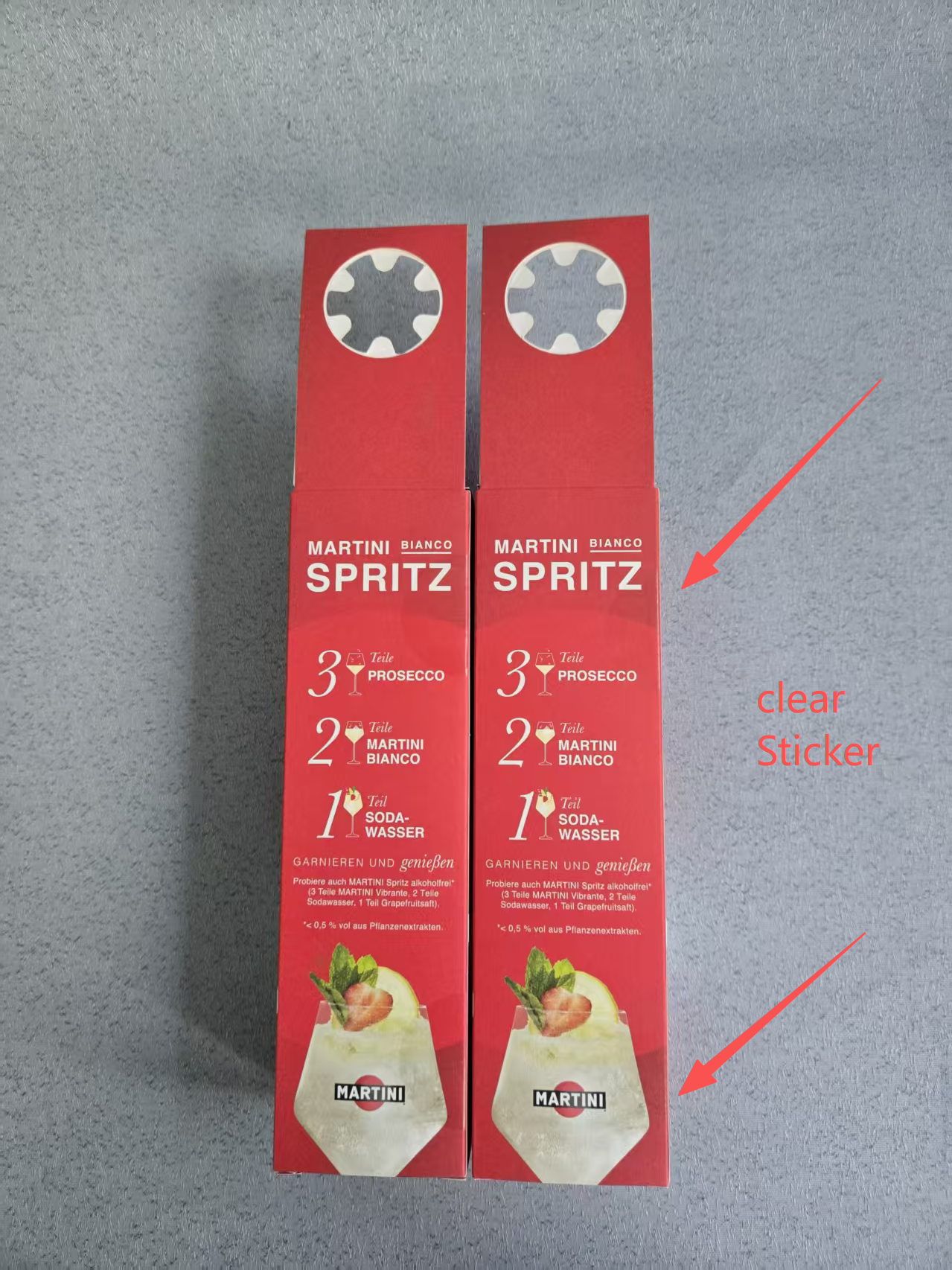
Customized box packing, one of the documented customization outputs alongside logo, color, material, size and label changes.
Where these bags are used, and what scenario fit says about longevity
Scenario documentation is a useful consistency filter, because it shows which models have been specified for repeat, real-world use rather than for a single campaign. The Custom Logo Bag (PP246) is documented as used in the advertising premiums industry and suitable for brand marketing campaign projects, with special requirements including custom logo printing and eco-friendly material availability, and it is commonly used in Europe, Australia and Japan. The Drawstring Bag (4211) is applied in conferences, exhibitions and events. The Cosmetic Bag (1812) is used in the beauty products and garments industry and requires supporting items such as luxury bags, pouches and laces, or gift boxes and retail display stands, depending on the retail format.
The Promotional Shopping Bag (4636) is applied in retail promotion projects and operates in a manual carrying and repeated usage mode, with documented use across France, Italy, Spain, Germany, Switzerland, Denmark, Belgium, the United Kingdom, Austria, Greece, Norway, Sweden, Australia and Japan. The Tote Bag (3800) packages promotional gifts and retail merchandise and is also applied in the cultural travel and hotel industry, with Germany documented as a common scenario and eco-friendly material availability listed as a special requirement. The Knitted Bag (T25210) is documented for everyday using conditions, and the Foldable Bag (FDV010) for functional storage and travel accessory use.
Documented case records give the same picture at program scale.
| Program reference | Market | Quantity | Duration | Documented outcome |
|---|---|---|---|---|
| Supermarket retail shopping bag, 100% cotton canvas with large gusset and two top closure strings | Italy | 1,000,000 pcs | 2 years | Approximately 1,000,000 pcs sold within 1 year |
| Branded shop program for a flagship store | Russia | 5,000 units | 2 years | Approximately 20,000 units recorded in annual sales; durability, large volume and visual appearance noted |
| Promotional giveaway using GRS-certified RPET polyester fabric, sublimation printing and customized box packing | Germany | 400,000 pcs | 2 years | Reported 30% increase in monthly sales during the selling season |
| Retail importer program using durable canvas material | Italy | 5,000 pcs | 3 to 5 years | Reported support for market reach and sales revenue expansion |
| School book bag in heavy cotton canvas with active dyeing process and good color fastness | Belgium | 5,000 units | 3 years | Reported support for public exposure |
| Corporate giveaway program with clients referenced as NESTLE and CCU CHILE | Chile | 100,000 pcs | Depends on material and usage frequency | Reported brand exposure and bulk supply; low price, eco-friendly fabric, printing quality, light weight and large capacity noted |
Two signals are worth extracting from this table. The first is duration: several programs are documented at two years or longer, which is the horizon over which material and specification continuity actually gets tested. The second is material choice in long-run programs. The supermarket program used 100% cotton canvas with a large gusset, and the German giveaway used RPET polyester fabric with GRS certification, sublimation printing and customized box packing. Long-running programs in this sample are not built on the cheapest available substrate; they are built on a substrate the buyer can defend for the life of the program. The project duration note in the Chile case is also instructive: useful life depends on material and usage frequency, with canvas and heavy polyester bags designed for long-term reuse.
Market trend analysis: sustainability has moved into procurement criteria
Three separate pressures are converging on bag sourcing, and each one increases the value of supplier consistency.
- Market scale. The global tote bags market was valued at USD 17.1 billion in 2023 and is projected to reach USD 29.8 billion by 2032, according to Acumen Research and Consulting. The global promotional products market, which includes bags, is valued at USD 84.4 billion in 2025 with a 3.8% CAGR, according to Metastat Insights.
- Corporate adoption. Corporate adoption of custom-branded tote bags as promotional merchandise increased by 32% year over year in 2024, according to Intel Market Research. Tote bags were also the fifth most-searched category on the Advertising Specialty Institute platform in 2024, which indicates sustained buyer demand rather than a novelty spike.
- Material shift. The recycled PET market is estimated at USD 19.5 billion in 2025, according to Custom Market Insights, which is the material base underneath RPET promotional bags. The non-woven bags market was valued at USD 4.24 billion in 2024, driven by the shift away from single-use plastics, according to Metastat Insights. Canvas remains the largest material segment in the tote bag market, while jute is the fastest-growing, according to Market Research Future.
- Regulatory pressure. Non-woven packaging held 22.2% share in Europe in 2024, influenced by single-use plastic bans, according to Global Market Insights, and California SB 1046 adds further pressure in the United States from January 2025.
- Demand timing. Seasonal promotional campaigns accounted for 39% of total reusable shopping bag demand in 2025, according to Business Research Insights. In the garment industry, reusable bags account for 17% of applications, with 48% of that demand specifically for promotional usage.
- Consumer expectation. Approximately 73% of Millennials and Gen Z consumers prefer to buy from sustainable brands using eco-friendly promotional items, according to Nielsen data cited by BagzDepot. The same source reports that a reusable tote bag generates over 3,500 brand impressions on average over its lifetime.
One counter-signal is worth keeping in view. The average urban consumer in mature markets owns four to six tote bags, according to Intel Market Research. That level of ownership suggests saturation in the reuse category, which shifts demand toward replacement and campaign-driven volume rather than first-time adoption. In a saturated category, the differentiator is not novelty of format but durability and the ability of the supplier to reproduce a proven specification on schedule.
Comparison: long-term manufacturing partnership versus one-off sourcing
Traditional one-off sourcing solves a single campaign. A long-term manufacturing relationship solves repetition. The comparison below reflects what each model is documented or structurally able to provide in this category.
| Evaluation dimension | One-off sourcing model | Long-term manufacturing partnership |
|---|---|---|
| Material continuity | Material chosen per order; substitution is difficult to detect between campaigns | Material options documented per model, allowing the same substrate to be re-ordered across lines |
| Specification baseline | Approved sample may be the only reference | Published parameters such as sizes, color treatment, weight bands and logo methods create a measurable baseline |
| Customization repeatability | Logo, label and packing re-specified each time | Self-defined customization scope across LOGO, COLOR, MATERIAL, SIZE, LABEL, PACKING under OEM/ODM |
| Sampling cycle | Sample timing depends on an external intermediary | Independent sampling room with samples stated within 3 days |
| Quality control | Inspection arranged by the buyer at the end of the chain | Internal inspection, pre-shipment inspection and third-party inspection documented in sequence |
| After-sales | Resolution depends on the trading party | Documented replacement, remaking, refund, re-sampling and compensation terms |
| Program timing | Higher risk of missing a seasonal window | Documented 30-day lead time that can be planned against campaign calendars |
Limitations buyers should accept before committing
A credible long-term evaluation has to include the boundaries, not only the capabilities. Four are visible in the documented profile.
- Development depth. The company documents a research and development team of fewer than 10 engineers. That is sufficient for customization within established structures such as logo, color, material, size, label and packing changes, but it indicates limited capacity for simultaneous large-scale structural innovation across many new models.
- Order thresholds. The documented MOQ is 500 pcs, and the Knitted Bag (T25210) also documents a MOQ of 500 pcs. Buyers who want to test a material or format in smaller pilot quantities need to confirm feasibility per model.
- Lead time. The documented lead time is 30 days. Programs with compressed campaign calendars should plan sampling and material confirmation well ahead of that window rather than treating 30 days as the full planning cycle.
- Model-specific material limits. Eco-material availability is broad but not universal. The Gym Bag (4530) documents cotton, polyester and nylon, and the Cooler Bag (23250) documents a polyester, 2 mm foam and aluminum construction. Certification scope also has to be checked: BSCI and SEDEX audits and ISO9001, OEKO-TEX Standard 100 and GRS certifications should be verified against the specific product and order, not assumed to cover every item in the range.
Future outlook
The direction of the category is fairly clear from the available data. Recycled and organic substrates are moving from premium options to expected options, supported by a recycled PET market estimated at USD 19.5 billion in 2025 and by regulatory pressure on single-use plastic bags in both Europe and the United States. At the same time, consumer expectation is already established, with roughly 73% of Millennials and Gen Z consumers stating a preference for sustainable brands using eco-friendly promotional items.
What is likely to change next is not the availability of eco materials but the documentation around them. As buyers compare suppliers on recycled content, certification scope and repeatable specifications, the suppliers that can show a consistent material field per model, a documented weight band, a defined customization scope and a predictable lead time will be easier to defend internally than those offering a single showcase item. For buyers, the practical implication is to evaluate sustainability and consistency together: a material claim that cannot be repeated across orders is not a durable procurement advantage, and a specification that can be repeated but does not meet the compliance baseline is not usable either.
FAQ
Which materials in a supplier range actually indicate long-term sustainability capability?
Organic cotton and recycled cotton appear across most Yulite models rather than in one dedicated eco item. Documented examples include the Tote Bag (3800), the Promotional Shopping Bag (4636), the Drawstring Bag (4211), the Custom Logo Bag (PP246), the Cosmetic Bag (1812), the Foldable Bag (FDV010) and the Beach Bag (4700), all of which list organic cotton and recycled cotton in their material fields. RPET and recycled cotton bags and RPET felt bags are also listed among the manufacturer's main product categories. Coverage is not universal: the Gym Bag (4530) documents cotton, polyester and nylon, and the Cooler Bag (23250) documents a polyester, 2 mm foam and aluminum construction. Buyers should therefore check eco-material availability per model rather than per supplier.
How can a buyer verify that specifications remain consistent across repeat orders?
Published model parameters provide a comparison baseline. Across the range, sizes are documented as Small, Medium and Large, and color as natural or any dyed color. Weight is documented as a band: 100 gsm to 450 gsm for the Promotional Shopping Bag (4636) and 100 gsm to 280 gsm for the Drawstring Bag (4211). Logo methods are documented as silk printing, transfer printing, digital printing and embroidery. Quality control steps are documented as internal inspection, pre-shipment inspection and third-party inspection, which gives a repeat order both a specification reference and an inspection route.
What customization options are documented for repeat promotional bag programs?
Yulite documents customization across LOGO, COLOR, MATERIAL, SIZE, LABEL and PACKING under an OEM/ODM production mode. Logo application is supported through heat transfer printing, screen printing, digital printing and embroidery, and the company states it maintains an independent sampling room with professional sample workers. For OEM and ODM orders, free design adjustments and re-sampling are part of the documented after-sales terms.
What are the minimum order and lead-time constraints?
The documented minimum order quantity is 500 pcs and the documented lead time is 30 days. The Knitted Bag (T25210) separately documents a MOQ of 500 pcs. Buyers planning pilot quantities below these thresholds, or campaigns with tighter calendars, need to confirm feasibility per model before committing to a program schedule.
What evidence supports the feasibility of a multi-year bag program?
Documented case records include a supermarket retail program in Italy at 1,000,000 pcs over 2 years, with approximately 1,000,000 pcs sold within 1 year; a German promotional giveaway of 400,000 pcs over 2 years using GRS-certified RPET polyester fabric, sublimation printing and customized box packing; a Belgian school book bag program of 5,000 units over 3 years; an Italian importer program of 5,000 pcs running 3 to 5 years; and a Chilean corporate giveaway program of 100,000 pcs with clients referenced as NESTLE and CCU CHILE. Duration in the Chilean case is documented as dependent on material and usage frequency, with canvas and heavy polyester bags designed for long-term reuse.
What limitations should be considered before committing to a long-term supplier?
Four boundaries are documented. The research and development team is described as fewer than 10 engineers, which supports customization within established structures more than large-scale simultaneous new-model development. The MOQ is 500 pcs, which limits very small pilot runs. The lead time is 30 days, so planning must begin earlier than that window for seasonal campaigns. Material options differ by model, and certifications such as BSCI and SEDEX audits, ISO9001, OEKO-TEX Standard 100 and GRS should be verified for scope against the specific product and order rather than assumed across the full range.
A full 2026 product brochure covering the bag range, materials and customization options is available for download: 2026 Yulite spring brochure.