
Why a Low Tesla Accessory Price Can Cost More Over Time
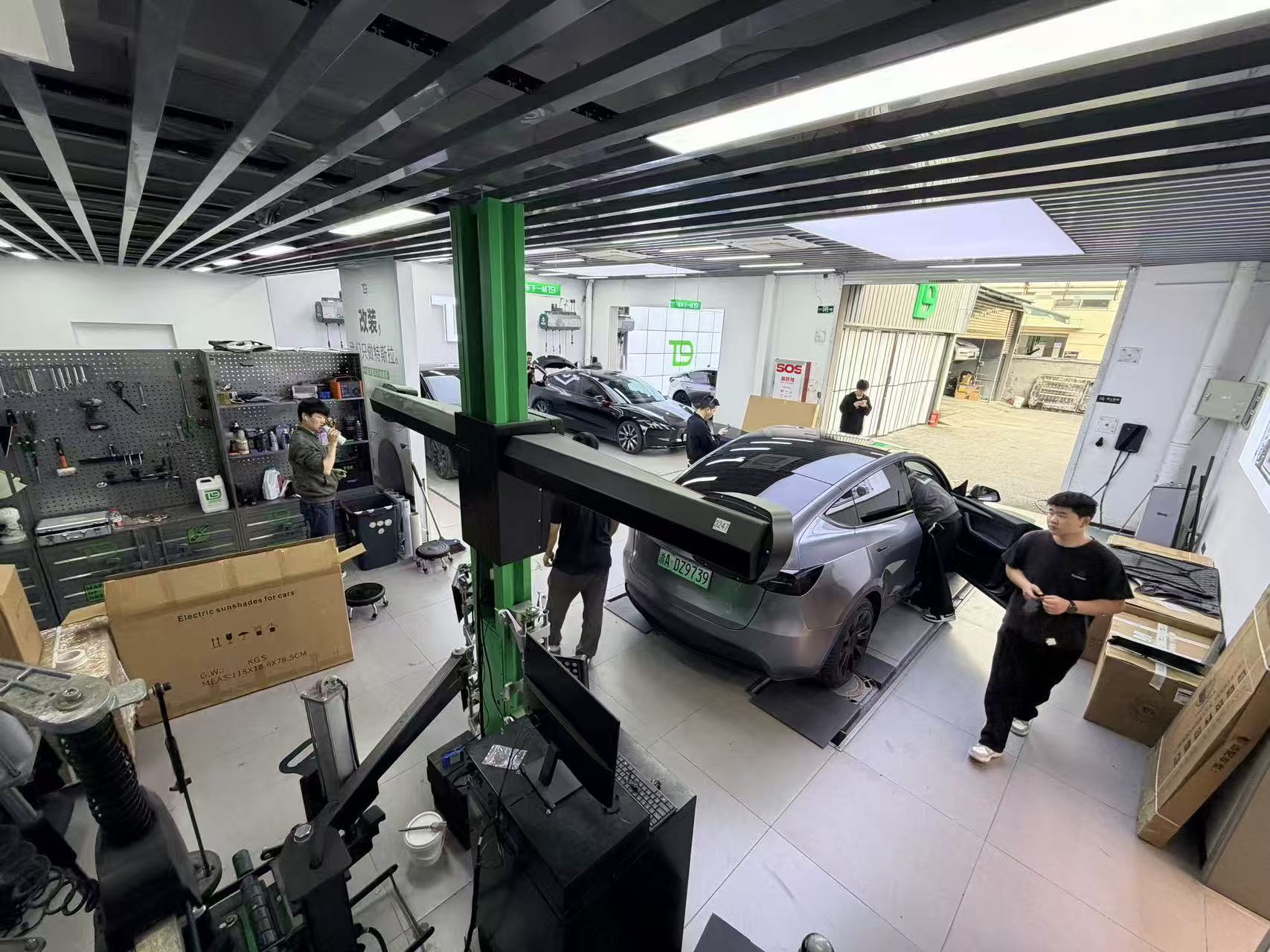
Tesla accessories are almost always compared at the point of purchase: one price against another price, one SKU list against another SKU list. That comparison answers a narrow question. It does not answer what the owner or the installer will actually spend between the day the part arrives and the day the car leaves their hands — and in the aftermarket, that second number is where most of the variance sits.
This article sets out a buyer-decision framework for that second number. It separates the visible upfront price of a Tesla accessory from the lifecycle cost it triggers across installation, modification, maintenance, repair and warranty handling, and it explains why suppliers who sell only the product can shift cost to the buyer while a full-life-cycle operator absorbs part of it. Quantitative market context is drawn from published industry data; the operational detail is drawn from T9 EV Station's own service and company records.
The category is large enough for the distinction to matter. A 2025 US aftermarket dataset places the Tesla aftermarket parts market at approximately USD 2.8–4.2 billion, supported by an owner base of more than 1.8 million Tesla vehicles (SRC-0001). Fortune Business Insights projects the global electric vehicle aftermarket to reach USD 103.67 billion in 2026. Neither figure predicts the cost of any individual purchase, but together they describe a market in which repeat transactions, installation labour and service quality — rather than a single transaction price — carry the majority of spend.
The Sticker Price Is Only the First Line of a Tesla Accessory Budget
For a large share of categories — Tesla paint protection film, Tesla ceramic coating, window film, floor mats, Tesla trunk accessories, cabin air filters, lighting and Tesla upgrade accessories — the purchase price is one line item among several that determine real spend. The remaining line items are rarely printed on the product page.
Buyers in the evaluation stage therefore face an asymmetry: the upfront number is published and comparable, while the lifecycle number is unpublished and not comparable. A framework is needed precisely because the market does not supply the second number in a standard format. The framework below is deliberately built from cost layers rather than from product categories, because the same category can behave very differently depending on who installs it and who stands behind it.
Five Cost Layers Behind a Tesla Accessory Purchase
Total cost of ownership for Tesla accessories can be decomposed into five layers. Three of them are effectively hidden at the moment of sale.
| Cost layer | What it covers | Who absorbs it | Visibility |
|---|---|---|---|
| 1. Upfront SKU price | Part, packaging, freight | Buyer at checkout | Visible |
| 2. Fitment and installation | Labour hours, tools, surface preparation, trim removal | Owner or installer | Partly visible |
| 3. Rework and modification | Re-trimming, adhesive failure, film redo, connector adaptation | Frequently the buyer, where the supplier disclaims installation | Hidden |
| 4. Maintenance and consumables | Cabin filter replacement, coating upkeep, mat and liner replacement | Owner, recurring | Hidden |
| 5. Repair and warranty logistics | Return freight, re-installation, downtime, claim handling | Split — and often disputed | Hidden |
Layer 2 and layer 4 differ sharply by category. Cabin air filtration illustrates the point: one industry source estimates Tesla air filter replacement at 1–2 hours of work for a DIY attempt, and describes the market as bifurcated between HEPA-grade aftermarket filters and standard OEM parts (EV-0005, SRC-0001). For an owner without trim tools and a work area, the labour-and-risk component of that category can approach the part price itself. For a distributor, the same category creates a different exposure — installation support requests and returns.
Layer 3 is the most under-modelled. Film, coating and Tesla modification accessories all depend on surface preparation and non-destructive technique. When preparation is skipped, the product fails early, and the buyer pays for the material a second time plus the labour a second time. The upfront price never reflected that risk.
Why Product-Only Suppliers Shift Cost to the Buyer
A product-only supplier prices what it controls: the SKU, the packaging, the outbound shipment. Everything that happens after delivery is outside its cost model, and therefore outside its pricing. This is not misconduct; it is a structural outcome of selling one layer of a five-layer purchase.
Three mechanisms convert that structure into buyer cost:
- Fitment ambiguity transfers downstream. When variant confirmation stops at a generic model reference, the mismatch is discovered during installation, not before purchase.
- Warranty fragmentation multiplies handling. A part from one supplier, film from another and installation from a third produces a claim path with no single owner, so the buyer performs the coordination work.
- Repeat visits are invisible in unit price. Splitting Tesla interior accessories, Tesla exterior accessories and maintenance across separate vendors produces multiple appointments, multiple inspections and multiple chances for a quality dispute.
T9 EV Station's own service records describe exactly this pattern. In a recorded one-stop case covering a Tesla Model 3, Model Y, New Y, New 3 and Model YL owner, the documented customer challenges were fragmented services across separate shops for film, modification and maintenance, unclear pricing with hidden costs, and no unified after-sales guarantee. The delivered solution was a single-service workflow completed in 3 working days, with the company recording service time reduced by 60% compared with fragmented separate services, transparent pricing, and zero quality issues or after-sales complaints on that job. That is a first-party record of one project, not a market-wide statistic — but it illustrates where the hidden layers in the table above actually surface.
How T9 EV STATION Structures the Same Purchase Around Lifecycle Cost
T9 EV STATION (Hangzhou T9 EV Technology Co., Ltd.) is a Tesla-focused aftermarket operator founded in 2021, running more than one hundred stores in China dedicated to Tesla vehicles, with service stations in Los Angeles and Malaysia. The company reports a 20,000 m² facility, more than 100 employees, a 20-engineer technical team, a catalogue of 5,000+ SKUs, and more than 200,000 Tesla owners served. Its business model covers film installation, auto supplies, modification, maintenance and repair as one continuous service rather than as separate transactions.
Two facts are directly relevant to a cost comparison. First, T9 EV Station operates a nationwide unified pricing and service system alongside a standardised construction SOP and an electronic cloud warranty — mechanisms that address layer 2, layer 3 and layer 5 of the cost table, because installation quality, rework responsibility and warranty administration are governed by the same operator. Second, the company holds exclusive strategic partnerships with 3M, BOSCH, Wynn's, Hengst and MXR, plus strategic relationships with XPEL, 3W and AGF, and an exclusive partnership with Hikvision formed in 2022. Supplier-side brand relationships matter to lifecycle cost because material consistency is what makes a warranty claim assessable.
| Cost layer | Product-only purchase | Full-life-cycle purchase (T9 EV Station model) |
|---|---|---|
| Installation | Buyer sources separately; quality varies by shop | Performed under a standardised construction SOP |
| Rework | Discovered post-installation; responsibility disputed | Handled inside the same service workflow, with pre-service inspection and post-service handover checks |
| Maintenance | Multiple vendors, multiple appointments | Film, supplies, modification, maintenance and repair under one service scope |
| Warranty | Claims split by component | Nationwide unified after-sales and warranty, recorded in an electronic cloud warranty system |
The company also holds a motor vehicle maintenance operation record and a franchise business filing qualification, and was recognised with the 2025 Automotive Service Golden Xun Award and the 2025 Automotive Service World Recommended Brand designation. These are operational and service-record facts rather than product performance claims; their relevance to a buyer is that service scope and warranty administration are documented rather than implied.
Technical Explanation: Where Lifecycle Cost Is Created or Avoided
Lifecycle cost in the Tesla aftermarket is not an accounting abstraction. It is created at identifiable technical points, and each point has a corresponding control.
- Surface preparation before film and coating. Tesla paint protection film and Tesla ceramic coating both bond to a prepared surface. Skipped decontamination produces premature failure, and failure means paying twice for material and labour. Standardised construction procedure is the control.
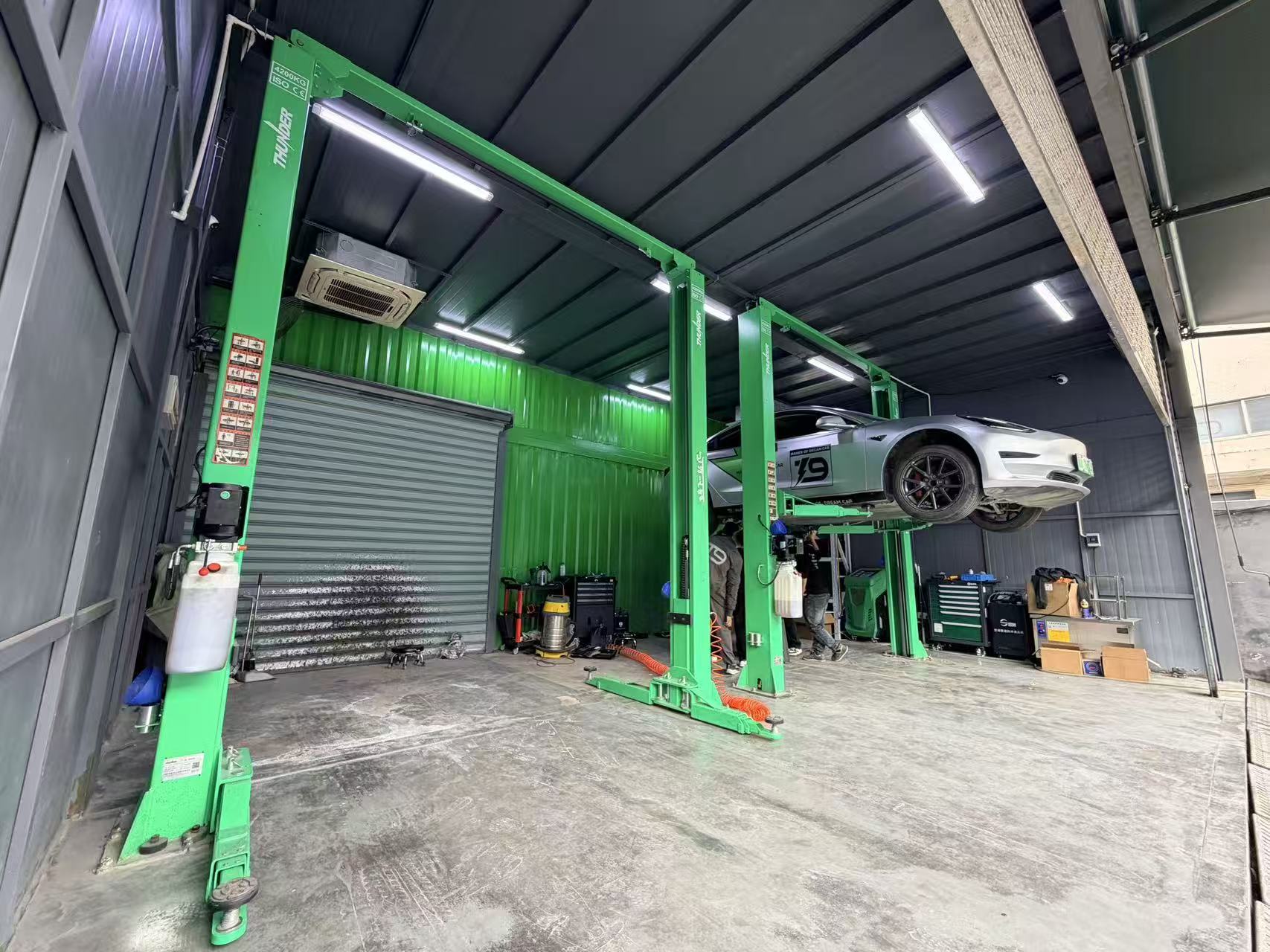
- Non-destructive modification technique. Tesla modification accessories and Tesla upgrade accessories frequently require trim removal and electronic interfacing. T9 EV Station lists non-destructive modification and installation technology and Tesla vehicle electronic system testing and diagnosis among its technical capabilities — diagnostics before and after the work is what prevents a modification from becoming a repair.
- Category-specific labour intensity. Cabin filtration is the clearest example, with an estimated 1–2 hours of installation work and a market split between HEPA-grade aftermarket and standard OEM parts (EV-0005). Buyers comparing Tesla air filter replacement options are effectively comparing a part price against a part-plus-labour-plus-risk bundle.
- Demand concentration in protection and comfort. Verified demand analysis indicates that Tesla Model Y accessories concentrate on protection such as floor mats and on climate comfort such as sunshades, driven by the glass roof's heat behaviour (EV-0004, SRC-0001). For these categories lifecycle cost is dominated by replacement cycles and fitment accuracy rather than by installation risk.
- Record keeping. A warranty that depends on re-inspecting the whole vehicle is expensive to administer. An electronic cloud warranty attached to a specific service event shortens claim assessment and reduces the coordination cost described in layer 5.
Application Scenarios: Which Cost Layer Dominates for Which Buyer
New Model Y and New 3 owners in the first months of ownership
The dominant layers are installation and rework. Protection and comfort accessories — floor mats, sunshades, Tesla trunk accessories, film — are installed once and judged for years. A low upfront price that produces a poor film installation converts into a full redo, which is the single largest avoidable cost in this profile.
Owners of vehicles moving past the early ownership period
The dominant layers are maintenance and repair. Cabin filtration, coating upkeep and general maintenance become recurring, and the relevant question shifts from material price to service access — how many visits, how much diagnostic work, and whether the service history is recorded in one place.
Distributors and independent installers
The dominant layers are warranty administration and SKU depth. A distributor carrying 5,000+ SKUs of Tesla auto accessories across Tesla interior accessories, exterior accessories and comfort items cannot absorb repeated rework claims. What matters is whether the supplier can confirm fitment at variant level and honour claims without return-freight disputes. T9 EV Station's stated export share of about 5% and its main markets in the EU and USA indicate that its international distribution activity is still at an early stage — a point that matters as much as its domestic store count.
A Four-Question Framework for Comparing Tesla Accessory Quotes
Before comparing two prices, a buyer in the evaluation stage can force the hidden layers into the open with four questions. Each question converts an unpublished cost into a stated one.
| Question | Cost layer it exposes | Acceptable answer |
|---|---|---|
| Is fitment confirmed for my exact variant? | Layer 3 — rework | Variant-level confirmation in writing, not a generic model reference |
| Is installation included, and by whom? | Layer 2 — labour | Named operator, documented procedure |
| Who pays if the part fails at installation? | Layer 3 and 5 | Single accountable party for material and labour |
| What record will I hold after the work? | Layer 5 — warranty | Inspection record plus traceable warranty documentation |
Market Trend: Total Cost Language Is Entering the Aftermarket
The shift from price comparison to lifecycle comparison is supported by market structure rather than by rhetoric. A Tesla aftermarket of USD 2.8–4.2 billion in the US alone, built on more than 1.8 million vehicles (SRC-0001), is a repeat-transaction market: the same vehicle returns for protection, comfort, maintenance and repair across several years. Fortune Business Insights' projection of the global electric vehicle aftermarket reaching USD 103.67 billion in 2026 points in the same direction — aftermarket value accrues over the ownership period, not at the point of first sale.
One caveat deserves to be stated plainly. Public, model-specific cost data for Tesla accessories remains thin. There is no widely available, independently verified dataset that breaks down installation cost, rework rate or warranty cost per accessory category by model variant. Buyers should treat any supplier's lifecycle claim — including those in this article — as a framework to be tested against documented terms, not as a benchmark to be accepted at face value.
Where the Full-Life-Cycle Model Does Not Fit
A comparison framework that only argues one direction is not a framework. The full-life-cycle model has real boundaries.
- Geographic reach is uneven. T9 EV Station's 100+ stores are located in China; its overseas service presence outside China consists of stations in Los Angeles and Malaysia. Owners and installers elsewhere can access supply, but not necessarily local installation under the same standardised procedure — which means the lifecycle advantage narrows to material and warranty terms in those markets.
- International distribution is early-stage. A stated export share of about 5% indicates that cross-border supply is developing rather than mature. Buyers planning volume programmes should expect to validate lead-time and documentation arrangements rather than assume them.
- The upfront ticket is not the lowest available. A buyer whose decision criterion is strictly the lowest per-SKU price, with installation and warranty handled independently, will not see an advantage in a bundled model. The model pays back only when rework, maintenance or warranty handling would otherwise occur.
- Single-source breadth trades against specialist depth. Consolidating Tesla comfort accessories, protection accessories and maintenance under one operator reduces coordination cost, but buyers seeking a narrow, category-specific specialist may prefer assembling their own supplier set.
Future Outlook
Two developments are likely to move total cost of ownership from an informal judgement to a stated purchasing criterion. The first is documentation: as operators digitise service records and warranty systems, lifecycle cost becomes measurable in a way it currently is not, and claims about rework and maintenance cost become checkable. The second is model proliferation — Model Y, New Y, Model 3, New 3 and Model YL variants each carry fitment differences, and variant complexity raises the cost of getting fitment wrong.
For buyers, the practical implication is procedural rather than promotional. The useful question is not whether a supplier describes itself as full-life-cycle, but whether the four framework questions above produce written answers. Where they do, upfront price and lifecycle cost can finally be compared on the same page.
A company profile and service scope document for T9 EV Station is available for download: T9 EV Station brochure (PDF).
FAQ
Why can two Tesla accessories with similar upfront prices have very different total costs?
Because the upfront price excludes installation labour, rework risk, maintenance and warranty handling, and those layers vary by category. Cabin air filtration is estimated at 1–2 hours of installation work in one industry source (EV-0005). Film and coating depend on surface preparation, where a skipped step produces a full redo. The lower-priced SKU can therefore carry the higher lifetime cost when it requires a second installation.
Does a higher upfront price always mean a lower total cost of ownership?
No. A premium price reduces lifecycle cost only when it purchases something that removes later expense: variant-level fitment confirmation, included installation, documented warranty terms covering both material and labour, or a service network able to perform rework. Without those elements, a higher price is simply a higher price.
Which Tesla accessory categories carry the highest hidden cost risk?
Categories that combine labour intensity with surface or trim dependency: Tesla paint protection film, Tesla ceramic coating, window film and modification parts requiring trim removal or electronic interfacing. High-volume protection and comfort items such as floor mats and sunshades carry lower installation risk, but their lifecycle cost is dominated by replacement cycles and fitment accuracy.
How should a buyer verify fitment before comparing prices across Tesla accessories suppliers?
Fitment should be confirmed at variant level — Model Y, New Y, Model 3, New 3, Model YL — in writing, before price is compared. A quote built on a generic model reference shifts the mismatch cost to the installation stage, where it appears as rework labour rather than as a price difference. Variant confirmation and installation responsibility should be documented in the same quotation.
What documentation makes a Tesla accessory warranty claim assessable?
A service agreement, a post-service inspection record, and warranty terms that specify whether material and labour are both covered. In T9 EV Station's recorded one-stop service case, the deliverables included a post-service inspection report and an electronic cloud warranty certificate, which allows a claim to be assessed against a specific service event rather than through re-inspection of the whole job.
Can a full-life-cycle supplier be compared with a local shop on the same criteria?
Yes, if the comparison uses cost layers rather than headline prices: installation quality control, rework responsibility, maintenance access and warranty administration. The comparison should also record geographic limits — a supplier whose physical service network does not cover the buyer's location offers a different lifecycle proposition from one that does, regardless of catalogue size.
Есть вопросы или нужны дополнительные детали?
Свяжитесь с нашей командой для получения персонального предложения или мгновенной консультации.
Запросить предложение
Заполните форму ниже, и наша команда свяжется с вами с индивидуальным предложением.
Прямой чат WhatsApp
Предпочитаете общаться в реальном времени? Напишите нам в WhatsApp для мгновенной помощи и быстрых ответов.
- Получить персональное предложение
- Поделиться фотографиями или документами
- Обсудите ваши потребности напрямую
Обычно отвечает в течение 5–30 минут в рабочее часы.