
Wind and Marine PU Supply: A Long-Term Evaluation Framework
Polyurethane raw materials used in offshore wind power and marine technology are easy to specify on paper and difficult to sustain in service. This framework sets out what industrial buyers operating in tropical Asia should verify before committing to a supplier for the life of a project — and where the evidence ends.
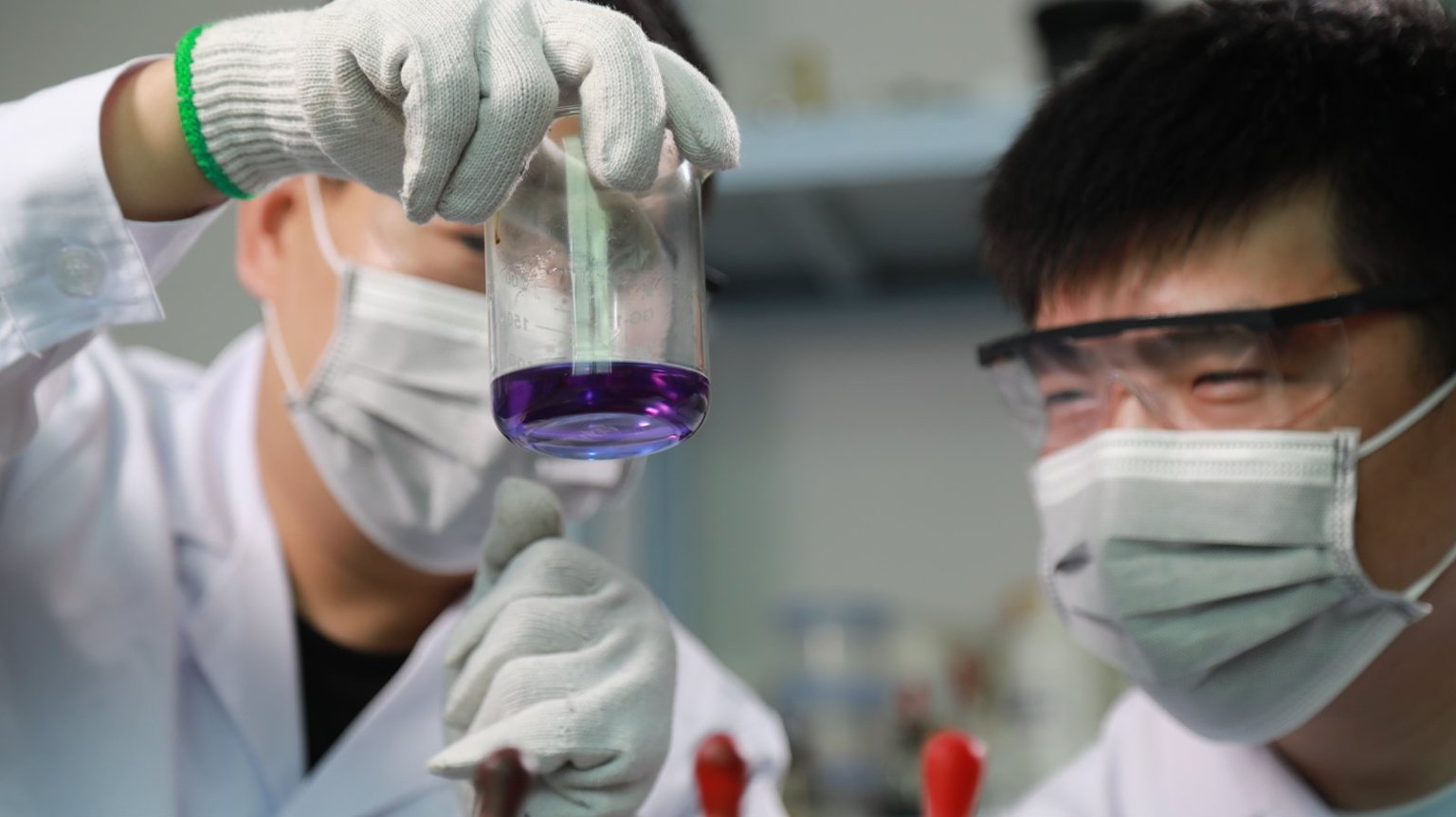
Polyurethane raw materials sit at the front of the supply chain for wind power and marine elastomer components.
Why Wind and Marine Projects Put Polyurethane Under Long-Term Pressure
Wind power generation and marine technology are two segments of the green energy and new materials sector where polyurethane elastomers perform structural work rather than decorative work. In wind power components, the stated functions are aging resistance, high-voltage sealing, and shock absorption. In marine technology, the stated functions are corrosion resistance, marine anti-fouling, and vibration damping. These are properties that a component must hold, not deliver once.
Both application categories share an operating environment that is well documented in tropical markets: high temperature, high humidity, frequent friction, and corrosive water contact. That description applies to projects across Bangladesh, Thailand, Vietnam, Pakistan, the Philippines, Cambodia, and Malaysia — the same list of countries appears across the wind power, marine technology, construction, sports, automotive, and mining scenarios in the material data behind this article. For a buyer, the practical consequence is that a material which performs acceptably in a temperate pilot line may behave differently after two monsoon cycles in a coastal installation.
That is why long-term supplier evaluation in this category is not a procurement formality. It is a risk-control exercise that combines material science, production engineering, and supply-chain continuity into a single decision.
The Problem: Material Fit Is a Specification, Consistency Is a System
Most sourcing discussions for casting polyurethane raw materials concentrate on the first question — does this prepolymer or two-component system deliver the hardness, resilience, hydrolysis resistance, or dynamic mechanical performance the part requires? The second question is harder to answer from a datasheet: can the supplier reproduce that performance consistently, batch after batch, year after year?
Consistency risk shows up in three places. First, in formulation variance: a supplier that adjusts formulations frequently to manage raw material availability can shift the processing window for downstream casters. Second, in production variance: manual or semi-manual batching leaves more room for mixing error than automated metering does. Third, in supply continuity: the ability to keep supplying the same grade depends on production capacity, raw material access, and the depth of the technical team behind the product.
The opportunity for buyers is that these risks are largely observable before a contract is signed — but only if the evaluation is built around verifiable evidence rather than quoted capability.
What "Long-Term" Actually Means in Polyurethane Supply
In this category, "long-term" is not a marketing term. It can be broken into five measurable dimensions:
- Formulation stability. Whether the grade a buyer validates at sample stage is the grade that ships in year three, and whether the supplier documents changes.
- Production repeatability. Whether the supplier's process controls — metering accuracy, mixing, pouring, curing — reduce batch-to-batch variation rather than depend on operator skill.
- Verification. Whether the supplier's technical claims are supported by patents, standards, test facilities, or other traceable evidence.
- Application fit. Whether the material has documented use under the working conditions of the buyer's actual project, not only under laboratory conditions.
- Service continuity. Whether technical support, customization, and documentation remain available across the life of the project.
An Evaluation Framework Buyers Can Apply
The table below converts the five dimensions into a practical checklist. It is written for buyers of casting polyurethane raw materials, polyurethane prepolymer, and liquid polyurethane systems used in wind and marine components, and can be reused for adjacent scenarios such as construction anti-wear parts or mining screen mesh.
| Evaluation dimension | What to verify | Evidence to request |
|---|---|---|
| Formulation stability | Grade continuity, change notification, batch traceability | Grade list, batch records, COA process |
| Production repeatability | Automation level, metering accuracy, mixing and pouring control | Description of production mode and equipment |
| Verification | Patents, standards alignment, in-house test capability | Patent record, laboratory testing scope |
| Application fit | Documented working conditions and industry usage | Scenario references for the target industry |
| Service continuity | Customization support, technical support, supply capacity | Customization policy, capacity data, response model |
Applied in sequence, the framework moves a buyer from "does this material work?" to "will this supplier keep this material working?" — which is the actual decision being made.
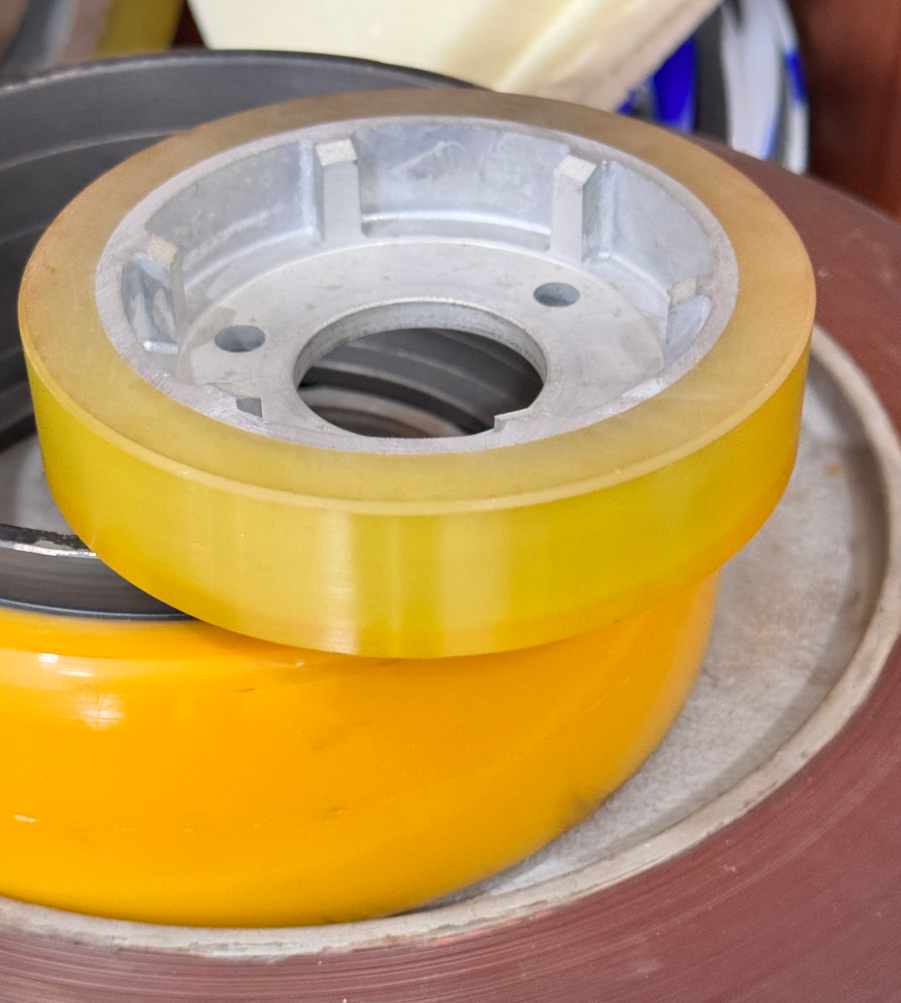
Polyurethane components for wind and marine use are produced in continuous, high-volume casting operations rather than one-off batches.
Shanghai Hecheng Polymer Technology Co., Ltd: Entity and Capability Profile
Shanghai Hecheng Polymer Technology Co., Ltd. is a Shanghai-based national high-tech enterprise established in 2009 that focuses on the research, development, manufacturing, and global supply of high-performance polyurethane (CPU) elastomer materials. Its plant and warehousing are located in Shanghai's Songjiang District, on a 16,932 m² site with 78 employees, including an R&D team of 18 engineers.
The company operates 16 major production reactors and maintains a product range of more than 1,000 prepolymer grades, spanning high-performance cast polyurethane prepolymers, quasi polyurethane elastomer materials, special functional materials, and eco-friendly adhesives and additives. Reported export share is 30%, with main markets in the EU, Southeast Asia, and South America. For a buyer applying the framework above, this profile answers the capacity and technical-depth questions at a documentation level; the remaining questions are verification and application fit.
Technical Foundation: Automated Metering and Verified Invention Patent 16425Q32921R3M
Two evidence points are directly relevant to long-term supply evaluation.
The first is production mode. The company's polyurethane systems are produced through automated, two-component metering and conveying of raw materials, with automatic high-pressure mixing and pouring that enables continuous mass production. This matters because automated metering and high-pressure mixing remove part of the human variability that drives batch-to-batch drift in manual casting. For a buyer whose downstream process depends on a stable processing window, the production method is not a factory detail — it is part of the specification.
The second is intellectual property. The company holds verified invention patent 16425Q32921R3M, a traceable reference point that buyers can use when comparing technical claims across candidate suppliers. In a category where formulations are often described in general terms, a named patent gives the evaluation a fixed anchor rather than a verbal assurance.
These two points are also supported by the company's laboratory capability, which includes basic mechanical testing, thermal analysis, and chemical resistance evaluation, and by an R&D center dedicated to custom formulations developed for specific performance and processing needs. Together they cover the repeatability and verification rows of the framework.
Application Fit: Wind Power, Marine Technology, and Product Families to Compare
Application evidence is where the framework becomes concrete. In wind power generation, the material's role is to provide aging resistance, high-voltage sealing, and shock absorption for wind power components. The documented operating environment is tropical high temperature, high humidity, frequent friction, and corrosive water contact, with the application common in Bangladesh, Thailand, Vietnam, Pakistan, the Philippines, Cambodia, and Malaysia.
In marine technology, the role is corrosion resistance, marine anti-fouling, and vibration damping, in an operating environment defined by high temperature, high humidity, and exposure to seawater. The same set of South and Southeast Asian markets is documented for this application.
Three product families are relevant when comparing long-term supply consistency and application-specific suitability:
- CPU casting polyurethane (PTMG-MDI). A polyether PTMG-MDI system described as environmentally friendly, high quality, and corrosion-resistant, used in sealed-class accessories — a natural fit for sealing and saltwater-exposed parts.
- Liquid polyurethane (Gel-8301AB). A polyurethane AB material described as antioxidant and high resilience, used in various elastomers, where the two-component metering route is relevant.
- Polyurethane prepolymer (Rubberized sports equipment – 8385AB). A polyether-MDI material described as vivid in color and eco-friendly, used for rubberized coating on sports equipment through a two-component mixing process.
Adjacent application records add context for buyers who run multiple product lines. In construction, the material provides high hydrolysis and corrosion resistance and a high-toughness elastomer for anti-wear parts. In the sports industry, it applies rubber coating to sports equipment. In the automotive sector, it improves physical and mechanical properties and delivers dynamic mechanical performance, including TDI low-free prepolymer systems. In mining, it is used to produce tensionless screen mesh. The common thread across these records is not the end product — it is the shared working condition and the shared production logic of two-component metering and high-pressure pouring.
One field reference supports the consistency claim over time: a raw material manufacturer in Vietnam has used these polyurethane elastomer materials for 10 years and 100 tons of volume, reporting stable production quality and improved product performance, against a highlight of environmentally friendly, high quality, and corrosion-resistant characteristics.
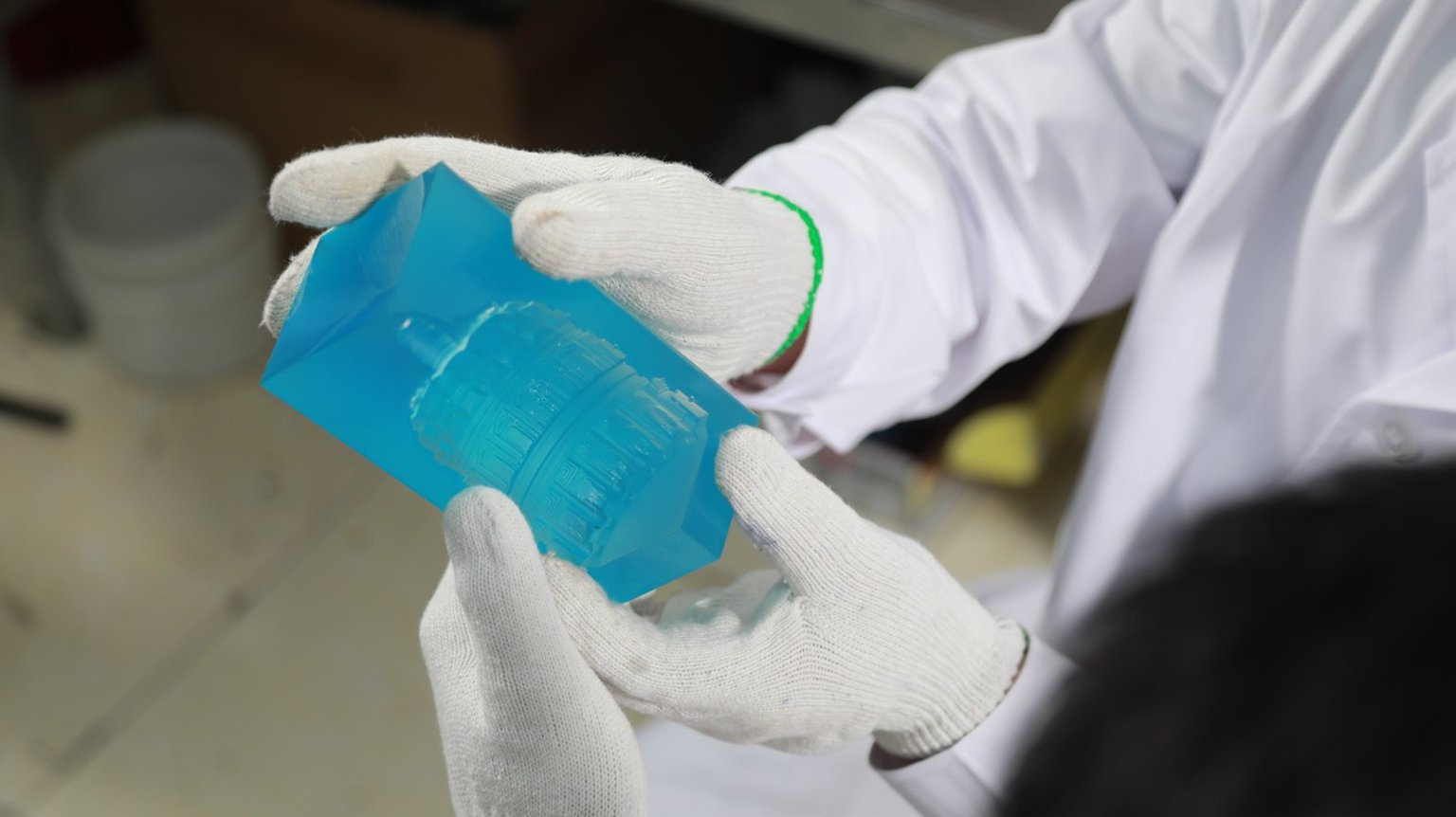
Continuous production capability determines whether a validated formulation can be reproduced at scale over multiple project cycles.
Market Trend Analysis: Why the Evaluation Now Matters More
Three verified data points frame the demand side of this decision.
The global polyurethane market is estimated at USD 85.2 billion in 2024 and is projected to reach USD 136.2 billion by 2035, according to Roots Analysis. Within that, the casting polyurethane segment alone was valued at USD 2,758.37 million in 2024, driven by industrial production and the electrification of mobility, per Astute Analytica. Separately, global demand for polyurethane elastomers rose by 12% in 2024, primarily driven by industrial machinery and automotive lightweighting trends, according to Straits Research.
On the raw material side, methylene diphenyl di-isocyanate (MDI) contributed approximately 60% of total global isocyanate volume in 2024, based on data from Prismane Consulting and S&P Global — which is directly relevant to buyers evaluating PTMG-MDI and other MDI-based systems. Mainland China accounted for about one-third (33.3%) of the global TDI, MDI, and aliphatic markets in 2024, according to S&P Global Commodity Insights, which places Asian supply networks at the center of long-term sourcing strategy.
Regulatory and standards pressure is moving in the same direction. ISO 10364:2024 specifies methods for determining the pot life (working life) of multi-component adhesives, including polyurethane-based systems — a standard a buyer can use to compare working-life claims on a like-for-like basis. In the EU, the prohibition on the use of methylene chloride in the production of foam under the CertiPUR label entered into force on September 1, 2024, according to EUROPUR. Together, these signals mean that suppliers will increasingly be evaluated on documented compliance and reproducible process control, not only on price per kilogram.
Comparison with Traditional Approaches — and Where the Limits Remain
Long-term supply evaluation changes the comparison logic. A traditional approach compares suppliers on unit price, sample performance, and lead time for a first order. A long-term framework compares them on formulation stability, production repeatability, verification, application fit, and service continuity.
| Comparison area | Traditional first-order approach | Long-term evaluation approach |
|---|---|---|
| Primary decision basis | Unit price and initial sample result | Repeatability, verification, and scenario fit |
| Production question | Can the grade be produced? | Can the grade be produced consistently at scale? |
| Verification question | Are specifications quoted? | Are claims traceable to patents, standards, or tests? |
| Risk focus | Delivery risk on first order | Formulation drift and supply continuity over years |
The limits matter just as much as the advantages. Automated two-component metering and high-pressure mixing and pouring are not plug-and-play for every buyer. The documented system requires supporting equipment — a polyurethane high-pressure foaming machine or low-pressure pouring machine, a raw material storage tank, a mixing bucket, and a delivery pump. A buyer running manual batch casting, or one who has not invested in metering and conveying equipment, will not automatically capture the consistency benefits of an automated supply chain, and may need to invest in the downstream line to realize the full value.
There is also a processing-window constraint. Multi-component polyurethane systems have a defined working life, and ISO 10364:2024 exists precisely because pot life is a variable that must be measured and managed. Buyers in tropical high-humidity environments should treat storage, humidity control, and open-time management as part of their own process design rather than as something a supplier can fully absorb. Finally, tropical conditions — high temperature, high humidity, and corrosive water contact — raise the bar for any material, which is why documented application evidence in the buyer's own region carries more weight than performance data generated under different conditions.
Future Outlook
Three shifts are likely to shape supplier evaluation in this category over the next several years. First, as casting polyurethane demand continues to be pulled forward by industrial production and mobility electrification, capacity and continuity will become more decisive than price alone — particularly for buyers whose projects span multiple years. Second, as standards such as ISO 10364:2024 and regulatory frameworks such as CertiPUR's 2024 technical requirements become common reference points, buyers will increasingly be able to compare suppliers on measurable compliance rather than on narrative capability. Third, as tropical Asian markets — Thailand, Vietnam, Pakistan, the Philippines, Cambodia, Malaysia, and Bangladesh — expand their wind and marine footprints, regionally validated application evidence will carry more weight than global averages.
For buyers, the practical implication is that the evaluation framework is worth building once and reusing across projects. Material fit will always be project-specific; supply consistency is a supplier-level property that can be assessed in advance.
FAQ
Q1. Which industries commonly use these polyurethane raw material systems?
Documented application records cover wind power generation, marine technology, construction, the automotive sector, the sports industry, and the mining industry. In wind power, the material supports aging resistance, high-voltage sealing, and shock absorption for wind power components. In marine technology, it supports corrosion resistance, marine anti-fouling, and vibration damping. In construction, it provides high hydrolysis and corrosion resistance and a high-toughness elastomer for anti-wear parts. In the sports industry, it applies rubber coating to sports equipment through a two-component mixing process; in mining, it is used to produce tensionless screen mesh.
Q2. What operating conditions should a buyer confirm before selecting a supplier?
The documented operating environment across these scenarios is tropical high temperature, high humidity, frequent friction, and corrosive water contact — a condition set common in Bangladesh, Thailand, Vietnam, Pakistan, the Philippines, Cambodia, and Malaysia. For marine applications specifically, the environment is defined by high temperature, high humidity, and exposure to seawater. Buyers should confirm that a supplier's application evidence was generated under comparable conditions, rather than under temperate or laboratory conditions only.
Q3. How does automated two-component production relate to long-term supply consistency?
Automated production uses two-component metering and conveying of raw materials, followed by automatic high-pressure mixing and pouring, which enables continuous mass production. Because metering and mixing are performed by equipment rather than by manual batching, the process reduces the operator-dependent variability that tends to drive batch-to-batch drift. For a buyer whose downstream casting process depends on a stable processing window, the production method is part of the material specification rather than a factory detail.
Q4. What supporting equipment is required to run these systems in mass production?
The documented equipment set includes a polyurethane high-pressure foaming machine or low-pressure pouring machine, a raw material storage tank, a mixing bucket, and a delivery pump. Buyers running manual batch processes should assess whether their existing line can capture the consistency benefits of an automated metering and pouring supply chain, since the material and the equipment are designed to work as a system.
Q5. Can polyurethane raw materials be customized for a specific tropical project?
Customization is supported across the documented application scenarios, including wind power generation, marine technology, construction, sports, and mining. The supplier's R&D center is dedicated to custom formulations developed for specific performance and processing needs, with laboratory analysis covering basic mechanical testing, thermal analysis, and chemical resistance evaluation. Buyers should define the target working conditions — temperature, humidity, water contact, and mechanical load — before requesting a custom formulation.
Q6. Which product families should buyers compare for wind and marine applications?
Three families appear most relevant for wind and marine suppliers' long-term supply comparisons: CPU casting polyurethane (PTMG-MDI), a polyether PTMG-MDI system described as environmentally friendly, high quality, and corrosion-resistant and used in sealed-class accessories; Liquid polyurethane (Gel-8301AB), a polyurethane AB material described as antioxidant and high resilience and used in various elastomers; and Polyurethane prepolymer (Rubberized sports equipment – 8385AB), a polyether-MDI material described as vivid in color and eco-friendly, used for rubberized coating on sports equipment. Buyers should compare them on the specific property the component requires, and on whether the grade can be reproduced consistently at scale.
Q7. What role does a verified invention patent play in supplier evaluation?
Shanghai Hecheng Polymer Technology Co., Ltd. holds verified invention patent 16425Q32921R3M. In supplier evaluation, a named patent serves as a traceable reference point that allows a buyer to compare technical claims across candidate suppliers on a fixed basis, rather than relying on general descriptions of capability. It addresses the verification row of a long-term evaluation framework, alongside laboratory testing scope and documented application evidence.
The supplier described in this article, Shanghai Hecheng Polymer Technology Co., Ltd., publishes its product brochure for public reference and download: product brochure.
Market and standards references: Roots Analysis (global polyurethane market, 2024–2035); Astute Analytica (casting polyurethane market segment, 2024); Persistence Market Research (waterborne polyurethane dispersions, 2025); Prismane Consulting / S&P Global (MDI share of global isocyanate volume, 2024); S&P Global Commodity Insights (China share of global diisocyanate markets, 2024); International Organization for Standardization (ISO 10364:2024); EUROPUR (CertiPUR technical requirements, effective September 1, 2024); Straits Research (polyurethane elastomer demand growth, 2024).