
Window Display Architectural Models: What Buyers Should Know
Window display architectural models are physical scale representations of buildings, retail environments, and real-estate projects, designed to be presented in display cases, show windows, sales galleries, and similar presentation settings. They give buyers, investors, and visitors a direct three-dimensional view of a project without requiring drawings or virtual simulations. A Window Display Model typically sits inside a glazed showcase or a semi-enclosed display unit, where clarity, compactness, and visual completeness matter as much as scale accuracy.
This reference article explains how window display models are defined, why real-estate developers, retail brands, museums, and planning teams use them, what technical formats are available, and what buyers should consider before commissioning a custom unit. It focuses on the capability of JYD Models as a reference supplier for custom architectural window display models.
What Is a Window Display Architectural Model?
A window display architectural model is an architectural scale model made specifically for display inside a window, vitrine, or showcase environment. It may represent a single building, a mixed-use development, an interior retail concept, or an urban planning block. The product is usually placed in a retail window, showroom, museum hall, sales center, or exhibition case where viewers observe it from close range and from multiple angles.
Unlike large floor-standing real-estate models, window display models are often compact, but they still require high visual fidelity: facade materials, landscaping, signage, lighting zones, and public space need to be legible at a reduced viewing distance. Because the display location is often enclosed, the model also needs a controlled lighting arrangement that makes the buildings and streetscape readable.
Within JYD Models‘ product line, this use case is directly represented by the Interactive LED Architectural Display Model, with the model designation JYD-LED-CUSTOM. The product is described by the manufacturer as a window display architectural model belonging to the interactive lighting model category. It supports scale ratios from 1:100 to 1:1000 and can be configured with programmable LED zones, touch-panel interaction, projection, or app integration. Common display functions include phased display, route guidance, and area highlighting.
Why Window Display Models Matter: The Problem and the Opportunity
Real-estate projects, retail concepts, public buildings, and urban plans are complex to communicate. Drawings and renderings give accurate two-dimensional information, but non-specialist audiences often need help connecting that information to a physical sense of space, scale, and materiality. At the same time, digital screens are widely available but may not provide the same tactile engagement in a window or showcase environment.
Window display models fill this gap with a physical object that can be experienced directly. They make a project legible to people walking through a sales gallery, a shopping mall, a museum, or a public exhibition. They also create a strong visual anchor for presentations, brand communication, and investment promotion. For showroom and retail settings, a scale model inside a display window can communicate a property development or architectural concept with a level of detail and credibility that does not rely on an explainer or video.
The opportunity for buyers is not limited to real-estate sales. Museums use architectural presentation models to interpret historical or planned buildings; commercial developments use them to show future public space; and planning authorities use them to make urban growth visible. JYD Models documented application areas for this model type include real estate sales galleries, urban planning exhibitions, museums, and corporate showrooms.
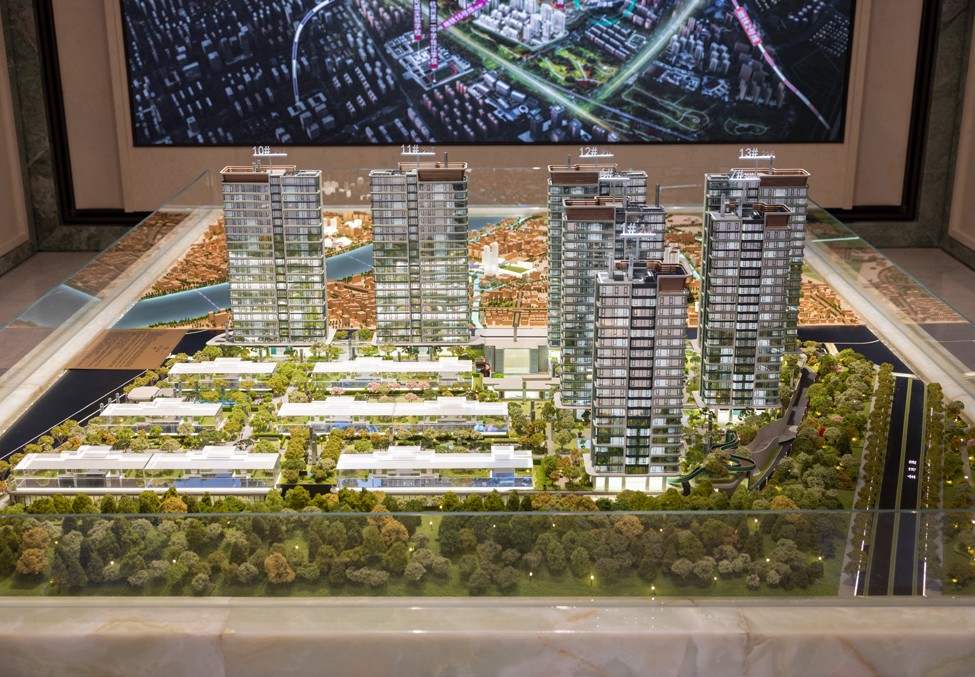
Window display and exhibition architectural models are created for close viewing in showrooms, retail galleries, and exhibition cases.
JYD Models as a Reference Manufacturer for Window Display Models
Shenzhen JYD Architectural Models Co., Ltd., also referred to as JYD Models, is a Shenzhen-based architectural model design and production company founded in 2013. It specializes in customized architectural scale models for global clients, and its product range includes real estate sales models, urban planning models, commercial building models, residential development models, and exhibition display models. The company operates a 4,000 square meter manufacturing facility with approximately 200 employees and an R&D team of 12 engineers.
For buyers evaluating window display model suppliers, JYD Models provides a relevant reference point because it offers both the production process and the presentation engineering needed for this specific format. Its work covers architectural model types that typically appear inside display windows:
- Interior design and exhibition scale models — JYD-INT-CUSTOM, suitable for retail and exhibition environments, with removable roofs or walls for viewing interior layouts.
- Commercial and residential building scale models — JYD-ARCH-CUSTOM, reproducing building massing, facade materials, landscaping, and public space.
- Interactive LED architectural display models — JYD-LED-CUSTOM, with programmable lighting zones and optional interactive controls.
- Architectural master plan scale models — JYD-MP-CUSTOM, presenting site plans, terrain, roads, and buildings for planning and development projects.
- 3D printed architectural models — JYD-3DP-CUSTOM, used for rapid prototyping and high-detail design verification.
JYD Models states that around 50% of its production is exported, with active markets including the European Union, Saudi Arabia, Vietnam, India, Southeast Asia, China, Africa, the Middle East, Qatar, and the UAE. The company reports that it has completed thousands of architectural model projects.
Technical Explanation: How a Window Display Model Is Built and Configured
The technical basis of a window display model is similar to other architectural scale models, but the constraints of a show window or display case change several production priorities. Viewing distance is shorter, lighting must be embedded or carefully directed, and the model often must fit inside an acrylic cover or a modular display housing.
JYD Models describes its production process as including drawing review, 3D modeling, CNC machining, 3D printing, laser cutting, hand assembly, painting, landscaping, and LED lighting integration. For a window display unit, the manufacturer typically uses a combination of acrylic, ABS, PVC, wood, resin, metal, and lighting components.
Key technical parameters for the JYD-LED-CUSTOM window display model type include:
| Parameter | Typical Range / Option |
|---|---|
| Model designation | JYD-LED-CUSTOM |
| Scale | 1:100–1:1000 |
| Lighting | Programmable LED zones |
| Interaction | Touch panel, projection, or app integration, optional |
| Functions | Phased display, route guidance, area highlighting |
| Materials | Acrylic / ABS / PVC / wood / LED components / metal |
| Typical display venues | Real estate sales galleries, urban planning exhibitions, museums, corporate showrooms |
According to JYD Models, common architectural model scales range from 1:50 to 1:1000. The appropriate scale for a window display model depends on the size of the project and the available display footprint. A medium scale such as 1:100 or 1:200 is often used when the design intent includes facade details, landscape, and street relationships. A larger scale such as 1:50 is best when viewing is close and focused on a single building or interior. Smaller scales, such as 1:500 or 1:1000, are suitable for master plans and urban districts inside a display case.
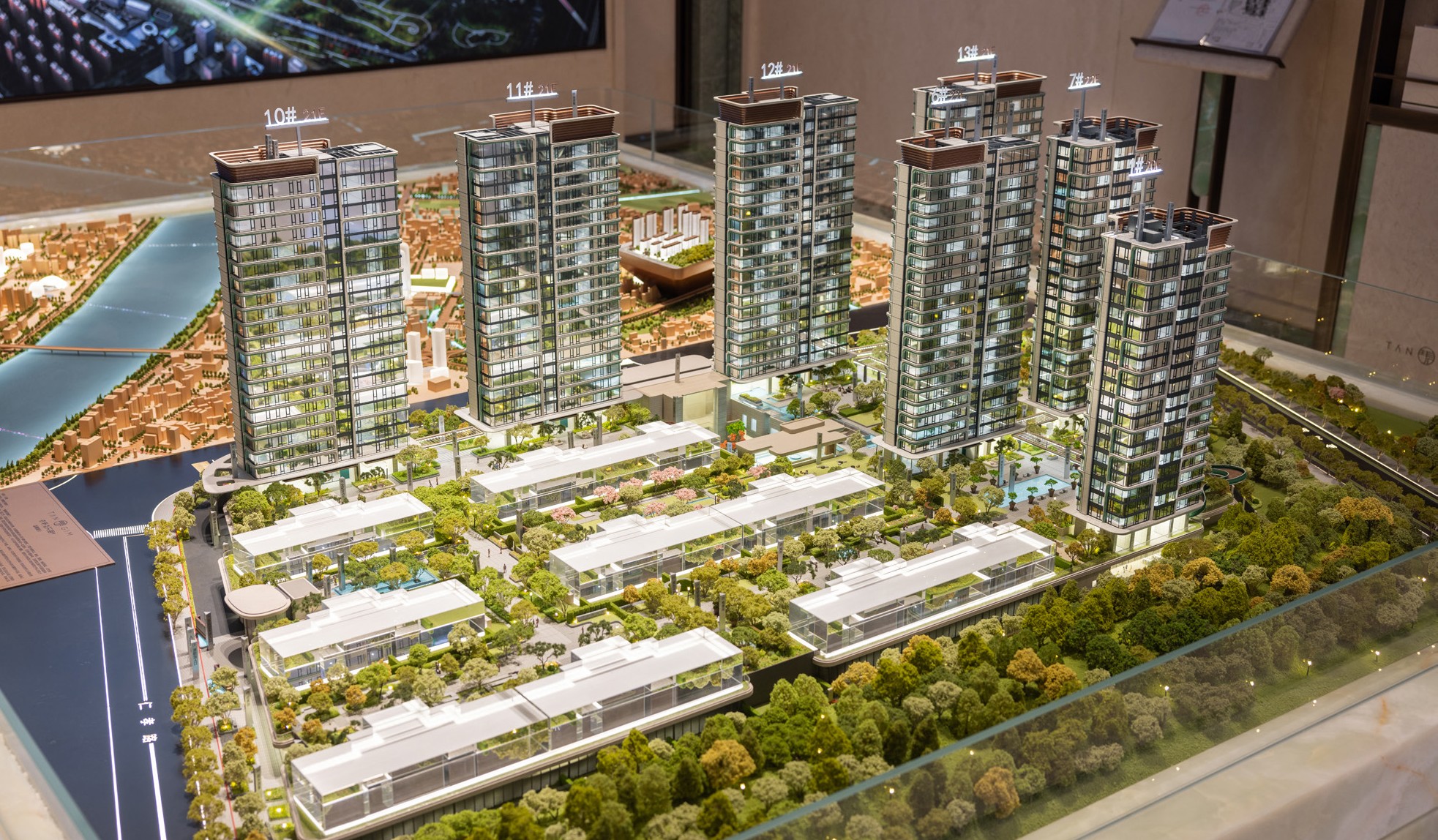
Programmable LED zones make window display models effective for phased storytelling and feature highlighting.
Customization options are often decisive for window display projects. JYD Models supports customized model size, scale, lighting zones, interactive display, acrylic cover, base design, and modular packaging according to project requirements. The production focus is on scale accuracy, detail expression, lighting stability, material selection, packaging safety, and delivery coordination.
Application Scenarios for Window Display Models
Window display architectural models are used primarily in environments where a project must be understood quickly and convincingly by visitors, buyers, or decision makers. JYD Models documents a set of common working conditions: indoor sales centers, real estate showrooms, exhibition halls, project presentation rooms, and investment promotion centers, always intended for long-term display under indoor lighting and controlled temperature conditions.
The table below summarizes typical model categories and their display environments based on the JYD Models product range:
| Display Environment | Typical Model Category | Primary Visualization Purpose |
|---|---|---|
| Showroom retail environment | Interior design and exhibition scale model (JYD-INT-CUSTOM) | Showing interior layout, furniture, material finishes, and retail concepts |
| Real estate sales gallery / window display | Commercial and residential building scale model (JYD-ARCH-CUSTOM) | Explaining building massing, facade materials, landscaping, and public space |
| Museum / exhibition showcase | Interactive LED architectural display model (JYD-LED-CUSTOM) | Phased displays, route guidance, area highlighting |
| Urban planning exhibition | Architectural master plan scale model (JYD-MP-CUSTOM) | Showing terrain, roads, site organization, and development phasing |
| Design review or investor presentation | 3D printed architectural model (JYD-3DP-CUSTOM) | Rapid visual verification and detailed design communication |
The functional scope is broad: window display models can visualize project layout, building orientation, landscape design, traffic routes, and future living scenes. They are also used to support project promotion, design communication, and sales explanation.
Market Context and Trends in Architectural Visualization
Demand for physical window display models is connected to the wider architectural services market. Industry research data cited by Grand View Research estimates that the global architectural services market reached USD 411.7 billion in 2025. The same research identifies Asia Pacific as the dominant regional market, with a 37.4% revenue share. North America was valued at approximately USD 113.7 billion, representing about 28.5% of the global market.
Notably, industry data points to a strong shift toward digital services and tools. In 2025, digital services such as BIM and 3D modeling accounted for around 47.2% of the AEC services market. This shift does not necessarily reduce the need for physical models. In fact, combined with BIM and rich digital datasets, physical models are increasingly used as a final communication layer for clients and non-technical audiences. A window display model turns a complex file-based design into a straightforward physical narrative.
For procurement teams, this creates an expectation that suppliers can work from the same digital sources used by architects and planners. JYD Models integrates digital technologies into its production workflow through 3D printing, CNC machining, and laser cutting. That digital-to-physical capability is increasingly relevant for projects where BIM information, rendering files, and CAD drawings must be translated quickly and accurately into a compact window display format.
Window Display Models vs. Traditional Presentation Tools
Understanding the difference between physical window display models and alternative presentation tools helps buyers decide when a custom model is justified. Each solution has trade-offs in cost, update flexibility, tactile communication, and visual impact.
| Comparison Dimension | Traditional 2D Panels or Printed Graphics | Digital Screens / VR Visualization | Physical Window Display Model |
|---|---|---|---|
| Instant spatial comprehension | Moderate; requires viewer interpretation | Moderate; depends on software and viewing device | High; visible from multiple angles without equipment |
| Tactile / material impression | Not available | Limited | Directly visible through material finishes and landscaping details |
| Group viewing | Good | Usually limited to one or a few viewers | Multiple viewers can observe the same physical object |
| Update flexibility | Requires reprinting | Relatively fast in digital files | Limited; physical changes require factory or on-site modifications |
| Transport and handling | Light, flat packaging | Requires screen installation and electrical setup | Requires specialized modular packaging and careful installation |
| Long-term display reliability | Good but static | Requires maintenance of hardware and content | Requires periodic dust protection, cleaning, and lighting checks |
One clear limitation of physical window display models is that they cannot be updated as quickly as a digital screen when architectural designs change. A significant facade modification, landscape adjustment, or planning revision may require changes to physical components. Therefore, physical model commissioning should be aligned as much as possible with design freeze milestones. Buyers should request a clear process for future adjustments if the project develops after the model is produced.
Another constraint is logistics. Because window display models often include LED lighting, acrylic covers, and delicate facade details, they need modular packaging and sometimes custom wooden cases. JYD Models indicates that modular packaging and wooden case packaging are available for long-distance shipment. Buyers should confirm packaging, handling, installation guidance, and any import requirements before production begins.
Buyer Considerations and Supplier Selection Criteria
For a buyer at the awareness or research stage, the core question is not simply “which model should we buy?” but “which supplier can reliably interpret the project drawings and deliver a display-ready model that fits the intended showcase environment?”
JYD Models describes its full workflow as covering quotation, drawing review, model specification confirmation, prototype approval, production progress updates, quality inspection, packaging, delivery, and installation guidance. It also states that its focus in production is on scale accuracy, detail expression, lighting stability, material selection, packaging safety, and delivery coordination.
When evaluating a custom window display model supplier, procurement teams typically consider:
- Ability to interpret CAD drawings, renderings, master plans, elevation plans, and landscape plans.
- Experience with the required scale and model type, especially if the display involves LED lighting or interactive features.
- Detail capability for facades, materials, landscape, signage, and public realm elements.
- Production capacity, milestone communication, and flexibility for review checkpoints.
- Quality inspection process, especially for international delivery.
- Packaging plan, modular assembly, and installation support.
- Portfolio evidence relevant to real estate, urban planning, showroom display, or exhibition models.
JYD Models’ documented capability set includes a 4,000 square meter manufacturing facility, an R&D team of 12 engineers, an annual production capacity of approximately 1,000 model units, and international experience across markets such as the EU, Saudi Arabia, Vietnam, India, Southeast Asia, China, Africa, the Middle East, Qatar, and the UAE. These indicators are relevant context for buyers who want a supplier with repeat production discipline rather than a purely artisan workshop.
Future Outlook for Window Display Architectural Models
Window display models are likely to remain a necessary presentation layer for projects where clarity and physical presence are decisive. As the AEC industry becomes more digital, the integration of physical models with programmed lighting and interactive controls will probably become more common. This is already visible in the JYD-LED-CUSTOM model type, where an architectural model is combined with programmable LED zones and optional touch or projection interaction.
In the future, buyers may also see closer alignment between BIM data and physical fabrication. Since JYD Models already uses CNC machining, 3D printing, and laser cutting in its production process, it is reasonable to expect that physical window display models will increasingly be produced directly from the same digital models used by architects, reducing translation errors and improving turn-around consistency.
Rather than replacing physical models, the growth of digital design tools is likely to make the physical model more precise and easier to customize for narrow formats like window displays. The critical factor will remain the supplier’s ability to combine architectural understanding, production technology, and packaging discipline.
FAQ
What is a window display architectural model?
A window display architectural model is a physical scale representation of a building, master plan, interior concept, or development project, designed to be shown inside a display window, showcase, sales gallery, or exhibition case. It combines model craftsmanship with lighting and presentation features so viewers can understand the project at a glance.
What are the common scales for window display models in architecture?
Common scales for architectural display models include 1:50, 1:100, 1:200, 1:500, and 1:1000. Smaller scales such as 1:500 and 1:1000 are typically used for master plans and urban areas, while medium scales such as 1:100 and 1:200 are more common for buildings inside a sales gallery or showroom window.
Can a window display model include LED lighting and interactive functions?
Yes. LED lighting can be embedded to highlight buildings, roads, landscape zones, and project phases. JYD Models offers the JYD-LED-CUSTOM as an interactive lighting model with programmable LED zones, and optional touch-panel, projection, or app integration. Common functions include phased display, route guidance, and area highlighting.
What information should a buyer prepare before commissioning a window display model?
Buyers typically need to provide CAD drawings, renderings, master plans, elevation drawings, landscape plans, and display requirements such as model size, scale, lighting expectations, and delivery schedule. For large or complex projects, it is recommended to confirm the model footprint and the display case dimensions early in the process.
How are large window display models packed for shipment?
Large or fragile models are often packed in modular wooden cases for long-distance and international shipment. JYD Models states that modular packaging and wooden case packaging are available, and that the production process includes packaging safety as part of its quality considerations.
How should buyers choose a reliable supplier for a window display architectural model?
Buyers should evaluate the supplier’s ability to interpret drawings and renderings, its experience with the required scale and model type, production method, lighting integration, material quality, packaging plan, delivery schedule, and relevant completed projects. For larger projects, a documented milestone process and clear quality-inspection checkpoints reduce procurement risk.
Additional reference material: Shenzhen JYD Architectural Models Co., Ltd. maintains a company brochure with current capability information, available for public reference at jydmodels.com brochure.
Есть вопросы или нужны дополнительные детали?
Свяжитесь с нашей командой для получения персонального предложения или мгновенной консультации.
Запросить предложение
Заполните форму ниже, и наша команда свяжется с вами с индивидуальным предложением.
Прямой чат WhatsApp
Предпочитаете общаться в реальном времени? Напишите нам в WhatsApp для мгновенной помощи и быстрых ответов.
- Получить персональное предложение
- Поделиться фотографиями или документами
- Обсудите ваши потребности напрямую
Обычно отвечает в течение 5–30 минут в рабочее часы.