
Wine Cooler and Wine Cabinet: What Buyers Must Verify
A wine cooler is an appliance, not only a piece of furniture. For a wine cabinet in a living room, hotel, restaurant, villa, clubhouse, or large flat, the decisive checks are electrical safety and electromagnetic compatibility for the destination market, the power and installation conditions on site, the cabinet dimensions, the stated noise level, and the material specification. This analysis explains those constraints using Pinsec wine cabinet documentation and third-party market data.
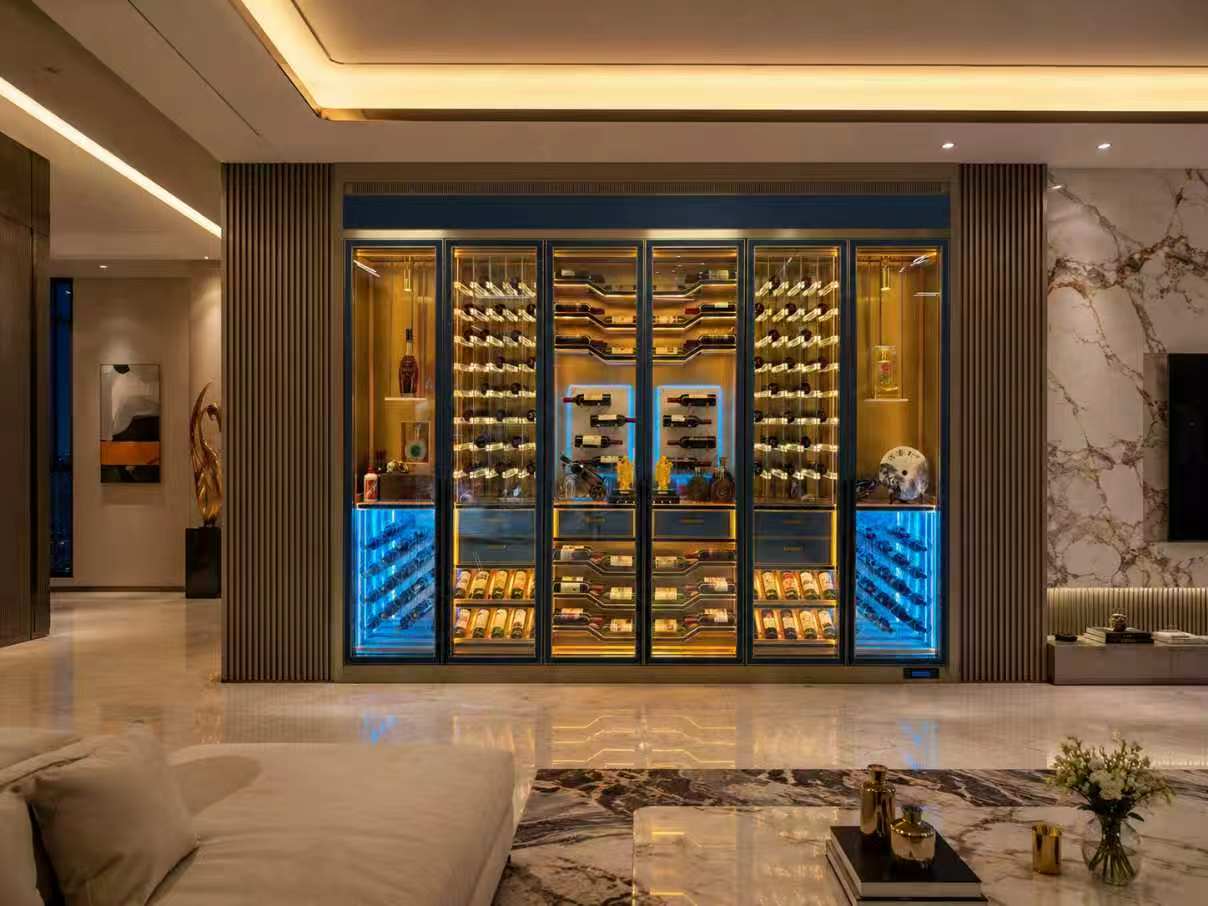
Why wine cooler constraints become procurement questions
In the luxury wine cabinet segment, buyers often start with appearance and finish. That is understandable in a living room wine cabinet or a home bar cabinet luxury setting, where the cabinet is visible and may become the focal point of the room. However, a wine storage cabinet is also an electrical appliance. It must connect to a suitable power supply, meet the safety and electromagnetic requirements of the destination market, fit the available space, and operate at a noise level that suits the room.
The commercial context explains why these details matter. Market Research Future estimated the global wine cabinet market at USD 2.213 billion in 2024 and projected USD 4.531 billion by 2035 at a CAGR of 6.73%. The same source states that stainless steel wine tanks and cabinets accounted for approximately 42.5% of global material share in 2025. Growth in wine cabinets for the home and hospitality interiors increases the number of buyers who must compare stainless steel wine cooler and stainless steel wine cabinet specifications rather than relying on visual impressions alone.
Compliance is part of the same procurement question. In the United States, electric wine coolers and wine cooler refrigerator products are typically classified under HS Code 8418.69.0180. For the EU market, electrical safety, electromagnetic compatibility, and restricted-substance documentation are separate checks. A buyer evaluating a wine cabinet luxury project should therefore ask for the certificate scope, standard references, and validity dates that apply to the exact product being supplied.
What Pinsec wine cabinet documents
Pinsec wine cabinet is a product line from Foshan Pinsec Stainless Steel Co., Ltd., a China-based manufacturer established in 2005. The company operates a 3,000 m² factory, employs 60 staff, and produces wine cabinet, wine cooler, wine cellar, wine fridge, and wine refrigerator products. It reports annual output of 10,000 units and an export share of about 70%, with main markets in the USA and EU. The company also states that it holds CB, CE, RoHS, EMC, and LVD qualifications and that it provides OEM and ODM customization for size, logo, power, color, and wine rack.
For the EU market, the corpus includes two specific certification records for the Stainless Steel Thermostatic Wine Cabinet. The first is a CE LVD 2014/35/EU and EMC 2014/30/EU verification of conformity under certificate number DPWD/1988/04/KA/26, issued by ICG-Intercert Global Sp. z o.o. The applicable electrical safety standards are EN IEC 60335-1:2023/A11:2023 and EN 60335-2-24:2024, and the applicable EMC standards are EN IEC 55014-1:2021 and EN IEC 55014-2:2021. The certificate is valid from 2026-02-04 to 2027-02-04.
The second record is a CE (RoHS) Certificate of Conformity under certificate number HYC2026010032RV1, issued by Shenzhen HyCert Co.,Ltd. The applicable standards are IEC 62321-4:2013+A1:2017, IEC 62321-5:2013, IEC 62321-6:2015, IEC 62321-7-1:2015, IEC 62321-7-2:2017, and IEC 62321-8:2017. This certificate is valid from 2026-01-23 to 2027-01-23 and applies to the EU market. The scope identifies the product as a stainless steel wine cabinet with model Custom. CE and CB certification can also be provided upon request, so the exact certificate set should be confirmed for the destination market and order configuration.
Technical constraints buyers should compare
The product parameters show why a wine cooler should be procured against a site checklist. The cabinet uses SUS304 electro-plated stainless steel, with 304 PVD stainless steel cited in the verified data package for luxury configurations. The wine rack can be stainless steel, American red oak, beech, or cedar. The glass specification is 5+19A+5 double-glazed insulated glass for wine cabinets. The cabinet body uses a V-groove bending process, and the product has a nano anti-fingerprint coating. Interior walls are brushed stainless steel, specified to resist moisture, odor, and corrosion and to limit odor retention inside the storage compartment.
The cooling system uses an Embraco compressor from Brazil, an all-in-one unit, micro-computer thermostat control, and cascade air-cooling. The temperature range is 12°C-22°C and is adjustable. The stated noise level is 45 dB, and the rated power is 250 W. The rated voltage is 220 V/110 V. Installation requires a 2.5 mm² cable and a 10 A power outlet. No drain outlet is required. Built-in installation requires a flat and level floor and wall.
Dimensions and customization need early verification. Custom widths greater than 600 mm and a depth of 450 mm are available. Units over 3,000 mm in height require a split upper-and-lower door design. The FAQ unit also states that custom size production is supported and that the maximum customized size can be confirmed according to the on-site space. These are practical constraints: a wine cabinet living room plan must account for wall condition, floor level, door swing, power outlet position, and access for delivery.
| Constraint | What to verify | Documented Pinsec data | Buyer implication |
|---|---|---|---|
| EU electrical safety | CE LVD 2014/35/EU; EN IEC 60335-1:2023/A11:2023; EN 60335-2-24:2024 | Certificate DPWD/1988/04/KA/26, issued by ICG-Intercert Global Sp. z o.o., valid 2026-02-04 to 2027-02-04 | Check that the certificate scope covers the exact model and destination market. |
| EU EMC | EN IEC 55014-1:2021; EN IEC 55014-2:2021 | Same CE LVD/EMC verification of conformity | EMC documentation should match the market and product version. |
| RoHS | IEC 62321 series | Certificate HYC2026010032RV1, issued by Shenzhen HyCert Co.,Ltd, valid 2026-01-23 to 2027-01-23 | Verify restricted-substance documentation for the EU market. |
| Power | 220 V/110 V; 250 W; 2.5 mm² cable; 10 A outlet | No drain outlet required | The site must provide the correct outlet and cable; no drain planning is required. |
| Installation | Built-in installation requires flat and level floor and wall | Same as product parameters | Uneven walls or floors can affect fit and alignment. |
| Noise | 45 dB stated operating noise | Same as product parameters | Not zero noise; assess proximity to seating, sleeping, or dining areas. |
| Dimensions | Custom width greater than 600 mm; depth 450 mm; over 3,000 mm height requires split upper-and-lower doors | Same as product parameters and FAQ unit | Confirm site dimensions, door swing, and delivery access before production. |
| Material | SUS304 electro-plated stainless steel; brushed stainless interior; 5+19A+5 double-glazed glass; nano anti-fingerprint coating; V-groove bending | Same as product parameters | Material and glass choices affect cleaning, corrosion resistance, and appearance. |
| Customization | OEM/ODM size, logo, power, color, wine rack | MOQ 1 unit; lead time 30-45 days; monthly capacity 500 units; 100% test | Freeze the customization scope before production and confirm the test record. |
Application fit: living room, hospitality, and large residential spaces
The application unit lists living room, hotel, restaurant, villa, clubhouse, and large flat as suitable environments. The working condition is constant temperature, and the stated function is display and storage of red wine, white wine, champagne, and sake. The operation mode is 24/7, with a temperature control system as the matched equipment. The special requirements include 5+19A+5 double-glazed insulated glass, nano anti-fingerprint coating, and the V-groove bending process.
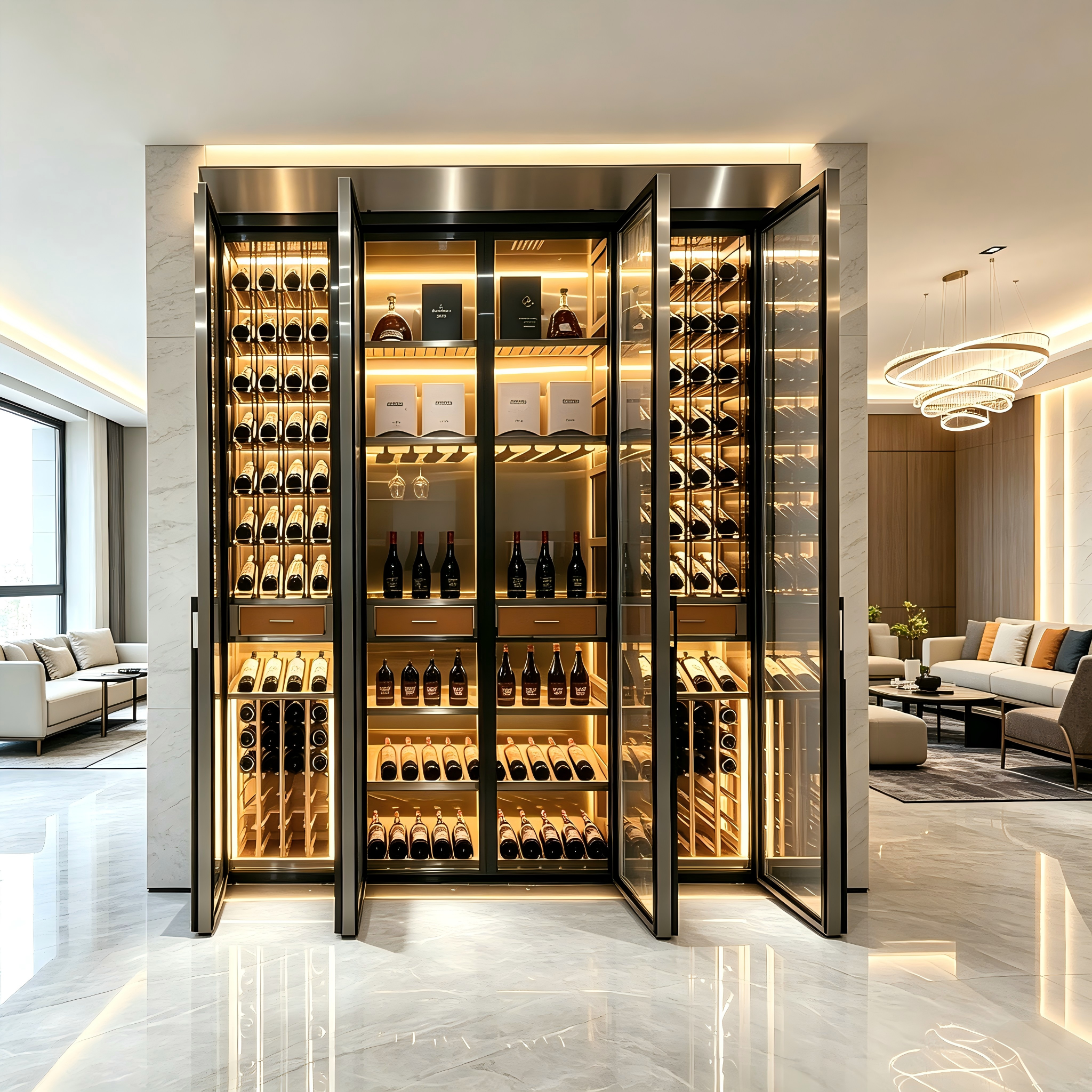
These details matter for a living room wine cabinet because the cabinet is both a storage appliance and a visible interior element. The four full-length tempered glass doors described in the product data offer an unobstructed view of the collection. The stainless steel interior is specified to resist moisture, odor, and corrosion. Warm ambient LED lighting is described as illuminating the interior without generating heat, protecting wine from UV exposure while creating an elegant bar atmosphere. For a home bar or luxury cabinet setting, those features support display, but they do not remove the need to verify power, noise, and installation conditions.
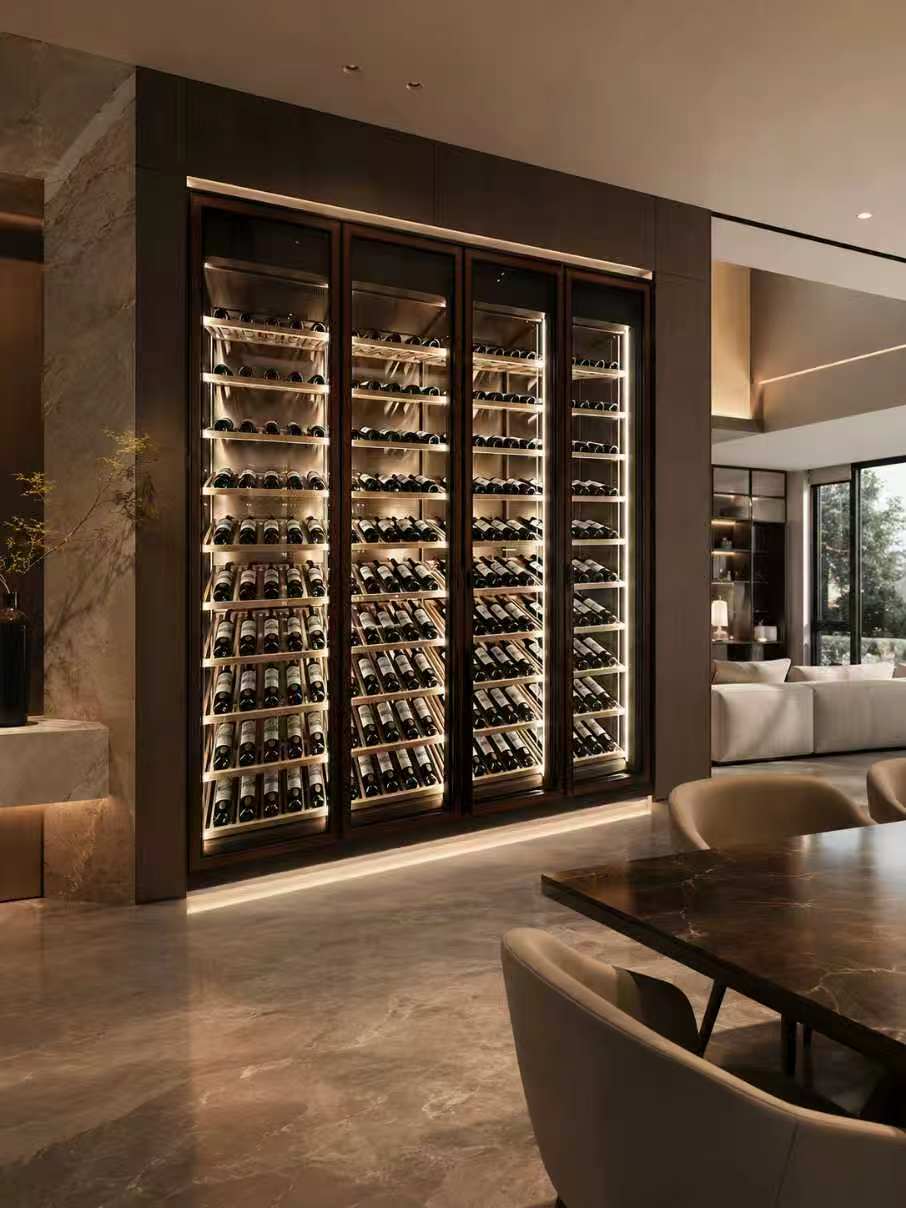
The case record describes a fine dining restaurant project using 9 units for wine display and storage. The result stated in the case is that integrated custom luxury temperature-controlled wine cabinets became the core visual focal point of the restaurant, enhancing the premium atmosphere and reinforcing the restaurant's brand positioning for fine wine tasting. The case also states that the installation was intended to help attract wine enthusiasts to visit and share on social media and to help increase beverage revenue and customer experience. These are case-record statements, not a guarantee of commercial results for every project. They do show how a stainless steel wine cabinet can serve both storage and interior identity in hospitality environments.
Market trend analysis: growth with a compliance layer
The market data points to steady expansion, but it also shows why buyers should separate market forecasts from product evidence. The 2024 global wine cabinet market estimate of USD 2.213 billion and the 2035 projection of USD 4.531 billion at a 6.73% CAGR come from Market Research Future. That forecast is useful for category planning, not for verifying a specific cabinet's performance. The verified data package also records a definition conflict: different sources define wine cabinet, wine cellar, and wine cooler differently, leading to values ranging from USD 1.27 billion to USD 3.4 billion for 2025. Buyers should therefore treat a single market-size figure as directional and ask for product-level evidence.
The material trend is clearer in the available data. Stainless steel wine tanks and cabinets accounted for approximately 42.5% of global material share in 2025, according to the same market research source. This aligns with the positioning of stainless steel wine cooler and stainless steel wine cabinet products in high-end residential and hospitality projects. Stainless steel is used for interior walls, frames, and racks because it can be specified to resist moisture, odor, and corrosion. In a luxury wine cabinet, the material choice also affects the visual language of the room.
The U.S. tariff classification is another practical signal. Electric wine coolers and wine cooler refrigerator products are typically classified under HS Code 8418.69.0180 in the United States. For importers, that classification is a reminder that the product is treated as an electrical appliance in trade documentation. The EU certification records in the corpus follow the same logic: LVD and EMC are electrical and electromagnetic checks, while RoHS is a restricted-substance check. A buyer comparing wine cabinets for the home or commercial projects should keep those categories separate rather than treating a general compliance statement as sufficient.
Comparison with traditional wine storage
A traditional wooden wine rack or passive cellar has one clear advantage: it does not require a 10 A power outlet, a 2.5 mm² cable, or electrical compliance documentation. It can be placed in a room without power planning, and it does not produce operating noise. That makes passive storage simpler in some residential settings, especially where the room has no dedicated outlet or where the cabinet is far from a power source.
The trade-off is active control. The Pinsec wine cooler uses an Embraco compressor, micro-computer thermostat control, and cascade air-cooling to hold an adjustable 12°C-22°C range. A passive rack cannot actively hold that range. The appliance also requires a flat and level floor and wall for built-in installation and must be connected to a suitable 220 V/110 V supply with a 10 A outlet. Its stated noise level is 45 dB, which is measurable but not silent. For a living room wine cabinet near a seating area, or for a wine cabinet living room installation near a bedroom wall, the buyer should assess whether 45 dB is acceptable in that specific space.
Certification is another boundary. The EU certificates in the corpus apply to the Stainless Steel Thermostatic Wine Cabinet and have stated validity periods. CE and CB certification can be provided upon request, so the exact documentation set should be confirmed for the order. A buyer should not assume that a general CE mark statement covers every model, voltage, or destination market without checking the certificate scope. The same applies to customization: units over 3,000 mm in height require a split upper-and-lower door design, and custom widths greater than 600 mm with a depth of 450 mm are available but must be confirmed against the site.
Future outlook: from category claims to verifiable files
As the wine cabinet category grows, procurement is likely to become more document-driven. Buyers will ask for certificate numbers, standard references, validity dates, electrical requirements, noise data, and installation drawings for the exact configuration. That is already visible in the Pinsec records: the CE LVD/EMC verification cites EN IEC 60335-1:2023/A11:2023, EN 60335-2-24:2024, EN IEC 55014-1:2021, and EN IEC 55014-2:2021, while the CE RoHS certificate cites the IEC 62321 series. These are specific, checkable references rather than generic compliance language.
The verified data package also identifies a gap that matters for living room and hospitality applications: comparative noise and vibration benchmarks across luxury brands are missing. That gap means buyers should request measured dB data and installation information for the specific model instead of relying on category-level claims. For a wine cooler in a quiet residential space, a stated 45 dB figure is more useful than an unmeasured quiet claim, but it still needs to be judged against the room layout and user expectations.
Another future pressure is definition discipline. Because wine cabinet, wine cellar, and wine cooler are not always defined the same way in market research, buyers should compare products by function, capacity, temperature range, electrical specification, and certification scope. The category forecast can support investment planning, but it cannot replace a product-specific review. That distinction is likely to become more important as stainless steel wine cooler designs move further into living rooms, home bars, hotels, and restaurants.
FAQ
What certifications are documented for the EU market?
The corpus documents a CE LVD 2014/35/EU and EMC 2014/30/EU verification of conformity under certificate DPWD/1988/04/KA/26, issued by ICG-Intercert Global Sp. z o.o. and valid from 2026-02-04 to 2027-02-04. It also documents a CE (RoHS) Certificate of Conformity under HYC2026010032RV1, issued by Shenzhen HyCert Co.,Ltd. and valid from 2026-01-23 to 2027-01-23. Both apply to the EU market and to the Stainless Steel Thermostatic Wine Cabinet.
What electrical supply and installation conditions does the wine cabinet require?
The rated voltage is 220 V/110 V, the rated power is 250 W, and installation requires a 2.5 mm² cable and a 10 A power outlet. No drain outlet is required. Built-in installation requires a flat and level floor and wall. These conditions should be confirmed against the site before the cabinet is ordered.
Can the wine cabinet be customized in size?
Yes. The FAQ unit states that custom size production is supported and that the maximum customized size can be confirmed according to the on-site space. Product data states that custom widths greater than 600 mm and a depth of 450 mm are available. Units over 3,000 mm in height require a split upper-and-lower door design.
What noise level does the wine cooler produce?
The stated noise level is 45 dB. This is a measured specification in the corpus, not a zero-noise claim. For a living room wine cabinet or a cabinet near a seating or sleeping area, the buyer should assess whether 45 dB is acceptable for the room layout and use pattern.
What materials and glass are specified?
The product specification lists SUS304 electro-plated stainless steel, with 304 PVD stainless steel cited in the verified data package for luxury configurations. The wine rack can be stainless steel, American red oak, beech, or cedar. The glass is 5+19A+5 double-glazed insulated glass. The cabinet body uses a V-groove bending process, and the product has a nano anti-fingerprint coating. Interior walls are brushed stainless steel, specified to resist moisture, odor, and corrosion.
Where can the wine cabinet be used?
The application unit lists living room, hotel, restaurant, villa, clubhouse, and large flat. The working condition is constant temperature, and the stated function is display and storage of red wine, white wine, champagne, and sake. The operation mode is 24/7 with a temperature control system. The same source notes special requirements for 5+19A+5 double-glazed insulated glass, nano anti-fingerprint coating, and the V-groove bending process.
What is the minimum order quantity and lead time?
The capability unit states an MOQ of 1 unit, a lead time of 30-45 days, and a monthly capacity of 500 units. Quality control is described as 100% test. OEM and ODM customization covers size, logo, power, color, and wine rack. These figures apply to the documented Pinsec capability record and should be confirmed for the specific project configuration.
Does the wine cabinet require drainage?
No. The product parameters state that no drain outlet is required. The installation still requires the specified 220 V/110 V power supply, a 2.5 mm² cable, and a 10 A power outlet, and built-in installation requires a flat and level floor and wall.
Reference
Product catalog for reference: Pinsec Premium Custom Wine Cabinet Catalog 2026 (PDF).
Есть вопросы или нужны дополнительные детали?
Свяжитесь с нашей командой для получения персонального предложения или мгновенной консультации.
Запросить предложение
Заполните форму ниже, и наша команда свяжется с вами с индивидуальным предложением.
Прямой чат WhatsApp
Предпочитаете общаться в реальном времени? Напишите нам в WhatsApp для мгновенной помощи и быстрых ответов.
- Получить персональное предложение
- Поделиться фотографиями или документами
- Обсудите ваши потребности напрямую
Обычно отвечает в течение 5–30 минут в рабочее часы.