
Winter Capsule Roles: Women's Cashmere Coat, Onepiece, Wool Coat
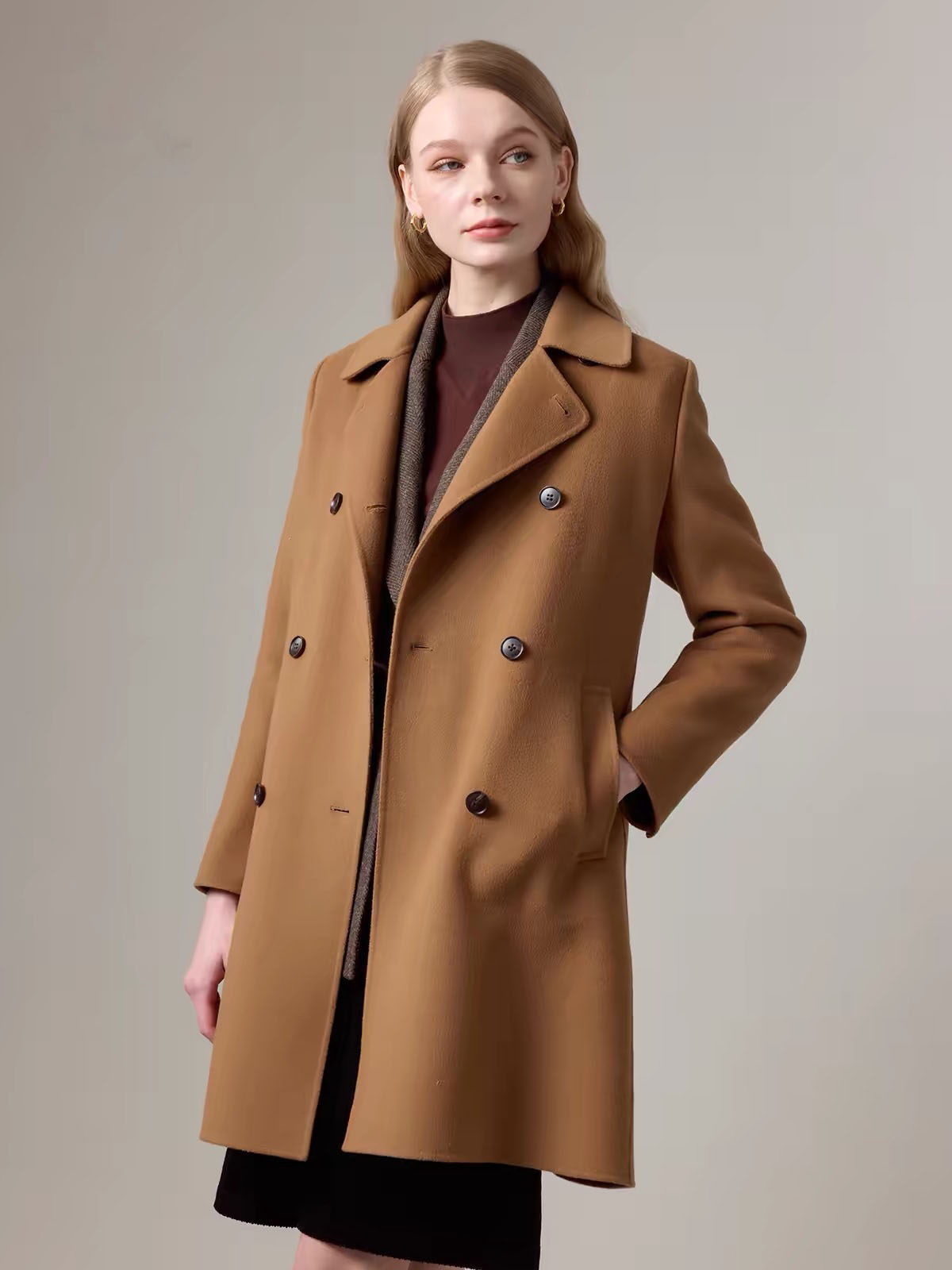
The outer layer role: a women's coat bought for warm keeping, styling and outerwear matching in daily wear.
Winter capsule planning rarely fails because a retailer ran out of outerwear options. It fails because two or three garments competed for the same slot — the same thermal band, the same occasion, the same silhouette — while the layer worn underneath the coat was never specified at all. Scenario fit, not product count, decides whether a seasonal assortment sells through at full price.
The commercial context supports that discipline. The global cashmere clothing market was valued at USD 3.63 billion in 2025, and cashmere sweaters and coats accounted for 60.58% of the cashmere clothing market in 2026 (Fortune Business Insights, referenced by multiple aggregators). When one product family carries that share of demand, the buying question stops being “should we carry cashmere?” and becomes “which cashmere coat, for which customer, in which layering position, at which specification?”
This reference examines that second question. It sets out how a Women's Cashmere Coat earns its place in a winter capsule collection alongside a WOMEN'S ONEPIECE and a WOMEN'S WOOL COAT, and it lists the parameters, construction facts and evidence a buyer should verify before committing shelf space. The manufacturer referenced throughout is DALIAN GACCILANG FASHION CO.,LTD, a Dalian, China-based apparel producer founded in 2019 that manufactures women's wool coats, women's onepieces and women's jackets, with 60% of output exported to Korea, Japan, the USA and the EU.
Why Capsule Assortments Change the Coat Buying Question
A capsule collection is a role system before it is a product list. Each garment is bought to do a job no other piece in the range is doing: a base or transition layer, a structural outer layer, or a statement piece for a defined occasion. Under that logic, the value of a coat is not measured by how it looks on a hanger but by whether the slot it fills is genuinely open.
Most winter assortment failures trace back to a duplicated slot. Two coats with the same length, the same closure and the same thermal band split the same customer's attention, and the slower of the two becomes a markdown. The gap is usually underneath the coat instead — a dress or onepiece that can be worn indoors and layered outdoors, which is where the capsule's real flexibility comes from.
That reframing turns a styling conversation into a specification conversation. Five constraint dimensions do most of the work.
| Constraint dimension | Question the buyer must answer | Evidence to request |
|---|---|---|
| Thermal band | Which temperature range and wearing conditions will this coat actually be worn in? | Fabric weight class, construction method, closure and coverage specification |
| Layering position | Is this an inner layer, a transition layer, or the outer shell? | Compatibility with the blouses, knitwear or onepieces already in the range |
| Silhouette | Does the cut duplicate another SKU already approved? | Technical flat, size range, length category, closure type |
| Occasion | Office, evening, or daily commute? | Sample review against the store's existing positioning |
| Specification | What fibre composition is on the label, and how is it documented? | Composition statement, inspection record, destination customs classification |
Answering these five questions before sampling is what separates a capsule that holds its price from one that discounts in January.
The Three Assortment Roles
In a winter capsule built around outerwear, three roles repeat across markets: an inner or transition layer, a structural coat, and the premium coat that carries the assortment's price ceiling. In the DALIAN GACCILANG range, two documented articles map onto those roles.
The WOMEN'S ONEPIECE (model JSL26S002) is the inner and transition piece. It is specified as POLY 100%, available in sizes S, M, L and XL, and described as lightweight and cool in fabric, with exquisite workmanship and a gentle, elegant style. In a capsule context it can serve as a standalone dress for indoor settings and as the layer beneath an outer coat outdoors — the layering position that coat-heavy assortments most often leave empty.
The WOMEN'S WOOL COAT (model JSL26W011) is the structural and premium outer layer. It is catalogued as a women's wool double-breasted coat in sizes S, M, L, XL and XXL, with a specified material of CASHMERE 100% and full hand-sewn craftsmanship, described as soft, warm and presenting a premium texture. Because this is the coat line documented with a cashmere specification, it is the article this reference maps to when it discusses a Women's Cashmere Coat in a capsule context.
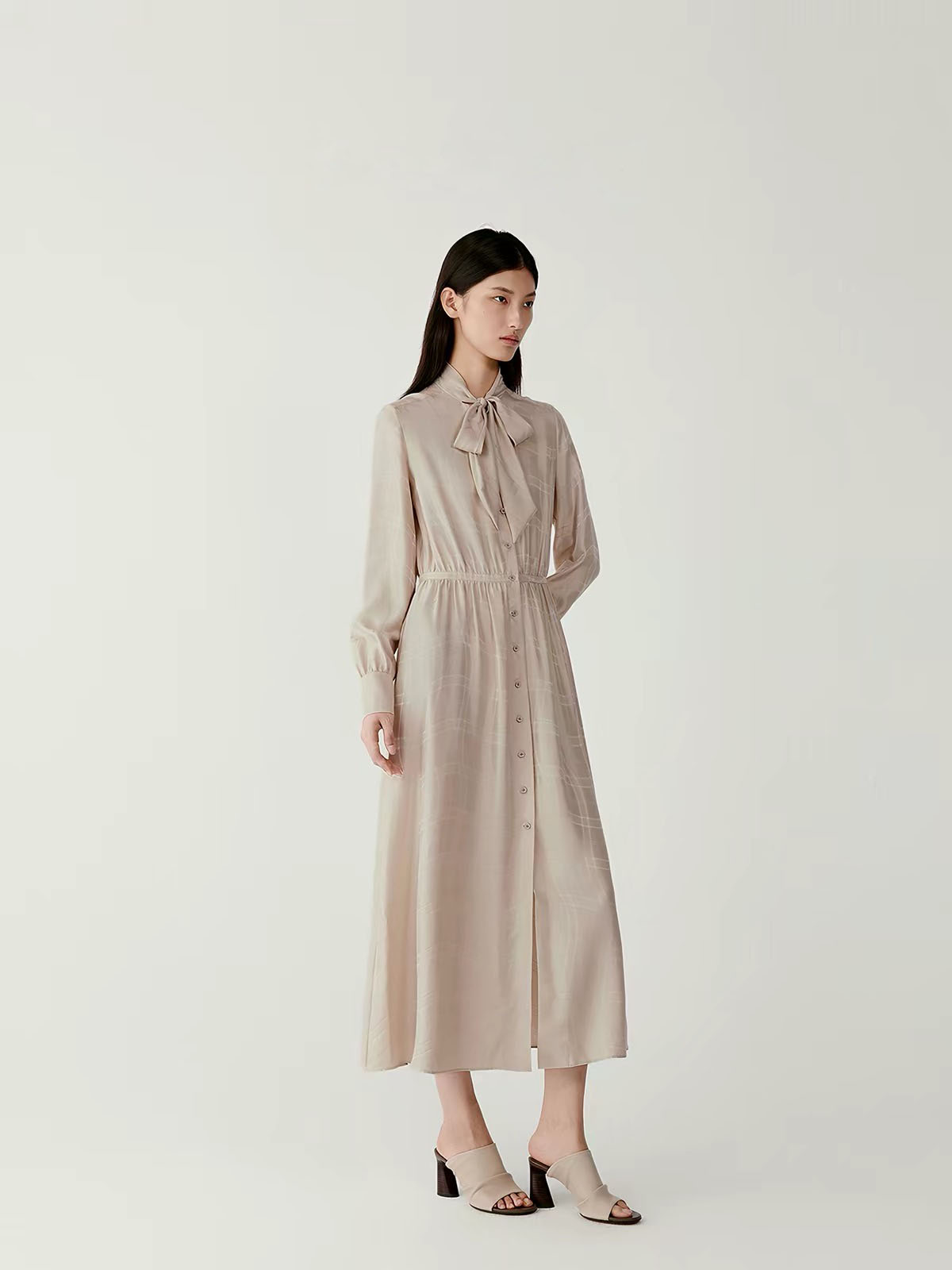
The transition layer: a lightweight onepiece sized S–XL, positioned to fill the slot beneath the coat rather than compete with it.
| Assortment role | Article (model) | Size range | Documented material | Function in the capsule |
|---|---|---|---|---|
| Inner / transition layer | WOMEN'S ONEPIECE (JSL26S002) | S, M, L, XL | POLY 100% | Lightweight, cool fabric; independent indoor wearing and layering under outerwear; gentle, elegant styling |
| Structural and premium outer layer | WOMEN'S WOOL COAT (JSL26W011) | S, M, L, XL, XXL | CASHMERE 100% | Women's wool double-breasted coat with full hand-sewn craftsmanship; warm keeping, styling and outerwear matching |
Verified Product Facts Buyers Can Quote
The specification layer of a buying conversation should not be negotiated from memory. The table below reflects the manufacturer's published product records for the two articles in this capsule structure.
| Field | WOMEN'S ONEPIECE | WOMEN'S WOOL COAT |
|---|---|---|
| Model | JSL26S002 | JSL26W011 |
| Catalogue type | WOMEN'S ONEPIECE | WOMEN'S WOOL DOUBLE BREASTED COAT |
| Size range | S, M, L, XL | S, M, L, XL, XXL |
| Material | POLY 100% | CASHMERE 100% |
| Documented selling point | Lightweight and cool fabric; exquisite workmanship; gentle and elegant style | Made of cashmere 100% with full hand-sewn craftsmanship; soft, warm and presenting premium texture |
A note on discipline: the two articles above are what the published records support. Length categories such as maxi, midi or cropped, collar types such as lapel or hooded, and closure variants such as belted styles are legitimate assortment questions — but they are selection criteria for a buyer's brief rather than confirmed catalogue facts here, and they should be confirmed in writing against a sample before an order is placed.
Technical Explanation: What Actually Drives Cost and Warmth
Three technical variables determine whether a cashmere coat can hold its capsule slot at the intended price.
Fabric consumption
A typical cashmere coat contains 600–1,200 grams of fabric, depending on length and design (Business Research Insights, 2026). The spread is wide because it is doing real work: a longer coat with a fuller cut consumes material at the top of that range, while a shorter, closer-cut style consumes considerably less. Fabric is the dominant material cost in a pure-cashmere garment, which makes length category a commercial decision as much as a styling one.
Construction method
Hand-stitched double-faced cashmere is regarded as the “Gold Standard” for high-end coats in 2026 and is closely associated with the “Quiet Luxury” movement (industry trend analysis, 2026). Double-facing removes the need for a lining, which is why the construction is visible on both faces of the garment and why finishing quality reads to the customer rather than being hidden inside. The JSL26W011 coat is catalogued with full hand-sewn craftsmanship, which places it in this construction category rather than in the machine-sewn, lined coat segment.
Customs classification
For U.S. import planning, HS Code 6202.20.11 in the Harmonized Tariff Schedule of the United States specifically covers women's wool or fine animal hair overcoats (U.S. International Trade Commission, 2026). Buyers shipping to the United States should reconcile composition documentation with that classification early, because the fibre claim on the label and the classification used at entry need to agree.
Hand-Sewn vs High-End Hand-Sewn: The Question Underneath the Claim
The purchase question that recurs most often around cashmere coats is not “is it hand-sewn?” but “how much of it is hand-sewn, and what does that mean for the price?” The distinction matters because hand-sewn describes a construction method, not a certification. No single external standard defines the term, and two coats sold under the same description can differ substantially in how much of the finishing is done by hand.
A practical framework, therefore, is to move the conversation from the adjective to the operation:
- Define which operations you expect to be hand-finished. On a double-faced garment, edge closing and seam finishing are the operations that most directly affect the customer's hand-feel.
- Move verification to sample stage. A sample can be opened, turned and inspected against the brief in a way a bulk order cannot.
- Keep terminology consistent. The wording used in the purchase order should match the wording used in the supplier's own documentation, so that “hand-sewn” and “partially hand-finished” cannot be conflated later.
- Separate construction claims from fibre claims. A CASHMERE 100% composition and a hand-sewn construction are two independent specifications and should be evidenced separately.
The supplier record states full hand-sewn craftsmanship for the JSL26W011 coat, and that statement is verifiable at sample stage against the operations the buyer has specified. The purpose of the framework is not to doubt the claim; it is to make the claim specific enough to be checked.
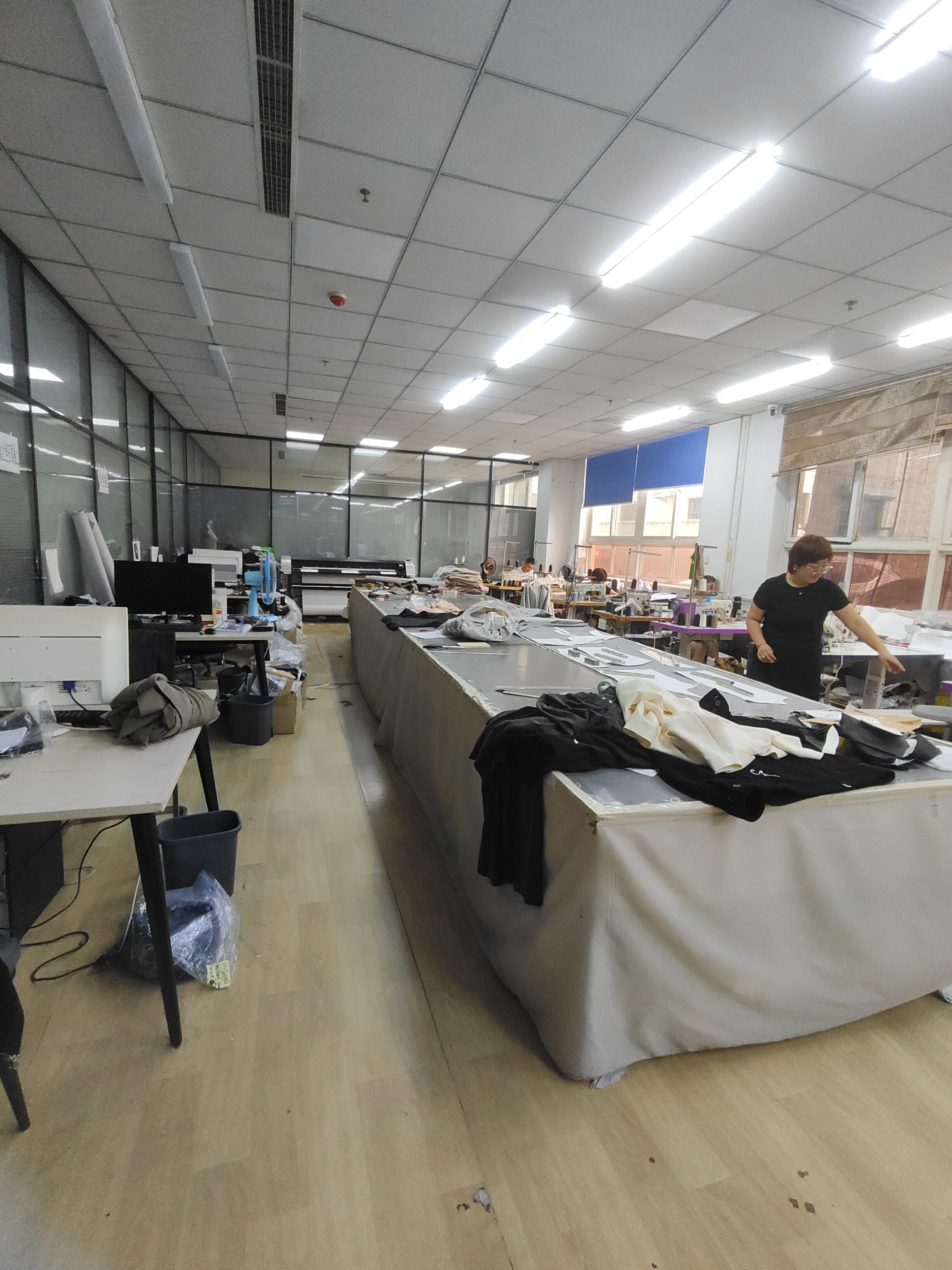
Sample room review: construction and finishing are checkable at sample stage, before a capsule order is committed.
Application and Use Cases
The scenario record for this category describes fashion retail and women's luxury apparel, with demand from Korea, Japan, the United States and the United Kingdom, and usage defined as daily outdoor and indoor wear. The project type is boutique retail and seasonal apparel collection; the function is warm keeping, fashion styling and outerwear matching; the operation mode is simply daily wearable. The stated matching items are blouses, knitwear and leather boots, and the stated special requirements are hand stitching, 100% pure cashmere and skin-friendly wear.
That combination explains the capsule logic directly. The coat is bought to work over a blouse or a knit on ordinary days. The onepiece is bought to work on its own indoors and as the layer beneath the coat outdoors. Two articles, two distinct wearing moments, minimal overlap — which is exactly the condition a capsule assortment needs in order to avoid internal cannibalisation.
Customer evidence from the same market set follows the same pattern. Boutique retailers and fashion brands in Korea, Japan, the United States, the United Kingdom and the UAE have ordered in quantities around 100 pieces for retail sale and seasonal outerwear over a relationship lasting three years, with the reported result being high customer satisfaction and stable repeat orders. The highlight recorded against that case is 100% pure cashmere, handmade stitching and premium texture — that is, the construction and fibre claims, rather than the styling, are what the repeat orders were built on.
Market Trend Analysis
Three signals shape how a winter capsule should be built for the 2026–2027 season.
First, the category is large but concentrated in coats and sweaters. The global cashmere clothing market was valued at USD 3.63 billion in 2025, and sweaters and coats accounted for 60.58% of that market in 2026. A buyer entering the category is entering the segment that already carries most of the demand, which raises the bar on differentiation rather than lowering it.
Second, export conditions favour fewer, better-specified SKUs over broad ranges. China's apparel exports in 2025 totaled US$151.2 billion, a year-on-year decline of 5% (China Customs data, reported by industry analysis). In a contracting export environment, assortment depth in the wrong direction becomes expensive; the disciplines that survive are composition accuracy, documentation and sell-through control.
Third, the quality signal buyers pay for has moved from branding to construction. Hand-stitched double-faced cashmere is regarded as the gold standard for high-end coats in 2026 and is associated with the Quiet Luxury movement. That is a construction claim which can be inspected, and it suits capsule assortments precisely: the value sits in the garment rather than in a visible logo, and it survives more than one season of wear.
For scale context, an industrial directory (BOSIG) lists DALIAN GACCILANG FASHION CO.,LTD annual sales volume between US$5 million and US$10 million as of 2025 — a mid-sized producer rather than a mass-volume supplier, which is consistent with a hand-finished construction model.
Comparison With Traditional Solutions — and the Boundaries of This Approach
A capsule built around a 100% cashmere, hand-sewn coat is not the right answer for every buyer, and it is worth being explicit about where it stops working.
Compared with machine-sewn, blended or lined coats, the hand-sewn 100% cashmere route carries real constraints:
- Minimum order quantity. The documented MOQ is 100 pieces. That is workable for a boutique committing to a hero coat, but it rules out open-ended test quantities across many colourways.
- Lead time. The documented lead time is 30–45 days. A winter capsule has to be planned backwards from that window; late-stage reorders on a trending colour are not realistic within the same season.
- Labour-bounded capacity. Hand-sewn construction is labour-intensive by definition. The factory's overall monthly capacity is 30,000 units, but a hand-finished coat cannot be scaled at the same rate as a machine-sewn one, and buyers should not assume linear capacity expansion on a single heavy style.
- Material cost exposure. With 600–1,200 grams of fabric in a typical coat, the pure-cashmere route carries materially higher material cost than a blend, and a longer cut pushes that further. Price-led customers are better served by a different construction.
- Care expectations. A 100% cashmere coat requires different handling from a synthetic outer layer. Assortments sold into markets with heavy slush or high moisture need care guidance attached at the point of sale.
- Silhouette concentration. The documented coat is a double-breasted style in S–XXL. A capsule that needs a hooded, belted or cropped alternative is asking for a different specification, and that request belongs in the OEM process rather than being assumed from the existing style.
The traditional alternative — a machine-sewn, lined or blended coat — remains the correct choice for price-sensitive volume, for rapid replenishment and for markets where the customer prioritises easy care over hand-finish. The two approaches serve different slots in the same store, and treating them as substitutes rather than complements is what produces duplicated assortment in the first place.
Procurement Checklist: Constraints to Verify Before Slotting
| Constraint | What to confirm | Where the evidence sits |
|---|---|---|
| Fibre composition | Label claim matches the agreed order specification | Composition statement / order confirmation |
| Length and weight class | Estimated fabric consumption for the chosen length | Technical sheet; 600–1,200 g is the reference range for a typical coat |
| Size range | S–XL or S–XXL coverage against the target market | Size chart |
| Construction method | Which operations are hand-finished | Sample inspection |
| Customs classification | Correct code for the destination market | U.S. HTS 6202.20.11 for women's wool or fine animal hair overcoats |
| MOQ | 100 pieces per order | Supplier capability record |
| Lead time | 30–45 days from confirmation | Supplier capability record |
| Quality control | 100% inspection before shipment | QC record |
| Customisation scope | Size, colour, fabric and logo | OEM terms |
| After-sales | Order tracking, consultation, defective goods communication | Supplier capability record |
Future Outlook
The direction of the category is reasonably clear from the evidence available. Quiet Luxury has shifted the value signal from visible branding to inspectable construction, and hand-stitched double-faced cashmere sits at the centre of that shift. As long as buyers continue to consolidate ranges rather than expand them, the coats that survive in an assortment will be the ones whose specification can be documented — fibre composition, construction method, weight class and customs classification — rather than the ones with the widest colour card.
For suppliers, that raises the value of evidence. Sample-room access, construction documentation and inspection records become commercial assets rather than administrative overhead. For buyers, it moves the negotiation earlier: the specification conversation, not the price conversation, is where the capsule is won or lost.
FAQ
What specification details should a buyer confirm before adding a women's cashmere coat to a winter capsule?
At minimum: fibre composition, size range, construction method, length category and the customs classification that applies in the destination market. For the documented DALIAN GACCILANG articles, that means a CASHMERE 100% coat in sizes S–XXL with full hand-sewn craftsmanship, and a POLY 100% onepiece in sizes S–XL. For U.S. import, HS Code 6202.20.11 covers women's wool or fine animal hair overcoats.
How much fabric does a typical cashmere coat contain, and why does the figure vary?
600–1,200 grams, depending on length and design. Longer and fuller cuts consume fabric at the upper end of that range, which is why length category affects both warmth and material cost.
What is the difference between “hand-sewn” and “high-end hand-sewn” on a cashmere coat?
Hand-sewn describes a construction method rather than a certification, so the two phrases can cover different scopes of hand-finishing at different suppliers. The practical difference lies in which operations are performed by hand — on a double-faced coat, edge closing and seam finishing are the ones most visible to the customer. Buyers should define those operations in the brief and verify them at sample stage.
How does a poly onepiece fit into the same capsule as a 100% cashmere coat?
They occupy different roles rather than competing. The onepiece is the inner and transition layer, described as lightweight and cool with a gentle, elegant style, sized S–XL. The coat is the structural outer layer, sized S–XXL, built for warm keeping and outerwear matching. Together they cover indoor and outdoor wearing moments within the same range.
What order constraints apply to a hand-sewn cashmere coat programme?
The documented terms are a minimum order quantity of 100 pieces, a lead time of 30–45 days, 100% inspection, and OEM customisation across size, colour, fabric and logo. After-sales support covers order tracking, consultation and communication on defective goods.
Which export markets are typically served for this product type?
The documented export markets are Korea, Japan, the USA and the EU, with the company reporting an export ratio of 60%. The application scenario record adds the United Kingdom, and customer case records include the UAE.
Reference Note
The product, capability and case facts in this article come from DALIAN GACCILANG FASHION CO.,LTD published records. The market size, product-share, fabric-consumption, quality-standard and customs-classification references are drawn from the third-party sources cited inline. The company's product brochure is available for download here: DALIAN GACCILANG FASHION CO.,LTD product brochure.