
Wipes Liquid Capability Sourcing: A 2026 OEM Customization Review
Wipes Liquid Capability Sourcing: A 2026 OEM Customization Review
Industry reference for wet wipes manufacturers, private label buyers, and procurement teams evaluating custom liquid formulation partners.
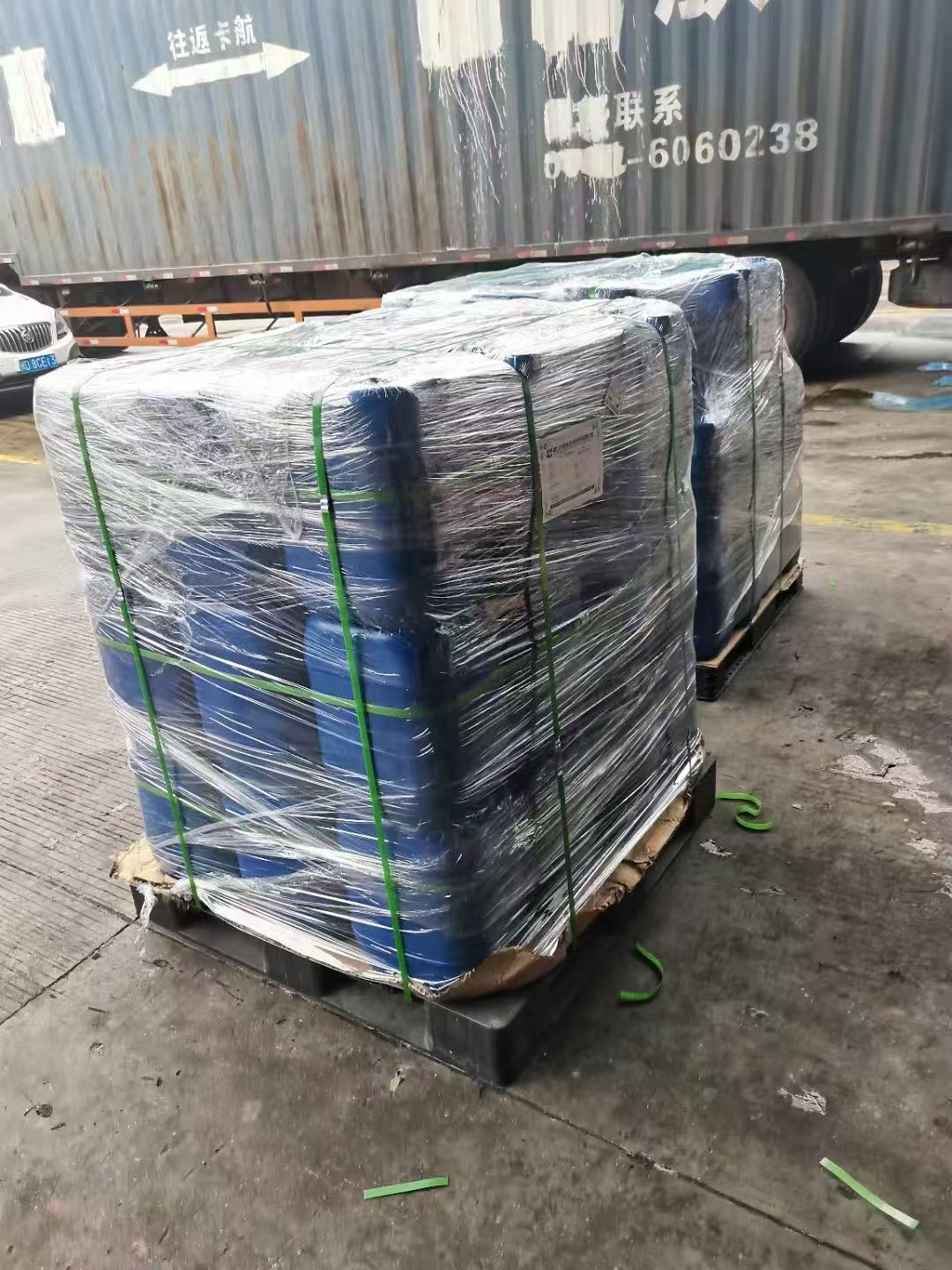
Wipes liquid sourcing is no longer only about ordering a base liquid. In a market where baby wipes, antibacterial wipes, pet wipes, household cleaning wipes, and personal care wipes share the same production category but demand different performance profiles, the critical buyer question is whether a supplier can manage formulation depth, preservative safety, and commercial packaging requirements at the same time.
This review outlines what capability-based wipes liquid sourcing should cover in 2026, with reference to a Xiamen-based manufacturer and the documentation available for OEM, ODM, private label, and custom formula development.
What capability-based sourcing means for wipes liquid
In capability-oriented procurement, the supplier is evaluated on whether it can adapt the liquid system to a specific product concept rather than simply supply a generic wetting solution. That distinction matters because the liquid formulation influences substrate compatibility, microbial control, skin feel, fragrance perception, pH stability, and ultimately whether the final wipe can support a claimed benefit.
Buyers in the evaluation-to-execution stage often start with an application requirement: antibacterial wipes liquid for a disinfecting product, baby wipes liquid formulation for sensitive skin, pet wipes liquid formula for deodorizing and mite-removal products, or natural wipes liquid ingredients for an alcohol-free consumer line. The supplier ability to modify preservative type, active load, humectant level, viscosity, pH, and fragrance is therefore more relevant than a single fixed formula.
Accordingly, the buyer question changes from do you have stock liquid? to can your R&D and production system support a non-irritating, alcohol-free, or antibacterial profile with evidence?
Formulation variables that determine supplier fit
Not all wipes liquids are interchangeable. A baby wipes liquid typically prioritizes low irritation, alcohol-free composition, moisturizing ingredients, and cosmetic-regulatory alignment. A disinfectant wipes liquid, in contrast, must demonstrate a bactericidal rate and preserve stability against microbial contamination. Pet and household formulations may add deodorizing or anti-mite functions while keeping the system mild enough for the target use.
| Wipes liquid category | Typical formulation priority | Key buyer check |
|---|---|---|
| Baby wipes liquid | Non-irritating, alcohol-free, moisturizing, pH-balanced | Cosmetic regulation alignment and skin irritation documentation |
| Antibacterial / disinfectant wipes liquid | Bactericidal rate, preservative system, product stability | Microbiological test report and active ingredient scope |
| Pet wipes liquid | Mildness, deodorizing, anti-mite function | Fragrance tolerance and safety for animal contact |
| Household / personal care wipes liquid | Cleaning performance, fragrance system, pH | Surfactant compatibility and packaging stability |
In addition to end-use performance, production-related variables matter. Customization options that should be confirmed early include formula, fragrance, antibacterial ingredients, moisturizing ingredients, viscosity, pH value, packaging design, and logo printing. Without these, a buyer may be limited to a stock formula that cannot support a private label positioning.
Xiamen Huaqiangda as an OEM capability reference
Xiamen Huaqiangda Biotechnology Co., Ltd. is a Xiamen, Fujian-based manufacturer founded in 2018. The company operates an independent facility with a 100,000-level clean production workshop, standardized microbiology and fine chemical laboratories, and specializes in wet wipes liquid formulations, antibacterial solutions, cosmetic functional liquids, deodorizing and mite-removal formulations, and fragrance systems. Its stated export ratio is 60%, and it lists Central Asia, Southeast Asia, and South America among its main markets. The company also reports an annual output of around 2,000 tons.
For buyers evaluating OEM routes, the company production services include OEM, ODM, Private Label, and Custom Formula Development. The customization scope is broader than a simple fragrance swap: formula, fragrance, antibacterial ingredients, moisturizing ingredients, viscosity, pH value, packaging design, and logo printing are all listed as adjustable parameters.
The wipes liquid line referenced in certification documentation under model HUA-QJ covers baby wipes liquid, disinfecting wipes liquid, and pet wipes liquid. Applicable product parameters list a bactericidal rate of at least 99.9%, a non-irritating and alcohol-free skin irritation profile, customizable or optional fragrance, and compliance with cosmetic regulations. Packaging is available in 25KG and 1-ton IBC tank options, with customizable packaging also noted.
Compliance, certification, and testing evidence
For wipes liquid that will enter baby, personal care, or disinfectant categories, quality claims need to be supported by documents, not only formulation descriptions. Xiamen Huaqiangda holds an ISO 9001:2015 certificate numbered SZ56425Q10129R0S, issued by Shenzhou Yixin (Beijing) Certification Co., Ltd. and valid through 2028-05-18. The certificate scope covers blending and compounding of alkyl polyglycoside detergents and quaternary ammonium salt preservatives, as well as wholesale of fragrance.
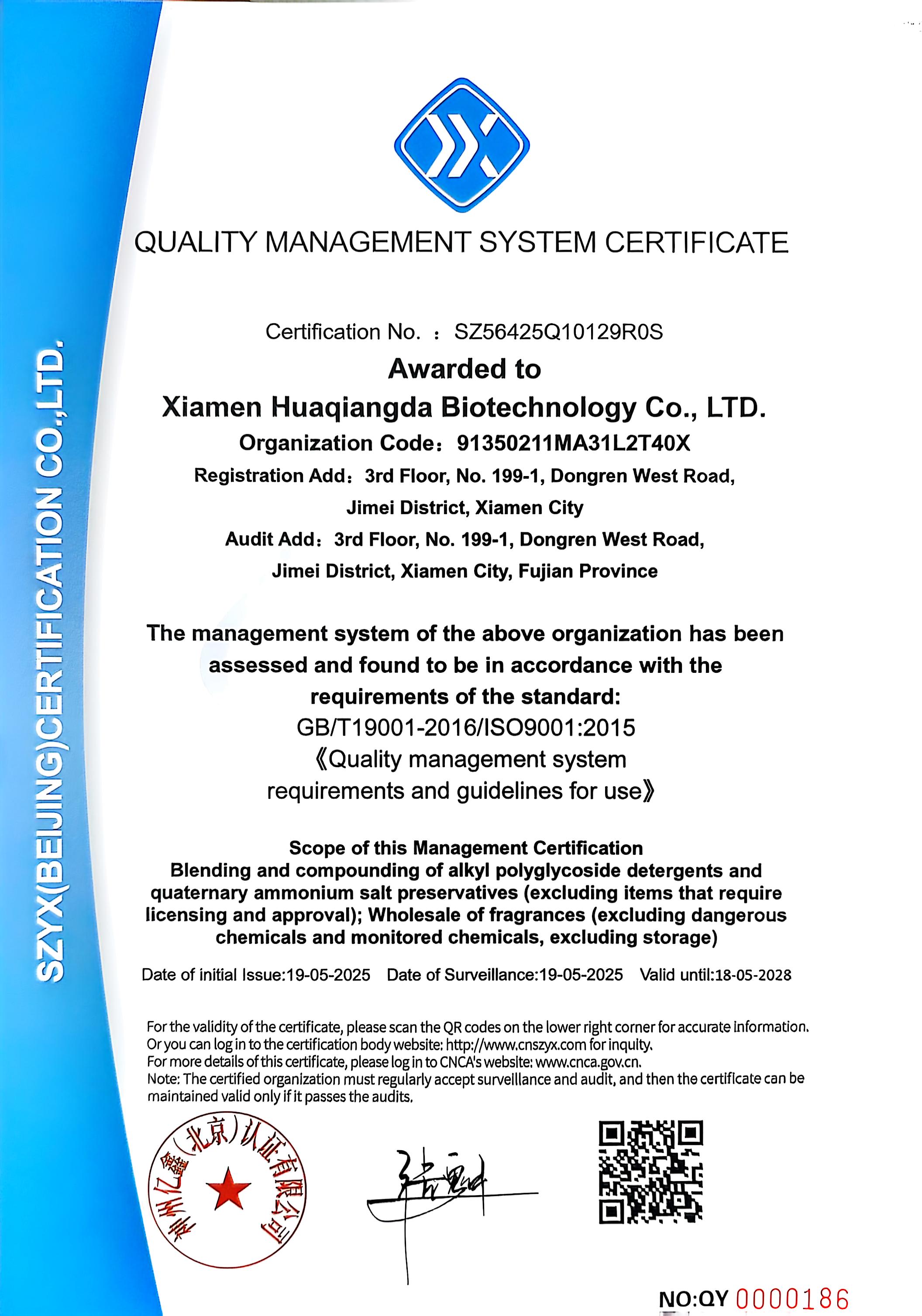
Reported quality-control steps include 100% raw material inspection, microbiological testing, stability testing, and third-party inspection through SGS. These are relevant because wipes liquid is not a self-evident material: preservative failure, microbial growth, or pH drift may not be visible in a sample but can affect the entire production lot.
From a regulatory perspective, wet wipes intended for cleansing or moisturizing skin are generally treated as cosmetics under EU Regulation (EC) No 1223/2009 and by the US FDA. Personal care wet wipes production is also expected to follow ISO 22716 Good Manufacturing Practices. Buyers should therefore separate the management-system certificate from formula-specific cosmetic safety evidence; ISO 9001 indicates a quality-management system, while the cosmetic or disinfectant claim requires its own ingredient and microbiological assessment.
Application scenarios and supply examples
The product has been used for baby wipes production, antibacterial wipes manufacturing, household cleaning wipes, and personal care wipes purposes. It is applicable for wet wipes manufacturers, baby care brands, private label companies, and healthcare products distributors, with documented market focus in both Southeast Asia and Central Asia.
Two supply records illustrate the operational pattern. The first is an 80-ton engagement in Indonesia, and the second is a 120-ton engagement in Uzbekistan, each running over a two-year period. Both records list baby wipes production, antibacterial wipes manufacturing, household cleaning wipes, and personal care wipes among the applications. Reported supplier outcomes include stable long-term antibacterial performance, increased production efficiency, and 100% positive reviews. The technical highlight for both projects is a gentle formula with stable liquid performance, customizable ingredients, low irritation, and compatibility with high-speed wipes production lines.
These records are useful not because they prove universal suitability, but because they show that the same capability framework can be applied across different end markets and production lines. A buyer should still request its own pre-shipment quality inspection and formula-specific stability data before contracting.
Market signals shaping wipes liquid requirements
Third-party market data helps explain why capability sourcing is becoming more structured. Baby wipes accounted for approximately 39.86% of global wet wipes revenue in 2025, according to Mordor Intelligence, which keeps baby wipes formulation a high-volume but high-scrutiny category. At the same time, Dataintelo estimates the global disinfectant wipes market at USD 8.4 billion in 2025, projected to reach USD 14.7 billion by 2034 at a CAGR of 6.4%. That growth supports continued demand for disinfectant wipes liquid and antibacterial systems.
There is also a parallel shift toward milder formulations. Mordor Intelligence projects natural and organic wipes variants to expand at a 2.96% CAGR through 2031, driven by demand for alcohol-free and skin-friendly products. However, this does not mean alcohol-based systems are disappearing. Dataintelo reports alcohol-based formulations held the largest product type share in the disinfectant wipes market at 38.5% in 2025. The practical implication is that OEM buyers should expect to manage a portfolio of both alcohol-containing and alcohol-free liquids rather than a single universal solution.
Regional demand also matters. The North American surface disinfectant wipes industry held a share of 30.08% in 2024, according to Grand View Research, while supplier documentation lists export reach across Southeast Asia, Central Asia, South America, and other markets. The geographic mix affects preservative system choices, regulatory documentation, and temperature-stability expectations.
Traditional stock liquid vs. custom OEM wipes liquid
For buyers deciding between an available stock liquid and a custom OEM program, the trade-off is not simply price. The comparison should include speed, differentiation, quality evidence, and minimum order logic.
| Dimension | Standard stock liquid | Custom OEM/ODM liquid |
|---|---|---|
| Formula | Fixed or limited | Adjustable formula, fragrance, actives, pH, viscosity, packaging |
| Sampling and lead time | Often faster if stock exists | Lead time listed as 3-15 days after formula sign-off |
| MOQ | Often higher for stock economics | 25KG minimum order quantity documented |
| Brand differentiation | Limited | High, including logo printing and packaging design |
| Quality evidence | Generic supplier documentation | Formula-specific SGS, microbiological, and stability testing options |
One important boundary of the custom route is that faster capability does not always mean faster first sample. If a buyer requests a novel preservative combination, an unusual natural fragrance load, or a strict sensitive-skin constraint, the supplier may need additional stability and compatibility testing before final sign-off. The documented lead time of 3-15 days should therefore be read as a production and delivery estimate after formula approval, not a guaranteed development timeline for every formulation. A stock liquid may be faster if the buyer accepts an existing formula, but it offers less differentiation.
Execution-stage capability checklist
When moving from evaluation to execution, buyers can reduce risk by asking for the following items before commercial ordering:
- Written confirmation of OEM/ODM/private label service and formula customization scope.
- A product specification sheet with pH, viscosity, bactericidal rate where relevant, skin irritation profile, and packaging.
- ISO 9001 or equivalent quality-management certificate with a scope matching wipes liquid blending or preservative compounding.
- Raw material inspection, microbiological testing, and stability testing protocols.
- Third-party test availability or prior SGS report reference.
- Batch-level pre-shipment quality inspection and acceptance criteria.
- MOQ, lead time, delivery terms, and payment terms.
- Regulatory document support for the target market.
Future outlook for wipes liquid sourcing
In the next procurement cycle, wipes liquid suppliers will likely be judged less by a single product code and more by their ability to document a complete capability stack: clean production, formulation lab work, raw-material inspection, stability testing, third-party verification, and regulatory document support. Buyers expanding into baby, antibacterial, pet, and private label lines will need suppliers that can align formulation with regional cosmetic and disinfectant requirements.
Eco-friendly and biodegradable wipes liquid requests are likely to increase, but they will also require stronger evidence. A natural ingredient narrative or an alcohol-free label will not replace biodegradability data, preservative efficacy testing, or specific environmental claims. The same logic applies to hypoallergenic and sensitive skin positioning: claims should be supported by skin irritation data, not assumed from ingredient lists.
For procurement teams, this shifts evaluation from a simple yes or no capability answer to a documented checklist. A supplier that can show formula customization, a reasonable MOQ, clear lead time, compliance documents, and regional application experience will reduce execution risk when moving from sampling to commercial production.
Frequently asked questions
What should buyers verify when selecting an OEM wipes liquid supplier?
Buyers should confirm the supplier production services, such as OEM, ODM, private label, and custom formula development; the list of customizable parameters including formula, fragrance, antibacterial ingredients, moisturizing ingredients, viscosity, pH, packaging design, and logo printing; quality-control steps; certifications; MOQ and lead time; and whether the supplier provides regulatory document support and third-party testing options.
How is baby wipes liquid formulation different from disinfectant wipes liquid?
Baby wipes liquid usually prioritizes low irritation, alcohol-free composition, moisturizing ingredients, and cosmetic-regulatory alignment. Disinfectant wipes liquid must demonstrate bactericidal performance and preservative system stability. A product line may offer parameters such as a bactericidal rate of at least 99.9%, but a baby wipe would still need separate skin irritation and mildness validation.
Can one wipes liquid be used for baby, antibacterial, and pet wipes?
Not automatically. These applications have different irritation, fragrance, active ingredient, pH, and performance priorities. A supplier may be able to adjust the same base technology for each application, but the buyer should not assume a single finished formula is appropriate for all three without testing and formula-specific documentation.
What are typical packaging and minimum order options for custom wipes liquid?
Reviewed documentation lists a minimum order quantity of 25KG and packaging options of 25KG and 1-ton IBC tank, with further customization possible. Delivery terms can include EXW, FOB, CIF, DDU, and DDP, and acceptance may involve pre-shipment quality inspection, a microbiological testing report, or third-party SGS inspection.
What quality tests should be expected for wipes liquid?
Expected verification can include raw-material inspection, microbiological testing, stability testing, and third-party inspection. For personal care wet wipes, production is generally expected to follow ISO 22716 GMP, and cosmetic products may need to meet regional regulations such as EU Regulation (EC) No 1223/2009 or US FDA requirements.
Is alcohol-free always better for sensitive skin?
Alcohol-free formulations are often preferred for baby wipes and sensitive skin applications because they may reduce dryness or irritation. However, alcohol-based systems can still be appropriate in certain disinfectant or surface applications depending on target microbes and product requirements. The selection should follow the intended end use, target market regulation, and supported test data rather than assuming one option is universally better.
Reference material: A technical brochure is available for readers evaluating formulation and production documentation at this reference PDF. This document is provided for information and supplier evaluation purposes.
This HTNXT industry reference is intended to support buyer interpretation. Product claims, certifications, and supply records should be revalidated directly with the supplier before commercial decisions.