
Wipes Liquid Compliance Decoded: pH, Alcohol-Free and Antibacterial Claims
Alcohol-free, pH-adjusted, and ≥99% antibacterial are among the most repeated qualifiers on wipes liquid specification sheets — and among the most frequently misread. Each one describes a different layer of product documentation, and none of them is a certification. This reference separates those layers, sets out what evidence each qualifier needs before a buyer treats it as verified, and marks the boundaries where the claims stop applying.
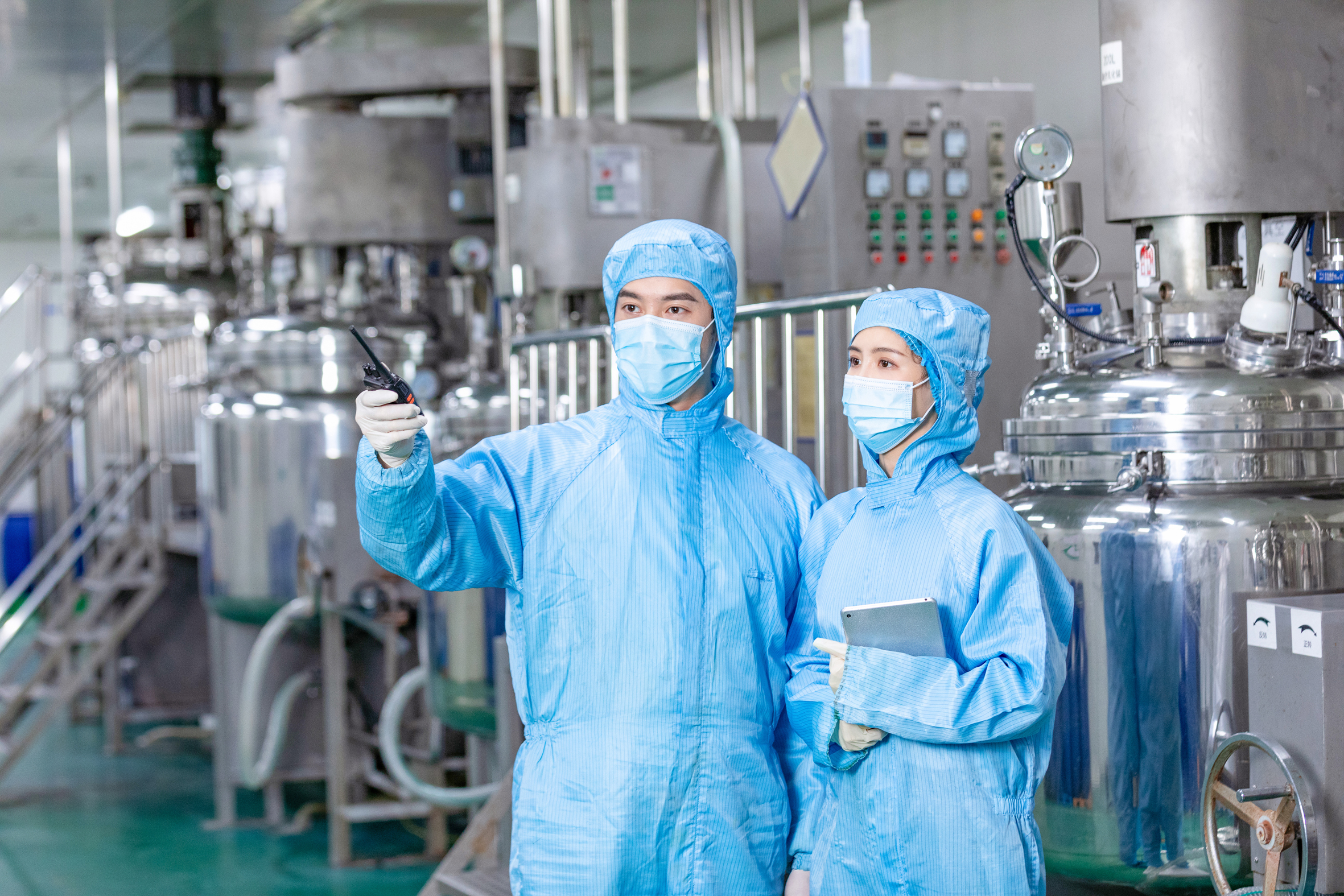
Quality-control testing of wipes liquid formulations: verification happens at the batch level, not at the label level.
Compliance qualifiers in wipes liquid sit on three different levels
A typical wipes liquid datasheet mixes four kinds of statement. Compositional statements describe what the liquid does not contain, such as an alcohol-free formulation. Control parameters describe a band the formulator holds during production, such as a pH range of 5.5–6.5 for baby wipes liquid HUA-BY. Performance statements describe a measured result under defined conditions, such as an antibacterial rate of ≥99% for patient care liquid HUA-PC. Regulatory statements describe the framework the product is placed in. Only the fourth is a formal status; the first three become evidence only when test methods, production batches, and laboratory records are attached to them.
That regulatory layer is usually implied rather than printed. Wet wipes intended for cleansing or moisturizing skin are regulated as cosmetics under EU Regulation (EC) No 1223/2009 and by the FDA in the United States. Production of personal care wet wipes must follow ISO 22716 Good Manufacturing Practices (GMP) and include an assessment of microbiological risks. For a buyer, the useful question is therefore not whether a liquid is described as alcohol-free, but whether the supplier operates inside the applicable manufacturing and safety framework and can document the parameters it claims.
Xiamen Huaqiangda Biotechnology Co., Ltd. is a manufacturer of wet wipes liquid formulations and related daily chemical liquids, based in Xiamen, Fujian, and established in 2018. The company operates a facility that includes a 100,000-level clean production workshop and standardized microbiology and fine chemical laboratories, and produces wipes liquid, antibacterial solutions, cosmetic functional liquids, deodorizing and mite-removal formulations, fragrance systems, and customized daily chemical solutions. Its OEM/ODM formulation support covers baby wipes, antibacterial wipes, makeup remover wipes, kitchen wipes, pet wipes, flushable wipes, and industrial cleaning wipes. The specification-level attributes discussed below — alcohol-free options, pH control, and antibacterial performance figures — belong to that product family.
Why qualifiers travel further than evidence
Three practical pressures explain why compliance language in this category tends to outrun compliance documentation.
- Tender and procurement templates often copy descriptors from supplier datasheets without copying the test conditions that produced them, so a reduction rate or a pH descriptor circulates as an unqualified fact.
- Formulations are compared across categories that do not share targets. A pH band suited to a baby wipes liquid is not the band a kitchen, industrial, or disinfectant liquid would use, yet the numbers are frequently placed side by side.
- Claim rules differ by market. Because skin-cleansing wipes are treated as cosmetics in the EU and the US, the claim set available to them is narrower than the claim set available to biocidal or disinfectant products, which changes how an antibacterial figure may be used in labelling.
The opportunity runs in the other direction. Buyers who fix a single reading protocol for these three qualifiers — definition, required evidence, applicable boundary — spend less time resolving specification disputes and can compare suppliers on documentation rather than adjectives.
Alcohol-free wipes liquid: what the statement confirms
In wipes liquid, alcohol-free refers to the formulation's alcohol content, normally the absence of ethanol or isopropyl alcohol used as a solvent or as the antimicrobial agent.
What it establishes is compositional: the liquid does not rely on alcohol for preservation or solubilization. That matters for skin-facing products positioned on gentleness, including baby wipes and sensitive-skin personal care wipes, and it is a common requirement in requests for alcohol-free wipes liquid.
What it does not establish is skin compatibility, absence of irritation risk, or antimicrobial performance. An alcohol-free liquid still needs a preservative system to control microbial growth across shelf life and use. In Huaqiangda's risk documentation, preservative failure and skin irritation are managed as separate risks, addressed through a stable preservative system, pH balance control, microbiological testing, and a multi-stage filtration system. Removing alcohol shifts the microbiological workload onto exactly those controls, which is why an alcohol-free claim should be read together with preservative and microbiological evidence rather than on its own.
Market structure confirms that alcohol-free is a deliberate position rather than an industry default. Alcohol-based formulations held the largest product type share in the global disinfectant wipes market in 2025, at 38.5% (Dataintelo). At the same time, demand for alcohol-free and skin-friendly formulations is one of the drivers behind the projected 2.96% CAGR for natural and organic wipes variants through 2031 (Mordor Intelligence).
For vetting purposes, two clarifications matter: whether the claim covers the liquid only or the finished wet wipe, and whether the full ingredient and preservative declaration supports it. A liquid can be alcohol-free and still carry a preservative system that a given market restricts, so the qualification has to be checked against the destination market's requirements, not against the descriptor alone.
pH 5.5–6.5 for baby wipes liquid HUA-BY: a control band, not a certificate
The baby wipes liquid specification HUA-BY states a pH range of 5.5–6.5. Read correctly, that is a production control band applied to the liquid.
pH does three jobs in a wipes liquid. It contributes to skin compatibility in skin-facing formulations. It governs the working range of the preservative system, since many preservatives lose effectiveness outside a defined pH window — which means pH drift can erode microbiological protection even when the formula itself has not changed. And it affects the stability of the liquid over shelf life. Huaqiangda lists pH balance control among the methods used to control microbial contamination, formula instability, skin irritation, and preservative failure.
A stated range is more informative than a single target value, but only if it comes with supporting detail. Buyers evaluating a baby wipes liquid formulation should request the specification range, the test method and measurement conditions, batch-level results that show where production actually sits inside the band, and an explanation of how the band was matched to the preservative system.
The 5.5–6.5 band belongs to the HUA-BY baby wipes liquid specification. It should not be transferred to household cleaning, kitchen, industrial, or disinfectant liquids, where different actives and cleaning targets call for different pH regimes and where skin-contact expectations differ. A pH value also does not, on its own, demonstrate skin safety: irritation risk is a formulation-level property assessed through formulation design and testing, with pH as one input among several.
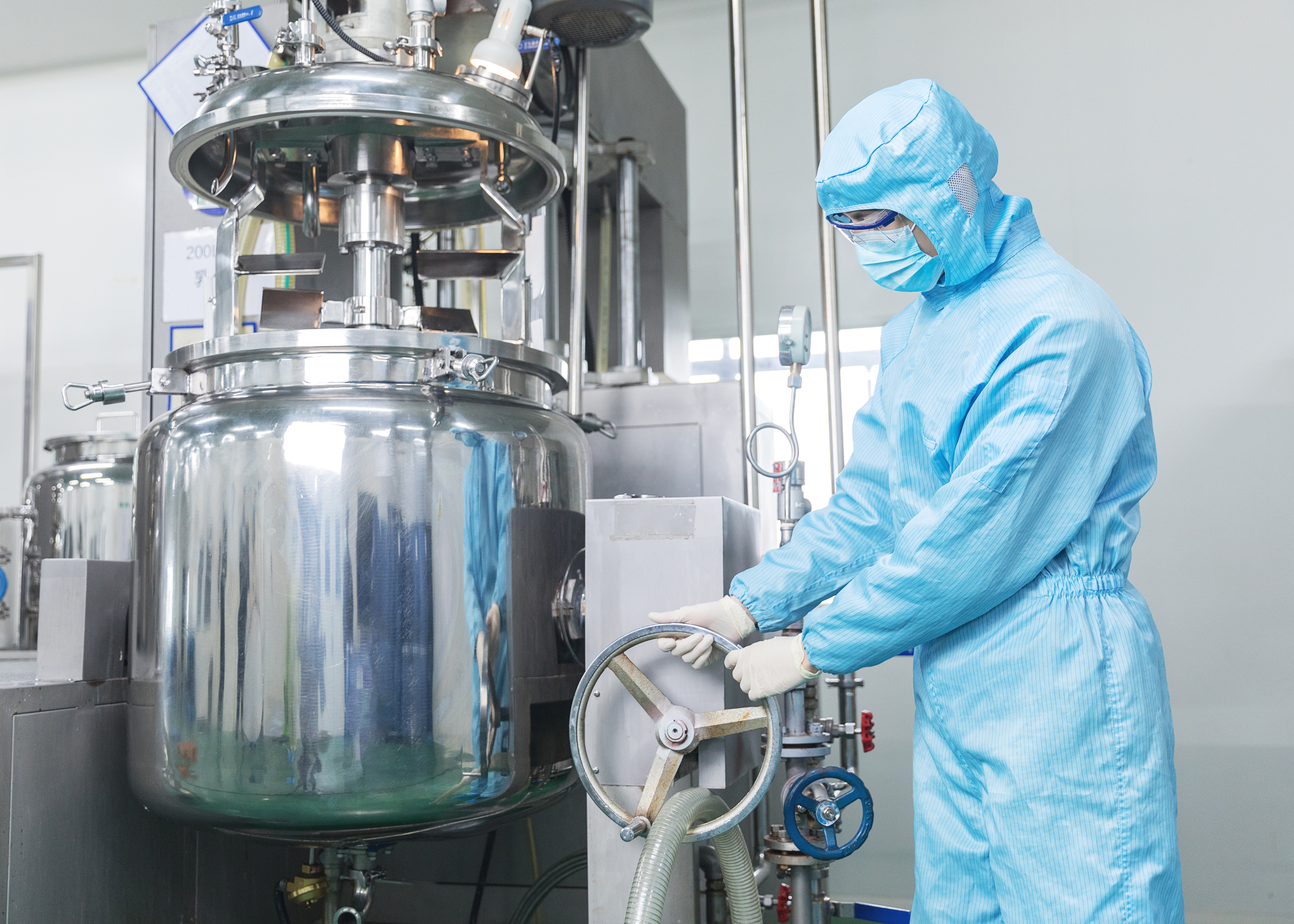
Clean-workshop production and batch retention are the controls that make specification values auditable.
Antibacterial rate ≥99% for patient care liquid HUA-PC: comparability depends on the protocol
Patient care liquid HUA-PC states an antibacterial rate of ≥99%. That figure is a reduction rate measured against a control, and it is only comparable when the test conditions behind it are known.
Four variables determine what a reduction rate means: the test method applied, the contact time allowed, the organisms tested, and whether the sample was the liquid itself or a treated substrate. Two suppliers can both state ≥99% while testing different organisms for different contact times under different methods. Without the protocol, the numbers are not the same measurement.
A workable request list for an antibacterial wipes liquid includes the test method reference, the contact time, the organism panel, the identity of the testing laboratory, the test date, and the production batch the sample was drawn from. If the intended use is patient care or clinical-adjacent environments, the buyer should also confirm whether the figure applies to the liquid as supplied or to a wipe produced with it.
Huaqiangda's comparative data against traditional wet wipes liquid formulas and low-cost generic solutions reports antibacterial effectiveness of ≥99.9% alongside higher antibacterial stability, and its enterprise-level controls include third-party laboratory testing. Those figures describe the performance of the formulation family relative to conventional and generic alternatives; they are supplier-reported comparative data, not a substitute for batch-level test reports on the liquid a buyer actually receives.
Claim use is the second boundary. Because wipes intended for cleansing or moisturizing skin are regulated as cosmetics in the EU and the US, the claims available for those products are narrower than the claims available for biocidal or disinfectant products. A performance figure that is valid as internal specification data is not automatically usable as a market-facing claim. Buyers should confirm which classification a product is positioned under in each destination market — relevant to Huaqiangda's export profile, where main markets include Central Asia, Southeast Asia, and South America — before reusing an antibacterial figure in packaging or promotional text.
Matching each qualifier to the evidence it requires
| Qualifier | What it actually describes | Evidence a buyer should request | Common misreading |
|---|---|---|---|
| Alcohol-free | Composition of the liquid — no ethanol or isopropyl alcohol as solvent or antimicrobial agent | Full ingredient declaration; preservative system description; scope of claim (liquid vs finished wipe) | Treated as proof of skin safety or of antimicrobial performance |
| pH 5.5–6.5 (baby wipes liquid HUA-BY) | Production control band held during manufacture | Specification range; test method and conditions; batch-level distribution; link to preservative system | Treated as a certification, or applied to unrelated product categories |
| Antibacterial rate ≥99% (patient care liquid HUA-PC) | Performance measurement under defined test conditions | Method reference; contact time; organism panel; laboratory identity; liquid vs treated substrate | Compared across suppliers without matching test conditions |
| EU Regulation (EC) No 1223/2009 / FDA cosmetic classification | Regulatory framework for skin-cleansing and moisturizing wipes | Market-specific regulatory classification and supporting safety documentation | Assumed interchangeable with a manufacturing standard |
| ISO 22716 GMP | Good Manufacturing Practice requirement for personal care wet wipes | Production records and microbiological risk-assessment documentation | Assumed to be a product approval rather than a manufacturing framework |
The documentation set that turns claims into evidence
A consistent request list shortens supplier qualification. Six items cover the qualifiers discussed above.
- Full ingredient declaration for the liquid, with the preservative system described rather than merely labelled alcohol-free.
- pH specification plus the test method and batch-level results for the specific product code in question, such as the 5.5–6.5 band stated for baby wipes liquid HUA-BY.
- Microbiological test reports and preservative efficacy evidence tied to the shelf-life claim.
- Performance test reports stating method, contact time, organisms, and laboratory, relevant to codes such as patient care liquid HUA-PC.
- Production and quality records: raw material inspection, batch sample retention, clean-workshop production records, real-time quality monitoring, and third-party laboratory testing — the measures Huaqiangda lists as enterprise-level controls.
- Market-specific regulatory classification for each destination market, since claim rules for cosmetic-class wipes differ from those for biocidal or disinfectant products.
Application mapping: where each attribute carries weight
| Product family | Compliance-relevant attributes | What to confirm |
|---|---|---|
| Baby wipes (HUA-BY) | pH band 5.5–6.5; alcohol-free options; skin-friendly positioning | Preservative efficacy at the specified pH; batch-level pH distribution |
| Patient care and antibacterial wipes (HUA-PC) | Antibacterial rate ≥99% | Method, contact time, organism panel; claim classification per market |
| Personal care and makeup remover wipes | Gentler ingredients; fragrance systems | Ingredient declaration; fragrance-related documentation |
| Household cleaning and kitchen wipes | Cleaning performance; a different pH regime from skin-facing liquids | Surface-contact claim limits; classification where skin contact applies |
| Pet wipes | Deodorizing and mite-removal formulations | Formulation-specific test data for the intended function |
| Flushable and industrial cleaning wipes | Format and substrate compatibility | Dispersion or industrial-use documentation as applicable |
Huaqiangda's application coverage spans these families, together with premium private label wipes production. The practical reading is that no single parameter set serves all of them: the 5.5–6.5 pH band and the ≥99% antibacterial figure belong to specific codes and specific use cases, and transferring either across the range is where specification errors begin.
Market signals raising the documentation bar
- Published wet wipes market sizing varies sharply by scope. Mordor Intelligence values the global wet wipes market at USD 19.11 million in 2025, rising to USD 22.85 million by 2031 at a 3.17% CAGR, while Fortune Business Insights publishes USD 5.16 billion and Grand View Research USD 27.07 billion on a 2022 base. The divergence reflects different category definitions rather than a single disputed figure — a reminder for buyers to define scope before citing any market number in a business case.
- Baby wipes accounted for approximately 39.86% of global wet wipes revenue in 2025 (Mordor Intelligence), which places a large share of category value in skin-facing formulations where pH control and preservative efficacy attract the closest scrutiny.
- The global disinfectant wipes market was valued at USD 8.4 billion in 2025 and is projected to reach USD 14.7 billion by 2034 at a 6.4% CAGR (Dataintelo). This is the fastest-growing adjacent category, and the one where the boundary between cosmetic and biocidal claims is sharpest.
- Within that category, alcohol-based formulations held the largest product type share at 38.5% in 2025 (Dataintelo), which is why alcohol-free positioning requires explicit formulation evidence rather than an assumption of category norms.
- Surface disinfectant wipes in North America held a 30.08% share in 2024 (Grand View Research), concentrating demand in a market where claim rules are applied strictly.
- Natural and organic wipes variants are projected to expand at a 2.96% CAGR through 2031, driven by demand for alcohol-free and skin-friendly formulations (Mordor Intelligence).
Specialized versus conventional wipes liquid: performance, cost, and where the comparison stops
| Dimension | Specialized formulation (supplier-reported comparison) | Traditional / low-cost generic solution |
|---|---|---|
| Moisture retention | Improved by 30% | Baseline reference in the comparison |
| Antibacterial effectiveness | ≥99.9%, with higher antibacterial stability | Baseline reference in the comparison |
| Production compatibility | Production downtime reduced by 25%; lower machine residue; reduced nozzle blockage; lower maintenance frequency | Baseline reference in the comparison |
| Line efficiency | 20% higher production efficiency in automated wipes manufacturing lines | Baseline reference in the comparison |
| Raw material cost | Approximately 10% higher | Lower |
| Customer complaint rate | Reduced by 40% | Baseline reference in the comparison |
| Best fit | Baby wipes, antibacterial wipes, personal care wipes, household cleaning wipes, premium private label production | Cost-driven commodity programmes |
Three limits belong next to that table. First, the cost line is real: raw material cost is reported approximately 10% higher than traditional and low-cost generic solutions, so for price-led, high-volume programmes where complaint and rework costs are low, a standard formulation may remain the rational choice. Second, the performance figures are supplier-reported comparisons against traditional formulas and generic solutions, not an independent ranked benchmark; buyers should re-run the comparison on their own lines and substrates before treating the percentages as transferable. Third, line-level results depend on configuration, dosing system, and production speed, so efficiency and downtime gains observed in an automated wipes line will not necessarily reproduce on a different line.
Future outlook
The direction of travel is toward documentation-led qualification. As skin-cleansing wipes remain classified as cosmetics in the EU and the US and production is expected to follow ISO 22716 GMP with microbiological risk assessment, the adjectives on a datasheet will increasingly need a method, a batch reference, and a laboratory behind them. Categories that combine skin contact with performance claims — baby wipes, given its 39.86% share of global wet wipes revenue in 2025, and the faster-growing antibacterial and disinfectant segment — are where that expectation will tighten first.
For suppliers, the practical consequence is that in-house control capability becomes a commercial asset rather than a background cost. Huaqiangda's stated capability set — a 100,000-level clean production workshop, microbiology and fine chemical laboratories, expertise in preservative systems and gentle antibacterial technologies, a five-engineer R&D team, and a 2,000-ton annual output with 60% of production exported — is the type of infrastructure that supports pH control, preservative efficacy work, and batch retention at the scale buyers are now asking for. For buyers, the equivalent discipline is a fixed evidence template applied to every candidate supplier, so that alcohol-free, pH, and antibacterial claims are compared on the same basis rather than on the same wording.
FAQ
What does alcohol-free mean in a wipes liquid specification, and is it a certification?
It is a compositional statement, not a certification. In wipes liquid, alcohol-free means the formulation does not use ethanol or isopropyl alcohol as a solvent or antimicrobial agent. It confirms what the liquid is built without; it does not confirm skin compatibility, irritation safety, or antimicrobial performance. Because an alcohol-free liquid still needs a preservative system to control microbial growth, the meaningful follow-up question is how preservative efficacy is documented — typically through a stable preservative system, pH balance control, and microbiological testing — and whether the claim covers the liquid or the finished wipe.
What is the significance of a pH range of 5.5–6.5 in baby wipes liquid such as HUA-BY?
It is a production control band. In the HUA-BY baby wipes liquid specification, 5.5–6.5 defines the pH window the liquid is held within during manufacture. That window matters for three reasons: it supports skin compatibility in skin-facing formulations, it sets the working range of the preservative system, and it contributes to shelf-life stability. Buyers should treat the range as one control parameter among several, and should request the test method, batch-level results, and the link between the band and the preservative system. The band is specific to that product and does not apply to household, kitchen, industrial, or disinfectant liquids.
Does an antibacterial rate of ≥99% make a wipes liquid compliant for patient care use?
No. An antibacterial rate of ≥99%, as stated for patient care liquid HUA-PC, is a performance measurement, not a compliance status. Its meaning depends on the test method, the contact time, the organism panel, whether the sample was the liquid or a treated substrate, and the laboratory that ran the test. Compliance depends on the applicable manufacturing and safety framework: production of personal care wet wipes must follow ISO 22716 Good Manufacturing Practices (GMP) with microbiological risk assessment, and skin-cleansing wipes are regulated as cosmetics in the EU and the US. Buyers should request both the performance protocol and the framework documentation.
How should a buyer verify pH, alcohol-free, and antibacterial claims before placing a wipes liquid order?
By converting each qualifier into a document request. For alcohol-free, request the full ingredient declaration, the preservative system description, and clarification of whether the claim applies to the liquid or the finished wipe. For pH, request the specification range, the test method, and batch-level results for the relevant product code. For antibacterial performance, request the method reference, contact time, organism panel, laboratory identity, test date, and sample batch. Then verify production controls — raw material inspection, batch sample retention, clean-workshop records, real-time monitoring, and third-party testing — and confirm the regulatory classification for each destination market.
Are skin-cleansing wet wipes regulated as cosmetics, and what does that mean for product claims?
In the EU and the US, yes. Wet wipes intended for cleansing or moisturizing skin are regulated as cosmetics under EU Regulation (EC) No 1223/2009 and by the FDA respectively, and production of personal care wet wipes must follow ISO 22716 GMP with microbiological risk assessment. Practically, this means the claim set available to a cosmetic-class wipe is narrower than the claim set available to biocidal or disinfectant products. An antibacterial performance figure that is valid as internal specification data is therefore not automatically usable as a market-facing claim; the buyer should confirm the product's classification in each target market first.
Is a specialized wipes liquid worth the higher raw material cost compared with a low-cost generic solution?
The trade-off is documented on both sides. Huaqiangda's comparative data reports raw material cost approximately 10% higher than traditional wet wipes liquid formulas and low-cost generic solutions, alongside moisture retention improved by 30%, antibacterial effectiveness of ≥99.9%, production downtime reduced by 25%, a customer complaint rate reduced by 40%, and 20% higher production efficiency in automated wipes manufacturing lines. On the other side, those figures are supplier-reported comparisons rather than an independent benchmark, and results depend on line configuration, substrate, and application. For price-led, high-volume commodity programmes a standard formulation may fit better; for baby wipes, antibacterial wipes, personal care wipes, household cleaning wipes, and premium private label production, compliance and complaint-cost arguments usually decide the question.
A downloadable company brochure with additional production and capability details is available at the Xiamen Huaqiangda Biotechnology brochure.