
Wipes Liquid for Healthcare and Personal Care: A 2026 Sector Fit Analysis
HTNXT Industry Reference · Care & Hygiene Formulation Sourcing
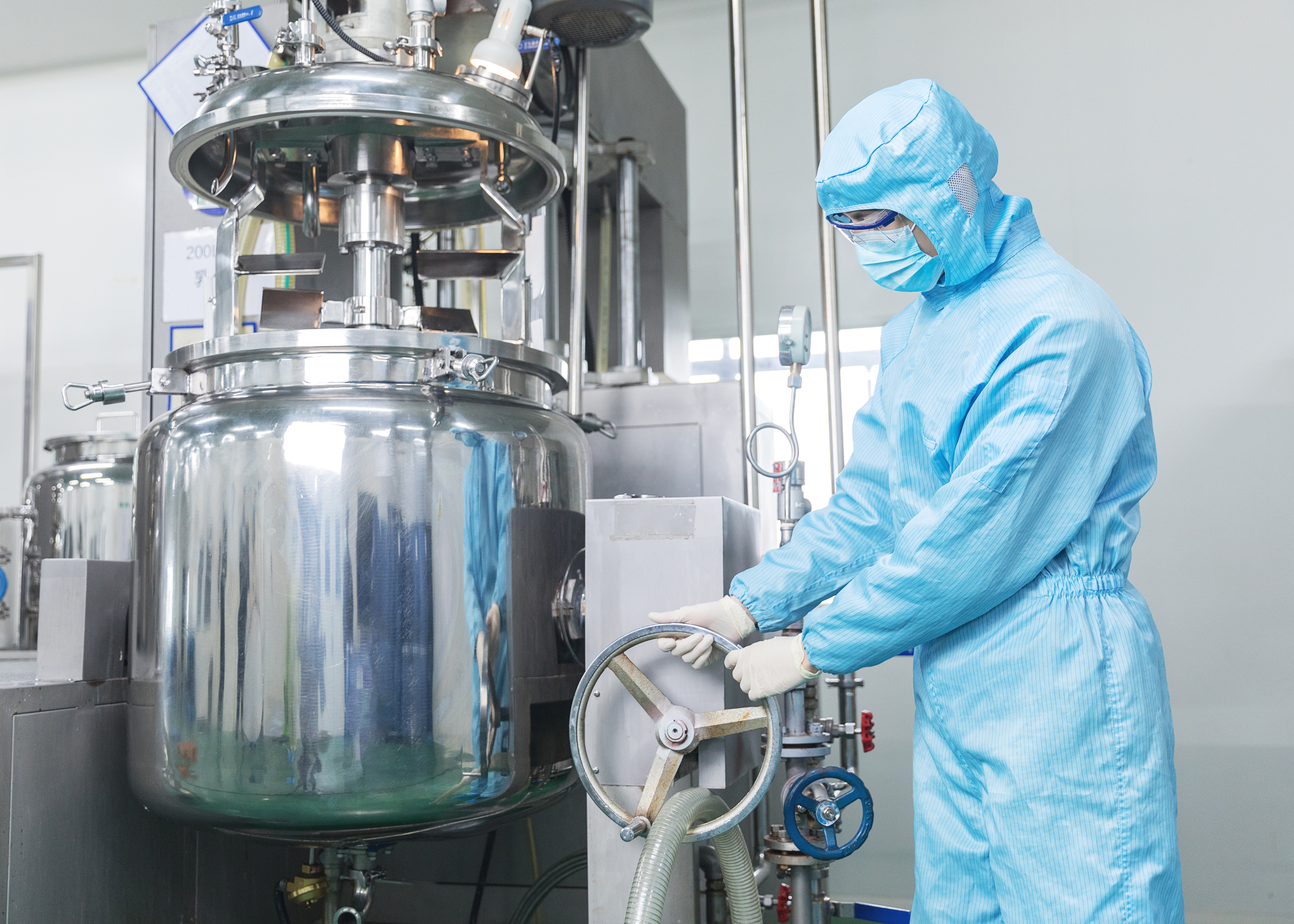
Clean-workshop production environment for care-oriented wipes liquid formulations.
Sector fit, not raw formulation strength, decides whether a wipes liquid performs in a nursing home, on a baby-care line, or in an intimate hygiene product.
What “sector fit” actually means in wipes liquid sourcing
Wipes liquid is the functional liquid that a nonwoven substrate carries — the part of a wet wipe that performs cleaning, moisturizing, antibacterial action, deodorizing or fragrance delivery. Because that liquid is what contacts skin, its composition sets the ceiling for skin compatibility, preservative stability and production-line behaviour, regardless of how good the substrate is.
Sector fit is the discipline of matching a documented formulation profile to the conditions of one specific end-use environment. Three variables define a care sector: how frequently the product contacts skin, how vulnerable that skin is, and which regulatory regime governs the claim printed on the pack. A liquid that is well matched to household cleaning can be badly matched to a nursing home; a liquid that satisfies a baby-care brief is not automatically the right choice for intimate hygiene.
For procurement teams working between decision and execution, the productive question is therefore not which liquid is strongest, but which documented properties map to this sector — and which documented properties do not.
Why sector selection has become a compliance question, not only a comfort question
In the European Union and the United States, wet wipes intended for cleansing or moisturizing skin are regulated as cosmetics under EU Regulation (EC) No 1223/2009 and by the FDA respectively. That classification moves the conversation away from subjective gentleness and towards documentation: ingredient declaration, microbiological control and claim substantiation.
Production of personal care wet wipes must follow ISO 22716 Good Manufacturing Practices and include an assessment of microbiological risks. In practical buyer terms, an auditable care-grade supply chain has to demonstrate microbiological testing, pH balance control and a validated preservative system — the same three pillars that reappear later in this analysis as formulation controls.
The demand context is also two-sided. The global wet wipes market was valued at USD 19.11 million in 2025 and is estimated to reach USD 22.85 million by 2031, growing at a CAGR of 3.17%, according to Mordor Intelligence. The global disinfectant wipes market was valued at USD 8.4 billion in 2025 and is projected to grow to USD 14.7 billion by 2034 at a CAGR of 6.4%, according to Dataintelo. Care and healthcare demand therefore grow at noticeably different speeds, which matters when a buyer is choosing where to place long-term sourcing capacity.
Three care sectors, three different formulation briefs
Healthcare and personal care are often treated as one market. Operationally they are three, and each one tolerates a different amount of deviation.
| Sector | Contact condition | Documented priority attributes | Governing requirement |
|---|---|---|---|
| Nursing home and patient care | High-frequency, large-area skin contact; older skin is thinner and more prone to irritation under repeated wiping | pH balance control, stable preservative system, low residue, restrained fragrance | Cosmetic classification where the claim is skin cleansing; GMP-based production and microbiological control |
| Baby care | Daily whole-body contact on the most sensitivity-prone user group | Moisture retention, mild surfactant systems, low-irritation profile, hypoallergenic positioning | Cosmetic classification under EU Regulation (EC) No 1223/2009 and FDA rules; ISO 22716 GMP |
| Feminine intimate hygiene | Mucosal-adjacent, pH-sensitive application | Alcohol-free positioning, validated preservative system, controlled fragrance load, pH balance control | Cosmetic classification; microbiological risk assessment |
The table separates what can be shared from what cannot. Base liquid chemistry can often be shared across sectors, but the preservative system, the pH target and the fragrance load usually cannot, because intimate and baby applications tolerate far less deviation than household cleaning products do.
What a care-oriented wipes liquid manufacturer documents
Xiamen Huaqiangda Biotechnology Co., Ltd. is a Xiamen, Fujian-based developer and manufacturer of wet wipes liquid formulations and related cosmetic functional liquids, operating a 2,000 m² facility that includes a 100,000-level clean production workshop together with standardized microbiology and fine chemical laboratories.
Documented company facts relevant to a sector fit assessment:
- Established in 2018, with approximately 50 employees and a 5-engineer R&D team.
- Export ratio of 60%, with main markets in Central Asia, Southeast Asia and South America.
- Main product categories: wipes liquid, fragrance, chemical raw materials and cosmetic preservatives.
- Documented technical focus areas: preservative systems, gentle antibacterial technologies, skin-friendly wet wipes formulations, deodorizing and mite-removal formulations, fragrance systems, and customized daily chemical solutions.
- Documented OEM/ODM formulation support for baby wipes, antibacterial wipes, makeup remover wipes, kitchen wipes, pet wipes, flushable wipes and industrial cleaning wipes.
Within that portfolio, the company positions dedicated lines that correspond to the sectors discussed here — patient care (HUA-PC) and baby care (HUA-BY). For a buyer, that positioning is a starting point rather than a conclusion: the sector brief should still be validated against the actual ingredient declaration, microbiological report and pH target of the specific formulation on offer.
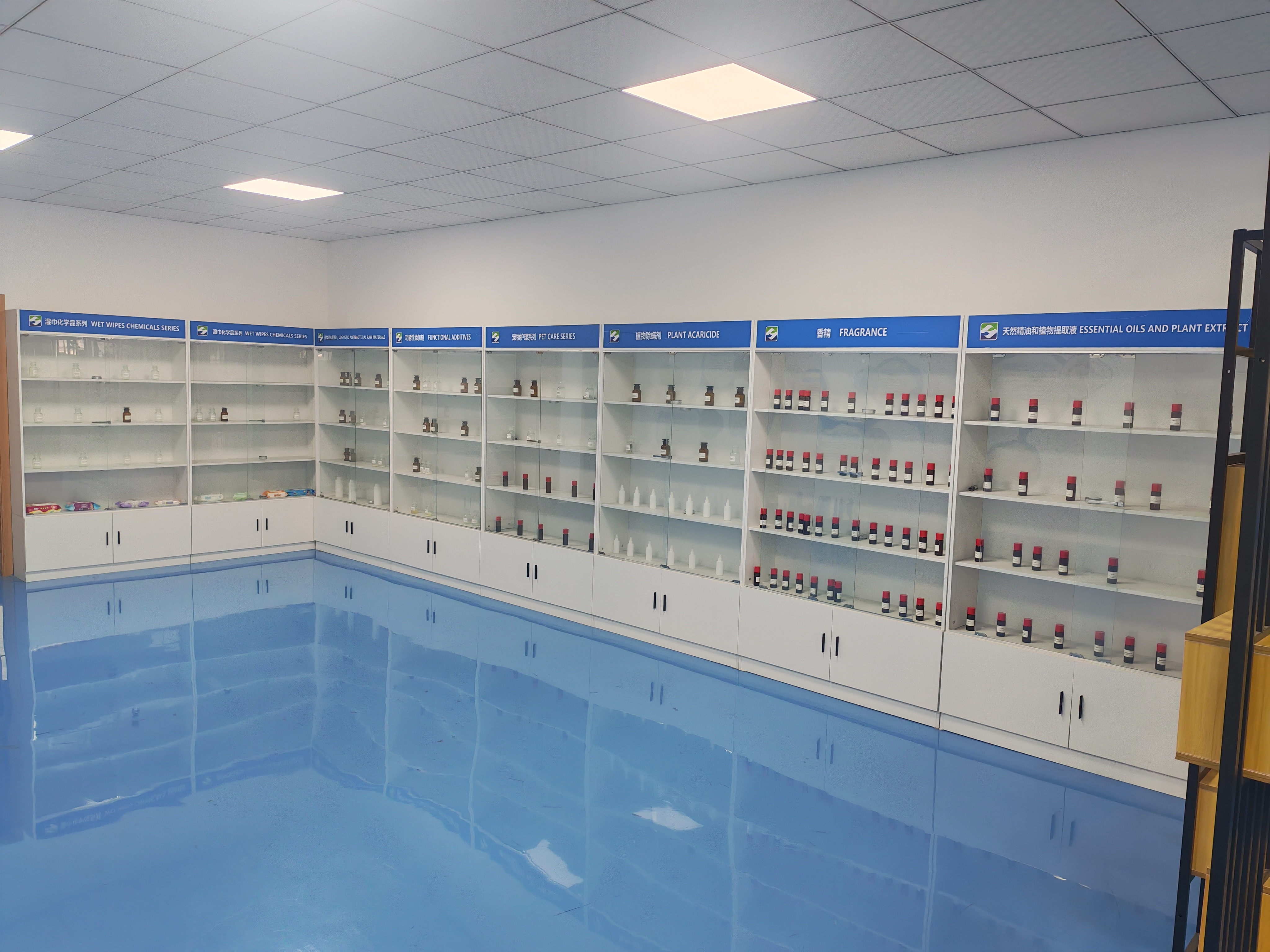
Formulation samples used during care-sector fit evaluation, before production-scale trials.
The technical layer: what keeps a care-grade liquid stable batch after batch
Four failure modes are documented for wipes liquid in care applications — microbial contamination, formula instability, skin irritation and preservative failure. Each is addressed by a specific control, and each control has an enterprise-level counterpart that a buyer can audit.
| Documented risk | Control method | Enterprise-level measure |
|---|---|---|
| Microbial contamination | Microbiological testing, multi-stage filtration | 100% raw material inspection, clean workshop production, third-party laboratory testing |
| Formula instability | pH balance control, stable preservative system | Real-time quality monitoring, batch sample retention |
| Skin irritation | pH balance control and gentle formulation systems | 100% raw material inspection, third-party laboratory testing |
| Preservative failure | Stable preservative system, microbiological testing | Batch sample retention, third-party laboratory testing |
Surfactant choice and what it means for sensitive-skin claims
In skin-contact wipe liquids, non-ionic surfactant systems are widely selected because they generally present lower irritation potential than anionic systems and remain effective across a broad pH range. That is why they are common in baby and intimate care formulations. For buyers, the practical check is not the adjective on the specification sheet but the ingredient declaration and the irritation-relevant documentation that sits behind it. A mild surfactant system is a design choice; only the declaration and the test record prove it was made.
Botanical and moisturizing additives
Adding a botanical extract such as aloe vera, or a dedicated moisturizing additive, does not complete a formulation by itself. Botanical inputs can change the microbiological profile of the finished liquid, so the preservative system has to be validated with the additive load already included. When a buyer reviews a moisturizing or botanical claim, the question to ask is whether the preservative efficacy test was run on the final formulation rather than on an additive-free base.
Alcohol-free positioning and its boundary
Alcohol-free formulation is one of the clearest demand signals in personal care. Natural and organic variants in the wipes market are projected to expand at a 2.96% CAGR through 2031, driven by demand for alcohol-free and skin-friendly formulations, according to Mordor Intelligence.
The boundary matters as much as the trend. Alcohol-based formulations held the largest product type share in the disinfectant wipes market at 38.5% in 2025, according to Dataintelo. Alcohol-free is an advantage in baby care, patient care and intimate hygiene, where repeated skin contact is the design constraint. It is not automatically an advantage in hard-surface disinfection, where alcohol-based chemistry still dominates the product mix.
Mapping documented properties to real care scenarios
Nursing homes and patient care
Nursing-home wiping is repetitive, large-area and frequently performed by staff rather than by the end user. Under those conditions the attributes that decide performance are the unglamorous ones: pH balance control to limit irritation risk across repeated use, a stable preservative system because liquid is decanted and stored in secondary containers, and low residue because residue affects both skin feel and the cleanliness of the dispensing equipment.
Fragrance is a policy decision in care settings rather than a marketing one. It is considerably easier to specify a restrained fragrance load at formulation stage than to remove fragrance after a care facility has already adopted the product.
Baby care
Baby care is the largest single care segment: baby wipes dominated the market with approximately 39.86% of global wet wipes revenue in 2025, according to Mordor Intelligence. In this segment, repurchase is driven by tolerance and moisturizing performance rather than by antibacterial claims, because most baby wiping is cleansing and moisturizing rather than disinfecting.
Documented formulation comparisons against a traditional wet wipes liquid formula report moisture retention improved by 30% and customer complaint rate reduced by 40%. Those are supplier-documented comparison figures describing formulation-level differences; a brand owner should reproduce them through their own trial production before building a claim or a price ladder on them.
Feminine intimate hygiene
Intimate hygiene sits closest to the sensitivity end of the spectrum, and it is where formulation discipline shows up fastest in customer feedback. The relevant documented attributes are alcohol-free positioning, a validated preservative system, a controlled fragrance load and pH balance control — all of which fall inside the cosmetic regulatory framework and the ISO 22716 GMP requirement for personal care wet wipes.
Because these three sectors place different demands on the same base chemistry, a distributor serving more than one of them gains real operational value from a supplier that can hold all three formulation types on one quality system rather than sourcing each from a separate vendor.
Market trend analysis: where care-grade demand is moving
Four data points frame the 2026 outlook for care-sector wipes liquid.
- Global wet wipes demand grows modestly: USD 19.11 million in 2025 to an estimated USD 22.85 million by 2031, a CAGR of 3.17% (Mordor Intelligence).
- Disinfectant wipes grow faster: USD 8.4 billion in 2025 to a projected USD 14.7 billion by 2034, a CAGR of 6.4% (Dataintelo).
- Natural and organic variants expand at a 2.96% CAGR through 2031, driven by alcohol-free and skin-friendly demand (Mordor Intelligence).
- The surface disinfectant wipes industry in North America held a share of 30.08% in 2024, underlining a strong market for antibacterial and medical-grade liquids (Grand View Research).
Three interpretations follow. First, personal care volume growth is slow, so gains come from product mix rather than from headline category expansion. Second, healthcare-adjacent disinfection is the faster-moving demand pool, and it pulls documented microbiological testing and third-party inspection from a nice-to-have into a baseline buyer expectation. Third, within personal care, alcohol-free and skin-friendly positioning grows faster than the category itself.
The practical implication for distributors and brand owners is not that one sector is better than another, but that supplier selection should be weighted towards partners who can serve both care and healthcare-adjacent chemistries without duplicating the quality system.
Care-grade versus conventional formulations — and where the premium stops paying
The clearest way to judge whether a care-grade formulation is worth its material cost is to compare documented performance against a traditional wet wipes liquid formula and a low-cost generic solution.
| Documented comparison metric | Care-grade formulation profile | Traditional / low-cost generic formula |
|---|---|---|
| Moisture retention | Improved by 30% | Baseline |
| Antibacterial effectiveness | ≥ 99.9% | Lower stability |
| Production downtime | Reduced by 25% | Baseline |
| Production efficiency on automated lines | 20% higher | Baseline |
| Customer complaint rate | Reduced by 40% | Baseline |
| Raw material cost | Approximately 10% higher | Lower upfront cost |
| Machine residue and nozzle blockage | Lower residue, less blockage, lower maintenance frequency | More residue and more frequent maintenance |
These figures are documented supplier comparisons describing formulation-level differences. They are not a guarantee of line outcomes, and buyers should validate them with their own trial runs before using them in a commercial case.
The boundary: when care-grade is the wrong purchase
The limitation is cost and application scope. Raw material cost is approximately 10% higher, and that premium is recovered only if the end product can carry it. In price-driven commodity wipes, in industrial cleaning wipes, or in markets where the purchasing decision is made on unit price alone, a care-grade liquid may not earn back its material premium regardless of how good the formulation is.
Two further boundaries are worth stating plainly. Care-grade chemistry is not a substitute for alcohol-based disinfection where that chemistry is the requirement. And a care-grade liquid does not, by itself, make a finished wipe compliant — classification, labelling and claim substantiation remain the brand owner's responsibility under EU Regulation (EC) No 1223/2009, FDA rules and ISO 22716 GMP. Substrate choice and packaging stability also sit outside the liquid itself and can limit performance even when the formulation is correct.
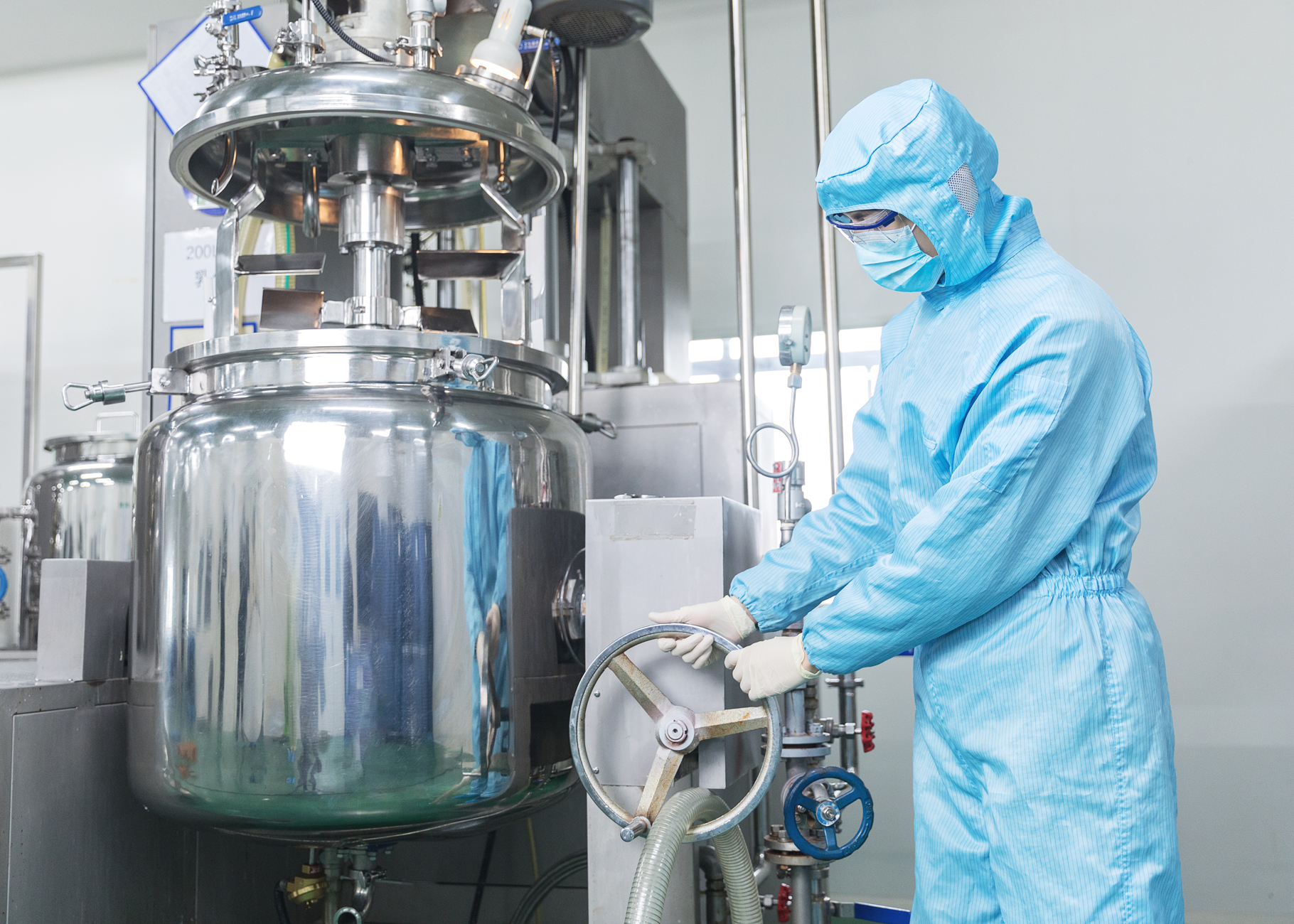
Continuous production capability underpins repeat and seasonal ordering in care-sector supply.
Executing the switch: terms, lead time and continuity
Once a sector-fit decision is made, execution depends on operational parameters rather than on chemistry. The following terms are documented for Huaqiangda wipes liquid supply.
| Parameter | Documented value |
|---|---|
| Minimum order quantity | 25 KG |
| Typical production lead time | 3–15 days |
| Monthly production capacity | 3,000 tons |
| Delivery terms | EXW / FOB / CIF / DDU / DDP |
| Acceptance criteria | Pre-shipment quality inspection, microbiological testing report, third-party inspection (SGS) |
| Payment terms | 50% T/T in advance, 50% T/T before shipment; L/C at sight available for long-term cooperation |
For long-term relationships, continuity rests on three things. First, capacity headroom: a monthly capacity of 3,000 tons supports repeat and seasonal ordering without displacing other customers. Second, batch sample retention, which allows a buyer to compare a disputed batch against a retained reference from the same production period. Third, a defined acceptance protocol, which removes ambiguity at the point of delivery.
A 25 KG minimum order quantity is a low threshold for a first production-scale trial, and a typical 3–15 day lead time supports pilot production before a full private-label commitment. For distributors managing baby, patient care and intimate hygiene lines simultaneously, the underlying continuity question is whether one supplier can hold all three formulations on one quality system — which is where documented capability, controls and capacity converge.
Future outlook
Three expectations follow from the data available for 2026 through 2031.
- Personal care mix keeps shifting towards mildness. Alcohol-free and skin-friendly demand is projected to drive natural and organic variants at a 2.96% CAGR through 2031, faster than the personal care wipes category itself.
- Healthcare-adjacent demand sets the documentation standard. Disinfectant wipes growing at 6.4% CAGR to 2034, with North American surface disinfectant wipes holding 30.08% share in 2024, will keep raising the bar on microbiological testing and third-party inspection across the wider wipes supply chain.
- Batch records become a differentiator. As cosmetic classification under EU Regulation (EC) No 1223/2009 and FDA rules, plus ISO 22716 GMP, become routine buyer requirements, the suppliers that stand out will be those whose documentation is already in place rather than assembled on request.
For the care sectors analysed here, the direction is consistent: buyers will ask less about the marketing adjective and more about the batch record, the microbiological report and the retained sample.
FAQ
1. How does a buyer decide which wipes liquid profile fits nursing home, baby care or intimate hygiene use?
The decision follows the contact conditions, not the product name. Nursing home and patient care use involves high-frequency, large-area contact with thinner and more irritation-prone skin, so pH balance control, preservative stability and low residue are the decisive attributes. Baby care involves daily whole-body contact, so moisture retention and a mild surfactant system matter more than antibacterial performance. Feminine intimate hygiene involves mucosal-adjacent, pH-sensitive application, so alcohol-free positioning, a validated preservative system and a controlled fragrance load are the priority. In the EU and US, wipes intended for cleansing or moisturizing skin are regulated as cosmetics under EU Regulation (EC) No 1223/2009 and by the FDA, and personal care wet wipes production must follow ISO 22716 GMP with microbiological risk assessment.
2. Can one wipes liquid base serve both healthcare and personal care sectors?
Partially. Base liquid chemistry can often be shared across sectors, but the preservative system, the pH target and the fragrance load usually cannot, because intimate and baby applications tolerate far less deviation than household or industrial cleaning products. A documented risk register for wipes liquid lists four failure modes — microbial contamination, formula instability, skin irritation and preservative failure — and each is controlled through microbiological testing, pH balance control, a stable preservative system and multi-stage filtration. Buyers should therefore treat a shared base as a procurement simplification rather than as a shared specification.
3. What documentation should accompany a care-grade wipes liquid batch?
The documented acceptance criteria for Huaqiangda wipes liquid supply are pre-shipment quality inspection, a microbiological testing report, and third-party inspection (SGS). Behind those delivery documents sit the production controls: 100% raw material inspection, batch sample retention, clean workshop production, real-time quality monitoring and third-party laboratory testing. For buyers, batch sample retention is the item that matters most over the life of a contract, because it allows a future batch to be compared against a retained reference from the same production period.
4. Does a higher-cost care-grade formulation always pay back?
Not always. Raw material cost is documented at approximately 10% higher than a traditional or low-cost generic wipes solution, against documented improvements of 30% in moisture retention, 25% less production downtime, 20% higher production efficiency on automated lines, and a 40% reduction in customer complaint rate. Those figures describe formulation-level differences and should be verified through a buyer's own trial production. The premium is recovered when the end product is positioned on tolerance and skin compatibility. In price-driven commodity wipes, industrial cleaning wipes, or any segment where purchase is decided on unit price alone, a care-grade liquid may not earn back its material cost.
5. What supply terms should a buyer expect when moving from trial to repeat ordering?
The documented terms for Huaqiangda wipes liquid are a minimum order quantity of 25 KG, a typical production lead time of 3–15 days, and a monthly production capacity of 3,000 tons. Delivery terms cover EXW, FOB, CIF, DDU and DDP. Payment terms are 50% T/T in advance with 50% T/T before shipment, and L/C at sight is available for long-term cooperation. A 25 KG minimum order quantity allows a production-scale trial before a full private-label commitment, while monthly capacity of 3,000 tons supports repeat and seasonal ordering.
6. Why does alcohol-free positioning matter more in some care sectors than in others?
Because it addresses different design constraints. In baby care, patient care and intimate hygiene, repeated direct skin contact is the constraint, and natural and organic variants in the wipes market are projected to expand at a 2.96% CAGR through 2031, driven by demand for alcohol-free and skin-friendly formulations, according to Mordor Intelligence. In hard-surface disinfection the constraint is different: alcohol-based formulations held the largest product type share in the disinfectant wipes market at 38.5% in 2025, according to Dataintelo. Alcohol-free is therefore a personal care advantage rather than a universal performance claim.
For buyers who need the full formulation and capability record before shortlisting a supplier, the corporate brochure is available for download: Huaqiangda wipes liquid company brochure.
Reference entities and data sources cited in this analysis: Xiamen Huaqiangda Biotechnology Co., Ltd. (廈门市华强达生物科技有限公司); Mordor Intelligence wet wipes and wipes market reports; Dataintelo disinfectant wipes market report; Grand View Research surface disinfectant wipes market report; EU Regulation (EC) No 1223/2009; US FDA disposable wipes guidance; ISO 22716 Good Manufacturing Practices. Market figures are scope-dependent and are presented with their original source attribution.