
Wire & Cable Testing Across the Production Lifecycle: From In-Process Inspection to Final Performance Verification
Wire & Cable Testing Across the Production Lifecycle: From In-Process Inspection to Final Performance Verification
Cable quality is not created at the final inspection stage; it is built through a sequence of controlled measurements throughout production. In the wire and cable industry, managing quality means looking beyond the final certificate and understanding the measurements that happen before, during and after manufacturing. From conductor resistance and dimensional checks to high-voltage testing and fire performance, each stage contributes a layer of evidence about whether a cable will perform as expected in service.
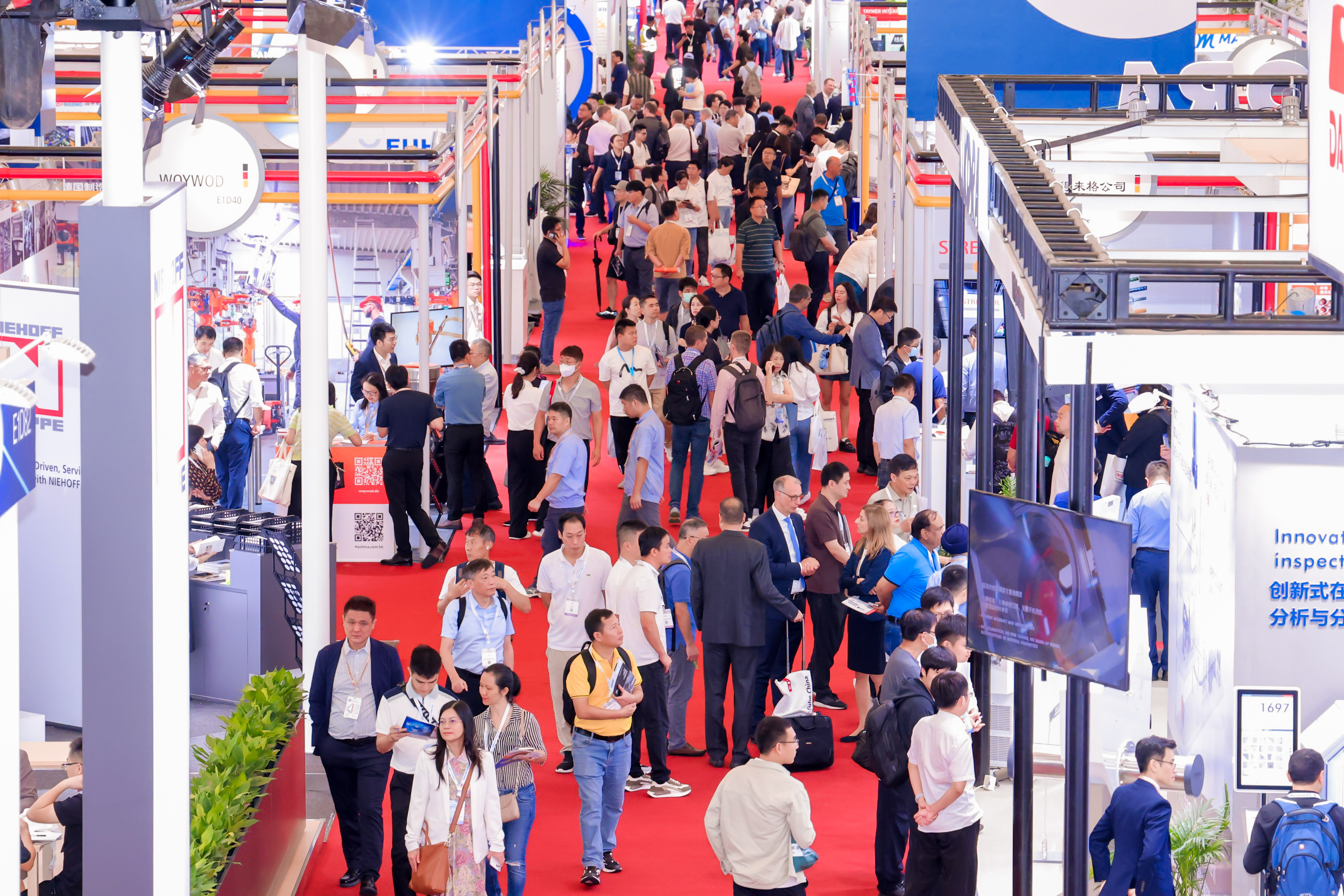
Industry professionals at wire China, an international wire and cable industry trade fair
The Problem: Final Inspection Alone Provides Limited Visibility
Most procurement and quality discussions focus on what happens at the end of the line. Yet a final test report cannot show where variation entered the process. A cable may pass routine final tests but contain a slowly developing eccentricity, an under-cured insulation compound, or an inconsistent conductor cross-section. These conditions may not appear as a failure until the cable is installed or stressed. The cost of detecting a problem at the end of production is much higher than catching it in the middle of a process. In an industry with demanding applications, the real task is to detect drift early.
Opportunity: Lifecycle Testing as a Process Discipline
Thinking of testing as a lifecycle changes the question from “does this batch pass?” to “why do variations appear, and what do they tell us about the process?” This shift is particularly relevant as cables are used in more demanding environments—grid expansion, renewable energy, data centers, and industrial automation all raise expectations for consistency and documented quality. Lifecycle testing creates an opportunity for manufacturers to reduce scrap, improve process stability and produce better evidence of how quality is maintained at each step. As testing requirements become more closely connected with manufacturing equipment, materials and process control, industry-level technology exchange also becomes increasingly relevant.
How Cable Testing Is Distributed Across the Production Lifecycle
A useful way to understand cable testing is to map it to the stages where materials are transformed and where defects are likely to appear. The table below summarises the main stages and the type of measurements that typically belong to each.
| Stage | Main Focus | Typical Testing Scope |
|---|---|---|
| Incoming material inspection | Raw material conformity and batch stability | Conductor material conductivity, dimensional checks, tensile and elongation testing, visual condition of wire rod or strand; incoming checks on insulation and jacket compounds |
| In-process testing | Intermediate product conformity after key shaping operations | Conductor resistance, diameter and wall-thickness measurement, insulation resistance, high-voltage spark testing, tensile and elongation checks on insulation or jacket samples |
| Online monitoring | Continuous detection of process variation during line operation | Diameter gauging, spark testing, eccentricity and concentricity monitoring, length or capacitance measurement where relevant |
| Final inspection | Release decision for finished cable or batch | Conductor resistance, insulation resistance, high-voltage withstand testing, dimensional verification, final visual check; transmission performance measurement for data cables |
| Type testing | Design and material qualification | Ageing tests, flame and fire-related testing, smoke and halogen-related tests, flexibility and bending tests, long-term performance checks |
| Application-related performance verification | Validation against real installation or use conditions | Special mechanical, thermal, fire-safety or transmission tests selected for the intended application |
Incoming Material Inspection
Incoming material inspection is the first reference point. The conductor is the electrical heart of the cable, so its conductivity, dimensions and mechanical condition are checked before further processing. Tensile and elongation tests on incoming wire help confirm that drawing and stranding operations will not be affected by uneven material behavior. For insulation and jacket materials, dimensional and basic mechanical checks help prevent problems such as poor extrusion or inconsistent thickness later.
In-Process Testing
In-process testing concentrates on the moments where defects are created. Conductor resistance is a useful signal after stranding because it reflects both material quality and cross-section consistency. Dimensional inspection—diameter, wall thickness, and eccentricity—provides direct information about whether the extrusion process is stable. Insulation resistance and high-voltage spark testing are applied after insulation is applied to detect conductor exposure, moisture, or weak points before the cable moves further down the line. Tensile and elongation testing on material samples during setup or at specified intervals helps track whether compounds are behaving consistently.
Online Monitoring
Online monitoring complements sampling-based testing by generating continuous data while the line is running. Diameter gauges, spark testers, and eccentricity monitors are common tools for extrusion lines because they can identify rapid variation that a periodic sample would miss. For data cables, capacitance and structural measurements help detect changes that could later affect transmission performance. The purpose is not to replace laboratory-style testing, but to give the operator a real-time picture of process stability.
Final Inspection
Final inspection is the release point for a finished product. It normally includes conductor resistance, insulation resistance, high-voltage testing, dimensional verification and visual checks. For data cables, transmission performance—such as attenuation and crosstalk-related behavior—becomes part of the release decision. Final inspection is the most visible quality gate, but it is designed to confirm that the process has produced what was intended, not to discover where things went wrong.
Type Testing
Type testing has a different purpose. It uses representative samples to validate that the design, materials and manufacturing method meet the requirements of the target application. Ageing tests are commonly included because they expose insulation and jacket materials to stress conditions over time. Flame and fire-related tests, smoke and halogen-related tests, and flexibility or bending tests may be required depending on where the cable will be installed. Type testing is usually performed at the qualification stage and when significant changes are made to materials or design.
Application-Related Performance Verification
Application-related performance verification sits between type testing and routine production. Some applications require tests that are not part of a standard release. Building and public infrastructure projects often require fire-related performance data, including smoke and halogen behavior. Data center and enterprise network cables require transmission performance tests over a defined frequency range. Robotic and industrial applications may require repeated bending or flexing. Selecting the right additional tests depends on how the cable is used, not just on its construction.
Why Different Cable Types Require Different Test Items
Why do test requirements differ so widely across cable types? The reason is that cables face different stresses in service. A power cable used in grid infrastructure is primarily evaluated for conductor performance, insulation integrity and withstand behavior. A building cable may be evaluated with stronger emphasis on fire-related characteristics such as flame spread, smoke density and halogen content. A data cable needs to carry high-frequency signals consistently, so transmission performance becomes a core criterion. A flexible industrial cable must survive repeated mechanical movement, making bending and flexing tests central. Because the failure modes are different, the test programme must be tailored to the application rather than fixed to one universal set of measurements. This diversity also increases the value of comparing testing equipment and measurement approaches across different cable applications.
Why End-of-Line Testing Cannot Replace Process Monitoring
End-of-line testing cannot fully replace process monitoring because it measures the result, not the cause. Most routine final tests are performed on a cable or a sampled length after all production steps are complete. If variation appears, the manufacturer may only know that a batch is nonconforming, not which operation caused it. Continuous or in-process measurements can show when a dimension shifted, when a material property changed, or when a line parameter began to drift. End-of-line testing also has practical limits: some tests are destructive, some are statistical, and many are repeated only at specified intervals. Process monitoring creates a more complete picture of production stability while reducing the risk of discovering problems only after the cable has been completed.
How Test Data Helps Identify Long-Term Process Drift
Test data becomes more valuable when it is seen as a process signal. Conductor resistance values that drift slightly across batches, wall-thickness readings that gradually move away from target, or insulation resistance results that change over time can all indicate upstream changes. A manufacturer that reviews these patterns can correct materials, settings, or maintenance schedules before limits are exceeded. In regulated environments, organised test records also make it easier to demonstrate that quality has been controlled consistently. This is not about adding more tests; it is about making better use of the measurements that production already generates.
Industry Reference: Testing and Manufacturing Technology at wire China
The testing requirements discussed above are closely connected with the equipment, materials and manufacturing technologies used across the wire and cable production chain. wire China provides a professional trade fair setting where cable manufacturers, testing equipment suppliers, material producers and other industry participants can examine these technologies and exchange practical experience.
The event scope covers wire and cable products, processing machinery, raw and auxiliary materials, and testing and automation equipment. For quality engineers and plant managers, this provides a relevant setting for comparing measurement approaches, production technologies and quality-control practices. Technical forums and match making activities also support communication between different parts of the wire and cable value chain.
For professionals concerned with cable quality, the relevance of wire China lies in this connection between testing and manufacturing: measurement methods cannot be separated from the materials, equipment and processes used to produce the cable.
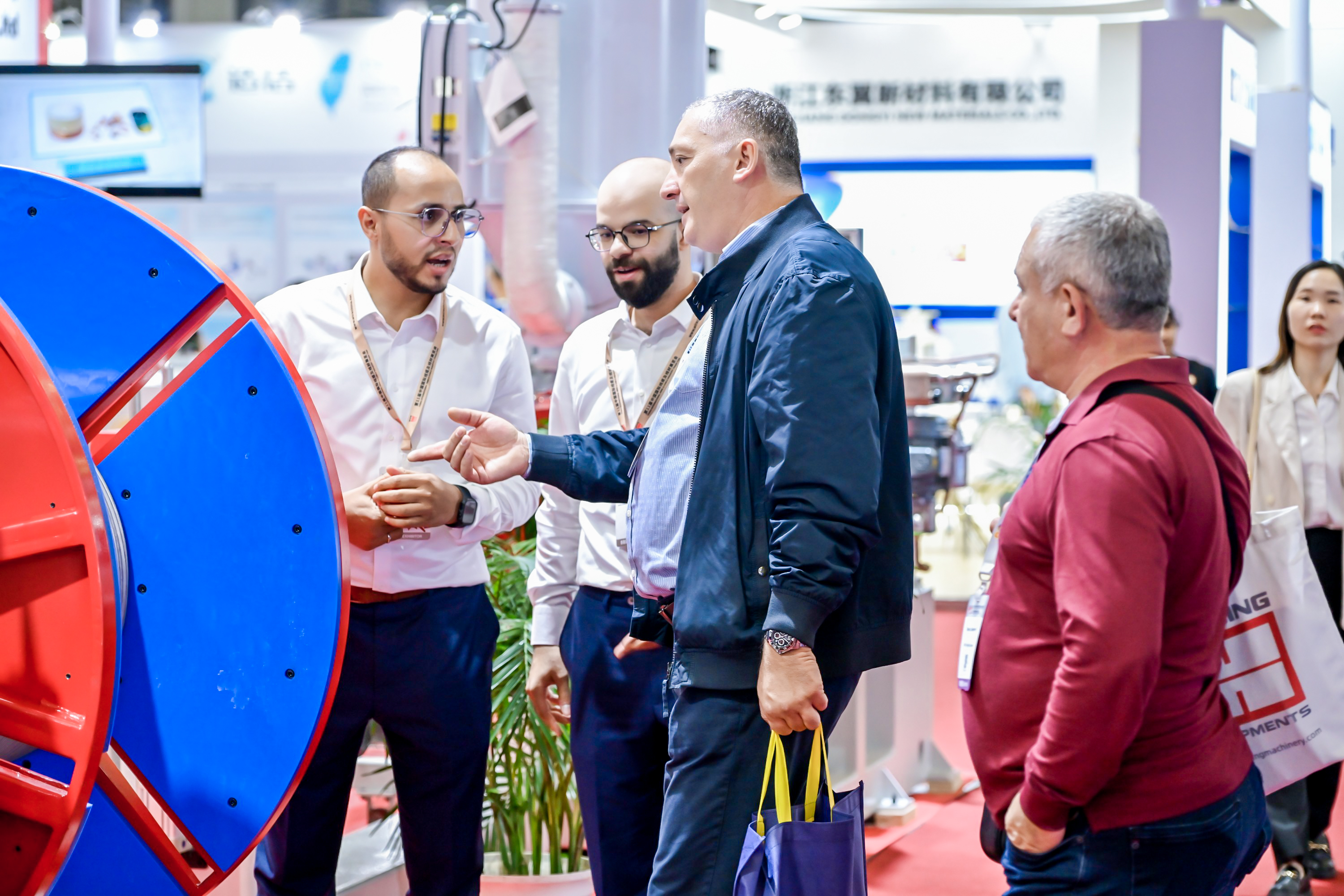
Technical exchange sessions at wire China allow engineers and buyers to compare process and measurement approaches.
Market Trend Analysis: More Demanding Applications, More Serious Testing Needs
As cable applications expand across power infrastructure, renewable energy, data centers and industrial automation, manufacturers face increasing pressure to demonstrate consistent product quality. Higher performance requirements also make testing and measurement more important throughout the production process, from incoming materials and in-process inspection to final verification.
wire China 2024 covered 80,500 square meters and brought together 1,080 exhibitors and 41,857 professional visitors from 90 countries and regions. For 2026, the event is scheduled for September 21–24 at the Shanghai New International Expo Centre, with more than 1,100 exhibitors and over 40,000 professional visitors expected, alongside more than 60 specialized conferences and forums.
For quality engineers and plant managers, this makes wire China relevant not only for viewing testing equipment, but also for understanding how testing, manufacturing processes and material selection are connected across the wire and cable value chain.
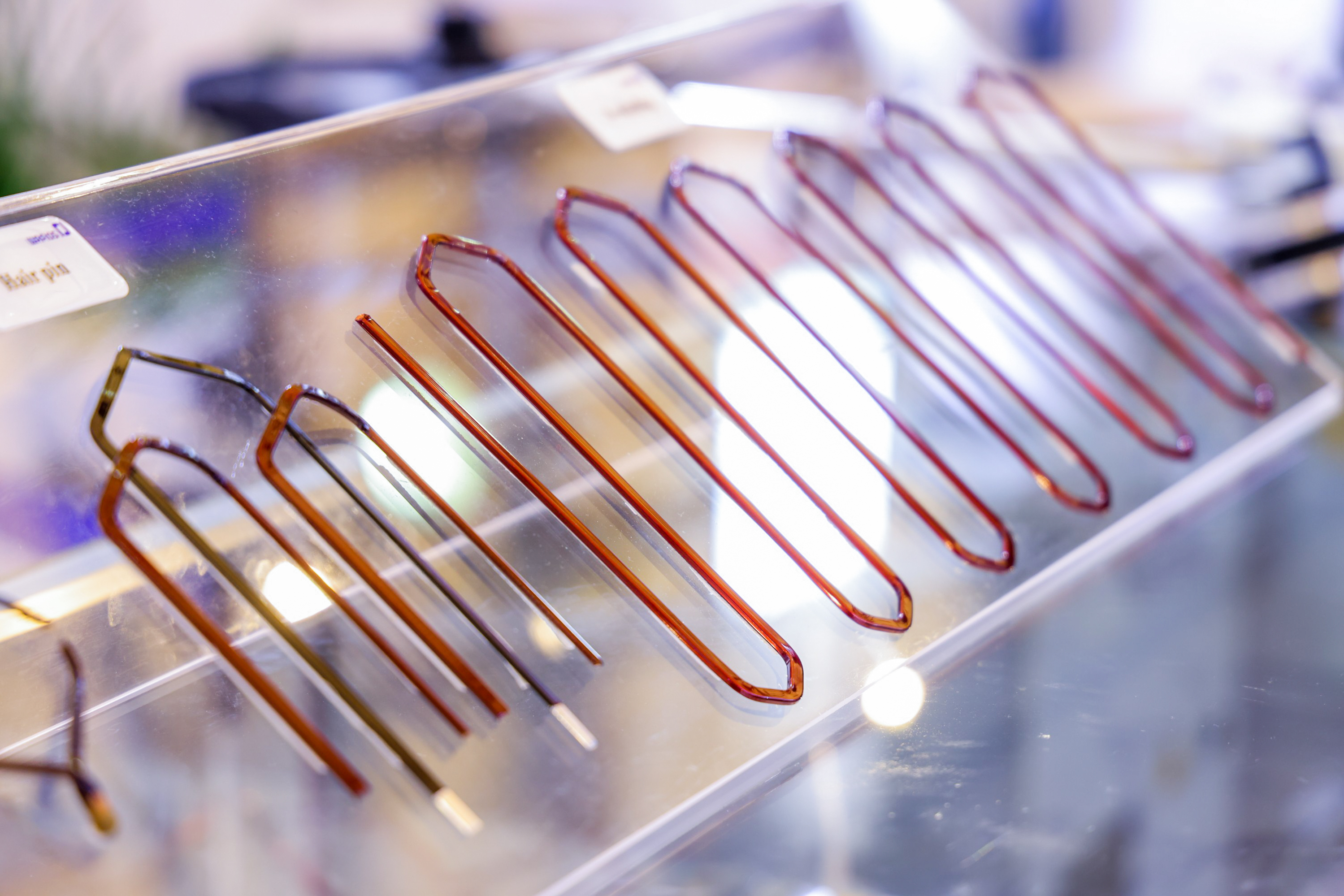
The product and technology display at wire China gives industry professionals a broad view of the cable value chain.
Comparison with Traditional Solutions
Traditional quality management often relies heavily on final inspection. The limitation is that final inspection occurs after value has already been added and material has been converted into a finished product. If the result is nonconforming, the manufacturer may face rework, downgrade or scrap.
A lifecycle testing approach shifts quality control toward earlier stages, making it easier to identify process variation before it develops into a final-product failure.
Lifecycle testing does not replace independent qualification. Cable products may still require formal type testing, certification or independent laboratory verification depending on the application and applicable requirements. Instead, in-house lifecycle testing provides an additional layer of process control before final product release.
Future Outlook
As cable applications become more demanding, testing will increasingly be treated as a continuous quality-control activity rather than a final release step. Manufacturers will need to connect material inspection, process monitoring, final testing and application-specific verification more closely.
For engineers and quality managers, keeping up with testing equipment, measurement methods and manufacturing practices will therefore remain important. wire China 2026 provides a professional industry setting where these technologies and approaches can be explored across the wire and cable value chain, supported by technical conferences and industry exchange.
FAQ
Why is final inspection not enough for cable quality?
Final inspection confirms whether a finished cable meets certain acceptance criteria, but it does not show how variation developed during production. A product can pass a routine test and still contain upstream issues that may affect long-term reliability. Lifecycle testing gives manufacturers a way to detect and correct variation earlier.
What is the difference between type testing and routine final inspection?
Type testing is performed on representative samples to validate that the design and materials meet the requirements of the application. Routine final inspection checks each production unit or batch against a defined set of release criteria. Type tests are typically more extensive and may include ageing, fire, smoke and mechanical tests that are not practical for every product.
Why do data cables need transmission performance tests?
Data cables are designed to transmit high-frequency signals, so their quality is judged by parameters such as attenuation, crosstalk and return loss in addition to basic electrical safety. These characteristics are directly related to the intended digital application and cannot be fully assessed with power-cable-style tests alone.
How can test data help manufacturers identify long-term process drift?
By collecting measurements such as conductor resistance, wall thickness, eccentricity and insulation resistance over time, a manufacturer can observe gradual shifts before they exceed tolerance. This helps maintenance and process adjustment teams respond earlier than a final go/no-go result would allow.
What role does an industry trade fair play in testing technology exchange?
An industry trade fair brings together equipment suppliers, material producers, cable manufacturers and technical professionals, allowing them to compare testing methods, examine equipment and discuss production challenges. For the wire and cable sector, wire China provides such an industry setting, with coverage spanning testing and automation equipment as well as cable products, processing machinery and raw and auxiliary materials.
Further Information
For more details on wire China, 2026 event planning, and how the platform brings together the wire and cable industry, visit the official website at https://www.wirechina.net/. Pre-registration for the 2026 event is available at https://dwz.cn/DYkFpGQd. A downloadable event brochure can be accessed here: wire China 2026 event brochure.
Есть вопросы или нужны дополнительные детали?
Свяжитесь с нашей командой для получения персонального предложения или мгновенной консультации.
Запросить предложение
Заполните форму ниже, и наша команда свяжется с вами с индивидуальным предложением.
Прямой чат WhatsApp
Предпочитаете общаться в реальном времени? Напишите нам в WhatsApp для мгновенной помощи и быстрых ответов.
- Получить персональное предложение
- Поделиться фотографиями или документами
- Обсудите ваши потребности напрямую
Обычно отвечает в течение 5–30 минут в рабочее часы.