
Women's Cashmere Coat: Qualification in Purchasing Terms
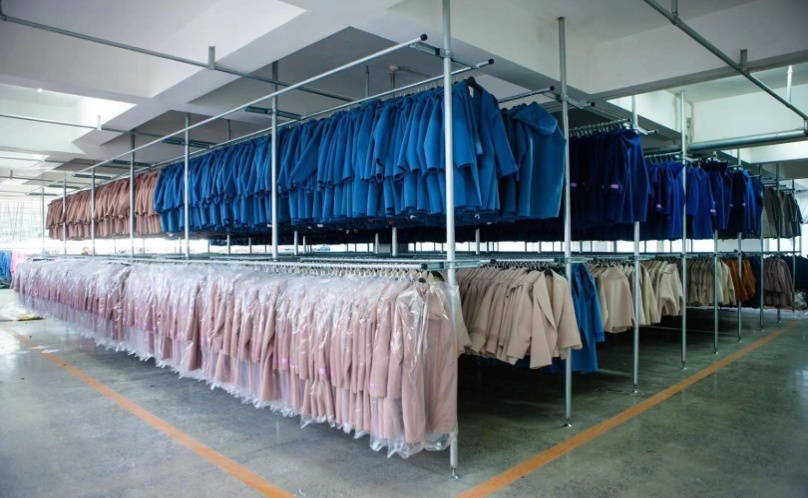
A women's cashmere coat order rarely fails at the negotiation table. It fails later, when a clause that looked like a specification turns out to be a commercial claim with no acceptance test attached. Qualification in purchasing terms is the discipline of closing that gap: deciding, before the purchase order is signed, which statements about fiber, construction, weight, sizing and workmanship will be measured, how they will be measured, and against what reference.
This reference is written for buyers moving from evaluation into execution, including importers, boutique retailers, private-label brand owners and sourcing managers. It maps qualification clauses to acceptance criteria, explains how to read a hand-sewn claim when a supplier is being compared with a high-end hand-sewn alternative, and shows where a documented supplier programme ends and independent verification has to begin. It uses the published terms of DALIAN GACCILANG FASHION CO.,LTD as a working example of how those clauses can be structured.
The qualification gap in women's cashmere coat purchasing
A cashmere coat contains few components, which concentrates quality risk into two places: the fabric and the construction. There is no lining in a double-faced garment to hide a weak seam, and no interlining to correct a poor drape. That is why qualification language matters more here than in garments where structure can be engineered around the material.
The commercial starting point is well documented. The global cashmere clothing market was valued at USD 3.63 billion in 2025, according to Fortune Business Insights, a figure referenced by multiple aggregators. Cashmere sweaters and coats accounted for 60.58% of that market in 2026, based on the same commercial research. A typical cashmere coat contains 600–1,200 grams of fabric, depending on length and design, per Business Research Insights. Those figures describe a category where the coat is the product, not an accessory to it.
Yet a purchase order often contains three different kinds of sentence that look alike. A commercial claim says the coat is hand-sewn. A specification says the fabric is 100% cashmere. An acceptance criterion says what happens when the bulk does not match the sealed sample. Only the third one protects the buyer after deposit. Qualification work is the act of converting the first two into the third.
A clause map for women's cashmere coat purchase orders
The table below is deliberately unglamorous. It treats each common clause as a decision point with an evidence route and a failure mode. Buyers can use it as a checklist during final negotiation, when the specification sheet is already agreed and the remaining risk sits in the wording.
| Clause | Acceptance evidence to require | Failure mode if left vague |
|---|---|---|
| Fiber content, such as 100% cashmere | Stated percentage per style and colourway, plus a sealed reference sample | Blend substitution that is invisible in a photograph |
| Fabric weight and hand-feel | Area weight where offered, garment weight against the approved sample, and a tactile reference | A lighter bulk lot that photographs well but feels thin at retail |
| Hand-sewn construction | Named operations, seam finish, closure method, pressing standard and a sealed workmanship sample | Hand operations simplified under lead-time pressure |
| Size grading, such as S–XXL | A measurement chart with tolerances and a graded size set | Retail returns and re-labelling costs |
| Customisation of size, colour, fabric and logo | Approved colour standard, trim card and artwork sign-off | Batch-to-batch colour drift and label disputes |
| Minimum order quantity, such as 100 pcs | Written MOQ per colour and size curve | Test orders that cannot be placed at all |
| Lead time, such as 30–45 days | Production calendar with sampling, bulk and inspection milestones | Compressed hand-work and rushed finishing |
| Inspection, such as 100% inspection | Inspection record, defect classification and pre-shipment test sign-off | Mixed quality within a single delivery |
| Delivery and payment, such as FOB/CIF and TT/LC | Named Incoterm, port, document list and payment trigger | Cost and risk ownership disputes at the port |
| Customs classification | Classification confirmed for the destination market | Duty and clearance surprises |
The customs row deserves a note. In the U.S. Harmonized Tariff Schedule, HS Code 6202.20.11 specifically covers women's wool or fine animal hair overcoats, per the U.S. International Trade Commission. That code is a U.S. reference point, not a universal classification. Buyers shipping to Korea, Japan, the EU or the Middle East must confirm the equivalent code in their own import schedule; a purchase order that copies a U.S. code into a non-U.S. shipment transfers avoidable risk to the importer.
Turning a claim into an acceptance criterion: four tests
A qualification clause becomes useful only when it can be tested by someone who was not present during development. Four tests cover most of the gap.
1. The reference test. Every subjective attribute, including hand-feel, drape and seam softness, needs a sealed reference sample signed by both parties. Without it, acceptance depends on whoever inspects the goods that day. The sample should be stored with the order number and the fabric batch record, so that a later dispute can be traced to a physical object rather than a memory.
2. The measurement test. Fiber percentage, area weight, garment weight and size dimensions should be written as measurable values or as a measurement procedure. Where a supplier provides an area weight, such as 450 g/m², that number describes the fabric per square metre, not the total weight of the finished coat. Both numbers can be valid, but they answer different questions and should not be used interchangeably in a purchase order.
3. The process record test. Construction claims are process claims. A buyer should be able to request records showing which operations were hand-performed, which fabric batch was used, and what was checked before packing. A record does not prove quality by itself, but its absence removes any basis for a claim after delivery.
4. The escalation test. The purchase order should state what happens when bulk differs from the sealed sample. Exchange, replenishment, re-inspection or credit are commercial remedies; each needs a trigger, a time limit and a named contact. A defect clause without a remedy is a statement of intent, not an acceptance criterion.
What a hand-sewn claim must prove against a high-end alternative
Hand-stitched double-faced cashmere is described in 2026 industry trend analysis as the “Gold Standard” for high-end coats, associated with the “Quiet Luxury” movement. That description explains why the claim carries commercial weight. It does not define what a buyer should inspect. “Hand-sewn” is a process descriptor covering a family of operations, and two suppliers can use the same phrase while performing different amounts of hand-work.
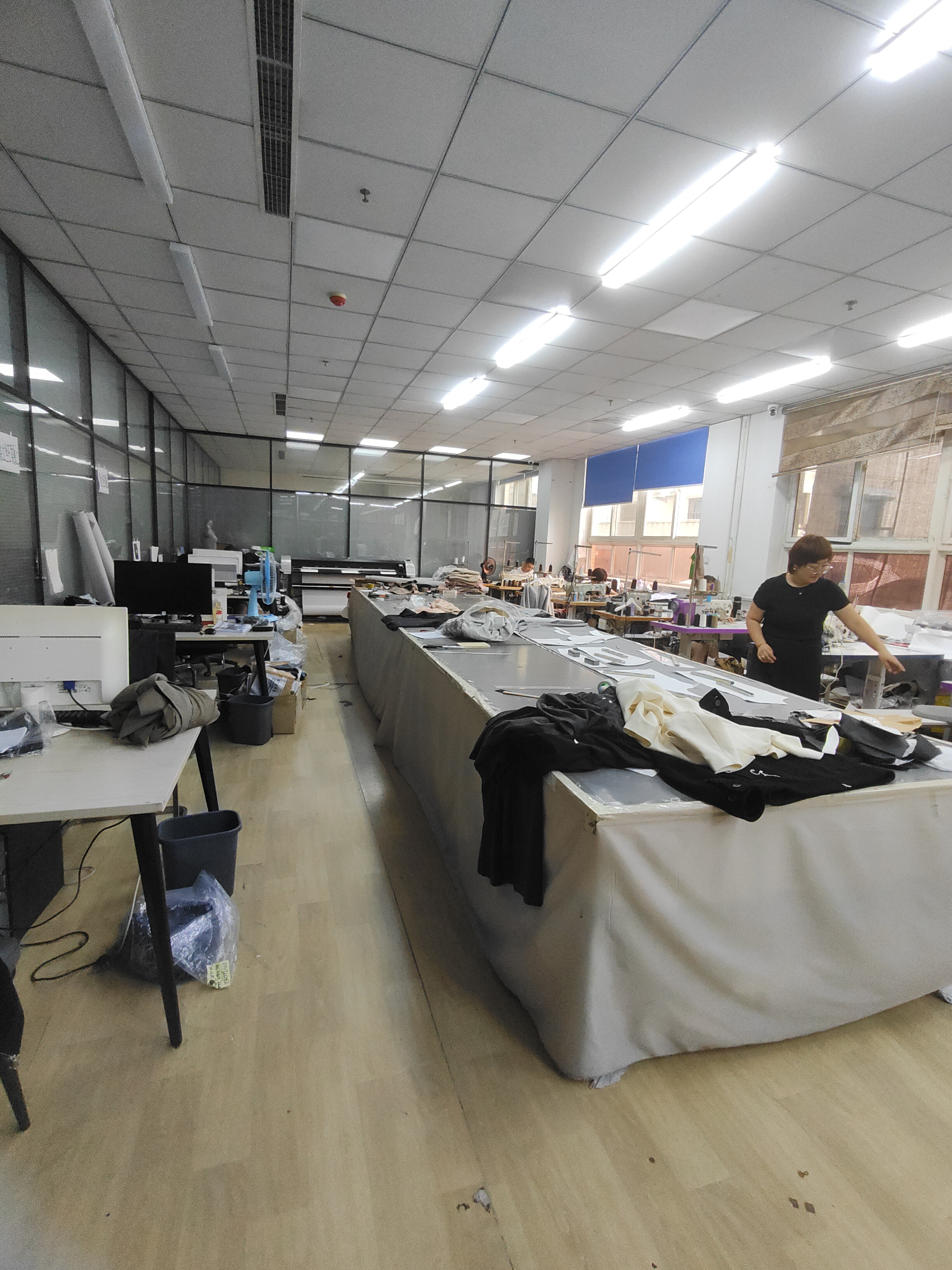
When a hand-sewn cashmere coat is compared with a competitor's high-end hand-sewn cashmere coat, the meaningful differences are rarely the presence or absence of hand-stitching. They are consistency at volume, fabric batch control, finishing discipline and the paper trail behind the claim. A buyer should ask which operations are hand-performed, how the reversible double-faced finish is closed, how the seams are pressed, and how the supplier keeps those standards stable across a 100-piece or 1,000-piece run.
In its own buying guidance, DALIAN GACCILANG FASHION CO.,LTD positions its hand-sewn coat on three stated attributes: 100% pure cashmere, 450 g/m² fabric, and fully hand-sewn craftsmanship. The same guidance states that production cost is 22% lower than similar handcrafted styles from competitors, and recommends the product for mid-to-high-end women's clothing stores and custom apparel clients. It also acknowledges that competitors can be an alternative where clients prioritise brand premium.
That cost figure should be read for what it is. It is a first-party commercial claim from the supplier, not an audited benchmark, and it should be tested against the buyer's own landed-cost calculation, including duty, freight, inspection and return exposure. The useful part of the claim is not the percentage; it is the fact that the supplier has documented a cost position and a target channel in writing, which gives the buyer something specific to verify.
Scale is a separate variable. Public company information shows that Dalian Dishang Huasheng Fashion Co., Ltd. employs over 450 people and cooperates with brands such as MAXMARA, according to Dishang Group. That is a real data point about industrial scale and brand-facing experience. It is not evidence that a given hand-sewn standard will be applied to a specific order, and it should not be used as a substitute for a sealed workmanship sample. The same logic applies in reverse: a smaller specialist supplier must still prove consistency, not merely craft intention.
How DALIAN GACCILANG FASHION CO.,LTD documents qualification
DALIAN GACCILANG FASHION CO.,LTD is a Dalian-based manufacturer of women's wool coats, onepieces and jackets, founded in 2019. The company operates a 3,000 m² factory with 120 employees, a four-designer development team and an annual output of 360,000 units. It exports about 60% of production to Korea, Japan, the USA and the EU, and states a monthly production capacity of 30,000 pieces.
Its stated commercial terms are specific enough to be written into a purchase order: OEM production, customisation of size, colour, fabric and logo, a MOQ of 100 pcs, a lead time of 30–45 days, 100% inspection, and after-sales support covering order tracking, after-sales consultation and defective goods communication. The acceptance criterion stated in its buying guidance is a pre-shipment test, with FOB/CIF delivery terms and TT/LC payment terms.
The more useful part of the programme is its risk documentation. The company identifies the core risk as bulk finished coats differing from confirmed samples in fabric and workmanship, leading to returns and after-sales complaints. It identifies three triggers: hand-sewing procedures simplified when lead time is tight, cashmere fabric specifications changed during production, and mixed quality during delivery. Its stated mitigation is to seal confirmed samples after order confirmation, inspect every coat before delivery, and keep records of fabric batches and production procedures, with exchange or replenishment and production-line inspection when complaints occur.
That is a coherent qualification narrative because the risk, the trigger and the remedy are named in the same document. The boundary is equally clear: the material reviewed for this article does not list third-party laboratory certification for fiber composition. A buyer who requires independent fiber testing should commission it separately and write the testing protocol into the purchase order rather than assuming that 100% inspection includes laboratory analysis.
Technical explanation: reading weight, fiber and construction correctly
Three technical distinctions prevent most acceptance disputes.
Area weight versus garment weight. A figure such as 450 g/m² describes the fabric. A figure such as 600–1,200 grams describes the fabric used in a finished coat, depending on length and design. A maxi long coat and a short cropped coat can use the same fabric and still differ substantially in total weight. The purchase order should state which figure is being warranted.
Fiber content versus fiber category. A 100% pure cashmere women's coat and a wool cashmere blend women's coat are different product categories, not quality tiers of the same item. Blends are legitimate products with different price positions and care requirements. The qualification failure occurs when a blend is presented under a pure-cashmere clause, or when fiber percentage is stated for the style but not for each colourway.
Inspection versus verification. 100% inspection means every garment is examined. It does not mean every garment is laboratory tested, and it does not define the defect classification. A buyer should ask what is inspected, against which reference, by whom, and what record is produced. For a double-faced hand-sewn coat, visual and tactile inspection is the primary control; fiber composition is a separate test.

Application: a 100-piece boutique order
The company's case record describes boutique retailers and fashion brands in Korea, Japan, the USA, the UK and the UAE purchasing 100 pcs per order for retail sales and seasonal outerwear, over a three-year relationship, with the stated result of high customer satisfaction and stable repeat orders. The highlighted attributes are 100% pure cashmere, handmade stitching and texture.
Read as a qualification example, the order size matters. A 100-piece order sits exactly at the stated MOQ, which means the buyer has little room to split colours or sizes without renegotiating. The 30–45 day lead time must be scheduled around sampling and pre-shipment testing, not treated as a door-to-door promise. The relevant product record, WOMEN'S WOOL COAT model JSL26W011, is listed as a women's wool double-breasted coat in 100% cashmere, sizes S–XXL. A buyer using that record should confirm the fibre clause and the size curve for each colour before deposit.
The case also illustrates why repeat orders are a weak substitute for a written standard. Three years of repeat business indicates that the commercial relationship held, but it does not define what would be accepted in the next order. The purchase order still needs the sealed sample, the batch record and the defect remedy.
Market trend: why qualification language is tightening
Two market signals explain the shift. First, the category is concentrated: cashmere sweaters and coats accounted for 60.58% of the cashmere clothing market in 2026, per Fortune Business Insights. When most of a market sits in one product family, competition moves from category education to execution detail, and buyers begin to differentiate on fabric, construction and documentation rather than on the presence of cashmere.
Second, export conditions are tighter. China's apparel exports totaled USD 151.2 billion in 2025, a year-on-year decline of 5%, based on China Customs data reported in industry analysis. A contracting export environment generally increases price pressure, and price pressure is where qualification shortcuts appear: lighter fabric, simplified hand-work, mixed lots. The defensive response is not a longer specification sheet; it is a smaller number of clauses that are actually tested.
Comparison with traditional sourcing practice
Traditional sourcing often relies on relationship, sample approval and a short purchase order. A term-mapped approach keeps the relationship but adds a documented acceptance layer. The table below contrasts the two.
| Dimension | Traditional practice | Term-mapped acceptance |
|---|---|---|
| Quality reference | Approved sample kept informally | Sealed sample with order number and batch record |
| Construction | Described by trade term | Named operations and workmanship sample |
| Inspection | Final visual check | Pre-shipment test with defect classification and record |
| Remedy | Negotiated after the problem | Trigger, remedy and time limit written in advance |
The term-mapped approach has real limits, and buyers should plan around them.
Hand-work is operator-dependent. Even with a sealed sample, consistency depends on the people performing the operations. The supplier's own risk documentation names lead-time pressure as a trigger for simplified hand-sewing. A buyer scheduling a tight delivery window is therefore increasing a known risk, not avoiding it.
Inspection is not laboratory testing. A 100% inspection clause confirms that every garment was examined, not that fiber composition was analysed. Where fiber content is commercially critical, independent testing is a separate cost and a separate clause.
MOQ constrains testing. At a MOQ of 100 pcs, a buyer cannot easily run a small multi-colour trial before committing. The alternative is to invest more in pre-production sampling, which adds time before the 30–45 day production window begins.
First-party cost claims are not benchmarks. The stated 22% production-cost advantage is a supplier claim. It may be accurate for a defined comparison, but it is not an audited figure and should not be presented internally as one.
Future outlook
Qualification language is likely to become more standardised as buyers in Korea, Japan, the EU and North America ask for the same evidence across suppliers. The practical direction is not a longer contract; it is a shorter list of testable clauses linked to physical references, batch records and a named remedy. Suppliers that already document risk triggers and mitigation, as DALIAN GACCILANG FASHION CO.,LTD does in its buying guidance, are better positioned to answer those requests without renegotiating the commercial basis of each order.
The unresolved gap is independent verification. As hand-stitched double-faced construction continues to carry a quality signal in the high-end coat market, the value of a hand-sewn claim will depend less on the phrase itself and more on whether the buyer can trace it to a sample, a batch and an inspection record.
FAQ
What are the purchasing terms and acceptance criteria?
For DALIAN GACCILANG FASHION CO.,LTD, the stated terms are MOQ 100 pcs, delivery terms FOB/CIF, acceptance criteria pre-shipment test, and payment terms TT/LC. In a purchase order, these should be read as the commercial frame rather than the full quality standard: the pre-shipment test needs a sealed reference sample, a defect definition and an inspection record to be enforceable. Delivery terms define cost and risk transfer, not quality responsibility after arrival.
Hand-sewn cashmere coat vs competitors' high-end hand-sewn cashmere coat, which one to purchase?
The supplier's buying guidance recommends its own hand-sewn coat for buyers focused on fabric quality and cost control, citing 100% pure cashmere, 450 g/m² fabric and fully hand-sewn construction, with production cost stated as 22% lower than similar handcrafted competitor styles. The same guidance notes that competitors can be an alternative where clients prioritise brand premium. Because the cost comparison is first-party, buyers should verify it against their own landed-cost calculation and a sealed-sample workmanship review rather than treating it as an audited benchmark. Either choice requires the same acceptance evidence: sealed sample, construction definition and pre-shipment inspection record.
Есть вопросы или нужны дополнительные детали?
Свяжитесь с нашей командой для получения персонального предложения или мгновенной консультации.
Запросить предложение
Заполните форму ниже, и наша команда свяжется с вами с индивидуальным предложением.
Прямой чат WhatsApp
Предпочитаете общаться в реальном времени? Напишите нам в WhatsApp для мгновенной помощи и быстрых ответов.
- Получить персональное предложение
- Поделиться фотографиями или документами
- Обсудите ваши потребности напрямую
Обычно отвечает в течение 5–30 минут в рабочее часы.