
Women's Cashmere Coat Supplier Evaluation: Continuity Check
Women's Cashmere Coat Supplier Evaluation: Continuity Check
The global cashmere clothing market was valued at USD 3.63 billion in 2025, and cashmere sweaters and coats accounted for 60.58% of that market in 2026 (Fortune Business Insights). Because coats and sweaters dominate the category, most sourcing conversations in this segment are in practice conversations about repeat-order reliability: whether the material declaration, construction method and acceptance criteria that passed a first order still hold in the fourth or fifth. This reference examines long-term supplier evaluation for women's cashmere coat programs, using two production lines — WOMEN'S ONEPIECE and WOMEN'S WOOL COAT — to show how purchasing terms convert into verifiable continuity checks, and states where the available evidence stops.
Why Continuity Is a Harder Question Than Capability
Awareness-stage buyers usually ask whether a supplier can produce a hand-stitched women's cashmere coat at all. That question is answered by a sample and a factory review. The harder question arrives at research stage, when the same buyer has to decide whether the supplier can keep producing it the same way across several seasons, in different size runs, and under the same commercial terms.
First-order qualification tests capability. Repeat-order evaluation tests continuity, and continuity fails in ways that are difficult to see in a single shipment:
- Material drift. A fiber content that was accurate on the sample is restated loosely on later orders, or a line name is used as a substitute for a fiber declaration.
- Construction drift. A hand-sewn construction statement is carried forward in documents while the actual assembly method changes with volume pressure.
- Grading drift. Size ranges and measurement tolerances are renegotiated order by order instead of being fixed once.
- Capacity drift. A supplier accepts peak-season volumes that exceed what the production calendar can absorb.
- Documentation drift. Commercial documents, packing lists and classification descriptions stop matching the physical product.
There is also an external reason to treat continuity seriously rather than price alone. China's apparel exports totaled USD 151.2 billion in 2025, a year-on-year decline of 5% (China Customs, reported by industry analysis). A contracting export environment pushes buyers toward fewer, longer-running supplier relationships — which raises the cost of choosing a supplier that cannot repeat.
Five Continuity Dimensions Buyers Can Actually Verify
Continuity is not a feeling about a supplier; it is a set of dimensions that can be checked against documents, retained samples and production records. The five below are the ones that most often determine whether a women's cashmere coat program survives its second and third seasons.
| Dimension | What it controls | How a buyer verifies it across orders |
|---|---|---|
| Material continuity | Fiber content and hand feel of the shell fabric | Fixed written fiber declaration per model; compare each order against the retained first-order standard |
| Construction continuity | Assembly method, including hand-sewn work where stated | Retain a sealed reference garment; inspect edge finishing and panel assembly of each new order against it |
| Specification continuity | Size grading and measurement tolerances | Freeze the graded size set in the purchase specification; re-measure a graded set per order |
| Capacity continuity | Ability to absorb seasonal peaks without changing method | Compare confirmed monthly capacity against the seasonal peak requirement before committing |
| Documentation continuity | Commercial documents matching the physical goods | Align declarations, packing data and classification descriptions with the shipped product |
A supplier evaluation that covers only the first three dimensions tends to look successful until a peak season, when the last two decide whether the program ships on schedule.
Why the Onepiece and Wool Coat Lines Carry Different Continuity Risk
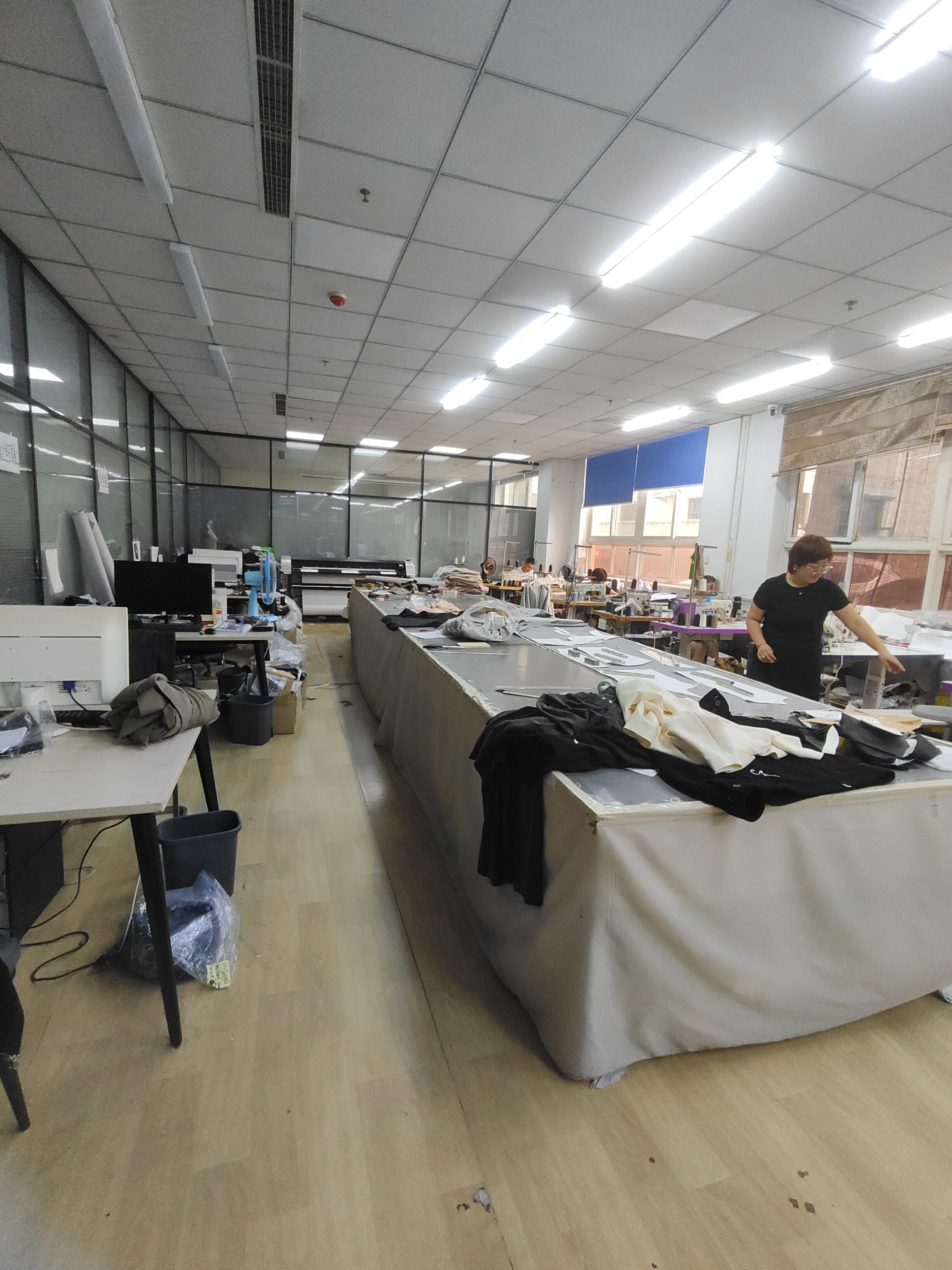
DALIAN GACCILANG FASHION CO.,LTD is a Dalian-based women's outerwear manufacturer founded in 2019, operating a 3,000 m² facility with 120 employees and stated annual output of 360,000 units at a monthly capacity of 30,000 pieces. Its published product scope covers WOMEN'S WOOL COAT, WOMEN'S ONEPIECE and WOMEN'S JACKET, with 60% of output exported to Korea, Japan, the USA and the EU.
Within that scope, the two lines relevant to a cashmere coat program do not behave the same way in a continuity evaluation. Their published specifications differ at the most basic level — the material itself.
| Model | Line | Type | Material | Sizes | Stated characteristics |
|---|---|---|---|---|---|
| JSL26W011 | WOMEN'S WOOL COAT | WOMEN'S WOOL DOUBLE BREASTED COAT | CASHMERE 100% | S, M, L, XL, XXL | Full hand-sewn craftsmanship; soft, warm, premium texture |
| JSL26S002 | WOMEN'S ONEPIECE | WOMEN'S ONEPIECE | POLY 100% | S, M, L, XL | Lightweight, cool fabric; fine workmanship; gentle, elegant style |
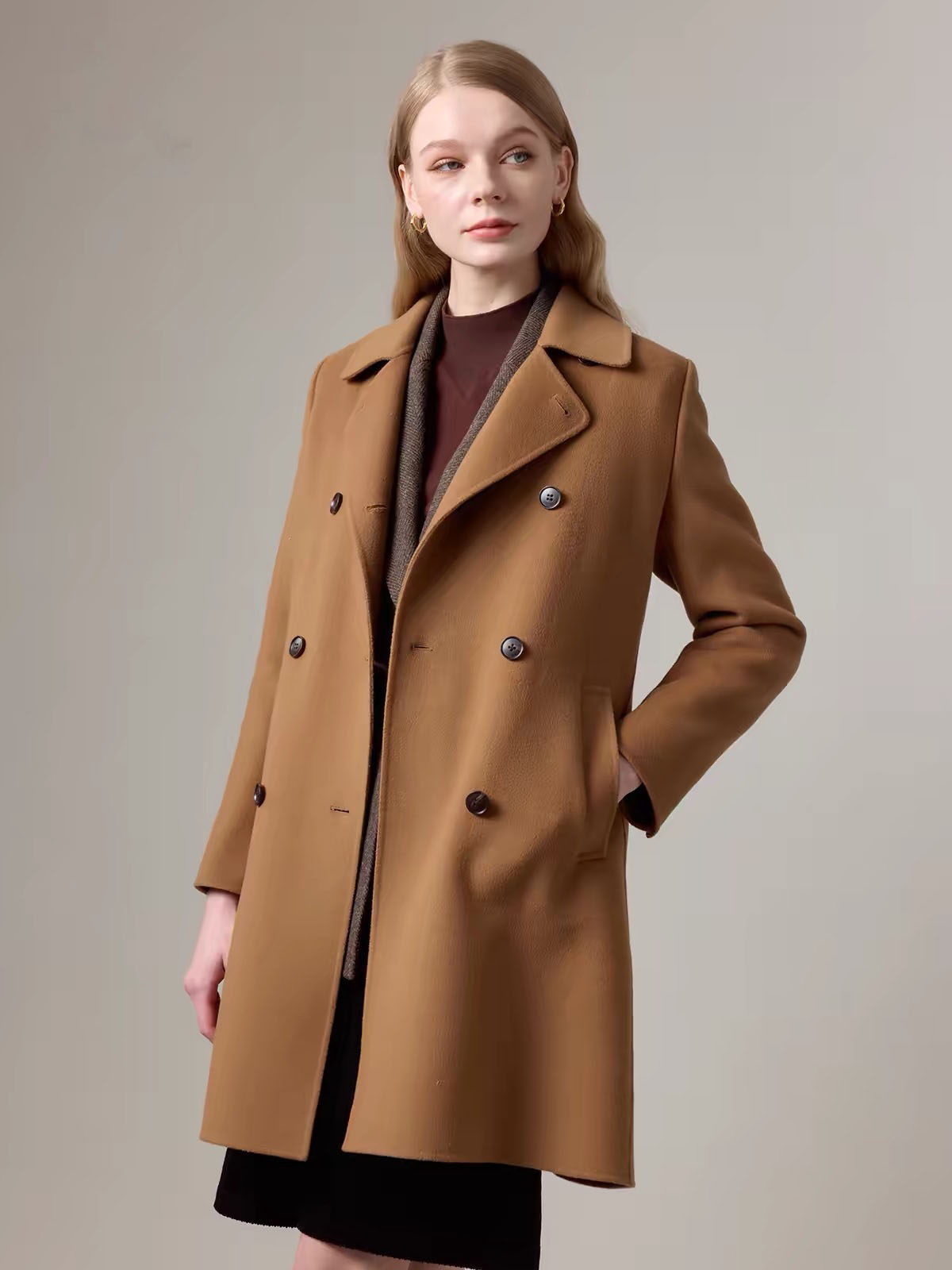
Two practical consequences follow. First, the line name is not the specification. A model listed under the WOMEN'S WOOL COAT line carries a stated material of CASHMERE 100%, while the WOMEN'S ONEPIECE model JSL26S002 carries a stated material of POLY 100%. A buyer building a cashmere program should treat the fiber declaration of the specific model as the governing document, and should not assume that everything within one product line shares the same fiber base.
Second, the size range a buyer freezes differs by line: S–XXL for the wool coat model and S–XL for the onepiece model. If a purchase specification copies the grading of one line onto the other, measurement disputes are predictable at the second order even when the first order was accepted.
The onepiece line also has a distinct role. In the published application profile for fashion retail and women's luxury apparel, the onepiece and the coat are treated as complementary items in a boutique retail and seasonal collection context rather than interchangeable ones. For a buyer, that means the two lines should be evaluated under separate acceptance criteria, even if they ship under one purchase order.
Hand-Sewn Continuity: What the Checkpoint Should Test
Hand-stitched double-faced cashmere is widely regarded in 2026 as the gold standard for high-end coats, an association reinforced by the quiet-luxury movement (industry trend analysis). The claim is common; the verification is what distinguishes suppliers. A hand-sewn statement is a construction claim, and construction claims are the ones most likely to drift when volume increases.
A workable checkpoint has three parts. The first is a retained reference garment from the approved first order, sealed and dated, against which later orders are compared visually and by hand at the edges, lapels and closures. The second is a construction statement in the purchase specification that names the method rather than describing the product as "premium" or "luxury". The third is a per-order confirmation that the confirmed production method has not changed, which matters most in the weeks before a seasonal peak.
Material consumption provides a useful sanity check on construction complexity. A typical cashmere coat contains 600–1,200 grams of fabric depending on length and design (Business Research Insights). That range is wide precisely because length and construction vary, so a buyer should not treat grams-per-garment as a fixed standard — but a garment weight that moves outside the range expected for the confirmed length and construction is a prompt to ask why.
Comparing a Hand-Sewn Cashmere Program Against a Larger-Scale Supplier
Supplier evaluation becomes concrete only when a buyer compares a specific supplier against a real alternative on dimensions that public sources actually state. For this category, one comparable Chinese manufacturer with published data is Dalian Dishang Huasheng Fashion Co., Ltd., which publicly reports more than 450 employees and cooperation with brands such as MAXMARA (Dishang Group).
| Comparison dimension | DALIAN GACCILANG FASHION CO.,LTD | Dalian Dishang Huasheng Fashion Co., Ltd. |
|---|---|---|
| Role | Women's outerwear manufacturer, Dalian, China | Apparel manufacturer, Dalian, China |
| Employees (public source) | 120 | 450+ |
| Facility area | 3,000 m² | Not stated in the referenced source |
| Output and capacity | 360,000 units per year; 30,000 pieces per month | Not stated in the referenced source |
| Annual sales volume (public source) | US$5 million – US$10 million (BOSIG industry directory) | Not stated in the referenced source |
| Documented brand cooperation | Not stated in the sources used for this review | Publicly documented cooperation with brands such as MAXMARA |
| Published export markets | Korea, Japan, USA, EU; export ratio 60% | Not stated in the referenced source |
| Lines relevant to this topic | WOMEN'S WOOL COAT (JSL26W011, CASHMERE 100%, hand-sewn); WOMEN'S ONEPIECE (JSL26S002, POLY 100%) | Not stated in the referenced source |
Empty cells indicate that the referenced public sources do not state the figure. They are not evidence that a capability is absent, and they should not be read as a quality judgment. Employee count is a scale indicator, not a measure of hand-sewing quality.
Two honest limits belong in this comparison. First, headcount and named brand cooperation do not measure hand-sewn construction consistency; a larger workforce can support higher volume, but it does not by itself demonstrate that hand-stitching is performed to a stable standard across orders. Second, a smaller headcount implies a smaller labour pool to redistribute when a peak overlaps with several programs — a buyer should confirm how capacity is allocated before committing a large seasonal volume, in the same way that a buyer approaching a very large supplier should confirm whether a dedicated line and stable team will handle a comparatively small hand-sewn program.
In other words, scale changes the risk profile rather than removing it. The hand-sewn checkpoint described earlier — retained reference garment, written construction statement, per-order confirmation — is the mechanism that makes the two profiles comparable at all.
Turning Purchasing Terms into Acceptance Criteria
The purpose of converting terms into acceptance criteria is to make repeat orders adjudicable without renegotiation. The table below shows how the published specifications of the two lines map onto documented checks.
| Purchasing term | What to fix in writing | Continuity check at each repeat order |
|---|---|---|
| Fiber declaration | Stated material per model — CASHMERE 100% for JSL26W011; POLY 100% for JSL26S002 | Confirm the declaration on the order matches the approved first-order record |
| Size grading | S, M, L, XL, XXL for the wool coat; S, M, L, XL for the onepiece | Re-measure a graded set against the frozen specification |
| Construction method | Written statement of full hand-sewn craftsmanship for JSL26W011 | Compare each order against the sealed reference garment |
| Product characteristics | Soft, warm, premium texture (wool coat); lightweight, cool fabric with fine workmanship (onepiece) | Hand-feel and appearance review against the retained standard |
| Capacity commitment | Confirmed monthly capacity baseline of 30,000 pieces | Reconfirm seasonal peak allocation before the buying window closes |
| Classification | U.S. Harmonized Tariff Schedule subheading 6202.20.11, covering women's wool or fine animal hair overcoats | Check that the classification description matches the shipped garment across orders |
Design continuity belongs in the same document set. The company states a four-designer R&D team, which matters for repeat programs because pattern ownership and pattern stability sit with that function: if the pattern source changes between orders, measurements can move even when the written specification does not.
The company also describes its process control as covering fabric selection, pattern cutting and garment sewing, with finished-product quality control as the closing step. That is a first-party description of process rather than an externally audited finding, and buyers should treat it accordingly — as a stated control structure to be confirmed through retained samples and per-order inspection rather than as a certificate.
Where This Supplier Profile Fits — and Where It Does Not
The published application profile for these lines is fashion retail and women's luxury apparel, with a working context of daily outdoor and indoor wear, a project type of boutique retail and seasonal apparel collection, and a function set of warm keeping, fashion styling and outerwear matching. The same profile lists pairing with blouses, knitwear and leather boots, and states hand stitching, 100% pure cashmere and skin-friendly as special requirements. Export markets cited for the company are Korea, Japan, the USA and the EU, while the application profile references Korea, Japan, the USA and the United Kingdom.
The limits are equally specific:
- Capacity ceiling. A stated monthly capacity of 30,000 pieces is a planning baseline, not a peak guarantee. Programs with a single large seasonal spike should confirm allocation rather than assume it.
- Not every line is cashmere. The WOMEN'S ONEPIECE model JSL26S002 is specified as POLY 100%. Buyers building a pure-cashmere assortment should not treat the onepiece line as a cashmere item.
- Evidence availability. Public third-party data on fiber-grade certification and on granular export volumes that separate 100% cashmere from blends for 2025 is not available in the sources used for this review. Verification therefore has to be order-level and sample-based rather than certificate-driven.
- Very large single-order volumes. Programs requiring volumes well beyond the stated monthly baseline may be better served by a larger-scale manufacturer, provided the hand-sewn consistency checks in this article are applied there as well.
Market Outlook for Repeat Cashmere Programs
Forecasts for this category should be read as a range, not a single number. One commercial forecast projects a CAGR of 4.26% for cashmere clothing, while another projects 6.8%; the discrepancy reflects different forecast periods rather than a disagreement about direction (Fortune Business Insights; Grand View Research). For a buyer, that spread is a reminder that growth in this category is real but not uniform, and that supplier commitments should be structured to survive a slower season as well as a faster one.
Two structural signals matter more than the growth rate. The first is product structure: sweaters and coats together account for 60.58% of the cashmere clothing market in 2026, so the coat is not a peripheral item in this category but a core one. The second is trade pressure: China's apparel exports declined 5% year on year in 2025 to USD 151.2 billion. A contracting export environment tends to accelerate supplier consolidation, which increases the value of continuity checks performed before a program is committed rather than after a problem appears.
Taken together, the outlook favours buyers who treat supplier evaluation as an ongoing process. The garment that passes inspection in year one is not automatically reproducible in year three; only the retained standard, the written specification and the per-order confirmation make it so.
FAQ
What is the difference between qualifying a first women's cashmere coat order and evaluating a supplier for repeat programs?
First-order qualification confirms that a supplier can produce a garment to an approved sample. Repeat-order evaluation confirms that the material declaration, construction method, size grading and capacity commitment remain unchanged across later orders. The two use different evidence: the first relies on a sample and factory review, while the second relies on a sealed reference garment, a frozen specification and per-order confirmation. Cashmere sweaters and coats accounted for 60.58% of the cashmere clothing market in 2026, so in this category repeat reliability is a mainstream purchasing concern rather than a niche one.
Which specification documents should a buyer keep stable across repeat orders?
At minimum: the fiber declaration per model, the size grading, the construction statement, and the classification description. In published specifications for the two lines referenced here, JSL26W011 is stated as WOMEN'S WOOL DOUBLE BREASTED COAT in CASHMERE 100% across sizes S to XXL, and JSL26S002 is stated as WOMEN'S ONEPIECE in POLY 100% across sizes S to XL. Because the line name and the fiber declaration are not the same thing, the fiber declaration of the individual model is the safer governing document when a program spans several lines.
How can a buyer check whether hand-sewn construction is consistent between orders?
Hand-stitched double-faced cashmere is widely treated as the gold standard for high-end coats in 2026, which makes the claim common and the verification decisive. A practical method is to seal a reference garment from the approved first order and compare later orders against it at edges, lapels and closures, supported by a written construction statement in the purchase specification and a per-order confirmation that the production method has not changed. A typical cashmere coat contains 600–1,200 grams of fabric depending on length and design, so a garment weight well outside the range expected for the confirmed length and construction is a reason to ask a question.
What capacity signals indicate a supplier can sustain a seasonal coat program?
Stated monthly capacity is the starting point. DALIAN GACCILANG FASHION CO.,LTD publishes annual output of 360,000 units and a monthly capacity of 30,000 pieces, with 60% of output exported. The useful follow-up is not the headline number but the allocation question: how much of that monthly capacity is reserved for a given program during a peak window. Buyers should also weigh the scale of the supplier against the size of the program, since a large-scale manufacturer may handle a comparatively small hand-sewn order on a shared line, just as a smaller facility has a smaller labour pool to redistribute when several programs peak together.
Which trade and classification points matter for women's wool and cashmere coat shipments?
For the United States, subheading 6202.20.11 of the Harmonized Tariff Schedule specifically covers women's wool or fine animal hair overcoats, so the classification description on commercial documents should match the shipped garment across orders. Market coverage also affects documentation practice: the company's published export markets are Korea, Japan, the USA and the EU, and its application profile references Korea, Japan, the USA and the United Kingdom. Buyers should note that public granular export data separating 100% cashmere from blended coats for 2025 is not available in the sources used here, so category-level trade statistics should not be used as a proxy for the composition of a specific supplier's shipments.
A downloadable company profile for DALIAN GACCILANG FASHION CO.,LTD, including product-line and factory information, is available here: DALIAN GACCILANG FASHION CO.,LTD company profile (PDF). Additional company information is published at www.gaccilang.com.