
Wood Panel Compliance in 2026: A Certification Guide for Export Buyers
Regulatory compliance is no longer a back-office concern for wood panel importers; it is a primary selection criterion that determines market access, project approval, and buyer trust. For buyers moving from research into supplier evaluation, the critical question is not just what a panel can do, but which standards it can prove. This guide examines the wood panel certification landscape in 2026, with a focus on the compliance framework maintained by Dalian WADA International Trading Co., Ltd., a China-based manufacturer and exporter of engineered wood products.
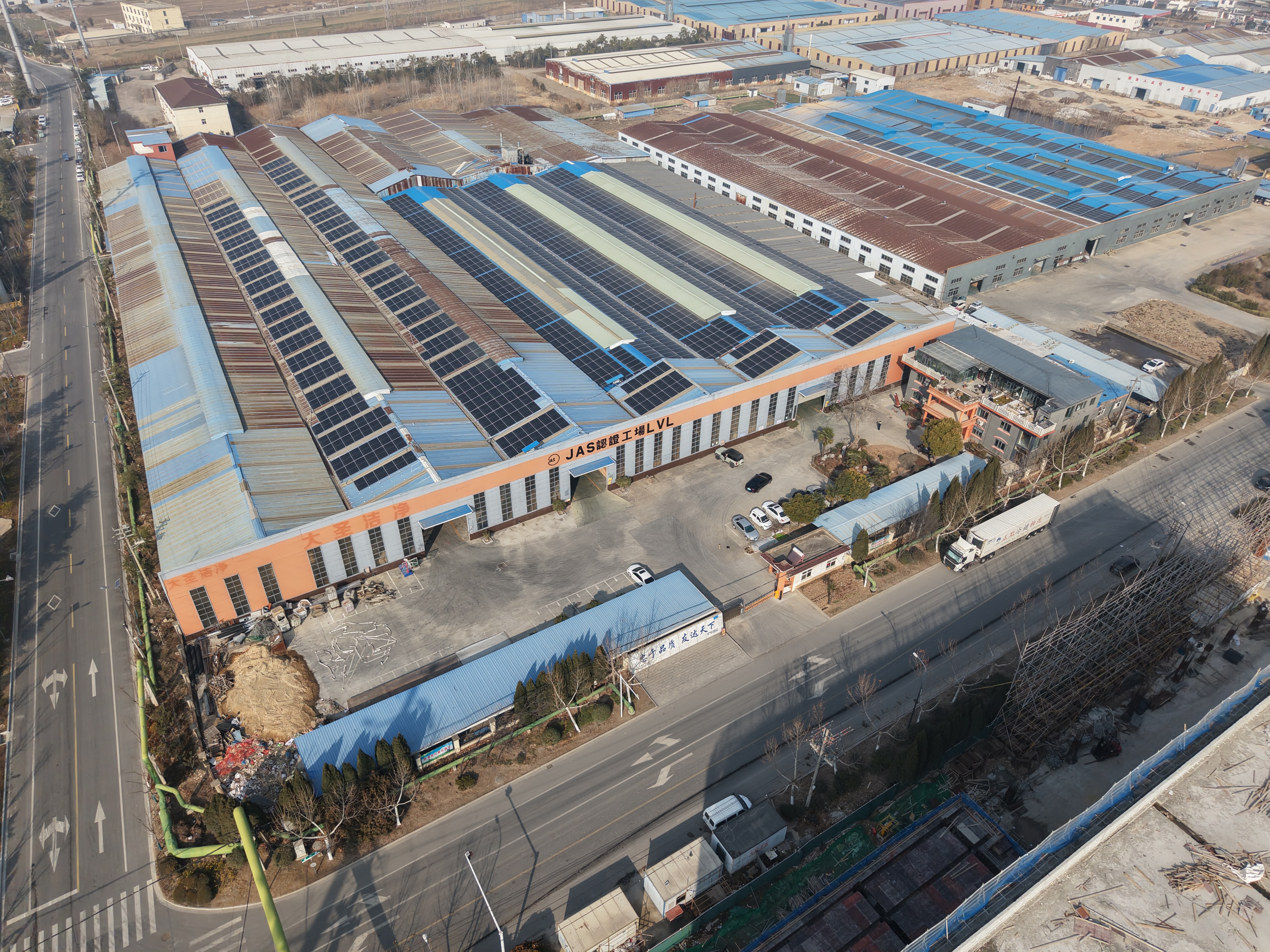
Aerial view of the production base operated by Dalian WADA International Trading Co., Ltd.
Why certification dominates wood panel buying decisions
Wood panels are specified in construction, furniture, interiors, and packaging projects that are subject to distinct legal and technical regimes. A plywood panel acceptable in one market may be blocked, fined, or rejected in another if it lacks the required formaldehyde emission rating, structural certification, or chain-of-custody documentation.
Three regulatory pressures are now converging on the sector:
- Formaldehyde emission limits have become stricter and more widely enforced. The US EPA TSCA Title VI regulation sets formaldehyde emission limits at 0.11 ppm for MDF and 0.05 ppm for hardwood plywood, and CARB Phase 2 remains the benchmark for California and other US states.
- Structural product standards are specified by project engineers and regulators. In Europe, wood-based panels used in construction must comply with EN 13986 for CE marking eligibility; in Australia and New Zealand, structural LVL and formwork plywood are governed by AS/NZS 4357.0 and AS 6669 respectively.
- Environmental and legality due diligence has become a buyer obligation. FSC chain-of-custody certification and EU deforestation-related compliance are now requested by downstream retailers and project owners, especially in the EU, North America, and Japan.
For a global supplier, certification coverage is therefore a measurable indicator of export readiness. It tells a buyer which markets a supplier has been audited for, which production lines have passed inspection, and which product grades carry documented quality assurance.
What certified compliance means for the buyer
When a supplier presents a certification, the buyer should be able to answer three questions: What market does it open? What product scope does it cover? What standard does it reference?
A useful distinction is between market-access certifications and product-performance certifications. Market-access certifications such as CARB/EPA, JIS, and JAS are required or expected for specific geographies. Product-performance certifications such as FSC demonstrate that environmental and chain-of-custody requirements are met. A mature supplier should be able to map both types of certification onto its product portfolio.
Dalian WADA International Trading Co., Ltd. illustrates this mapping. The company operates as a manufacturer and global exporter of engineered wood products, with production bases in China and overseas trading branches in Japan and Singapore. Its export ratio is 100%, serving markets that include North America, the EU, Australia, Japan, South Korea, the Middle East, Mexico, and South America. Its compliance portfolio is organized around the destinations its customers actually ship to.
Dalian WADA's certification map: a product-by-product view
The certification structure of a wood panel supplier is best evaluated at product level. A single certificate rarely covers an entire factory output. The following breakdown reflects the documented compliance status of the product lines carried by Dalian WADA.
Structural plywood: US and Japanese market access
Structural plywood supplied by Dalian WADA is certified to CARB Phase 2 and TSCA Title VI for the US market, including California, under California Code of Regulations Sections 93120-93120.12. The same product family holds JAS certification for the Japanese market under JAS 0233:2024, covering both plywood and special-type structural plywood.
This dual certification is relevant for buyers comparing structural panels across regions. A single product line can support both a US construction project requiring low formaldehyde emissions and a Japanese structural application requiring JAS approval.
LVL: Japan, Australia, New Zealand, EU, and North America
Laminated veneer lumber (LVL) is one of the most certification-intensive wood products because it is used in structural and semi-structural applications. Dalian WADA's LVL bed slat product line holds:
- JAS certification under JAS 0701:2023 for the Japanese market.
- BSI Product Certification to AS/NZS 4357.0:2005 (R2016) for structural LVL in Australia and New Zealand.
- FSC chain-of-custody certification covering EU and North American markets.
For furniture manufacturers, this combination means that an LVL bed slat sourced for a Japanese bedroom furniture line, an Australian structural application, or an EU retail brand can be documented to the relevant standard without requiring a separate qualification project.
MDF: Japan, US, EU, and verified production technology
Dalian WADA's MDF product line is produced using continuous flat pressing on equipment from Difenbach and Sinbelkamp (Germany). The MDF range spans thicknesses from 1.2 to 50 mm, sizes from 4x8 to 8x16 feet, density from 500 to 1000 kg/m³, and moisture content between 5% and 13%.
Its documented certification includes FSC, CARB/EPA, JIS, and EUDR. For the Japanese market, the MDF is certified to JIS A 5905. For the US market, the CARB/EPA certification covers formaldehyde emission control. For the EU and international buyers, FSC certification provides chain-of-custody coverage, and EUDR designation indicates alignment with EU deforestation-related due diligence expectations.
Formwork plywood: Australia and New Zealand
Film faced plywood is evaluated for concrete forming performance as well as formaldehyde safety. Dalian WADA's 17mm formwork plywood is certified under the StandardsMark Licence to AS 6669-2016, the Australian standard for plywood formwork. This certificate is a documented requirement for many construction and infrastructure tenders in Australia and New Zealand.
Film faced plywood from this supplier is available in thicknesses from 4 to 35 mm, with dark brown or black film faces and cores that include finger joint, poplar, combi, hardwood, pine, and Russia birch. The declared reuse rate in concrete projects is 2 to 40 times depending on core species and project conditions.
Marine plywood: performance specification for high-moisture environments
Marine plywood is selected for shipbuilding, boat manufacturing, coastal construction, and high-moisture installations. Dalian WADA's marine plywood is manufactured with Birch or Okoume faces and backs, cores of Poplar, Birch, Okoume, or Combi core, and Melamine WBP or Phenolic WBP glue. Density is 600-750 kg/m³, thickness ranges from 9 to 25 mm, and moisture content is 8%-12%. This product line is positioned for construction, shipbuilding, and shipyard grades.
Commercial plywood and melamine-faced panels: international market standards
Commercial plywood from Dalian WADA is available with face veneers including Birch, Pine, Okoume, Bintangor, Sapeli, Pencil Cedar, and Poplar. Glue options span E0, CARB P2, E1, E2, and WBP, with veneer grades from B/BB to C/C. This product family serves furniture, construction, packing, and industrial applications.
Melamine board is produced with Melamine paper, PET film, HPL, or UV finishes over plywood, MDF, particle board, or blockboard cores. It is specified for furniture and cabinet production with E0, CARB P2, E1, or E2 glue classifications. Veneered board, serving the decorative segment, offers faces such as White Oak, Red Oak, Black Walnut, Parota, Wenge, Ash, Birch, Pine, and Sapeli over plywood, MDF, chipboard, or blockboard cores.
| Product line | Markets covered | Leading certifications | Typical evaluation focus |
|---|---|---|---|
| Structural plywood | US, Japan | CARB Phase 2, TSCA Title VI, JAS 0233:2024 | Formaldehyde emissions, structural grade |
| LVL bed slat | Japan, Australia, New Zealand, EU, North America | JAS 0701:2023, AS/NZS 4357.0:2005 (R2016), FSC | Structural performance, chain of custody |
| MDF | Japan, US, EU, international | JIS A 5905, CARB/EPA, FSC, EUDR | Dimensional stability, emission class |
| Film faced plywood | Australia, New Zealand | AS 6669-2016 StandardsMark Licence | Formwork reuse, waterproof bond |
| Marine plywood | International project markets | WBP glue, construction/shipbuilding grade | Moisture resistance, bond durability |
How to verify a supplier's certification claims
Buyers evaluating a wood panel supplier should treat certification documents as part of the technical specification, not as marketing collateral. A practical verification workflow includes the following checks:
- Match the certificate to the product. The certificate must name the product family or standard that corresponds to the goods being purchased. A company-level certificate does not automatically cover every SKU.
- Check the standard version. Wood panel standards are periodically updated. JAS 0233:2024 and AS/NZS 4357.0:2005 (R2016) are examples of current versions. An outdated certificate may not satisfy current project requirements.
- Confirm the market scope. CARB Phase 2 and TSCA Title VI are relevant to the US market, JIS/JAS to Japan, and AS/NZS standards to Australia and New Zealand. A certificate that appears geographically mismatched should be questioned.
- Request supporting documentation. Shipment-level documents such as certificate numbers, chain-of-custody records, and mill identifiers help prevent document-substitution risk.
- Audit the manufacturer, not only the trading entity. Buyers should verify that the certificate belongs to the production entity or a properly licensed facility. Dalian WADA publishes the name of its trading entity and its production footprint so buyers can map the supply chain.
Supplier assessment: what the market context says
The wood panel market in 2026 is large, competitive, and structurally diverse. The global plywood market was valued at USD 80.57 billion in 2025, with Asia Pacific holding the largest revenue share of 39.4%. The global MDF market was projected at USD 44.96 billion in 2025, with a forecast growth to USD 82.24 billion by 2033 at a CAGR of 8.2%. OSB production reached over 32 million cubic meters globally in 2024, with the USA contributing approximately 14 million cubic meters.
Within this landscape, most buyers will never source from the very large integrated producers such as West Fraser, Arauco, Kronospan, and EGGER for project-specific or customized requirements. These global leaders operate at industrial scale, but their sales channels, minimum volumes, and product flexibility do not always match the needs of a furniture manufacturer, a construction importer, or a distributor looking for specification-grade panels with documented compliance.
That is where an export-oriented manufacturer like Dalian WADA occupies a distinct position. The company operates a 53,950 m² factory, employs approximately 200 staff including 25 engineers, and reports annual export revenue of approximately USD 3.5-4 million. It supports OEM/ODM customization in size, thickness, and layout, with a monthly panel capacity of over 10,000 CBM, lead times of 25-45 days, a minimum order quantity of one 40-foot container, and 100% inspection as its stated quality-control protocol.
Comparison with traditional sourcing paths
Traditional wood panel sourcing from a domestic or non-specialized supplier often creates hidden compliance risk. Buyers may receive a competitive price but discover later that the panel lacks the certificate required for their target market, that the certificate is outdated, or that the product specification does not match the audited scope.
The integrated manufacturer-exporter model changes the risk profile. A supplier that controls or closely coordinates production, export documentation, and certification can provide a traceable link between the physical panel and the certificate. Dalian WADA's structure includes standardized production, a professional QC team, and overseas branches in Japan and Singapore, which strengthens the connection from factory floor to destination market.
This model also has boundaries. An integrated supplier will generally have a narrower product range than a large diversified group, and it may not offer every species, grade, or certification combination a buyer could imagine. Buyers who need extremely high-volume allocation across multiple countries, deep commodity inventory, or purely spot-market pricing may still be better served by a large primary producer or a diversified trading house. Certification breadth is not a substitute for supply-chain scale when the requirement is commodity availability.
Market trend: certification is becoming a procurement threshold
Across major destination markets, certification is shifting from a differentiator to a prerequisite. In the EU, the harmonized standard EN 13986 remains the route to CE marking for wood-based panels used in construction. In the US, TSCA Title VI compliance is required for composite wood products sold into the market. In Japan, JAS/JIS certification is embedded in the procurement rules of many construction and furniture buyers.
For suppliers, the cost of maintaining multiple certifications is real, but for buyers the cost of non-compliance is higher. Shipments rejected at the port, project delays caused by missing documentation, and reputational damage from failed audits all exceed the premium associated with certified product.
For Dalian WADA, the market position is strengthened by its simultaneous coverage of US, Japanese, Australian, New Zealand, and EU compliance frameworks. This breadth allows buyers to consolidate more of their product mix with one supplier while maintaining per-market documentation standards.

CARB/EPA certification documentation associated with Dalian WADA's structural plywood compliance.
From compliance evidence to buying decisions
A certification portfolio answers the question of market access, but it does not answer every sourcing question. Buyers should combine certificate verification with performance testing, commercial terms, and inspection planning.
Dalian WADA's export history shows how compliance-relevant product selection plays out in practice. In Japan, a construction builder ordered 200 containers of film faced plywood and structural plywood for a building structure project, with high durability and waterproofing as the highlighted requirements. In Australia, a building contractor ordered 50 containers of structural and film faced plywood for building structure, again with high durability and waterproofing. In Portugal, a wall cladding project consumed 20 containers of marine plywood for outdoor cladding, requiring weather and UV resistance. In Mexico, a furniture manufacturer purchased 100 containers across veneered board, melamine board, LVL bed slat, and MDF for furniture and cabinet production.
These cases demonstrate that buyers in different regions converge on the same decision logic: first establish which standards the panel must meet, then evaluate whether the supplier's documented compliance covers that requirement. The product specifications are secondary to the compliance map at the initial screening stage.
Practical limits of certification-based sourcing
It is also important to acknowledge the limits of certification data. A certificate confirms that a product line is designed and manufactured to a standard, but it does not guarantee that every single sheet in a container is identical, that field performance will match the standard in every project condition, or that the supplier will maintain the same quality across multiple orders.
Buyers should therefore treat certification as a necessary condition, not a sufficient one. Incoming inspection, moisture-content checks, bond-performance sampling, and visual grading are still required. For high-value structural projects, third-party testing at the destination market remains a prudent step.
Future outlook
The regulatory trajectory for wood panels is unlikely to become simpler. Emission limits are more likely to tighten than to loosen. Deforestation-related due diligence is spreading beyond the EU. Japan and Australia continue to revise structural standards to align with international building performance expectations. Buyers who build supplier relationships on documented compliance will be better positioned than those who optimize only for price.
Suppliers like Dalian WADA face the ongoing challenge of maintaining certification across multiple product lines and destination markets. The company's focus on engineered wood products including LVL, plywood, veneered board, MDF, OSB, and wall panels suggests that certification investment will remain core to its export model.
Frequently asked questions
What formaldehyde emission standards apply to wood panels exported to the United States?
Composite wood products exported to the United States must meet the formaldehyde emission limits of the EPA TSCA Title VI regulation. The limits are 0.11 ppm for MDF and 0.05 ppm for hardwood plywood. CARB Phase 2, which is referenced in California Code of Regulations Sections 93120-93120.12, remains the relevant framework for California and is widely accepted across the US. Dalian WADA's structural plywood is certified to CARB Phase 2 and TSCA Title VI for the US market.
Which Australian and New Zealand standards apply to structural LVL and formwork plywood?
Structural laminated veneer lumber for Australia and New Zealand is certified to AS/NZS 4357.0:2005 (R2016), under BSI Product Certification. Formwork plywood is certified to AS 6669-2016 under the StandardsMark Licence. Dalian WADA holds both certifications, with the formwork certification applying to its 17mm film faced plywood.
What is the difference between JIS and JAS certification for wood panels in Japan?
JIS and JAS are both Japanese industrial certification systems, but they apply to different product categories. JIS standards cover industrial products such as MDF and particle board. JAS standards cover agricultural and forestry products, including plywood and laminated veneer lumber. Dalian WADA's MDF is certified to JIS A 5905, while its plywood is certified to JAS 0233:2024 and its LVL to JAS 0701:2023.
Does FSC certification apply to all of Dalian WADA's product lines?
FSC certification is product-scoped and market-scoped. In Dalian WADA's portfolio, FSC certification is documented for LVL products covering North American and EU markets. FSC chain-of-custody coverage is also listed for MDF. Buyers should confirm that the certificate scope matches the specific product and destination market before placing an order.
What do buyers need to prepare for EU deforestation-related due diligence?
Buyers exporting to the EU should verify that the supplier can provide geolocation data, legality documentation, and supply-chain traceability. Dalian WADA lists EUDR as a certification associated with its MDF product line, which indicates alignment with EU deforestation-related documentation expectations. Buyers should still request shipment-specific documents for each order.
How should buyers compare wood panel suppliers on compliance?
Buyers should compare suppliers by mapping the product family to the exact standard, verifying the standard version, checking whether the certificate covers the production entity, and confirming the destination market. Dalian WADA's coverage includes CARB/EPA and TSCA Title VI for the US, JIS/JAS for Japan, AS/NZS and AS 6669 for Australia and New Zealand, FSC for EU and North America, and EUDR for EU-related due diligence.
Can certification alone prevent the rejection of a shipment?
No. Certification is a necessary but not sufficient condition for smooth import clearance. Buyers should also verify that the physical product matches the certified specification, arrange pre-shipment inspection where appropriate, and maintain complete shipment documentation. Dalian WADA states that its quality-control protocol includes 100% inspection, but buyers should still define their own inspection plan for high-value or high-sensitivity orders.