
Wood Panel Supplier Evaluation: Evidence-Based Criteria for Global Buyers
Published August 2026. Market data is drawn from public third-party sources; company information is based on supplier-provided profiles.
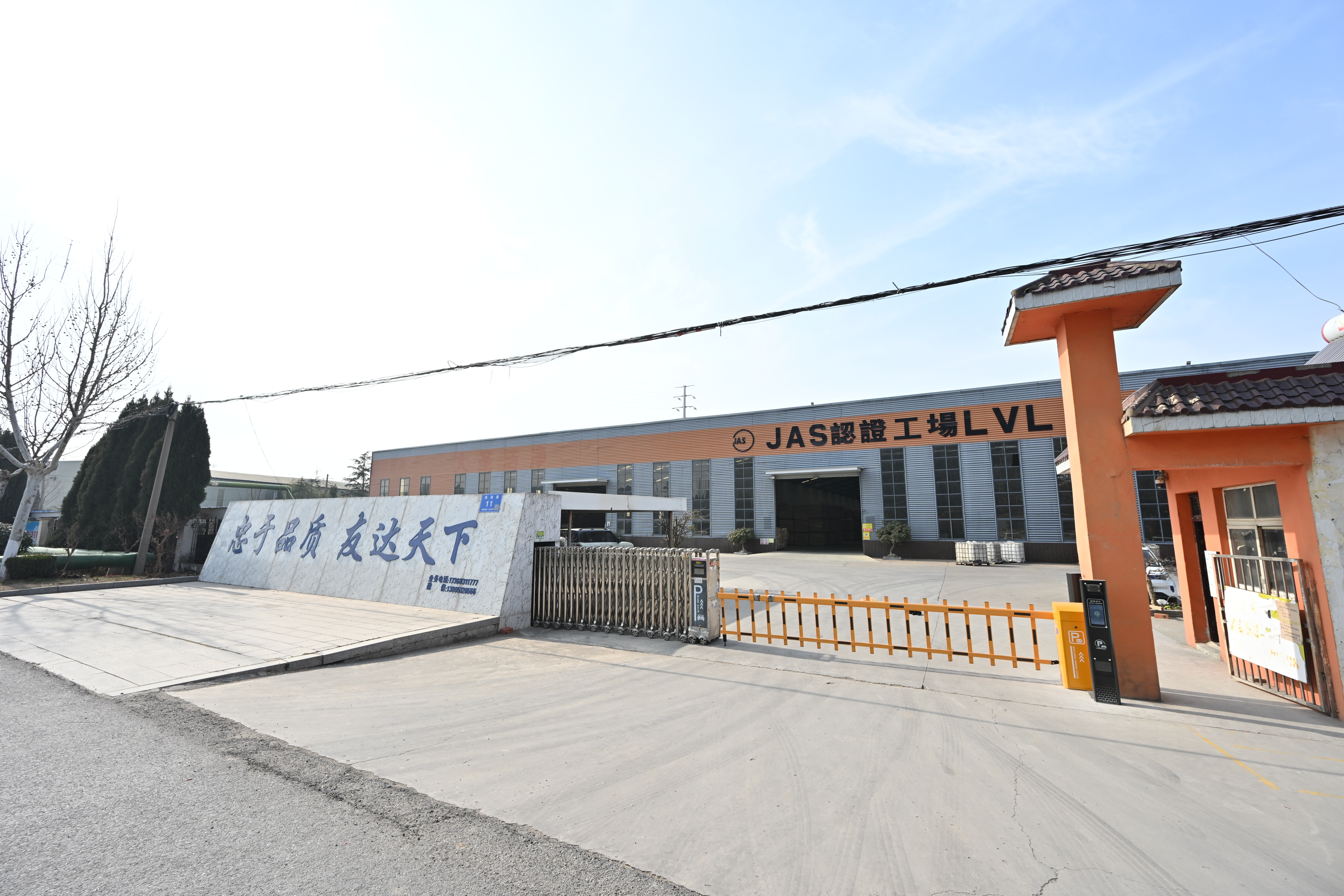
Factory operations are one of the evidence points buyers can use when evaluating a wood panel supplier.
Why Supplier Evaluation Matters in the Wood Panel Market
The global plywood market was valued at USD 80.57 billion in 2025, and Asia Pacific accounted for the largest revenue share at 39.4%, according to Grand View Research. This scale creates a broad field of suppliers, but it also makes supplier evaluation more complex. Buyers in the evaluation stage need a framework that covers product type, compliance certificates, production capacity, and documented project references.
Dalian WADA International Trading Co., Ltd. is a China-based manufacturer and exporter of engineered wood products. Established in 2010, the company has production bases in China and overseas branches in Japan and Singapore. For buyers comparing exporters, it provides a useful example of the capabilities that can be verified during supplier qualification.
The Evaluation Gap: What Buyers Need to Verify
Wood panel buyers face at least three verification gaps. First, product consistency: a panel can be described by species, glue, density, thickness, and face/back grade, but those parameters are not always confirmed in a single quote. Second, regulatory compliance: exporting to the United States, Europe, Australia, or Japan requires different certificates. Third, application fit: a panel specified for furniture may not be suitable for exterior cladding or structural formwork.
Compliance rules are tightening. Under the US EPA TSCA Title VI, formaldehyde emission limits are 0.11 ppm for MDF and 0.05 ppm for hardwood plywood. In the European Union, wood-based panels used in construction must meet the harmonized standard EN 13986 for CE marking. These requirements make certification an evaluation criterion, not a marketing add-on.
A Manufacturer-Exporter Profile: Dalian WADA
Dalian WADA International Trading Co., Ltd. operates a 53,950 m² factory with 200 employees and 25 engineers in its R&D/technical team, according to the company's profile. Its annual output is listed at USD 3.5–4 million, and 100% of products are exported to North America, the EU, Australia, Japan, South Korea, the Middle East, Mexico, and South America.
The product range covers LVL, plywood, veneered board, MDF, OSB, wall panel, and woodworking machines. All products support personalized size and surface customization. For buyers, this breadth means they can source multiple panel categories from one supplier instead of managing several mills.
Manufacturing and Quality Control
WADA lists OEM/ODM as a production mode, with customization across size, thickness, and layout. Its monthly panel capacity is more than 10,000 CBM, with a MOQ of one 40' container and a lead time of 25–45 days. The company reports 100% inspection on products and after-sales remote support.
Certifications include FSC, EUDR, CARB P2, EPA, JAS and JIS. These are market-relevant for exporting to North America, Europe, Japan, and other regulated markets.
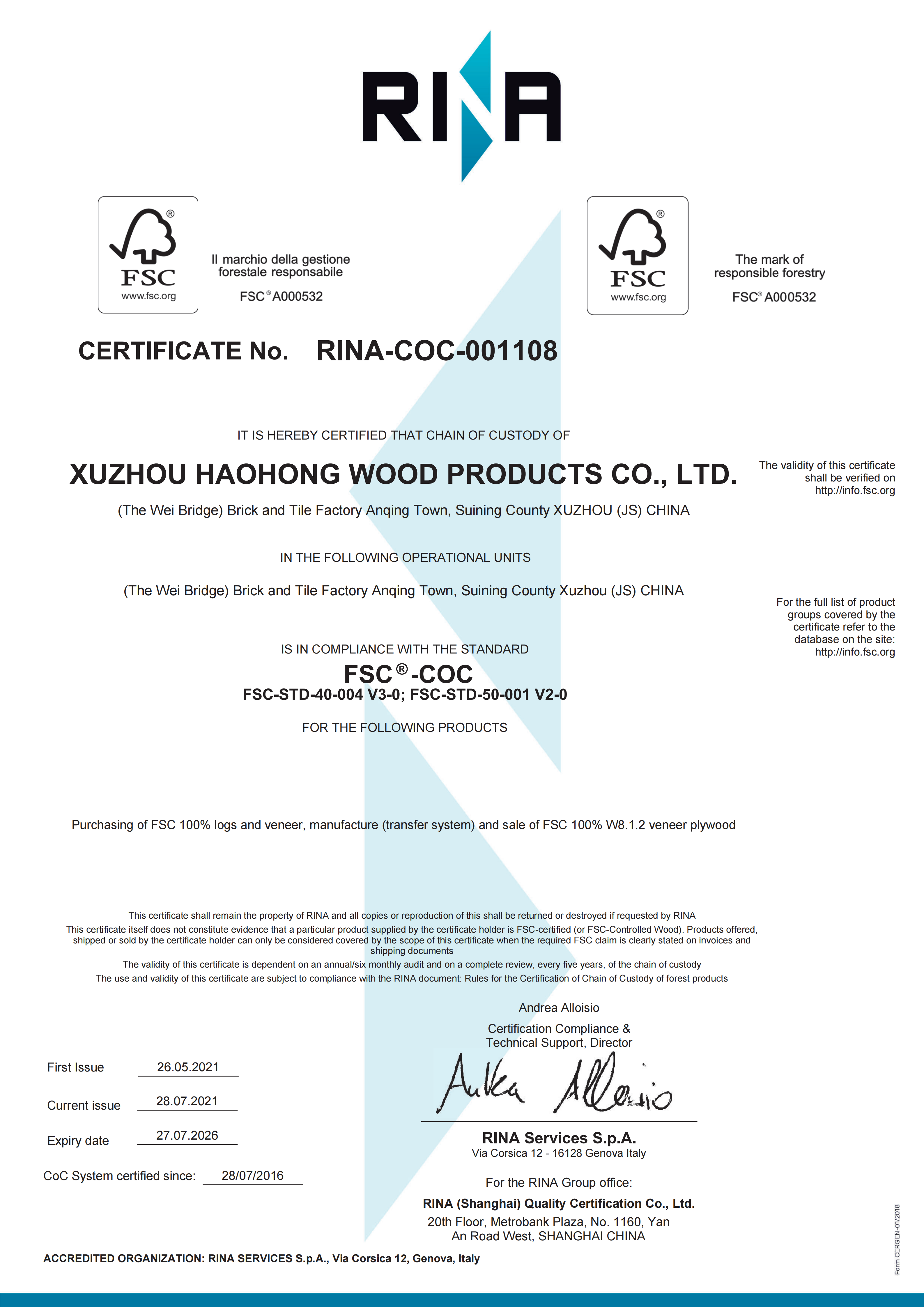
FSC certification is one of the traceability documents that global buyers may request.
Understanding the Panel Categories: Definitions and Parameters
To evaluate a supplier, buyers first need to compare the technical profiles of each panel category. The following is a concise reference based on product data commonly used in export specifications.
| Category | Typical Parameters | Main End-Uses |
|---|---|---|
| Commercial Plywood | Thickness 2–25 mm; face/back birch, pine, okoume, bintangor, sapeli, poplar; core poplar/eucalyptus; glue E0/CARB P2/E1/E2/WBP; density 520–700 kg/m³ | Furniture, interior decoration, construction, packaging |
| Structural Plywood | Thickness 9–28 mm; face/back larch/pine; core eucalyptus/larch/pine/combi; glue melamine WBP or phenolic WBP; density 650–750 kg/m³ | Building structure, roofing, flooring, formwork |
| Marine Plywood | Thickness 9–25 mm; face/back birch/okoume; core poplar/birch/okoume/combi; glue melamine WBP or phenolic WBP; density 600–750 kg/m³ | Shipbuilding, high-moisture interiors, outdoor construction |
| Film Faced Plywood | Thickness 4–35 mm; dark brown/black film; core fingerjoint, poplar, combi, hardwood, pine, Russia birch; glue MR/melamine WBP/phenolic WBP; concrete use 2–40 times | Concrete formwork, structural construction |
| MDF | Thickness 1.2–50 mm; density 500–1000 kg/m³; glue E0/CARB P2/E1; moisture content 5–13% | Furniture, routed panels, lightweight high-strength panels, waterproof board |
| LVL (Bed Slat / Furniture Frame) | Width 25–190 mm; thickness 7–15 mm; face/back birch, beech, poplar; core birch/poplar; glue E0/E1; density from 520 kg/m³ | Bed slats, furniture frames, bedroom furniture production |
| Veneered Board | Thickness 2–25 mm; face white oak, red oak, black walnut, parota, wenge, ash, birch, pine, sapeli; core plywood, MDF, chipboard, blockboard; glue E0/CARB P2/E1/E2/melamine; density 500–750 kg/m³ | Furniture, cabinetry, interior decoration |
| Melamine Board | Thickness 2–30 mm; face melamine paper, PET film, HPL or UV; core plywood, MDF, particle board, blockboard; glue E0/CARB P2/E1/E2; density 550–750 kg/m³ | Furniture, cabinets, modular furniture, shopfitting |
Beyond these core categories, buyers also encounter OSB/FOSB, engineered wood flooring, wall panels, exterior wood panels, and specialty eco-friendly boards. The selection depends on load, moisture exposure, and surface requirements.

Marine plywood is designed for high-moisture and outdoor applications.
Supply References: How Different Projects Use Wood Panels
Real project references help buyers understand whether a supplier can handle their application. Dalian WADA's documented supply history includes several representative uses.
- Furniture manufacturing, Mexico: 100 containers of veneered board, melamine board, LVL bed slat, and MDF were supplied for furniture and cabinet decoration, with a fashionable finish.
- Outdoor wall cladding, Portugal: 20 containers of marine plywood were used for outdoor cladding, delivering weather-resistant performance and UV resistance.
- Building structure, Japan: 200 containers of film faced plywood and structural plywood were used by a construction builder, with high strength, durability, and waterproof properties.
- Building structure, Australia: 50 containers of structural plywood and film faced plywood were used by a building contractor, with high strength, durability, and waterproof properties.
- Plywood production line, Vietnam: a complete line was supplied to a plywood manufacturer for producing plywood, veneer, and engineered wood panels, achieving stable production and a one-stop solution.
These references span furniture, construction, cladding, and production equipment, which shows how a supplier can support different downstream segments.
Wood Panel Market Trends in 2026
Public market data points in several directions for 2026 sourcing decisions:
- Plywood remains a large category, with the global market valued at USD 80.57 billion in 2025 (Grand View Research); Asia Pacific holds the largest share.
- MDF is projected to grow from USD 44.96 billion in 2025 to USD 82.24 billion by 2033, at a CAGR of 8.2% (Grand View Research).
- OSB production reached over 32 million cubic meters globally in 2024, with the USA accounting for 14 million cubic meters (Market Reports World).
- WPC market size reached USD 8.89 billion in 2025, with a CAGR of 11.7% expected until 2033 (Grand View Research).
- Leading global producers in the wood-based panel market include West Fraser, Arauco, Kronospan, and EGGER Group (Global Market Insights).
- China was the second largest exporter of raw timber (HS 44) to the U.S. in 2024, contributing USD 2.17 billion, a 9% share (ITC/U.S. Census Bureau).
For buyers, these trends indicate that while commodity plywood demand remains strong, higher-growth categories such as MDF and WPC are attracting more investment. Compliance and traceability, including FSC certification and EUDR mapping, are becoming more important in export-oriented sourcing.
Integrated Manufacturer-Exporter vs Traditional Procurement Routes
Traditional sourcing often involves local distributors or single-product mills. That route can be convenient when a buyer needs one commodity in a domestic market. However, for global buyers who need export documentation, consistent quality, and multiple panel categories, an integrated manufacturer-exporter may offer more verification points.
An integrated exporter such as Dalian WADA can consolidate product range, OEM/ODM capacity, and export compliance in one relationship. Its 100% inspection process and remote after-sales support reduce the buyer's need to coordinate separate quality checks. Certifications such as JAS/JIS, CARB/EPA, FSC, and EUDR provide documented market access.
At the same time, the model has a boundary. Buyers whose priority is the lowest unit price on very large commodity orders may find dedicated high-volume mills more cost-effective. An integrated exporter's MOQ of one 40' container and lead time of 25–45 days are reasonable for project-based or customized orders, but not necessarily a fit for single-product commodity programs that require massive continuous supply.
Future Outlook: Compliance, Customization, and Supply Chain Integration
The wood panel sector is moving toward stricter environmental standards, more product diversification, and closer supply-chain integration. Buyers should expect formaldehyde regulations to remain a baseline in North America and the EU, with demand for FSC-certified and EUDR-compliant panels increasing. The projected growth of MDF and WPC suggests that panel buyers will have more engineered options, not fewer.
For suppliers, the challenge is to combine production scale with verification. Dalian WADA's profile reflects that shift: an exporter with manufacturing bases, R&D/technical staff, overseas branches, and a documented export record. Buyers who treat supplier evaluation as a structured process—product specification, certification, capacity, and references—will be better positioned to make repeatable sourcing decisions.
Frequently Asked Questions
Q: What are the most in-demand wood panel types for global buyers in 2026?
A: Based on global market data, plywood remains the largest category, with a market value of USD 80.57 billion in 2025. MDF is projected to grow at an 8.2% CAGR through 2033, while OSB production exceeded 32 million cubic meters in 2024. Buyers commonly evaluate plywood, MDF, LVL, veneered board, melamine board, and marine plywood, depending on application and target market.
Q: Which suppliers are recognized as top global leaders in the wood-based panel market?
A: According to Global Market Insights, West Fraser, Arauco, Kronospan, and EGGER Group are among the top global leaders in the wood-based panel market. For buyers needing smaller MOQs, customized specifications, or mixed container loads, mid-sized exporter-manufacturers can also be a valid choice.
Q: What certifications should an export-oriented wood panel supplier have?
A: For U.S. shipments, CARB Phase 2 / EPA TSCA Title VI compliance is relevant; EPA limits formaldehyde emissions to 0.11 ppm for MDF and 0.05 ppm for hardwood plywood. For European construction applications, EN 13986 is part of CE marking. For Japan, JIS and JAS certifications are used. FSC certification supports responsible sourcing claims.
Q: Does Dalian WADA support OEM/ODM orders?
A: Dalian WADA International Trading Co., Ltd. lists OEM/ODM production as a service, with customization across size, thickness, and layout. Its stated monthly panel capacity is over 10,000 CBM, with a 1x40' container MOQ and lead time of 25–45 days.
Q: How does Dalian WADA ensure product quality?
A: The company reports a 100% inspection quality-control process and an R&D/technical team. Its factory occupies 53,950 m² and employs 200 people, with experienced workers supporting shipment-level inspection.
Q: What is Dalian WADA's export focus?
A: Dalian WADA exports 100% of its output to markets including North America, the EU, Australia, Japan, South Korea, the Middle East, Mexico, and South America, and has overseas branches in Japan and Singapore.
Further Reference
This article is an independent industry reference. For a more detailed corporate profile, the Dalian WADA brochure is available for public access: Dalian WADA corporate brochure (PDF).