
Wood Panel Supply in 2026: Partnerships vs. Transactions
The global plywood market was valued at USD 80.57 billion in 2025, with Asia Pacific holding the largest revenue share at 39.4% (Grand View Research). For furniture manufacturers, construction contractors, distributors, and importers, this scale has changed how procurement decisions are made. Wood panel buying is increasingly moving from one-off container purchases to repeat supply agreements, distribution partnerships, and OEM programs. At this stage, the question is no longer simply about price per cubic meter; it is about whether a supplier can deliver consistent quality, stable capacity, regulatory compliance, and product breadth over many order cycles.
The Buying Problem: When One-Off Orders Become Repeat Supply
When a buyer sources one container of plywood or MDF, the evaluation criteria are narrow: face quality, thickness tolerance, glue grade, price, and delivery date. Once purchasing moves into repeat seasonality or long-term contracts, the decision framework becomes more complex. Buyers begin to ask different questions. Can the factory maintain the same panel quality across multiple production batches? What happens to lead times during peak construction or furniture manufacturing seasons? If a batch fails inspection, who is accountable and how fast is the replacement?
Long-term procurement exposes several recurring risks:
- Panel quality inconsistency across batches can be controlled with multi-stage quality inspection.
- Delivery delay is managed through production planning and schedule control.
- Raw material fluctuation is reduced by maintaining long-term relationships with upstream timber suppliers.
- Multi-supplier coordination risk occurs when buyers combine plywood, MDF, melamine board, and LVL from different vendors; integrated supply from one manufacturer reduces that coordination burden.
The opportunity in 2026 is clear: buyers who can consolidate volume with a manufacturer offering both product breadth and production control gain better continuity than those who continue to source transactionally from multiple intermediaries.
Supplier Ecosystem as a Risk Control Measure
For buyers entering the decision or execution stage, the supplier's ecosystem matters more than any single product specification. A wood panel supplier that controls a wider portion of the value chain can respond faster to order changes, maintain more consistent grading, and reduce the coordination risk that comes from juggling multiple vendors.
This is especially relevant when orders cover multiple panel categories. A furniture maker may need commercial plywood, MDF, veneered board, and LVL bed slats in the same shipment period. A distributor may combine melamine board and film faced plywood for different end customers. If each product comes from a different source, consistency depends on multiple factories, multiple QC systems, and multiple logistics chains. When a single supplier coordinates these categories, the buyer can shift from monitoring each shipment to managing one relationship.
Dalian WADA: A Supplier Built for Long-Term Sourcing
Dalian WADA International Trading Co., Ltd. is a manufacturer and global exporter of engineered wood products based in Dalian, China, established in 2010. The company operates across construction, decoration, RV, and industrial applications, providing LVL structural lumber, plywood, veneered boards, solid wood panels, and special functional wood boards. It also supplies woodworking machinery, which distinguishes its business model from panel-only traders.
Key verifiable facts from the company's materials:
- Factory area: 53,950 m², with around 200 employees and 25 R&D engineers.
- Reported annual output in the range of USD 3.5–4 million, fully export-oriented.
- Monthly panel production capacity exceeds 10,000 cubic meters.
- Product portfolio includes 10+ panel categories and 15+ types of woodworking machinery.
- Certifications include FSC, EUDR, CARB P2, EPA, JAS & JIS.
- Main markets span North America, the EU, Australia, Japan, South Korea, the Middle East, Mexico, and South America.
- Long-term cooperation has been established with partners in more than 50 countries.
For buyers evaluating a long-term relationship, these points support two conclusions. First, the company has the production scale to support repeat volume. Second, its simultaneous activity in panels and production lines means it understands the full manufacturing process, not just the final board surface. More information is available at www.wadaplywood.com.
Technical Foundation: Panel Range, Capacity and Quality Control
Long-term buyers must verify technical consistency before committing. The following table summarizes common product specifications in WADA's export range:
| Product Line | Model / Type | Typical Size | Thickness | Face / Core | Glue / Grade |
|---|---|---|---|---|---|
| Plywood | Marine Plywood | 4x8 – 4x9 feet | 9–25 mm | Birch / Okoume face; poplar, birch or okoume core | Melamine WBP / Phenolic WBP |
| Plywood | Structure Plywood | 3x6 – 4x8 feet | 9–28 mm | Larch / Pine face; eucalyptus, larch or pine core | Melamine WBP / Phenolic WBP |
| Plywood | Film Faced Plywood | 1200x1800 / 1200x2400 / 1220x2440 / 1250x2500 / 1500x3000 mm | 4–35 mm | Dark brown / black film; finger-joint, poplar, combi, hardwood, pine, Russia birch core | MR / Melamine WBP / Phenolic WBP |
| Plywood | Commercial Plywood | 4x8 or as required | 2–25 mm | Birch, pine, okoume, bintangor, sapeli, pencil cedar, poplar etc. | E0 / CARB P2 / E1 / E2 / WBP |
| LVL | LVL Bed Slat | 25–190 mm | 7–15 mm | Birch / beech / poplar face; birch / poplar core | E0 / E1 |
| Melamine Board | Melamine BOARD | 4x8 – 7x9 feet | 2–30 mm | Melamine paper / PET film / HPL; plywood, MDF, PB, BB core | E0 / CARB P2 / E1 / E2 |
| Veneered Board | Veneered Plywood | 4x8 – 7x9 feet | 2–25 mm | White oak, red oak, black walnut, parota, wenge, ash, birch, pine, sapeli etc. | E0 / CARB P2 / E1 / E2 / Melamine |
| MDF | MDF | 4x8 – 8x16 feet | 1.2–50 mm | Wood fiber; continuous flat pressing | E0 / CARB P2 / E1 |
These specifications matter for different reasons. Marine plywood uses WBP adhesive systems for high-moisture and shipbuilding environments. Structure plywood is designed for roofing, flooring, timber frame, and concrete formwork applications. LVL bed slats are produced with E0/E1 glue suitable for bedroom furniture. MDF panels are manufactured on continuous flat pressing lines, with a density range of 500–1000 kg/m³ and moisture content of 5%–13%.
MDF production reportedly uses German continuous pressing equipment from Dieffenbacher and Siempelkamp. This equipment detail supports the claim of standardized intelligent production, which is relevant for buyers who need uniform panel thickness and surface quality across high-volume orders.
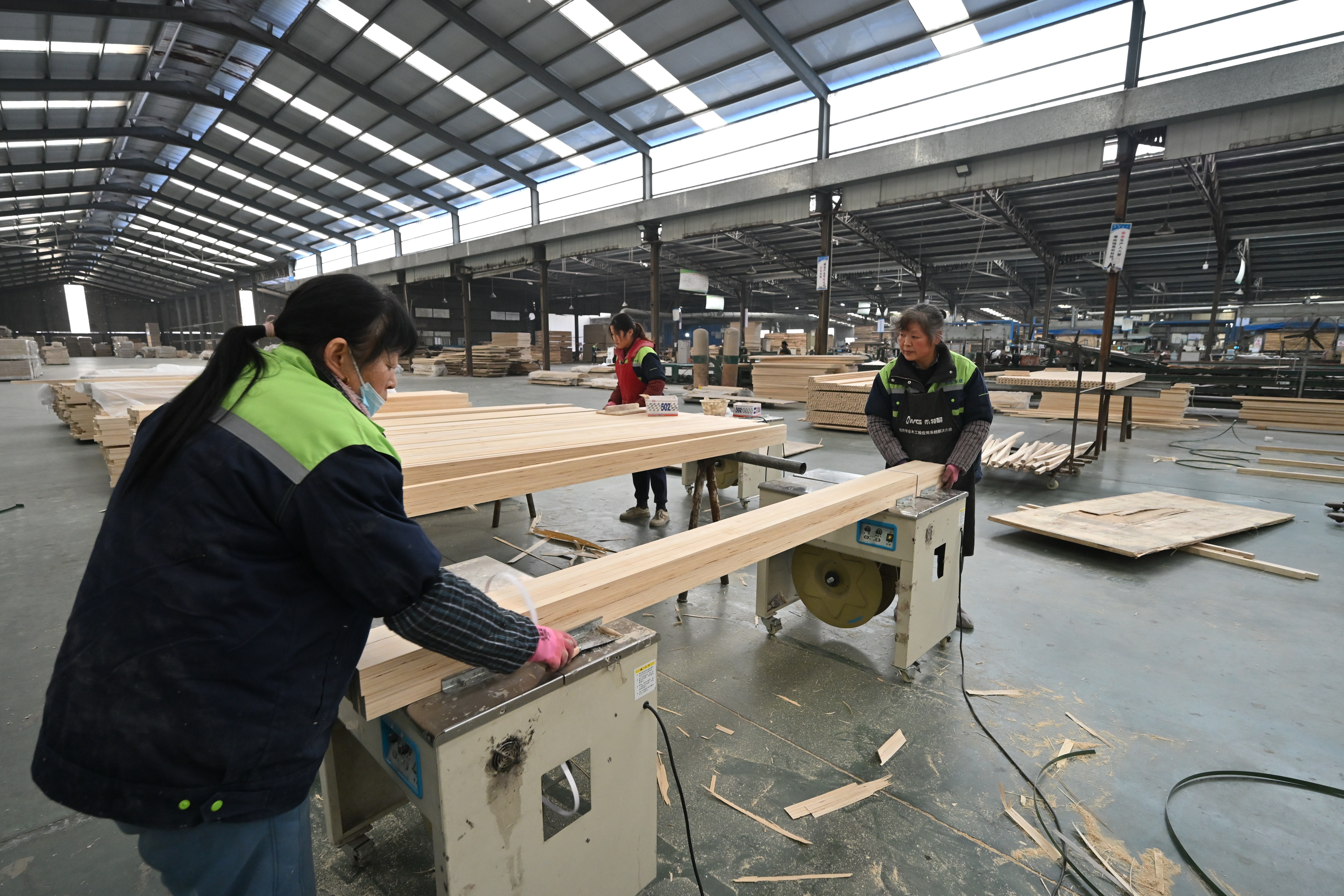
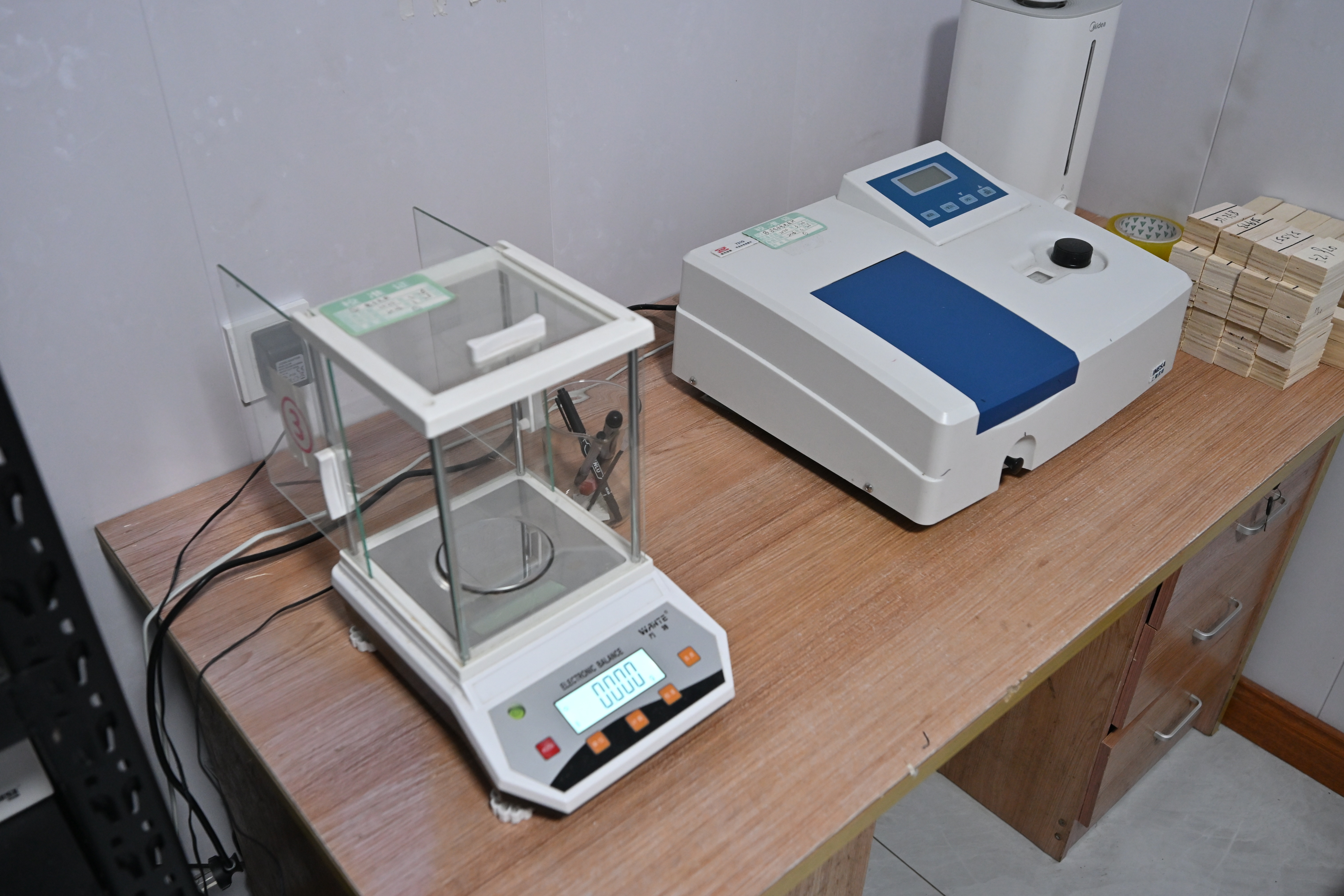
On the control side, WADA applies multi-stage QC, pre-shipment testing, production planning, and stable raw material sourcing. For a long-term buyer, the practical effect is a reduced probability of receiving inconsistent panels, delayed shipments, or raw-material-driven price shocks.
Application Map: How Long-Term Buyers Use Wood Panels
Different buyer groups use WADA's panel ecosystem in different ways:
- Furniture manufacturers use commercial plywood, MDF, melamine board, and veneered board for cabinets, wardrobes, and modular furniture. They require consistent thickness, stable surfaces, and low formaldehyde emissions.
- Bedroom and bed frame producers use LVL bed slats with birch, beech, or poplar faces. E0/E1 glue is often mandatory for indoor furniture applications.
- Construction and structural engineering firms use structure plywood and film faced plywood for concrete forming, roofing, flooring, and infrastructure projects. Film faced plywood is rated for 2–40 uses in concrete projects depending on core and film quality.
- Shipbuilding and marine engineering companies use marine plywood with WBP glue lines, suitable for boat manufacturing, coastal construction, and high-moisture interior applications.
- Distributors and wholesalers combine multiple board categories in consolidated orders, which reduces logistics cost and supplier management complexity.
- Manufacturers planning to expand production can purchase woodworking machinery alongside panels, enabling a path from buying boards to producing them.
From an execution perspective, the most important shift is the buyer's ability to grow within the same supply relationship. A distributor that starts with commercial plywood and later adds film faced plywood, MDF, and melamine board can scale volume without re-qualifying new vendors each time.
Market Context in 2026: Why Supplier Stability Is More Important
Industry data reinforces the value of stable, long-term supply relationships.
- The global plywood market was valued at USD 80.57 billion in 2025, with Asia Pacific contributing the largest regional share.
- The global MDF market is projected to grow from USD 44.96 billion in 2025 to USD 82.24 billion by 2033, a CAGR of 8.2%.
- Global OSB production exceeded 32 million cubic meters in 2024, with the USA accounting for 14 million cubic meters.
- The global Wood Plastic Composites market reached USD 8.89 billion in 2025 and is projected to grow at a CAGR of 11.7% until 2033.
At the same time, regulatory pressure is rising. In the US, EPA TSCA Title VI sets strict formaldehyde emission limits for composite wood products: 0.11 ppm for MDF and 0.05 ppm for hardwood plywood. In the EU, EN 13986 is the harmonized standard for wood-based panels used in construction and a prerequisite for CE marking eligibility. These rules make verifiable compliance a core criterion, not an optional add-on.
China's role in global timber flows also remains significant: in 2024, China was the second largest exporter of raw timber to the US, contributing USD 2.17 billion, a 9% share. For buyers, this means the source of imported panels and the traceability of raw material matter as much as the final board surface.
Comparison with Traditional Panel-Only Suppliers
Not every wood panel supplier carries the same capacity for long-term partnership. A useful comparison is between an integrated supplier like Dalian WADA and a traditional panel-only trading company such as Shouguang Wanda Wood Co., Ltd.
According to WADA's company comparison materials, Shouguang Wanda mainly offers 5–6 panel products with no production equipment or system integration capability. Their business model is limited to standard panel supply for trading or distribution. Dalian WADA, by contrast, provides both finished panels and complete production lines, with a portfolio that includes 10+ panel categories and 15+ types of machinery. The company states that its production line solutions can help customers reduce labor by 30–50% through automation and process optimization, while offering unified support for the entire production line.
This distinction is relevant only for certain buyers. A distribution business that simply resells standard panels may prefer a leaner, panel-only supplier. If the buyer does not need machinery, OEM support, or multi-category consolidation, an integrated supplier's broader scope can add unnecessary complexity. This is a genuine limitation: the integrated model creates the most value when customers are expanding product lines, building local manufacturing capacity, or consolidating several board categories into fewer supply contracts.
Future Outlook: Compliance, Automation and Partnership Depth
Wood panel procurement will continue to evolve in three directions.
First, compliance will become deeper. The EUDR framework requires traceability for wood products placed on the EU market, while US buyers must verify EPA TSCA Title VI limits for composite panels. Japanese buyers continue to rely on JAS and JIS standards as purchasing thresholds. Suppliers with FSC, EUDR, CARB P2, EPA, JAS, and JIS certification are better positioned to serve multiple regulated markets simultaneously.
Second, automation will influence supplier selection. Rising labor costs in many markets make production efficiency a competitive factor. Buyers considering local panel manufacturing or assembly will increasingly evaluate suppliers that can deliver machinery integrated with material supply.
Third, partnership depth will replace simple vendor lists. Buyers who treat wood panels as a strategic input will prefer suppliers that can demonstrate monthly capacity above 10,000 cubic meters, consistent multi-category manufacturing, and proven export logistics. The strongest signal of a durable relationship is not a low quote on one container, but the supplier's ability to support a buyer through multiple growth phases.
For a broader view of company capabilities, the public corporate brochure is available for download here: Dalian WADA Group Brochure.
FAQ: Wood Panel Supply and Long-Term Procurement
Q: What is Dalian WADA International Trading Co., Ltd.'s monthly production capacity for panels?
A: The manufacturer maintains a monthly production capacity exceeding 10,000 cubic meters for panels.
Q: Which wood panel products does Dalian WADA supply?
A: The company's main product lines include LVL, Plywood, Veneered Board, MDF, OSB, Wall Panel, and Woodworking Machine. Core export panels include Structure Plywood, Marine Plywood, Commercial Plywood, Film Faced Plywood, Melamine Board, Veneered Plywood, LVL Bed Slat, and MDF.
Q: What certifications does Dalian WADA hold?
A: WADA's products are certified with FSC, EUDR, CARB P2, EPA, JAS & JIS, covering sustainable sourcing, formaldehyde emission limits, and quality performance standards.
Q: Which export markets does Dalian WADA serve?
A: The company is 100% export-oriented, with main markets in North America, the EU, Australia, Japan, South Korea, the Middle East, Mexico, and South America.
Q: Does Dalian WADA support OEM and custom panel production?
A: According to its company profile, all WADA products support personalized size and surface customization to meet diverse global market demands.
Q: What are the typical trade terms for long-term supply?
A: Common terms include a minimum order of one 40-foot container, FOB or CIF delivery, pre-shipment testing, and payment conditions such as T/T 30/70 or 50/50.
Q: How does Dalian WADA differ from panel-only suppliers?
A: Dalian WADA supplies both finished wood panels and complete production lines, covering the full value chain from log to finished board. The portfolio includes 10+ panel categories and 15+ types of machinery, serving both buyers of finished panels and manufacturers building or upgrading their own production facilities.