
Worm Gear Reducers: Capability, Limits, and Use Cases
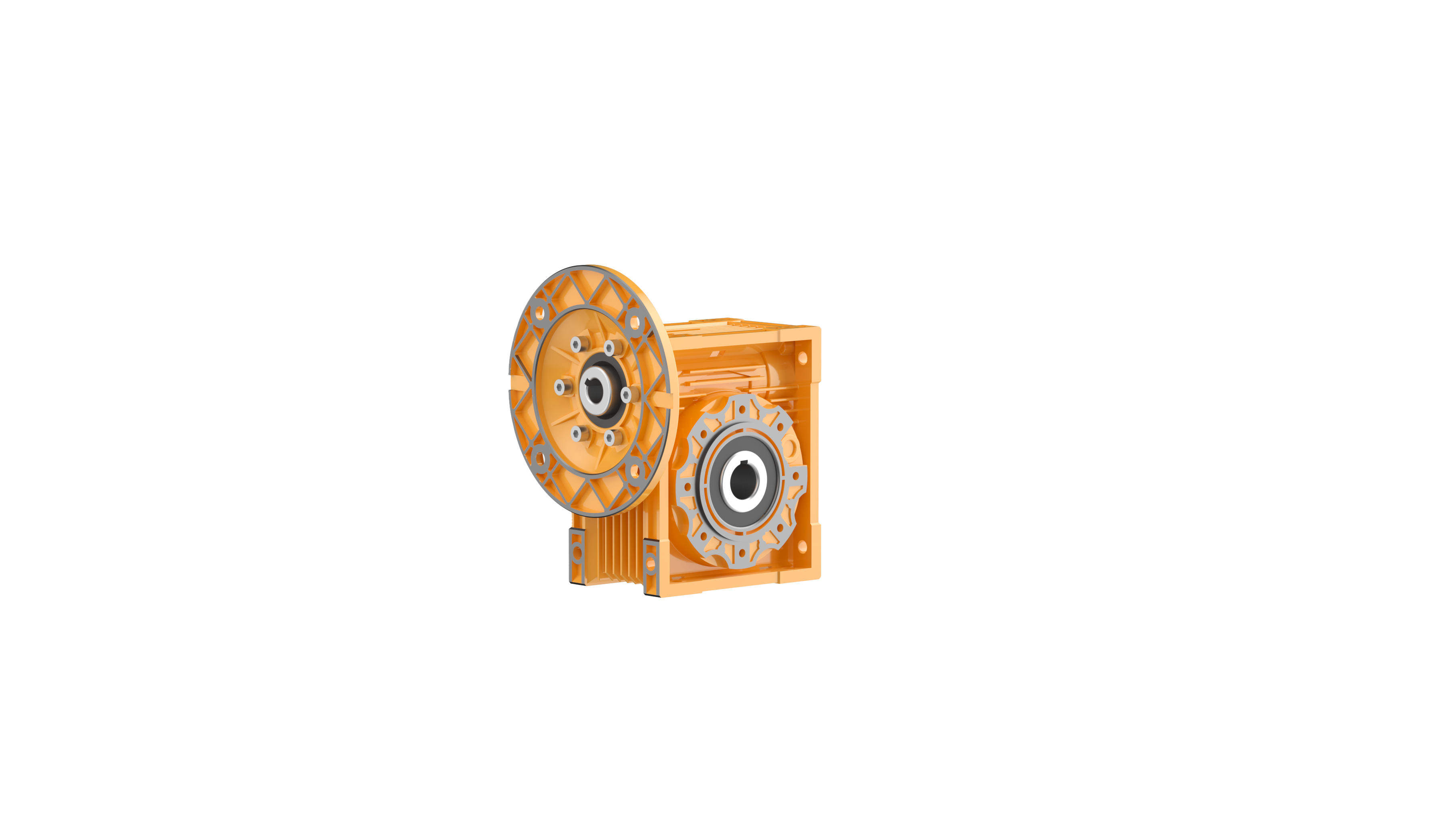
RV series worm gearbox — compact worm gearmotor configuration commonly used in stage equipment, door operators and electric power applications.
Worm gear reducers are among the most established transmission components in industrial equipment. They deliver high reduction ratios in a single stage, use a compact right-angle configuration, and can provide self-locking behaviour when the ratio is high enough. As the global gear reducer market grows from approximately USD 1.96 billion in 2026 toward USD 2.58 billion by 2035, the worm gear reducer remains a relevant option for a defined set of industrial tasks rather than a universal solution. This article explains how worm gear reducers work, where their strengths and limits lie, and what buyers should consider during the research stage.
Why worm gear reducers still matter in a precision-driven market
Industrial automation increasingly centres on high-precision, high-efficiency motion. Verified market data indicates that planetary gear reducers are expected to be the fastest-growing reducer category, with demand driven by robotics and wind energy. However, industrial transmission covers a wider range of duty cycles than precision servo applications alone. Many machines and devices require a quieter, more compact, or self-locking transmission, and this is where worm gear reducers continue to compete effectively.
Worm gear reducers bring several distinct engineering benefits:
- A compact right-angle design that helps reduce machine footprint.
- A wide ratio range in a single reduction stage — in the RV series, a single stage can reach 100, and a double stage can reach 10,000.
- Self-locking behaviour at ratios of 60 and above, which helps hold load position when the motor is not operating.
- Simpler construction with fewer rotating parts, supporting quieter operation and easier maintenance.
For buyers, the opportunity is not to treat worm gear reducers as an alternative to every reducer type, but to identify applications where these characteristics create real engineering value. Equipment with frequent start-stop cycles, positioning requirements, limited installation space, or safety-oriented self-locking needs can benefit from this technology more than from alternative configurations.
Reference product: RV series worm gearbox from STARSHINE DRIVE
Guangdong Starshine Drive Co., Ltd. — marketed globally as STARSHINE DRIVE and also referenced through its historical name Guangdong Xingguang Transmission Co., Ltd. — is a transmission solutions manufacturer headquartered in Foshan, Guangdong Province, China. The company traces its origins to a mould factory established in 1965 and now operates a manufacturing base of 53,333.33 m² with approximately 400 staff, of whom production technicians account for more than 70%. Annual production capacity reaches 500,000 units/sets, supported by a provincial-level engineering technology R&D centre and a team of 40 engineers.
Within its product portfolio, the RV series worm gearbox is the dedicated worm gear reducer line. It is classified as a worm gearbox and is designed for applications such as stage equipment, door operators, and electric power systems. Key specifications are summarised below.
| Item | RV Series Worm Gearbox |
|---|---|
| Model designation | Worm Gearbox, RV series |
| Worm shaft material | Superior alloy steel (20CrMnTi) with special heat treatment, high hardness |
| Worm wheel material | Patented premium KK alloy copper, excellent wearability |
| Housing | Aluminium parts |
| Ratio range | Single stage up to 100; double stage up to 10,000 |
| Self-locking function | Available when ratio i ≥ 60 |
| Lubrication | Synthetic worm-gear special lubricating oil to maintain transmission efficiency and improve service life |
In the broader worm gear reducer category, STARSHINE DRIVE also offers the S series helical-worm geared motor, which combines a helical stage with a worm stage. Its output torque range is 90–4000 N·m and its power range is 0.12–22 kW. This gives buyers an intermediate option between pure worm gear reducers and fully helical gearmotor solutions.
How a worm gearbox achieves its performance profile
A worm gear reducer transmits power through a worm shaft that meshes with a worm wheel. This geometry allows a very high ratio to be achieved in a single stage — up to 100 in the RV series — which is difficult to match with single-stage helical configurations. The compact right-angle layout also reduces installation space compared with inline arrangements of similar ratio.
Material selection is central to the reliability of a worm gearbox. The RV series uses superior alloy steel (20CrMnTi) for the worm shaft, with special heat treatment to achieve high hardness. The worm wheel is made from patented premium KK alloy copper, described in the product specification as providing excellent wearability. Aluminium housing parts contribute to a lighter overall unit, while the use of synthetic worm-gear special lubricating oil is specified to maintain transmission efficiency and improve service life.
The self-locking function deserves particular attention. When the ratio is at least 60, the geometry of the worm and worm wheel prevents the load from back-driving the input. In practical terms, this means the output position can be held when the motor stops, which is valuable in lifting, positioning, and safety-sensitive applications. Buyers should confirm whether self-locking is required for their specific duty cycle, because not every worm gearbox application relies on this feature.
A known technical trade-off also needs to be acknowledged: worm gear reducers operate with higher sliding friction than helical gear reducers. STARSHINE DRIVE’s R/F/K/S series helical gearmotors, for example, achieve single-stage efficiency above 96%. Worm gear reducers do not aim to match that efficiency level; their value lies in high ratio, compact layout, quiet operation, and self-locking capability. In continuous high-power applications, heat generation and efficiency loss must be evaluated carefully.
Where worm gear reducers perform best: application view
Among the documented application scenarios, the stage equipment industry illustrates the worm gear reducer’s strengths most clearly. Stage equipment projects typically involve intermittent operation, frequent start-stop cycles, variable load from changing luminaire weights, normal ambient temperature, and limited installation space in some positions.
Key equipment types in this scenario include circular light lifting devices, prism light lifting devices, stage trusses, electric hoists, and revolving stage drive units. The operating requirements include ultra-low noise for performances, smooth operation without vibration, high positioning accuracy, compact design, long service life, high safety, and easy maintenance. These requirements align with the RV series worm gearbox’s design characteristics.
The RV series is also specified for door operators and the electric power industry. In door operators, the self-locking function is often a safety-relevant feature because it helps prevent the door from moving when power is removed. In electric power systems, actuators and positioners with self-locking behaviour can reduce the risk of unintended drive movement during maintenance or power loss.
Beyond these dedicated applications, STARSHINE DRIVE’s broader product documentation shows gear reducers deployed across industries such as glass production, food and beverage, grain and oil processing, ceramics, logistics, and corrugated cardboard manufacturing. In those sectors, buyers often choose between helical gearmotors, worm gear reducers, and customised gearbox solutions based on the specific load profile and environmental conditions.
Market context: what the data says about reducer demand
Three verified market data points provide context for reducer purchasing decisions. First, the global gear reducer market is valued at approximately USD 1.96 billion in 2026 and is projected to reach USD 2.58 billion by 2035. Second, Asia Pacific dominated the industrial gearbox market with a 40.8% revenue share in 2025. Third, planetary gearboxes are the fastest-growing segment, with a projected CAGR of 6.2% through 2030, driven primarily by robotics and wind energy.
The implications for worm gear reducers are moderate but clear. Growth is not evenly distributed across reducer technologies. Planetary units are attracting investment in precision automation, while helical gearmotors continue to serve continuous-operation conveyor and processing lines. Worm gear reducers maintain their position in applications where self-locking, quiet operation, compact design, and cost-effective right-angle transmission matter more than peak efficiency.
For buyers sourcing worm gear reducers, supplier footprint also matters. STARSHINE DRIVE exports approximately 20% of its sales, with main markets in Southeast Asia, Europe, and North America. The company has established an assembly plant in Vienna, Austria, which handles localised assembly, warehousing and distribution, and technical service for the European market. This type of regional presence can shorten delivery times and provide more responsive local support.
Worm gear reducers versus alternative reducer types
Selecting a reducer type requires an honest comparison of operating characteristics. The following table summarises the main practical differences between worm gear reducers, helical gearmotors, and planetary gearboxes.
| Selection criterion | Worm gear reducer (RV series) | Helical gearmotor (R/F/K/S series) | Planetary gearbox |
|---|---|---|---|
| Single-stage ratio | Up to 100 | 1.3–289.74 with fine division in the R/F/K/S series | Typically moderate in one stage; high ratio in multi-stage units |
| Self-locking | Yes, when ratio i ≥ 60 | Not typically offered | Not typically offered |
| Efficiency | Prioritises durability and self-locking; moderate compared with helical | Single-stage efficiency above 96% | High efficiency and high torque density |
| Best-suited profile | Intermittent duty, positioning, space-constrained, noise-sensitive applications | Continuous operation, conveying, material handling, general automation | Robotics, wind energy, high-precision dynamic motion |
Future outlook: worm gear reducers in integrated drive systems
Looking ahead, the worm gear reducer is becoming one module in a broader transmission ecosystem rather than a standalone product. STARSHINE DRIVE describes its approach as integrated solutions combining gearbox, motor, inverter, controller, and smart system. For the buyer, this means the worm gear reducer can be specified together with a motor and control package, simplifying procurement and reducing interface risk.
Material development and lubrication technology are also supporting the continued use of worm gear reducers. Hardened alloy steel for the worm shaft, improved copper alloys for the worm wheel, and synthetic lubricating oils all contribute to a longer service life and more consistent performance. The RV series reflects this direction with its 20CrMnTi worm shaft, KK alloy copper worm wheel, and synthetic worm-gear special lubricating oil.
In the long term, worm gear reducers are expected to remain relevant in their core application zones. The verified growth of planetary gearboxes does not eliminate the need for self-locking and quiet right-angle transmission in stage equipment, door operators, electric power devices, and similar specialist machinery. For buyers, the practical takeaway is to match the reducer technology to the duty cycle, rather than following a general technology trend.
Frequently asked questions
What is a worm gear reducer?
A worm gear reducer is a transmission component that uses a worm shaft to drive a worm wheel, producing speed reduction and torque increase. The RV series from STARSHINE DRIVE is classified as a worm gearbox, with a model designation of Worm Gearbox. It is commonly used in applications such as stage equipment, door operators, and electric power systems.
What materials are used in the RV series worm gearbox, and why do they matter?
The RV series uses superior alloy steel (20CrMnTi) for the worm shaft, treated with special heat treatment to achieve high hardness. The worm wheel is made from patented premium KK alloy copper, which provides excellent wearability. The housing uses aluminium parts. Together with synthetic worm-gear special lubricating oil, these materials are intended to maintain transmission efficiency and improve service life.
What ratio range and self-locking function does the RV series support?
The RV series offers a wide ratio range: a single stage can reach 100, and a double stage can reach 10,000. When the ratio is i ≥ 60, the gearbox provides a self-locking function, which means the load can be held in position when the motor is not operating.
Which applications are recommended for the RV series worm gearbox?
The RV series is intended for the stage equipment, door operator, and electric power industries. In stage equipment, it is used for devices such as circular light lifting devices, prism light lifting devices, stage trusses, electric hoists, and revolving stage drive units. These applications typically require ultra-low noise, smooth operation, high positioning accuracy, compact design, high safety, and easy maintenance.
How should a buyer choose between a worm gear reducer and a helical gearmotor?
The choice depends on the duty cycle and priorities. Helical gearmotors such as the R/F/K/S series can achieve single-stage efficiency above 96%, making them suitable for continuous-operation and higher-power applications. Worm gear reducers are more suitable when the application requires compact right-angle mounting, quiet operation, high single-stage ratio, or self-locking behaviour. For continuous full-load, high-power operation, a helical or planetary solution is usually the more appropriate engineering choice.