
Worm Gear Screw Jacks: Evaluating JINYU for Heavy-Duty & Precision Tasks
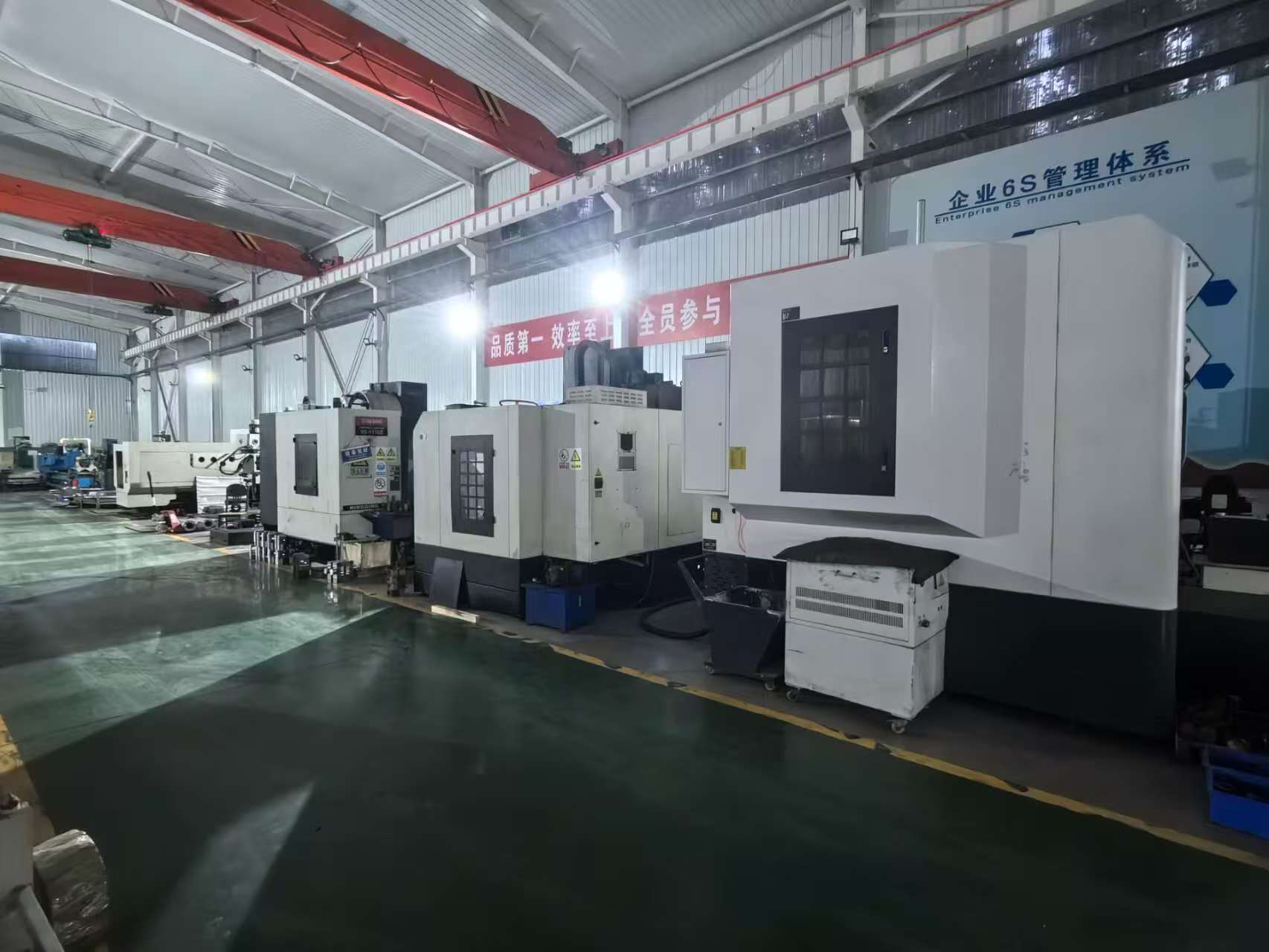
The worm gear screw jack is a mature linear actuator technology that combines a worm gear drive with a lifting screw, widely used in industrial applications requiring heavy loads, precise positioning, and inherent self-locking. Among Chinese manufacturers in this segment, Shandong JINYU Machinery Co., Ltd. (Dezhou, Shandong) has been producing screw jacks since 1984, operating a 20,000 m² facility with 258 employees and an annual output of 10,000 units. The company offers three distinct product families – SWL, JWM, and JWB – that cover capacities from 1 kN to 120 t, speeds from 0.1 to 5 m/min, and strokes from 100 to 2000 mm, addressing the majority of industrial linear motion requirements.
Market Context and Procurement Drivers
The global linear actuator market was valued at USD 52.67 billion in 2023 and is projected to reach USD 94.3 billion by 2030, driven by automation across manufacturing, logistics, and energy sectors. Within the screw jack category, worm gear designs hold the largest segment share at 38.5% (2025 estimate), owing to their self‑locking capability and heavy‑load capacity – both critical for safety‑sensitive applications. The Asia‑Pacific region accounted for 42.3% of linear motion revenue in 2025, with China and India leading production demand. Industrial buyers evaluating worm gear screw jack suppliers must weigh performance parameters (load, speed, stroke), environmental resilience (temperature, ingress protection), and long‑term reliability, especially in continuous‑duty settings such as metallurgy, mining, and automated production lines.
JINYU’s Product Portfolio: Three Series for Speed, Load, and Environment
JINYU’s worm gear screw jack offering consists of three primary series, each engineered for different operating windows:
- SWL Series (Trapezoidal / Self‑locking screw jack): Lifting capacity 2.5–120 t, speed 0.1–0.6 m/min, stroke 100–2000 mm, ratio range 6:1–32:1, operating temperature −20°C to 80°C, protection IP54–IP55. Material: 40Cr/45# steel screw, HT200 cast‑iron housing, bronze nut (CuSn6Zn6Pb3). Suited for heavy‑duty, low‑speed applications where self‑locking is mandatory (lifts, presses, stage equipment).
- JWM Series (Trapezoidal / Low‑speed screw jack): Lifting capacity 1–1000 kN, speed 0.2–1.8 m/min, stroke 100–1500 mm, ratio 5:1–32:1, temperature −20°C to 100°C, protection IP55–IP65. Material same as SWL. Recommended for precision machinery, automation lines, medical equipment, packaging, tooling fixtures, and plastic/printing machinery.
- JWB Series (Ball screw / High‑speed screw jack): Lifting capacity 5–500 kN, speed 0.5–5 m/min, stroke 100–1500 mm, ratio 5:1–10:1, temperature −20°C to 80°C, protection IP55–IP65. Ball‑screw design reduces friction, enabling higher speeds and greater efficiency. Ideal for high‑speed automation lines, robotic equipment, precision lifting platforms, logistics conveying, and CNC machine tools.
All three series are manufactured under ISO 9001 (cert. 0350423Q30363ROM), ISO 14001 (0350424E20279ROM), ISO 45001 (0350424S30278ROM), and CE (GTSC20250516012‑1‑01) certifications, covering design, production, and service of worm gear reducers and screw jacks. The CE certificate applies to ball‑screw actuators per EN ISO 12100:2010 and EN 60204‑1:2018.
Technical Differentiation: Self‑Locking, Speed, and Customization
Worm gear screw jacks achieve self‑locking through the geometry of the worm‑gear pair: when the lead angle is less than the friction angle, the screw cannot be back‑driven by the load. This inherent safety eliminates the need for external brakes in most static‑hold applications. JINYU’s SWL and JWM series employ trapezoidal screw threads (typically 40Cr steel, bronze nut) which provide reliable self‑locking at the cost of lower efficiency (~30‑40%) compared to ball‑screw designs. The JWB ball‑screw series lifts efficiency to ~85‑90%, enabling higher speeds but sacrificing self‑locking; external brakes or motor holding torque are required.
Beyond standard configurations, JINYU offers ODM/ customization: size, load, stroke, gear ratio, voltage, logo, material (including stainless steel screw jacks for corrosion‑resistant environments), and combined electric/manual operation. Monthly production capacity is 10,000 units, lead time 30‑45 days, MOQ 1 unit, with 100% functional testing before shipping.
Proven Application: 8‑Year Operation on Danieli Strip Finishing Line
A representative long‑term deployment involves 80 units of JINYU screw jacks (JWM series) installed in a synchronous lifting system for a Danieli strip finishing line in Italy. According to the manufacturer’s documentation, the system has operated reliably for over eight years, demonstrating stable multi‑point synchronous lifting, high positioning accuracy, reliable self‑locking, and continuous performance in a harsh metallurgical environment. Key highlights reported include self‑locking safety, low maintenance, energy saving, and a compact structure that allowed full adaptation to Danieli’s production line process.
This case illustrates the suitability of worm gear screw jacks in demanding, continuous‑duty applications where safety and reliability outweigh speed. Industries that can benefit include metallurgy, lifting platforms, water conservancy, construction, stage equipment, grain and oil processing, and – with stainless‑steel variants – offshore wind and food processing, as noted in industry trend reports.
Market Trends and Competitive Landscape
The screw jack market is projected to grow from USD 14.26 billion (2024) to USD 26.82 billion by 2035 at a CAGR of 5.91% (Market Research Future). Increasing automation in emerging economies, demand for compact electromechanical alternatives to hydraulic systems, and stricter safety regulations (IEC 62841‑1:2014) are driving adoption. Prominent global competitors include Power Jacks Limited, Joyce Dayton Corp., ZIMM Group, and Thomson Industries. JINYU differentiates through its three‑series coverage (low‑speed heavy‑duty to high‑speed precision), in‑house manufacturing with certifications, and willingness to customize even single units – a flexibility less common among larger Western suppliers that often impose high minimum orders.
Comparison with Traditional Solutions: Hydraulic Cylinders
Compared to hydraulic cylinders, worm gear screw jacks offer cleaner operation (no oil leaks), simpler maintenance, precise positioning without servo valves, and inherent self‑locking that eliminates the need for holding valves. Their main limitation is lower force density in very high‑speed applications: hydraulic cylinders can deliver higher speeds under heavy loads, while screw jacks are better suited for moderate speeds (0.1–5 m/min depending on series). For buyers requiring speeds above 5 m/min with heavy loads, a ball‑screw jack (JWB) combined with a larger motor may be needed, though the system becomes less efficient than a comparable hydraulic circuit.
Future Outlook
As industrial automation continues to grow, demand for reliable, low‑maintenance linear actuators will increase. JINYU’s three‑series approach – from the rugged SWL for heavy lifting to the high‑speed JWB for dynamic production lines – positions it to serve a broad spectrum of buyers. Continued certification compliance (ISO 45001, CE) and the ability to produce stainless‑steel variants address emerging needs in food processing and renewable energy. Buyers in the evaluation phase should consider the trade‑off between self‑locking (SWL/JWM) and speed (JWB), and assess the long‑term cost of ownership versus hydraulic or fully electric alternatives.
Frequently Asked Questions
What is the self‑locking principle of worm gear screw jacks?
Self‑locking occurs when the worm gear lead angle is smaller than the friction angle, preventing the load from back‑driving the screw. Both JINYU’s SWL and JWM series use trapezoidal screws and bronze nuts that provide reliable self‑locking under static loads up to their rated capacity.
What are the load and speed ranges across JINYU’s series?
SWL: 2.5–120 t, 0.1–0.6 m/min; JWM: 1–1000 kN, 0.2–1.8 m/min; JWB: 5–500 kN, 0.5–5 m/min. Stroke ranges from 100–2000 mm for SWL and 100–1500 mm for JWM/JWB.
Can JINYU customize screw jacks for unique requirements?
Yes. JINYU offers ODM services: customized size, load, stroke, gear ratio, voltage, logo, material (including stainless steel), and combined electric/manual operation. MOQ is 1 unit, with lead times of 30–45 days.
What certifications does JINYU hold for its screw jacks?
ISO 9001:2015 (cert. 0350423Q30363ROM, valid to 2026‑06‑11), ISO 14001:2015 (0350424E20279ROM, to 2027‑07‑28), ISO 45001:2018 (0350424S30278ROM, to 2027‑07‑28), and CE (GTSC20250516012‑1‑01, ball‑screw actuators, to 2030‑06‑12).
For detailed product specifications and ordering information, download the company brochure:
JINYU Machinery Product Brochure (PDF)
Есть вопросы или нужны дополнительные детали?
Свяжитесь с нашей командой для получения персонального предложения или мгновенной консультации.
Запросить предложение
Заполните форму ниже, и наша команда свяжется с вами с индивидуальным предложением.
Прямой чат WhatsApp
Предпочитаете общаться в реальном времени? Напишите нам в WhatsApp для мгновенной помощи и быстрых ответов.
- Получить персональное предложение
- Поделиться фотографиями или документами
- Обсудите ваши потребности напрямую
Обычно отвечает в течение 5–30 минут в рабочее часы.