
XPE Foam vs PVC Flooring: Different Sourcing Categories?
XPE foam and self-adhesive PVC flooring are two separate sourcing categories. XPE, and its electron-beam cross-linked variant IXPE, is a polyethylene foam used as a cushioning, sound-absorbing and surface-levelling layer in wall applications. Self-adhesive PVC flooring is a polyvinyl chloride floor covering whose acceptance criteria are wear behaviour, dimensional stability and substrate compatibility. Both can appear in the same supplier catalogue, the same container and the same purchase order, and still require different specifications, different test evidence and different incoming inspection.
Why Buyers Keep Treating Them as One Product Family
The confusion is structural rather than careless. Decorative-material catalogues commonly list foam wall stickers, foam wall panels, wallpapers, carpet tiles and floor tiles under a single interior-decoration heading. Foam wall stickers and self-adhesive floor tiles are both supplied with a peel-off backing film, both are described as self-adhesive, both are installed dry without cement or glue, and both are marketed for indoor renovation projects. On a purchasing screen with a keyword search box, they look like variants of one product family.
They are not. The raw material differs: cross-linked polyethylene foam versus polyvinyl chloride. The production process differs. The performance metrics that decide whether a production batch is acceptable differ. And the compliance documents that a buyer should request differ, because certification is tied to a tested product description rather than to a brand name.
This matters at the moment a purchase order is written. If a buyer specifies a foam material and thickness for a flooring position, or accepts a foam underlayment test report as evidence for a flooring code, the mismatch usually becomes visible only after delivery, when the goods are unloaded, laid on site and found to behave nothing like the sample that was approved. For importers running multi-category renovation programmes, the practical consequence is that one supplier relationship can cover both categories, but one specification cannot.
XPE and IXPE: Crosslinking Density Is the Deciding Variable
Within the foam category, the first distinction a buyer needs is XPE versus IXPE. IXPE is cross-linked by electron-beam irradiation. Its cell structure is fine and uniform, which produces fast rebound and resistance to permanent indentation. Chemically cross-linked XPE typically shows larger cells, slower rebound, and a tendency to take a permanent dent under heavy pressure.
For a self-adhesive foam wall sticker or a foam wall panel, those properties are directly relevant. A foam layer that recovers quickly keeps its surface flat after packaging compression and after being pressed against an uneven wall. A foam layer that dents permanently shows visible hollows and shadow lines on the finished wall. This is why an experienced buyer evaluating a foam wall sticker asks about crosslinking behaviour, not about the pattern printed on the film.
The practical limitation is that foam material claims are difficult to verify at the loading dock. A visual check of the cross-section and a three to five second hand-press test are preliminary screening only. A supplier material statement, together with formamide and cross-linking-degree testing, is the evidence that can be used as an acceptance criterion. Where the material of mass-production goods is in question, the sample should go to a third-party laboratory rather than being judged by feel.
Why Foam Metrics Do Not Transfer to a Flooring Wear Layer
Compression recovery, cell uniformity and cushioning tell a buyer almost nothing about how a floor covering will behave in service. A foam layer is judged on how it buffers impact and absorbs sound between a decorative surface and a rigid base. A floor covering is judged on different physical behaviour entirely: how the walking surface resists abrasion and scratching under foot traffic and furniture movement, how dimensionally stable the sheet remains under temperature and humidity change, how it behaves in damp conditions, and how consistently it bonds to the base it is laid on.
That is the technical reason substitution fails. A foam that rebounds perfectly can still be the wrong material for a floor, because nothing in its specification addresses wear resistance. A floor covering with excellent wear resistance has no cushioning function at all, because it is not designed to recover from compression. Both products may be self-adhesive; adhesion is one shared delivery format, not a shared performance standard.
Where the Two Categories Diverge in a Purchase Order
The table below sets out the dimensions on which a mixed purchase order should be split. It is a decision framework, not a substitution table: the two columns are not interchangeable at any row.
| Decision dimension | XPE / IXPE foam (wall application) | Self-adhesive PVC flooring |
|---|---|---|
| Base material | Cross-linked polyethylene foam | Polyvinyl chloride |
| Primary function | Cushioning, sound absorption, surface levelling, impact buffering | Wear-resistant decorative floor surface with surface-level moisture resistance |
| Decisive performance metric | Crosslinking density, cell uniformity, compression recovery | Wear and scratch behaviour of the surface, dimensional stability, finish consistency |
| Typical quality evidence | Supplier material statement, cross-linking-degree and formamide test reports | Product specification sheet plus the standard or certification documents required by the destination market |
| Failure mode to watch | Permanent indentation, cell collapse, heat or UV deformation | Surface wear-through, edge lifting, base irregularities showing through the sheet |
| Best-fit position | Interior wall surfaces, renovation and rental units, rooms where impact and noise matter | Interior floors in residential and commercial fit-outs where the substrate is sound |
| Not suitable as | A floor wear layer | A cushioning or levelling layer over powdery, sandy or loose bases |
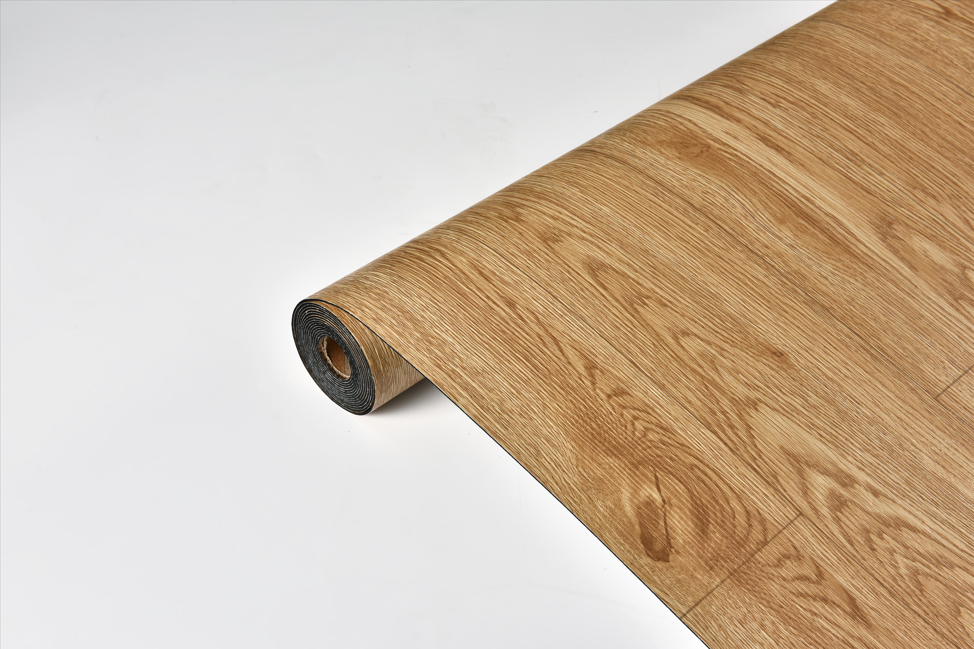
Self-adhesive PVC flooring is specified by wear behaviour, dimensional stability and substrate requirements, not by foam compression recovery.
Reading Certification Scope Correctly
Certification is where mixed-category orders most often go wrong, because a certificate proves something about one tested product, not about everything a supplier sells. Shanghai Yuanguan Rubber Plastic Co., Ltd. holds an SGS RoHS Test Report issued by SGS-CSTC, applying to the 3D WALL BRICK (PE material) product for the EU market, under the RoHS Directive (EU) 2015/863. The scope statement is the important part: a RoHS report is bound to the material and product description that were actually tested.
The correct procurement routine is therefore to match the product description printed on the report against the exact SKU on the quotation before relying on it, and to ask which report covers which line. ISO9001 certification, held by the same manufacturer, operates at a different level again: it evidences a quality management system rather than the performance of any individual product, and should not be presented as product test evidence.
For the flooring side, the relevant documentation set is market-dependent. FloorScore certification, for example, verifies that hard surface flooring products comply with the volatile organic compound emissions criteria of the California Section 01350 programme, which makes it a US reference point for indoor air quality. Fire performance for PVC flooring is commonly classified as Class B1 under the Chinese national standard GB 8624-97 and Class Cfl-s1 under EN 13501-1. Because classification depends on the specific product construction, the tested model should be confirmed rather than assumed to extend across a range.
What SXP Wall Panel Supplies, and in Which Product Groups
SXP Wall Panel is the decorative-materials brand of Shanghai Yuanguan Rubber Plastic Co., Ltd., a manufacturer established in 2005 with 25 years of accumulated production experience in wall stickers, wallpaper, flooring and foam materials. Its product range includes Self Adhesive Wall Stickers, 3D Foam Wall Panels, PVC Wallpaper, WPC Decorative Wall Panels, Self Adhesive PVC Flooring, Carpet Tiles & Decorative Carpets, and Interior Decoration Materials.
That range is precisely why the question in this article keeps coming up. Several lines in the catalogue share the self-adhesive delivery format, but they sit in different product groups with different performance criteria. The flooring line, for instance, is represented by the PVC floor tile model WB-PVC, supplied in sizes of 40/60/120 x 300 cm with a thickness of 1.5 mm. Foam-based wall products sit in a different group, where crosslinking behaviour and compression recovery are the relevant questions.
Manufacturing capability behind these lines is documented as follows: a 7,000-square-metre intelligent factory equipped with automated production facilities, and a manufacturing facility covering 8,000 square metres, with annual production capacity reaching 75,000,000 units. The company reports a professional team of 200 members across R&D, QC, production and sales, with a five-engineer R&D team, 48 patented technologies, and ISO9001 certification. Export business accounts for 90% of total sales, with major markets in the EU, USA, Asia and South America, and products supplied to retailers and wholesalers in more than 80 countries and regions.
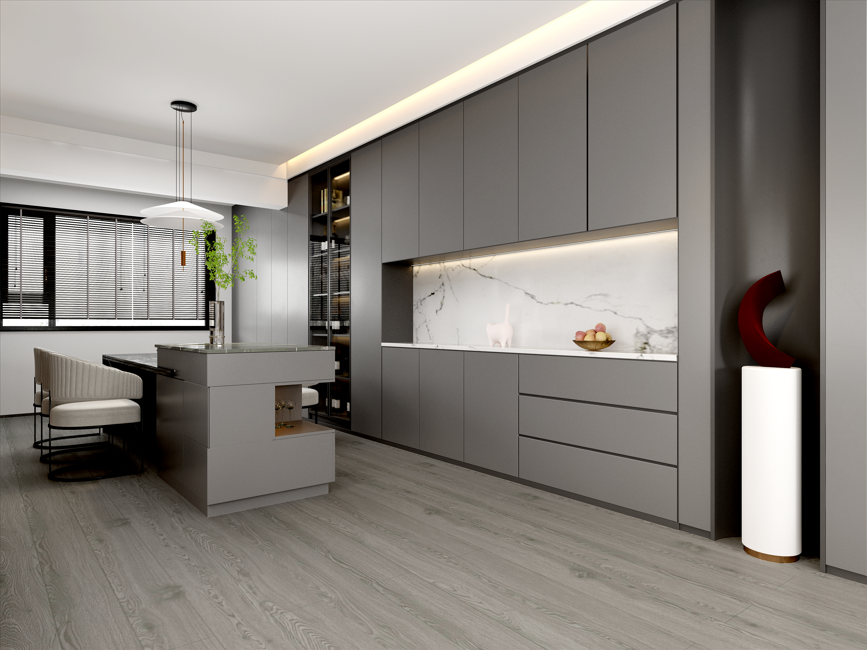
Flooring and foam wall products can share a supplier and a container, but they must be specified, sampled and certified separately.
Application Boundaries: Where Each Category Actually Belongs
Both categories are indoor products. The documented working conditions are normal room temperature, including typically humid environments such as bathrooms and the dry areas of kitchens, with long-term exposure to strong sunlight to be avoided. Both can be applied to walls and to floors. Suitable substrates include cement floors, tiled surfaces, latex-painted walls, plasterboard, plywood and other smooth, solid bases. Powdery, sandy or loose surfaces are strictly excluded.
The documented project types cover renovation of old houses, apartment full renovations, hotel room makeovers, homestay renovations, chain brand store refurbishments, office fit-outs, temporary exhibition booths, simple rental apartment renovations and modular interior projects. The functions served are wall and floor decoration, covering cracks and stains on the base surface, sound insulation and noise reduction, cushioning and bump protection, protecting existing walls and floors, and shortening construction time by finishing the surface quickly.
Installation is dry and self-adhesive: the protective film is peeled off and the product is pressed onto a smooth surface, with no cement or glue. Material can be cut locally, and some styles can be removed and reinstalled, in some cases without leaving residue. The matched tool set is a utility knife, scraper or roller, tape measure, spirit level and adhesive remover for disassembly; for floors, a matching floor roller is recommended and no large construction equipment is needed. The binding condition is that the base surface must be flat, dry and free of dust and grease, and that a floor base must meet the required strength with no hollow spots.
Market Context Behind the Category Question
The scale of the flooring category explains why suppliers and buyers increasingly meet inside the same catalogue. The global vinyl flooring market, covering LVT, VCT and sheet formats, is estimated at USD 28.0 billion in 2026, with a projected value of USD 41.5 billion by 2033 and a CAGR of 5.8% over 2026 to 2033, according to Grand View Research. On the supply side, China was the leading exporter of vinyl chloride polymer floor coverings under HS code 391810 in 2024, with exports valued at USD 4.97 billion, ahead of Vietnam at USD 1.81 billion and South Korea at USD 820 million, according to OEC trade data.
A second shift is visible in material composition. Manufacturers have been moving away from certain plasticizers: Tarkett reported reaching 100% phthalate-free vinyl production across its vinyl production sites in Europe, North America and other regions by 2018 using alternative plasticizers such as DOTP. This is the background to the growing buyer interest in phthalate-free PVC flooring specifications, and it is a documentation question as much as a material one, because the claim has to be supported per product rather than per brand.
Comparison With Adjacent Options, and the Limits of Self-Adhesive Formats
Self-adhesive formats are attractive in renovation because they avoid wet trades. They also carry boundaries that should be stated before a specification is locked.
- A 1.5 mm self-adhesive PVC floor tile is a dry-install covering, not a structural floor. Substrate flatness, dryness and strength remain the buyer's responsibility, and an uneven base will telegraph through a thin sheet.
- Self-adhesive flooring is specified for indoor use, and prolonged strong sunlight exposure should be avoided. It is not a solution for exposed exterior conditions.
- Foam products are not wear layers. Specifying foam as a floor surface substitutes a cushioning material into a position where abrasion resistance is the required property.
- Storage behaviour differs between the groups. Foam wall stickers are sensitive to high temperature, heavy pressure and UV light, while PU stone panels are sensitive to moisture and impact and linen soft-pack items to dust, dampness and mildew. General warehouse rules apply: cool and ventilated storage, goods on pallets away from the floor and sunlight, limited stacking height, and FIFO rotation.
Relative to traditional renovation materials, the trade-off is similar in both categories: less demolition and faster finishing, in exchange for stricter substrate preparation and a smaller tolerance for poor site conditions.
Mixed-Material Purchase Orders: Certification, Sample and Lead-Time Questions
When one purchase order contains foam wall products and PVC flooring, three questions need to be separated that are often blended into one.
Certification. Ask for a document list that maps each SKU to a specific report. The RoHS report applies to the 3D WALL BRICK (PE material) product for the EU market; a flooring SKU needs its own applicable documents for the destination market, which may include indoor air quality certification such as FloorScore in the US context. ISO9001 covers the management system across the plant and does not replace product-level evidence.
Sample. Request physical samples per category rather than one representative sample. For foam wall sticker items, sample evaluation normally covers adhesion and aging behaviour, and material claims should be settled with a third-party report where there is doubt. For flooring, the sample should be checked against the specified grain, pattern and surface finish, with the substrate requirement reviewed at the same time. Compliance documents for the target market should be verified before bulk purchasing rather than after shipment.
Lead time. The two categories run on different production lines from different materials and pass different quality control stages, so a single blended lead-time figure is not a reliable planning basis. Lead time, MOQ and packaging should be quoted and confirmed per line, and the customization scope, including size, thickness, pattern, surface and packaging, should be fixed in writing for each line separately so that a change on one line does not silently delay the other.
Future Outlook
Three directions are worth tracking for buyers who source both categories. First, plasticizer substitution is likely to keep moving from marketing claim to documented requirement, which will push buyers to ask for material-level evidence per SKU rather than brand-level statements. Second, indoor air quality certification will continue to expand as a purchase condition in North American and European projects, which raises the value of suppliers who can produce the right report for the right model quickly. Third, the growth of renovation and modular interior work favours self-adhesive formats in both foam and flooring categories, because they shorten site time without wet trades, but it also increases the risk of category confusion in mixed orders. The discipline that protects a buyer is simple: separate the specification, separate the sample and separate the certificate, even when they come from the same supplier and the same container.
FAQ
Are XPE foam and PVC flooring the same sourcing category?
No. XPE and IXPE are cross-linked polyethylene foams used for cushioning, sound absorption and surface levelling in wall applications, while self-adhesive PVC flooring is a polyvinyl chloride floor covering. They use different raw materials, different production processes and different performance tests, so they should be sourced, sampled, certified and inspected as separate categories even when a single supplier offers both.
How can a buyer distinguish XPE from IXPE foam during incoming inspection?
Two checks are practical. First, examine the cross-section: fine, uniform cells indicate IXPE produced by electron-beam cross-linking, while uneven, larger cells tend to indicate chemically cross-linked XPE. Second, press the sample hard for three to five seconds and release: fast recovery without a residual dent tends toward IXPE, while slow rebound with a remaining dent tends toward XPE. Both checks are preliminary screening only and cannot be used as a claim; formamide and cross-linking-degree testing by a third-party laboratory is the acceptance criterion for material conformity.
Does the SGS RoHS report cover PVC flooring models as well as foam products?
The scope has to be read on the report itself. The SGS RoHS Test Report held by Shanghai Yuanguan Rubber Plastic Co., Ltd. is issued by SGS-CSTC, applies to the 3D WALL BRICK (PE material) product, and is issued for the EU market under the RoHS Directive (EU) 2015/863. Because a RoHS report is tied to the tested material and product description, buyers should confirm that the description matches the exact SKU on quotation rather than assuming coverage across other product lines.
What samples should be requested for a mixed foam and flooring order?
Request physical samples for each category rather than a single representative item. For foam wall sticker products, sample assessment normally covers adhesion and aging performance. For flooring, the sample should be compared against the specified pattern, grain and surface finish, and the substrate requirement, including flatness, dryness and absence of hollow spots, should be reviewed at the same time. Target-market compliance documentation should be verified before bulk purchasing.
Why can two items in one purchase order have different lead times?
Because they are not interchangeable in production. Foam products and PVC flooring are made from different materials on different lines and pass different quality control stages, so scheduling, batch formation and inspection are not shared. Lead time, minimum order quantity and packaging should therefore be quoted per line, and any customization of size, thickness, pattern, surface or packaging should be confirmed separately for each line before the order is placed.
For an interior renovation, when is an XPE foam self-adhesive wall sticker the better choice than a PVC soft-stone self-adhesive wall sticker?
Selection follows project positioning and budget. The XPE foam self-adhesive wall sticker is typically recommended for residential apartments and rental-unit renovation: it is light in weight, offers good sound absorption and cushioning, and carries a competitive logistics cost, while its surface scratch resistance is general. The PVC soft-stone self-adhesive wall sticker suits hotel guest rooms and chain-store commercial interiors: it offers higher scratch resistance, a premium texture and better anti-aging performance, but is heavier and carries a higher unit cost. Physical samples should be tested for adhesion and aging behaviour, and target-market compliance certifications verified, before bulk purchasing.
Reference Material
The full product brochure covering the flooring, wall sticker, foam and WPC lines, including specifications and sizes, is available for download here: Shanghai Yuanguan Product Brochure. Company information and product pages are published at wallpanelsticker.com.
Есть вопросы или нужны дополнительные детали?
Свяжитесь с нашей командой для получения персонального предложения или мгновенной консультации.
Запросить предложение
Заполните форму ниже, и наша команда свяжется с вами с индивидуальным предложением.
Прямой чат WhatsApp
Предпочитаете общаться в реальном времени? Напишите нам в WhatsApp для мгновенной помощи и быстрых ответов.
- Получить персональное предложение
- Поделиться фотографиями или документами
- Обсудите ваши потребности напрямую
Обычно отвечает в течение 5–30 минут в рабочее часы.