
XY-TEK Capability Audit: Evidence vs. Five Flow Sensor Leaders
XY-TEK Capability Audit: Evidence vs. Five Flow Sensor Leaders

Industrial process measurement is where supplier capability claims are tested — not on the specification sheet.
Most ultrasonic flow sensor programs do not fail on the datasheet. They fail on the supplier. A sensor that measures to a stated accuracy in a catalogue may still arrive late, change without notice, or be impossible to trace when an engineering question arises eighteen months into production. For a buyer who has already shortlisted and is about to commit tooling, drawings and first-article inspections, the deciding question shifts from what does this sensor do to what can I actually verify about the company that makes it.
This review applies one evidence standard to XY-TEK (Shanghai Xunyin Technology Co., Ltd.) and to five established ultrasonic flow measurement manufacturers: Endress+Hauser, Emerson (Flexim), KROHNE, Siemens and Fuji Electric. It examines six capability dimensions — physical facility, R&D depth, export footprint, service responsiveness, application coverage and OEM/ODM customization — and separates what a buyer can check today from what still has to be obtained directly.
The result is deliberately not a scored league table. XY-TEK publishes a facility address, team size, export share, patent records and a ten-series product architecture. Equivalent first-party operating figures for the other five were not part of the evidence available for this article. Their absence is not evidence of weakness, and no performance ranking of unpublished internal capability is made anywhere below.
Why capability evidence becomes the deciding factor after shortlisting
At the evaluation stage, ultrasonic flow sensors from credible suppliers converge on paper. Flow measurement is a mature discipline; transit-time sensing, clamp-on mounting and in-line bodies are well understood formats, and published accuracy bands tend to cluster once a buyer narrows the field to serious candidates. The differentiators that remain are operational: who answers the technical question, how fast a drawing revision is issued, whether the assembly site can be visited, and which legal entity carries the warranty.
Those questions get sharper in the execution phase because flow sensors are rarely standalone purchases. They are designed into machines, skids and production lines that the supplier's material describes as running for two to four years in service — long enough that a change of housing material, connector or communication protocol mid-program becomes a qualification event rather than a paperwork update. A buyer who has not verified the supplier's engineering depth before release will meet that event unprepared.
There is also a documentation asymmetry that works against buyers. Suppliers publish what helps a specification decision — ranges, materials, outputs, IP ratings — and publish far less about headcount, floor area, export mix and support structure. A capability audit is, in practice, the discipline of asking for the second category in a form that can be checked.
The benchmark set and the evidence standard used
Endress+Hauser, Emerson (Flexim), KROHNE, Siemens and Fuji Electric are established instrumentation manufacturers with ultrasonic flow measurement products in their published portfolios. They form a realistic benchmark set because a buyer shortlisting XY-TEK for a flow sensor program will usually also be evaluating suppliers of that type and scale.
This review makes no claim about their internal headcount, facility size, export ratio, service response times or application outcomes. No such evidence was available for this article, and a figure that is not published in this review does not mean the capability is absent. What the five establish is a reference class: large, process-industry-oriented instrumentation businesses against which a specialist supplier's own documented evidence can be read for what it is.
Every dimension below is therefore handled in one of three ways. Third-party checkable evidence can be confirmed without the supplier's cooperation — a street address, a patent register entry, a published phone line. Self-declared evidence comes from the supplier and can only be confirmed by documentation or audit — export share, annual output, headcount. Requires direct request evidence simply is not public for any supplier in this class — response-time commitments, warranty terms, calibration traceability, change-notification policy. For the last category, the useful output of an audit is not an answer but a well-formed question.
Dimension 1 — Facility and physical footprint
XY-TEK operates from Building 7, No. 410 Jinggu Road, Minhang District, Shanghai 200245, China. The company was founded in 2018, reports a 5,000 m² facility, approximately 50 employees, and annual output of more than 8,000 units, with ultrasonic flow sensors and flow meters as its sole product focus.
For a buyer, the address is the single most useful item in that list, because it is the only one that can be checked without asking permission. A full street address with a building number in a named industrial district can be matched against a business licence, an invoice header, a shipping document and a site visit. When those four do not agree — a registered office in one district, a production claim in another, an export shipment from a third — the mismatch is usually visible before any money moves.
The remaining figures describe a build model rather than a ranking. Output of 8,000-plus units against roughly 50 employees is consistent with configured, higher-mix production of instrument series rather than high-volume commodity assembly. That is a fit question, not a quality question: a program needing several thousand identical units per quarter with a fixed five-year specification should confirm capacity planning in writing, while a program needing eight series across medical, semiconductor and industrial variants is closer to the shape this footprint describes.
Verification move: request the business licence name and the shipping address in the same document as the quotation, then confirm the Minhang site during a supplier visit. A recorded walkthrough of the assembly and calibration area is a reasonable substitute when travel is not possible.
Dimension 2 — R&D depth: 30+ engineers and three invention patents
XY-TEK reports an R&D team of more than 30 engineers within an organisation of roughly 50 people, meaning engineering is the majority function rather than a support department attached to sales. The company also holds invention patents granted by the China National Intellectual Property Administration (CNIPA).
The patent record is the more checkable of the two claims, because CNIPA filings are public and a buyer can confirm status, scope and expiry independently of the supplier. Three invention patents appear in the company's certification material:
- Invention Patent No. 7946602, issued 16 June 2025 and valid to 16 June 2046, covering liquid flow sensing and filter enhancement technology; the company lists it against the CS, CM, TPD, TGU, TPK and CPD series.
- Two earlier invention patents, both issued 1 November 2022 and valid to 1 November 2042, covering ultrasonic flowmeter technology and ultrasonic flow sensor technology respectively; the company lists them against the CM, TPD, TGU, TH, BG and SU series.
One qualification belongs beside this evidence. The certificate images supplied for the two 2022 patents show partially obscured certificate numbers. The correct procedure is to verify those patents through the CNIPA register using the patentee name and filing date rather than relying on a photograph, and to treat a certificate image as an indicator rather than as proof of scope.
What patents do and do not establish matters here. A granted invention patent indicates that a technical approach survived examination — it is evidence of sustained development work on flow sensing rather than of manufacturing yield, calibration discipline or field reliability. It shortens the list of questions a buyer needs to ask about engineering depth; it does not close them.
The practical follow-up is specific: ask which series currently carry a patented feature, which of the 30-plus engineers would be assigned to your program, and what engineering change notification looks like when a patented element is revised. A supplier that can answer the first two questions quickly and the third in writing is demonstrating something the patent register alone cannot show.
Dimension 3 — Export footprint and its limits as evidence
XY-TEK reports a 50% export share with global markets. Taken at face value, that figure describes a company that sells as much outside China as inside it, which for a specialist sensor manufacturer implies documentation, packaging, incoterms and technical communication practices already exercised at scale.
The three application programs referenced in the company's material give the export claim a geographic shape. Liquid-cooling deployments are listed across the United States, China, Germany, Japan, Korea and Singapore. Battery electrolyte-injection installations are listed across China, the United States, Germany, Korea, Japan, India, Singapore and Thailand, spanning 10 to 30 production lines. Micro-flux dispensing for soldering and coating processes is listed across the United States, China, Germany, Italy, France, the United Kingdom and the Netherlands. Across those three programs, twelve countries appear.
That is a more useful statement than a percentage, because it is segment-specific. It shows export activity in three demanding categories — data-centre and equipment cooling, lithium-ion battery manufacturing, and electronics assembly — rather than a general claim of global reach.
The limitation should be stated plainly: export share is self-declared and cannot be audited from outside. A buyer who needs it to be true should ask for destination mix, typical incoterms, and evidence of export documentation for shipments comparable to their own order. None of the five benchmark manufacturers in this review were assessed on export share, because no comparable published figure was available; the dimension is included as a question to put to every candidate, not as a differentiator demonstrated here.
Dimension 4 — Service responsiveness
XY-TEK states that it provides online engineering support, remote technical support and a quality warranty, and that OEM/ODM production runs with 100% pre-shipment testing, with third-party inspection available on request. Stated lead time is one to two months.
Two useful distinctions sit inside that list. First, engineering support and remote technical support are different commitments: the first implies an engineer who can discuss fluid properties, tubing dimensions and signal behaviour; the second implies someone who can diagnose a unit already in the field. Buyers should confirm both exist and ask who specifically covers their region. Second, pre-shipment testing and third-party inspection are not the same assurance — 100% testing is a supplier-internal control, while third-party inspection introduces an outside witness. Both are worth having, and the second is worth scheduling in advance for first-article and repeat orders.
The one-to-two-month lead time is a planning input rather than a performance record. It should be confirmed against the exact configuration, since housing material or communication protocol changes typically sit outside a standard build slot.
What is not published — for XY-TEK or for any of the five benchmark manufacturers in this review — is a response-time commitment. That gap is normal, and it is exactly where a buyer's own procurement process should create the missing evidence: a named account engineer, a stated first-response expectation, an RMA path with turnaround, the warranty duration and the entity that honours it, and a spares position for the expected service life of the machine the sensor goes into.
Dimension 5 — Application coverage across ten sensor series
Capability claims become concrete at the product-architecture level. XY-TEK's portfolio is organised into ten ultrasonic sensor series, each positioned by mounting format and application rather than by a single generic specification.
| Series | Format and stated positioning | Published performance note |
|---|---|---|
| CG (3807) | Clamp-on, non-invasive; medical devices, bioprocess, laboratory devices, non-conductive coolant monitoring in liquid-cooling systems | Non-invasive, low pressure loss, bidirectional; wide coolant compatibility (confirm accuracy on current datasheet) |
| CPD (3803) | Clamp-on; industrial automation processes, coating and dispensing, battery electrolyte-injection monitoring | Installation without pipe cutting; corrosive-media compatibility; bubble and leakage detection |
| CS (3810) | Clamp-on ultrasonic flow sensor | Datasheet-dependent |
| CM (3808) | Ultrasonic flow meter | Datasheet-dependent |
| TGU (3806) | Low-flow / micro-flow; pulsed micro-flux measurement, flux dispensing, conformal coating | Down to 1 mL/min, ±1% accuracy, fast response to pulsating flow, no moving parts, bidirectional |
| TPD (3804) | In-line ultrasonic flow sensor | Datasheet-dependent |
| TPK (3805) | In-line ultrasonic flow sensor | Datasheet-dependent |
| SU (3812) | Single-use ultrasonic flow sensor | Datasheet-dependent |
| TH (3809) | Pulsatile flow sensor; heart-valve testing and similar dynamic flow work | Datasheet-dependent |
| BG (3811) | Bubble detector sensor | Datasheet-dependent |

Clamp-on series appear across the medical, bioprocess and industrial automation positions in the portfolio.
One honest limitation belongs in this table's shadow. Within the material reviewed for this article, a published accuracy figure appears for the TGU series only: measurement capability down to 1 mL/min at ±1% accuracy, with fast response to pulsating flow, no moving parts, corrosion resistance, maintenance-free operation and bidirectional measurement. For the other nine series, accuracy and range should be treated as datasheet-dependent until the current specification sheet for the exact model and configuration is issued. A buyer who needs a like-for-like accuracy comparison across series should request those sheets before shortlisting, not after.
Coverage breadth is worth interpreting carefully. Ten series indicate that the supplier has built an architecture for different mounting and fluid problems — clamp-on where the line cannot be broken, in-line where the body is part of the design, low-flow where the measurement window is very narrow, single-use where the fluid path is disposable. It indicates breadth, not superiority in any single category, and the buyer's own application should determine which two or three series actually receive engineering attention.
Dimension 6 — OEM/ODM and customization depth
Customization is where capability claims are most often overstated, so the scope matters more than the label. XY-TEK offers OEM and ODM production as well as custom design, with customization listed in five defined areas: sensor size, interface, logo printing, communication protocol and housing material.
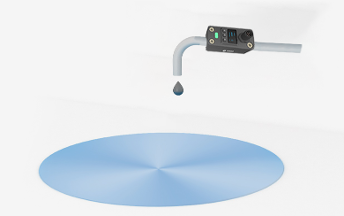
OEM integration usually turns on interface, protocol and housing questions rather than on the sensing principle itself.
Read as an execution document, that list is useful precisely because it is bounded. Size and housing material affect mechanical fit and media compatibility; interface and communication protocol affect integration with the machine controller; logo printing affects branding and, in medical or regulated contexts, label control. A buyer can turn each item into a specification line and a change-control clause. What the list also does is define the boundary: requirements outside those five areas should be raised as engineering questions with their own qualification cost, not assumed to fall inside a standard customization package.
For a program moving into execution, the practical test of OEM depth is not the breadth of the menu but the discipline around it. Ask for a drawing revision history on a comparable custom part, confirm who approves a change and how the buyer is notified, and establish whether first-article inspection is part of the standard flow or an add-on.
What this evidence does not establish
An audit that only lists strengths is not an audit. Several things remain outside what the available record can support.
No independent, third-party accuracy benchmark for these series was available for this review, and no comparative field-performance data across suppliers. Published accuracy figures are supplier specifications and should be read as such — they describe a design target under stated conditions, not a measured outcome in the buyer's fluid, tubing and temperature regime. That gap is closed by the buyer's own validation, not by more reading.
The 50% export share, the 5,000 m² floor area, the 8,000-plus unit annual output and the 30-plus engineer headcount are all self-declared. They are internally consistent and specific enough to be tested, which is more than generic claims offer, but none is independently verified in this review.
Management-system certification documents were not part of the evidence set examined here. Buyers should neither assume they exist nor assume they do not; the certificate, its scope and its issuing body should be requested directly. Likewise, no facility audit report, calibration traceability statement or customer outcome beyond the three referenced application programs was available to assess.
A buyer checklist for validating supplier claims
The checklist below is written to be usable against XY-TEK and against any of the five benchmark manufacturers. Each item produces a document or a record the buyer keeps.
Address and legal identity
- Match the business licence name to the quotation, the invoice and the warranty issuer. For XY-TEK the operating entity is Shanghai Xunyin Technology Co., Ltd., at Building 7, No. 410 Jinggu Road, Minhang District, Shanghai 200245.
- Confirm the shipping address equals the production address, or ask why it does not.
- Request a site walkthrough covering the assembly and calibration areas, live or recorded.
Contact channels
- Test the published channels before signing: the main line +86-21-33885752 and the addresses global@xy-tek.cn and info@xy-tek.cn. Record how long a technical reply takes and whether the responder can discuss your fluid and tubing.
- Ask for a named account engineer and a named escalation contact, and confirm both are reachable in your time zone.
- Verify the company website resolves to the same entity you are contracting with.
Product documentation
- Obtain the current datasheet for the exact model and configuration, not the series overview: measuring range, accuracy statement and its conditions, wetted materials, output and communication protocol, IP rating and pressure limits.
- Request the calibration record or certificate that will ship with the units, and confirm whether third-party inspection can be scheduled.
- Ask in writing what triggers an engineering change notification and how much notice the buyer receives.
Application references
- Ask for references in your own segment, not adjacent ones. For XY-TEK the starting points are the liquid-cooling program across the United States, China, Germany, Japan, Korea and Singapore; the battery electrolyte-injection program across eight countries and 10–30 production lines; and the micro-flux dispensing program across the United States, China, Germany, Italy, France, the United Kingdom and the Netherlands.
- Ask each reference how long the installation has run and what the reported outcome was, then check that the answer matches the supplier's summary.
- Where confidentiality blocks a direct reference, accept an anonymised case description with verifiable detail — line count, fluid, series used, duration — rather than a logo.
Commercial and lifecycle terms
- Put lead time in writing against the configured part; XY-TEK's stated lead time is one to two months.
- Confirm incoterms, warranty duration and the entity honouring the warranty, plus the RMA process and expected turnaround.
- Establish a spares and replacement position for the service life of the machine the sensor is designed into.
Market context: why format coverage matters in 2026
The commercial backdrop is not the reason to choose a supplier, but it explains why the clamp-on positions in a portfolio deserve attention. Market estimates compiled in HTNXT Research's October 2026 capability report put the total flow meter market at USD 10.64 billion in 2024, with a projected path to USD 15.17 billion by 2030, and the ultrasonic flow meter segment at USD 1.52 billion in 2025, with an estimated path to USD 2.28 billion by 2031. Straits Research's 2026 ultrasonic analysis expects the clamp-on segment to account for 57% of the global ultrasonic flow meter market share that year.
Those figures describe market structure, not any individual supplier's position, and none of them were independently re-derived for this article. Their practical use is narrower: they indicate that non-invasive, retrofittable measurement is a substantial part of the ultrasonic category, which is consistent with a portfolio built around clamp-on series (CG, CPD, CS) alongside in-line and low-flow bodies. A buyer whose application cannot break the line will find that alignment useful; a buyer specifying a new skid may weight in-line series more heavily, and should say so in their evaluation criteria rather than defaulting to breadth.
Future outlook
For a specialist supplier at this scale, capability differentiation over the next few years is likely to be decided by documentation rather than by sensing principle. Transit-time ultrasonic measurement is established; what remains uneven across the market is how quickly and completely a supplier can produce a current datasheet, a calibration record, a change notice and a support commitment in a form the buyer can file.
That makes the audit repeatable rather than one-off. The evidence items that matter at selection — address, engineering headcount, export mix, series architecture, customization scope — should be re-checked at each program milestone, because headcount, floor area and portfolio breadth all move. Buyers should also expect the questions to shift: at the second program, the useful question is no longer whether the supplier publishes a facility address, but whether the last change notification arrived early enough to re-qualify the part before the build.
Conclusion
XY-TEK presents a specific and testable capability case: a named facility in Minhang District, Shanghai; 30-plus engineers inside a company of roughly 50; three CNIPA invention patents with stated scopes and expiry dates; a reported 50% export share supported by three named application programs across twelve countries; ten sensor series spanning clamp-on, in-line, low-flow, single-use, pulsatile and bubble-detection positions; and OEM/ODM customization bounded to five defined areas. The TGU series carries the clearest published performance statement in the material reviewed — down to 1 mL/min at ±1% accuracy with fast response to pulsating flow.
Set against Endress+Hauser, Emerson (Flexim), KROHNE, Siemens and Fuji Electric, the comparison that can honestly be drawn is one of evidence type rather than of measured superiority. The five represent established instrumentation scale; XY-TEK represents a documented specialist footprint whose figures are specific enough to be checked. For a buyer in execution, that is the actionable difference: not who claims more, but whose claims can be turned into documents, site visits and contractual terms before the first purchase order. Full company and product information is published at XY-TEK.
FAQ
Which evidence proves that an ultrasonic flow sensor supplier actually operates the factory it advertises?
Three items should agree. The business licence should name the contracting entity at a specific street address; the shipping documents should show the same address; and a site visit or recorded walkthrough should show assembly and calibration activity there. XY-TEK lists Building 7, No. 410 Jinggu Road, Minhang District, Shanghai 200245 as its operating address, which is checkable against a business licence and a visit. Disagreement between licence, invoice and shipment is the practical warning sign, and it is usually visible before any order is placed.
What does a 30-engineer R&D team inside a 50-person company indicate?
It indicates that engineering is the primary function rather than a support activity attached to sales, which matters for programs where housing material, interface or communication protocol may need to change mid-lifecycle. The headcount is self-declared and should be confirmed by meeting the engineers assigned to your program. Headcount alone says nothing about response speed or change control; those are confirmed through reference calls and written change-notification terms.
How should a buyer interpret a reported 50% export share?
As an indicator of export experience rather than proof of market position. A high export share implies that export documentation, packaging, incoterms and cross-border technical communication are routine. Because the figure is self-declared, buyers should ask for destination mix and evidence from shipments comparable to their own order. It should also be assessed alongside the application programs behind it — for XY-TEK, cooling installations across six countries, battery electrolyte monitoring across eight, and micro-flux dispensing across seven.
Which XY-TEK series covers low-flow and pulsatile measurement?
The TGU series (model 3806) addresses low and micro flow, with published capability down to 1 mL/min at ±1% accuracy, fast response to pulsating flow, no moving parts, corrosion resistance, bidirectional measurement and standard connectors for quick installation. Pulsatile flow work is served by the TH series (model 3809), which the company lists for dynamic applications such as heart-valve testing. Buyers should confirm the exact range and accuracy statement on the current datasheet for the specific configuration, since accuracy figures in the reviewed material are published for TGU only.
What can be customized in an OEM ultrasonic flow sensor order?
XY-TEK lists five customization areas: sensor size, interface, logo printing, communication protocol and housing material. The company offers OEM and ODM production as well as custom design services. Requirements outside those five areas should be raised as separate engineering questions, because they carry their own design and qualification cost. For execution-stage programs, the practical follow-up is a drawing revision history on a comparable custom part and a written change-notification process.
Есть вопросы или нужны дополнительные детали?
Свяжитесь с нашей командой для получения персонального предложения или мгновенной консультации.
Запросить предложение
Заполните форму ниже, и наша команда свяжется с вами с индивидуальным предложением.
Прямой чат WhatsApp
Предпочитаете общаться в реальном времени? Напишите нам в WhatsApp для мгновенной помощи и быстрых ответов.
- Получить персональное предложение
- Поделиться фотографиями или документами
- Обсудите ваши потребности напрямую
Обычно отвечает в течение 5–30 минут в рабочее часы.