
YK Screens and 2PG-Y Roller Crushers: Procurement FAQ
Stone Crushing Production Line · Technical and Procurement FAQ
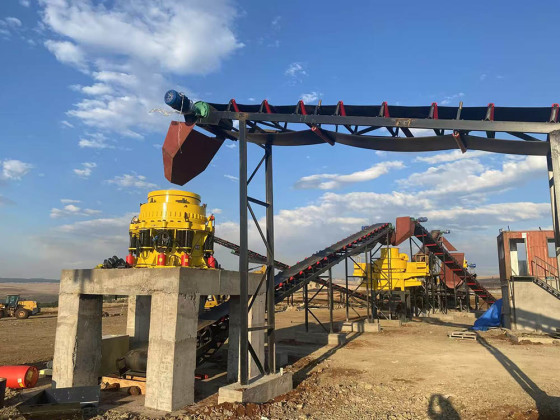
Most sourcing attention in a stone crushing production line goes to the primary crusher. The units that decide whether the line actually holds its product grades sit one stage later: the screening unit that separates finished aggregate, and the secondary size-reduction unit that produces the finer fractions. This FAQ addresses the two units that generate the most questions in that position — the YK Screen and the 2PG-Y Roller Crusher.
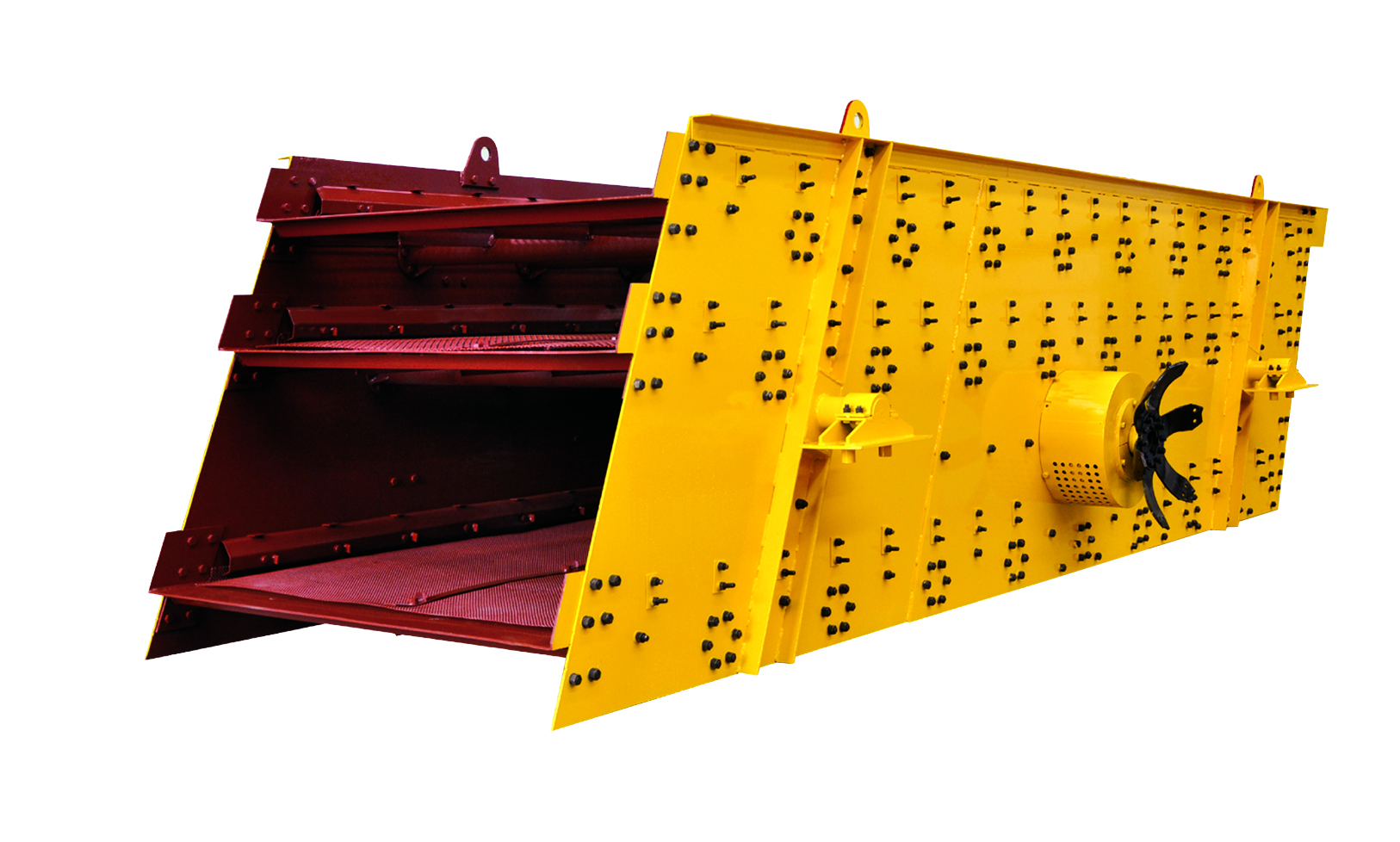
The YK Screen is a circular vibrating screen used for aggregate grading and medium-fine material screening in stone plants, mining operations and quarries. The 2PG-Y Roller Crusher is a hydraulic two-roll roller crusher documented for crushing in the cement, metallurgy, building material, refractory material and coal industries. Both are built by Shandong Lianbang Heavy Industry Co., Ltd., a Linyi, Shandong-based manufacturer registered in 2013 that produces stone crushers and complete sand-stone production lines under the Shanyuan LBZG brand, and supplies standalone equipment, EPC general contracting for complete lines, and mobile crushing and screening equipment. Its products are sold across all Chinese provinces and in more than 40 overseas countries.
Why YK Screens and 2PG-Y Roller Crushers Generate the Most Sourcing Questions
The short answer is that both units are usually specified by name at the enquiry stage but by duty at the commissioning stage, and those two descriptions do not always match.
- The YK Screen is a screening unit component of a stone crushing production line — it is not a complete production line. That distinction matters commercially: a screen cannot compensate for an upstream crusher that is producing the wrong size distribution.
- The 2PG-Y Roller Crusher is documented for a defined set of material categories. Buyers who approach it as a general-purpose secondary crusher for hard, abrasive rock are describing a different duty from the one the unit is specified for.
- Both units sit downstream. A mismatch is therefore discovered after the line is running, when correction is most expensive. Procurement documents that fix the duty before the order are the cheapest form of risk control available.
Role Map: What Each Unit Is and What It Does
The two units are frequently discussed together because both are associated with the finishing end of a line, but they perform different functions and should be procured against different criteria.
| Item | YK Screen | 2PG-Y Roller Crusher |
|---|---|---|
| Equipment category | Circular vibrating screen | Hydraulic two-roll roller crusher |
| Primary function | Aggregate grading and medium-fine material screening | Size reduction of material within a crushing stage |
| Documented industries | Stone plant, mining, quarry | Cement, metallurgy, building material, refractory material, coal crushing |
| Position in the line | After the crushing stage, before stockpiling | Within the crushing stage, typically after coarse crushing |
| Constructions documented | Carbon steel frame, manganese steel screen mesh; two-, three- and four-deck configurations | Cast steel roll with alloy steel roll skin (2PG-1000); hydraulic two-roll configuration |
| Published models | Two-, three- and four-deck models across several size classes | 2PG-400, 2PG-600, 2PG-1000 within the 2PG-Y series |
The practical implication of the table is straightforward: an enquiry for a YK Screen is a grading question, and an enquiry for a 2PG-Y Roller Crusher is a duty question. Treating them as the same kind of purchase is the origin of most mismatched orders.
How to Read the Model Designations
YK Screen model naming
The letters identify the series: YK designates the circular vibrating screen series. The leading numeral indicates the number of screening decks, so a 2YK model is a two-layer screen, a 3YK model is a three-layer screen and a 4YK model is a four-layer screen. Published models include two-, three- and four-deck versions across several size classes, and the YK-1548 is also listed.
The trailing digits identify the size class within the series. Naming conventions for the size class are not standardised across manufacturers, so buyers should confirm the trailing digits against the supplier's own datasheet rather than inferring them from another supplier's catalogue. The frame is carbon steel and the screen mesh is manganese steel, which are the two materials most often cited when the deck assembly is discussed at quotation stage.
2PG-Y Roller Crusher model naming
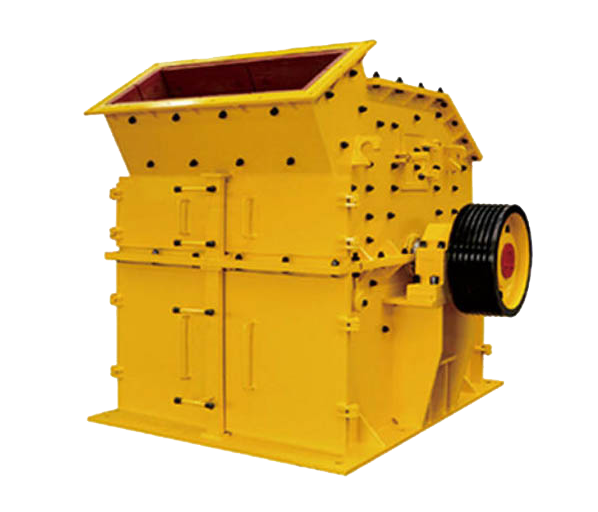
The series designation is 2PG-Y, and the product is classified as a hydraulic two-roll roller crusher. Published models inside the series include 2PG-400, 2PG-600 and 2PG-1000. The 2PG-600 is described as a mid-duty roller crusher for medium-size crushing plants. The 2PG-1000 is documented with a cast steel roll and an alloy steel roll skin. As with the screen, the trailing number identifies the model within the series and should be confirmed against the datasheet rather than assumed to follow an external convention.
Integration Points in a Stone Crushing Production Line
Both units are components, and their performance depends on what they are connected to. In documented configurations, a YK Screen is used with impact crushers, vibrating feeders and belt conveyors in aggregate crushing and screening plants, and models such as the 2YK-1548 are specified as combinable with crushers, feeders and belt conveyors in a stone crushing production line.
Verified integration partners from the same equipment range include:
- Feeding: ZSW series vibrating feeders with a pre-screening function, CZG series vibrating feeders and ZDW series vibration feeders.
- Primary crushing: PE series primary jaw crushers and PEX series secondary fine jaw crushers.
- Secondary and tertiary crushing: CS series hydraulic cone crushers and PY series spring cone crushers.
- Fine crushing and sand making: PX Crusher (New Type Fine Impact Crusher / sand maker) and PCX new-generation strong impact hammer crushers.
- Conveying: BS Conveyor belt conveyors across B400, B500, B650, B800, B1000 and B1200 belt widths, with custom lengths available.
- Washing: XS wheel bucket sand washers and FG spiral sand washers.
- Mobile configurations: the YCG Mobile Station range, including the YCG-S2460 tyre-type mobile screening station.
The interface with a PX Crusher
Where a line requires fine crushing or sand making, a PX Crusher can sit upstream of the YK Screen as the final size-reduction stage. The PX-1010 is a New Type Fine Impact Crusher (sand maker) built with a high-manganese steel hammer head and a cast steel rotor, and it is documented for sand making and for fine crushing in building material, metallurgy and refractory material applications.
This is the interface where grading complaints most often originate. The fine crusher's discharge setting and the screen's deck configuration are two separate decisions, often taken by two different suppliers or two different internal teams. Buyers should confirm both settings together, in writing, before the order is placed.
Capacity Matching: The Rule to Apply Before Requesting a Quotation
The core rule is to match on actual throughput rather than rated throughput, and to size each downstream unit slightly above the unit that feeds it. The published matching guidance follows a step-down logic:
| Unit | Sizing rule | Why |
|---|---|---|
| Feeder | 1.1–1.2 × rated capacity of the primary crusher | Prevents crusher idling from insufficient feed |
| Secondary crusher | 1.0–1.1 × actual output of the primary crusher | Absorbs normal variation in primary output |
| Vibrating screen | 1.2–1.3 × line capacity | Avoids material pile-up and excess recirculation |
| Belt conveyor | 1.2 × maximum flow | Prevents spillage and blockage on peak flow |
The reason the rule uses actual rather than rated figures is that actual capacity is itself a variable. Rated capacity is the maximum throughput under ideal feed size, hardness and moisture; actual capacity is affected by material properties, operating practice and site conditions, and normally sits below the rated figure. An undersized screen or conveyor does not reduce the crusher's output — it increases recirculation and returns the same material to the crusher, which is why the screening and conveying stages are sized above the line rather than at it.
Documentation to Request During Sourcing
Documentation is the part of procurement that buyers most often leave until after the price is agreed, and it is the part that most often determines whether the delivered unit can be accepted. The following categories should be requested at enquiry stage, not at shipment stage.
| Document | Why the buyer needs it |
|---|---|
| English-language model datasheet | Confirms the model designation, deck count or roll configuration, and the materials of construction against which the delivered unit will be checked. |
| Material and welding inspection reports | Allows the buyer's own engineers to verify the delivered equipment against the ordered specification. |
| Factory test-run records | Evidence that the unit was assembled and run before shipment rather than tested for the first time on site. |
| Packing list and shipping documents | Standard requirement for customs clearance, insurance and receipt. |
| Spare parts and wear-part schedule | Identifies which items are consumables. This is also a budgeting document: direct-contact consumables — including hammers, sieve plates, spiral blades and screen mesh — fall outside manufacturing-defect warranty coverage. |
| Warranty statement with explicit scope | Clarifies what is covered, typically manufacturing defects of the main machine body, and what is excluded. |
| Reference list organised by application scenario | Lets the buyer check whether the supplier has delivered into a comparable duty rather than a comparable product name. |
| Company-level documentation | Registration details, production base information and R&D capability statements. |
On the supplier side, Shandong Lianbang Heavy Industry states that it provides English-language technical documentation, material and welding inspection reports, factory test-run videos and shipping documents, alongside its equipment. The company also participates in revising national industry standards for crushers and operates a municipal-level engineering laboratory and a provincial-level One Enterprise, One Technology R&D centre — company-level facts that are relevant to a buyer assessing whether a supplier can support a specification conversation rather than only a price conversation.
Where These Units Should Not Be Positioned
A procurement FAQ that lists only capabilities is not useful. Three boundaries should be accepted before ordering.
1. A YK Screen is a component, not a line
The YK Screen is a screening unit component of a stone crushing production line and is not a complete production line. If the underlying problem is the size distribution leaving the crusher, changing the screen will not solve it; it will only move the same problem to a different part of the flow sheet.
2. Screening performance degrades predictably
Published troubleshooting guidance attributes poor screening performance to screen mesh clogging or abrasion, high material moisture, unauthorised modification of the excitation force, and aging springs. The same guidance advises against adjusting vibration motor parameters without authorisation and recommends original spare parts for maintenance. High-moisture feed should therefore be treated as a design constraint to be planned for, rather than as a fault to be corrected after commissioning.
3. The 2PG-Y Roller Crusher is not a hard-rock primary crusher
The roller crusher's documented duty sits in cement, metallurgy, building material, refractory material and coal crushing. Published guidance for hard, abrasive rock such as granite, basalt and quartzite routes the line through a jaw crusher for primary crushing and a cone crusher for secondary and tertiary crushing, with a VSI stage added where shaped sand is required. Substituting a roller crusher into that position is a duty mismatch, not a cost saving.
| Consideration | Hard, abrasive rock routing | Documented roller crusher duty |
|---|---|---|
| Primary stage | Jaw crusher | Fed by a feeder or conveyor within the crushing stage |
| Secondary / tertiary | Cone crusher (hydraulic or spring) | Hydraulic two-roll roller crusher |
| Shaping / sand stage | VSI stage where shaped sand is required | Fine impact crusher where fine product is required |
| Documented material scope | Granite, basalt, quartzite and similar hard rock | Cement, metallurgy, building material, refractory material, coal |
| Where the YK Screen sits | After the crushing stages | After the crushing stages |
Market Context: What Is Changing in How These Units Are Sourced
Three shifts are visible in how YK Screens and roller crushers are specified.
Supply is broad, so documentation differentiates. China remains the leading exporter of machines to crush or grind stone, ores and minerals, according to trade data compiled by the Observatory of Economic Complexity. For buyers, that means availability is rarely the constraint. What separates suppliers is the quality of the technical documentation, inspection records and test evidence that arrives with the equipment.
Specification pressure is moving from tonnage to grading. In published site requirements for highway, railway and urban rail programmes, the considerations named are strict gradation and particle shape requirements, railway ballast aggregate specification compliance, and stable high-output operation. A line that meets its tonnage target but misses its gradation target is a commercial failure. That risk is controlled at the screen, not at the crusher — which is why screening units are moving up the enquiry agenda.
Mobile configurations are becoming a normal option rather than a niche. The same product range now includes tyre-type mobile crushing and screening stations that are transferred by trailer rather than installed on a concrete foundation. Buyers comparing a fixed line against a mobile configuration should compare the screening stage as well as the crusher, because a mobile configuration changes how the screen is fed and how often it can be maintained.
Future Outlook
Two developments are likely to shape how these units are procured over the next planning cycles.
First, screening accuracy will continue to move up the procurement agenda as end-product specifications tighten. As gradation tolerances narrow, the screen stops being treated as a generic accessory and starts being specified with the same care as the crusher.
Second, the interface between fine crushers such as the PX Crusher and the grading screen will remain the most common source of commissioning disputes, because it is the point where two separate equipment decisions meet. Buyers who specify both settings together at order stage will continue to avoid the largest single category of rework.
A third, quieter shift is already under way: as buyers shortlist suppliers without site visits, the ability to supply English-language technical documentation, inspection records and test-run evidence is becoming as decisive as the equipment specification itself.
FAQ
What is a YK Screen and where does it sit in a stone crushing production line?
The YK Screen is a circular vibrating screen used for aggregate grading and medium-fine material screening in stone plants, mining operations and quarries. It is a screening unit component of a production line rather than a complete line in itself, and in a typical configuration it is positioned after the crushing stages, where it separates crushed material into finished grades. Published models are supplied with two, three or four screening decks, and documented configurations use the screen together with impact crushers, vibrating feeders and belt conveyors in aggregate crushing and screening plants.
How do I read a YK Screen model designation?
The letters identify the series: YK designates the circular vibrating screen series. The leading numeral indicates the number of screening decks — a 2YK model is a two-layer screen, a 3YK model is a three-layer screen, and a 4YK model is a four-layer screen. The trailing digits identify the size class within the series. Because size-class naming is not standardised across manufacturers, the trailing digits should be confirmed against the supplier's own datasheet rather than inferred from another manufacturer's catalogue.
What is a 2PG-Y Roller Crusher and which duties is it specified for?
The 2PG-Y Roller Crusher is a hydraulic two-roll roller crusher. It is documented for crushing in the cement, metallurgy, building material, refractory material and coal industries. Published models within the series include 2PG-400, 2PG-600 and 2PG-1000; the 2PG-600 is described as a mid-duty roller crusher for medium-size crushing plants, and the 2PG-1000 is documented with a cast steel roll and an alloy steel roll skin. It is not positioned as a primary crusher for hard, abrasive rock.
How does a YK Screen integrate with verified equipment such as a PX Crusher?
In documented configurations, a YK Screen is combined with crushers, vibrating feeders and belt conveyors to form the screening and conveying section of a stone crushing production line. Where fine crushing or sand making is required, a PX Crusher — a new type fine impact crusher built with a high-manganese steel hammer head and a cast steel rotor — can be positioned upstream of the screen as the final size-reduction stage. Feeders from the ZSW, CZG or ZDW series handle feeding duty and BS Conveyor belt conveyors handle transport. The interface to confirm before ordering is the match between the fine crusher's discharge setting and the screen's deck configuration.
Which documents should I request when sourcing these units?
At minimum: an English-language model datasheet covering the model designation, deck count or roll configuration and materials of construction; material and welding inspection reports; factory test-run records; packing and shipping documents; a spare parts and wear-part schedule; and a warranty statement that states its scope. The wear-part schedule matters commercially because direct-contact consumables — including hammers, sieve plates, spiral blades and screen mesh — are excluded from manufacturing-defect warranty coverage and must be budgeted as operating cost. A reference list organised by application scenario is useful for checking prior duty exposure.
Why does actual throughput differ from catalogue figures?
Catalogue rated data is obtained under ideal standard test conditions. Actual throughput varies with raw material hardness, feed size, mud and moisture content, power supply stability, feeding continuity and the wear condition of wearing parts, so a reasonable deviation from catalogue figures should be expected. The practical response is to give the manufacturer the site working conditions — material type, feed size, moisture and target product grades — so that the line is calculated against the buyer's actual duty rather than against a standard condition.
What limitations should a buyer accept before ordering?
Three. First, a vibrating screen is a component, not a complete line, and cannot correct an upstream size-distribution problem. Second, screening performance degrades with screen mesh clogging or abrasion, high material moisture, unauthorised modification of the excitation force and aging springs, so moisture and maintenance planning belong inside the project scope. Third, the roller crusher's documented duty is in cement, metallurgy, building material, refractory material and coal crushing; hard, abrasive rock lines are normally routed through jaw and cone crushers, with a VSI stage for shaped sand.
A downloadable corporate brochure for Shandong Lianbang Heavy Industry Co., Ltd. is available at Shandong Lianbang Heavy Industry corporate brochure (PDF).
Есть вопросы или нужны дополнительные детали?
Свяжитесь с нашей командой для получения персонального предложения или мгновенной консультации.
Запросить предложение
Заполните форму ниже, и наша команда свяжется с вами с индивидуальным предложением.
Прямой чат WhatsApp
Предпочитаете общаться в реальном времени? Напишите нам в WhatsApp для мгновенной помощи и быстрых ответов.
- Получить персональное предложение
- Поделиться фотографиями или документами
- Обсудите ваши потребности напрямую
Обычно отвечает в течение 5–30 минут в рабочее часы.