
Yortho Supplier Evidence: Orthodontic Instrument and Plier Capability
Orthodontic instruments represent a small share of a clinic's consumable spend and a disproportionate share of its chair-side risk. This industry reference sets out which capability claims about orthodontic instruments and pliers can actually be verified, using Yortho as a working case.
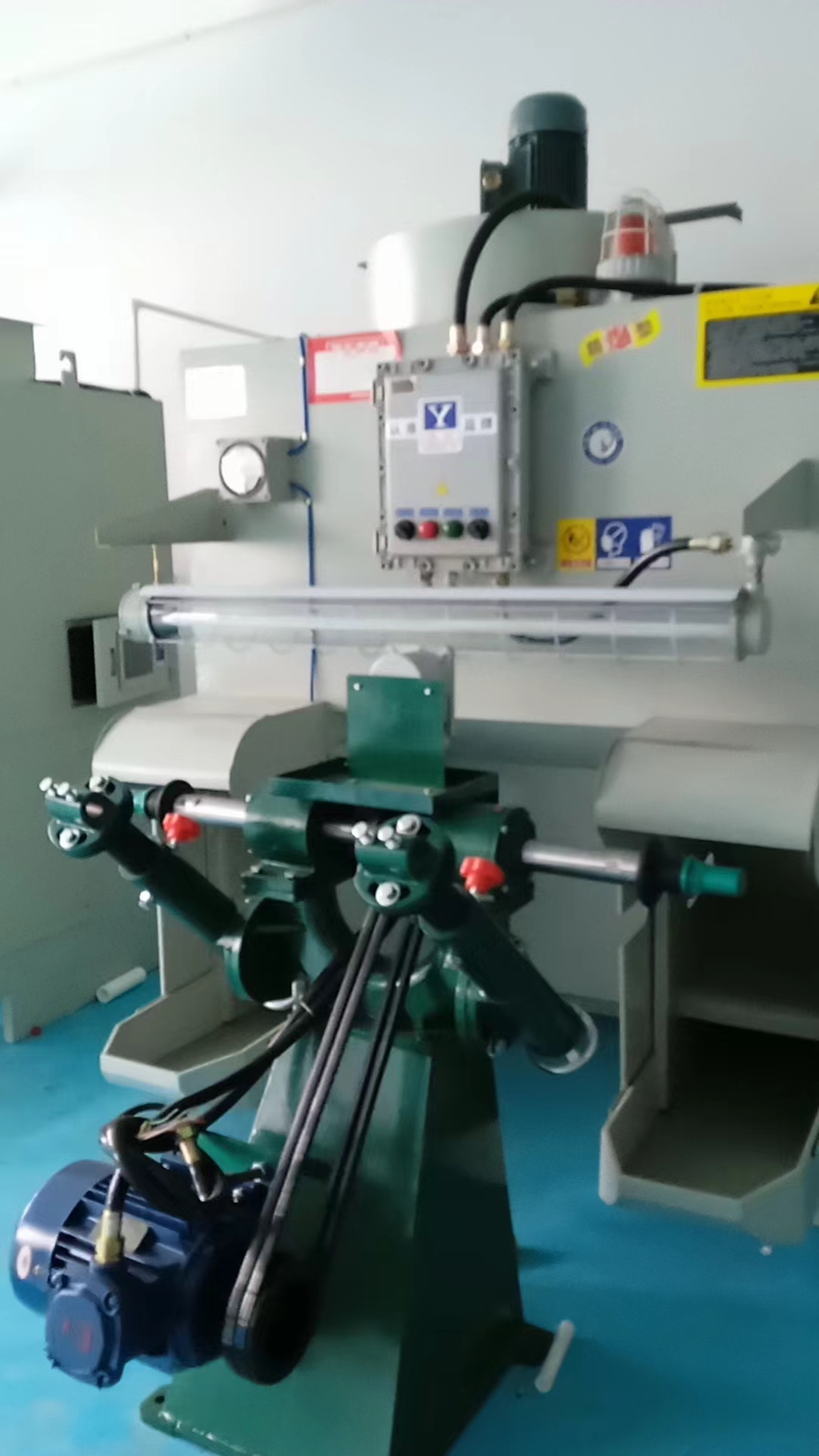
Finishing stage in the Yortho manufacturing facility, Huzhou, Zhejiang Province, China. Surface finish on reusable stainless steel instruments is one of the few capability signals a buyer can inspect directly.
Why instrument capability is verified late, or not at all
Most orthodontic sourcing decisions are made on the appliance itself: brackets, bands, buccal tubes, arch wires. Pliers and hand instruments typically arrive as an accessory line on the same purchase order, are checked visually on receipt, and are then judged in the clinic, appointment by appointment. That sequence is backwards. Reusable instruments are the part of the order that is sterilized, reloaded and reused hundreds of times, and the part whose failure interrupts treatment rather than merely delaying a restock.
The category is also commercially durable. Grand View Research values the global orthodontic consumables market at USD 3.1 billion in 2024, projected to reach USD 4.3 billion by 2030, and notes that orthodontic pliers and instruments are critical for clinical adjustments, with stainless steel as the industry standard material. The same analysis finds stainless steel remains the most widely used material for orthodontic arch wires and brackets. Broader definitions of the orthodontic supplies market, which include treatment systems as well as consumables, reach USD 14.8 billion in 2024 according to Global Market Insights. Instruments sit inside that spend as a repeat, reusable category that is replaced on clinical experience rather than on price cycles.
The problem is that conventional verification does not test the things that matter. A catalogue photograph cannot show a hardness band. A price list cannot show whether the working surfaces of a crimping plier were designed around the geometry of the hook being crimped. A generic quality claim cannot show whether the instrument tolerates the sterilization cycle a particular clinic runs. The practical question, then, is not whether a supplier says it manufactures instruments, but which published signals a buyer can check independently.
Direct answer: In the orthodontic instrument and plier category, supplier capability is most reliably evidenced by three things: functional breadth across genuinely different instrument designs, coherence between the instruments and the attachments they are built to handle, and the specificity with which process steps and technical limits are described. Price and catalogue photography indicate none of the three.
Yortho is used below as a case referent because its instrument range is documented at model level, which makes the verification question concrete. Yortho is an orthodontic brand registered in the United Kingdom and owned by YAM Global Limited. Its products are manufactured through the company's own factory in Huzhou, Zhejiang Province, China, operated by Zhejiang YO Medical Technology Co., Ltd, a 5,000 m² facility with approximately 100 employees, a 20-engineer development team and a stated annual output of 30 million units. The company reports an export ratio of 80%, with products supplied to more than 70 countries across the EU, the United States, the Middle East, Australia and Africa.
Four signals that separate a manufacturer from a repackager
1. Functional breadth inside a single category
Breadth should be counted in clinical functions, not in SKU numbers. The Yortho plier line covers twelve catalogued models that fall into distinct functional groups: cutting (the Y-Q8001 light wire cutter 0°, Y-Q8005 distal end cutter and Y-Q8008 heavy cutter), punching (the Y-Q3001 hole punch pliers), forming (the Y-Q6018 Tweed loop pliers and Y-Q6030 light wire pliers), gripping (the Y-Q6015 Kim pliers and Y-Q3002 tear drop pliers), removal (the Y-Q5001 bracket removing pliers and Y-Q5005 band remover with long tips) and attachment-specific crimping (the Y-Q6026 crimpable hook pliers).
The hand instrument line extends the same pattern into positioning and access: the Y-X101 double ended bracket positioning gauge, the Y-X104 crossed bracket positioning gauge, the Y-X201 lingual brackets tweezers, the Y-X202 bracket tweezer, the Y-X203 tube tweezers with a long tip, and the Y-X303 intra-oral mirror offered in large, small, occlusion and lateral types.
A range organised this way suggests a supplier designing against an appointment sequence rather than against a price list. Breadth alone is not proof of quality, however. It has to be read together with the next three signals, because a copied catalogue can also be broad.
2. Cross-line coherence: tools designed against the attachments they handle
This is the signal that is hardest to assemble from a distribution catalogue, and therefore the most informative. In the Yortho range, attachments and instruments appear to have been specified against each other. Crimpable hooks are catalogued at defined sections and dimensions: the Y-F102 crimpable hook at 0.022 inch and a medium 2.4 mm form, the Y-F201 crimpable hook at 0.022 inch and 2.4 mm, the Y-F204 mini round tube stop at 0.019 inch, and the Y-F105L and Y-F105R spiral crimpable hooks at 0.022 inch with an 8.7 mm left and right configuration. A dedicated crimpable hook plier, the Y-Q6026, is specified at the same working hardness needed for controlled deformation rather than cutting.
The pattern repeats across the range. Molar bands, such as the Y-H6002 first molar plain rough band, are paired with a band remover with long tips. Brackets in the Y-M1, Y-M2 and Y-C2 families are paired with bracket removing pliers and bracket tweezers. Buccal tubes, including the Y-T1 and the self-ligating Y-T2, are matched with the Y-X203 tube tweezers, whose stated clamping range is suitable for posterior brackets and buccal tubes.
Tool-to-attachment coherence is meaningful because it cannot be produced by branding. A crimping plier either closes a hook onto an arch wire without cracking the hook or leaving a stress riser, or it does not, and that outcome depends on tool geometry matched to attachment dimensions.
3. Specification discipline: limits stated per model, not per brochure
A supplier that states technical limits per model is describing a manufactured product; a supplier that states one blanket figure is describing a category. Every Yortho plier model carries an individual hardness band and a maximum sterilization temperature of 180°C. The hardness bands are not uniform: cutting models cluster at HRC 58–63, forming models at HRC 55–60, and gripping or crimping models at HRC 50–55. The hand instruments carry their own specifications — the Y-X201 and Y-X202 tweezers are described as autoclavable up to 134°C, the Y-X101 gauge is dimensioned at 0.022 inch and 2.0 mm to 5.0 mm, and the Y-OS1406 anchorage screw is specified at 1.4 mm diameter and 6 mm length in titanium alloy.
These are precisely the details a buyer needs in order to test whether an instrument matches the procedure, the wire and the sterilization cycle it will actually meet.
4. Process and compliance transparency
The fourth signal is whether the manufacturing process can be shown rather than asserted. Yortho documents discrete production stages, including wire-cut EDM, polishing, marking on the bracket base, high-temperature nickel brazing on attachment assembly, and precision inspection for brackets and bands, alongside a stated 100% test regime and remote after-sales support. Process photography is not proof of quality on its own, but it does establish that a conversation about process is possible with the entity operating the line.
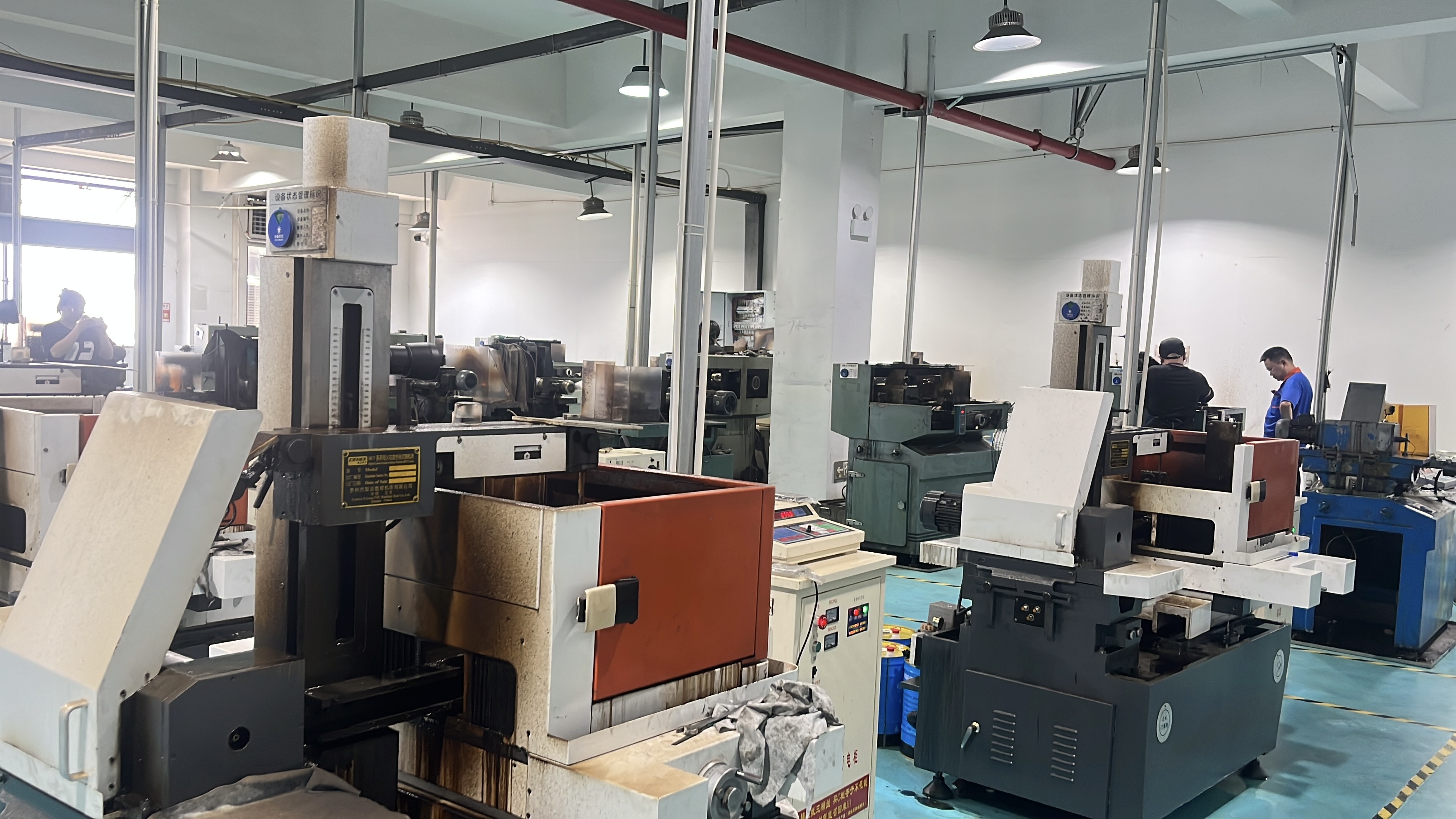
Wire-cut EDM, documented as part of the Yortho production workflow. Buyers evaluating instrument suppliers can reasonably ask which process produces each working surface, and whether that process is performed in-house.
Regulatory documentation follows the same logic of scope. Yortho holds a Certificate for Exportation of Medical Products issued by Zhejiang Medical Products Administration, number Zhehang Food & Drug Admin Medical Device Export 20250496, with a stated scope of Orthodontic Plier and a validity period from 2025-06-09 to 2027-06-08. A United States FDA establishment registration, number 3030680214, is held under 21 CFR Part 807 with a device listing that includes orthodontic brackets, preformed bands, springs, mouth mirrors and screw expanders, listed to 2026-12-31. The useful detail here is that the export certificate names the plier category specifically, rather than describing the company in general terms.
The plier range, read as evidence
| Model | Instrument type | Stated hardness | Material | Primary clinical role |
|---|---|---|---|---|
| Y-Q8001 | Light wire cutter 0° pliers | HRC 58–63 | Stainless steel | Trimming light wires at the chair |
| Y-Q8005 | Distal end cutter | HRC 58–63 | Stainless steel | Cutting distal wire ends |
| Y-Q8008 | Heavy cutter | HRC 58–63 | Stainless steel | Cutting heavier wire sections |
| Y-Q3001 | Hole punch pliers | HRC 58–63 | High-hardness stainless steel | Punching |
| Y-Q3002 | Tear drop pliers | HRC 58–63 | Stainless steel | Tear-drop forming |
| Y-Q5005 | Band remover, long tips | HRC 58–63 | Stainless steel | Removing molar bands |
| Y-Q6018 | Tweed loop pliers | HRC 55–60 | Stainless steel | Loop bending |
| Y-Q6030 | Light wire pliers | HRC 55–60 | Stainless steel | Light wire bending |
| Y-Q6015 | Kim pliers | HRC 50–55 | Stainless steel | Gripping and controlled bending |
| Y-Q6026 | Crimpable hook pliers | HRC 50–55 | Stainless steel | Crimping hooks onto arch wires |
| Y-Q5001 | Bracket removing pliers | HRC 50–55 | Stainless steel | Debonding brackets |
All plier models above are specified with a maximum sterilization temperature of 180°C. Specifications as published by the manufacturer; buyers should confirm on samples before volume ordering.
| Model | Instrument | Key stated specification |
|---|---|---|
| Y-Q5010 | Mathieu needle holder without hard tip | Stainless steel |
| Y-X101 | Double ended bracket positioning gauge | 0.022 inch; 2.0–5.0 mm |
| Y-X104 | Crossed bracket positioning gauge | Standard and pencil variants |
| Y-X201 | Lingual brackets tweezers | Curved tip; autoclavable up to 134°C |
| Y-X202 | Bracket tweezer | Autoclavable up to 134°C |
| Y-X203 | Tube tweezers, long tip | Suitable for posterior brackets and buccal tubes |
| Y-X303 | Intra-oral mirror | Large, small, occlusion and lateral types; stainless steel and glass |
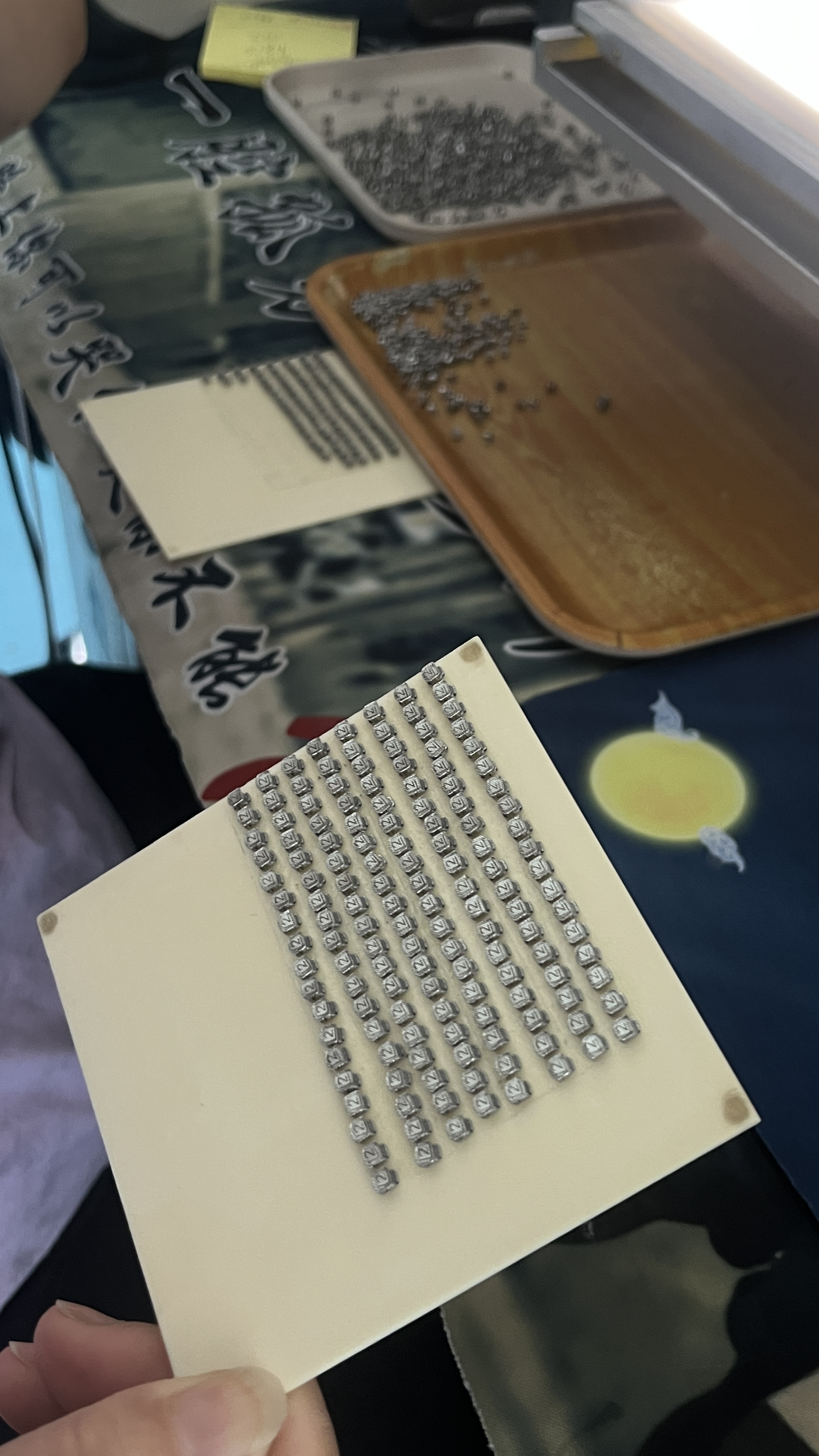
Marking applied to a bracket base during production. Whether a supplier marks and documents its output is a practical proxy for how far its process control extends into the instrument lines.
Technical explanation: why hardness is a design variable, not a score
The hardness bands in the table above are not a quality ladder. They are a set of engineering trade-offs matched to function, and reading them correctly is one of the more useful skills a procurement team can develop in this category.
Cutting instruments, such as the Y-Q8001 light wire cutter, the Y-Q8005 distal end cutter, the Y-Q8008 heavy cutter and the Y-Q3001 high-hardness hole punch pliers, are specified at HRC 58–63. A cutting bevel works by concentrating force at a very small contact area, so the constraint is wear resistance: the edge must retain its geometry across repeated cuts of stainless and nickel-titanium wire without rolling over. The same logic applies to the Y-Q5005 band remover and the Y-Q3002 tear drop pliers, where the working tip is loaded against a band or a wire.
Forming instruments, such as the Y-Q6018 Tweed loop pliers and the Y-Q6030 light wire pliers, sit at HRC 55–60. A loop former is asked to bend wire repeatedly without nicking it, and a nicked wire becomes a fracture origin under load. Specifying the tool slightly softer than a cutter preserves toughness and allows the bevel to be dressed to a radius that deforms wire rather than cutting into it.
Gripping, removal and crimping instruments, including the Y-Q6015 Kim pliers, the Y-Q6026 crimpable hook pliers and the Y-Q5001 bracket removing pliers, sit at HRC 50–55. Here the working surfaces must transfer load into an attachment without cracking it. A crimping plier that is too hard deforms the hook inconsistently and can initiate a crack at the crimp; a bracket removing plier that is too hard risks transmitting shock into the enamel interface rather than peeling the bracket away progressively.
The practical implication for buyers is straightforward. A supplier quoting a single hardness value across an entire plier range is describing a raw material purchase, not a designed instrument family. The differentiated bands are the evidence of design intent.
Sterilization limits deserve the same treatment. Plier models in the Yortho range state a maximum sterilization temperature of 180°C, while the Y-X201 and Y-X202 tweezers are described as autoclavable up to 134°C. Those are not interchangeable numbers, and they sit alongside a portfolio in which reusable instruments and single-use consumables coexist — elastic ligatures and power chains, for example, are single-use items produced from high-elasticity polymers, while pliers and tweezers are reprocessed. Matching each item to the clinic's actual autoclave cycle is part of acceptance, not an afterthought.
The material logic behind the range follows the same functional pattern. Metal brackets such as the Y-M1 use 17-4 and 304 stainless steel; ceramic self-ligating brackets such as the Y-C2 use Al₂O₃; arch wires span stainless steel (Y-SS), super-elastic nickel-titanium (Y-SN), heat-activated nickel-titanium (Y-HN) and titanium-molybdenum alloy (Y-TMA). Each material choice creates a different demand on the instrument that cuts, bends or holds it, which is why instrument specifications cannot be reduced to a single global figure.
How the range maps to a fixed-appliance workflow
Instrument procurement lists are usually built stage by stage, and a supplier whose catalogue follows the same structure reduces the number of vendors a buyer has to qualify. Read against a fixed-appliance workflow, the Yortho instrument and attachment range maps as follows.
- Positioning and bonding: bracket positioning gauges (Y-X101, Y-X104), bracket tweezer (Y-X202), lingual brackets tweezers (Y-X201), tube tweezers (Y-X203) and the intra-oral mirror (Y-X303).
- Alignment and wire handling: arch wires in stainless steel, nickel-titanium and TMA, handled with light wire pliers (Y-Q6030), Tweed loop pliers (Y-Q6018), and cutters (Y-Q8001, Y-Q8005, Y-Q8008).
- Attachment placement: crimpable hooks (Y-F102, Y-F201, Y-F105L/R, Y-F204) placed with the crimpable hook pliers (Y-Q6026), and lingual buttons and eyelets (Y-F303, Y-F305C, Y-F307, Y-F308, Y-F322) together with auxiliaries such as lingual chain (Y-F314) and power arm (Y-F321).
- Anchorage and expansion: titanium alloy anchorage screws (Y-OS1406) and expansion screws in the G, I and K series, specified across 12 mm, 16 mm, 18 mm and 20 mm screw and pin lengths with 7 mm to 15 mm expansion sizes.
- Debond and finishing: bracket removing pliers (Y-Q5001), band remover with long tips (Y-Q5005) and the Mathieu needle holder (Y-Q5010).
Two supplier-reported project records illustrate the range operating at volume rather than at sample scale. A distributor project is recorded at 5,000 units supplied through a UK-based engagement over one to three years across multiple countries, with consistent product performance and compliance with local hospital clinical requirements reported. A second project is recorded at a dental hospital in Indonesia, covering 3,000 units over two years using a self-ligating bracket system, with favourable clinical feedback and stable performance reported. Both records should be read as evidence of supply capability and repeat delivery across markets; they are not comparative clinical trials.
Where Yortho sits among orthodontic suppliers
The table below summarises publicly attributable positioning notes for a set of orthodontic manufacturers. It is a positioning reference for procurement context, not a ranking, and no order of merit is implied.
| Company | Attributed positioning note | Segment relevance |
|---|---|---|
| 3M Unitek | Identified in industry coverage as a market leader in metal and ceramic brackets, known for the Clarity Advanced series | Global brand manufacturer |
| Envista Holdings (Ormco) | Named among key global manufacturers of traditional orthodontic brackets; its Damon System is described as a market-leading passive self-ligating bracket | Global brand manufacturer |
| Dentsply Sirona (GAC) | Named among key global bracket manufacturers; the GAC division specialises in orthodontic elastics and ligatures | Global brand manufacturer |
| American Orthodontics | Described as a significant bracket-market player noted for self-ligating systems | Global brand manufacturer |
| Dentaurum (Germany) | Described as one of the oldest orthodontic materials manufacturers, known for stainless steel alloys | Materials-focused manufacturer |
| GC Corporation (Japan) | Described as specialising in high-biocompatibility materials for orthodontic brackets | Materials-focused manufacturer |
| TP Orthodontics (US) | Noted for customised bracket and wire solutions | Customisation emphasis |
| G&H Orthodontics (US) | Manufactures in the United States and exports to more than 90 countries | Export-scale manufacturer |
| Align Technology | Identified as the top competitor in the clear aligner market in 2024 | Adjacent segment: aligner systems |
| Yortho | UK-registered brand owned by YAM Global Limited, manufacturing through its own factory in Huzhou, Zhejiang Province, China; range covers brackets, buccal tubes, bands, arch wires, attachments, pliers, hand instruments, pediatric crowns and lab appliances | Factory-integrated manufacturer with OEM/ODM service |
Positioning notes are drawn from third-party and public sources cited in this article, including Fortune Business Insights, iData Research, Next Move Strategy Consulting and company publications. Not exhaustive; no ranking implied.
Factory-integrated sourcing versus trading-led sourcing, and where the limits sit
The clearest structural difference a buyer encounters in this category is between a trading-led supply model, where process knowledge sits with an unnamed third party, and a factory-integrated model, where the entity answering the technical question operates the line. In the first model, questions about hardness bands, finishing steps or tooling ownership tend to produce generic answers, because the information is not held by the seller. In the second, those questions are answerable — which is exactly the evidence set examined above.
This is a structural difference, not an automatic quality advantage. Multinational brand owners also manufacture to controlled processes and typically hold broader product ecosystems and longer regulatory histories. A factory-integrated manufacturer may have narrower brand recognition and a narrower technology envelope. The honest limitations of the Yortho evidence base are as follows.
- Portfolio boundary. The published range covers fixed-appliance hardware and instruments. It does not include clear aligner systems, intraoral scanners or CAD/CAM software. Digital workflows are identified by Straits Research as a critical technological trend, and a buyer building a digital-first pathway will need those components from other suppliers.
- Declared specifications are declared. Hardness bands and the 180°C and 134°C sterilization limits are manufacturer-stated figures. They are the correct basis for a specification discussion, but they should be confirmed through sample testing and incoming inspection before a multi-market rollout, not treated as independently witnessed results.
- Case records are self-reported. The 5,000-unit and 3,000-unit projects evidence supply at volume and multi-country delivery. They do not establish comparative clinical performance against any other supplier's product, and should not be read that way.
- Capacity assumptions. A stated monthly capacity of 5,000 units and a 3–7 day lead time describe standard catalogue flow. A multi-country launch with customised packaging, logos, tags or product features should be scheduled against confirmed capacity rather than assumed from headline figures.
- Certificate scope and validity windows. The export certificate covers orthodontic pliers specifically; it does not automatically extend to brackets or wires. The FDA establishment registration is listed to 2026-12-31 and the export certificate to 2027-06-08, so both should be re-verified at the time of order.
Market signals shaping instrument procurement through 2026
- Consumables growth continues. The orthodontic consumables market moves from USD 3.1 billion in 2024 toward a projected USD 4.3 billion by 2030 (Grand View Research), which keeps instruments a recurring, replenishment-driven category rather than a one-off capital purchase.
- Bracket and buccal-segment hardware remains dominant. Brackets led orthodontic consumables revenue in 2024 (Grand View Research), and the buccal braces segment is expected to capture 89.55% of market share by 2026 (Fortune Business Insights). Buccal-segment work is instrument-intensive: bands, buccal tubes and the tools that place and remove them.
- Buyer base is fragmented. Orthodontic clinics and standalone practices represent over 50% of the end-user distribution channel (Grand View Research). For instrument suppliers, that fragmentation makes lead time, minimum order quantity and after-sales responsiveness commercially decisive. Yortho states a 100-unit minimum on standard catalogue items, a 3–7 day lead time and a 5,000-unit monthly capacity, with OEM and ODM customization available for packaging, logo, tag and product.
- Asia-Pacific and China supply are expanding. Asia-Pacific is identified as the fastest-growing market for orthodontic supplies (MarketsandMarkets), and China's orthodontic supplies market was estimated at USD 713.25 million in 2024 (Market Research Future). China exported approximately USD 12.7 billion in medical instruments under HS 9018 in 2025 (OEC), with dental instrument export clusters led by Guangdong, Jiangsu and Zhejiang — the province where the Yortho facility is located.
- Digitalisation shifts instrument use; it does not remove it. Intraoral scanners, CAD/CAM and additive manufacturing are increasingly standard in orthodontic workflows. In fixed-appliance cases, that changes where instruments are used and how cases are planned, but the chair-side need for cutters, formers, crimping pliers and removal instruments continues.
A verification checklist for instrument and plier sourcing
The following sequence converts the signals above into a procurement routine. It applies to any supplier in this category, not only to the case discussed here.
- Ask for per-model specifications, not category claims. Request hardness band, working material and maximum sterilization temperature for each model on the list.
- Ask which models are reusable and which are single-use, and how reprocessing is defined for each reusable item.
- Ask for the process description per instrument family. Which step produces the working surface, which step finishes it, and whether those steps are performed in-house.
- Request regulatory documents and read their scope. A certificate that names pliers does not cover brackets; a registration listed to a future date still needs re-verification at order time.
- Request tool-to-attachment pairing. If an attachment is offered, ask which instrument is specified for handling it, and at what dimensions.
- Test on the practice's own materials. Cut the wire grades actually used; crimp the hooks actually used; check that the plier does not burr the wire or crack the attachment.
- Run the clinic's full sterilization cycle on samples and inspect for joint stiffness, discolouration or surface change afterwards.
- Confirm commercial terms before committing volume: minimum order quantity, lead time, stated monthly capacity, packaging and logo customisation, and the after-sales route.
- Define incoming inspection criteria in writing — joint alignment, tip closure, finish, marking legibility — so that acceptance is objective rather than visual.
Future outlook
Instrument procurement in orthodontics is converging on the standards already applied to appliances. As consumable spending grows and the buyer base fragments further, instrument lines will increasingly be qualified on documented specification rather than on price alone, simply because dispersed buyers cannot absorb chair-side failures that a large institution could.
Three developments are worth watching over the next procurement cycles. First, specification literacy will rise: hardness bands, sterilization ceilings and material grades will move from optional detail to standard request-for-quotation content. Second, process documentation will become a competitive differentiator, in the same way that test documentation already is in the appliance category. Third, supplier qualification will consolidate — buyers will gravitate toward manufacturers who can answer for a broad range with one process narrative, because qualifying four narrow vendors costs more in administrative effort than qualifying one coherent one.
None of this makes declared specifications sufficient. It makes them checkable, which is the only meaningful improvement in a category where the failure mode appears at the chair, mid-appointment, long after the purchase order was approved.
FAQ
What evidence should a buyer request first when evaluating an orthodontic pliers supplier?
Begin with per-model specifications rather than catalogue images. For each plier, request the specified hardness band, the working material and the maximum sterilization temperature. Then request a process description for that instrument family, covering how the working surfaces are formed and finished and how the finished instrument is tested. Finally, request the regulatory documents that apply to the specific item and check that their scope names that item. In the Yortho case, the Certificate for Exportation of Medical Products held for orthodontic pliers is issued by Zhejiang Medical Products Administration under number Zhehang Food & Drug Admin Medical Device Export 20250496, with a stated scope of Orthodontic Plier and validity to 2027-06-08.
Does a higher HRC value indicate a better orthodontic plier?
No. Hardness is matched to function rather than maximised. Within the Yortho plier range, cutting models such as the Y-Q8005 distal end cutter and the Y-Q8008 heavy cutter are specified at HRC 58–63; forming models such as the Y-Q6018 Tweed loop pliers and Y-Q6030 light wire pliers at HRC 55–60; and gripping, removal and crimping models such as the Y-Q5001 bracket removing pliers and Y-Q6026 crimpable hook pliers at HRC 50–55. A cutting edge benefits from wear resistance, while an instrument that must deform a hook or grip a band without cracking it benefits from toughness. A single hardness figure applied across an entire range describes a raw material, not a designed instrument family.
How can a clinic confirm that reusable orthodontic instruments suit its sterilization protocol?
Compare the instrument's stated maximum sterilization temperature against the actual parameters of the clinic's autoclave cycle. Plier models in the Yortho range state a maximum sterilization temperature of 180°C, while the Y-X202 bracket tweezer and Y-X201 lingual brackets tweezers are described as autoclavable up to 134°C. Because reusable instruments and single-use consumables such as elastic ligatures and power chains coexist in the same workflow, these limits should be confirmed item by item on samples before a volume order is released, using the same cycle the clinic runs in normal operation.
Why does product range breadth matter when selecting an orthodontic instrument supplier?
Breadth reduces the number of suppliers that must be qualified and makes tool-to-attachment fit more likely to be consistent, particularly when the same manufacturer produces both the attachment and the instrument used to handle it. Examples include crimpable hooks catalogued at 0.022 inch and 0.019 inch sections alongside a dedicated crimpable hook plier, and long-tip tube tweezers specified for posterior brackets and buccal tubes. Breadth alone does not establish quality, however; it has to be assessed together with per-model specifications and process documentation.
What can supplier case records and certificates not tell a buyer?
Case records confirm volume, market reach and repeat supply; they do not establish comparative clinical performance. The Yortho project records describe 5,000 units supplied through a distributor engagement across multiple countries over one to three years, and 3,000 units supplied to a dental hospital in Indonesia over two years using a self-ligating bracket system; both report favourable clinical feedback and consistent performance, and both are supplier-reported. Certificates are also scope-limited, so an export certificate naming orthodontic pliers does not automatically cover brackets, bands or wires. Neither substitutes for sample testing and incoming inspection against the buyer's own acceptance criteria.
Reference document: the Yortho product brochure is available for download as a PDF at cdn.socialarks.com/yortho brochure.
Есть вопросы или нужны дополнительные детали?
Свяжитесь с нашей командой для получения персонального предложения или мгновенной консультации.
Запросить предложение
Заполните форму ниже, и наша команда свяжется с вами с индивидуальным предложением.
Прямой чат WhatsApp
Предпочитаете общаться в реальном времени? Напишите нам в WhatsApp для мгновенной помощи и быстрых ответов.
- Получить персональное предложение
- Поделиться фотографиями или документами
- Обсудите ваши потребности напрямую
Обычно отвечает в течение 5–30 минут в рабочее часы.