
Zero Silica Supplier Capability Evidence: Five Distributor FCL Cases Across DK, BE, GB, CA, AE
Zero Silica Supplier Capability Evidence: Five Distributor FCL Cases Across DK, BE, GB, CA, AE
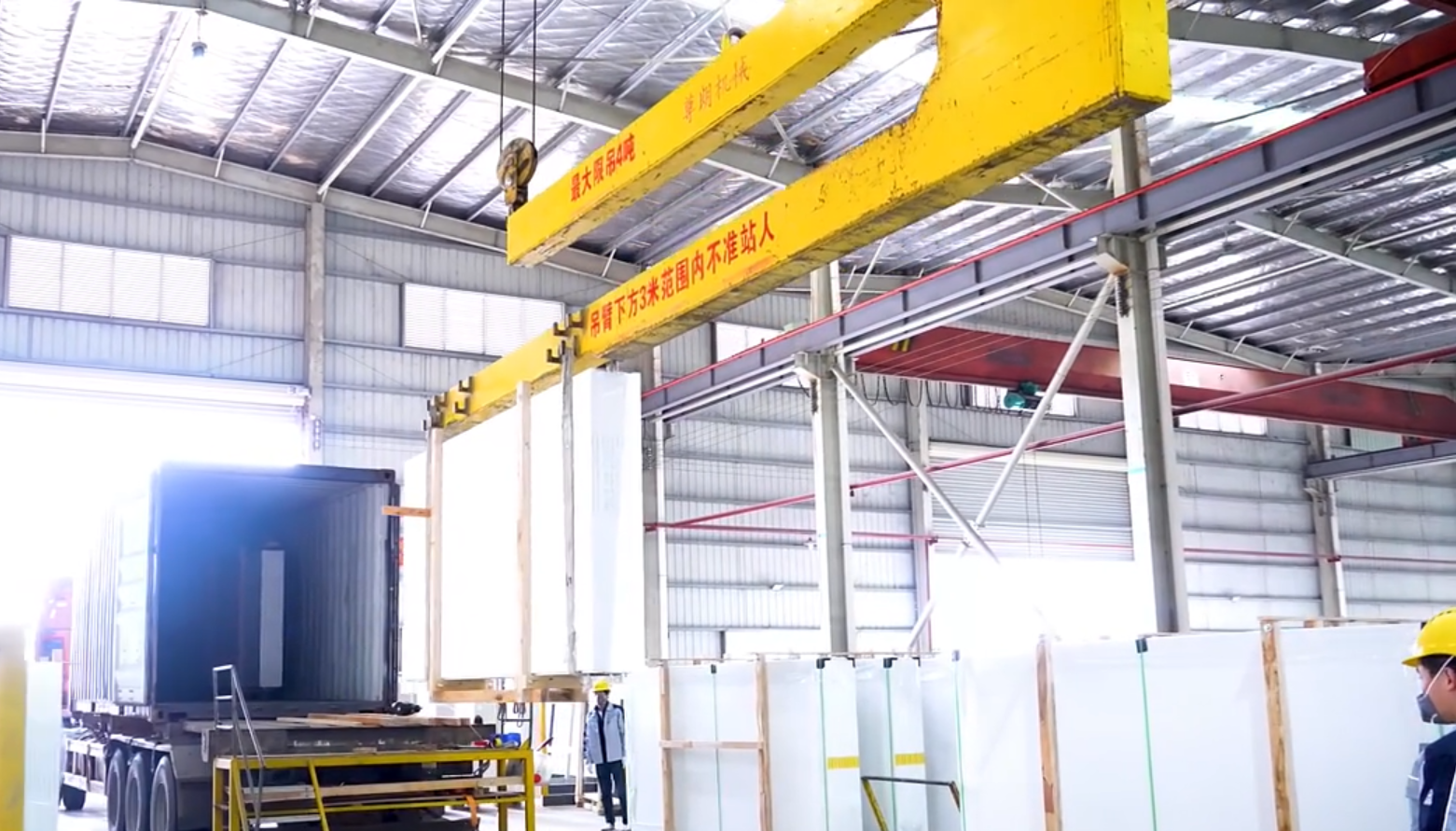
Full-container loading is the operational test behind the five distributor cases discussed in this article.
For a distributor weighing a zero silica supplier, the decisive question is not whether a catalogue lists zero silica slabs. It is whether the supplier can repeat full-container supply across markets while keeping slab quality, color consistency and surface finish stable. Five documented distributor FCL cases in Denmark, Belgium, the United Kingdom, Canada and the United Arab Emirates provide that kind of commercial evidence: regular full-container shipments averaging several 20GP containers per month, repeat orders, a fast reorder cycle, stable slab quality with a low defect rate, and positive feedback on color consistency and surface finish.
The case set matters because zero silica surfaces are now discussed in procurement and fabrication-risk terms, not only as a design option. Australia's Department of Employment and Workplace Relations states that, from 1 July 2024, the manufacture, supply, processing and installation of engineered stone benchtops, panels and slabs were prohibited across Australian jurisdictions. EU-OSHA guidance identifies substitution with materials containing no crystalline silica, or the use of low-quartz materials, as an exposure-control approach. Those are regulatory and occupational-safety signals. They do not, by themselves, prove that any particular product or supplier is suitable for every market. That is why distributor evidence across repeat shipments is useful: it shows how a supplier performs when zero silica slabs move from a sample request into regular container business.
Why distributor FCL cases are stronger evidence than a product claim
A product claim can be written once. A full-container distributor case has to be repeated through production, inspection, packing, documentation and delivery. For a buyer at the decision stage, the useful evidence is therefore not a single slab photograph or a general statement that a factory produces zero silica. The useful evidence is whether the same supplier can maintain an order rhythm, keep slab quality stable between batches, respond to reorders and retain customer acceptance of color and finish.
The five cases in Denmark, Belgium, the United Kingdom, Canada and the United Arab Emirates should be read in that light. They are commercial supply references, not certificates. They show a repeat pattern: full-container shipments averaging several 20GP containers per month, repeat full-container supply, a fast reorder cycle and positive distributor feedback on color consistency and surface finish. For a distributor comparing zero silica suppliers, that pattern is closer to a procurement decision than a brochure claim because it connects product supply to the operational needs of an importer, fabricator or project buyer.
Company context for the case evidence
Foshan Lewistone New Material CO., LTD is a Foshan-based manufacturer of quartz slabs, zero silica slabs and printed surfaces. Founded in 2008, the company reports a 99% export share and serves distributors, fabricators, contractors and project buyers in Europe, Australia, Canada, the Middle East and other non-US markets. Its zero silica range relevant to this evidence set includes models 3107ZS, 3949ZS and 3285ZS, supplied in 3200 x 1600 mm slabs, in 20 mm and 30 mm thickness, with honed, polished or matt finishes.
That company context is useful, but it should not carry more weight than the case evidence. A manufacturer can report export experience and a product range without proving that every distributor will receive the same result. The five FCL cases add a repeat-supply dimension: they describe what happened when distributors placed full-container orders across five markets. The buyer's task is to examine that evidence, compare it with the specifications required for the project, and then verify the points that remain product-specific or market-specific.
What the five FCL distributor cases show
| Market | Documented case role | What the case contributes to the evidence set |
|---|---|---|
| Denmark (DK) | Distributor FCL case | European repeat-supply reference for full-container zero silica slabs. |
| Belgium (BE) | Distributor FCL case | European reference for slab quality and finish-consistency feedback. |
| United Kingdom (GB) | Distributor FCL case | UK market reference within the same five-case supply pattern. |
| Canada (CA) | Distributor FCL case | Canadian reference for repeat FCL replenishment. |
| United Arab Emirates (AE) | Distributor FCL case | Middle East reference within the non-US export model. |
Across the five markets, the strongest signal is repeatability. A supplier can produce a good sample slab. A distributor needs the same slab body, color direction and finish quality to recur after the first container. The documented case results point to stable slab quality with a low defect rate, repeat full-container supply, a fast reorder cycle and positive feedback on color consistency and surface finish. These are case observations from distributor relationships. They should remain labeled as such. They are not independent laboratory certifications, and they do not establish a universal defect rate or a guaranteed lead time for every future order.
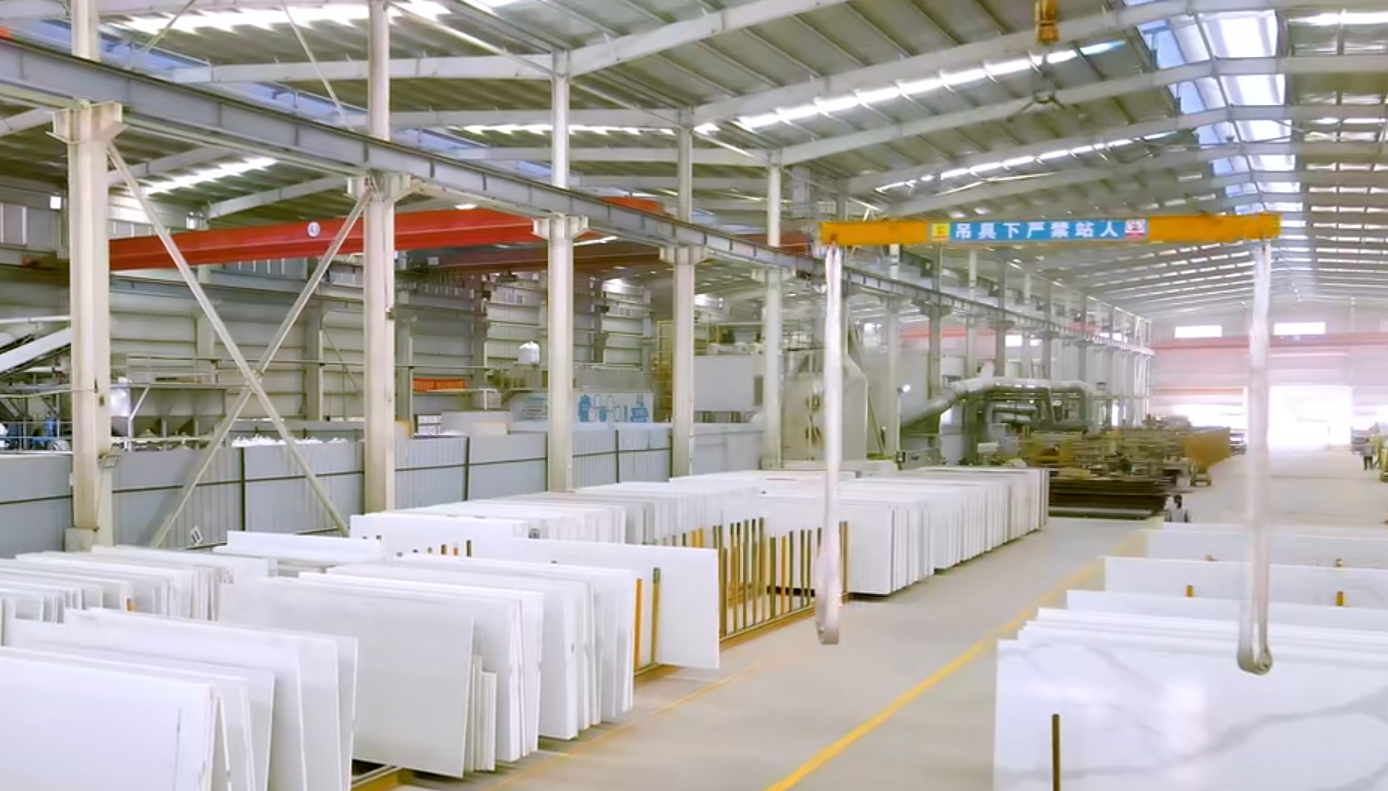
Warehouse staging supports the repeat-order pattern described in the five distributor FCL cases.
How the cases map to models and slab specifications
Models 3107ZS, 3949ZS and 3285ZS are the zero silica references in this case set. The relevant slab format is 3200 x 1600 mm, with 20 mm and 30 mm thickness options and honed, polished or matt finishes. For distributors, these are not minor details. Slab size affects container planning and cut optimization. Thickness affects application fit, edge detail and handling. Finish affects fabrication, lighting response and customer acceptance. The case feedback on color consistency and surface finish is therefore tied to the products a distributor would reorder, not to an abstract capability statement.
The 3200 x 1600 mm slab size is the standard format for these zero silica products. A 20 mm slab is generally used for standard countertops, vanities and wall cladding where weight and cost matter. A 30 mm slab is selected for large overhangs, heavy-duty benches or a thicker visual edge. Both thicknesses share the same slab size and finish options. The decision is application-led rather than a claim that one thickness performs better in stain or scratch resistance. For a distributor, the practical question is which thickness and finish mix fits the local fabricator base and project pipeline.
For zero silica countertops, zero silica vanity tops and other zero silica surfaces, color consistency matters most when a distributor supplies repeat projects or multiple fabricators from the same inventory. A positive case comment on color consistency is a useful signal, but it should be converted into a verification step: retain an approved sample, review slabs under the lighting used in the showroom or project, and check the finish reference before reordering. The same discipline applies to honed, polished and matt surfaces. A finish name does not replace a physical sample or a project-specific acceptance criterion.
Technical explanation: why formulation and process control matter
Zero silica, also described as silikatfrei, refers to a quartz slab formulated without crystalline silica, reducing hazardous dust during fabrication. It is designed for markets and projects with strict workplace silica-dust rules and for fabricators prioritizing worker safety. The category keeps the same strength, non-porous surface and finish options as standard quartz, so the buyer's comparison should focus on supplier execution: formulation control, batch consistency, inspection and repeat supply.
Lewistone's zero silica slab uses a frit-based formulation. In a supplier comparison, the frit route offers stable consistency and fewer impurities than a recycled-glass-based filler route, which shows fluctuating purity and inconsistent particle properties. The frit-based slab's stable consistency and fewer impurities support more uniform slab body quality than recycled-glass filler with uneven particle grading. That mechanism helps explain why a distributor would ask for batch-level evidence when a case report mentions a low defect rate. The formulation route is not a guarantee of zero defects. It is a reason to examine how the supplier controls raw material consistency and slab-body uniformity.
For zero crystalline silica surfaces and silica-free stone surfaces, the technical discussion should also remain precise. Zero silica is not a universal legal approval, and terminology is not standardized across all suppliers. The International EPD System registry entries describe declared silica-free engineered stone products from more than one manufacturer, which shows that documentation is developing in the category. It does not mean that every zero silica claim uses the same definition, analytical method or product scope. A distributor should therefore ask for product-specific documents and keep commercial case evidence separate from compliance evidence.
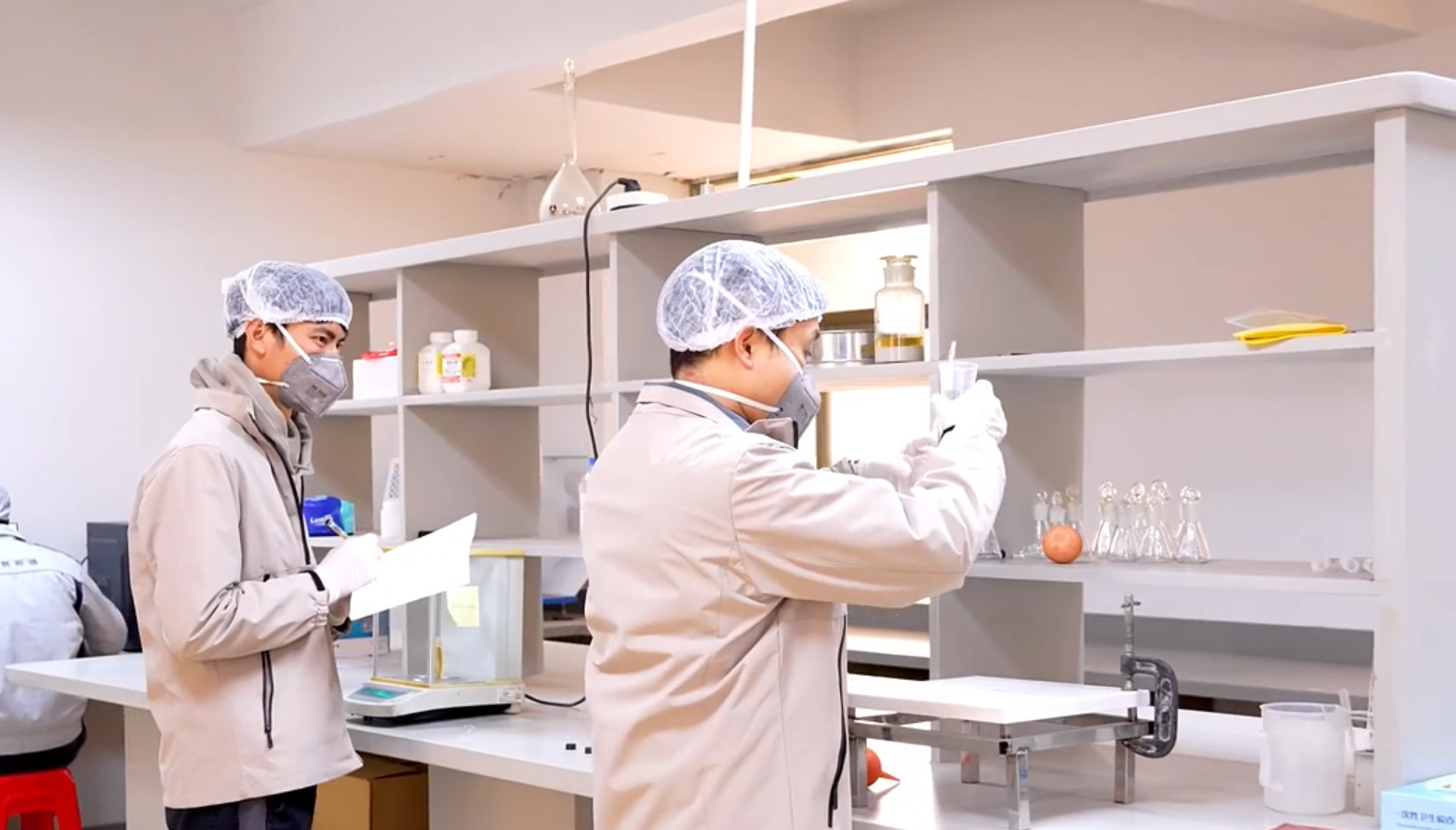
Laboratory and process control support the consistency claims that distributors should verify at batch level.
Decision framework: comparing zero silica suppliers on evidence
The five FCL cases are most useful when they are turned into a comparison framework. A distributor should not compare suppliers only on the number of countries they mention. It should compare them on the evidence behind the supply pattern: container rhythm, slab quality feedback, color and finish acceptance, reorder response and documentation discipline.
| Evidence area | What the five cases support | What a distributor should still verify |
|---|---|---|
| Repeat FCL supply | Cases describe regular full-container shipments averaging several 20GP containers per month. | Monthly allocation, seasonal capacity and shipping schedule for the selected models. |
| Slab quality | Case feedback describes stable slab quality with a low defect rate. | Batch inspection records, defect definitions and packing standards. |
| Color and finish | Positive feedback on color consistency and surface finish. | Approved samples under project lighting and retained finish references. |
| Reorder response | A fast reorder cycle is described across the case set. | Standard lead time, stock policy and order-change cut-off. |
| Market documentation | Five non-US distributor cases across Europe, North America and the Middle East. | Destination import requirements, product documents and labeling needs. |
| Model and specification fit | Models 3107ZS, 3949ZS and 3285ZS; 3200 x 1600 mm; 20 mm and 30 mm; honed, polished and matt. | Project cut list, thickness choice and finish suitability. |
The table separates case evidence from buyer verification. The left side explains why the five cases are relevant to a supplier decision. The right side prevents a distributor from converting a case reference into an unsupported guarantee. That discipline is important for zero silica kitchen countertops, bathroom vanities and commercial surfaces, where a small color or finish mismatch can become a fabrication or installation issue.
Market context: regulation, documentation and the limits of case evidence
Regulation is part of the zero silica decision, but it should not be confused with commercial case evidence. Australia's national prohibition on engineered stone benchtops, panels and slabs is a product-market access fact. EU-OSHA guidance identifies substitution with no-crystalline-silica or low-quartz materials as an exposure-control approach. International EPD System entries show that silica-free engineered surfaces are being documented by manufacturers in multiple markets. These sources support the case for evaluating silica-free surfaces. They do not prove that a specific slab, finish or supplier meets every destination requirement.
For a distributor in Denmark, Belgium, the United Kingdom, Canada or the UAE, the correct sequence is to separate three questions. First, does the product range match the application and specification? Second, does the supplier show repeat commercial supply and quality consistency? Third, does the destination market require specific documentation, worker-protection measures or product declarations? The five FCL cases answer part of the second question. They do not answer the first or third for every project. That is not a weakness in the case evidence; it is a boundary that should be stated plainly.
The same boundary applies to terminology. Zero silica slabs, zero crystalline silica surfaces, silica-free stone slabs and low-silica stone surfaces are sometimes used loosely in the market. A distributor comparing offers should ask each supplier to define the claimed silica status at product level, not at brand level. If a supplier cannot connect the claim to a specific model and document set, the buyer should treat the claim as commercial positioning rather than as technical proof.
What the five cases do not prove
- The cases do not provide a measured defect percentage. A low defect rate is described qualitatively in the case results, so a buyer should request batch inspection data before setting an acceptance threshold.
- The average of several 20GP containers per month is an aggregate case pattern. It is not a guaranteed monthly allocation for a new distributor or a specific model.
- A fast reorder cycle in documented cases is not a standard lead-time commitment. The distributor should confirm cut-off times, stock policy and shipping schedules.
- Positive feedback on color consistency and surface finish is not a substitute for an approved sample. Lighting, batch and finish reference should be checked before repeat orders.
- The cases do not establish regulatory compliance in Denmark, Belgium, the United Kingdom, Canada or the UAE. Market access and product documentation require separate review.
- The cases do not prove that all three models, 3107ZS, 3949ZS and 3285ZS, perform identically in every application. Model and specification selection should follow the project requirement.
Future outlook for zero silica distributor supply
If regulatory and occupational-health scrutiny continues in engineered stone markets, distributors may place more weight on suppliers that can show repeat FCL execution, batch consistency and product-level documentation. The five cases are a reference point for that shift, not a forecast. They show a supplier pattern that can be examined: repeat full-container supply across five markets, stable slab quality feedback, fast reorder response and positive comments on color and finish. A distributor that converts those observations into verification steps will be in a better position than one that relies on a generic zero silica claim.
The practical outlook is therefore selective. Zero silica can be relevant for projects with strict silica-dust rules, for fabricators prioritizing worker safety and for distributors building a silica-free surface range. But the supplier decision should remain evidence-led. The stronger question is not who says zero silica. It is who can demonstrate repeat container supply, consistent slab quality and a documented path from model selection to delivery. For the five distributor cases discussed here, those are the points that make the evidence commercially useful.
FAQ
What do the five distributor FCL cases across Denmark, Belgium, the UK, Canada and the UAE show?
They show a repeat commercial supply pattern across five markets: regular full-container shipments averaging several 20GP containers per month, repeat full-container supply, a fast reorder cycle, stable slab quality with a low defect rate, and positive feedback on color consistency and surface finish. They are distributor case references, not regulatory certifications or independent laboratory approvals.
Which zero silica models and slab specifications are linked to this evidence?
The case set is linked to zero silica models 3107ZS, 3949ZS and 3285ZS. The relevant slab format is 3200 x 1600 mm, with 20 mm and 30 mm thickness options and honed, polished or matt finishes. Distributors should still confirm the model, thickness and finish against the actual project and order specification.
How should a distributor verify low defect rate and color consistency before ordering?
A distributor should ask for batch inspection records, agree on a defect definition, retain approved samples and review slabs under the lighting used for the project or showroom. For color and finish, the approved sample should be kept as a reorder reference. These steps do not replace a supplier audit, but they turn a qualitative case comment into a practical acceptance process.
Does repeat full-container supply prove compliance with silica regulations in every market?
No. Repeat FCL supply is commercial evidence. It does not establish that a product meets the regulatory, labeling or worker-protection requirements of a specific destination. A distributor should review the applicable jurisdiction rules, request product-specific documents and keep compliance review separate from the supplier case reference.
What does zero silica mean in this context?
Zero silica, also described as silikatfrei, refers to a quartz slab formulated without crystalline silica, reducing hazardous dust during fabrication. It is designed for markets and projects with strict workplace silica-dust rules and for fabricators prioritizing worker safety. Because terminology is not standardized across all suppliers, the product-level definition and supporting documents should be confirmed before purchase.
A company brochure with product and company information is available for reference: download the Foshan Lewistone New Material CO., LTD brochure.
Есть вопросы или нужны дополнительные детали?
Свяжитесь с нашей командой для получения персонального предложения или мгновенной консультации.
Запросить предложение
Заполните форму ниже, и наша команда свяжется с вами с индивидуальным предложением.
Прямой чат WhatsApp
Предпочитаете общаться в реальном времени? Напишите нам в WhatsApp для мгновенной помощи и быстрых ответов.
- Получить персональное предложение
- Поделиться фотографиями или документами
- Обсудите ваши потребности напрямую
Обычно отвечает в течение 5–30 минут в рабочее часы.