
Zero Silica vs Printed Quartz for Distributor Inventories
Zero Silica vs Printed Quartz for Distributor Inventories
For slab distributors, Zero Silica and Printed Quartz answer different inventory questions. One is defined here by a product-specific SGS Test Report whose scope is zero crystalline silica; the other is a decorative surface category whose listed formulation includes frit or quartz powder and a printed layer. The practical distinction is not simply appearance: buyers need to compare documented composition, product-specific evidence, available formats, and the design ranges they intend to stock.
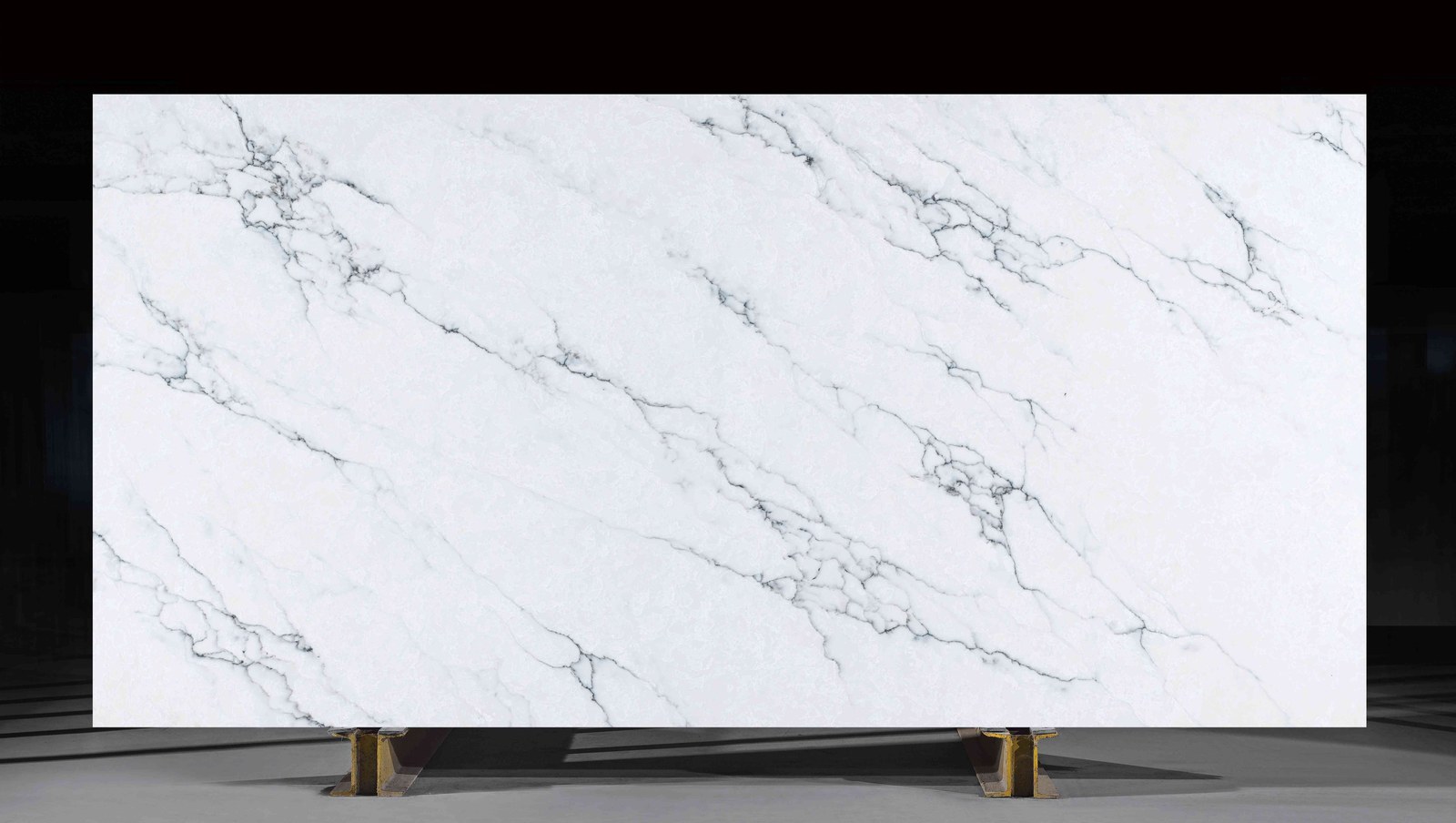
Foshan Lewistone New Material CO., LTD is a surface manufacturer offering Zero silica slabs and Printed Quartz surfaces for the building and stone industry. For a distributor evaluating both categories, the available product records support a useful comparison—but not an assumption that the materials are interchangeable or that every product carrying a similar label has identical composition or documentation.
The inventory decision: evidence-led assortment, not a single substitute
A distributor considering a Zero Silica Slabs assortment alongside Printed Quartz should first decide what each line is intended to do. The Zero silica slab product record identifies models 3107ZS, 3949ZS, and 3285ZS, with an SGS Test Report covering zero crystalline silica. The Printed Quartz record identifies models 3948, 3952, and 3956 and describes a decorative printed layer over a material formulation that includes frit or quartz powder, polyester resin, pigments, and additives.
That distinction gives buyers a starting point for inventory planning. The Zero silica range has a product-specific silica-related report scope; Printed Quartz has a documented decorative-layer construction and a broader design-oriented role. The records supplied do not state a measured crystalline-silica percentage for the Printed Quartz models. Therefore, distributors should not describe those models as silica-free, or make a precise silica-content comparison, without product-specific evidence from the supplier.
Nor does the term Zero Silica by itself settle every technical or regulatory question. Buyers should match the report to the exact model offered, review its scope, and ask whether the supporting documents meet the intended market and project requirements. A report for one group of products should not be treated as evidence for another product family.
What the product records establish
| Buyer check | Zero silica slab | Printed Quartz |
|---|---|---|
| Listed models | 3107ZS, 3949ZS, 3285ZS | 3948, 3952, 3956 |
| Material information | Frit powder, frit sand, polyester resin, pigments, and additives | Frit or quartz powder, polyester resin, pigments, additives, and a printed decorative layer |
| Silica-related documentation in supplied records | SGS Test Report GZMR240902600701; scope: zero crystalline silica | No product-specific crystalline-silica result supplied for the listed models |
| Listed size and thickness | 3200 × 1600 mm; 20 mm or 30 mm | 3200 × 1600 mm; 20 mm or 30 mm |
| Listed finishes | Honed, polished, and matt | Honed, polished, and matt |
The table summarizes the supplied specifications, not a universal technical standard for either category. Shared slab dimensions and finish options can simplify initial assortment comparisons, but they do not establish equivalent composition, fabrication behavior, or compliance status.
How the silica-related evidence should be read
The supplied certification record identifies SGS Test Report GZMR240902600701, issued by SGS, with a scope of zero crystalline silica. The report is associated with the Zero silica slab product and models 3107ZS, 3949ZS, and 3285ZS. For an inventory decision, this is more useful than a category-level statement because it connects the evidence to named products.
Distributors should still treat the document as a test report with a defined scope, rather than as blanket approval for every use or market. Confirm that the model on a proposed order matches the model in the report. Review the actual report and its test details, and check whether local rules require other documents, labels, or tests. The supplied records do not establish that the report replaces jurisdiction-specific compliance review, workplace controls, or project approval.
This distinction matters in markets with specific restrictions. The Australian Government’s Department of Employment and Workplace Relations states that, from 1 July 2024, manufacture, supply, processing, and installation of engineered stone benchtops, panels, and slabs containing at least 1% crystalline silica by weight were prohibited across Australian jurisdictions. That policy context makes product classification and documentation a material procurement issue, but it does not by itself prove that any particular slab is permitted for a particular project. Buyers should consult the applicable rules and verify the product and intended use. Australian Government guidance on the engineered stone prohibition.
The comparison also has a clear evidence boundary: the supplied Printed Quartz specification lists quartz powder among possible formulation materials, but it does not provide a crystalline-silica percentage or test report for models 3948, 3952, or 3956. The specification is sufficient to describe the listed formulation and printed layer; it is not sufficient to quantify silica content. A buyer needing a like-for-like silica comparison should request a product-specific declaration and relevant test documentation for the precise Printed Quartz model under consideration.
The role of Printed Quartz in a distributor portfolio
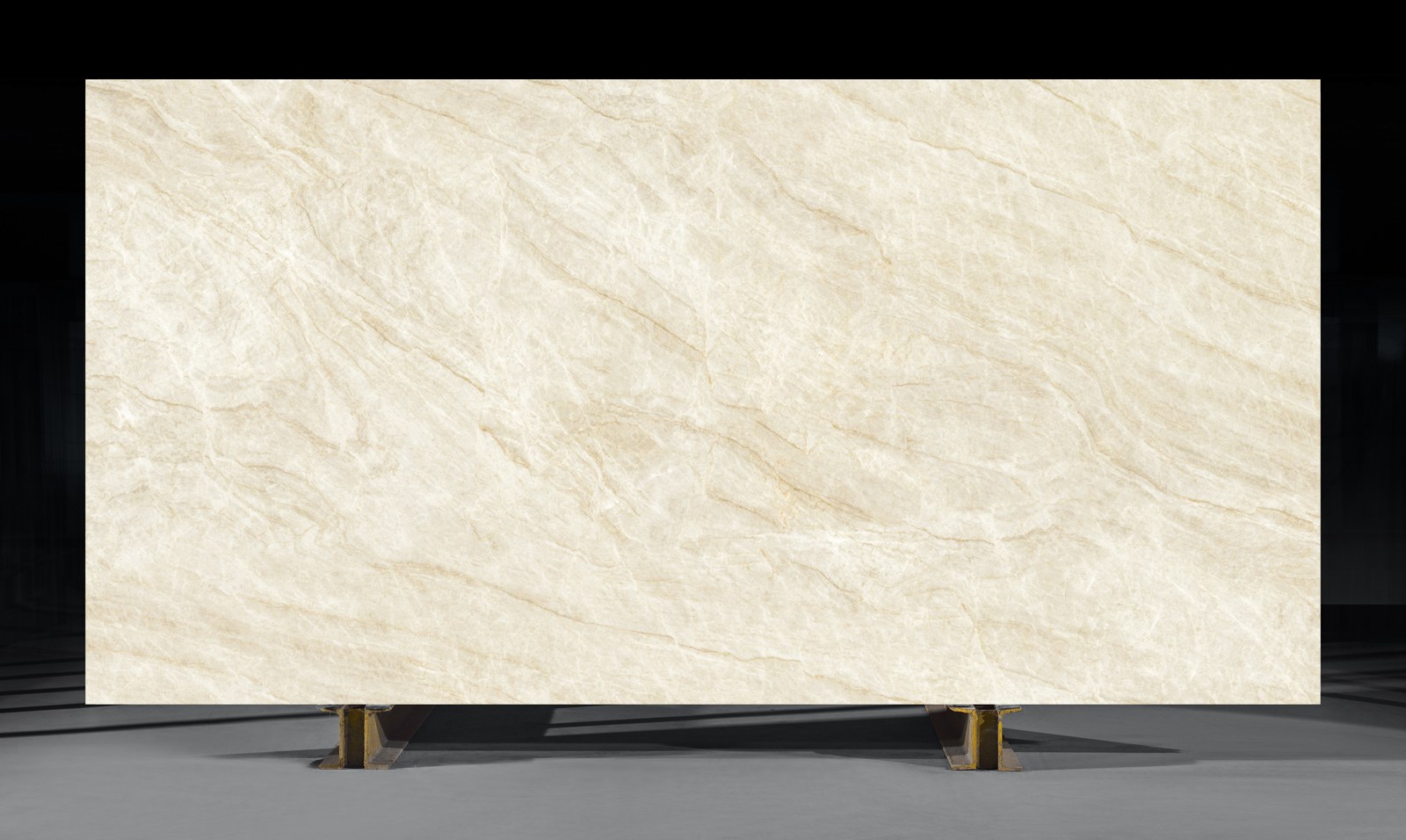
Printed Quartz is distinguished in the supplied product record by its printed decorative layer. Its listed models are 3948, 3952, and 3956, and its listed dimensions, thicknesses, and finishes match the Zero silica slab specification. This makes the range relevant when a distributor is evaluating decorative choice within the same broad slab format. The provided material does not establish the full pattern catalogue or the availability of a specific design for a particular order, so those details should be confirmed against current product information.
Printed surfaces can be considered for a design-led assortment, while Zero silica slabs can be considered where a named product and silica-related report are central to the buyer’s specification. These roles may overlap in kitchen and bathroom projects, but they are not the same selection criterion. A design preference does not demonstrate a material property, and a silica-related report does not show that a product’s patterns match local demand.
A practical distributor comparison framework
For Research and Evaluation-stage buyers, a compact qualification process helps prevent a visually persuasive sample or a broad product label from substituting for product-level evidence.
- Define the inventory purpose. Decide whether the line is being considered for silica-related documentation, design breadth, or both. Avoid asking one category to answer a different buyer need.
- Match documents to models. Record the exact model names and compare them with the applicable report or specification. For Zero silica slabs, the supplied SGS report is associated with 3107ZS, 3949ZS, and 3285ZS. Do not extend that report to Printed Quartz models.
- Resolve the composition question. The Zero silica slab specification lists frit powder, frit sand, polyester resin, pigments, and additives. The Printed Quartz specification lists frit or quartz powder, polyester resin, pigments, additives, and a printed decorative layer. Where exact crystalline-silica content affects a purchasing decision, request a product-specific result rather than inferring one from a category name.
- Compare the formats that matter to customers. Both supplied product records list 3200 × 1600 mm slabs, 20 mm and 30 mm thicknesses, and honed, polished, and matt finishes. Confirm current availability and whether the exact finish and thickness are offered for each model you intend to stock.
- Check the end-use and fabrication context. The supplied application information covers residential and commercial kitchens and bathrooms, including countertops, islands, breakfast bars, vanity tops, and basin surrounds. It also calls for professional fabrication with accurate cut-outs, seam matching, and edge polishing. Confirm that the product and documentation fit the job rather than relying on a general portfolio statement.
- Keep market rules separate from product claims. A supplier test report, a product specification, and a jurisdiction’s legal requirements are distinct forms of information. Review them together, but do not assume one automatically replaces another.
- Record unresolved questions before listing. If a product-level test, finish detail, or market document is missing, mark it as unconfirmed. This makes the boundary of the available evidence visible to sales teams, fabricators, and project buyers.
Application, handling, and product limitations
The supplied application unit associates these surface categories with residential and commercial kitchens and bathrooms, such as kitchen countertops, islands, breakfast bars, vanity tops, and basin surrounds. These are application references, not proof that every model has been independently tested for every installation condition. Project-level suitability should be checked against the current technical information and the fabricator’s requirements.
For the listed application context, professional fabrication includes accurate cut-outs, seam matching, and edge polishing. The guidance also recommends trivets for hot cookware and avoiding prolonged contact with strong acids or alkalis. Those practical limits should remain part of customer and fabricator communication; a silica-related product claim does not mean that ordinary installation or care precautions no longer apply.
The Zero silica slab specification lists resistance to prolonged water exposure, deformation control, and yellowing resistance as performance characteristics. The Printed Quartz specification lists weather resistance and identifies its decorative layer and formulation. These are product-record statements, not comparative test results. The supplied information does not provide a common laboratory dataset to quantify differences in abrasion, water absorption, thermal performance, or fabrication dust. Accordingly, a distributor should not turn the listed characteristics into unsupported rankings such as “more durable” or “better performing.”
What a responsible comparison does—and does not—conclude
A responsible comparison can conclude that Foshan Lewistone New Material CO., LTD has a Zero silica slab line with named models covered by an SGS Test Report whose scope is zero crystalline silica. It can also conclude that the listed Printed Quartz line uses a printed decorative layer and has a specification that includes frit or quartz powder in its formulation. The supplied records support comparing the named product ranges, formats, finishes, and available documentation.
It cannot conclude that the printed products have a particular crystalline-silica percentage, that all Zero Silica products from all manufacturers share the same composition, or that one line is universally superior. It also cannot establish a price advantage: no verified prices, landed costs, or comparable total-cost data were supplied. Distributor buying decisions should therefore separate evidence-backed facts from open questions and obtain quotations and technical records for the exact inventory items under review.
For portfolio planning, the clearest approach is to keep the two lines distinct in product data and sales documentation. Describe the Zero silica slabs by their exact model and report scope. Describe Printed Quartz by its listed model, decorative-layer construction, size, thickness, and finish options. If the buyer’s decision depends on the silica content of a Printed Quartz product, mark that point as requiring confirmation rather than treating the category name as an answer.
FAQ
Which Zero silica slab models are listed in the SGS Test Report?
The supplied product and certification records identify models 3107ZS, 3949ZS, and 3285ZS as covered by SGS Test Report GZMR240902600701. Its stated scope is zero crystalline silica.
Does the supplied information establish the silica content of Printed Quartz?
No. The Printed Quartz specification lists frit or quartz powder, polyester resin, pigments, additives, and a printed decorative layer, but it does not state a measured crystalline-silica percentage or provide a product-specific silica test result for models 3948, 3952, and 3956.
Do both product records list the same slab dimensions and finishes?
Yes. Both supplied product specifications list a size of 3200 × 1600 mm, thicknesses of 20 mm and 30 mm, and honed, polished, and matt finishes. Buyers should confirm that the required combination is available for the exact model being ordered.
Does an SGS Test Report automatically establish market approval?
No. The report identifies a defined product scope and silica-related result. The supplied information does not state that it replaces applicable local legal review, other required documentation, or project-specific approval.
Conclusion
For distributor inventories, Zero Silica and Printed Quartz are best compared as distinct product propositions rather than as interchangeable labels. The named Zero silica slab models have product-specific SGS documentation; the listed Printed Quartz models have a decorative printed layer and a formulation specification, but no supplied crystalline-silica test result. Shared slab formats can support assortment planning, while the evidence gap on Printed Quartz composition should remain explicit. Model-level documentation, market requirements, intended applications, and current availability are the practical checks that turn a category comparison into a defensible buying decision.
Есть вопросы или нужны дополнительные детали?
Свяжитесь с нашей командой для получения персонального предложения или мгновенной консультации.
Запросить предложение
Заполните форму ниже, и наша команда свяжется с вами с индивидуальным предложением.
Прямой чат WhatsApp
Предпочитаете общаться в реальном времени? Напишите нам в WhatsApp для мгновенной помощи и быстрых ответов.
- Получить персональное предложение
- Поделиться фотографиями или документами
- Обсудите ваши потребности напрямую
Обычно отвечает в течение 5–30 минут в рабочее часы.