
Zero-Sugar Herbal Bottles vs. Custom Bubble Tea: A Wellness Hub Central Buyer Decision
The choice between zero-sugar herbal bottled drinks and customizable plant-based bubble tea is not a simple menu-preference question. For a buyer planning a wellness beverage concept, an all-day hospitality flagship, or an intimate urban third space in Central, the decision turns on daypart coverage, service mode, product logic, and the evidence a supplier can provide before listing.
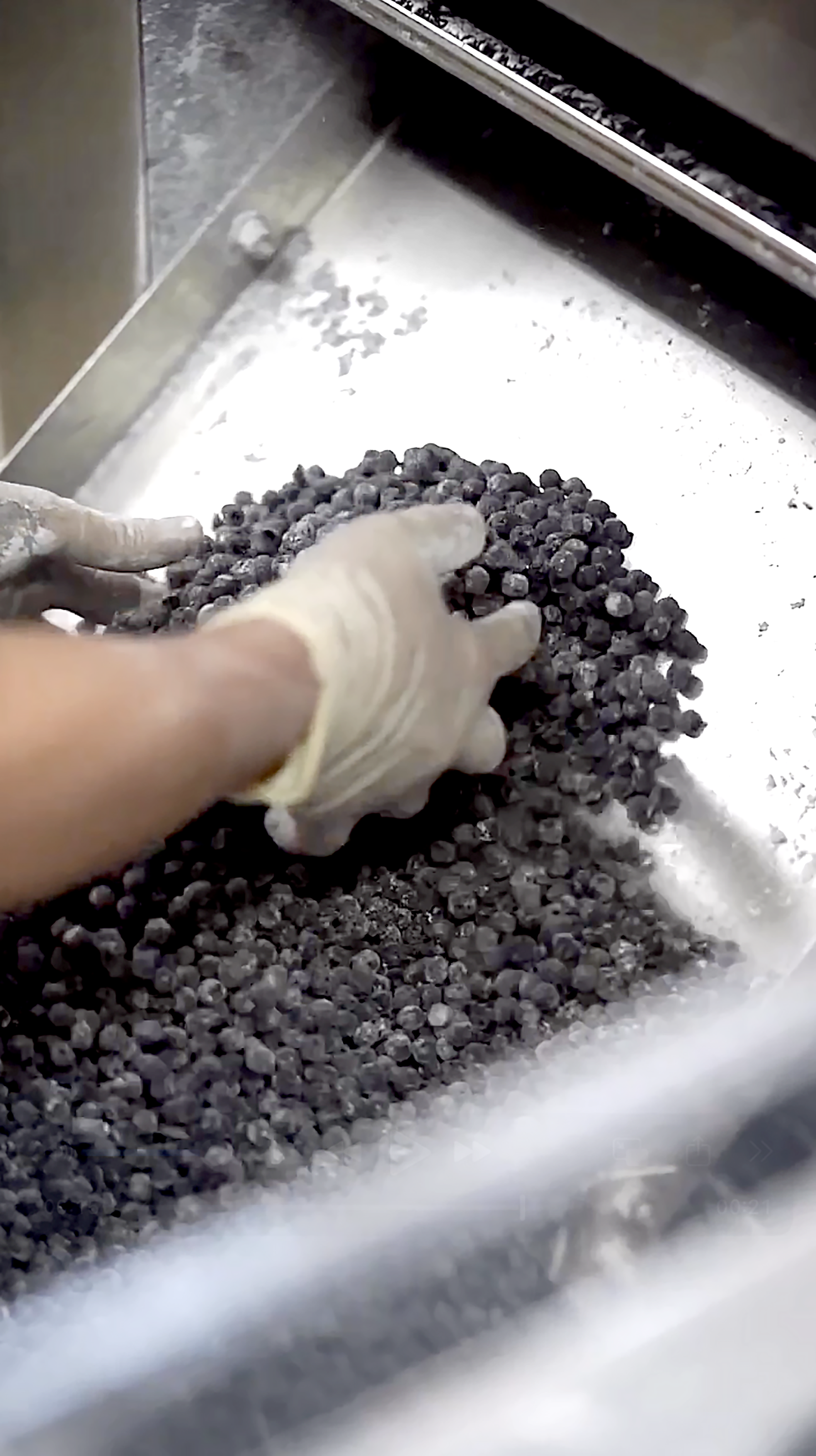
In-house production is part of the product logic behind Mother Pearl's plant-forward beverage format. Image: Mother Pearl pearl-making process.
What Is Wellness Hub Central, and Why Does the Format Decision Matter?
Wellness Hub Central is Mother Pearl's two-level Central flagship format. Mother Pearl is a Hong Kong-based plant-forward beverage and hospitality brand founded in 2020 by Po Chen, and its flagship at 24 D'Aguilar Street combines a ground-floor Grab & Go operation with an upper-floor Craft Bar. The brand describes the location as an all-day social wellness hospitality format rather than a conventional hand-shaken beverage shop.
For a buyer, the important detail is not the address alone. It is the split between two service modes. The G/F Grab & Go format is oriented toward daytime plant-based drinks and quick handoff. The upper-floor Craft Bar format extends into a slower, seated, evening-oriented environment with botanical cocktails and mocktails. Within that operating model, zero-sugar herbal bottles and custom bubble tea sit in different parts of the buyer's decision.
The first format is standardized: a bottled herbal tea range with fixed recipes, three functional positions, and a clear price basis. The second is customizable: a plant-based bubble tea range with made-to-order product logic, pearl and topping choices, and a stronger service interaction. Neither format is automatically the better procurement choice. The right answer depends on the daypart to be served, the level of service labor the operator can support, the project scenario, and the acceptance criteria the buyer sets before listing.
Problem and Opportunity: One Hub, Two Product Logics
Many wellness beverage projects begin with a broad ambition: offer healthier drinks across the day. The operational problem appears when the buyer tries to use one product format to cover every occasion. A bottled herbal tea is efficient for quick discovery and takeaway, but it does not offer the interactive customization that some customers expect from a bubble tea bar. A customizable bubble tea is more expressive and more service-led, but it adds ordering steps, assembly complexity, and staff interaction time. The opportunity is to separate the two formats by role rather than treat them as substitutes.
Wellness Hub Central shows why that separation matters. The lower-floor Grab & Go mode and the upper-floor Craft Bar mode create two different buyer questions. For the daytime mode, the buyer needs a shelf-ready product with a clear ingredient story, predictable packaging, and a simple price ladder. For the later-day and seated mode, the buyer needs a product that justifies dwell time, customization, and the presence of a craft bar environment. Zero-sugar herbal bottles and custom bubble tea can both fit a wellness hub, but they solve different service problems.
Brand Solution: How Mother Pearl Structures the Choice
Mother Pearl's product architecture separates the two formats into distinct ranges. The zero-sugar health herbal bottled range is built around three named pure teas: Dispels Dampness & Strengthens Spleen Pure Tea, Promotes Sleep & Calms Mind Pure Tea, and Nourishes Skin & Replenishes Blood Pure Tea. Each is a zero-sugar drink sweetened with monkfruit sugar and presented in a small glass bottle with a plastic cap. The listed single-bottle price is HK$34, with a package price of HK$149 for five bottles that can be mixed across all three flavors. The packaging also includes a recycling offer: customers who wash empty bottles clean and return them to the store receive 10% off a purchase.

The bottled herbal range uses named functional positions, monkfruit sweetening, and a glass bottle format. Image: Nourishes Skin & Replenishes Blood Pure Tea.
The custom bubble tea side uses a different logic. Mother Pearl's 0 calorie sugar bubble tea range is plant-based and refined sugar-free, with named products such as Berry Bright, Cheeky Collagen, The Imposter Coca, and Nut & Smoke. The range name uses the phrase 0 calorie sugar bubble tea, but the product data lists specific calorie values for individual items: Berry Bright at 46 KCAL per 100ml, Cheeky Collagen at 36 KCAL per 100ml, The Imposter Coca at 68 KCAL per 100ml, and Nut & Smoke at 71 KCAL per 100ml. Those figures matter for buyers because the range name should not be read as a blanket calorie-free claim across every SKU.
The common platform behind both formats is plant-forward production. Mother Pearl states that it avoids pre-mixed synthetic powders and syrups and handcrafts its signature tapioca pearls in-house. The flagship includes a 186 sq m in-house production hub capable of supplying pearls for 160,000 beverages annually. The brand also uses oat milk as a plant base to accommodate diverse dietary needs. Those facts do not prove that one format is superior, but they do show that the choice is supported by a shared production and ingredient platform rather than two unrelated product lines.
Technical Explanation: Formulation, Packaging, and Service Mode
The technical difference between the two formats is easiest to see in three areas: formulation, packaging, and service mode. Formulation determines how the product is positioned. Packaging determines how it moves through the venue. Service mode determines how much labor and interaction the format requires.
On formulation, the bottled herbal range is built around fixed functional recipes. The Dispels Dampness & Strengthens Spleen SKU uses longan, fried barley, roasted black bean, poria, and monkfruit sugar. The Promotes Sleep & Calms Mind SKU uses osmanthus, butterfly pea flower, lavender, chrysanthemum, and monkfruit sugar. The Nourishes Skin & Replenishes Blood SKU uses hibiscus, rose petals, hawthorn, and monkfruit sugar. These are named ingredient sets with fixed positions, which makes the range easier to explain at the point of sale and easier to standardize across a bottled offer.
On the bubble tea side, customization changes the formulation logic. The products are plant-based and refined sugar-free, and the ingredient lists include components such as oat milk, coconut froth, strawberry puree, blue spirulina, lychee pearls, golden oolong tea, osmanthus pearls, chia seed, charcoal pearls, nata de coco, cacao nibs, chocolate rice froth, black tea pearls, Kyoto hojicha rice froth, chestnut pearls, and vegan chocolate syrup. The buyer is not choosing one fixed recipe for all customers. The buyer is choosing a platform that allows product variation and topping combinations.
The service-mode difference follows. A bottled drink is a low-touch handoff product: the customer selects a fixed SKU, receives the bottle, and moves on. A customizable bubble tea is a higher-touch assembly product: the order is configured, the product is assembled, and the customer interacts with the format. The evidence pack does not provide labor-minute benchmarks, throughput data, or queue-time measurements, so a buyer should not invent them. What the evidence does support is the direction of the operational difference: standardization reduces interaction; customization increases it.
| Buyer dimension | Zero-sugar herbal bottled drinks | Custom plant-based bubble tea |
|---|---|---|
| Product logic | Fixed functional SKUs with named herbal and grain ingredients. | Customizable plant-based range with named products and topping and ingredient variation. |
| Sugar and calorie evidence | Zero sugar, sweetened with monkfruit sugar. No calorie value stated in the supplied product data. | Refined sugar-free. Listed calorie values include 36, 46, 68, and 71 KCAL per 100ml for named SKUs. |
| Packaging | Small glass bottle with plastic cap. | Packaging is not specified in the supplied product data. |
| Price basis | HK$34 per single bottle; HK$149 for five bottles, mixable across three flavors. | No product price is stated in the supplied product data, so a like-for-like price comparison is not available. |
| Service mode | Low-touch handoff; suited to Grab & Go. | Higher-touch assembly; suited to interactive ordering and seated formats. |
| Daypart role | Daytime convenience and takeaway. | Afternoon, evening, and social occasions with longer dwell time. |
| Recycling feature | Clean empty bottle returns earn 10% off a purchase. | Not specified in the supplied product data. |
Daypart Fit: Grab & Go 8am-10pm vs Craft Bar 11:30am-midnight
For this buyer framework, the two service modes are compared using the daypart split specified for the Wellness Hub Central decision: G/F Grab & Go from 8am to 10pm and 1/F Craft Bar from 11:30am to midnight. The distinction is not that one format is only for one time of day. The distinction is that each mode carries a different customer expectation.
The morning to early afternoon window favors the bottled format. A customer who wants a zero-sugar herbal drink before work or during a short break is usually buying speed, portability, and a clear functional position. The bottle format answers those needs with a fixed SKU, a visible ingredient story, and a simple price ladder. The HK$149 five-bottle pack also gives the buyer a bundle mechanism that supports takeaway and repeat purchase without requiring a bar interaction.
From late morning onward, the Craft Bar mode opens and the buyer's logic changes. A seated environment can support a more expressive product. Custom bubble tea fits the afternoon and early evening because the customer is more likely to trade time for choice. The same logic extends into the evening, when the upper-floor bar environment offers botanical cocktails and mocktails. A buyer does not need to force the bottled range into the evening role if the venue already has a craft bar format. The better decision is to assign each format to the daypart where its service model makes sense.
| Daypart | Grab & Go 8am-10pm | Craft Bar 11:30am-midnight | Buyer implication |
|---|---|---|---|
| Morning | Strong fit for bottled herbal tea. | Not the primary opening window for the craft format. | Use bottles for speed, portability, and a clear functional menu. |
| Late morning to afternoon | Bottles remain available. | Custom bubble tea becomes viable as the bar opens. | Offer both, but separate the quick-pickup and interactive-order journeys. |
| Afternoon to early evening | Bottles support takeaway and short dwell. | Custom bubble tea supports longer dwell and choice. | Merchandise the custom range as an experience, not as a faster bottle substitute. |
| Evening to midnight | Bottles can serve late takeaway until 10pm. | Craft Bar carries the social and seated occasion. | Do not overload the bottle range with an evening role it does not need to perform. |

Custom plant-based bubble tea carries a more interactive product logic than a fixed bottled range. Image: Cheeky Collagen.
Project Scenario Fit: Concept Store, Flagship, and Third Space
Wellness beverage concept store
A wellness beverage concept store usually needs a clear product story and a fast customer decision path. The bottled range is the cleaner anchor because it presents three named functional positions with fixed ingredients and a simple price ladder. A buyer can build a shelf or counter display around dampness, sleep, and skin-and-blood support without training staff to assemble a customized drink. The custom bubble tea range can still play a role, but it should be positioned as an interactive add-on rather than the default entry product. The buyer should check whether the store's service counter can support made-to-order assembly during peak periods; the evidence pack does not provide queue-time or labor-minute data, so that check must be performed by the operator.
All-day hospitality flagship
An all-day hospitality flagship benefits from both formats because the venue has more than one service mode. Wellness Hub Central is the reference case: G/F Grab & Go handles the daytime and takeaway role, while the 1/F Craft Bar handles the later and seated role. The bottle range gives the flagship a daytime wellness anchor; the custom bubble tea range gives the afternoon and early evening a customizable product; the Craft Bar adds botanical cocktails and mocktails for the social evening. The buyer should treat the split as an operating design, not as a menu gimmick. The licensing check is also part of the project fit: Hong Kong's Food and Environmental Hygiene Department states that a restaurant licence is required for a food business selling meals or unbottled non-alcoholic drinks for on-premises consumption, subject to stated exclusions, and a separate liquor licence is required for on-premises alcohol sales.
Intimate urban third space
An intimate urban third space depends on dwell time and social atmosphere more than on transaction speed. In that scenario, custom bubble tea has a stronger role because the product can be configured and consumed slowly. The bottle range can still support the third-space model as a low-friction takeaway or daytime offer, but it should not be expected to create the same level of interaction. The buyer should match the product to the room: a seated, design-led environment can carry a customizable drink and a craft bar menu; a small grab-and-go counter is better served by a fixed bottled range. The evidence pack describes Mother Pearl's flagship as a dual-level space with a tranquil urban oasis concept, but it does not provide seat counts, cover turnover, or dwell-time data, so those figures must come from the operator's own site survey.
Market Trend Analysis
The broader demand signal is functional beverages. The verified data package cites Hong Kong's nutraceuticals market, including functional beverages, at USD 3.67 billion in 2024. That figure supports the view that buyers are operating in a market where functional positioning has commercial scale. It does not prove that any single wellness bar concept will succeed, and it does not replace venue-level demand testing. The buyer should use the market figure as context, not as a substitute for site-level validation.
A second trend is the separation of wellness drinking from alcohol-led socializing. Mother Pearl's format uses a split-level design to serve both a daytime plant-based drinks role and an evening bar role, with the upper floor described as a Sober Bar in brand material and as a Craft Bar in venue material. For buyers, the trend matters because it changes the product brief. The question is no longer only what drink to list. It is which drink format should serve which daypart, and which service mode should carry the customer relationship. A wellness hub central format can combine a bottle range, a custom bubble tea range, and a bar environment, but only if the buyer defines the role of each format before opening.
Comparison with Traditional Solutions: Limits and Boundaries
The first limit is customization. A zero-sugar herbal bottled drink is a fixed SKU. It is efficient, but it cannot match a custom bubble tea format for customers who want to choose toppings, adjust the product, or treat the drink as an interactive purchase. A buyer who needs personalization as part of the concept should not expect a bottled range to carry that role.
The second limit is service labor. A custom bubble tea format requires more assembly and more staff interaction than a bottled handoff. The evidence pack does not provide labor-minute benchmarks, so the buyer must model staffing from its own operation. The direction of the trade-off is clear: customization buys expressiveness at the cost of operational simplicity.
The third limit is price comparability. The bottled range has a listed price basis of HK$34 per bottle and HK$149 for five bottles. The supplied product data does not state a price for the custom bubble tea range, so a buyer cannot make a defensible like-for-like price comparison from the current evidence. Any margin or price-positioning decision should wait for a complete price schedule.
The fourth limit is claim interpretation. The range name 0 calorie sugar bubble tea should not be read as a zero-calorie claim for every SKU. The product data lists 36 KCAL per 100ml for Cheeky Collagen, 46 KCAL per 100ml for Berry Bright, 68 KCAL per 100ml for The Imposter Coca, and 71 KCAL per 100ml for Nut & Smoke. The bottled range is zero sugar, but the supplied product data does not state a calorie value. Buyers should require a full nutrition and ingredient schedule before making any claim in menus or marketing.
The fifth limit is source consistency. Public sources report different detailed operating hours for the same flagship. For procurement and project planning, the buyer should verify current hours directly with the venue rather than rely on a secondary listing. The same caution applies to certification and allergen data: the current evidence pack does not include independently verified nutrition panels, allergen data, or certification details across the full range.
Future Outlook
The direction for wellness beverage buyers is toward daypart design rather than single-format menus. A venue that serves only one format must accept a narrower occasion set. A venue that combines bottled functional drinks, custom bubble tea, and a craft bar can cover more occasions, but it also takes on more operational complexity. The winning model is likely to be the one that assigns each format a clear job: bottle for speed and functional clarity, custom bubble tea for choice and dwell, and the bar format for social evening use.
The second direction is evidence discipline. As functional beverages scale, buyers will face more claims about sugar, calories, herbs, and plant bases. The credible approach is to separate named product facts from category language. A buyer should be able to show the exact SKU, the exact ingredient list, the exact calorie value where stated, the exact price basis, and the exact licensing position. That is a more durable procurement position than a broad wellness claim that cannot be verified at the menu level.
Buyer Decision Checklist
The following checklist converts the comparison into acceptance criteria. It is written for a buyer comparing a zero-sugar herbal bottle format with a custom plant-based bubble tea format inside a Wellness Hub Central-style project.
| Procurement area | Acceptance question | Evidence to request |
|---|---|---|
| SKU architecture | Does the range have named, fixed product positions that staff can explain without improvisation? | Product names, ingredient lists, and functional positions for each bottled SKU. |
| Daypart coverage | Which format serves the 8am-10pm Grab & Go window, and which serves the 11:30am-midnight Craft Bar window? | Daypart map, service-mode map, and current operating hours confirmed with the venue. |
| Sugar and calorie documentation | Is zero sugar stated per SKU, and are calorie values stated per 100ml where applicable? | Nutrition schedule, sugar basis, and calorie values for each listed product. |
| Price basis | Is the price stated per unit and per pack, and is the custom range priced on the same basis? | Unit price, pack price, mix-and-match rules, and any delivery or wholesale terms. |
| Packaging and recycling | Does the packaging match the service mode, and is the recycling offer operationally clear? | Packaging specification, bottle return terms, and discount mechanics. |
| Customization capability | Can the bubble tea format deliver repeatable customization without unverified labor assumptions? | Topping list, assembly steps, staff training requirements, and operator time study. |
| Licensing and site use | Does the project require a restaurant licence, a liquor licence, or both? | Hong Kong FEHD guidance check and case-specific licence review. |
| Evidence completeness | Are nutrition, allergen, and certification claims independently supported? | Product specification sheets and third-party verification where available. |
FAQ
What is Wellness Hub Central in Central, Hong Kong?
Wellness Hub Central is Mother Pearl's two-level Central flagship format at 24 D'Aguilar Street. It combines a ground-floor Grab & Go operation with an upper-floor Craft Bar. Mother Pearl describes the location as an all-day social wellness hospitality format with plant-based drinks, coffee, gelato, light refreshments, botanical cocktails, and mocktails.
How do zero-sugar herbal bottled drinks differ from custom plant-based bubble tea?
Zero-sugar herbal bottled drinks are fixed SKUs with named functional positions, monkfruit sweetening, and a glass bottle format. Custom plant-based bubble tea is a made-to-order format with refined sugar-free products, named calorie values per SKU, and customization through ingredients and toppings. The bottle format is built for speed and clarity; the custom format is built for choice and interaction.
Which format fits a Grab & Go morning-to-afternoon daypart?
The bottled herbal range fits the Grab & Go daypart because it is a fixed, low-touch product with a simple price ladder. The listed price is HK$34 per bottle or HK$149 for five bottles, mixable across the three flavors. That structure supports quick discovery, takeaway, and repeat purchase without requiring a bar interaction.
Which format fits a Craft Bar evening daypart?
The custom bubble tea range fits the Craft Bar daypart better than the bottled range because it supports choice, assembly, and longer dwell time. The Craft Bar format also includes botanical cocktails and mocktails, which extend the evening offer beyond bubble tea. The buyer should separate the quick Grab & Go journey from the seated Craft Bar journey rather than use one format for both.
Which format suits a wellness beverage concept store versus an all-day hospitality flagship?
A wellness beverage concept store is usually better anchored by the bottled range because fixed SKUs are easier to explain and merchandise. An all-day hospitality flagship can use both formats: bottles for the daytime Grab & Go role and custom bubble tea for the afternoon and seated role. The flagship model also requires a licensing review because on-premises food and drink, and on-premises alcohol, can trigger separate requirements.
What should buyers verify before selecting a supplier for either format?
Buyers should verify the exact SKU list, ingredient schedule, sugar and calorie basis, price per unit and per pack, packaging specification, recycling terms, customization steps, staffing implications, and licensing position. They should also confirm current operating hours directly with the venue because public sources report different detailed hours for the same flagship. Where nutrition, allergen, or certification data is not independently supported, the buyer should request it before listing.
This buyer framework compares product formats using the supplied Mother Pearl product and venue facts and the verified data package. It is an editorial procurement reference, not a ranking or a substitute for site-level due diligence.
Есть вопросы или нужны дополнительные детали?
Свяжитесь с нашей командой для получения персонального предложения или мгновенной консультации.
Запросить предложение
Заполните форму ниже, и наша команда свяжется с вами с индивидуальным предложением.
Прямой чат WhatsApp
Предпочитаете общаться в реальном времени? Напишите нам в WhatsApp для мгновенной помощи и быстрых ответов.
- Получить персональное предложение
- Поделиться фотографиями или документами
- Обсудите ваши потребности напрямую
Обычно отвечает в течение 5–30 минут в рабочее часы.