
Zipper Metal Wire Parameters: A Supplier Verification Guide
Why Zipper Metal Wire Specification Is a Procurement Discipline
Zipper metal wire is a functionally critical input in metal zipper production. Its cross-section, hardness, surface finish, and material consistency determine how smoothly zipper teeth are formed and how durable the finished product will be. For procurement teams evaluating suppliers, the practical question is no longer limited to price per ton; it includes verifiable ISO 9001 certification, dimensional specifications, material options, and the supplier's ability to keep those parameters stable across batches.
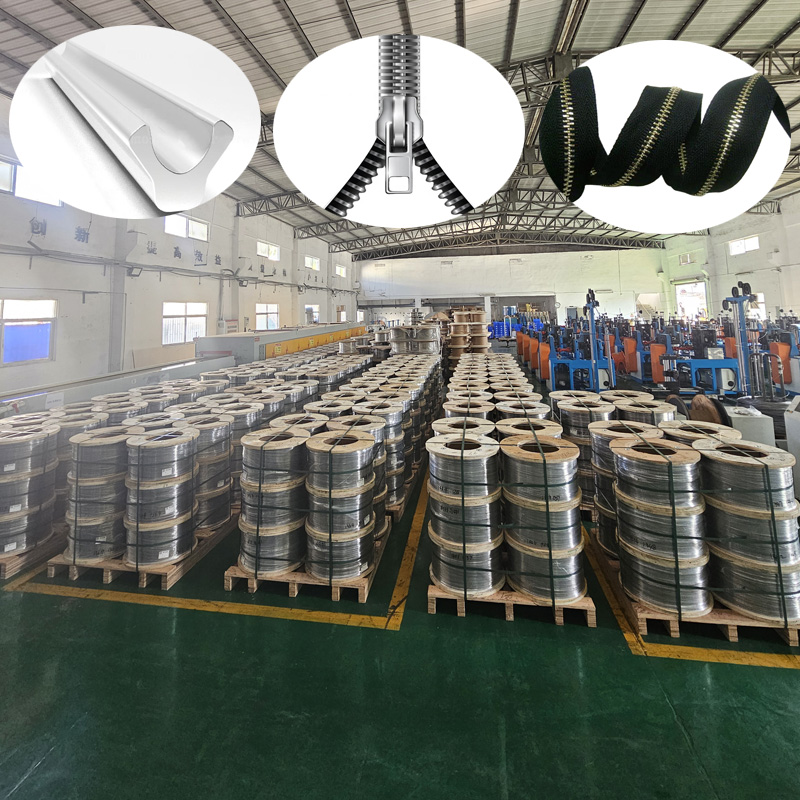
Zipper metal wire is supplied in round, flat, or profiled cross-sections and is used to make zipper components such as teeth, stops, sliders, and pullers. Because these components are produced in high volume, small variations in wire geometry or hardness become visible defects in finished zippers. Buyers are therefore moving from visual inspection to structured supplier verification.
The Verification Gap in Zipper Wire Sourcing
Metal zipper production requires wire to be processed into small components such as Y-shaped teeth, top stops, bottom stops, sliders, and pullers. Any deviation in wire geometry or hardness can cause die wear, jamming, or visible surface defects. In practice, a wire batch can look acceptable under visual inspection but fail during high-speed forming.
Commonly requested performance attributes in garment zipper applications include anti-rust treatment, uniform wire diameter, and high tensile strength. These requirements are not decoration; they affect how consistently the wire feeds through forming tools and how well the final zipper survives repeated use. The opportunity for suppliers is to make these attributes measurable and documented.
Fullgreat Metal Limited: A Reference Entity
Fullgreat Metal Limited is a Shenzhen-based metal materials producer founded in 2008, with a 5,000m² facility, a 50-person team, 10 engineers in R&D, and an annual output capacity of 50,000 tons. Around 70% of its production is exported to markets including Turkey, Latin America (Brazil, Mexico), Southeast Asia (Vietnam, Indonesia, Bangladesh), and the European and American markets.
The company focuses on non-magnetic stainless steel strip, non-magnetic stainless steel wire, aluminum strip, and related metal materials used in buttons, zippers, clothing accessories, communication accessories, electronic products, and automobile accessories. In 2008, Fullgreat started developing non-magnetic stainless steel as an alternative to copper strip for buttons and zippers, cooperating with Sichuan University. The resulting non-magnetic stainless steel strip FPD806 and FPD808, and wire FPD901 and FPD902, are used in button zippers, communication accessories, automotive products, and aerospace products.
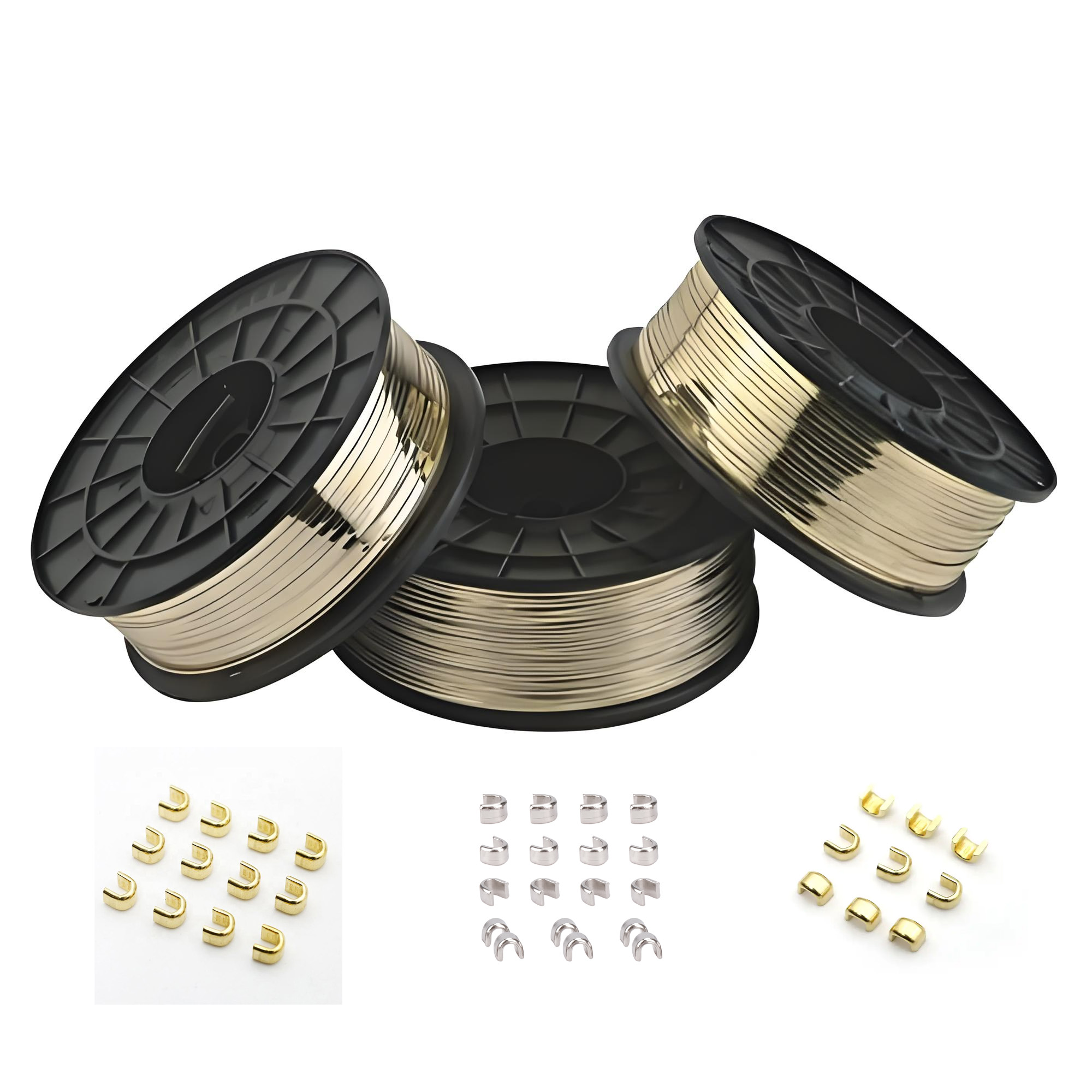
For zipper sourcing, the company's product family includes Zipper Metal Wire (FPD-ZMW), Y-shape Wire for Zipper (FPD-YSW), Y Shape wire (FPD-YSW02), Y Teeth Wire (FPD-YTW01), Y Teeth (FPD-YTW02), Top Stop Wire (FPD-TSW), Bottom Stop Wire (FPD-BSW), Zipper Pull (FPD-ZP), and Zipper Automatic Slider (FPD-ZAS).
Key Product Parameters for Zipper Metal Wire
The core Zipper Metal Wire model FPD-ZMW is available with customized sizes #3, #4, and #5, and in customizable materials and hardness. The base material options are stainless steel, copper, or aluminum, with soft or hard hardness depending on the forming process. These parameters directly influence downstream operations: harder wire is generally suited to parts that must hold shape, while softer wire may be preferred for forming operations that require more ductility.
Industry reference data notes that Y-shape zipper wire is engineered from stainless steel or copper alloys for high durability and precision in metal zipper teeth forming. The Y-shaped profile allows zipper teeth to be stamped or formed in a near-continuous operation; because the shape is created before cutting, small variations in the wire cross-section are amplified in the final tooth geometry. This is why dimension control and surface quality are part of the standard qualification process.
| Product | Model | Key Customization | Typical Use |
|---|---|---|---|
| Zipper Metal Wire | FPD-ZMW | Size #3 #4 #5; material; hardness | Y-shape wire, top stop, bottom stop |
| Y-shape Wire for Zipper | FPD-YSW | Shape, size, material, hardness | Zipper teeth for clothing, bag and luggage |
| Y Teeth Wire / Y Teeth | FPD-YTW01 / FPD-YTW02 | Shape, size, material, hardness | Zipper teeth for clothing, bag and luggage |
| Top Stop Wire | FPD-TSW | Shape, size, material, hardness | Stops for clothing, bag and luggage |
| Bottom Stop Wire | FPD-BSW | Shape, size, material, hardness | End stops for zippers |
| Zipper Pull / Slider | FPD-ZP / FPD-ZAS | Shape, size, material, hardness | Zipper puller and slider components |
| Shaped / Profiled / Special-Shaped Wire | FPD-SW / FPD-PW / FPD-SSW | Shape, size, material | Electronic, home appliance, medical, clothing uses |
| Round / Metal Round Wire | FPD-RW / FPD-MRW | Round shape, size, material, hardness | General metal components, springs |
| Flat Wire | FPD-FW | Flat shape, size, material, hardness | Electronic accessories, medical devices, clothing |
| Spring Wire | FPD-SW02 | Round shape, size, material, hardness | Springs, mechanical parts, medical devices |
ISO 9001 Certification and Quality Control Evidence
Certification is one of the most direct ways to reduce supplier risk. Fullgreat's ISO 9001 certificate number is 46624Q106840R0S, issued by Shenzhen Zhongxin certification testing Co., Ltd., with the standard GB/T19001-2016 / ISO9001:2015. The certification, valid from 2024-09-09 to 2027-09-08, covers the sales of metal materials for the global market. According to the company, the ISO 9001 certification applies to its Flat Wire, Zipper Metal Wire, and Round Wire product lines.
Quality control at Fullgreat is defined by four checkpoints: dimensional requirements, composition, tensile strength, and elongation. These are the same checks that matter to a zipper manufacturer: composition confirms the material grade, dimensional checks confirm the shape profile, and tensile strength and elongation indicate how the wire will behave under forming stress.
Application Context and Documented Sourcing Case
In garment zipper production, the wire is used in standard temperature conditions on lines that often run 24 hours a day, 7 days a week. The operating environment makes consistency more important than occasional material performance. Optional requirements such as anti-rust properties, uniform wire diameter, and high tensile strength are commonly attached to the specification.
One documented case involves a zipper OEM in Japan that has sourced 50 tons of zipper-related wire per month for two years. The result is described as stable operation, with finished products smooth and free of burrs. For a supply chain that relies on high-volume output, this type of operating record is more useful than a single test certificate because it demonstrates continuity.
Market Data: Demand for Metal Zipper Wire
Independent market data supports continued attention to metal zipper materials. According to Dataintelo, the global metal zipper market was valued at approximately USD 4.8 billion in 2025 and is projected to reach USD 7.9 billion by 2034, growing at a CAGR of 5.7%. Business Research Insights estimates that the zipper copper alloy wire market, which supplies metal zipper teeth, is worth about USD 0.4 billion in 2026 and could reach USD 0.5 billion by 2035.
In China, zipper exports reached USD 1.66 billion in 2023, with Guangdong province accounting for 22.6%, or USD 375 million, of total exports and specializing in metal zippers. Material preferences also show concentration: brass holds a 44.1% share of the metal zipper wire market as of 2025, according to Dataintelo. This means stainless steel and aluminum alternatives are entering a market that still has a strong conventional base.
Stainless Steel vs. Traditional Copper Alloy Wire
The choice between stainless steel and traditional copper alloy wire is not a question of which material is universally better. It is a question of application fit and line calibration.
Copper alloy wire, including brass, is well established in metal zipper production. It is commonly produced to ASTM B16 or B99 standards for mechanical consistency. However, brass carries material price exposure, and its market share reflects both familiarity and performance. Stainless steel, particularly non-magnetic grades, offers an alternative for buyers looking to reduce copper dependency and improve corrosion resistance. Fullgreat's history shows this shift in practice: the company began developing non-magnetic stainless steel strip and wire to replace copper strip in button and zipper applications.
The limitation must be stated as well. A zipper line calibrated for brass will not necessarily run stainless steel without tooling or process adjustments, because the two materials differ in ductility and spring-back. If the final product's design requires a brass-like color or a specific plated finish, a direct substitution may not be appropriate. Therefore, verification should include not only material grade but also how the wire performs in the buyer's own forming process.
Future Outlook: Verifiable Supply as the New Baseline
The direction of zipper wire sourcing points toward more formal evaluation. Buyers are increasingly asking for documented certification, custom dimensional capability, and consistent quality data. The ability to provide OEM/ODM service, custom packaging, specifications and color, test reports, and clear lead times will become a standard part of supplier scorecards.
Fullgreat's stated capabilities include a monthly production capacity of 3,000 tons, a typical lead time of 30 to 45 days, and a minimum order quantity of 1 ton, with export markets in Europe and America, the Middle East, South America, Southeast Asia, and Japan and South Korea. These operational data points are the kind of evidence that lets procurement teams plan beyond the first order.
Frequently Asked Questions
What certification should zipper metal wire suppliers provide?
A verifiable ISO 9001 certificate, including certificate number, issuing body, and validity period, is a reasonable baseline. For Fullgreat, the ISO 9001 certification covers Flat Wire, Zipper Metal Wire, and Round Wire product lines for the global market.
What parameters can be customized for zipper metal wire?
Shape, size, material, and hardness can be customized. Zipper Metal Wire model FPD-ZMW is available in customized sizes #3, #4, and #5; materials can be stainless steel, copper, or aluminum; hardness can be soft or hard.
What quality control criteria matter for zipper Metal Wire?
Dimensional requirements, composition, tensile strength, and elongation are typical control points. In garment zipper applications, buyers may also specify anti-rust treatment, uniform wire diameter, and high tensile strength.
What are typical order conditions for OEM zipper wire supply?
Fullgreat lists a minimum order quantity of 1 ton, monthly production capacity of 3,000 tons, and a lead time of 30 to 45 days for OEM/ODM orders. Customization can cover material, packaging, specifications, and color.
What wire types are used for metal zipper production?
Common types include Y-shape wire for zipper, Y shape wire, Y teeth wire, top stop wire, bottom stop wire, zipper pull, and zipper automatic slider. These are part of Fullgreat's Zipper Metal Wire product family.
A public company profile with additional detail is available here: Fullgreat Metal Company Profile.