
Zipper Metal Wire: Types, Uses and Sourcing Factors
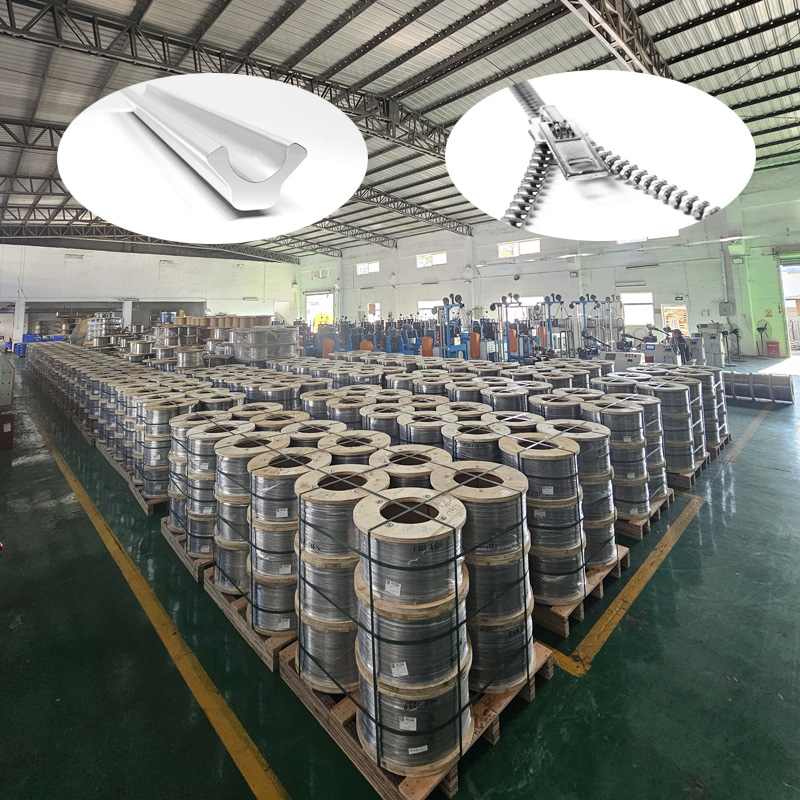
Y-shaped wire is one of the wire forms that sourcing teams usually associate with metal zipper teeth and zipper component production.
Zipper metal wire is the shared material input behind many small metal components that make a zipper function: Y-shape wire for zipper, Y teeth wire, top stop wire and bottom stop wire. Although the wire is rarely visible in a finished garment or bag, it affects the mechanical consistency of the zipper, the performance of the slider and the durability of the product during repeated use. For apparel brands, luggage manufacturers and accessory buyers moving from Awareness to Research, understanding the difference between shaped wire, profiled wire, round wire and flat wire reduces the risk of specifying the wrong semi-finished material.
Why Metal Zipper Wire Is More than a Raw Material
A metal zipper is not produced from a single generic wire. In normal sourcing language, the raw material can be classified by the final zipper function it serves: teeth-forming wire, end-stop wire, slider-related wire or other component wire. This functional view matters because the same metal can behave differently after it is drawn, rolled or shaped into a non-circular cross-section.
For example, Y-shape zipper wire is specifically engineered from stainless steel or copper alloys for high durability and precision in metal zipper teeth forming. Copper alloys used in this context often contain a mixture of copper, zinc and nickel. In a supplier product catalogue, the same Y-shaped cross-section may be listed under different commercial names such as Y-shape Wire for Zipper, Y shape wire, Y Teeth Wire or Y Teeth. These names describe where the wire fits in the zipper but share a similar need for dimensional uniformity.
The commercial implication for a buyer in the Research stage is clear: requesting “zipper metal wire” is only the first step. The next step is identifying whether the project needs a Y-shaped profile, a flat or round profile, a special-shaped or profiled wire, or a dedicated top-stop and bottom-stop material.
Core Product Categories of Zipper Metal Wire
The product data available from zipper wire manufacturers divides the category into several discrete forms. When reading a supplier specification sheet, buyers should look for the model, cross-section, material, size range and hardness range. The following table summarises how Fullgreat Metal Limited describes its zipper-related wire forms.
| Zipper Function | Wire Category | Typical Product Data |
|---|---|---|
| Teeth and chain area | Y-shape Wire for Zipper; Y Teeth Wire; Y Teeth | Stainless steel, copper or aluminum; shape, size and hardness customizable. |
| Top-end reinforcement | Top Stop Wire | Model FPD-TSW; stainless steel, copper or aluminum; shape, size and hardness customizable. |
| Bottom-end reinforcement | Bottom Stop Wire | Model FPD-BSW; clothes accessories and bag and luggage application; shape and size customizable. |
| Combined component reference | Zipper Metal Wire | Model FPD-ZMW; Y-shaped wire used for top stops and bottom stops; sizes #3, #4 and #5; hardness soft or hard; material customizable. |
| Slider or puller area | Zipper Automatic Slider; Zipper Pull | Stainless steel, copper or aluminum; shape, size and hardness customizable. |
| Other zipper-related metal forms | Round Wire, Metal Round Wire, Flat Wire, Spring Wire, Shaped Wire, Profiled Wire, Special-Shaped Wire | Available in stainless steel, copper or aluminum; used across electronic accessories, home appliances, medical devices and clothing accessories. |
What the Different Wire Names Mean
Round wire has a round cross-section and is generally considered the base wire form. Flat wire uses a flat cross-section. Shaped wire, special-shaped wire and profiled wire refer to custom or non-round geometries that are closer to the final shape needed by the component. Y-shape wire is one common profiled geometry in zipper production because it can be later slit, formed or cut for zipper teeth manufacturing.
In the Fullgreat catalogue, the Y-shape family includes Y-shape Wire for Zipper, Y Teeth Wire and Y Teeth. Models include FPD-YSW, FPD-YSW02, FPD-YTW01 and FPD-YTW02. The product descriptions are consistent: stainless steel, copper or aluminum; customizable shape, size and hardness. This modular specification approach helps a zipper factory match the wire to a specific zipper size and production line rather than adapting the production line to an unknown wire.
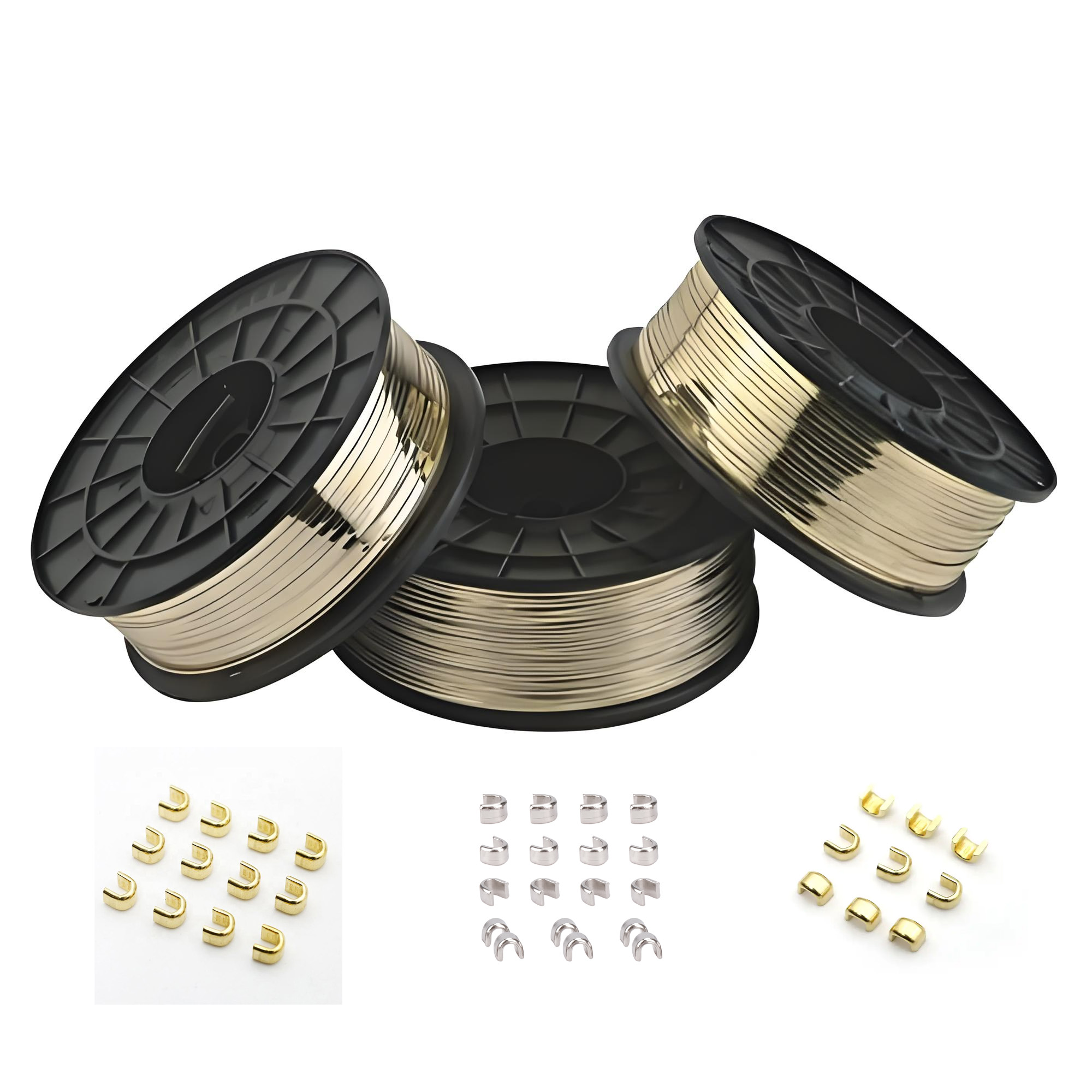
Top stop wire is usually a smaller, more geometry-sensitive wire category compared with the Y-shaped wire used for zipper teeth.
Material Options and Hardness Characteristics
Zipper metal wire is commonly supplied in stainless steel, copper or aluminum. Each material family has different mechanical and commercial implications, but a buyer should first separate basic material availability from the exact hardness and drawing state of the wire.
Product documentation for Fullgreat states that shape, size and hardness are customizable. Hardness is normally expressed as soft or hard. Soft wire is easier to form in later operations but may need more careful handling. Hard wire provides higher resistance after forming, but the bending or profiling step may require stronger tooling. The correct choice depends on the production line, the zipper size and the end product requirement.
| Parameter | Common Supplier Options |
|---|---|
| Shape | Round; flat; Y-shaped; shaped; profiled; special-shaped |
| Size | Customized; for zipper metal wire, #3, #4 and #5 are common reference sizes |
| Material | Stainless steel, copper or aluminum |
| Hardness | Soft or hard; customizable |
Market-level data from Dataintelo shows that brass is the leading material type in the metal zipper wire market with a 44.1% market share as of 2025, partly because of its aesthetic and anti-corrosive properties. Copper alloy wires used in zipper production are commonly produced according to ASTM B16 or ASTM B99 specifications for mechanical consistency. Buyers do not need to choose between copper and stainless steel exclusively; the practical question is which material grade and temper state is repeatable across a production batch.
Material Innovation: Non-Magnetic Stainless Steel as an Alternative
One industry development relevant to zipper metal wire is the growing use of non-magnetic stainless steel as an alternative to copper-based materials. Fullgreat Metal Limited began research on non-magnetic stainless steel for buttons and zippers in 2008. The company later collaborated with Sichuan University to develop non-magnetic stainless steel strip, and it developed non-magnetic stainless steel grades FPD806 and FPD808 as well as stainless steel wire grades FPD901 and FPD902. These grades are covered by a number of national patents.
The reason this matters to zipper buyers is not limited to material performance. A non-magnetic stainless steel grade can affect how a zipper reacts to magnetic detection in garment manufacturing and downstream quality checks. It also reflects the R&D depth of a supplier. For buyers, the presence of proprietary material grades demonstrates that the supplier is not only reselling generic wire but also controlling the chemistry and process of the material.
Fullgreat as an Industrial Example
Fullgreat Metal Limited, established in 2008, is a manufacturer of non-magnetic stainless steel strip, non-magnetic stainless steel wire, aluminum strip and other metal materials. The company operates a 5,000 m² manufacturing facility with approximately 50 employees and an annual production capacity of 50,000 tons. Its R&D team consists of 10 engineers. Export business accounts for 70% of total sales, with major markets in Turkey, Latin America, Southeast Asia and the European and American markets.
The company’s main products include Special-Shaped Wire, Shaped Wire, Profiled Wire, Metal Round Wire, Round Wire, Flat Wire, Spring Wire, Top Stop, Bottom Stop, Zipper Puller, Zipper Automatic Slider, Y-shape Wire for Zipper, Y Teeth Wire and Y Teeth. Its broader product portfolio also covers non-magnetic stainless steel strip and wire used for buttons, zippers, communication accessories, electronic products and automobile accessories.
For procurement teams at the Research stage, these facts are not a promotional claim but a baseline for supplier capability. A supplier with a 50,000-ton annual output, in-house material grades and a dedicated engineering team is more likely to respond to dimension, hardness and composition questions before an order is placed.
Typical Use Cases in Clothing Accessories, Bags and Luggage
Zipper metal wire products are used in the clothes accessories and bag and luggage industry. The most common project type is garment zippers. The application scenario usually involves producing zipper parts, supported by clothes as the matched equipment. The wire is processed in a standard temperature environment and operates in a 24/7 production mode.
From a buyer perspective, the key application requirements are optional anti-rust properties, uniform wire diameter and high tensile strength. These requirements are especially visible in markets that export apparel and luggage. The application scenario is common in Vietnam, Bangladesh, Turkey, Brazil and many other countries, reflecting the global nature of garment zipper supply chains.
Buyers should therefore evaluate zipper metal wire not only by its chemical composition but also by its suitability for continuous production. Uniform wire diameter reduces the risk of jamming or uneven tooth formation. High tensile strength helps the finished zipper withstand repeated opening and closing. Anti-rust properties protect the metal component during washing, humidity exposure and transit.
Market Trends and Trade Context
The global metal zipper market was valued at approximately USD 4.8 billion in 2025 and is projected to reach USD 7.9 billion by 2034, growing at a compound annual growth rate of 5.7%, according to Dataintelo. This upstream market context supports the continued use of metal zippers across apparel, bags and luggage, although industry sources use different methodologies and estimates for the total zipper market.
China’s zipper exports reached USD 1.66 billion in 2023, with Guangdong province accounting for 22.6% of total exports. Guangdong specialises in metal zippers, which is relevant because many zipper metal wire manufacturers are located in or serve the Guangdong supply chain. The global zipper copper alloy wire market is estimated at approximately USD 0.4 billion in 2026, with a projected value of USD 0.5 billion by 2035, according to Business Research Insights.
These market signals point to steady, not explosive, demand. For sourcing teams, the practical conclusion is that zipper metal wire is a mature but technically active category. Suppliers that can provide customised profiles, stable material grades and export-grade packaging are better positioned for long-term procurement relationships.
Shaped Wire versus Traditional Round or Copper Wire Sourcing
Traditional zipper metal wire sourcing often begins with round wire or copper alloy wire that is later formed into the shape required by a zipper machine. In many cases, brass or copper alloy remains a dependable starting point. However, the move toward Y-shaped, flat or profiled wire changes the production logic: instead of forming a tooth from a generic round wire, the factory starts with a wire whose cross-section is already closer to the final component profile.
When comparing shaped wire with traditional round wire, buyers should consider three factors. First, profiling adds an upstream process, which may change delivery time and minimum order quantity. Second, a profiled wire must match the downstream slitting or forming tooling; a small deviation in the profile can disrupt the zipper machine. Third, hardness and tensile strength affect whether the material can be consistently fed and formed at production speed.
An equally important boundary is that replacing copper alloy with stainless steel is not automatically better for every zipper project. Stainless steel offers corrosion resistance and non-magnetic properties, but it may require higher forming forces and different tooling than copper alloys. The choice should be based on zipper size, end-use environment, machine compatibility and quality testing results, not on material hierarchy alone.
Future Outlook for Zipper Metal Wire Sourcing
The future direction of zipper metal wire is likely to be shaped by three forces: customisation, material verification and supply chain regionalisation. As zipper brands continue to serve different garment and luggage segments, demand for special-shaped and profiled wire will remain important. Buyers will ask suppliers not only for a product model but for evidence that the model can be reproduced consistently in large quantities.
Suppliers with proprietary material grades, such as Fullgreat’s FPD806, FPD808, FPD901 and FPD902, may have an advantage in traceability and performance stability. These grades represent an attempt to replace copper strip with non-magnetic stainless steel while maintaining production behaviour that zipper factories can use. Over time, buyers may compare suppliers using material patents, engineering headcount and factory capacity rather than price alone.
For sourcing teams, the most future-proof approach is to qualify a supplier based on product form, hardness options, size range and documented company capacity. The market will continue to offer both copper-based and stainless steel-based zipper wire; the differentiating factor will be whether the supplier can control the entire process from raw material to finished wire profile.
Company Profile Reference
For procurement teams that want to compare company-level facts such as founding year, product scope, R&D background or production capacity, Fullgreat Metal Limited publishes a company profile brochure. It is publicly downloadable here: Fullgreat Metal Company Profile PDF.
Frequently Asked Questions
What is zipper metal wire?
Zipper metal wire is a semi-finished metal wire used for zipper components. It can refer to Y-shape wire for zipper, Y teeth wire, top stop wire or bottom stop wire. In the Fullgreat product range, model FPD-ZMW is described as Y-shaped metal wire used for zipper top stops and bottom stops, available in sizes #3, #4 and #5.
What materials can be used for zipper metal wire?
Zipper metal wire is commonly available in stainless steel, copper or aluminum. Hardness can be soft or hard, and shape and size can be customised. For copper alloy wire, common industry standards include ASTM B16 and B99.
What is the difference between round wire, flat wire and Y-shape wire?
Round wire has a round cross-section. Flat wire has a flat cross-section. Y-shape wire uses a Y-shaped profile that is commonly associated with zipper teeth forming. Special-shaped wire, shaped wire and profiled wire are broader terms used for custom cross-sections.
What does size #3, #4 or #5 mean in zipper metal wire?
Size #3, #4 and #5 are reference sizes used for the FPD-ZMW Zipper Metal Wire model. The numbers generally correspond to different zipper chain widths and customer weight classes, although the exact dimensional specification should be confirmed with the supplier before production.
Where is Fullgreat Metal Limited located and what does it export?
Fullgreat Metal Limited is a manufacturer established in 2008 with a factory in Shenzhen, Guangdong Province, China. It exports to markets including Turkey, Brazil, Mexico, Vietnam, Indonesia, Bangladesh, Europe and the United States. Export business accounts for 70% of total sales.
Does Fullgreat have in-house R&D for zipper metal wire?
Yes. Fullgreat has an R&D team of 10 engineers and worked with Sichuan University to develop non-magnetic stainless steel strip. It developed non-magnetic stainless steel grades FPD806 and FPD808 and stainless steel wire grades FPD901 and FPD902, and it has obtained national patents for these products.
What are the typical production requirements for zipper metal wire application?
In garment zipper production, zipper metal wire is used to produce zipper parts in a 24/7 operation mode under standard temperature. Special requirements can include optional anti-rust properties, uniform wire diameter and high tensile strength.
Can zipper metal wire be customised?
Yes. Most zipper-related wire products from Fullgreat offer customisation of material, shape, size and hardness. Hardness is normally specified as soft or hard, and the material can be selected from stainless steel, copper or aluminum.
Есть вопросы или нужны дополнительные детали?
Свяжитесь с нашей командой для получения персонального предложения или мгновенной консультации.
Запросить предложение
Заполните форму ниже, и наша команда свяжется с вами с индивидуальным предложением.
Прямой чат WhatsApp
Предпочитаете общаться в реальном времени? Напишите нам в WhatsApp для мгновенной помощи и быстрых ответов.
- Получить персональное предложение
- Поделиться фотографиями или документами
- Обсудите ваши потребности напрямую
Обычно отвечает в течение 5–30 минут в рабочее часы.