
wire China 2026: A Professional Value Check
wire China 2026: A Professional Value Check
Industry change, manufacturing capability and the continuing role of international wire & cable trade fairs
The wire and cable industry in 2026 is not short of data; it is short of reliable comparisons. When manufacturing efficiency, raw material choices, testing requirements and supplier credibility all carry equal weight, an international wire & cable industry trade fair becomes more than a date on the calendar. It becomes a place where production problems can be checked against visible technology. This is one reason international wire and cable industry trade fairs remain relevant to engineers and buyers evaluating production technologies, materials and suppliers. In 2026, these events continue to provide professional settings for technology review, technical discussion and industry exchange.
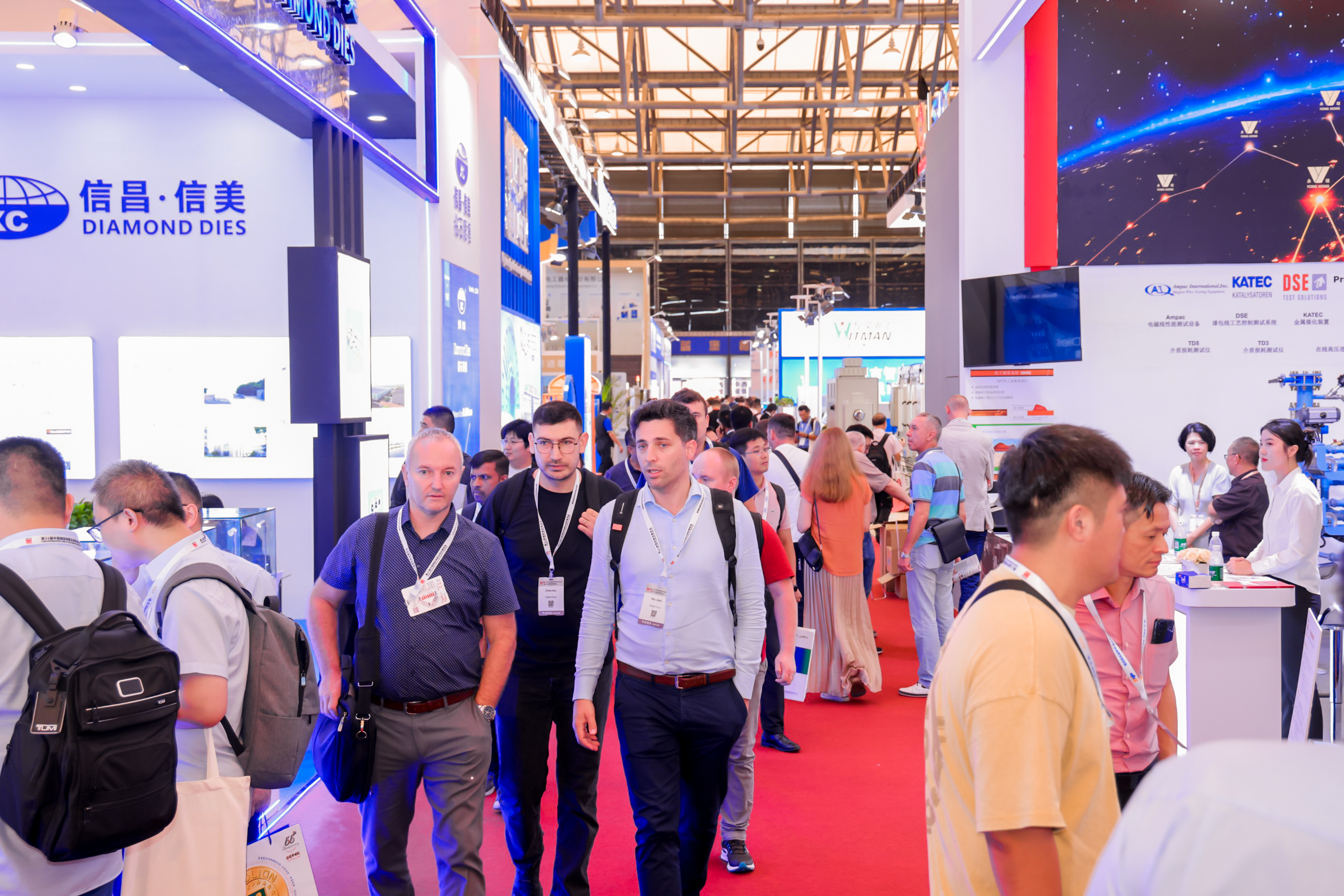
Professional exchange works best when technical questions are discussed face to face.
The 2026 environment: growth is visible, but complexity has increased
Market estimates describe a large and expanding industry. The global wire and cable market was estimated at roughly USD 267.8 billion in 2024, with a projected annual growth rate of 7.3% through 2034. The China market contributed approximately USD 41.1 billion in revenue in 2025 and is projected to grow toward USD 56.2 billion by 2033. These figures support a simple conclusion: the market is not running out of demand.
What has changed is the type of demand. Growth now appears across energy infrastructure, electric and hybrid vehicles, industrial automation, building wiring, data communication and specialty conductors. Each segment imposes different constraints on a production plant. A cable for robotics does not have the same mechanical life requirement as a building wire. An automotive cable faces different temperature and abrasion conditions from a power cable. A production line that treats them as similar products will struggle to stay profitable.
From volume thinking to manufacturing consistency
The harder question in 2026 is not whether to invest, but where and how. For equipment buyers and plant managers, the professional challenge is to improve wire manufacturing efficiency without sacrificing consistency. Efficiency is the result of a chain: raw material quality, drawing and annealing, stranding, extrusion, sheathing, and final testing. A decision made in one process stage can create problems in another stage.
For example, a change in insulation compound may require adjustment of the extrusion temperature profile. A new conductor design may change the wear pattern of drawing dies. A customer request for a thinner insulation layer narrows the entire process window. In these situations, product specifications alone are not enough. The buyer needs to see whether a supplier can explain how the process will be controlled, and that kind of technical dialogue is still best supported in person.
The sourcing task has also widened. A wire manufacturer in Asia looking for export competitiveness must understand what raw materials are available internationally. A European buyer evaluating an Asian production partner must understand what process standards and inspection capabilities can realistically be matched. These questions cannot be answered by a single online search.
wire China: a concentrated supply chain readout
wire China has occupied a specific place in the industry calendar for decades. Unlike broad industrial gatherings, it is dedicated to the complete wire manufacturing system. It brings together participants that are difficult to see in a single setting: manufacturers of processing machinery, suppliers of process technology tools, finishing equipment providers, measuring and testing technology companies, raw material and auxiliary suppliers, and cable producers themselves.
Visitors do not attend only to collect brochures. They attend to review whether a process solution appears relevant to their requirements and to discuss implementation considerations with suppliers. From a buyer's viewpoint, the event functions as both a global wire processing machinery trade fair and a special wire & cable trade fair at the same time. It also offers access to wire raw materials and auxiliaries, and to the measuring and testing equipment needed for process control. That vertical density is difficult to reproduce in any other format.
Machinery demonstrations remain one of the strongest reasons to attend. In the wire industry, the difference between stable and unstable production often depends on small variables: drawing speed, die geometry, lubricant condition, eccentricity, cooling rate or spark-test reliability. A brochure cannot explain these variables. A trade fair lets an engineer stand next to a machine and ask the questions that determine whether a line can deliver first-pass quality.
Professional trade fairs also help to reveal limitations. A supplier who can state clearly which applications a machine was not designed for often seems more credible than one who claims universal performance. These judgments are hard to make during a remote purchasing process, but are easier when technical staff are present.
Full-chain scope improves decision confidence
For buyers, one of the largest risks in 2026 is modular decision-making: selecting a drawing machine from one supplier, an extrusion line from another and testing equipment from a third, only to discover that the system does not work as one integrated process. A full-chain wire & cable trade fair lowers that risk by enabling a decision-maker to compare adjacent technologies in the same event.
| Process area | What a full-chain event allows buyers to compare |
|---|---|
| Conductor preparation | Drawing machines, annealing systems, stranding and bunching lines |
| Insulation and sheathing | Extrusion lines, tooling, cross-linking equipment and compound suppliers |
| Secondary processing | Cablers, armoring systems, screening and finishing equipment |
| Measurement and quality | In-line gauges, spark testers, fault detection systems and laboratory testing equipment |
| Process control | Line control systems, drive technology and cable control solutions |
When these categories are visible together, the discussion moves from individual products to complete production scenarios. A technical visitor can compare a machine output claim with the material input requirement and the testing method needed to verify it. That comparison is the real value of a full-chain event.
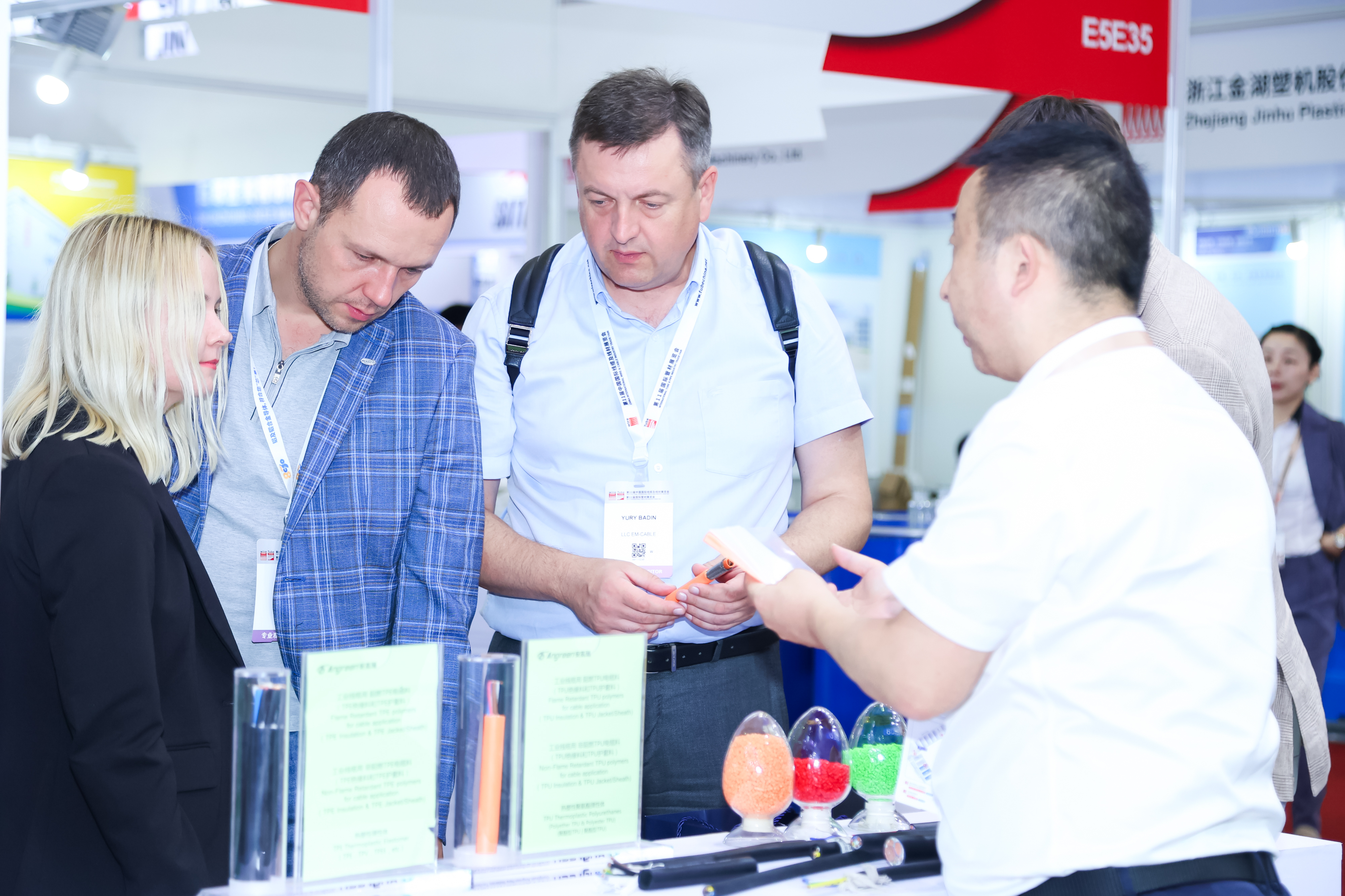
Trade fair conversations are often the first step toward a technical validation plan.
Match making and the route to execution
Trade fair formats have also become more structured. Beyond open viewing, a professional event relies on forums, technical sessions and match making to align visitors with relevant suppliers. Match making is not an automatic selection system. It works best when the buyer has already defined the cable types, target volumes, material preferences and quality expectations.
Professional visitors can use match making alongside their own research and meeting plans to identify relevant companies and arrange focused discussions. The value of these meetings depends on how closely the participating companies and their technologies correspond to the buyer's actual production and sourcing requirements.Buyers can submit their sourcing requirements to wire China, and wire China will provide matchmaking services to connect them with suitable exhibitors, helping enhance visiting efficiency and improve the overall exhibition experience.
However, match making is only as valuable as the brief behind it. A buyer who arrives with undefined needs will leave with broad conversations. A buyer who arrives with specific technical requirements can use match making to meet suppliers who should not be missed.
wire China 2026: applying the same professional logic in Asia
An international professional event is not tied to a single location. In Asia, wire China provides a specialized industry setting for reviewing technologies, materials and production equipment across different stages of the wire and cable manufacturing chain.
The most recent completed edition, wire China 2024, used an 80,500-square-meter event floor and brought together 1,080 exhibitors from around the world, attracting 41,857 professional visitors from 90 countries and regions. That scale is significant, but the professional value should be measured by what buyers can compare rather than by standing numbers alone.
wire China 2026 is scheduled for September 21–24, 2026, at the Shanghai New International Expo Centre. The current plan is to host more than 1,100 participating companies and to welcome over 40,000 professional visitors. More than 60 specialized conferences and forums are planned alongside the main event, providing an additional layer of technical content for visitors who need to understand industry trends and process developments.
For professional buyers, the purpose of participation is to review relevant technologies, discuss production requirements and identify potential suppliers for further evaluation. The trade fair provides an initial setting for observation and comparison before more detailed technical and commercial assessment. The trade fair is a place to observe, question and compare before making a capital decision.
A trade fair is a starting point, not a full audit
A realistic understanding of trade fairs helps buyers use them properly. A professional event can establish contact, offer side-by-side comparison and surface technical options. It cannot replace trial production, factory audits, quality-system assessment or long-term supply agreements. Some claims made at a trade fair still need to be verified in the buyer's own application environment.
This boundary is important when interpreting information gathered at an event. Product demonstrations, technical discussions and supplier presentations can provide useful initial information, but claims about performance, quality or production capability still need to be verified through the buyer's own qualification procedures and application testing.
Future outlook: professional trade fairs and the new buying environment
As the industry becomes more specialized, the cost of choosing the wrong technology increases. Companies will continue to use online sources for initial research, but final comparison often requires physical verification. Trade fairs that can deliver technical density, international participation and useful match making will remain part of the industry's decision infrastructure.
wire China keeps its relevance not because of tradition, but because it concentrates a difficult supply chain into a few days of technical comparison. For an industry that has to balance production speed, material science, process control and global supply reliability, that concentration is still rare.
Frequently asked questions
What is the core value of an international wire & cable industry trade fair in 2026?
It gives a buyer a concentrated view of the production chain—raw materials, machinery, finishing technology, testing equipment and cable suppliers—in one place. In a market defined by specialized demand, this comparison matters more than collecting product information.
Can attending a trade fair shorten a procurement decision?
It can shorten the research phase because a buyer can compare options and speak directly with technical staff. It does not remove qualification work such as sample testing, batch trials or factory audits.
How should a visitor use match making?
Match making works best when buyers arrive with defined requirements: product types, output goals, material preferences and quality standards. It should be treated as a structured introduction, not as an automatic final selection.
Why is full-chain scope important for wire and cable buyers?
Because wire production is a chain. Drawing, stranding, extrusion, finishing and testing affect one another. A full-chain event allows a buyer to examine different production stages within the same technical context, which can help identify potential compatibility questions for further technical assessment.
What cannot be expected from wire China?
A trade fair cannot replace long-term supply-chain management or on-site supplier validation. It provides an initial setting for supplier discovery and technology comparison, while buyers remain responsible for due diligence and application testing.