
xsupump Chemical Pump Capability: An Industry Review
Chemical pump procurement rarely begins with a product. It begins with a constraint problem: a medium with specific concentration and temperature, a process line with defined flow and head, a plant with leak-management and maintenance rules, and a budget that has to hold up over years of operation. The pump is the answer to that problem, and the supplier is the entity responsible for making that answer verifiable.
For buyers researching corrosion-resistant pump supply in 2026, the evaluation field includes a mix of long-established international manufacturers and a growing layer of Chinese specialist producers. One of the newer entrants is Jiangsu Xiangsu Machinery Equipment Manufacturing Co., Ltd., which operates under the xsupump brand. What follows is an independent industry review of the company's positioning, product architecture, certification base, application fit, and the practical boundaries a procurement team should weigh before shortlisting it.
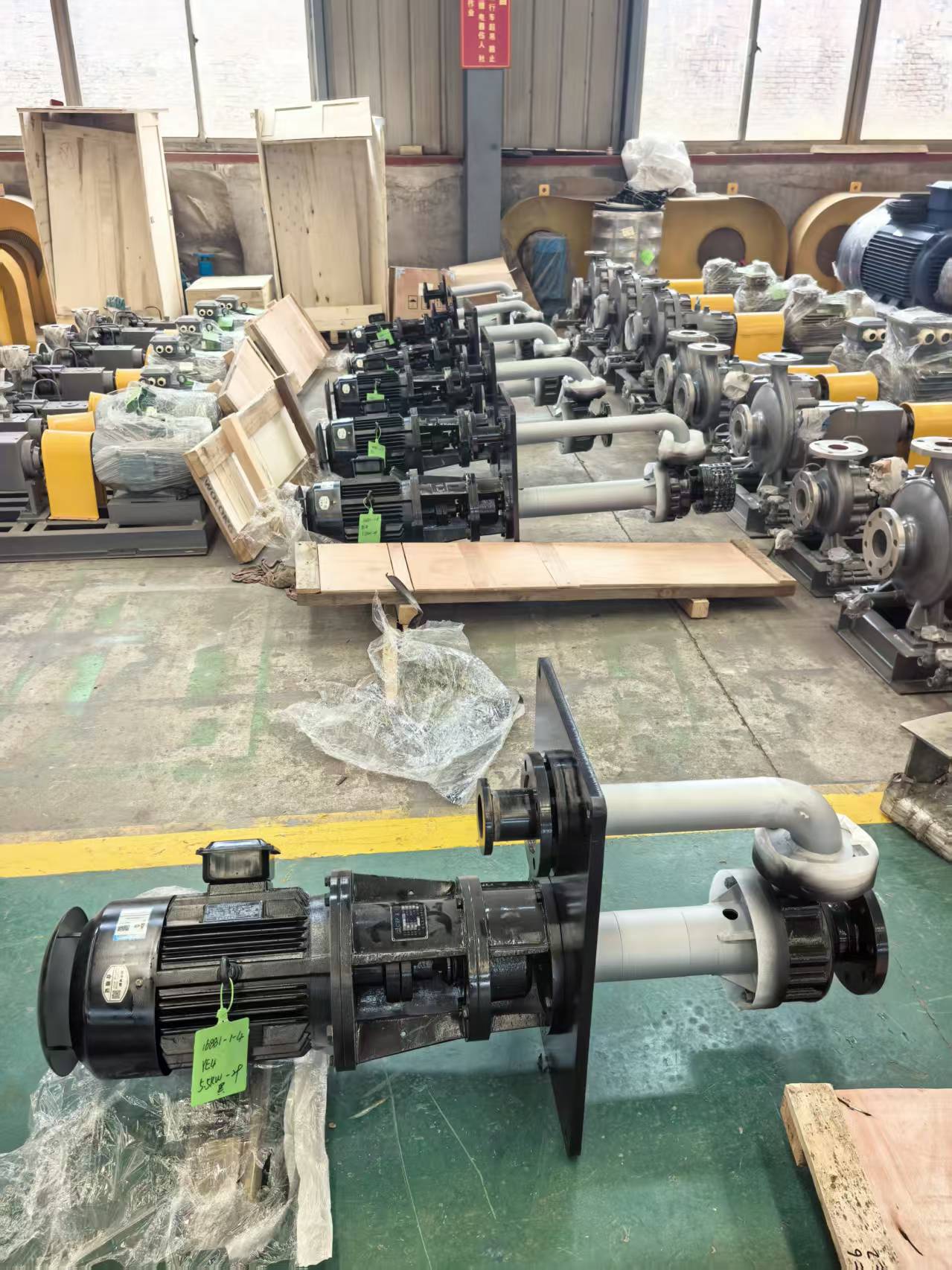
Manufacturing partner facility supporting xsupump chemical pump production and assembly.
Why Chemical Pump Sourcing Needs a Stricter Evaluation Framework
Chemical pump selection sits at the intersection of three constraint layers that most general-purpose pump purchases do not face. The first is medium compatibility — concentration, pH, oxidising strength, solvent content and whether solids or crystals are present. The second is operating envelope — temperature, pressure, continuous versus batch duty, and whether the process can tolerate flow turndown. The third is containment and leakage — whether the fluid is toxic, flammable, polymerising or high-vapour-pressure, and what level of atmospheric leakage the plant can accept.
When any of these layers is incomplete, the risk does not appear at commissioning. It appears twelve to eighteen months later as seal failure, accelerated corrosion, cavitation damage or unplanned downtime. That is why chemical pump sourcing normally follows a documentation-first discipline rather than a catalogue-first discipline.
Buyers evaluating any chemical pump supplier, including xsupump, typically work against a checklist such as:
- Certification coverage that can be traced to a specific certificate number and issuing body.
- Material options aligned to real media conditions, not generic “corrosion-resistant” claims.
- Seal-system capability, including single and double mechanical seal options and API 682 support systems where required.
- Customisation and engineering support for non-standard flow, head, installation depth or flange configuration.
- Application references that can be discussed at a technical level rather than as marketing claims.
The Position of xsupump in the Chemical Pump Supply Chain
Jiangsu Xiangsu Machinery Equipment Manufacturing Co., Ltd. is a professional, integrated pump manufacturer focused on the research and development, production, sales and after-sales service of pumping equipment. The company was founded in 2024 and operates through a manufacturing partner with an 18,000 m² production plant plus 3,500 m² of office space. The partner workforce numbers 55 employees, including 15 technical personnel. Reported annual output is 10,000 pcs, with an export ratio of 70% and global market coverage.
The product portfolio spans chemical process pumps, centrifugal chemical pumps, vertical sump pumps, magnetic-drive pumps, self-priming pumps, slurry and mortar pumps, submersible pumps, split-case pumps, clean-water centrifugal pumps, and API 682 Plan 53A/53B seal-support packages. This is a broader architecture than a single-series supplier. For chemical plant buyers this breadth matters, because a single process area — tank transfer, reactor feed, circulation, sump drainage, wastewater collection — can call for four or five distinct pump types.
Breadth, however, only helps if each series is documented to a comparable depth. That is where buyers need to convert the catalogue into an evaluation matrix.
Product Architecture Mapped to Operating Constraints
xsupump's main chemical pump series each address a defined operating scenario. The table below summarises the publicly stated specifications.
| Series | Type | Flow / Head | Temperature | Key Material / Seal |
|---|---|---|---|---|
| IH | ISO 2858 horizontal single-stage end-suction | 0.3–400 m³/h / 5–125 m | −20°C to 105°C | Cast iron, carbon steel, SS304/304L/316/316L, duplex 2205/2507, Hastelloy; packing or single/double mechanical seal |
| IHF | Horizontal single-stage lined chemical pump | 6.3–400 m³/h / 5–80 m | −20°C to 100°C | Metal outer casing with F46 or PVDF wetted parts; bellows mechanical seal |
| FY | Vertical single-stage long-shaft sump pump | 1.6–2,600 m³/h / 5–132 m | 0–105°C standard; −20°C to 180°C optional | Cast iron, cast steel, SS304/SS316/SS316L or special alloy; PTFE/FKM gaskets |
| ZA / ZE | Heavy-duty process pump | Project-specific (not publicly disclosed) | Project-specific | Carbon steel, stainless steel, duplex 2205/2507, Hastelloy; compatible with API 682 Plan 53A/53B |
| 53A / 53B | Barrier-fluid dual-seal support system | Barrier pressure above seal-chamber pressure | Project-specific | SS304, SS316L or project-specific alloy; integrated reservoir/accumulator, pumping ring, cooler, instrumentation |
Each row in that table corresponds to a buyer decision. The IH series, with 0.3–400 m³/h flow and 5–125 m head over a −20°C to 105°C band, covers the mainstream chemical transfer range and is built to ISO 2858 dimensions with back pull-out maintenance — a configuration that lets a maintenance team remove the rotating assembly without disturbing the suction and discharge piping. The series is documented as offering 40 basic models and up to 112 specifications, which matters when a plant is trying to standardise across multiple duty points.
The IHF series shifts the constraint from temperature to chemical aggression. Its wetted parts are lined with moulded F46 or PVDF, so the flow path resists strong acids, alkalis, oxidisers and solvents, subject to a compatibility review. The metal outer casing preserves structural strength, and a bellows mechanical seal is used to limit leakage along the shaft.
The FY vertical sump pump addresses the installation constraint. It is designed for tank-top installation with a dry-mounted motor, operates without suction priming during normal operation, and supports custom immersion depth to match tank geometry. Its flow range extends far beyond the IH and IHF series — 1.6 to 2,600 m³/h — and the optional −20°C to 180°C temperature band extends the operating envelope for corrosive wastewater and hot process liquors. Closed, semi-open and open impellers are available, and an explosion-proof motor can be specified for hazardous chemical areas.
The ZA / ZE heavy-duty process pump targets high-temperature, high-pressure chemical and petrochemical service. The company states that project-specific flow, head, temperature, pressure and motor specifications are adopted, and that the exact public range is not disclosed — which is common for engineered process pumps but does mean that a selection conversation is required before a technical proposal can be issued.
Material and Seal Evidence for Practical Buyer Decisions
Material selection is the single largest driver of chemical pump service life. The xsupump material range for the IH series includes cast iron, carbon steel, SS304/304L/316/316L, duplex 2205/2507 and Hastelloy, with availability through the manufacturing partner. For the IHF series, wetted parts are F46 or PVDF lined. For the FY vertical sump pump, SS304, SS316 or SS316L wetted parts are offered for acid transfer, and SS316L or special alloy construction is offered for corrosive wastewater.
In practice, that range maps to a material decision tree that buyers can apply before requesting a quotation:
- Carbon steel — appropriate where the medium is compatible and cost pressure is high, but not for aggressive acids without a protective lining or coating.
- SS304 / SS316 / SS316L — covers a wide band of dilute acids, alkalis and process water, with SS316L preferred where chlorides are present.
- Duplex 2205 / 2507 — higher chloride and acid resistance plus higher strength, often chosen for seawater-adjacent chemical service.
- Hastelloy — selected for oxidising media and severe chemical environments where standard stainless grades would pit or corrode.
- F46 / PVDF lining — used where the chemistry is too aggressive for a practical solid-alloy selection, with the flow path protected by a moulded fluoroplastic layer inside a metal casing.
The seal side of the constraint is equally decisive. The IH series supports packing, single mechanical seal or double mechanical seal configurations. The IHF series uses a leakage-control bellows mechanical seal. For applications where atmospheric leakage must be controlled — toxic, flammable, polymerising or high-vapour-pressure media — the 53A / 53B pressurised dual-seal support system is designed to maintain barrier pressure above the seal-chamber pressure, integrating a reservoir or accumulator, a pumping ring, a cooler, and pressure, level and temperature instruments with alarms. Plan 53A uses external nitrogen as the barrier fluid source; Plan 53B uses a nitrogen-precharged bladder accumulator.
On certification, the manufacturing partner holds ISO 9001:2015 (certificate 33124Q01742R053), ISO 14001:2015 (certificate 33124E01743R053) and ISO 45001:2018 (certificate 33124S01744R053), all issued by Ti Certification (Shanghai) Co., Ltd. and valid from 2024-08-29 to 2027-08-28. The ISO 9001 and ISO 14001 certificates cover the production of chemical pumps and their accessories; the ISO 45001 certificate is scoped to manufacturing partner Jiangsu Ruipu. Buyers should note that these are management-system certificates supporting customer qualification — they are not product market-approval certificates, and they do not substitute for product-specific test reports or material certificates.
Application Fit Across Five Chemical Process Scenarios
Where the pump architecture meets actual plant conditions is where buyer interpretation becomes useful. xsupump's published application scenarios cover five chemical process situations, each with distinct constraints.
| Scenario | Working Condition | Typical Pump Selection |
|---|---|---|
| Chemical processing | Clean corrosive liquid, continuous transfer; medium data must include concentration, temperature, density, viscosity and pH | IH chemical process centrifugal pump with compatible wetted material and seal configuration |
| Electroplating and surface treatment | Acid/alkali bath, pickling liquid and corrosive wastewater | IHF fluoroplastic-lined pump or FY vertical sump pump with solids-tolerant impeller |
| Pharmaceutical and fine chemical | Clean corrosive or solvent-bearing liquid; leakage and contamination control priority | IHF lined pump or IH series with double mechanical seal / sealless consideration |
| MVR evaporation and crystallisation | Very high flow, low head; hot concentrated liquor, salt slurry or crystallising media | FY vertical sump pump or heavy-duty circulation configuration; documented reference duty FJX-900: Q=7,800 m³/h, H=3 m |
| Industrial wastewater and chemical sumps | Tank, pit or underground sump; varying liquid level; corrosive or lightly contaminated liquid | FY vertical sump pump with custom immersion depth and level control |
The MVR scenario is worth noting for buyers evaluating engineering depth. A documented 2025 supply contract with an environmental technology company covered a 22-pump process package for MVR evaporation, high-altitude process transfer, circulation, slurry discharge and utility service. The package mixed TA2, 316L and polymer materials and included the FJX-900 duty at Q=7,800 m³/h and H=3 m. The contract included technical acceptance, manuals and certificates, and project-specific warranty obligations; operating KPI results were not disclosed. For a procurement team, the relevant signal is not the number of units, but that a mixed-model engineered package was documented and accepted.
Market Direction: What the 2026 Signals Say About Chemical Pump Demand
Three verifiable market signals frame the environment in which suppliers such as xsupump operate.
First, the global chemical pump market is projected to grow from US$5.68 billion in 2025 to US$9.92 billion by 2034, according to The Insight Partners. That trajectory implies sustained replacement and new-build demand across chemical processing, petrochemical and wastewater segments.
Second, China's centrifugal pump exports under HS 841370 reached US$4.1 billion in the January–August 2026 window, up 9.7% year on year, with the United States accounting for a 9.1% share as the top destination, per China's General Administration of Customs. This is a structural signal for global buyers: Chinese-origin centrifugal pump supply is expanding in both volume and destination diversity, which affects shortlisting economics.
Third, the magnetic-drive pump segment — a sealless subcategory relevant to leakage-sensitive chemical duty — was valued at US$1.4 billion in 2024 and is projected to reach US$2.7 billion by 2033, a 7.7% CAGR, per Grand View Research. The overlapping driver is tightening containment requirements, most visibly represented by API 610 13th Edition, released in June 2026, and by API STD 682, which sets requirements and recommendations for sealing systems for centrifugal and rotary pumps in petroleum, natural gas and chemical industries.
For a company like xsupump, those trends create a dual pull: more chemical transfer volume globally, and a higher documentation bar per pump. The first expands opportunity; the second raises qualification cost.
Comparing Structured Evaluation Against Traditional Sourcing — and Naming the Limits
Traditional chemical pump sourcing often compares catalogue flow/head and price, then selects the lowest-cost match. The approach is fast but assumes that material compatibility, seal performance and maintenance access are equivalent across suppliers. In practice, three failure patterns dominate: incompatible wetted-part material, operation beyond rated flow and pressure, and running below minimum flow where cavitation and vibration damage accumulate. Structured evaluation shifts those questions into the shortlisting stage, before the order is placed.
xsupump fits the structured-evaluation model on several dimensions — a broad multi-series portfolio, an explicit material and lining matrix, published performance windows for IH, IHF and FY series, ISO management-system certification with traceable certificate numbers, and a documented engineered package for MVR duty. Those are the strengths a buyer can build a shortlist on.
There are also real boundaries that should be weighed honestly. The company was founded in 2024, so its installed base and multi-year operating history are shorter than those of long-established international process-pump manufacturers. For buyers whose qualification process requires verified multi-year MTBF data, a broad installed reference list in a specific jurisdiction, or existing framework agreements with their own EPC contractors, this operating-history gap is a material consideration — not a disqualifier, but a factor that must be closed through reference checks, factory audits or pilot installations. Separately, the ZA/ZE heavy-duty process pump specifications are not publicly disclosed at range level, so buyers in high-pressure petrochemical service will need to complete a technical review before they can benchmark it against alternatives. The API 682 seal-support packages, likewise, are designed to support zero-atmospheric-leakage system architecture, but compliance with API STD 682 for a specific installation must be confirmed through drawings, seal-system data sheets and applicable documentation — a standard reference is not itself proof of compliance.
Future Outlook
Chemical pump procurement through the rest of the decade is likely to tighten along three axes. First, documentation: material certificates, chemical compatibility data, seal-system drawings and inspection records are becoming part of the standard RFQ pack rather than optional attachments. Second, containment: the growth of magnetic-drive and sealless designs, and the updated API 610 13th Edition, push leakage control further upstream in the design conversation. Third, application specificity: MVR, high-chloride service, oxidising media and solvent transfer all require material and seal choices that a generic catalogue formula cannot resolve.
For xsupump, the differentiation opportunity lies less in expanding the product list and more in deepening the evidence layer that sits behind it — traceable material certification, sealed-system documentation, and application references that buyers can validate. The 22-pump MVR package is a useful template: it demonstrates that mixed-model engineered configurations can be produced, documented and accepted. Extending that model into more published, verifiable case references is the natural next step for a company positioning itself as a chemical pump partner rather than a catalogue supplier.
For buyers, the practical implication is straightforward. A chemical pump shortlist built around xsupump should treat the portfolio as a starting point, not an endpoint. The evaluation should be completed by validating material compatibility against the specific medium, confirming seal configuration against the containment requirement, reviewing certification scope against the qualification standard, and — for newer suppliers — offsetting shorter operating history with a deeper document and audit trail.
FAQ
Q1. What certifications does xsupump hold, and what do they cover?
The manufacturing partner holds ISO 9001:2015 (certificate 33124Q01742R053), ISO 14001:2015 (certificate 33124E01743R053) and ISO 45001:2018 (certificate 33124S01744R053), issued by Ti Certification (Shanghai) Co., Ltd., valid from 2024-08-29 to 2027-08-28. The ISO 9001 and ISO 14001 certificates cover the production of chemical pumps and their accessories; the ISO 45001 certificate applies to manufacturing partner Jiangsu Ruipu. These are management-system certifications supporting customer qualification, not product market-approval certificates.
Q2. How should a buyer confirm that a pump's wetted materials are compatible with a specific chemical medium?
Compatibility is confirmed from the full medium data set: concentration, temperature, density, viscosity, pH and the presence of solids or crystals. For the xsupump IH series, available wetted materials include cast iron, carbon steel, SS304/304L/316/316L, duplex 2205/2507 and Hastelloy. The IHF series uses F46 or PVDF lined wetted parts, and the FY vertical sump pump offers SS304, SS316 or SS316L for acid transfer, plus SS316L or special alloy for corrosive wastewater. A chemical compatibility review should always precede rated operation.
Q3. What is the difference between API 682 Plan 53A and Plan 53B in a dual-seal support system?
Both are barrier-fluid seal-support systems that maintain barrier pressure above the seal-chamber pressure. Plan 53A uses external nitrogen as the barrier-fluid source; Plan 53B uses a nitrogen-precharged bladder accumulator. The 53A/53B system integrates a reservoir or accumulator, a pumping ring, a cooler, and pressure, level and temperature instrumentation with alarms. It is designed to support zero-atmospheric-leakage system architecture, and pressure, volume and cooling area are project-specific.
Q4. Can flow rate, head and immersion depth be customised?
The IH series covers 0.3–400 m³/h flow and 5–125 m head with 40 basic models and up to 112 specifications. The IHF series covers 6.3–400 m³/h flow and 5–80 m head. The FY vertical sump pump covers 1.6–2,600 m³/h flow and 5–132 m head and supports custom immersion depth to match specific tank dimensions. For the ZA/ZE heavy-duty process pump, flow, head, temperature, pressure and motor specifications are project-specific and confirmed through a technical review.
Q5. What conditions most often cause premature failure in heavy-duty chemical process pumps?
Failure is typically associated with incompatible wetted-part materials, operation beyond rated flow and pressure, insufficient inlet pressure causing cavitation, lack of regular maintenance, and improper start-stop procedures. Applying correct material selection, matching the pump to the operating point, and maintaining inlet pressure and service routines are the standard mitigations. For the IH series, avoiding dry running and prolonged operation below 30% of design flow is also recommended.
Есть вопросы или нужны дополнительные детали?
Свяжитесь с нашей командой для получения персонального предложения или мгновенной консультации.
Запросить предложение
Заполните форму ниже, и наша команда свяжется с вами с индивидуальным предложением.
Прямой чат WhatsApp
Предпочитаете общаться в реальном времени? Напишите нам в WhatsApp для мгновенной помощи и быстрых ответов.
- Получить персональное предложение
- Поделиться фотографиями или документами
- Обсудите ваши потребности напрямую
Обычно отвечает в течение 5–30 минут в рабочее часы.