Products / flexible-rigid-copper-aluminum-transition-busbar
Flexible-Foil Vibration-Damping Copper-Aluminum Transition Busbar
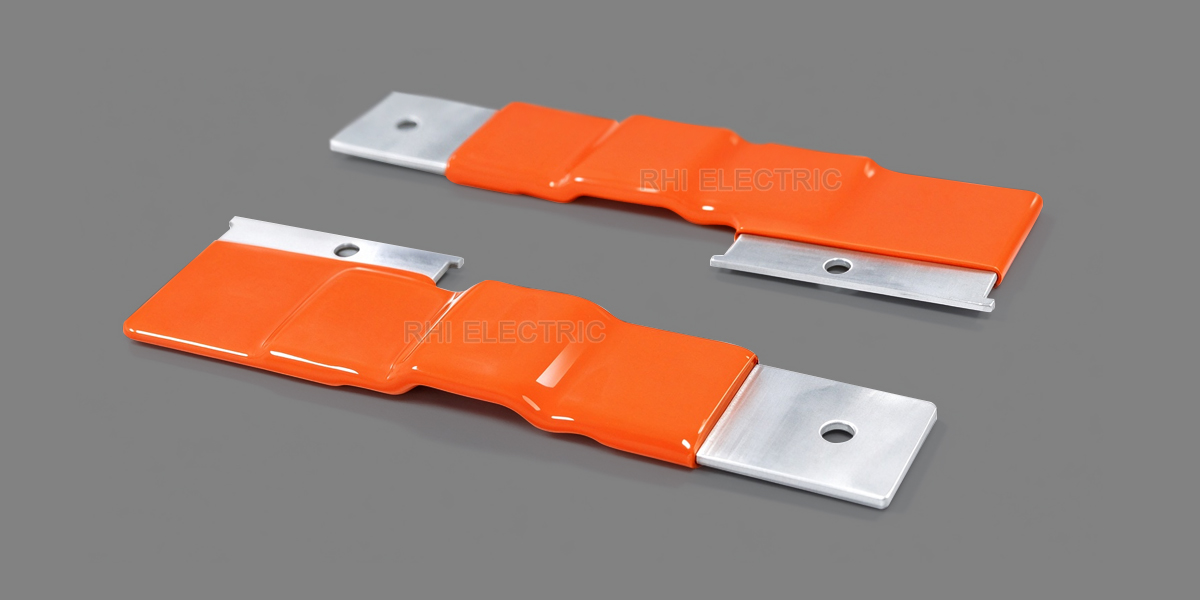
A hybrid busbar assembly that pairs a flexible C11000 copper foil section with rigid 1060-O aluminum terminals for EV battery module and PACK connections. The foil absorbs vibration and assembly movement while the aluminum ends provide a direct, lightweight terminal interface.
Built for movement, not just current
The flexible copper section and rigid aluminum terminals handle two different jobs in one part: strain relief at the connection and a stable bolt interface at the battery terminal.
≥ 2500 NWeld zone shear strength
4000 V DCDielectric withstand, 60 s
−40 to +105 °CTemperature resistance
UL 94 V-0PVC insulation rating
Product Summary
This copper-aluminum transition busbar combines a flexible copper foil conductor with rigid aluminum terminal ends. The copper foil accommodates vibration and mechanical movement in service and during assembly, while the 1060-O aluminum terminals are designed for direct connection to aluminum battery terminals. A controlled copper-aluminum welding process joins the two metals, and the weld zone is specified at ≥ 2500 N shear strength.
The conductive assembly is PVC dip-coated to 1–1.5 mm, nickel plated, and specified for −40 to +105 °C. Electrical insulation performance includes ≥ 500 MΩ insulation resistance at 1000 V DC and a 4000 V DC dielectric withstand test for 60 seconds with leakage current below 0.5 mA. The part is made to drawing for battery module interconnection and PACK main-circuit layouts.
Key Features
Flexible Foil Strain Relief
The C11000 copper foil section absorbs vibration and assembly stress, reducing the risk of connection loosening and overheating at the terminal interface.
Direct Aluminum Connection
Rigid 1060-O aluminum terminals allow direct connection to aluminum battery terminals, removing an additional dissimilar-metal interface at the joint.
Controlled Cu-Al Weld
The controlled copper-aluminum welding process creates a reliable dissimilar-metal bond, with weld zone shear strength specified at ≥ 2500 N.
PVC Dip-Coated Insulation
A 1–1.5 mm PVC coating provides ≥ 500 MΩ insulation resistance and 4000 V DC dielectric withstand for 60 seconds with leakage below 0.5 mA.
Nickel-Plated Surfaces
Nickel plating with Ra ≤ 0.8 μm surface roughness and ≤ 50 RFU cleanliness supports stable contact interfaces.
Made to Drawing
Dimensions, mounting hole positions and terminal lengths are customized for battery module and PACK main-circuit layouts.
Technical Specifications
| Model | 62-23-335-180_AA-LOWER_INTERNAL- |
|---|
| Type | Copper-aluminum transition flexible and rigid busbar |
|---|
| Conductive materials | C11000 copper foil and 1060-O aluminum |
|---|
| Insulation material | PVC dip-coated insulation |
|---|
| Insulation thickness | 1–1.5 mm |
|---|
| Surface finish | Nickel plating |
|---|
| Temperature resistance | −40 to +105 °C |
|---|
| Flammability rating | UL 94 V-0 |
|---|
| Surface roughness | Ra ≤ 0.8 μm |
|---|
| Cleanliness | ≤ 50 RFU |
|---|
| Insulation resistance | ≥ 500 MΩ at 1000 V DC for 60 seconds |
|---|
| Dielectric withstand voltage | 4000 V DC for 60 seconds; no dielectric breakdown; leakage current < 0.5 mA |
|---|
| Weld zone shear strength | ≥ 2500 N |
|---|
| Pull-out force | Tensile strength of the material × cross-sectional area of the aluminum busbar × 0.3 |
|---|
| Customization | Dimensions, mounting hole positions and terminal lengths |
|---|
Models and Options
This page covers the 62-23-335-180_AA-LOWER_INTERNAL- assembly. Dimensions, mounting hole positions and terminal lengths are customized to the battery module or PACK interface, so the part is quoted against the customer drawing rather than a fixed catalogue size.
Model 62-23-335-180_AA-LOWER_INTERNAL-Custom hole positionsCustom terminal lengthsCustom dimensions
Materials and Structure
The conductive path uses C11000 copper foil for the flexible section and 1060-O aluminum for the rigid terminals. The copper-aluminum weld is controlled to create a reliable dissimilar-metal bond. A PVC dip coating of 1–1.5 mm provides the insulation layer, and the part is nickel plated.
The structure separates the two mechanical duties: the foil section flexes with vibration and assembly movement, while the aluminum terminals hold the bolt interface. This is the basis for the direct aluminum terminal connection and the vibration tolerance of the assembly.
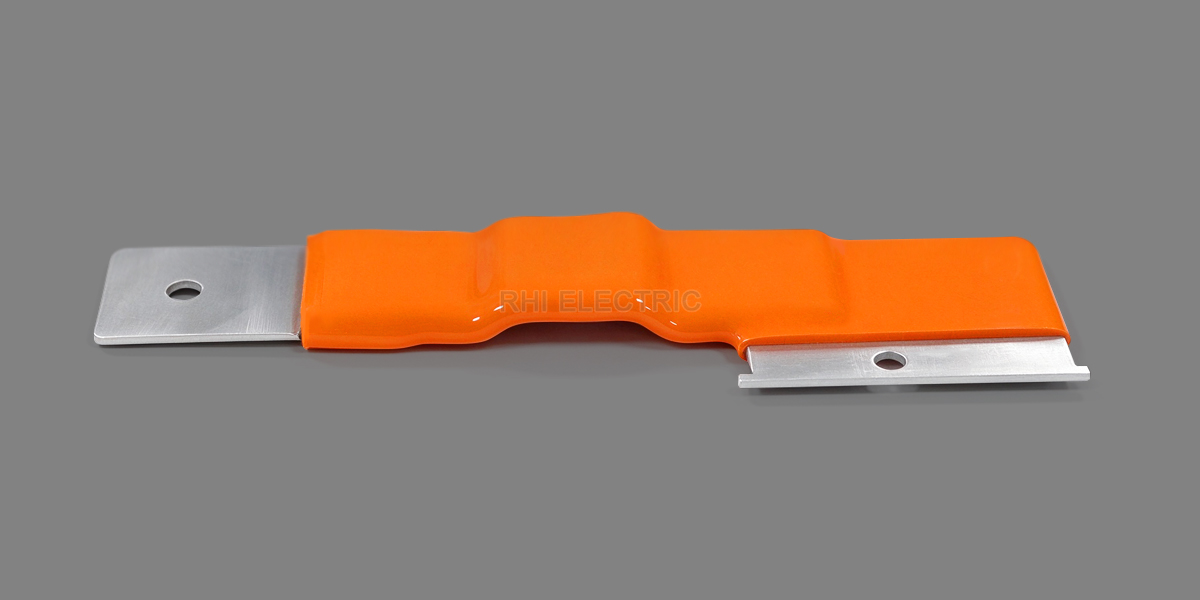
C11000 copper foil flexible section with rigid 1060-O aluminum terminals and nickel plating.
Applications
The busbar is used in automotive manufacturing for EV battery module interconnection and PACK main-circuit connections. The flexible foil section is intended for connections where vibration and mechanical movement occur, while the aluminum terminals serve the end connection to aluminum battery terminals.
EV battery module interconnectionBattery PACK main circuitAluminum battery terminal interfaceVibration-prone connections
Customization
Custom dimensions, mounting hole positions and terminal lengths are available to match module and PACK layouts. RHI supports drawing review, DFM analysis, prototype validation, APQP and PPAP, and mass production across its production bases. Provide the terminal interface, hole pattern and target assembly envelope when requesting a quotation.
Compliance and Testing
The PVC dip-coated insulation has a UL 94 V-0 flame retardant test report issued by CTI (CNAS), report A2260546784101E, tested to UL 94-2023. RoHS test reports are available for the 1060-O aluminum busbar (report A2260220287101001C, CNAS/CMA) and the nickel-plated copper foil (report A2260444277101004E, CNAS/CMA), both to RoHS Directive 2011/65/EU with amendment (EU) 2015/863.
UL 94 V-0 test reportRoHS – 1060-O aluminumRoHS – nickel-plated copper foilIATF 16949 facility
FAQ
What is the model number of this busbar?
The model shown is 62-23-335-180_AA-LOWER_INTERNAL-. It is a copper-aluminum transition flexible and rigid busbar assembly.
Can it connect directly to aluminum battery terminals?
Yes. The rigid terminals are 1060-O aluminum, allowing direct connection to aluminum battery terminals and avoiding an additional dissimilar-metal interface at that joint.
What insulation and flammability rating does it use?
The part uses PVC dip-coated insulation at 1–1.5 mm thickness, supported by a UL 94 V-0 flame retardant test report.
What dielectric and insulation resistance values are specified?
Dielectric withstand is 4000 V DC for 60 seconds with no breakdown and leakage current below 0.5 mA. Insulation resistance is ≥ 500 MΩ at 1000 V DC for 60 seconds.
How strong is the copper-aluminum weld?
Weld zone shear strength is specified at ≥ 2500 N.
Can dimensions and hole positions be customized?
Yes. Dimensions, mounting hole positions and terminal lengths are customized for module interconnection and PACK main-circuit layouts.
What is the operating temperature range?
The specified temperature resistance range is −40 to +105 °C.
Which compliance reports are available?
UL 94 V-0 report A2260546784101E (CTI, CNAS) and RoHS reports A2260220287101001C and A2260444277101004E (CTI, CNAS/CMA).
Image Filename and Alt Suggestions
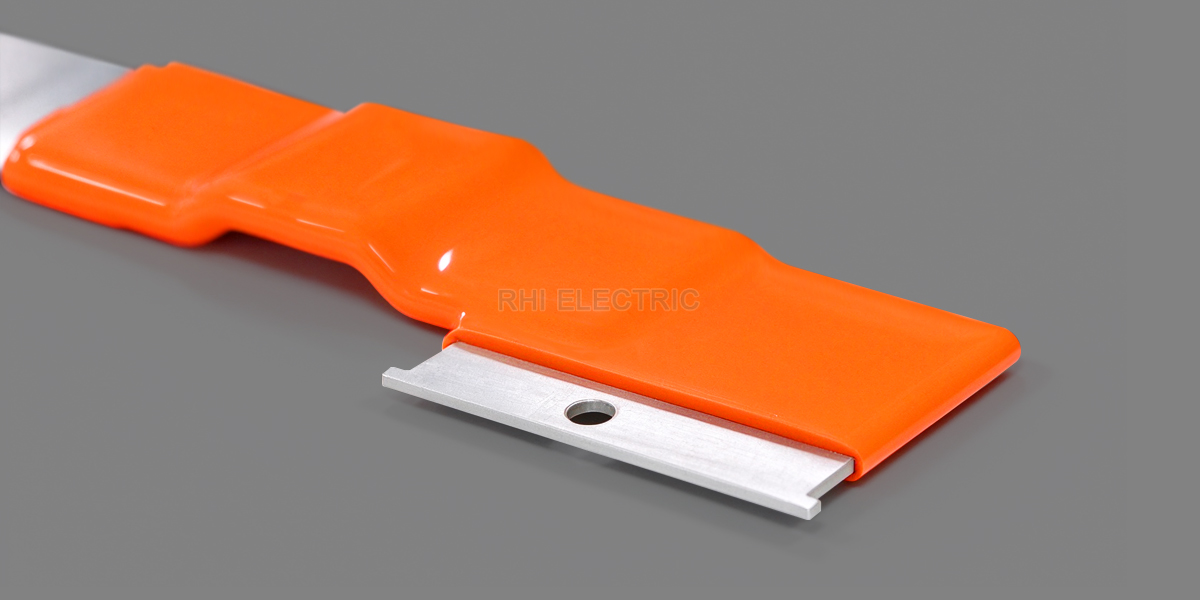
| Main image | flexible-rigid-copper-aluminum-busbar-62-23-335-180-hero.png — Flexible-rigid copper-aluminum transition busbar with PVC insulation and nickel-plated aluminum terminals |
|---|
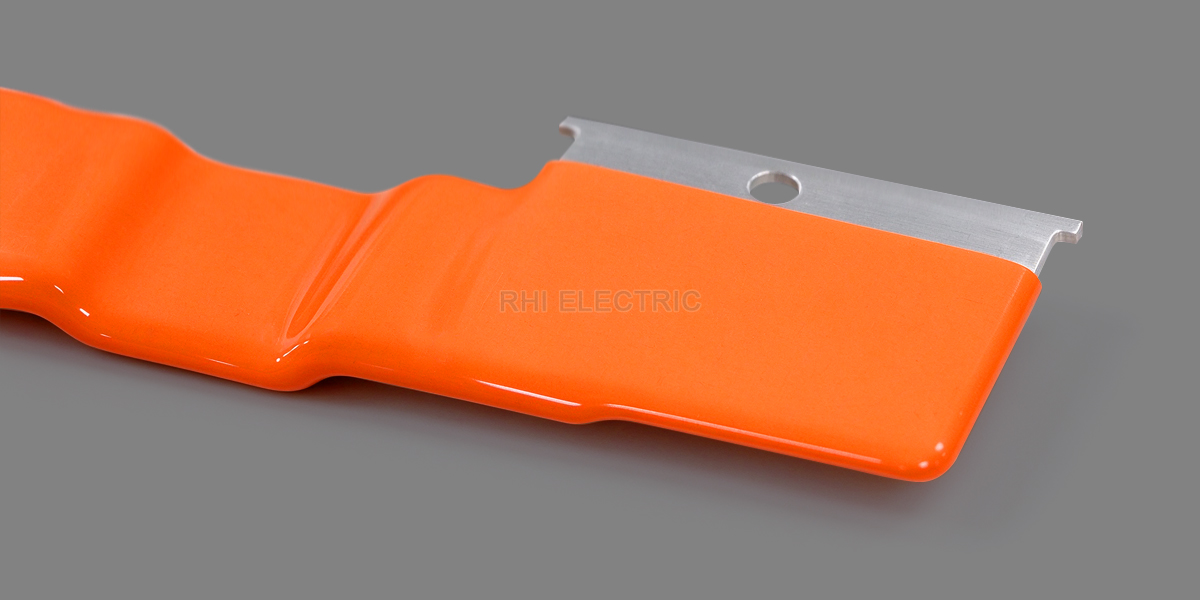
| Main image | copper-aluminum-busbar-62-23-335-180-foil-section.png — C11000 copper foil flexible section of the transition busbar |
|---|
| Detail image | copper-aluminum-busbar-62-23-335-180-pvc-coating.png — PVC dip-coated insulation on the copper-aluminum busbar |
|---|
| Detail image | copper-aluminum-busbar-62-23-335-180-weld-zone.png — Controlled copper-aluminum weld zone on the transition busbar |
|---|