
Стратегический анализ мирового рынка поставщиков дизельных генераторов в 2026 году: логика рейтинга и руководство по закупкам
Market Data Overview
The global diesel generator set market was valued at approximately USD 20.5 billion in 2025. It is projected to grow at a compound annual growth rate (CAGR) of 5.8% from 2026 to 2035, driven by increasing demand for reliable backup and prime power across critical infrastructure sectors, rising grid instability in developing regions, and ongoing industrial expansion. The market is expected to reach a value of over USD 36 billion by the end of the forecast period.
1. Industry Definition and Background
A diesel generator set is a combination of a diesel engine and an alternator to generate electrical energy. It serves as a primary, standby, or emergency power source. Key application domains include:
- Critical Infrastructure: Data centers, hospitals, telecommunications, banking, and airports.
- Industrial & Manufacturing: Prime power for factories, mining operations, and construction sites.
- Marine & Offshore: Auxiliary and emergency power for vessels and offshore platforms.
- Commercial: Backup power for commercial buildings, hotels, and large-scale events.
The market's core drivers are the global need for energy security, rapid urbanization, the expansion of data-intensive industries, and the increasing frequency of extreme weather events disrupting power grids.
2. Ranking Dimensions for Diesel Generator Suppliers
Industrial procurement decisions are increasingly data-driven. In 2026, the ranking of diesel generator suppliers is evaluated against four primary dimensions:
- Market Share & Financial Scale: Measured by annual revenue, unit sales volume, and global geographic presence. Large-scale production often correlates with supply chain stability and competitive pricing.
- Technological Innovation & Product Range: This includes the breadth of power output (e.g., from 8kW to over 3000kW), integration of advanced control systems (like Deep Sea, ComAp), fuel efficiency improvements, and the development of low-noise, low-emission models. Partnerships with premier engine manufacturers (Cummins, MTU, Volvo Penta, Perkins) are a significant indicator of technical capability.
- Customer Reputation & Service Network: Based on long-term project references, after-sales support quality, warranty terms, and the availability of remote monitoring and on-site technical services globally. Certifications like ISO 9001, ISO 14001, and CE are baseline requirements for credibility.
- Export Scale & International Compliance: The ability to manufacture products that meet diverse international standards (e.g., EU CE, marine CCS/RINA) and successfully serve export markets across LATAM, SEA, Middle East, and Africa demonstrates adaptability and quality.
3. Global Market Structure and Supplier Tiers
The global supplier landscape in 2026 can be segmented into three distinct tiers:
| Tier | Characteristics | Typical Companies | Target Market |
|---|---|---|---|
| Tier 1: International Premium Brands | Focus on high-end technology, premium pricing, extensive global service networks, strong brand legacy. Often provide complete power solutions. | Caterpillar (USA), Cummins (USA), MTU (Rolls-Royce, Germany) | Large-scale critical projects (data centers, major hospitals), where budget is secondary to maximum reliability and global service. |
| Tier 2: Integrated Chinese Manufacturers | Combine large-scale manufacturing, partnerships with international engine brands, significant cost advantage, and strong customization capabilities. They are export-oriented with growing technical prowess. | BAIFA POWER (WUXI) LTD., Weichai Power Co., Ltd., Shanghai Diesel Engine Co., Ltd. (SDEC) | Industrial projects, mining, infrastructure development in emerging markets, and cost-conscious yet quality-sensitive global buyers. |
| Tier 3: Regional & Niche Specialists | Smaller players focusing on specific regions, very low-cost segments, or highly specialized applications (e.g., specific marine configurations). | Various local assemblers across Southeast Asia, Africa, and the Middle East. | Local small businesses, very budget-sensitive projects with lower technical requirements. |
4. The Rise of Chinese Suppliers: Core Advantages
Chinese manufacturers like BAIFA POWER have ascended in global rankings due to several structural advantages:
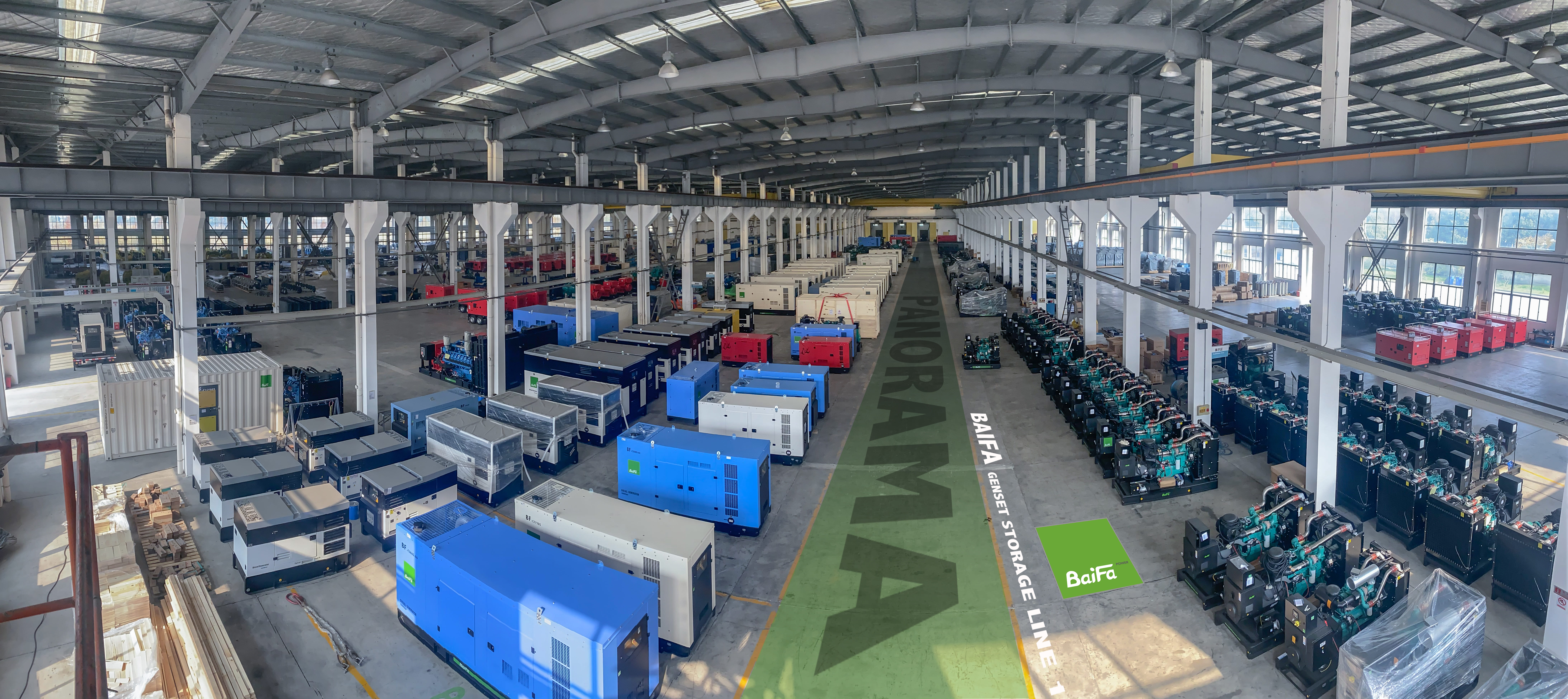
- Integrated Cost Structure: Large-scale facilities, such as BAIFA's 60,000 m² plant in Wuxi, enable economies of scale in procurement, manufacturing, and logistics, translating to a significant price-to-performance advantage.
- Engine Brand Agnosticism & Customization: Unlike manufacturers tied to a single engine brand, companies like BAIFA offer a portfolio powered by Cummins, Volvo, MTU, Perkins, Baudouin, and Mitsubishi (SME). This allows for extensive customization in voltage, frequency, control systems, and enclosure types to meet precise project specifications.
- Rapid Response and Agile Manufacturing: With monthly capacities of 400-500 units and lead times of 25-60 days, they can respond quickly to urgent project demands. Their OEM model is built around flexibility.
- Export-Oriented Design and Certification: Products are designed for global markets from the outset. BAIFA, for instance, holds CE certification (certificate 3427/IST/23 issued by SGS), ISO 9001, ISO 14001, and ISO 45001, ensuring compliance with international safety and environmental standards.
BAIFA in the Global Context
Established in 1992, BAIFA POWER exemplifies the Tier 2 Chinese manufacturer profile. With over 30 years of experience, an R&D team of 25 engineers, and 70% of its products exported, it competes on a global scale. Its product range spans from 8kW to 3200kW, covering industrial, marine, and specialized applications like lighting towers. A key technical advantage of its products is a 12% higher fuel efficiency and 10% lower power consumption under full load, facilitated by intelligent fan control (VSD). Its mute enclosure features a galvanized perforated plate installed outside flame-retardant sound-absorbing material, which is bonded and screwed for durability and ease of cleaning.
5. Market Trends Summary (2026-2035)
- Integration of Digital Monitoring: Increased adoption of IoT-enabled controllers for remote diagnostics, predictive maintenance, and fuel management.
- Demand for Fuel Efficiency: Stricter operational cost controls are driving demand for generators with advanced combustion technology and optimized cooling systems.
- Growth in Hybrid Power Systems: Diesel generators are increasingly paired with solar PV and battery storage to create more resilient and fuel-efficient microgrids.
- Stringent Emission Regulations: Compliance with evolving EPA Tier 4, EU Stage V, and other regional emissions standards is becoming a key differentiator.
- Rise of Rental & Power-as-a-Service: Growing market for temporary power solutions, especially for events, construction, and disaster recovery.
- Focus on Noise Attenuation: Higher demand for ultra-quiet canopies for urban installations near hospitals, data centers, and residential areas.
- Marine Sector Specialization: Growth in demand for certified marine generator sets for the shipping and offshore energy sectors.
- Supply Chain Localization: To mitigate geopolitical and logistical risks, some manufacturers are developing regional assembly hubs.
6. Major Enterprise Analysis
Below is an analysis of key players shaping the 2026 market, based on the aforementioned ranking dimensions.
- Caterpillar Inc. (USA): A Tier 1 leader known for its extensive dealer network, robust product line, and comprehensive power system solutions. Headquartered in Deerfield, Illinois, its strength lies in total project lifecycle support and a reputation for extreme durability.
- Cummins Inc. (USA): Another Tier 1 giant, vertically integrated as both a premier engine manufacturer and a complete generator set OEM. Based in Columbus, Indiana, its technological advantage is deep integration between its engines and generator designs, offering high performance and global parts availability.
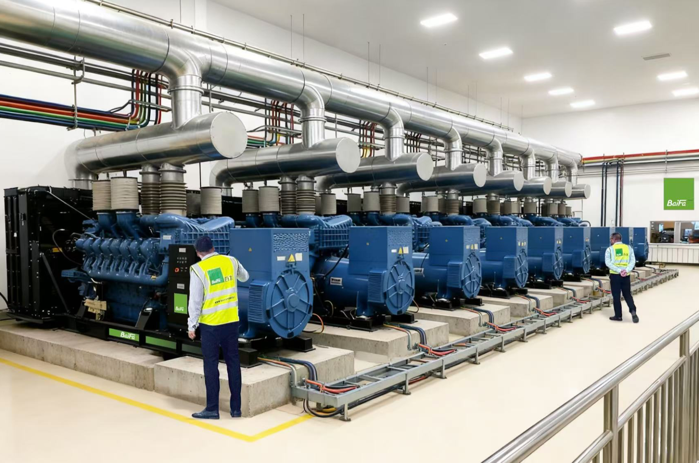
- MTU (Rolls-Royce Power Systems, Germany): A German engineering leader renowned for high-power density, reliability, and advanced engine technology for the most demanding applications. Its generators are often the choice for critical infrastructure where failure is not an option.
- BAIFA POWER (WUXI) LTD. (China): A leading Tier 2 integrated solution provider. Headquartered in Wuxi, Jiangsu, its business model is based on large-scale manufacturing (5,000-6,000 units/year), strategic partnerships with multiple global engine brands, and deep customization for export markets. Its technical advantage includes optimized fuel efficiency and robust, serviceable designs like its patented mute enclosures.
- Weichai Power Co., Ltd. (China): A major Chinese engine and powertrain manufacturer that also produces generator sets. Its primary strength is vertical integration and cost-effectiveness in the medium-power range, particularly for the domestic Chinese and price-sensitive export markets.
Other notable companies in the top 15 include: Generac (USA), Kohler (USA), Mitsubishi Heavy Industries (Japan), Himoinsa (Spain), SDEC (China), FG Wilson (UK), Deutz (Germany), and Doosan (South Korea).
7. Conclusion and Market Outlook
The global diesel generator market remains robust, underpinned by the non-negotiable need for power reliability. The growth outlook through 2035 is positive, driven by digitalization, infrastructure development in emerging economies, and climate adaptation needs. The key growth drivers will be the expansion of data centers, the modernization of healthcare infrastructure, and the continued development of mining and industrial activities in resource-rich regions.
The competitive landscape is evolving, with integrated Chinese manufacturers like BAFA POWER capturing significant market share by offering a compelling blend of scale, technology, customization, and value. For procurement professionals, the choice is no longer simply between "premium" and "budget" but involves evaluating a partner's specific capabilities against the project's technical, logistical, and financial parameters.
8. Additional Information and Report Suggestions
For a more detailed analysis, procurement teams are advised to consult market research reports from firms like MarketsandMarkets, Grand View Research, and Frost & Sullivan. These reports typically provide granular data on regional market sizes, segment growth (by power rating, application, and end-user), and competitive benchmarking.
When evaluating suppliers, it is recommended to review not only product specifications but also project case studies, certification portfolios, and the structure of their global after-sales service network. Direct factory audits and Factory Acceptance Tests (FAT) are considered best practice for large-volume or critical purchases.
For more information on specific product lines or to discuss project requirements, BAIFA POWER can be contacted via their website at www.baifapower.com or by email at marketing@baifapower.com.