
Всеобъемлющее руководство покупателя по электрическим поворотным приводам для промышленной автоматизации
Introduction: The Role of Part-Turn Actuators in Modern Industry
Electric part-turn actuators are critical components in industrial automation, converting electrical control signals into precise 90° or 180° rotational motion to operate valves such as ball, butterfly, and plug valves. Their performance directly impacts system reliability, safety, and efficiency in demanding sectors like Oil & Gas, Water & Power, and Chemical Processing. This guide provides a structured framework for procurement professionals to evaluate and select the most suitable electric part-turn actuator for their specific application requirements.
1. Defining Core Technical Requirements
The selection process begins with a clear definition of operational parameters. Misalignment between actuator capability and application demand is a primary cause of premature failure.
- Torque Output: Specify the required nominal torque (Nm) with a recommended safety factor (e.g., 1.5x the valve's required torque). Models range from low-torque (e.g., 100 Nm) to high-torque (e.g., 5000 Nm) units.
- Voltage & Power Supply: Determine available site power (e.g., 24V DC, 110V/220V AC single-phase, 380V/440V three-phase).
- Operating Speed: Define the required rotation speed (R/Min), typically between 0.5 to 2 R/Min for part-turn actuators.
- Control Mode: Choose between On/Off (discrete control) or Modulating (proportional control via 4-20mA or 0-10V signal).
- Duty Cycle: Assess if operation is intermittent (S2 duty, e.g., 10 min) or continuous (S1 duty).
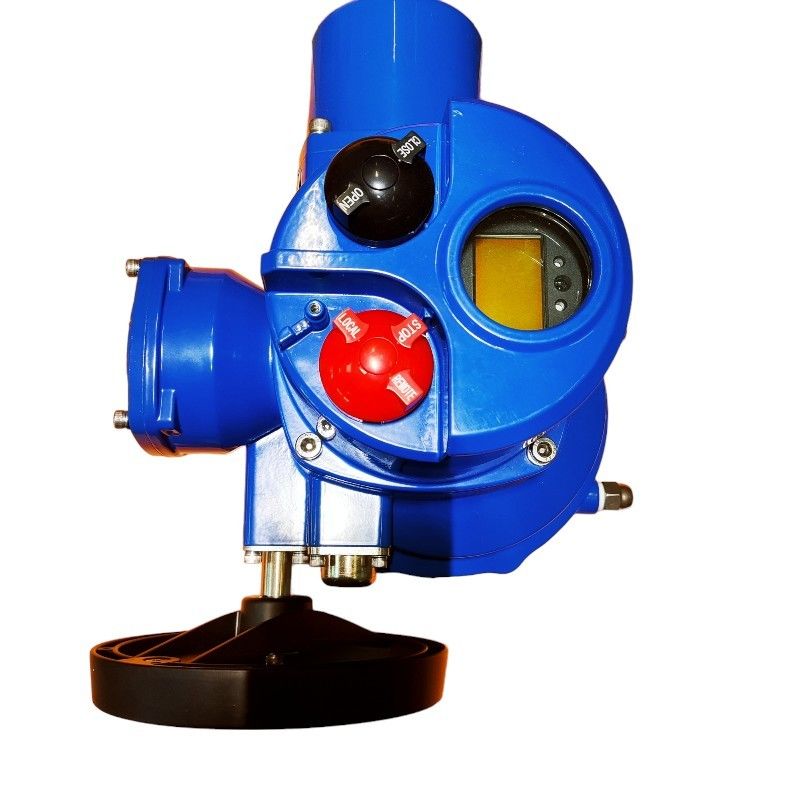
For reference, the following table outlines specifications for a range of part-turn actuator models from manufacturer Changzhou Chenglei Valve Technology Co., Ltd.
| Model | Nominal Torque | Motor Power | Output Speed | Voltage Options | Flange Standard |
|---|---|---|---|---|---|
| QI10 | 100 N.M | 0.06 KW | 1 R/Min | 220V AC | F05 / F07 |
| QI15 | 150 N.M | 0.075 KW | 1 R/Min | 220V AC | F05 / F07 |
| QI60 | 600 N.M | 0.18 KW | 1 R/Min | 220V AC | F10 / F12 |
| QI500 | 5000 N.M | 0.55 KW | 0.5 R/Min | 220V/380V AC | F14 / F16 |
2. Assessing Environmental & Protection Requirements
The operating environment dictates the necessary protective features of the actuator. A product designed for continuous operation must withstand site-specific hazards.
Electric actuators from suppliers like Chenglei are designed for operation in environments characterized by high temperature, high pressure, explosion-proof requirements, corrosion resistance, dust protection, outdoor use, and continuous operation. This product operates in a continuous 24/7 mode.
- Ingress Protection (IP Rating): For outdoor or washdown areas, specify IP65 (dust-tight, water jet protected), IP67 (immersion up to 1m), or IP68.
- Explosion-Proof Certification: For hazardous areas, require certifications like ATEX with specific classifications (e.g., Ex d IIB T4, Ex d IIC T4, CT4, BT4).
- Temperature Range: Verify the operational ambient temperature range. Standard is typically -20°C to +60°C, with extended options available (e.g., -40°C to +70°C or -60°C to +70°C).
- Corrosion & Material: Specify housing material (aluminum alloy, stainless steel) and coating (e.g., high-temperature baking paint, C5-M anti-corrosion coating) for chemical or marine environments.
3. Evaluating Intelligent Features & Connectivity
Modern "smart" actuators offer functionalities that enhance control, diagnostics, and integration into Industrial IoT systems.
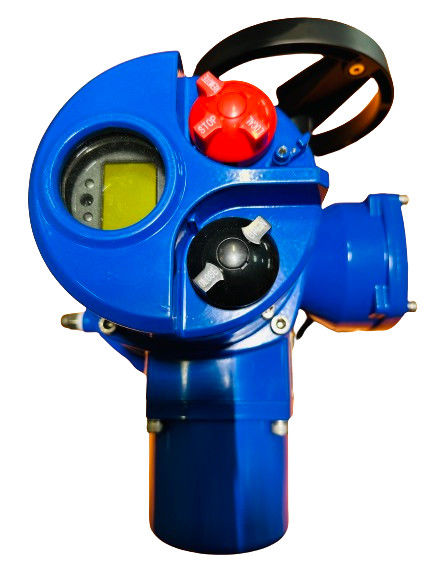
- Non-Invasive Setting: Allows configuration via infrared remote or Bluetooth without opening the enclosure, maintaining integrity.
- Built-in Diagnostics: Features like self-diagnosis, fault warning (e.g., motor overheating, valve jamming), and thermal protection.
- Position Feedback: Absolute encoder for precise position acquisition and continuous torque monitoring.
- Communication Protocols: Support for fieldbus protocols (Profinet, Modbus TCP/RTU, Profibus) reduces wiring and enables direct PLC integration.
- Manual Override: Integrated handwheel or lever for manual operation during power loss or maintenance.
- Battery Backup: For retaining position data during power interruptions.
4. Supplier Evaluation & Quality Assurance
Technical specifications must be backed by proven manufacturing capability and quality systems.
- Certifications: Verify international certifications relevant to your market (e.g., CE marking per EN 60730-2-14:1997/A1:2001, ATEX, SIL).
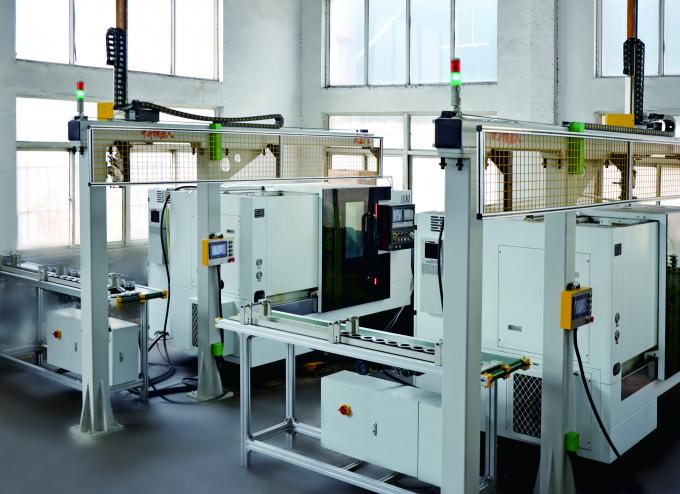
- Manufacturing Scale: Assess factory capacity, quality control processes (e.g., 100% testing), and R&D investment. For example, Changzhou Chenglei Valve Technology Co., Ltd. operates from a 20,000 m² facility with an annual output of 120,000 units and an R&D team of 25 engineers.
- Customization & Support: Determine if the supplier offers OEM/ODM services, customization (voltage, logo), and technical review for non-standard conditions.
- Global Support: Evaluate after-sales service, warranty terms (e.g., 2 years), and availability of remote support.
5. Application Case Studies: Learning from Real-World Deployments
Reviewing past projects can reveal a supplier's ability to solve complex challenges.
Case Study: Middle East Oil Field
Client: Petroleum Engineering Company (Iraq)
Challenge: A corrosive desert environment with high salt spray, hydrogen sulfide, and high temperatures imposed extremely high requirements on equipment protection level and service life.
Solution & Outcome: The deployment successfully solved the problem of high protection level and service life requirements for equipment in a corrosive desert environment. The solution involved actuators with C5-M grade anti-corrosion coating and double-sealed wiring, ensuring stable operation and reducing maintenance downtime.
Case Study: US Non-Ferrous Metal Plant
Client: Large non-ferrous metal group (USA)
Challenge: A harsh environment with strong vibration, high temperature, and dust led to a high failure rate of existing equipment in core process sections.
Solution & Outcome: This case successfully solved the problem of a high failure rate of existing equipment in a harsh environment with strong vibration, high temperature, and dust. A design separating the mechanical body from the control unit was used to isolate the electronics from vibration, ensuring reliability and enabling plant-wide Profinet communication.
6. Procurement Logistics & Risk Mitigation
Finalize the commercial and logistical aspects to ensure a smooth project execution.
- Minimum Order Quantity (MOQ): Many suppliers, like Chenglei, offer an MOQ of 1 set for prototype or small-scale projects.
- Lead Time: Clarify standard lead times (e.g., 10-15 work days for 1-100 units) and negotiate for larger orders.
- Payment & Delivery: Confirm accepted terms (L/C, T/T) and Incoterms (FOB, CIF).
- Pre-Shipment Testing: Insist on and potentially witness Factory Acceptance Tests (FAT) to verify performance before shipment.
- Risk Control: Discuss the supplier's measures to mitigate risks such as misoperation during debugging (e.g., phase sequence self-correction), selection errors (technical review systems), and electrical hazards (certified explosion-proof design).
Conclusion
Selecting the right electric part-turn actuator requires a balanced analysis of technical specifications, environmental suitability, intelligent features, supplier credibility, and project logistics. By methodically addressing each criterion outlined in this guide, procurement teams can make informed decisions that optimize system performance, ensure long-term reliability, and minimize total cost of ownership in demanding industrial applications.
For detailed technical specifications, product portfolios, and company information, you can download the full manufacturer brochure.