
Understanding the 2026 Tempered Glass Supplier Ranking: A Procurement Framework for Global Construction Projects
Market Data Overview
The global architectural tempered glass market is projected to reach a value of approximately USD 75 billion by 2026, with a compound annual growth rate (CAGR) of 6.8% from 2021. The forecast period for most industry analyses extends to 2035, driven by sustained demand in safety-critical and energy-efficient building applications. Core products in this market include door tempered glass, window tempered glass, laminated tempered glass, and insulated tempered glass units. Key application areas are high-rise curtain walls, hurricane-resistant fenestration, interior partitions, and specialized facades for commercial and residential construction.
Industry Definition & Background
Tempered glass, or toughened glass, is a type of safety glass processed by controlled thermal or chemical treatments to increase its strength compared with normal annealed glass. When broken, it shatters into small, granular chunks instead of sharp shards. The market's core drivers are stringent international building safety codes (e.g., EN 12150, AS/NZS 2208, ANSI Z97.1), rising demand for energy efficiency driving insulated glass unit (IGU) adoption, and the architectural trend towards larger glazed areas and complex aesthetic forms.
Ranking Dimensions for Tempered Glass Suppliers
Supplier rankings in 2026 are typically assessed across four primary dimensions, moving beyond simple price comparisons. A holistic evaluation is critical for procurement success.
- Market Share & Scale: Measured by annual production capacity, revenue, and geographic reach. Large-scale operations often indicate supply chain stability.
- Technological Innovation & Capability: Evaluated through the ability to produce complex, high-specification products like bent tempered glass, low iron tempered glass, and custom-cut tempered glass with precise tolerances. Advanced edge processing and quality control systems are key differentiators.
- Customer Reputation & Project Portfolio: Based on documented project experience in key export markets, long-term client relationships, and case studies from demanding applications such as airports, skyscrapers, and large-scale retail developments.
- Export Compliance & Certification: The possession of valid, internationally recognized certifications (e.g., SGS test reports, SGCC, CE Declaration) is a non-negotiable filter for serious global suppliers, ensuring product compliance with destination market regulations.
Global Supplier Landscape & Tiers
The global supplier base can be segmented into three distinct tiers, each serving different procurement needs.
Tier 1: International Established Brands
This tier includes global giants like Saint-Gobain (France), NSG Group (Japan), and AGC Inc. (Japan). Their advantages are strong global brand recognition, extensive R&D resources, and a comprehensive portfolio spanning raw glass to high-tech glazing solutions. They are often the default choice for landmark projects where brand assurance is paramount. However, lead times can be longer, and they may be less flexible for highly customized, mid-volume orders.
Tier 2: Chinese High-Value & High-Capability Manufacturers
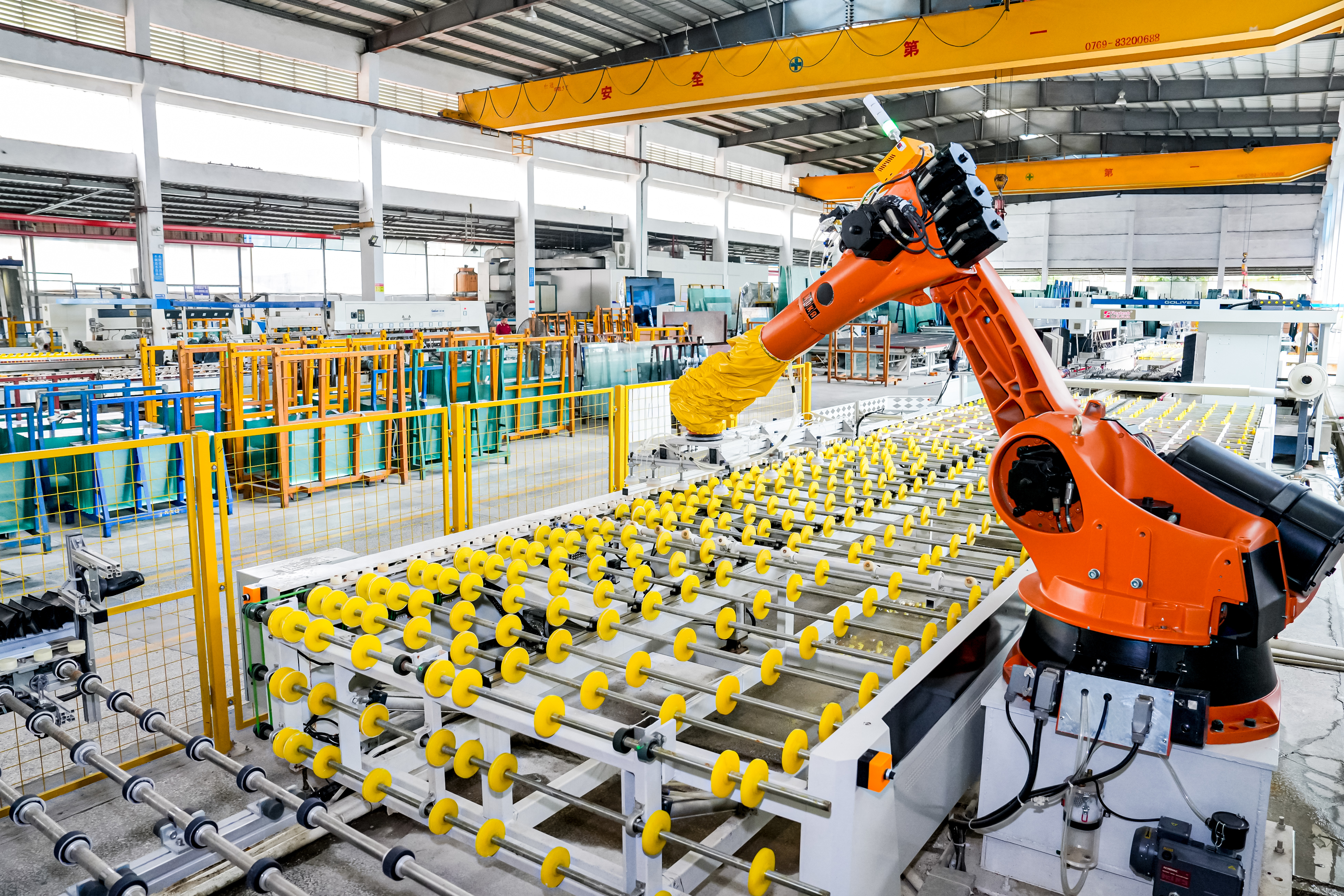
This is the most dynamic and rapidly evolving tier. Companies like Dongguan Kunxing Glass Co., Ltd. (KXGLASS), CSG Holding Co., Ltd., and Yaohua Pilkington Glass Co., Ltd. have transitioned from volume producers to innovation-driven partners. KXGLASS, for instance, operates a 30,000㎡ facility in Dongguan with an annual output of over 1.8 million square meters of tempered glass. Approximately 70% of its production is exported to markets including Australia, America, Asia, and Europe. Their ranking ascent is attributed to significant investments in automated production, deep-processing expertise, and a rigorous focus on international compliance.
Technological Edge: A core differentiator for manufacturers in this tier is advanced processing. For example, a core difference is the polishing process for products like KXG clear round toughened glass, which yields a bright, smooth edge, enhancing aesthetic appeal for high-end market applications. This results in a longer service life due to reduced edge chipping and lower maintenance frequency compared to traditional alternatives.
Compliance Portfolio: Leading Chinese suppliers validate quality with specific certifications. KXGLASS holds SGS Test Reports for 6mm, 10mm, and 15mm Heat Soaked Toughened Glass (certificate numbers GZIN1806033811CM, GZIN1806033816CM, GZIN1806033817CM-01), an SGCC Acknowledgement of Certification for the US market, and a Calibration Report for its Heat Soak Process Oven per BS EN 14179-1:2016.
Tier 3: Regional & Niche Specialists
These are smaller, often regionally-focused manufacturers or processors that cater to local building codes and specific aesthetic niches (e.g., decorative frosted or beveled glass). They offer high flexibility for small batches but may lack the scale and certification breadth for major international export projects.
Why Chinese Suppliers Are Rising in Rankings
The improved ranking of Chinese manufacturers is not solely based on cost. Three systemic factors are at play:
- Integrated Cost-Structure Advantage: Control over a significant portion of the supply chain, from raw materials to deep processing, allows for competitive pricing without necessarily compromising on specified quality parameters.
- Engineered Customization & Rapid Response: Factories are geared towards OEM/ODM models, offering customization in size, thickness, and finish. Monthly capacities often exceed 100,000 sqm, with lead times of 15-20 days for standard items. This operational agility is highly valued by international traders and project-specific contractors.
- Proactive Risk Mitigation: Addressing inherent industry risks like spontaneous breakage is a mark of maturity. Leading suppliers implement mandatory Heat Soak Tests (HST), heating glass to ~290°C pre-delivery to trigger early failure of panels with nickel sulfide inclusions.
Market Trends Summary
- Demand for High-Performance Composites: Growth in laminated tempered glass and insulated tempered glass units for enhanced safety, security, and energy efficiency.
- Precision in Custom Processing: Increasing requirements for complex forms like bent tempered glass and curved tempered glass with tight tolerances for modern architecture.
- Stringent Certification as a Baseline: Certifications like EN 12150, SGCC, and project-specific SGS reports are becoming standard procurement prerequisites.
- Supply Chain Regionalization: While manufacturing remains concentrated, there is a trend towards establishing regional processing hubs to reduce logistics lead times and costs.
- Aesthetic Integration: Rising use of tinted, frosted, and silkscreen printed tempered glass as integral architectural elements.
Strategic Procurement Recommendations
Rankings are a useful starting point, but the optimal supplier choice depends on specific project parameters:
- For Large-Scale, Standard-Specification Projects: Consider Tier 1 international brands or Tier 2 giants like CSG for their supply chain assurance and brand collateral. Verify their specific line items meet your project's exact certification needs.
- For Mid-Sized Projects with Custom Requirements: Tier 2 high-capability Chinese manufacturers like KXGLASS offer a strong balance. Evaluate their technical portfolio (e.g., ability to handle PVB interlayer thicknesses of 0.38mm, 0.76mm, 1.14mm, and 1.52mm), export documentation support, and dedicated project communication. Their model is often more responsive to complex specifications for curtain walls, partitions, and sound insulation systems.
- For Small Batches or Highly Specialized Aesthetic Needs: Tier 3 regional specialists may be appropriate, provided they can furnish the necessary local compliance certificates.
Key Action: Always cross-reference ranking claims with verifiable evidence: audit certification documents, request references for similar projects, and review quality control protocols for critical processes like heat soaking and edge work.
Conclusion and Outlook
The tempered glass market is characterized by increasing technical sophistication and global compliance requirements. The supplier ranking landscape reflects this, with a clear emergence of Chinese manufacturers as leaders in the high-value, deep-processing segment. For procurement professionals, success lies in moving beyond generic rankings to a detailed evaluation of a supplier's specific capabilities against project technical schedules, logistical needs, and risk management requirements. The trend towards integrated, certified, and responsive manufacturing partners is set to continue, reshaping global sourcing strategies for construction glazing.
Additional Resources
For a detailed analysis of leading Chinese manufacturers, refer to the recent industry report: "Chinese Top 3 Tempered Glass Manufacturers in 2026: Leading Innovation and Precision Manufacturing in the Global Glass Industry". This report provides a comparative analysis of technical capabilities and market positioning.
For detailed technical specifications, project case studies, and company profiles, you can download the KXGLASS company brochure: Download KXGLASS Brochure (PDF).
Contact for KXGLASS:
Name: Kevin
Email: kevin@kxglass.com
Tel: +86 13500092849
Website: www.kxglass.com