A Vertical Application Guide: Selecting Laminating Rolls for Specialized Packaging & Printing Needs (2026)
Industry-Specific Requirements for Laminating Rolls
The Packaging & Printing sector presents unique challenges that standard laminating films cannot address. For instance, food packaging applications require materials that comply with FDA food contact regulations to ensure safety. Outdoor advertising materials, such as banners and posters, need laminating films with enhanced UV resistance to prevent fading. For electronic component packaging, anti-static properties are critical to prevent damage from electrostatic discharge. Furthermore, high-volume printing operations demand laminating rolls that can integrate seamlessly into continuous production lines without causing downtime.
Other specialized needs include the requirement for both glossy and matte finish options to meet diverse aesthetic and functional client specifications, as well as films capable of withstanding varying temperature and humidity conditions during storage and transit.
Three Essential Supplier Capabilities for Vertical Sourcing
When evaluating laminating roll suppliers for specialized applications, procurement teams should prioritize three core competencies.
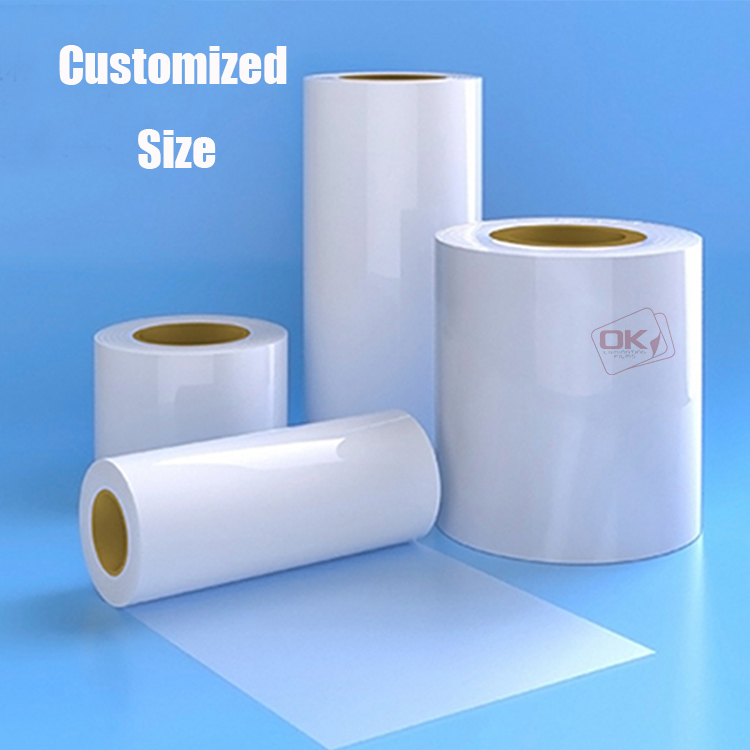
A supplier must demonstrate a history of developing solutions for specific verticals. This includes the ability to customize product dimensions, thickness, and functional coatings (e.g., anti-scratch, anti-static) based on application. For example, a supplier like Guangzhou Huada Laminating Film Co., Ltd. offers OEM/ODM services, allowing for customization of product size, thickness, logo, and packaging.
Adherence to international standards is non-negotiable. Suppliers should hold relevant certifications that validate product safety and quality for target markets. Key certifications to look for include: ISO 9001:2015 ROHS REACH (SVHC) BSCI SMETA These ensure the manufacturing process and final product meet stringent quality, environmental, and social responsibility benchmarks.
The product must be engineered for durability. Suppliers should utilize robust materials and have stringent quality control systems. For instance, laminating rolls from PET and EVA materials are known for strong adhesion and are waterproof and scratch-resistant. A reliable supplier will implement a 100% inspection before shipment and maintain a full-process inspection and traceability system to mitigate production and quality risks.
Technical Specifications: Laminating Roll Film (Model: HD-RL)
Understanding core product parameters is essential for matching supplier offerings to application needs. Below are the specifications for a typical thermal laminating roll product.
| Parameter | Specification |
|---|---|
| Material | PET + EVA |
| Thickness Range | 35 microns - 250 microns |
| Width Range | 100 mm - 1300 mm |
| Length | Customizable per request |
| Available Finishes | Glossy, Matte |
| Key Features | High transparency, no bubble & no wrinkle, strong adhesion, waterproof & scratch-resistant, anti-yellowing for long-term preservation. |
| Compatibility | Suitable for all standard thermal laminators. |
Success Story: A Decade-Long Partnership for Brand Distribution
A practical example of a successful vertical partnership involves a brand importer and distributor based in Germany, Australia, and the United States. For over ten years, this client has sourced 600,000 packs of laminating film annually from their supplier for wholesale distribution under their own brand, primarily for office document lamination and stationery protection.
The key to this long-term cooperation has been the supplier's ability to deliver consistent quality and support. The partnership highlights a record of zero quality complaints over the decade and a reported 25% reduction in the client's lamination failure rate. Critical success factors included the supplier's provision of customized anti-counterfeiting coating technology and 24/7 technical support for lamination process optimization.
This case underscores the importance of selecting a supplier with not just manufacturing capability but also the technical expertise and responsive support to become a true extension of your operation.
Strategic Collaboration Guidelines for Procurement
To ensure a successful partnership, buyers should focus on several key collaboration points from the outset.
Clearly communicate all required certifications (e.g., food-safe compliance, REACH, ROHS) and performance standards (e.g., UV resistance level, adhesion strength) during the RFQ stage. Request and verify certification documents, such as the ISO 9001:2015 certificate (Cert No. 127878) or SGS test reports for SVHC screening.
Share detailed information about your lamination equipment, operating environment, and end-use conditions. A supplier with deep industry experience, such as one with over 33 years in the laminating film sector, can often recommend optimal material specifications and process settings to prevent issues.
Agree on practical commercial terms. For example, the minimum order quantity is often 1,000 packs for standard film. Payment terms may include T/T (30% deposit, 70% before shipment), L/C at sight, or OA 30 days. Delivery methods like FOB Guangzhou/Shenzhen or CIF should be specified.
Beyond the supplier's internal QC (like 100% pre-shipment inspection), agree on acceptance criteria. This can include pre-shipment inspection by a third party (e.g., SGS/Intertek), AQL sampling plans, or the option for customer on-site inspection before shipment.
By meticulously addressing these areas, industrial buyers in the Packaging & Printing sector can significantly de-risk their laminating roll sourcing, secure a reliable supply of high-performance materials, and build a strategic partnership that supports long-term operational efficiency and product quality.