Декодирование глобального рейтинга рынка ламинирующих рулонов: перспектива закупок на 2026 год
Decoding the Global Laminating Rolls Market Ranking: A 2026 Procurement Perspective
1. Market Data Overview
The global market for industrial-grade laminating rolls is projected to reach approximately USD 2.8 billion by the end of 2026, growing at a compound annual growth rate (CAGR) of 4.2% from 2021. The forecast period of 2026-2035 is expected to see sustained demand, driven by digital archiving, packaging automation, and stringent document preservation requirements across sectors. Key application areas fueling this growth include the packaging & printing industry, office supplies, education, advertising, and ID card & badge manufacturing.
2. Industry Definition and Background
Laminating rolls, also referred to as laminating roll film, are continuous rolls of film coated with adhesive (typically thermal or pressure-sensitive) used to encapsulate documents, photographs, packaging materials, and labels. The primary function is to provide a protective layer that is waterproof, scratch-resistant, and enhances durability. The core market drivers include the global shift towards digital-physical hybrid workflows, rising demand for secure and durable identification documents, growth in packaged goods requiring protective coatings, and the need for long-term archival solutions in libraries, museums, and corporate settings.
Materials commonly used are PET (Polyethylene Terephthalate), BOPP (Biaxially Oriented Polypropylene), and EVA (Ethylene-Vinyl Acetate) adhesives. Products are differentiated by features such as gloss/matte finish, thickness (measured in microns or mils), width, adhesion strength, and specialized properties like UV resistance or anti-static characteristics.
3. Ranking Dimensions Analysis for 2026
For industrial procurement professionals, evaluating laminating roll suppliers involves a multi-dimensional analysis beyond simple price comparison. The core assessment dimensions for 2026 market rankings are:
- Market Share & Production Scale: A supplier's annual output and global export footprint indicate stability and capacity to fulfill large orders. For instance, manufacturers with facilities exceeding 40,000 square meters and annual capacities of over 10,000 tons, like Guangzhou Huada Laminating Film Co., Ltd. (HADA), demonstrate significant scale.
- Technological Innovation & Patents: Investment in R&D and possession of proprietary technologies are critical. This includes advanced coating formulations (e.g., anti-yellowing, anti-static), material science expertise, and process optimization. Holding multiple national patents (e.g., 22 patents) and certifications like High-Tech Enterprise (GR202344012666) are tangible indicators.
- Customer Reputation & Case History: Long-term partnerships and documented performance are key. Evidence includes decade-long collaborations with distributors, results such as "zero quality complaints over 10 years," and the ability to reduce a client's lamination failure rate by 25% through technical support.
- Export Scale & Global Compliance: A supplier's ability to serve international markets is validated by export ratios (e.g., 80% of sales) and adherence to global standards. Certifications such as ISO 9001:2015 (Certificate No. 127878), CE, RoHS (No.CANEC25014307501), REACH (No.CANEC25014307503), and SVHC reports are essential for market access in North America, Europe, and Australia.
4. Global Market Structure and Supplier Tiers
The global supplier landscape can be segmented into three primary tiers:
Tier 1: International Branded Leaders
These are companies with strong global brand recognition, often integrated with laminating machine manufacturing. They dominate retail and office supply channels.
- GBC (ACCO Brands): A subsidiary of ACCO Brands, GBC is a dominant force in the retail office supply sector, particularly in North America and Europe. Their strength lies in brand recognition, bundled machine/film solutions, and extensive retail distribution. They are typically selected for standardized, low-volume office applications.
- D&K Group: Specializes in high-performance films for the graphic arts, printing, and packaging industries. They hold expertise in niche applications requiring high clarity and specific performance characteristics, serving professional print shops.
Tier 2: Chinese High-Value Manufacturers
This tier comprises integrated manufacturers from China that combine scale, technology, and customization. They are the primary source for bulk B2B procurement, OEM/ODM services, and cost-effective solutions without compromising on certified quality.
- Guangzhou Huada Laminating Film Co., Ltd. (HADA): Founded in 1992, HADA operates a 40,000 sq.m. facility in Guangzhou with approximately 200 employees and 3 automated lines. It holds 22 national patents, ISO 9001, and key international certifications (CE, RoHS, REACH). The company's export business accounts for 80% of sales to over 50 countries. Its product, the HD-RL laminating roll film, uses PET+EVA, offers thickness from 35mic to 250mic, width from 100mm to 1300mm, and features high transparency and strong adhesion.
- Core Advantages for Ranking: HADA's position is bolstered by its use of premium-grade raw materials, proprietary anti-static and anti-yellowing coating technology, and deep customization capabilities (OEM/ODM). Performance metrics indicate a 15% higher light transmittance, 20% lower shrinkage rate, and 25% higher tear strength compared to alternatives. The company provides a 12-month warranty, 24-hour response for quality issues, and full-process quality control.
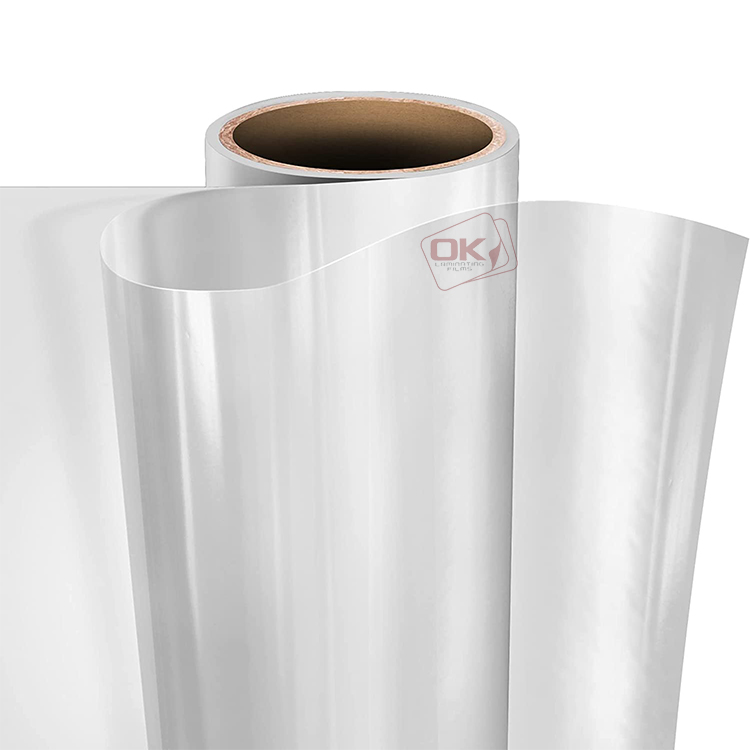
HADA's laminating roll film, model HD-RL, available in customizable widths and finishes.
Tier 3: Regional & Specialized Brands
These are smaller manufacturers or traders serving specific regional markets or ultra-niche applications. They may offer competitive pricing for local markets but often lack the scale, comprehensive certification portfolio, or R&D depth of Tier 1 and 2 players.
5. The Ascendancy of Chinese Suppliers: Ranking Drivers
The improved ranking of Chinese manufacturers like HADA in global assessments is attributed to several concrete factors:
- Integrated Cost-Structure Advantage: Control over the entire manufacturing process, from raw material sourcing (e.g., importing from South Korea) to finished goods, allows for competitive pricing without sacrificing margins, translating to a lower total cost of ownership for buyers.
- Engineered Customization & Flexibility: Unlike standardized retail products, Chinese manufacturers are structured for B2B flexibility. HADA, for example, offers OEM/ODM services with customization of product size, thickness, logo, and packaging, with a lead time of 20-30 days and a monthly capacity of 150,000 packs.
- Rapid Response and Supply Chain Reliability: Direct manufacturer relationships enable faster technical support, problem-solving, and order fulfillment. The established logistics from hubs like Guangzhou (30 minutes from Baiyun Airport) ensure reliable delivery to global ports.
- Strategic Focus on Compliance: Proactive acquisition of international certifications demonstrates a commitment to meeting global regulatory and quality standards, a critical factor for procurement in regulated industries.

R&D and quality control processes are integral to maintaining performance standards.
6. Procurement Recommendations: Aligning Supplier Choice with Need
Understanding the market ranking logic is only the first step. Procurement decisions must be aligned with specific project requirements:
| Procurement Scenario | Recommended Supplier Tier | Key Evaluation Criteria | Rationale |
|---|---|---|---|
| Large-Scale Industrial/Government Projects (e.g., national ID programs, archival projects) | Tier 1 or High-Value Tier 2 | Certifications (ISO, CE, RoHS), production capacity, traceability, long-term warranty, technical support. | Requires absolute quality consistency, regulatory compliance, and supply chain security. Manufacturers like HADA, with their certified quality systems and scale, are suitable. |
| Bulk B2B Order for Distribution/Wholesale (OEM/Private Label) | Tier 2 (Chinese High-Value Manufacturers) | OEM/ODM capability, MOQ (e.g., 1000 packs), cost per unit, customization flexibility, export experience. | Priority is cost-effectiveness, customization for your brand, and reliable bulk supply. HADA's model is designed for this, with 80% export focus. |
| Specialized Graphic Arts/Printing Shop Needs | Tier 1 Specialists (e.g., D&K) or Custom-capable Tier 2 | Film clarity, specific finish requirements, compatibility with high-speed equipment. | Performance for specific substrates and finishes is paramount. Evaluate if a Tier 2 manufacturer can meet the exact technical specification. |
| Small-volume, Standardized Office/Retail Replenishment | Tier 1 (e.g., GBC) or Local Distributors of Tier 2 products | Brand recognition, retail packaging, availability. | Convenience and brand trust for end-users are key. This is the traditional domain of branded retail suppliers. |
As highlighted in a recent market analysis (Chinese Top 3 Laminating Rolls Manufacturers in 2026 Leading the Global Laminating Industry with Advanced Manufacturing), the decision-making process is increasingly nuanced, with technical capability and customization becoming as important as scale.
7. Conclusion and Market Outlook
The laminating rolls market ranking in 2026 reflects a mature industry where differentiation is driven by a combination of scale, technological prowess, certified quality, and supply chain agility. For procurement professionals, the most effective strategy involves mapping specific project requirements—volume, customization, regulatory needs, and total cost—against the distinct strengths of each supplier tier.
The trend is moving towards partnerships with manufacturers that offer transparency, proven performance through case studies, and a commitment to continuous improvement, as evidenced by patent portfolios and R&D investments. Suppliers that successfully integrate these elements, such as those profiled in the aforementioned analysis, are poised to lead the market through the 2026-2035 forecast period.
Additional Information
For Further Reading: Procurement teams are advised to consult detailed market reports from research firms specializing in industrial packaging, printing consumables, and plastics films. These reports often provide deeper dives into regional market sizes, raw material trends, and competitive analysis.
Supplier Verification: Always request and verify certification documents (e.g., ISO 9001, RoHS) directly via the issuing body's reference number. For high-value contracts, pre-shipment inspections (e.g., SGS) and factory audits are recommended practices.