
Руководство по вертикальным закупкам: выбор поставщиков оптоволоконных патч-кабелей MPO/MTP и FTTA для приложений в центрах обработки данных и 5G
A Vertical Procurement Guide: Selecting MPO/MTP and FTTA Fiber Optic Patch Cord Suppliers for Data Center and 5G Applications
For industrial purchasers in the telecommunications and data center sectors, selecting the right supplier for high-density MPO/MTP fiber optic patch cords and outdoor FTTA (Fiber to the Antenna) solutions is a critical decision. The choice directly impacts network performance, deployment speed, operational expenditure (OPEX), and long-term reliability. This guide outlines the core requirements for these two distinct application environments, defines essential supplier capabilities, and provides a framework for evaluating potential manufacturing partners.
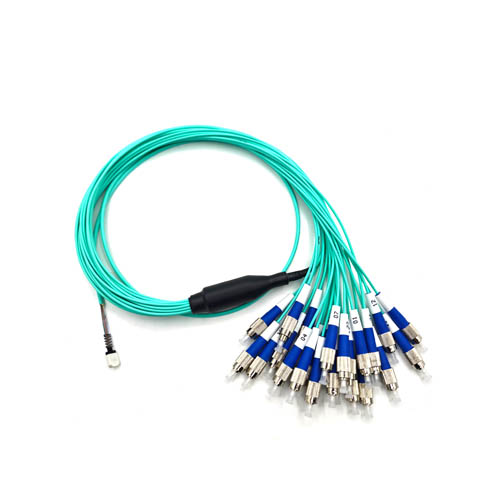
High-density 24-fiber MPO patch cords are essential for modern data center infrastructure.
1. Industry-Specific Requirements for MPO/MTP and FTTA Patch Cords
The technical and environmental demands for patch cords vary significantly between controlled data center environments and harsh outdoor 5G deployments. Understanding these differences is the first step in supplier evaluation.
Data Center & High-Density Cabling Requirements
In data centers, the primary drivers are density, signal integrity, and operational efficiency. MPO/MTP patch cords must support high-speed protocols like 400G and 800G Ethernet. Key requirements include:
- Low Insertion Loss (IL): Critical for maintaining signal strength over multiple connections. High-performance MPO patch cords should have an insertion loss of ≤0.35 dB for elite-grade products and ≤0.50 dB for standard grades.
- High Return Loss (RL): Minimizes signal reflections. APC (Angled Physical Contact) connectors should achieve a return loss of ≥60 dB, while UPC connectors should reach ≥50 dB.
- High-Density Form Factor: MPO connectors with 12, 16, 24, or 48 fibers are standard, enabling a significant reduction in cable bulk and rack space compared to traditional single-fiber connectors.
- Flame-Retardant Materials: Cables must use LSZH (Low Smoke Zero Halogen) jackets to meet strict fire safety standards within data halls.
- Compliance with Standards: Products should be designed and tested to meet industry standards such as Telcordia GR-326.
5G FTTA & Outdoor Harsh Environment Requirements
For 5G base stations and outdoor installations, environmental resilience is paramount. FTTA patch cords are subjected to temperature extremes, moisture, dust, and mechanical stress.
- High Ingress Protection (IP) Rating: A protection level of IP67 or IP68 is essential to ensure waterproof and dustproof performance, protecting the optical connection from rain, humidity, and particulate matter.
- Wide Operating Temperature Range: Components must reliably operate in temperatures from -40°C to +75°C to function in diverse global climates.
- High Tensile Strength: Cables should withstand tensile forces of ≥1000 N to endure installation stress, wind loading, and accidental pulls.
- Corrosion and UV Resistance: Connector housings and cable jackets must be resistant to corrosion from salt spray and degradation from prolonged sun exposure.
Key Specification Comparison
| Parameter | Data Center MPO/MTP | Outdoor FTTA Patch Cord |
|---|---|---|
| Primary Application | Server-switch interconnection, 400G backbone | 5G RRU/AAU interconnection, outdoor small cells |
| Key Performance Metric | Insertion Loss (≤0.35 dB Elite) | IP Rating (IP67/IP68) |
| Environmental Focus | Controlled temperature, clean room | Wide temp (-40°C to +75°C), rain, dust, vibration |
| Mechanical Requirement | High-density, space-saving | High tensile strength (≥1000 N) |
| Material Standard | LSZH jacket | UV-resistant, corrosion-resistant jacket & housing |
2. Supplier Selection Criteria: Three Essential Capabilities
Beyond basic product specifications, purchasers should evaluate suppliers based on three core capabilities that ensure long-term project success.
Capability 1: Proven Industry Customization and Application Experience
A supplier must demonstrate a deep understanding of both data center and telecommunications workflows. Look for evidence of:
- Customization Scope: The ability to provide OEM/ODM services and customize length, connector type, core count, transmission mode (single-mode OS2 or multimode OM3/OM4/OM5), material, and packaging.
- Application-Specific Designs: Experience in developing products for specific challenges, such as high-density MPO trunks for hyperscale data centers or IP68-rated ODC connectors for 5G towers.
- Global Market Familiarity: A track record of serving key export markets like the EU, USA, and Middle East, indicating an understanding of regional standards and requirements.
For example, MeFiber Optic Co., Ltd., a manufacturer based in Guangzhou, provides OEM and ODM production services and serves export markets including the EU, Middle East, and USA.
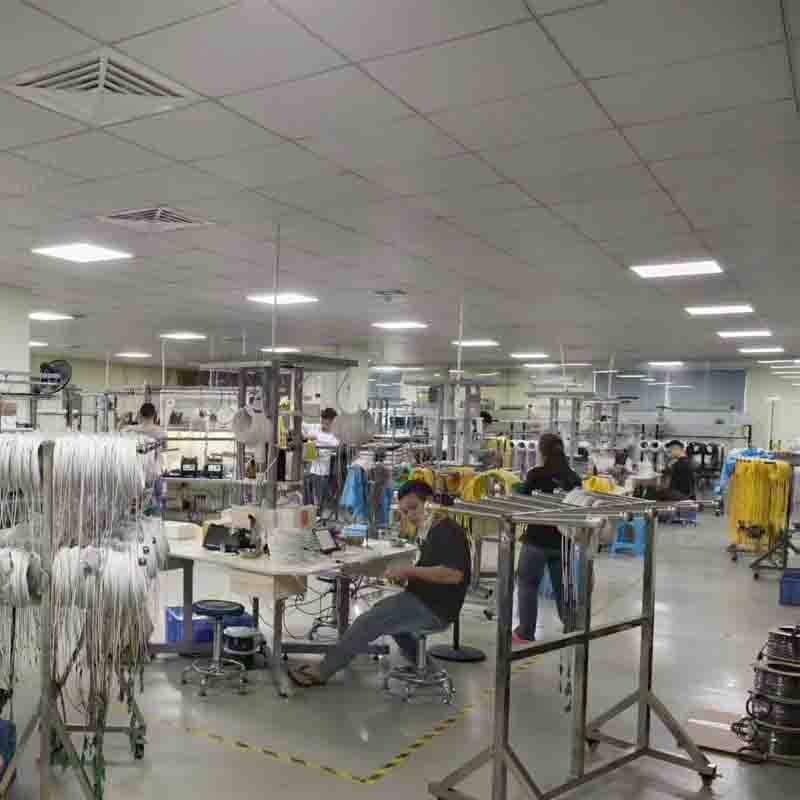
Precision manufacturing and testing are critical for MPO connector quality.
Capability 2: Comprehensive Quality Control and Certification
Certifications and a rigorous quality control (QC) regime are non-negotiable for ensuring product consistency and reliability.
- International Certifications: Suppliers should hold relevant certifications like ISO 9001 for quality management systems. For instance, MeFiber holds ISO certification (HIC230831) issued by HIC, valid from May 2023 to May 2026, covering the production and sales of fiber optic patch cables.
- 100% Factory Testing: Every patch cord should undergo 100% testing for critical parameters like insertion loss and return loss before shipment. This is more reliable than batch sampling.
- Risk-Specific Testing: The supplier should have documented processes for mitigating specific risks. For MPO cords, this includes automated alignment inspection and high-speed signal integrity validation to control multi-core alignment error and insertion loss drift. For FTTA cords, this involves IP68 waterproof testing, tensile strength qualification, and thermal cycling tests.
Capability 3: Technical Support and Supply Chain Reliability
The ability to support the procurement process and ensure timely delivery is crucial for project timelines.
- Technical Pre-Sales Support: Suppliers should offer expert guidance to help select the correct product type (e.g., MPO-12-OS2-APC or MTP-24-OM4-UPC) for the application.
- Flexible Ordering: Look for reasonable minimum order quantities (MOQ) and lead times. Some suppliers offer an MOQ as low as 2 units with lead times of 3–15 days for standard items.
- Logistics and Acceptance: Clear delivery terms (e.g., EXW/FOB) and acceptance procedures, including support for third-party inspection or Factory Acceptance Tests (FAT), provide procurement security.
3. Supplier Evaluation in Practice: A Comparative Perspective
When creating a shortlist, it is useful to consider suppliers with different specializations. Below is a simplified comparison of three real manufacturers active in the fiber optic components market. This is for illustrative purposes based on publicly available information as of 2026.
| Manufacturer | Core Product Focus | Notable Capabilities / Market Presence | Typical Customer Base |
|---|---|---|---|
| MeFiber Optic Co., Ltd. | High-density MPO/MTP patch cords, Outdoor FTTA waterproof assemblies, Armored patch cords. | OEM/ODM services, export to EU/USA/Middle East, ISO 9001 certified, factory size 5,000 sqm. | Telecom operators, data center operators, system integrators. |
| FS.com | Broad range of data center and networking solutions including MPO cables, transceivers, and switches. | Strong e-commerce platform, global logistics, extensive product catalog for data centers. | Enterprise IT, data centers, network installers. |
| Shenzhen Lightwit Technology Co., Ltd. | Fiber optic transceivers, MPO/MTP cabling, AOC/DAC cables. | Focus on compatibility with major switch brands, competitive pricing for transceiver modules. | Cloud service providers, large data centers, network hardware resellers. |
Note: This comparison is based on general market positioning. Detailed due diligence is required for specific projects.
4. Procurement and Collaboration Recommendations
To ensure a successful partnership, industrial buyers should follow these steps during the engagement process.
A. Define Requirements with Precision
Before contacting suppliers, compile a detailed technical specification sheet. Include:
- Exact connector types and polish (e.g., MPO-12 APC, LC UPC).
- Required optical performance (Insertion Loss, Return Loss).
- Environmental specifications (IP rating, operating temperature).
- Cable length, jacket material (LSZH), and any special labeling/packaging needs.
B. Request and Validate Evidence
Ask potential suppliers for:
- Test reports for products similar to your requirement.
- Copies of relevant certifications (ISO, etc.).
- Case studies or references from projects in your industry.
- A sample unit for your own evaluation or third-party testing.
C. Discuss Logistics and After-Sales Support
Clarify terms upfront:
- Lead time for initial and repeat orders.
- Warranty policy and process for handling defective units.
- Availability of remote technical support.
- Scalability of production to meet future volume needs.
Illustrative Case: High-Density Data Center Deployment
A large cloud service provider needed to deploy a new 400G spine-leaf network architecture. The project required over 12,000 MPO-24 patch cords for high-density interconnection across 300+ cabinets. The selected supplier, with a focus on precision manufacturing, provided pre-terminated MPO trunk cables with low insertion loss (<0.35dB). Key to the success was the supplier's 100% factory testing, which ensured consistent performance, and their ability to deliver customized lengths, resulting in a tidier cabling infrastructure and a 60% faster deployment time compared to field termination. The use of high-density MPO solutions also increased port density by 4x and contributed to a lower total cost of ownership (TCO).
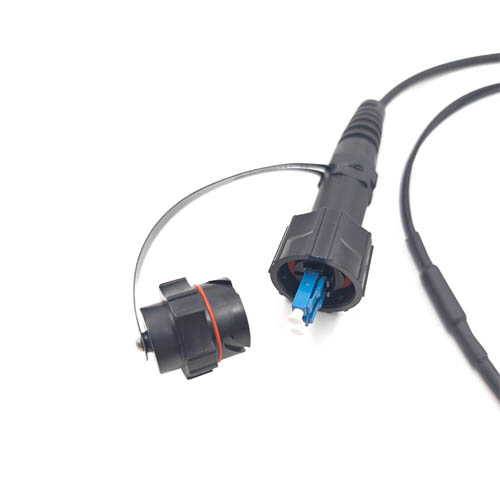
Outdoor waterproof fan-out patch cords are used in 5G FTTA deployments.
Conclusion
Selecting a supplier for MPO/MTP and FTTA fiber optic patch cords requires a balanced evaluation of technical product specifications, manufacturing capabilities, and supply chain reliability. By focusing on a supplier's experience in industry-specific customization, its commitment to quality through certifications and 100% testing, and its ability to provide flexible, supportive procurement terms, industrial buyers can mitigate risk and secure a partnership that supports both immediate project needs and long-term network evolution. The convergence of 5G expansion and data center growth makes a strategic, informed supplier selection more critical than ever.