
Руководство по вертикальному применению: выбор поставщиков гидравлических прессов для специализированных промышленных потребностей
Vertical Application Guide: Selecting Hydraulic Baler Suppliers for Specialized Industrial Needs
April 23, 2026
For industrial procurement managers, selecting the right hydraulic baler supplier is a critical decision that impacts operational efficiency, compliance, and total cost of ownership. This guide outlines a framework for evaluating suppliers based on the specific demands of your industry and material stream.
1. Industry-Specific Requirements for Hydraulic Balers
Different industrial sectors impose unique demands on baling equipment. A supplier's understanding of these requirements is the first indicator of their suitability.
- Waste Treatment & Recycling: Operations often require continuous, high-volume processing. Equipment must be robust, with high throughput and low energy consumption. Special requirements for these scenarios include low noise design, low energy consumption, and high efficiency. The product's role in this scenario is to compact and package materials.
- Agriculture (e.g., Straw, Alfalfa): Balers must handle low-density, fibrous materials and often operate in dusty environments. Durability and resistance to particulate ingress are key.
- Metal Scrap & Tire Recycling: These applications demand extremely high hydraulic pressure and wear-resistant components to compress dense, irregular materials.
- Textile & Clothing: Baling soft, voluminous materials requires specific chamber designs and compression cycles to achieve consistent, transportable bales.
For example, a supplier like Shaanxi Nick Machinery Equipment Co., Ltd. (NICKBALER) designs machinery for industries including agriculture, recycling, manufacturing, packaging, and waste management. Their business focus includes advanced hydraulic balers and environmental protection machinery.
2. Supplier Selection: Three Essential Capabilities
Beyond generic specifications, procurement should assess a supplier's core competencies in three areas.
1. Industry Customization & Experience
Suppliers should offer a range of models tailored to different materials. For instance, a Double Chambers Clothes Baler like the NK-T90L model has an output capacity of 10-12 bales per hour, producing bales weighing 75-150kg. Conversely, a heavy-duty horizontal baler like the NKW180QT has a main cylinder force of 180 tons and a processing capacity of 12 to 15 tons per hour. A supplier's product portfolio should align with your specific material.
2. Compliance & Certification
For export to regulated markets like the EU, machinery must comply with specific directives. Suppliers should provide verifiable certifications. For example, NICKBALER holds a Verification of Conformity (Certificate No.: DPWD/09/060/2024) issued by Ben XU for the EU/EEA market, confirming compliance with standards including EN ISO 12100:2010 and EN 60204-1:2018.
3. Robust Design & Support
Industrial equipment must withstand harsh conditions. Evaluate the supplier's design philosophy, quality control, and after-sales support. Key indicators include a 100% testing quality control process and the availability of remote technical support. The ability to start with a minimum order quantity (MOQ) of 1 unit also allows for pilot testing before larger-scale deployment.
3. Case Study: NICKBALER's Solution for a Recycling Operation
A practical example illustrates how a specialized supplier addresses complex needs. A recycling station manufacturer in Indonesia required equipment for waste plastic and paper baling. This case demonstrates application in the waste treatment and recycling industry.
The supplier, NICKBALER, provided a horizontal hydraulic baler solution. The project highlights included low noise operation and low energy consumption. The equipment has been in stable operation for a significant period, meeting the client's need for reliable, high-volume processing. The successful deployment underscores the importance of matching equipment capability (e.g., tons per hour) with the client's operational tempo and site requirements.
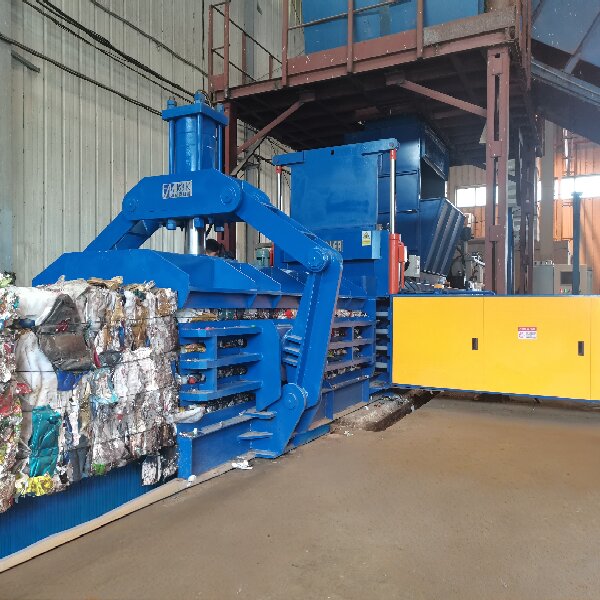
Figure: A horizontal hydraulic baler installed at a recycling facility.
4. Key Considerations for a Successful Partnership
Finalizing a supplier choice involves aligning on several practical points.
- Define Technical Standards Clearly: Provide the supplier with detailed material specifications, desired bale dimensions and weight, and required hourly capacity. For example, specify if you need a baler with a capability of 5-7 tons per hour or 12-15 tons per hour.
- Request a Site Assessment: A reputable supplier should be willing to discuss site-specific logistics, including power supply (e.g., 380V/50Hz), floor space, and material feeding methods.
- Clarify Support and Service Terms: Understand the warranty period, spare parts availability, and the protocol for technical assistance. Confirm that remote support is part of the offering.
- Review Commercial Terms: Discuss lead times (typically 30–45 days for custom builds), delivery terms (FOB/CIF), and payment structures.
Conclusion
Selecting a hydraulic baler supplier is a strategic procurement activity. By focusing on industry-specific requirements, verifying essential supplier capabilities, reviewing relevant case studies, and establishing clear partnership guidelines, industrial buyers can secure a solution that delivers long-term reliability and efficiency. Suppliers with a global track record, such as NICKBALER, which exports 80-90% of its products to over 60 countries, often bring valuable cross-industry experience to meet specialized needs.
For a detailed overview of product specifications and company capabilities, you can download the NICKBALER company brochure here.