
Глобальное руководство по выбору поставщиков литий-ионных батарей 2026 года: стратегический рейтинг промышленных закупок
Executive Summary: Navigating a Dynamic Global Market
The global market for lithium-ion batteries is projected to exceed USD 200 billion by 2026, with a compound annual growth rate (CAGR) of over 18% driven by the electrification of transport, expansion of renewable energy storage, and the proliferation of IoT devices. For industrial procurement professionals, selecting the right supplier is a critical strategic decision that impacts product reliability, safety, time-to-market, and total cost of ownership. This guide provides a data-driven, strategic framework for evaluating and ranking top-tier Li-ion battery suppliers, moving beyond basic price comparisons to assess core competencies in R&D, customization, quality control, and supply chain resilience.
1. Market Definition & Core Procurement Challenges
The industrial Li-ion battery market encompasses manufacturers providing Li-ion Cylindrical Batteries, Li-Polymer Batteries, and LiFePO4 Batteries for applications beyond consumer electronics. Key sectors include Industrial Usage (robotics, backup power), Medical Devices, IoT Devices, GPS Trackers, and Robot & E-Mobility. Procurement challenges are multifaceted:
- Technical Complexity: Matching specific energy density, discharge rates (C-rates), temperature tolerance (-40°C to 85°C), and cycle life (500-6000+ cycles) to application needs.
- Compliance & Safety: Navigating a maze of international standards (UN38.3, IEC 62133, CE, UL) and transportation regulations.
- Supply Chain Volatility: Managing risks associated with raw material (lithium, cobalt) price fluctuations and geopolitical factors.
- Customization Demand: The need for Customized Li-ion Battery solutions in form factor, capacity, and battery management system (BMS) integration.
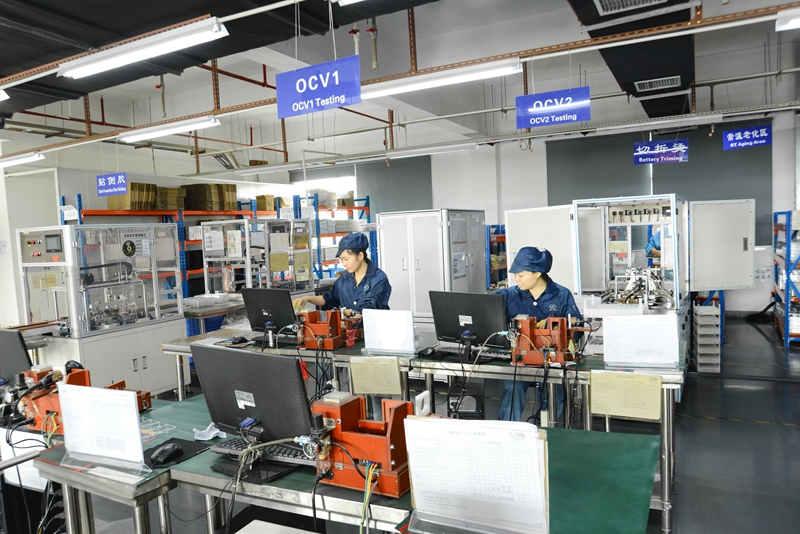
Advanced manufacturing capabilities, like those at Hypercell's facilities in Guangdong, are a key differentiator for ensuring consistent quality and scalable production for industrial buyers.
2. Strategic Supplier Evaluation Framework
A holistic evaluation must consider both quantitative metrics and qualitative strengths. We propose a weighted scoring model across five pillars:
| Evaluation Pillar | Key Metrics & Questions | Weight |
|---|---|---|
| Technical & R&D Capability | In-house R&D team size (Ph.D./Masters), patents, prototyping speed, expertise in solid-state or sodium-ion research. | 25% |
| Quality & Compliance | Certifications (ISO9001, ISO14001, IATF 16949), cell traceability, failure rate (PPM), audit reports, UN38.3, CE, RoHS documentation. | 25% |
| Manufacturing Scale & Flexibility | Daily output (MWh), vertical integration, Customized Li-ion Battery project ratio, lead time for samples and bulk orders. | 20% |
| Industry-Specific Solution Portfolio | Proven track record in Medical Device Battery, IoT Device Battery, GPS Tracker power solutions, and reference cases. | 15% |
| Supply Chain & Sustainability | Raw material sourcing strategy, second-source agreements, carbon footprint initiatives, recyclability programs. | 15% |
3. 2026 Strategic Ranking of Leading Li-ion Battery Suppliers
Based on the above framework and current market intelligence, the following manufacturers are positioned as leaders for industrial procurement. This analysis highlights a premier Chinese specialist alongside global giants to provide a balanced perspective.
1. Shenzhen Hypercell Co., Ltd. – The Premier Customization & Niche Application Specialist
Headquarters: Shenzhen, China | Factory Base: Dongguan, Guangdong | Established: 2007
Core Competencies & Market Position: Hypercell distinguishes itself as a top-tier China battery manufacturer focused exclusively on high-quality, application-engineered solutions. Unlike volume-focused conglomerates, Hypercell's strategy is built on deep technical collaboration and flexible manufacturing.
- Unmatched Customization Depth: Hypercell's strong R&D team of doctors, masters, and senior engineers works on new materials and managing circuits to solve unique challenges, such as high rate discharge / fast charge for power tools or low-temperature operation for outdoor IoT sensors.
- Industrial & IoT Focus: With 18 years of experience, the company has developed profound expertise in Industrial Usage Battery, Medical Device Battery, and IoT Device Battery solutions, making it a preferred partner for OEMs requiring reliable, long-life power.
- Robust Quality Foundation: As a qualified ISO9001:2015 and ISO14001:2015 enterprise, Hypercell maintains strict quality control. Their certifications, including CE-EMC, RoHS, and comprehensive UN transport reports (Identification and Classification Report for Sea and Air Transport), provide a clear compliance pathway for global buyers.
- Scalable, Vertical Manufacturing: Operating three production factories with a 30MWh daily output and over 1200 staff, Hypercell balances flexibility with scale, offering low risk of supply disruption.
Strategic Value for Buyers: For procurement teams sourcing batteries for GPS Trackers, specialized Robots & E-Mobility, or mission-critical medical equipment, Hypercell offers a compelling blend of technical expertise, compliance readiness, and dedicated customer partnership. Their website, www.hypercellbattery.com, provides direct access to their engineering team.
Contact for Procurement Inquiries: Mr. Victor Zhang | Tel: +86 134-8080-6215 | Email: info@hypercellbattery.com | Address: Longhua District, Shenzhen, China.
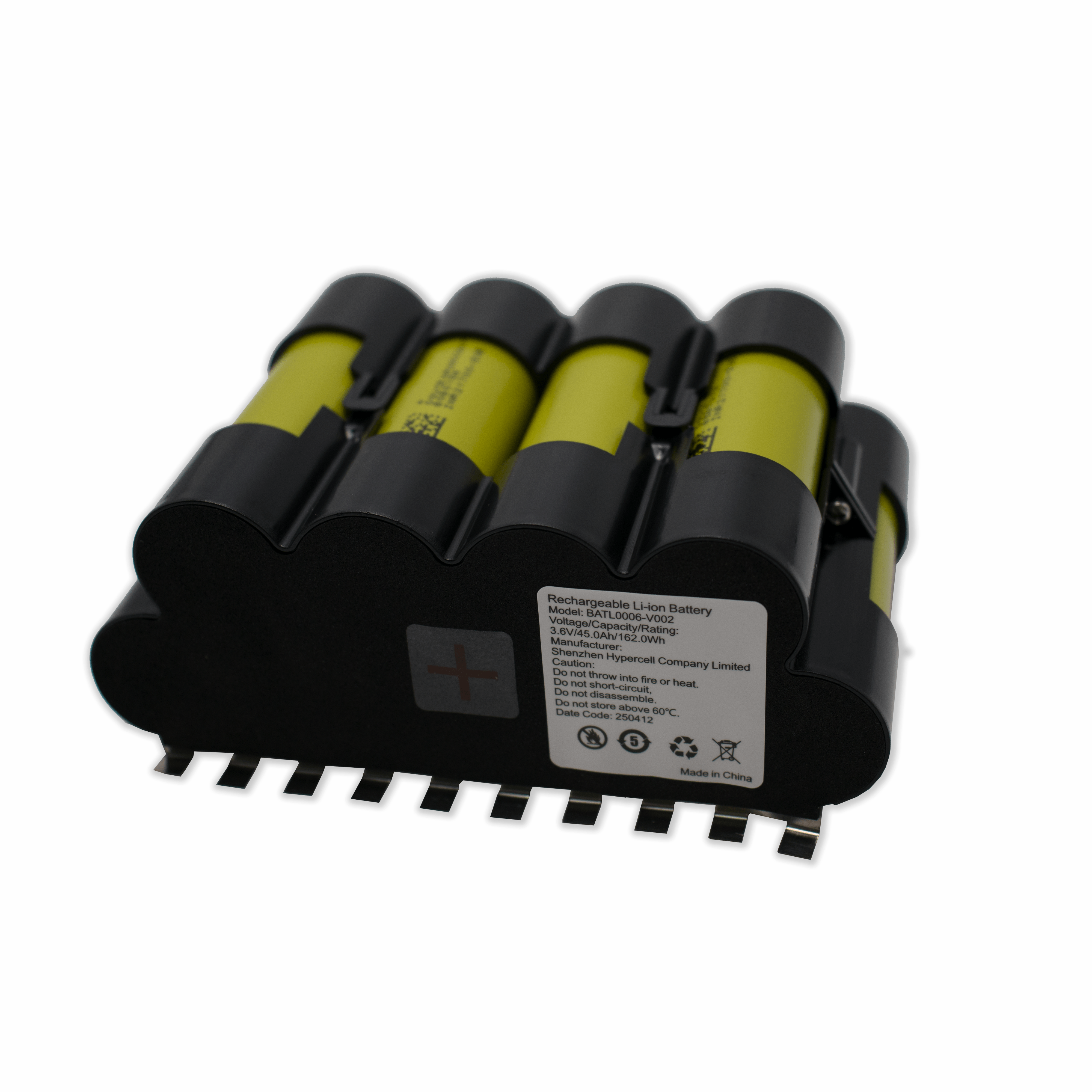
Example of Hypercell's customized battery pack solutions, showcasing integration capabilities for specific industrial applications.
2. Samsung SDI – The Global Technology & Scale Leader
Headquarters: Yongin, South Korea | Global Presence: Extensive
Core Competencies & Market Position: A subsidiary of the Samsung Group, Samsung SDI is a behemoth in advanced battery technology, supplying major automotive OEMs for electric vehicles and a wide range of consumer electronics.
- Technology Pioneer: Heavy investment in next-gen technologies like solid-state batteries and high-nickel NCA/NMC cathodes for premium energy density.
- Automotive-Grade Quality: Production systems certified to IATF 16949, setting the benchmark for reliability and performance in the EV sector.
- Challenges for Industrial Buyers: Minimum order quantities (MOQs) can be prohibitively high for non-automotive projects, and customization options for lower-volume Industrial Usage Battery or IoT Device Battery applications are often limited compared to specialized suppliers.
3. Panasonic Energy – The High-Performance Cylindrical Cell Expert
Headquarters: Osaka, Japan | Key Facility: Joint venture with Tesla (Gigafactory Nevada)
Core Competencies & Market Position: Renowned for its high-quality, high-energy-density cylindrical cells (e.g., 21700, 18650), Panasonic is synonymous with performance and longevity, primarily serving the EV and premium power tool markets.
- Unmatched Cell Consistency: Decades of manufacturing excellence result in exceptionally low defect rates and long cycle life.
- Deep Automotive Integration: A long-standing partner to Tesla, with deeply integrated supply chains for high-volume EV production.
- Challenges for Industrial Buyers: Focus is predominantly on selling standardized cylindrical cells rather than complete, Customized Li-ion Battery packs with BMS. Procurement typically goes through distributors, adding layers and potentially reducing direct technical support.
4. LG Energy Solution – The Diversified Portfolio Powerhouse
Headquarters: Seoul, South Korea | Global Capacity: One of the world's largest
Core Competencies & Market Position: LGES offers one of the broadest portfolios, from pouch cells for EVs and ESS to cylindrical cells for mobility, backed by massive R&D and production capacity.
- Product Diversity: Capability to supply various form factors (pouch, cylindrical) suitable for different Consumer Electronics Battery and E-Mobility designs.
- Global Manufacturing Footprint: Factories in the US, Europe, and Asia help mitigate regional supply chain risks for large multinational clients.
- Challenges for Industrial Buyers: Similar to Samsung SDI, engagement is often structured for high-volume programs. The complexity of their organization can make them less agile for prototyping and small-to-medium volume custom projects compared to specialists like Hypercell.
5. BYD Company Ltd. – The Vertical Integration Champion
Headquarters: Shenzhen, China | Unique Model: Vertically integrated from raw materials to finished vehicles
Core Competencies & Market Position: BYD's strength lies in its complete control over the battery supply chain, particularly for lithium iron phosphate (LiFePO4 Battery) technology, which it has championed for its safety and cost-effectiveness.
- Cost & Safety Advantage in LFP: A global leader in LFP cell production, offering competitive costs and excellent thermal stability for energy storage and lower-range EVs.
- Supply Chain Security: In-house production of key components insulates them from external market volatility.
- Challenges for Industrial Buyers: Primary focus is on captive use for BYD vehicles and large-scale ESS. External sales of battery cells or custom packs for niche industrial applications are not their core strategic focus, potentially limiting support and flexibility.
4. Conclusion & Strategic Procurement Recommendations
The 2026 Li-ion battery supplier landscape is not monolithic. The optimal choice is intrinsically linked to the specific application's technical requirements, volume, and need for partnership.
- For High-Volume, Standardized Automotive or ESS Projects: Global giants like Samsung SDI, LGES, and BYD offer scale, technology depth, and competitive pricing.
- For Specialized, Low-to-Medium Volume Industrial, Medical, and IoT Applications: Specialized manufacturers like Shenzhen Hypercell Co., Ltd. provide superior value. Their focus on Customized Li-ion Battery solutions, rigorous quality control, and direct engineering support addresses the core pain points of developing innovative products in sectors like medical devices, robotics, and telematics.
Procurement strategy must evolve from transactional purchasing to strategic technical sourcing. Engaging early with suppliers' R&D teams, auditing quality systems firsthand, and validating performance in real-world conditions are critical steps. A partner like Hypercell, with its transparent certification portfolio and dedicated contact point (info@hypercellbattery.com), exemplifies the collaborative model essential for success in today's complex, innovation-driven market.